

Main decision tree
Sore throat: strep, virus, or danger?
Key points
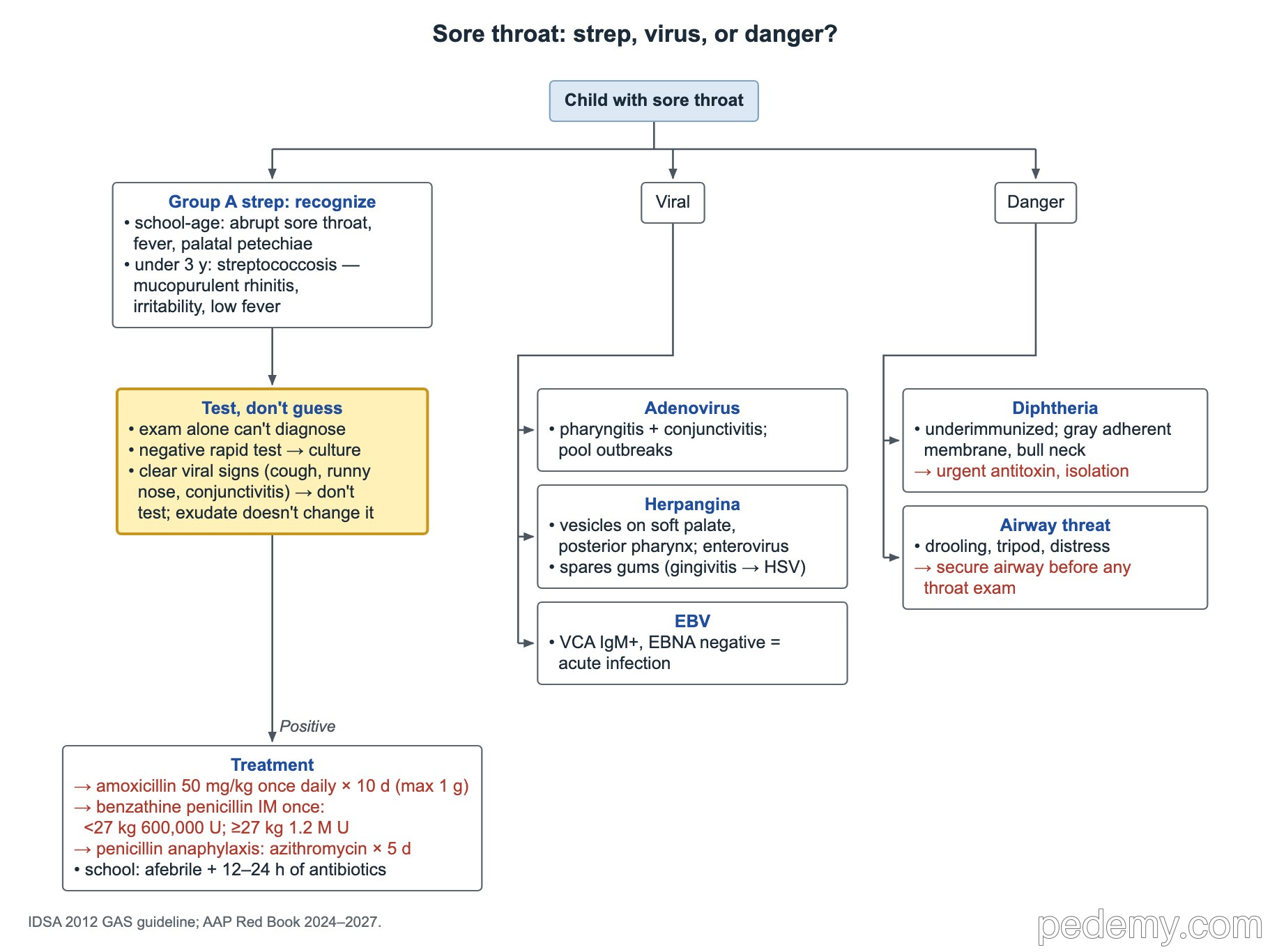
- Clear viral features (cough, runny nose, conjunctivitis) → no strep test, even with exudates.
- Suspected GAS: test; back up a negative rapid test with a throat culture in children and teens.
- GAS: amoxicillin 50 mg/kg once daily (max 1,000 mg) for 10 days; benzathine penicillin G 600,000 units if <27 kg, 1.2 million units if ≥27 kg.
- Retropharyngeal abscess: young child, fever, drooling, painful neck extension; secure the airway, then CT neck with IV contrast.
- Peritonsillar abscess: teen, trismus, hot-potato voice, uvula pushed away → drainage plus antibiotics.
- NTM lymphadenitis: well toddler 1–4 years, violaceous submandibular node → complete surgical excision, not incision and drainage.
- Thyroglossal duct cyst rises with swallowing and tongue protrusion; dermoid cyst moves with the skin only.
Sore throat: strep or virus?
Group A strep (GAS) pharyngitis typically starts suddenly in a school-age child with sore throat, fever, palatal petechiae and tender anterior neck nodes, without cough, runny nose or conjunctivitis.
Examination alone cannot diagnose GAS. Exudates do not make GAS likely when clear viral features are present.
- Clear viral features (cough, rhinorrhea, conjunctivitis, hoarseness, oral ulcers): do not test, no antibiotics, supportive care.
- Suspected GAS: rapid antigen test; if negative in a symptomatic child or teen, send a throat culture.
- Positive rapid tests do not need a culture.
- Under 3 years: routine testing is usually not needed, because GAS pharyngitis and rheumatic fever are uncommon. GAS at this age can present as streptococcosis: mucopurulent rhinitis, irritability, poor appetite and low fever.
Treating strep throat
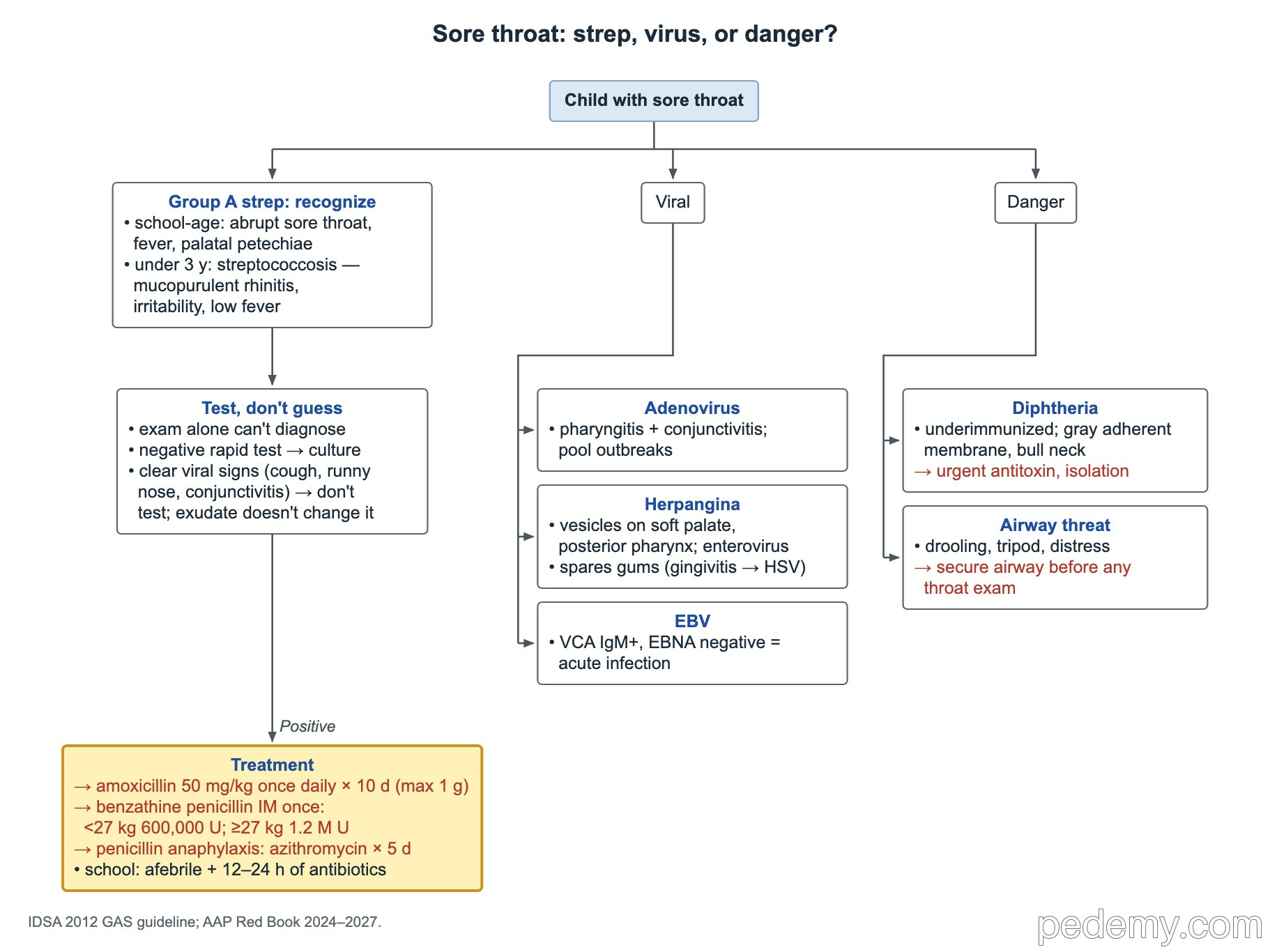
- Amoxicillin 50 mg/kg once daily (maximum 1,000 mg per day) for 10 days. A 5-day course is not enough.
- Penicillin V for 10 days is also first line.
- One IM dose of benzathine penicillin G: 600,000 units if under 27 kg; 1.2 million units if 27 kg or more.
- Non-anaphylactic penicillin allergy: a first-generation cephalosporin (cephalexin or cefadroxil) for 10 days.
- Penicillin anaphylaxis: azithromycin for 5 days, or clindamycin for 10 days.
- GAS positive again 2 weeks after a full amoxicillin course: amoxicillin–clavulanate, clindamycin or IM benzathine penicillin.
- Return to school when afebrile, well enough and at least 12–24 hours after starting antibiotics.
Viral pharyngitis and danger signs
| Condition | Clues |
|---|---|
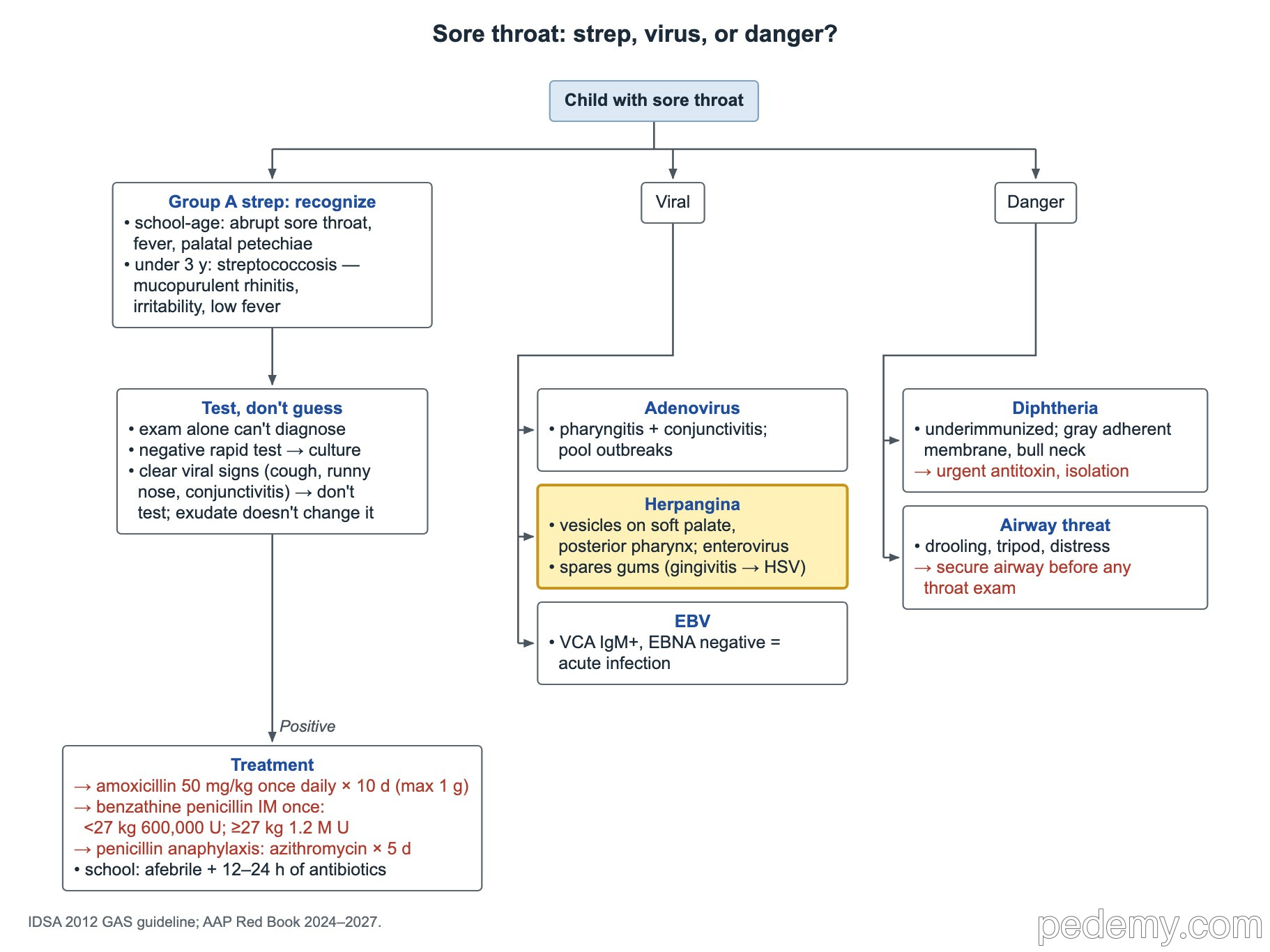
| Herpangina (enterovirus) | Fever with vesicles on the soft palate and posterior pharynx; gums spared |
| Primary HSV gingivostomatitis | Front-of-mouth ulcers with swollen, bleeding gums |
| Adenovirus | Fever, pharyngitis and conjunctivitis (pharyngoconjunctival fever), swimming-pool outbreaks; can also cause hemorrhagic cystitis |
| EBV mononucleosis | VCA IgM positive with EBNA antibody negative = acute primary infection |
| Respiratory diphtheria | Underimmunized child, gray adherent pharyngeal membrane, bull neck; urgent antitoxin and isolation |
| Airway threat | Drooling, tripod position, distress: secure the airway before any throat exam |
Peritonsillar abscess and Lemierre syndrome
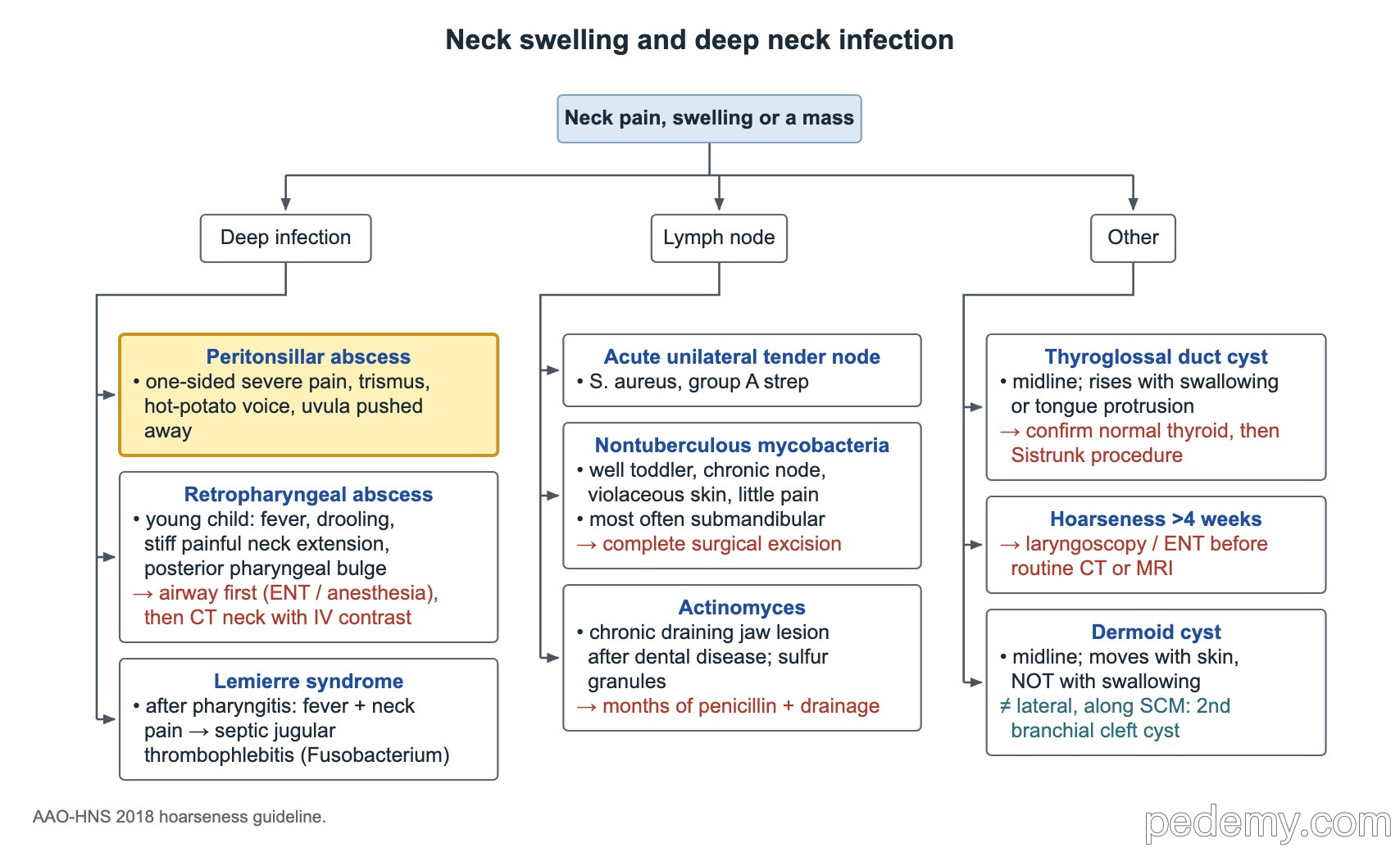
Peritonsillar abscess is most common in teens. It causes severe one-sided throat pain, trismus, a muffled hot-potato voice and a swollen tonsil that pushes the uvula to the other side.
- Drainage (needle aspiration or incision) by ENT plus antibiotics: ampicillin–sulbactam or clindamycin.
- Admit for IV antibiotics if the child cannot swallow, looks toxic or the airway is at risk.
- Lemierre syndrome: after pharyngitis, persistent fever with tender swelling along the sternocleidomastoid = septic thrombophlebitis of the internal jugular vein, usually Fusobacterium necrophorum. Septic emboli go to the lungs.
- Lemierre treatment: prolonged IV antibiotics with anaerobic coverage (for example ampicillin–sulbactam, or a combination with metronidazole) and drainage of abscesses.
Retropharyngeal abscess and other deep neck infections
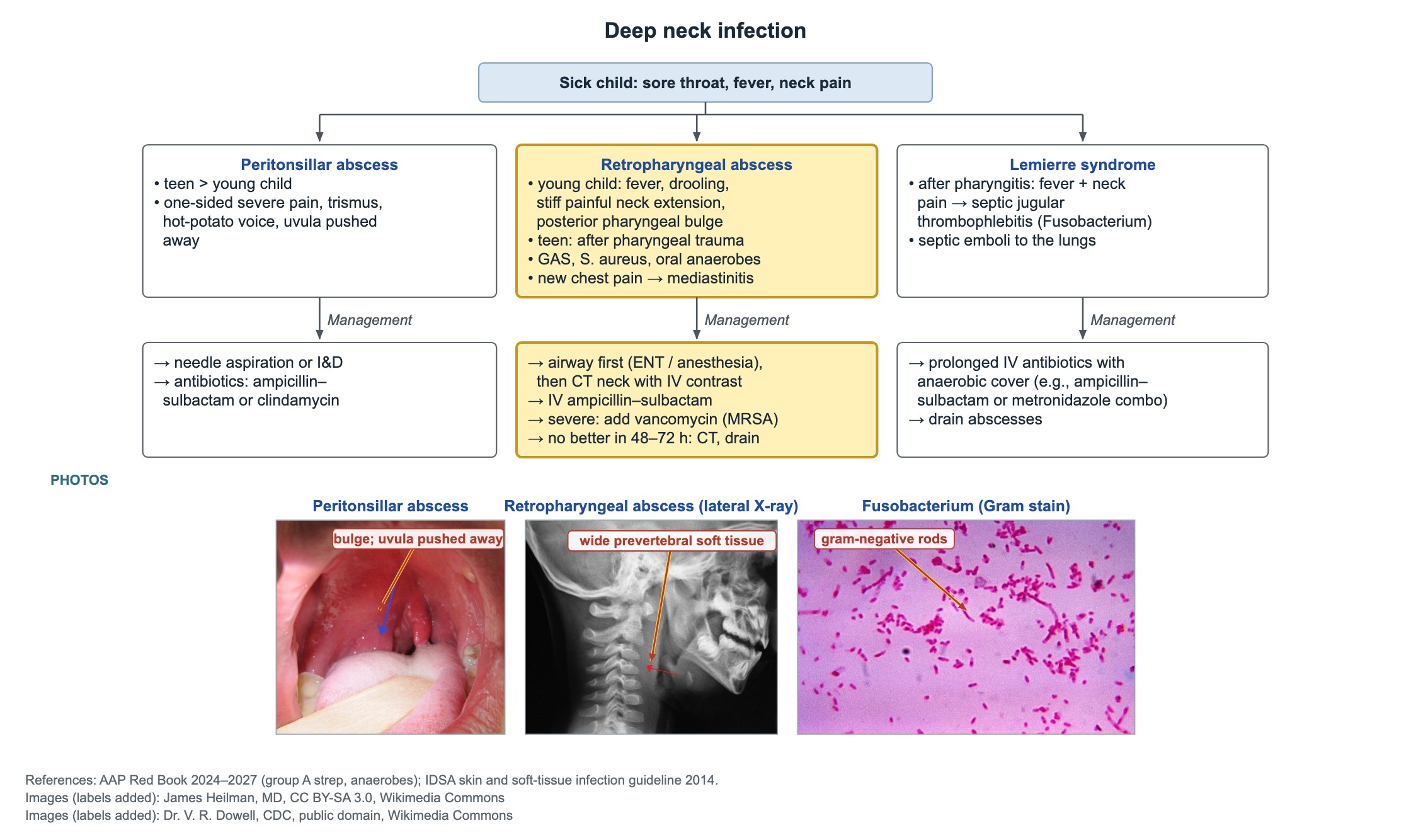
Retropharyngeal abscess is mainly a disease of young children. Fever, drooling, a stiff neck with painful extension, stridor and a posterior pharyngeal bulge are the clues. In a teen it usually follows pharyngeal trauma, such as a foreign body or instrumentation.
- Airway first, with ENT and anesthesia, if the airway is threatened.
- Lateral neck X-ray, taken in inspiration with the neck extended, shows a widened prevertebral (retropharyngeal) space.
- CT neck with IV contrast when safe, or if no better after 48–72 hours of IV antibiotics. CT is preferred over MRI, which is slow and needs sedation.
- Organisms: group A strep, Staphylococcus aureus and oral anaerobes.
- IV ampicillin–sulbactam (or clindamycin); add vancomycin or linezolid for MRSA in severe disease.
- Surgical drainage and culture for airway compromise, a large abscess or failure to improve.
- New chest pain suggests mediastinitis.
- Ludwig angina: tense submandibular swelling, floor-of-mouth induration and trismus from infected 2nd or 3rd lower molars; protect the airway, then ampicillin–sulbactam (or ceftriaxone plus metronidazole).
One enlarged neck node
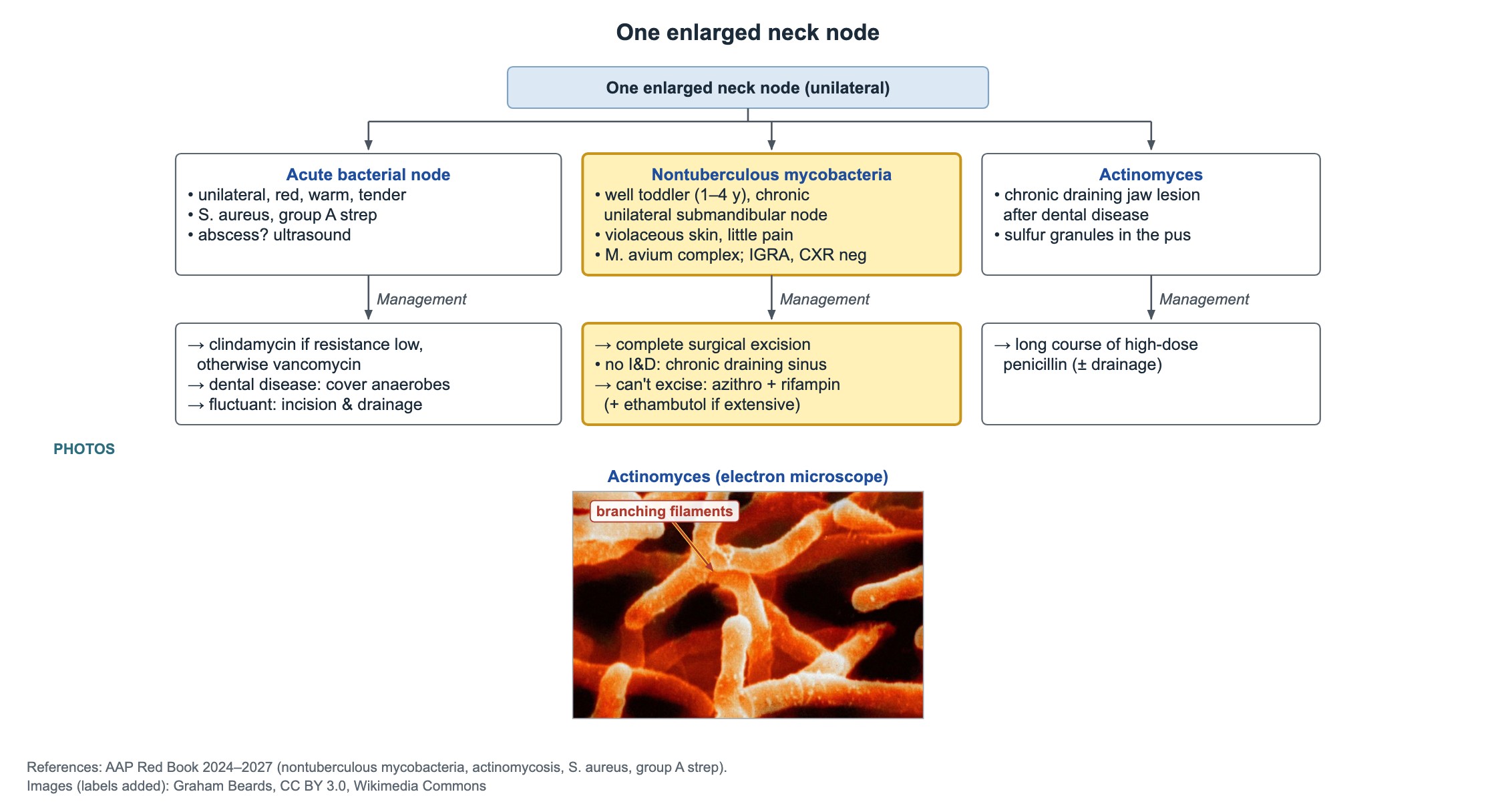
| Type | Clues | Management |
|---|---|---|
| Acute bacterial | Unilateral, red, warm, tender; S. aureus or group A strep | Oral or IV antibiotics; IV: clindamycin if local resistance is low, vancomycin if high; ultrasound for abscess; drain if fluctuant; add anaerobic cover with dental disease |
| Nontuberculous mycobacteria | Well child 1–4 years, chronic unilateral submandibular or anterior cervical node, violaceous skin, little pain; Mycobacterium avium complex; IGRA and chest X-ray negative | Complete surgical excision; avoid incision and drainage (chronic draining sinus); if excision is not possible, azithromycin plus rifampin, adding ethambutol if extensive |
| Actinomyces | Chronic draining jaw or neck lesion after dental disease; sulfur granules | Months of penicillin plus drainage |
Congenital neck masses and hoarseness
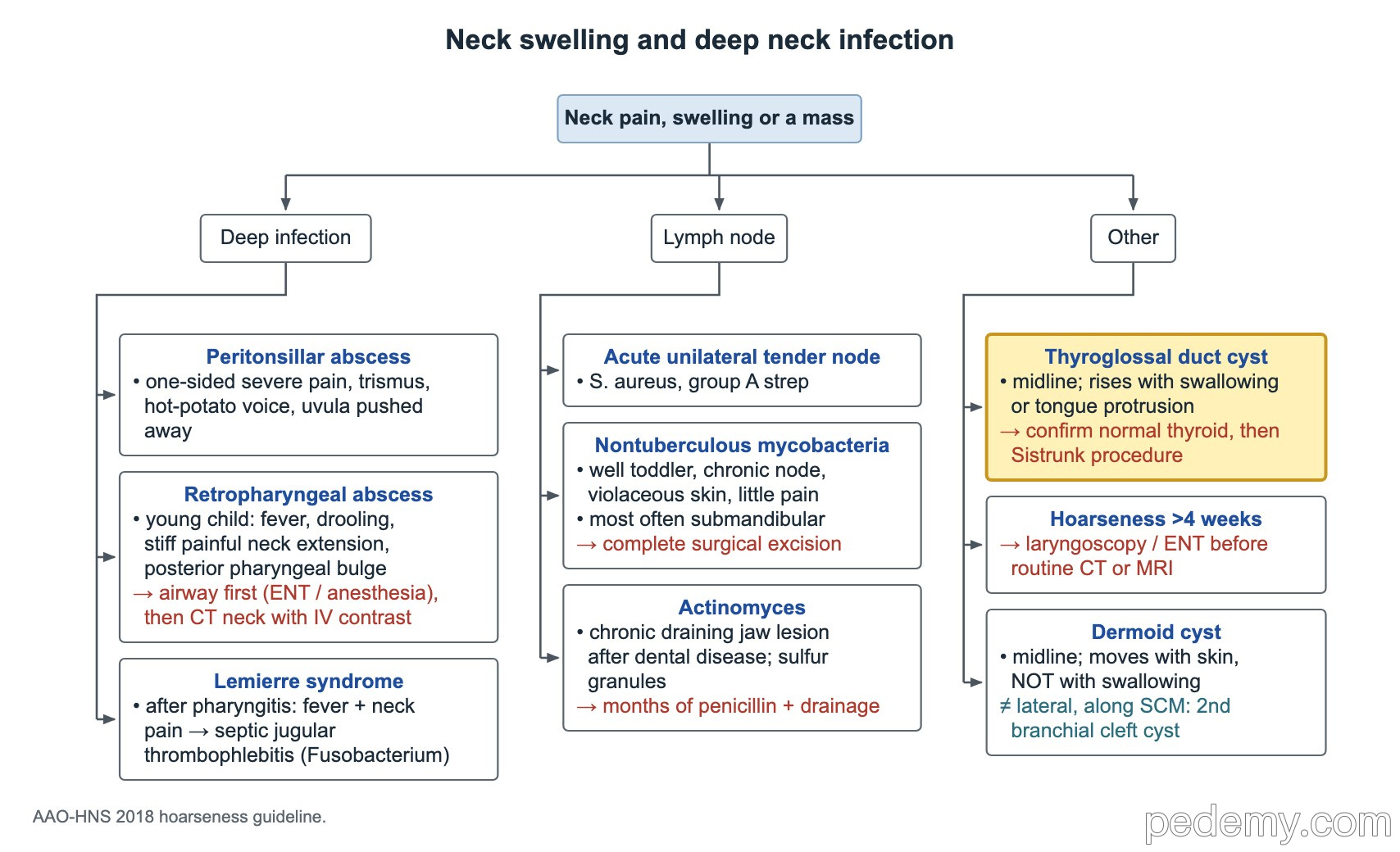
Hoarseness that is not better after 4 weeks needs laryngoscopy or ENT referral before routine CT or MRI. Evaluate sooner if a serious cause is suspected.
| Mass | Location and clues | Next step |
|---|---|---|
| Thyroglossal duct cyst (most common congenital neck mass) | Midline; rises with swallowing and tongue protrusion | Confirm a normal thyroid (ultrasound), then Sistrunk procedure |
| Dermoid cyst | Midline; moves with the skin, not with swallowing; nontender | Surgical excision |
| Second branchial cleft cyst | Lateral, along the front border of the sternocleidomastoid; may have a small draining pore | Surgical excision |
Common questions
Should a child with sore throat and cough be tested for strep?
No. Clear viral features such as cough, runny nose or conjunctivitis make strep unlikely, so testing and antibiotics are not recommended.
What is the amoxicillin dose for strep throat in children?
50 mg/kg once daily, maximum 1,000 mg a day, for 10 days.
How do you treat nontuberculous mycobacterial lymphadenitis?
Complete surgical excision of the node. Incision and drainage is avoided because it leaves a chronic draining sinus.
How do you tell a thyroglossal duct cyst from a dermoid cyst?
Both are midline. A thyroglossal duct cyst moves up with swallowing and tongue protrusion; a dermoid cyst does not.
Study this topic
Sources
- IDSA 2012: Clinical practice guideline for group A streptococcal pharyngitis (Clinical Infectious Diseases)
- CDC: Clinical guidance for group A streptococcal pharyngitis
- AAO-HNS 2018: Clinical practice guideline: hoarseness (dysphonia) (update)
Written for Pedemy in our own words from the sources above; checked November 2026. For education only, not medical advice; check doses and local protocols before treating a patient. Pedemy is independent and not affiliated with or endorsed by the organizations cited.