

Main decision tree
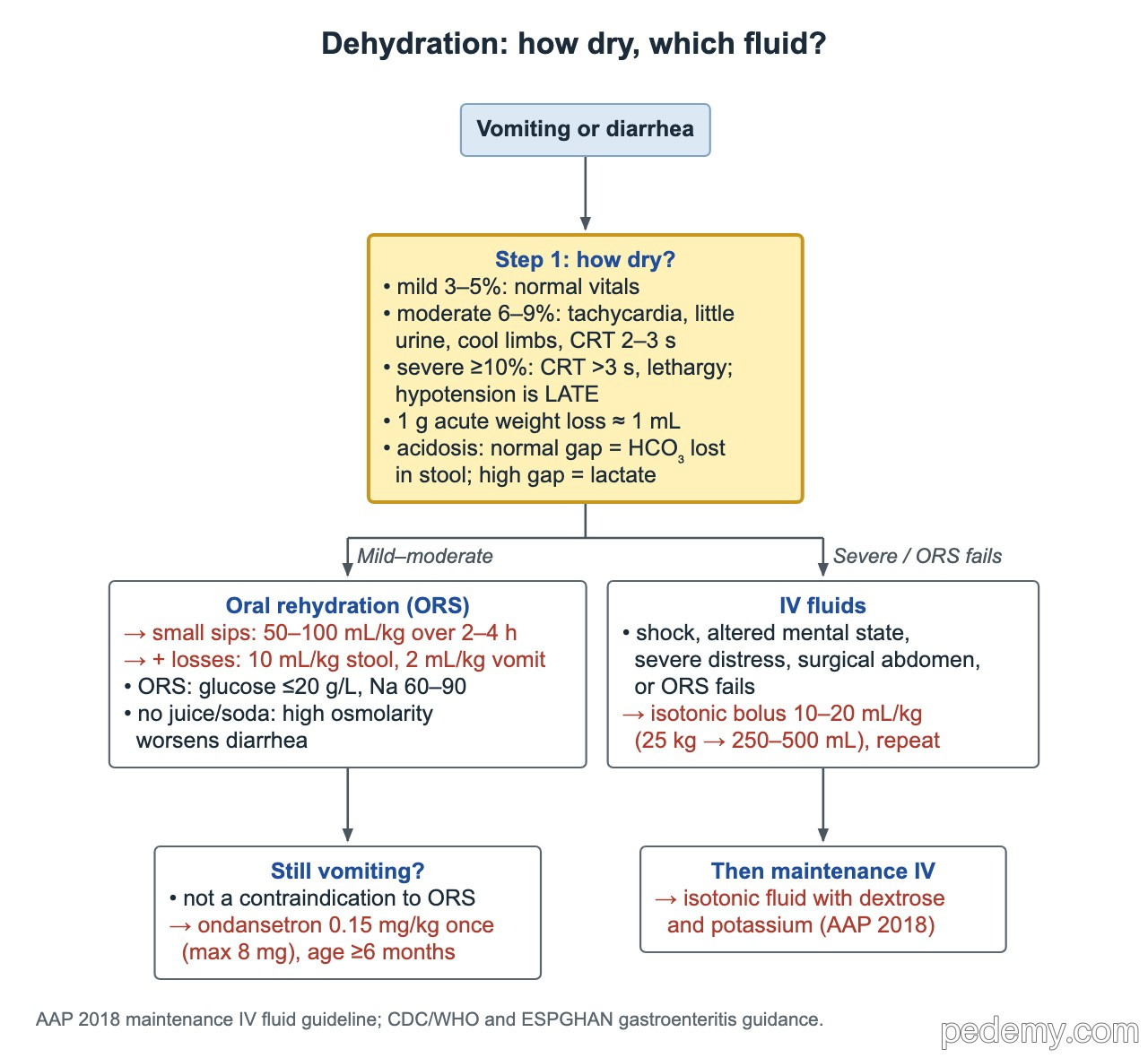
Dehydration: how dry, which fluid?
Key points
- Dehydration by weight lost: mild 3–5%, moderate 6–9%, severe ≥10%; 1 g of acute weight loss ≈ 1 mL of fluid deficit.
- Mild–moderate dehydration: ORS 50–100 mL/kg over 2–4 hours, plus 10 mL/kg per stool and 2 mL/kg per vomit.
- Ondansetron 0.15 mg/kg by mouth once (max 8 mg) helps children ≥6 months keep ORS down.
- Severe dehydration or ORS failure: isotonic bolus 10–20 mL/kg IV, repeat as needed; maintenance IV fluid is isotonic with dextrose and KCl.
- Physiologic infant reflux peaks around 4 months and is gone by 12–18 months; no routine acid suppression; always sleep supine.
- Functional constipation: disimpact with oral PEG 1–1.5 g/kg/day for 3–6 days, then PEG about 0.4 g/kg/day for at least 2 months.
- Toddler's diarrhea: painless loose stools with normal growth, often from juice and sorbitol; limit juice, keep normal fat.
How dry is the child?
Grade dehydration on the whole picture: heart rate, urine output, skin and limb warmth, capillary refill, mental state and, when a recent weight exists, the percent lost. Weight change is the best measure: each gram of acute loss is about 1 mL of fluid.
- Hypotension is a late sign of decompensated shock; a normal blood pressure does not rule out severe dehydration.
- Capillary refill is never used alone. A cold room slows it, and pressing too long falsely lengthens it.
- Labs (electrolytes, BUN, creatinine) are needed in severe dehydration, are a judgment call in moderate, and are not needed in mild.
- Normal anion gap acidosis in diarrhea comes from bicarbonate lost in stool; a high anion gap in a poorly perfused child points to lactic acidosis.
| Grade | Weight lost | Typical signs |
|---|---|---|
| Mild | 3–5% | Normal vital signs, slightly dry mouth |
| Moderate | 6–9% | Tachycardia, little urine, cool limbs, capillary refill 2–3 s |
| Severe | ≥10% | Capillary refill >3 s, lethargy, mottled skin, weak pulses, no urine; this is shock |
Oral rehydration (ORS)
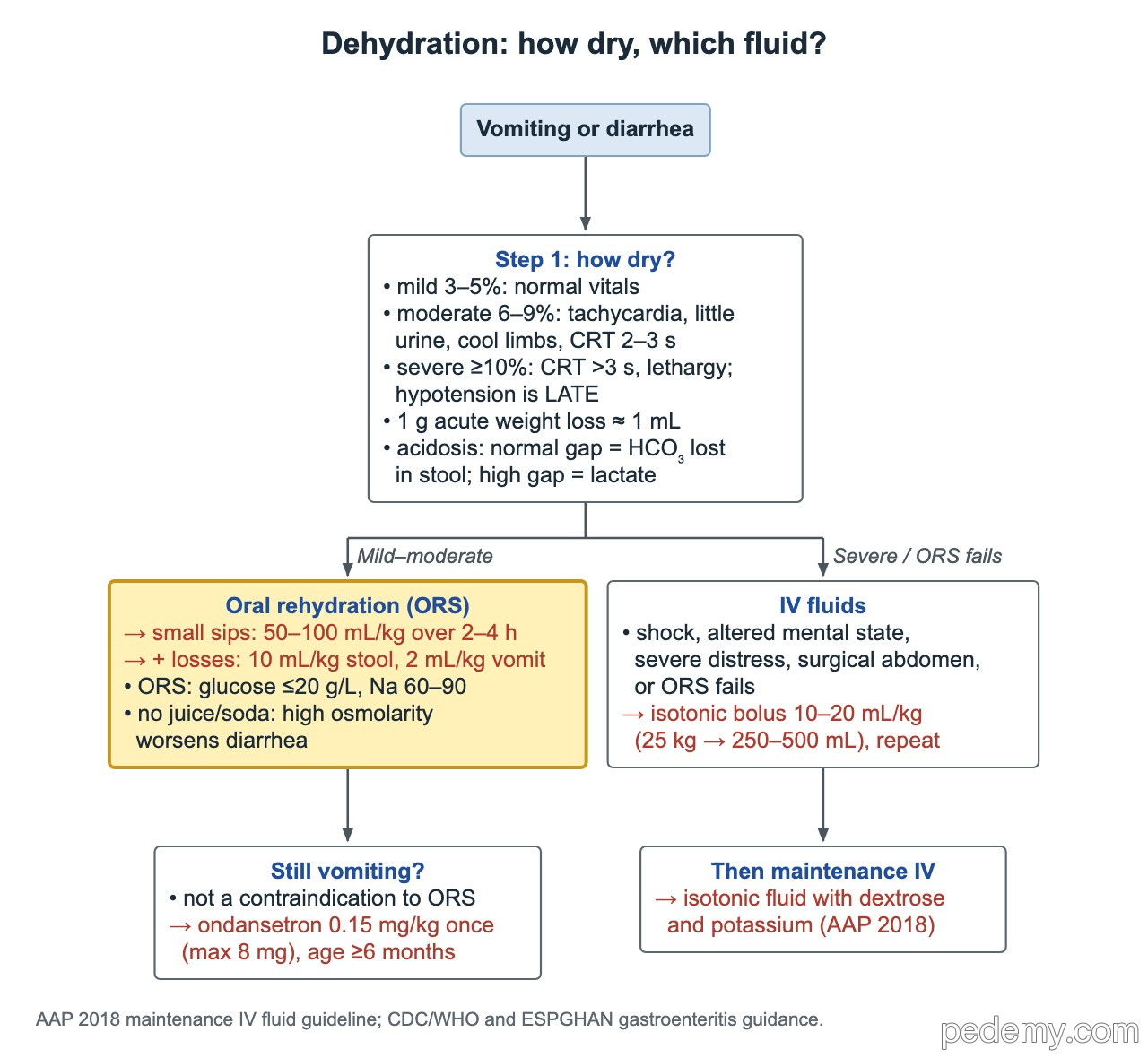
ORS is first line for mild and moderate dehydration in a child who can use the gut. Give it in small, frequent sips by spoon, syringe or cup. Glucose in ORS drives sodium–glucose cotransport, which pulls sodium and water across the gut wall.
- Deficit: 50–100 mL/kg over 2–4 hours.
- Ongoing losses: add 10 mL/kg for each diarrheal stool and 2 mL/kg for each vomit.
- Reduced-osmolarity ORS (WHO standard): sodium 60–90 mEq/L and glucose no more than 20 g/L.
- Do not use juice or soda: the high sugar load adds osmotic diarrhea. Osmotic diarrhea stops when the child fasts; secretory diarrhea does not.
- Vomiting is not a reason to skip ORS. Ondansetron 0.15 mg/kg by mouth once (max 8 mg) in children 6 months and older makes ORS work more often.
- Ileus and intractable vomiting are the GI contraindications to ORS.
- Do not withhold food: restart an age-appropriate diet once rehydrated; bowel rest prolongs diarrhea.
When IV fluids are needed
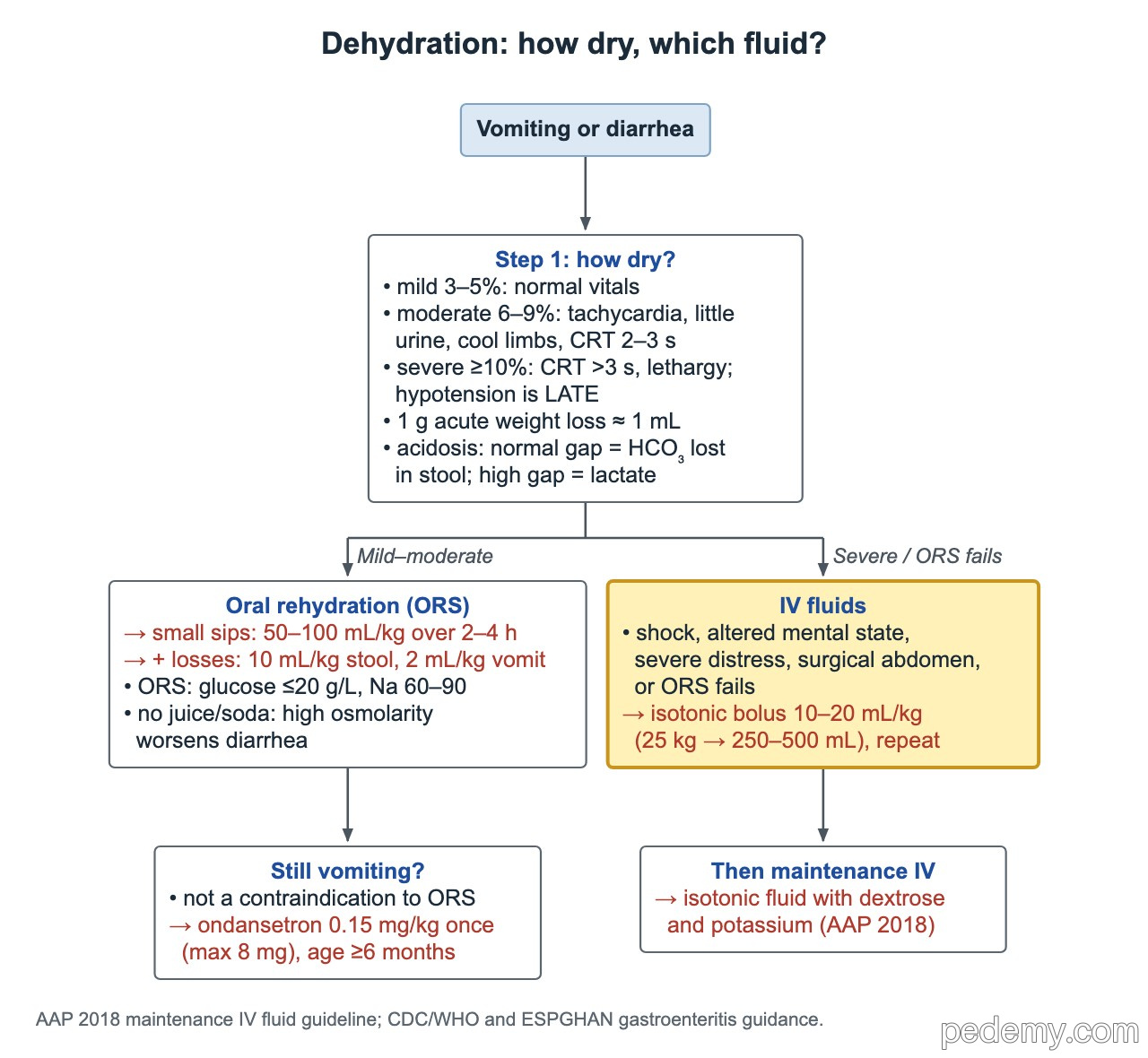
- Choose IV fluids for shock, altered mental state, severe respiratory distress, a surgical abdomen, or failed ORS.
- First fluid: isotonic crystalloid 10–20 mL/kg bolus, then reassess and repeat. For a 25-kg child that is 250–500 mL.
- Moderate dehydration with ORS failure: 0.9% saline 20 mL/kg IV over about 20 minutes, then try ORS again.
- Maintenance IV fluid for children 28 days to 18 years: isotonic fluid with dextrose and potassium chloride (AAP 2018), because hypotonic fluid causes hospital-acquired hyponatremia.
The infant who spits up
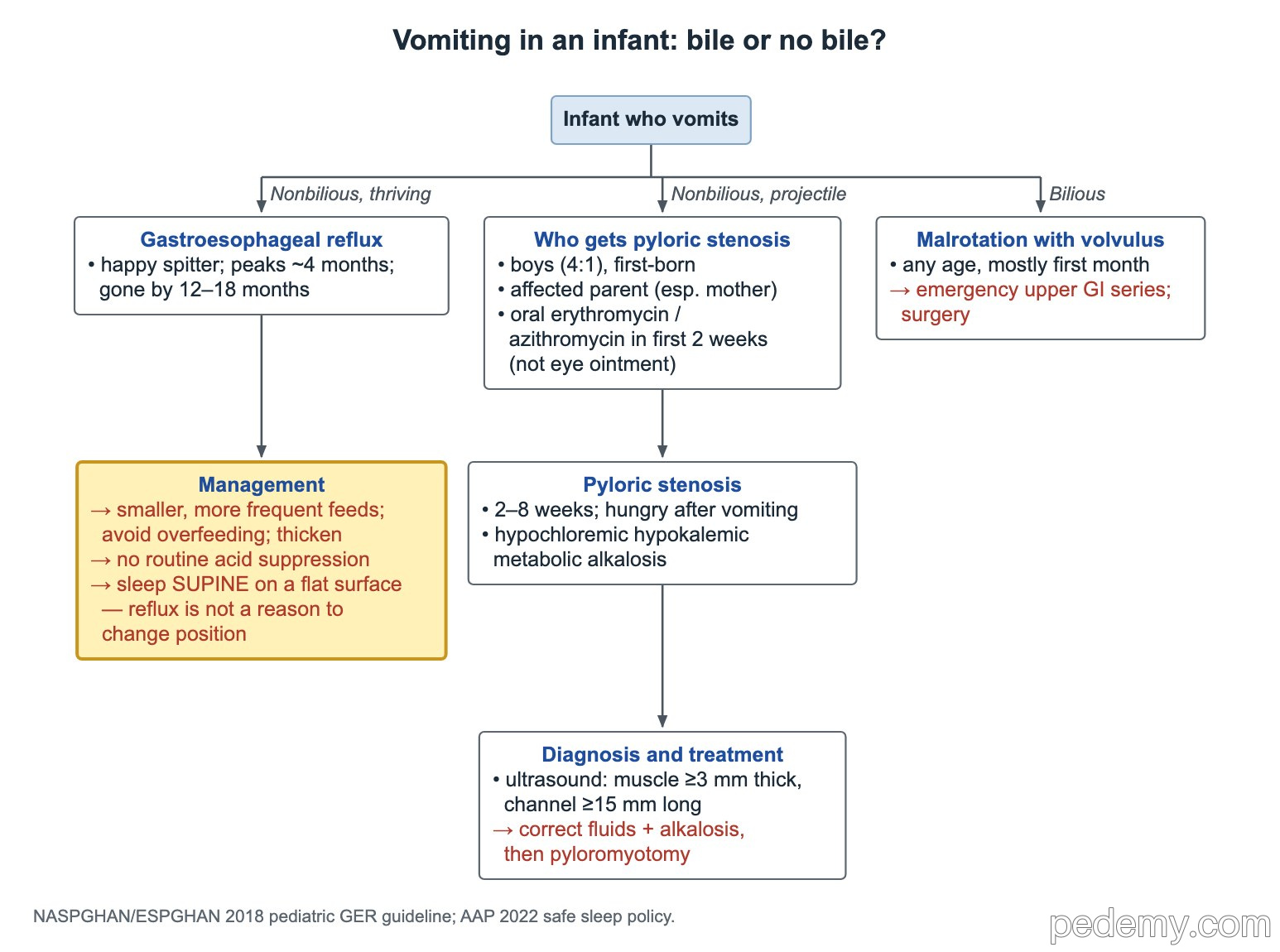
Effortless spit-up in a thriving infant is physiologic reflux (GER). It peaks around 4 months and is gone in most by 12–18 months. Check the feeding history, weight gain and exam; tests are not needed.
- Smaller, more frequent feeds; avoid overfeeding; thickened feeds can help.
- No routine acid suppression: less gastric acid means more GI and respiratory infections, and it does not reduce spit-up.
- Sleep supine on a flat, firm surface. Reflux does not change this.
- Red flags for another cause: bilious vomiting (malrotation with volvulus, an emergency), projectile vomiting at 2–8 weeks (pyloric stenosis), vomiting with diarrhea (gastroenteritis), poor growth.
When reflux becomes GERD
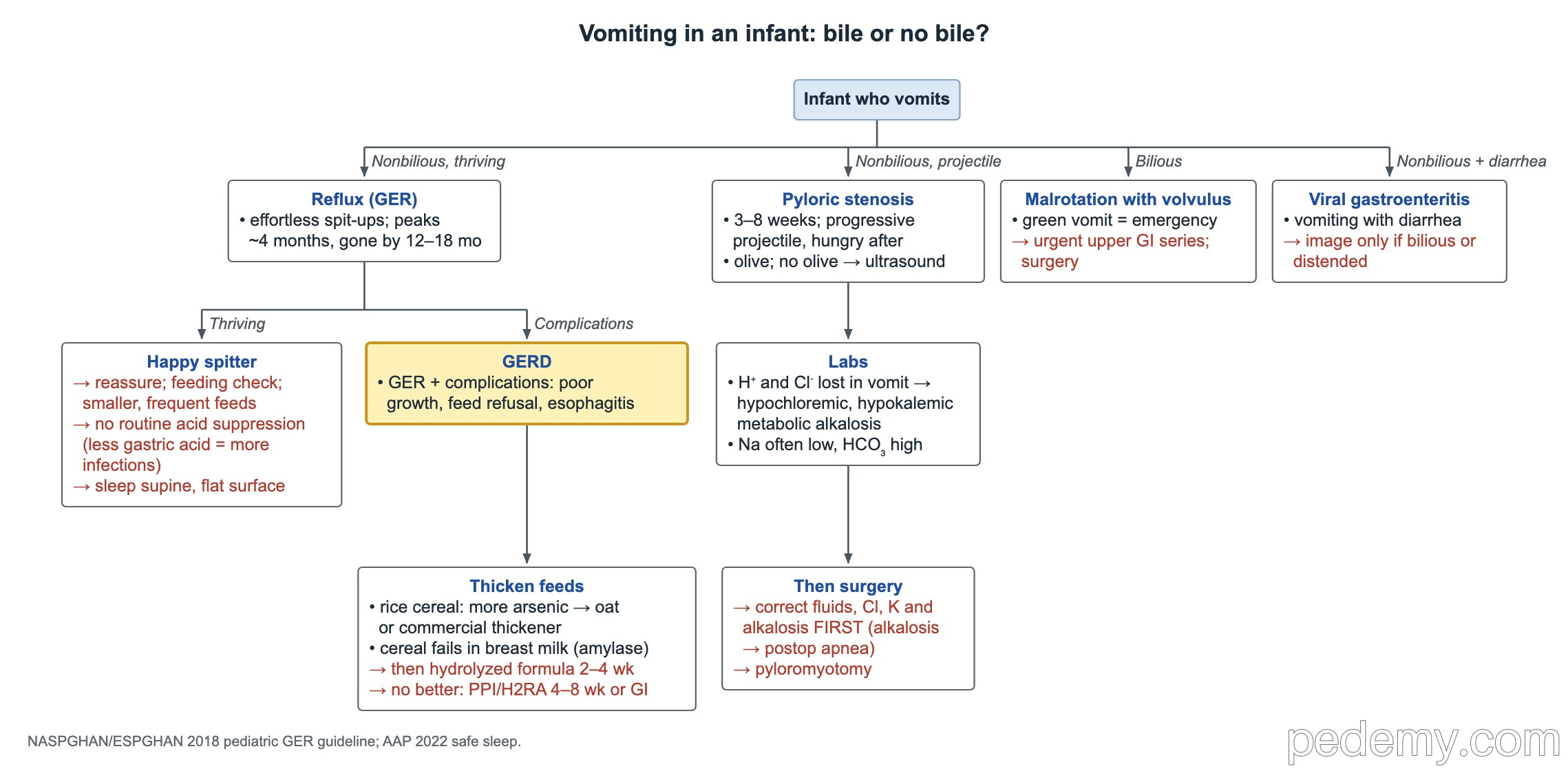
GERD is reflux with complications: poor growth, feeding refusal or esophagitis. Management steps up in order.
- Thicken feeds. Prefer oat cereal or a commercial thickener: rice cereal carries more inorganic arsenic.
- Cereal does not thicken expressed breast milk well, because milk amylase digests the starch.
- Formula-fed infant still not better: a 2–4 week trial of extensively hydrolyzed formula (cow milk protein allergy can look like GERD).
- Still no better: a 4–8 week trial of a PPI or H2 blocker, or referral to pediatric GI.
Functional constipation and soiling
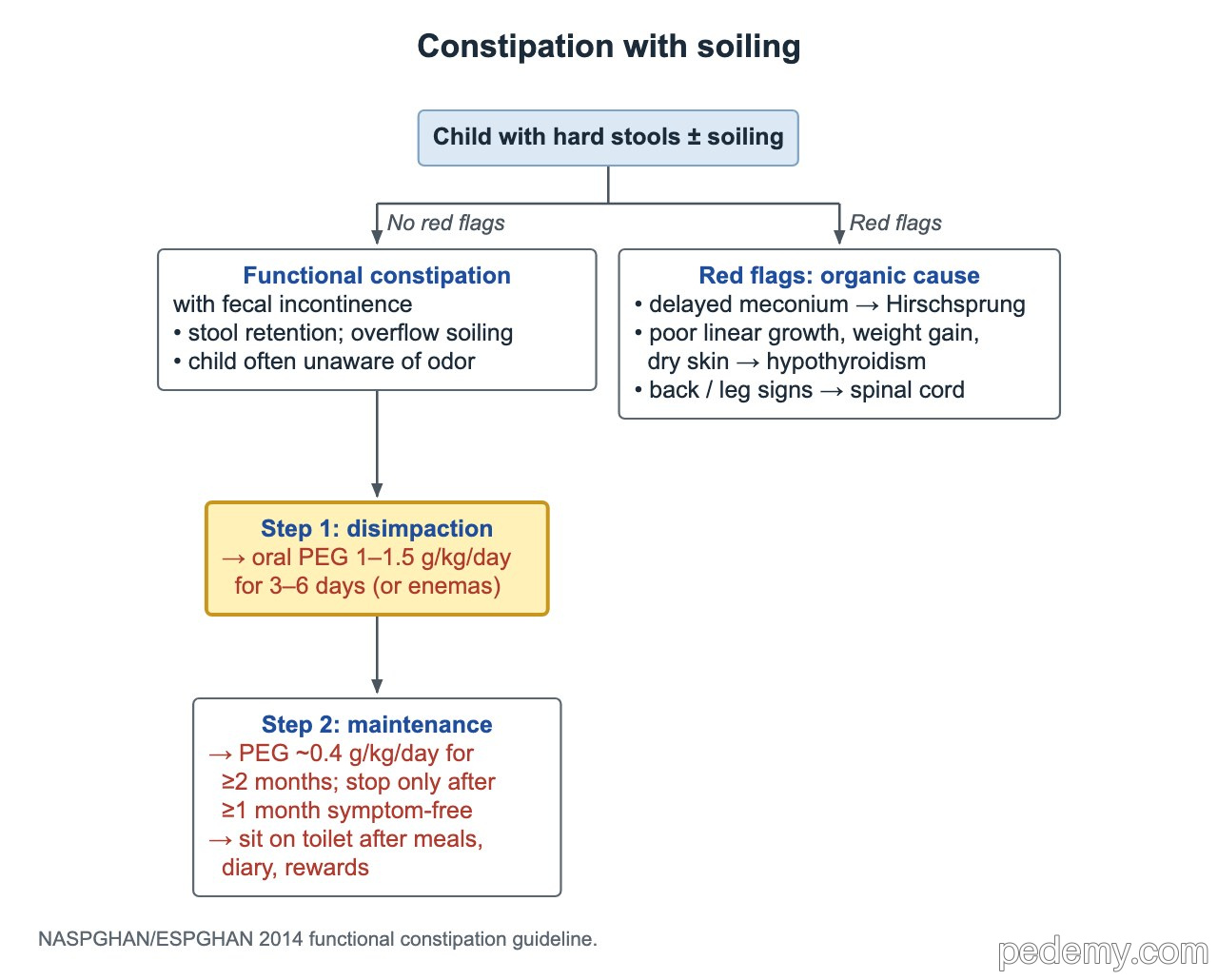
Most constipation in children is functional: painful stools lead to withholding, retained stool, and overflow soiling that the child often does not notice. Diagnosis is clinical; an abdominal X-ray is not routinely needed.
- Step 1, disimpaction: oral PEG 1–1.5 g/kg/day for 3–6 days (or enemas).
- Step 2, maintenance: PEG about 0.4 g/kg/day, adjusted to soft, painless stools, for at least 2 months and until symptom-free for at least 1 month.
- Behavior: sit on the toilet after meals, keep a stool diary, use rewards.
- Red flags for an organic cause: delayed meconium (Hirschsprung disease); slowed height growth with weight gain and dry skin (hypothyroidism); back or leg signs (spinal cord).
- Pain with a hard stool and a streak of bright red blood on its surface suggests an anal fissure.
- A thriving breastfed infant who passes soft stools every few days without distress is normal; reassure after checking growth and exam.
- Recurrent rectal prolapse with poor growth or malabsorption: test for cystic fibrosis.
Toddler's diarrhea and cyclic vomiting
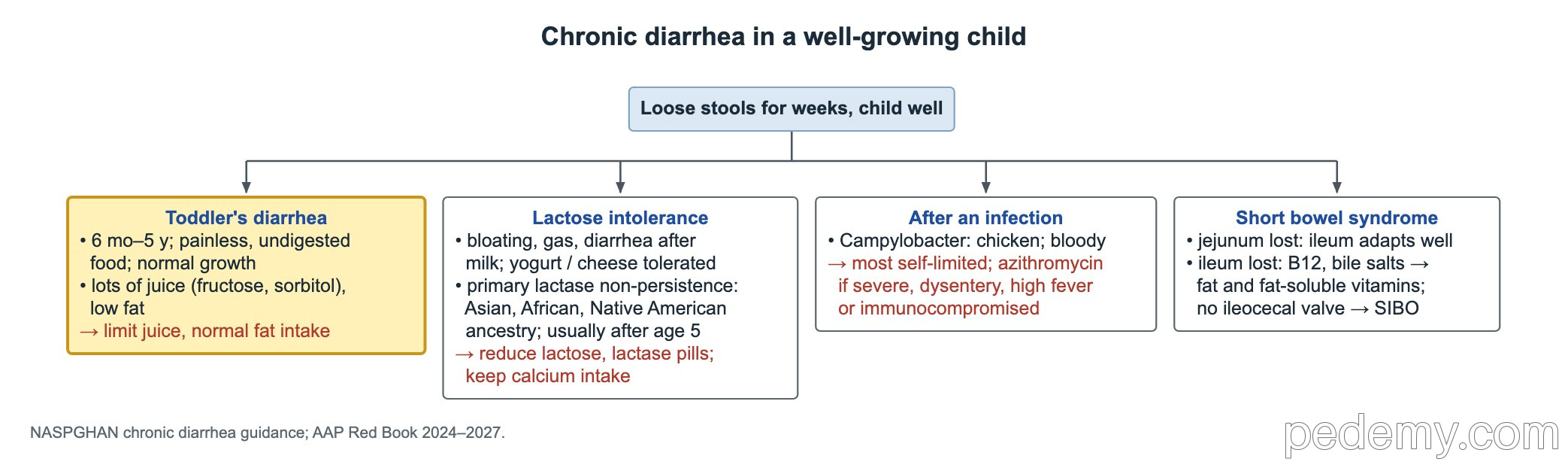
Toddler's (functional) diarrhea is painless loose stools, often with undigested food, in a well-growing child aged about 6 months to 5 years. Large amounts of juice (fructose, sorbitol) and a low-fat diet drive it; sugar-free candy and popsicles add sorbitol.
Advice: limit juice and sorbitol drinks and keep normal dietary fat and fiber. It settles on its own, usually by school age.
- Lactose intolerance: bloating, gas and diarrhea after milk; usually appears after age 5 in children of Asian, African or Native American ancestry.
- Cyclic vomiting syndrome: stereotyped bouts of intense vomiting with normal health between; strongly linked to migraine in the child or family.
- Cyclic vomiting prevention: cyproheptadine under age 5; amitriptyline at age 5 and older.
Common questions
How much ORS does a dehydrated child need?
For mild to moderate dehydration, 50–100 mL/kg over 2–4 hours, plus 10 mL/kg for each diarrheal stool and 2 mL/kg for each vomit.
Should babies with reflux sleep on their side or stomach?
No. Infants with reflux still sleep on their back on a flat, firm surface.
How long should a child stay on PEG for constipation?
At least 2 months, and until the child has been symptom-free for at least 1 month, then taper.
Study this topic
Sources
- CDC MMWR 2003: Managing acute gastroenteritis among children
- AAP 2018: Clinical practice guideline, maintenance intravenous fluids in children (Pediatrics)
- NASPGHAN/ESPGHAN 2018: Pediatric gastroesophageal reflux guidelines (JPGN)
- ESPGHAN/NASPGHAN 2014: Functional constipation in infants and children (JPGN)
- NASPGHAN 2008: Consensus statement on cyclic vomiting syndrome (JPGN)
Written for Pedemy in our own words from the sources above; checked November 2026. For education only, not medical advice; check doses and local protocols before treating a patient. Pedemy is independent and not affiliated with or endorsed by the organizations cited.