

Main decision tree
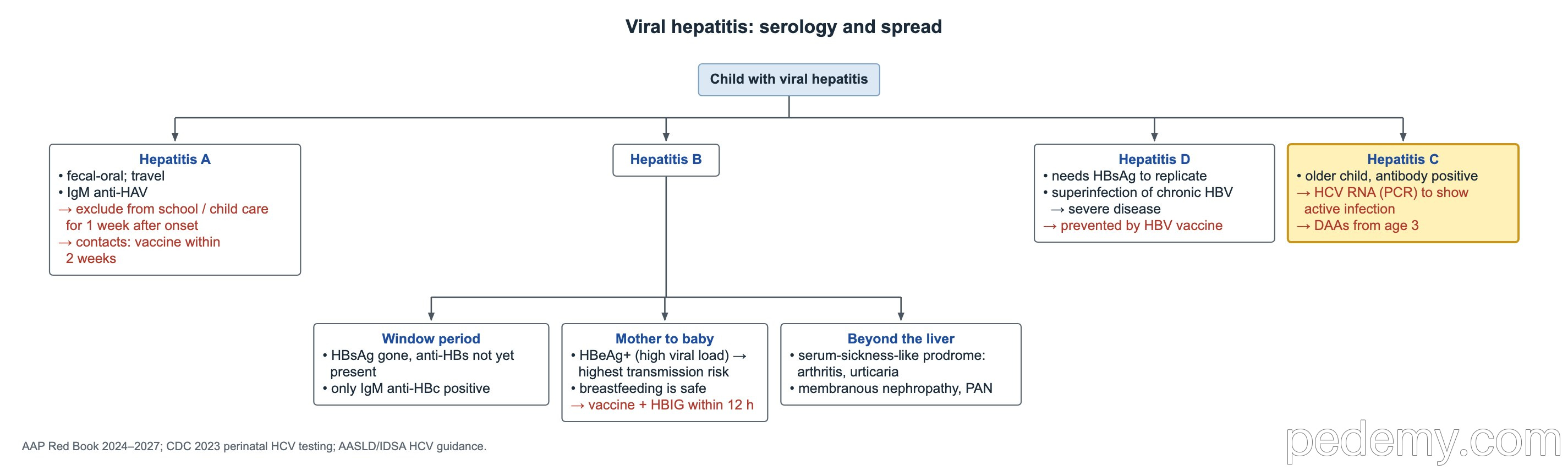
Viral hepatitis: serology and spread
Key points
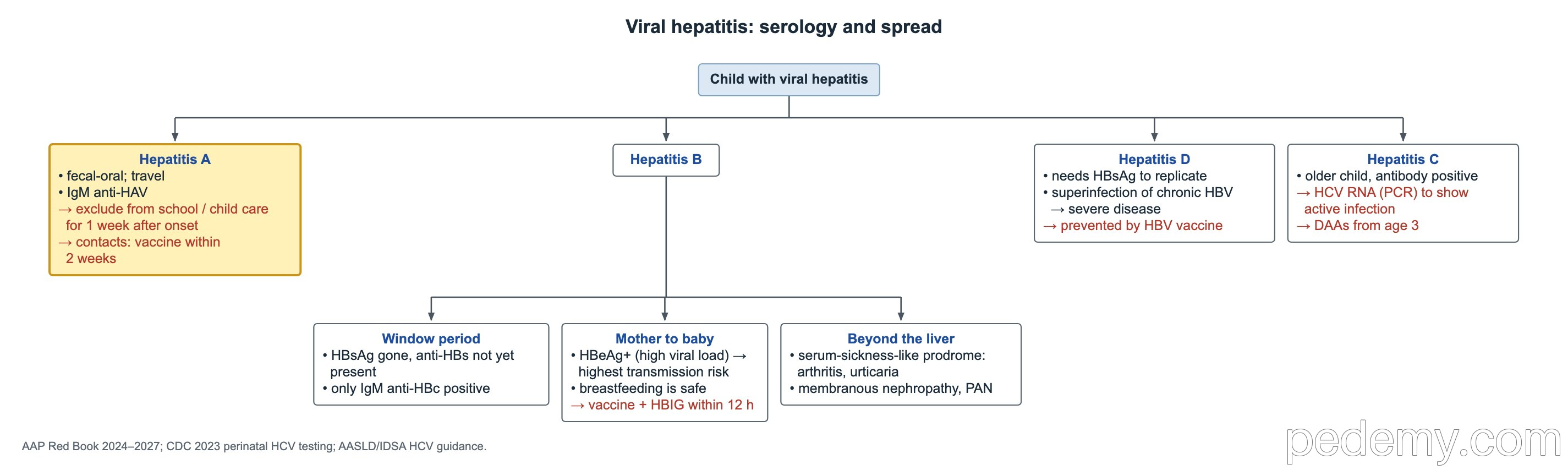
- Acute hepatitis A: IgM anti-HAV; keep the child out of school or child care for 1 week after illness onset.
- Hepatitis B is the only DNA virus among hepatitis A–E; infection in infancy becomes chronic in about 90%, in adults about 5%.
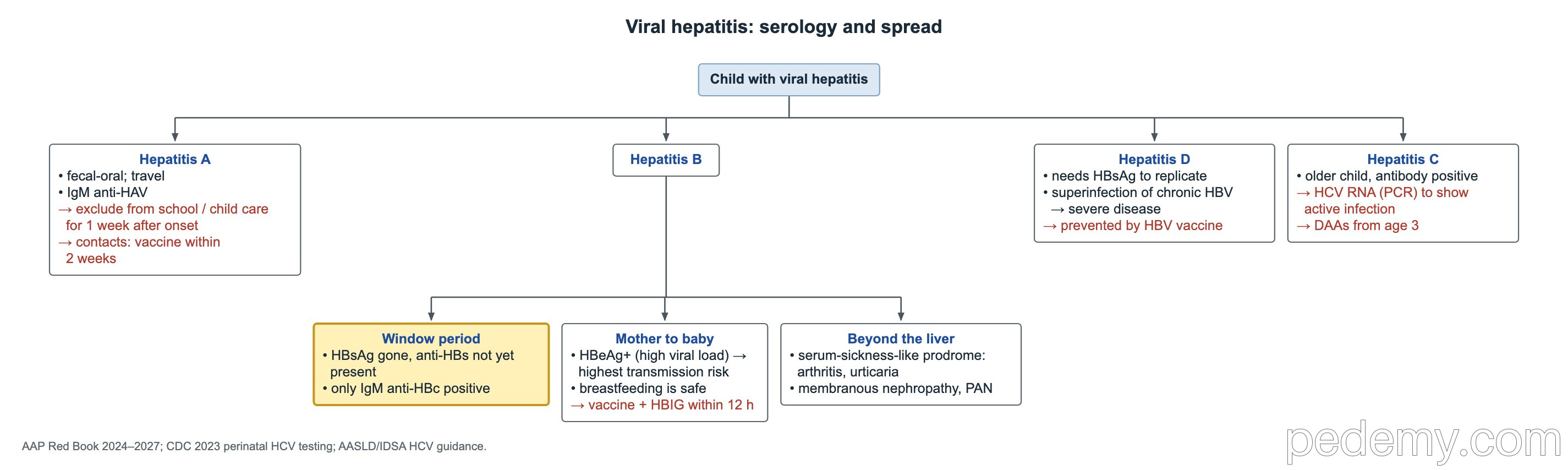
- HBV window period: HBsAg gone, anti-HBs not yet present; only IgM anti-HBc is positive.
- Infant of an HBsAg-positive mother: hepatitis B vaccine plus HBIG within 12 hours of birth; breastfeeding is safe.
- Maternal HBV DNA >200,000 IU/mL: tenofovir for the mother from 28–32 weeks.
- Perinatally HCV-exposed infant: HCV RNA test (NAT) at 2–6 months; DAAs cure chronic HCV from age 3.
- Autoimmune hepatitis: high AST/ALT and IgG; type 1 ANA and anti-smooth muscle, type 2 anti-LKM-1.
Hepatitis A
Hepatitis A spreads by the fecal-oral route, often linked to travel, child care or food. Young children are often without symptoms; older children and adults are more often jaundiced. It does not become chronic.
- Diagnosis: IgM anti-HAV in a child with compatible acute hepatitis.
- Exclude from school or child care for 1 week after illness onset (jaundice).
- Close contacts who are not immune: hepatitis A vaccine (or immune globulin when advised) within 2 weeks of exposure.
Hepatitis B serology
Hepatitis B is a DNA virus spread by blood, sex and from mother to baby. The younger the person at infection, the more likely it becomes chronic.
- Window period: HBsAg has cleared, anti-HBs has not appeared; IgM anti-HBc shows the infection. HBV DNA may still be detectable.
- Outside the liver: a serum-sickness-like prodrome with symmetric arthritis or arthralgia and urticaria; later membranous nephropathy and polyarteritis nodosa.
| Marker | Meaning |
|---|---|
| HBsAg | Current infection, acute or chronic |
| Anti-HBs | Immunity, from recovery or vaccine |
| IgM anti-HBc | Recent (acute) infection; the only positive marker in the window period |
| Total anti-HBc | Past or current infection; never from vaccine |
| HBeAg | High viral load and high infectivity |
Hepatitis B from mother to baby
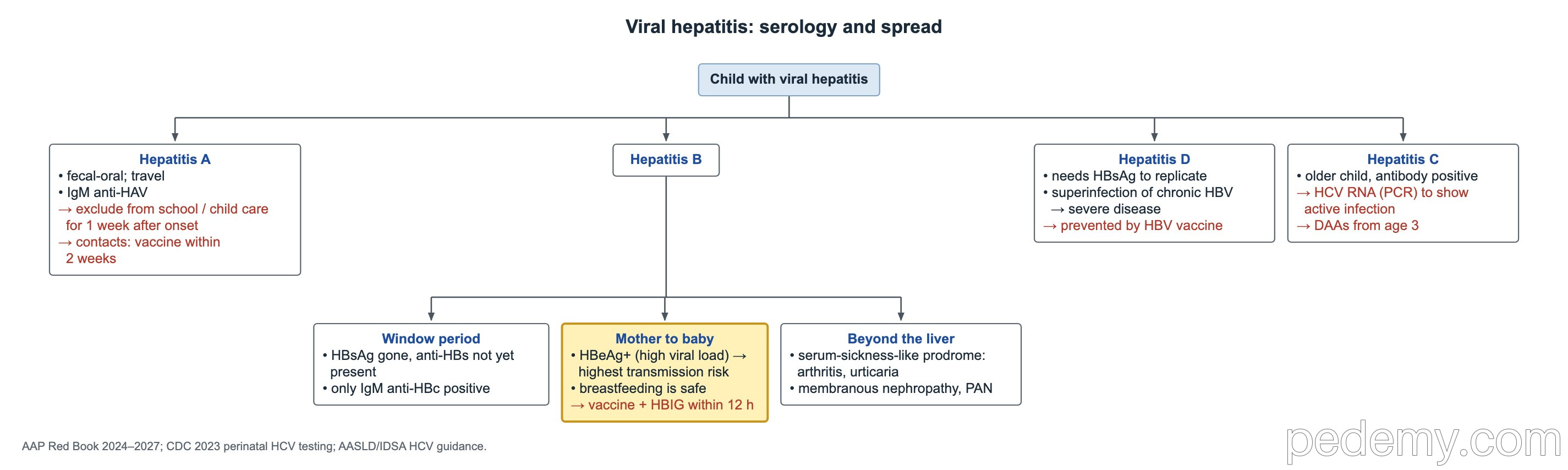
- Maternal HBeAg positivity (high viral load) is the strongest risk factor for passing HBV to the baby.
- Infant of an HBsAg-positive mother: hepatitis B vaccine plus HBIG within 12 hours of birth, then complete the series and test the infant after it.
- Mother with HBV DNA >200,000 IU/mL: add tenofovir from 28–32 weeks of pregnancy.
- Breastfeeding is safe.
- About 90% of infants infected at birth develop chronic infection, compared with about 5% of infected adults.
Hepatitis D
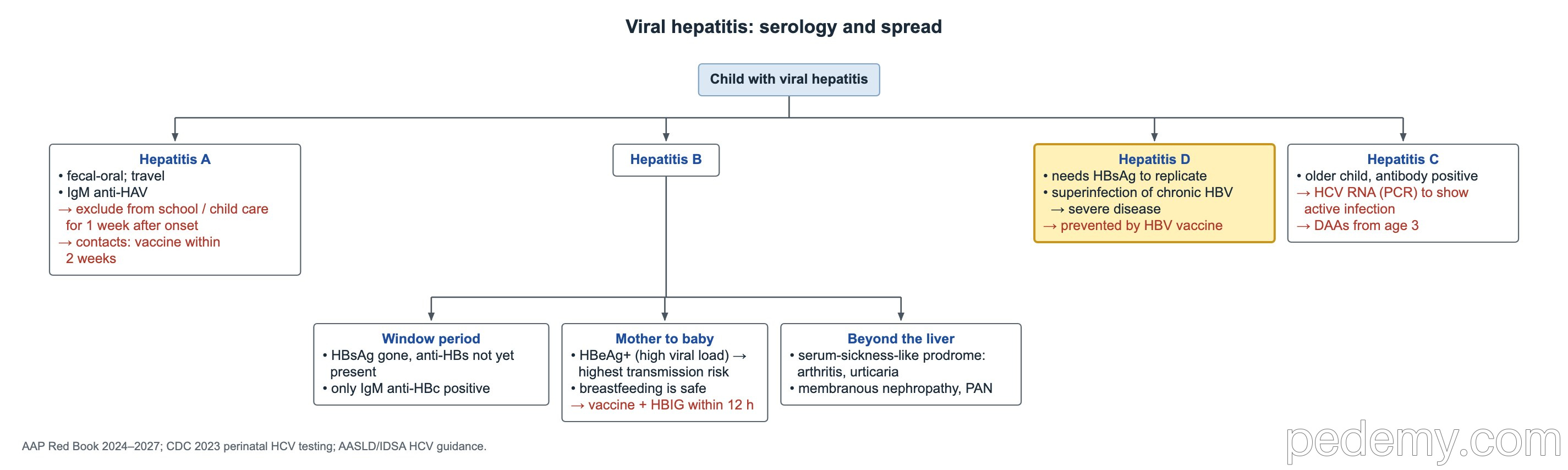
Hepatitis D is a defective virus that needs HBsAg to replicate, so it causes disease only with hepatitis B. Superinfection of a child who already has chronic HBV causes the most severe disease. Hepatitis B vaccine prevents hepatitis D.
Hepatitis C in older children
Hepatitis C is blood-borne and often becomes chronic. In children it is usually acquired at birth; in teens, injection drug use is the main risk.
- A positive HCV antibody shows exposure. Order HCV RNA (PCR) to show active infection.
- Direct-acting antiviral regimens cure chronic HCV and are recommended from age 3 years, with age- and weight-appropriate dosing.
The HCV-exposed infant
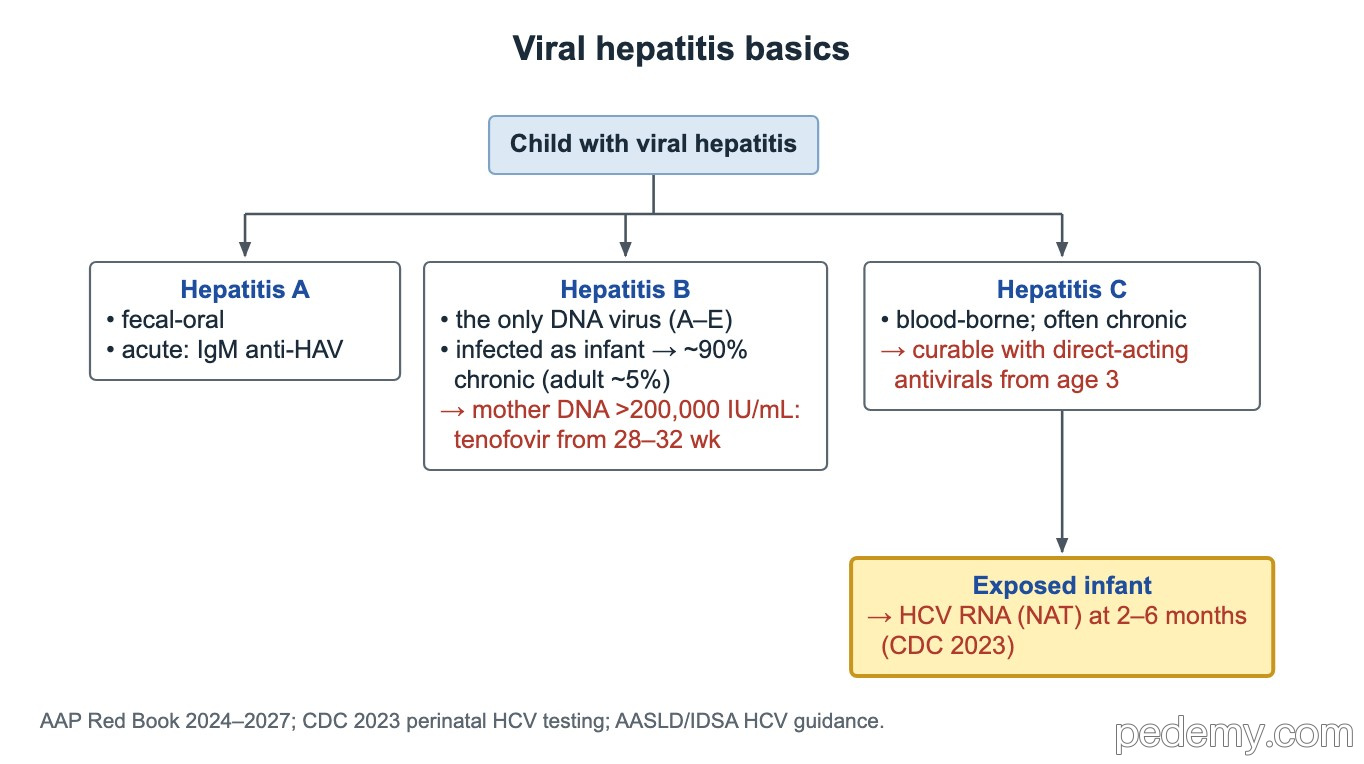
About 6–7% of perinatally exposed infants acquire HCV. Maternal antibody crosses the placenta, so antibody tests in young infants mislead.
- Test all perinatally exposed infants with a nucleic acid test (NAT) for HCV RNA at 2–6 months (CDC 2023).
- Undetectable HCV RNA at or after 2 months: no further follow-up unless clinically needed.
- Detectable HCV RNA: refer to a clinician with pediatric hepatitis C expertise.
- Never tested: HCV RNA at 7–17 months; anti-HCV with reflex RNA from 18 months.
When viral tests are negative: autoimmune hepatitis
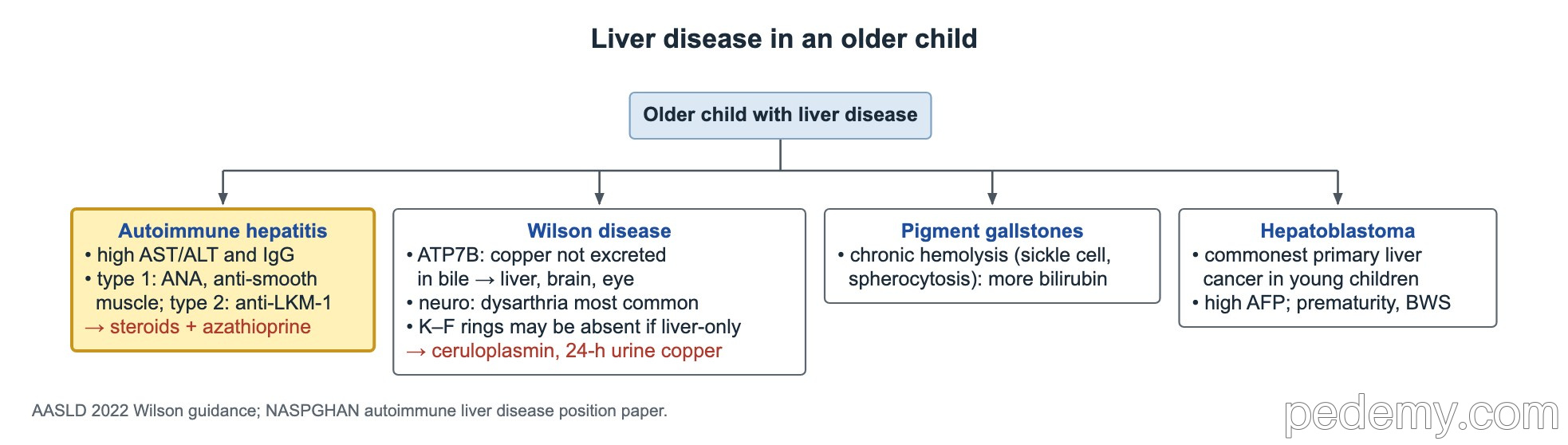
Think of autoimmune hepatitis in a teen girl with hepatitis, negative viral tests and a high total protein. The high protein is polyclonal IgG.
- Type 1: ANA and/or anti-smooth muscle antibody; usually adolescents.
- Type 2: anti-LKM-1; younger children, often more acute.
- Treatment: corticosteroids plus azathioprine.
- Check Wilson disease in any child over about 3–5 years with unexplained hepatitis.
Common questions
When can a child with hepatitis A go back to school?
One week after the illness began (onset of jaundice).
What is the window period in hepatitis B?
The gap after HBsAg clears and before anti-HBs appears. Only IgM anti-HBc is positive, so it is the test that shows the infection.
How do you test a baby born to a mother with hepatitis C?
With an HCV RNA nucleic acid test at 2–6 months of age, not an antibody test.
Study this topic
Sources
- CDC 2023: Hepatitis C testing among perinatally exposed infants and children (MMWR)
- AASLD 2018: Hepatitis B guidance (Hepatology)
- ESPGHAN 2018: Pediatric autoimmune liver disease position statement (JPGN)
Written for Pedemy in our own words from the sources above; checked November 2026. For education only, not medical advice; check doses and local protocols before treating a patient. Pedemy is independent and not affiliated with or endorsed by the organizations cited.