

Main decision tree
Chemotherapy: asparaginase, vincas, topo, heart and lungs
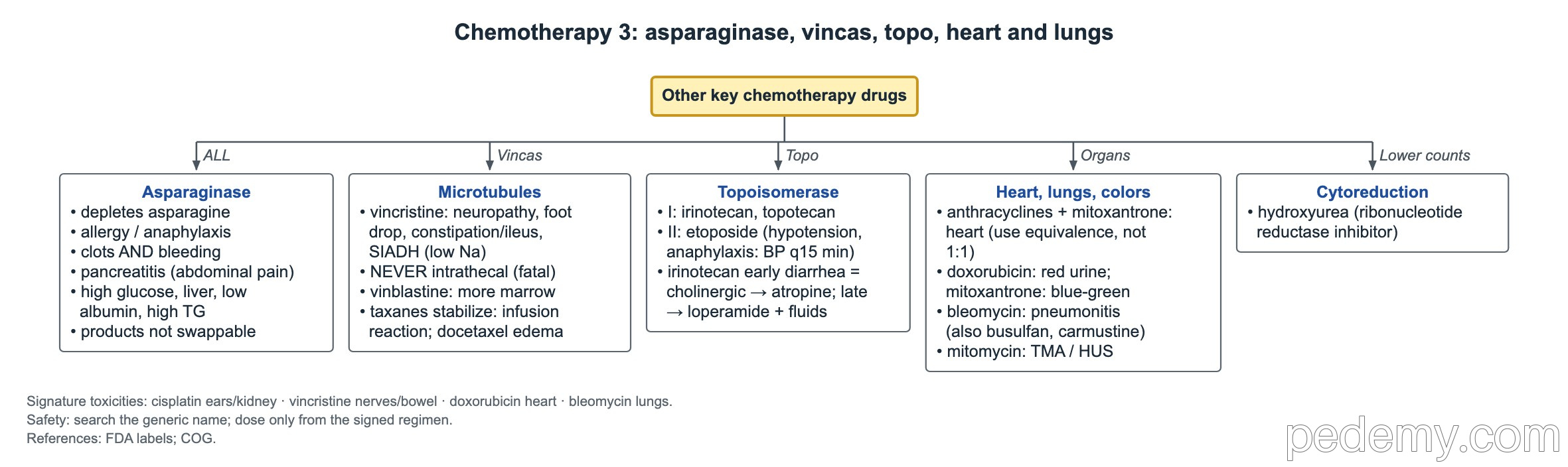
Key points
- Signature toxicities: cisplatin → kidney and ears; vincristine → nerves and bowel; doxorubicin → heart; bleomycin → lungs.
- Cyclophosphamide and ifosfamide cause hemorrhagic cystitis; mesna and hydration protect the bladder.
- Cisplatin causes more nephrotoxicity and hearing loss than carboplatin.
- Vincristine and vinblastine are IV only: intrathecal vinca alkaloid is fatal.
- Vincristine: constipation that can progress to ileus, peripheral neuropathy, and SIADH with hyponatremia.
- Asparaginase: hypersensitivity, pancreatitis, thrombosis and bleeding, hyperglycemia and liver injury.
- High-dose methotrexate is followed by leucovorin rescue timed to methotrexate levels.
Signature toxicities at a glance
| Drug | Main toxicity to remember |
|---|---|
| Cisplatin | Kidney injury with magnesium wasting, hearing loss |
| Vincristine | Neuropathy, constipation and ileus, SIADH |
| Doxorubicin and other anthracyclines | Cardiomyopathy |
| Bleomycin | Pneumonitis and pulmonary fibrosis |
| Cyclophosphamide, ifosfamide | Hemorrhagic cystitis |
| Asparaginase | Allergy, pancreatitis, clots and bleeding |
| Mercaptopurine, thioguanine | Myelosuppression, liver toxicity |
| Methotrexate (high dose) | Kidney injury, mucositis, marrow suppression |
Cyclophosphamide, ifosfamide and mesna
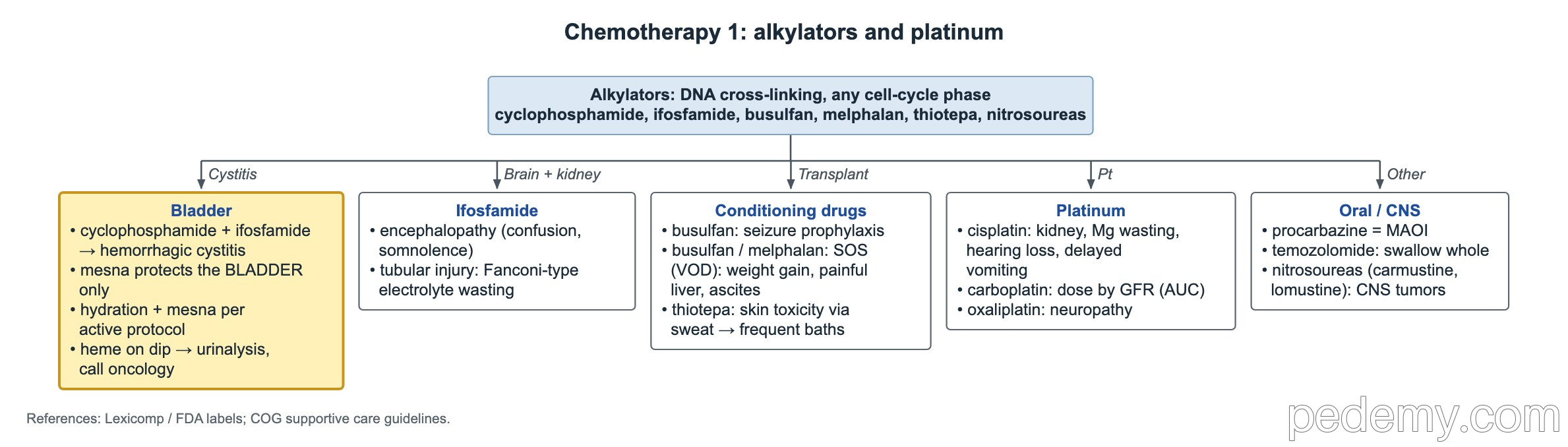
Cyclophosphamide and ifosfamide produce acrolein, a urinary metabolite that injures the bladder lining and causes hemorrhagic cystitis. Hydration and mesna, which binds acrolein in the urine, protect the bladder. Mesna protects only the bladder.
Blood on a urine dipstick during these drugs needs a urinalysis and a call to the oncology team. Ifosfamide can also cause encephalopathy and proximal tubular injury with Fanconi-type electrolyte wasting.
Cisplatin and carboplatin
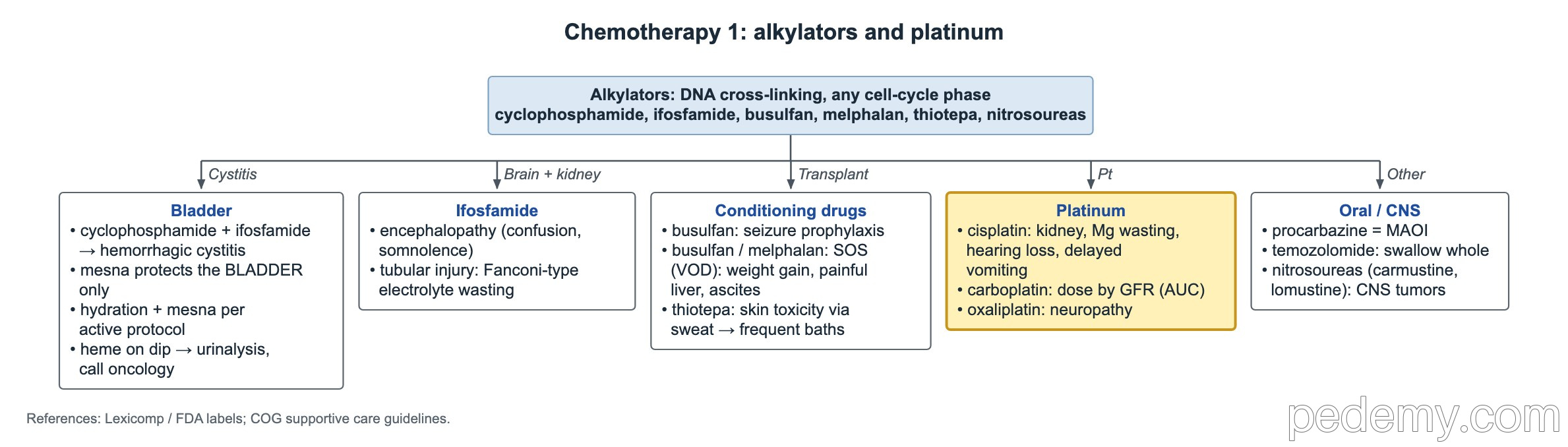
- Cisplatin: kidney injury with magnesium and other electrolyte wasting, high-frequency hearing loss and delayed vomiting.
- Cisplatin causes more nephrotoxicity and ototoxicity than carboplatin.
- Carboplatin is dosed by kidney function and causes more marrow suppression.
- Children on cisplatin need hearing tests and close electrolyte checks.
Anthracyclines and bleomycin
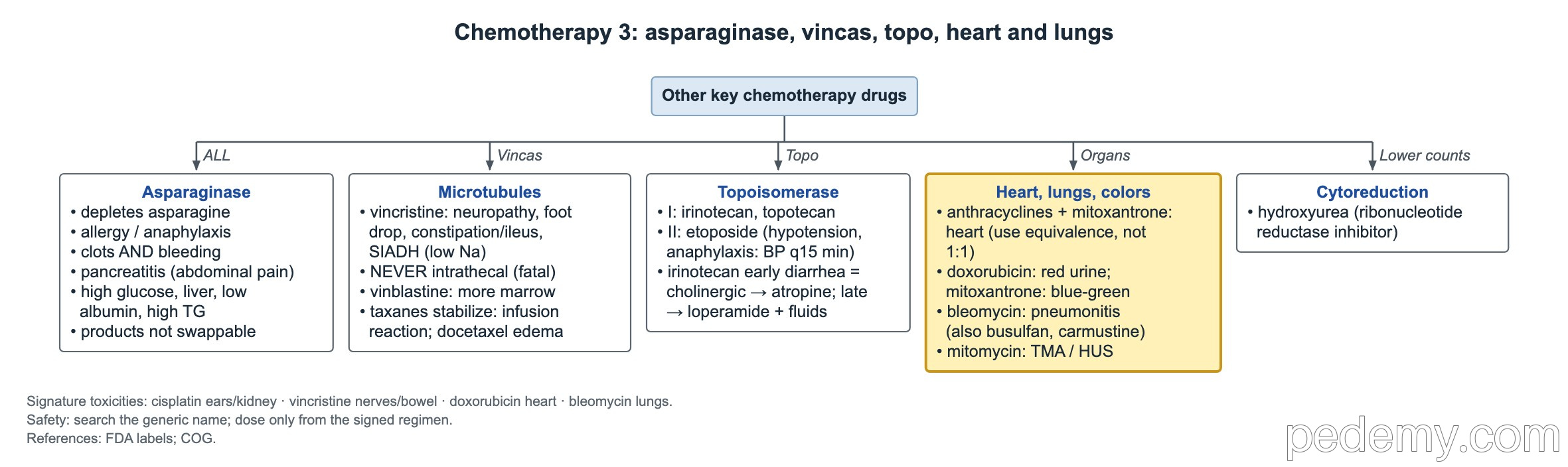
Anthracyclines (doxorubicin, daunorubicin, idarubicin) and the related drug mitoxantrone cause dose-related cardiomyopathy, which can appear years after treatment. Survivors need lifelong echocardiogram surveillance based on cumulative dose and chest radiation. Doxorubicin turns urine red; mitoxantrone turns it blue-green.
Bleomycin causes pneumonitis that can progress to pulmonary fibrosis. A new dry cough or shortness of breath after bleomycin needs evaluation for this toxicity.
Vincristine and vinblastine
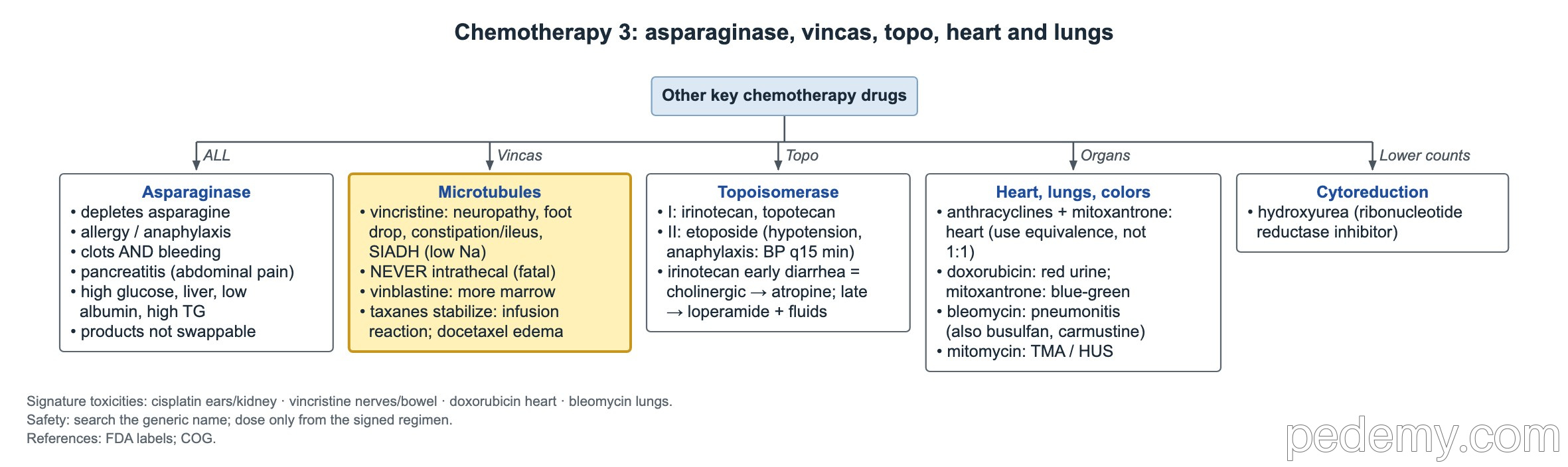
- IV only: intrathecal vincristine or vinblastine is a fatal route error.
- Constipation is common and can progress to ileus: prevent it actively with a bowel regimen.
- Peripheral neuropathy: jaw pain, foot drop, loss of reflexes.
- SIADH with hyponatremia.
- Vinblastine causes more marrow suppression than vincristine.
Asparaginase
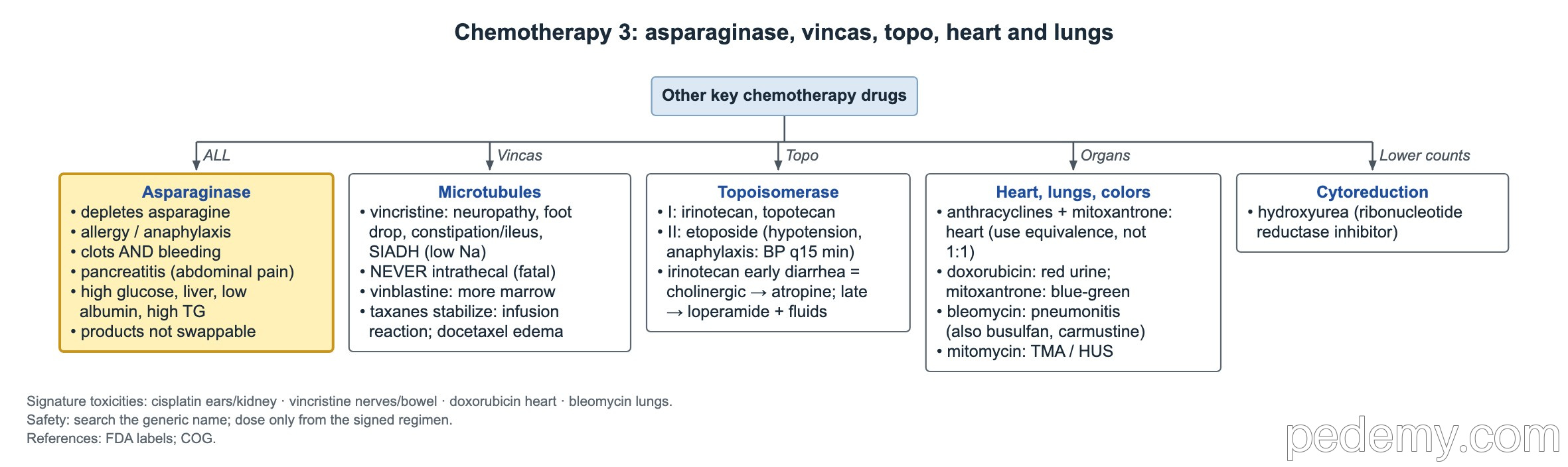
Asparaginase depletes circulating asparagine. Leukemic lymphoblasts cannot make enough of their own, so their protein synthesis fails. It is a core drug for acute lymphoblastic leukemia (ALL).
- Hypersensitivity, including anaphylaxis, during or after a dose: watch closely during administration.
- Pancreatitis: severe abdominal pain or vomiting after pegaspargase needs lipase and imaging.
- Both thrombosis and bleeding: it lowers synthesis of both procoagulant and anticoagulant proteins.
- Hyperglycemia and liver toxicity; low albumin and high triglycerides can also occur.
- Asparaginase products are not interchangeable dose for dose.
Methotrexate, mercaptopurine and thioguanine
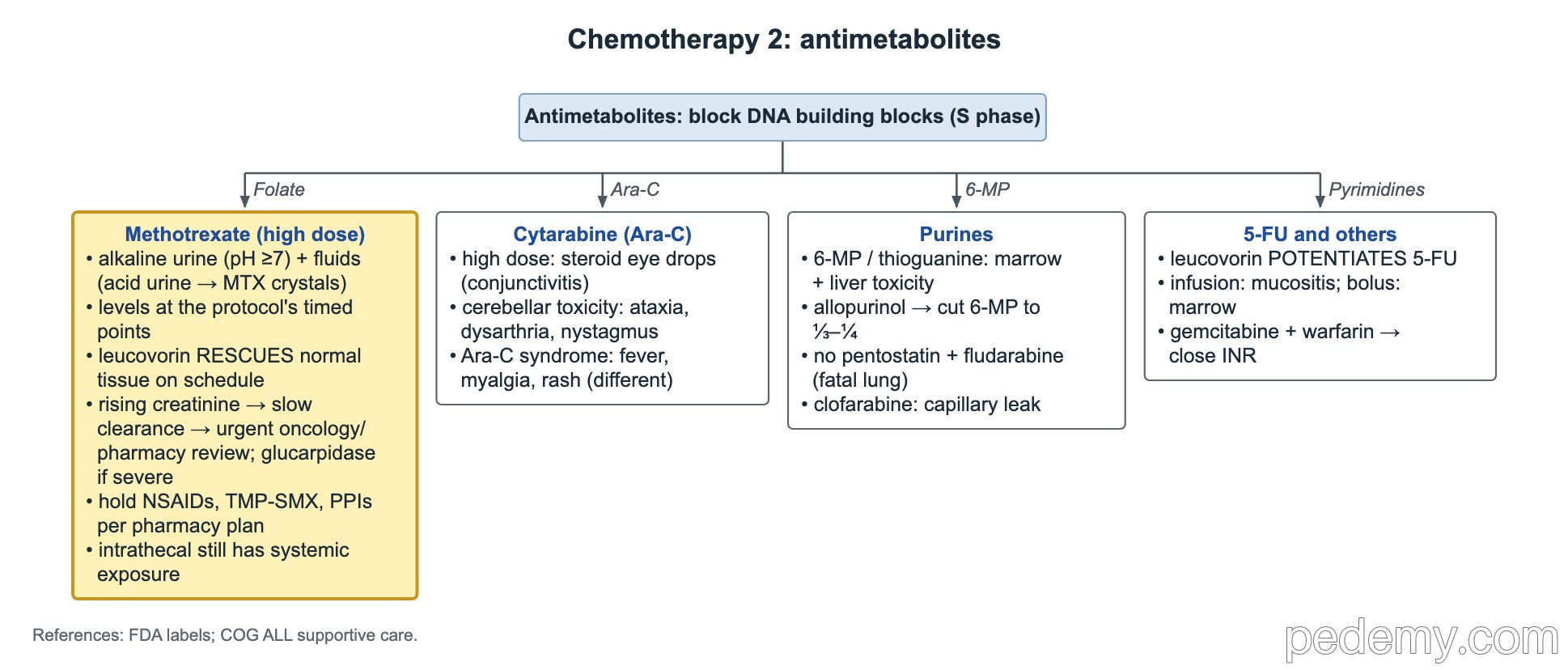
After high-dose methotrexate, leucovorin (folinic acid) rescues normal cells. It is given on a schedule set by the time since the infusion and the methotrexate levels. Fluids and alkaline urine prevent methotrexate crystals in the kidney; a rising creatinine means slow clearance and needs urgent review, and glucarpidase is used for severe toxicity.
Mercaptopurine (6-MP) and thioguanine cause myelosuppression and liver toxicity. Allopurinol raises 6-MP levels, so the 6-MP dose must be cut sharply if both are given.
Common questions
Which chemotherapy drugs cause hemorrhagic cystitis?
Cyclophosphamide and ifosfamide. Hydration and mesna protect the bladder.
Why is leucovorin given after methotrexate?
Leucovorin supplies reduced folate to normal cells, rescuing them from high-dose methotrexate. Timing and dose follow methotrexate levels.
Why must vincristine never be given intrathecally?
Intrathecal vincristine causes ascending paralysis and is almost always fatal. Vinca alkaloids are for IV use only.
Study this topic
Sources
- IGHG: Cardiomyopathy surveillance for survivors of childhood cancer (Lancet Oncol 2015)
- Ponte di Legno consensus definitions of acute toxic effects of ALL therapy (Lancet Oncol 2016)
- NCI: Chemotherapy to treat cancer
Written for Pedemy in our own words from the sources above; checked November 2026. For education only, not medical advice; check doses and local protocols before treating a patient. Pedemy is independent and not affiliated with or endorsed by the organizations cited.