

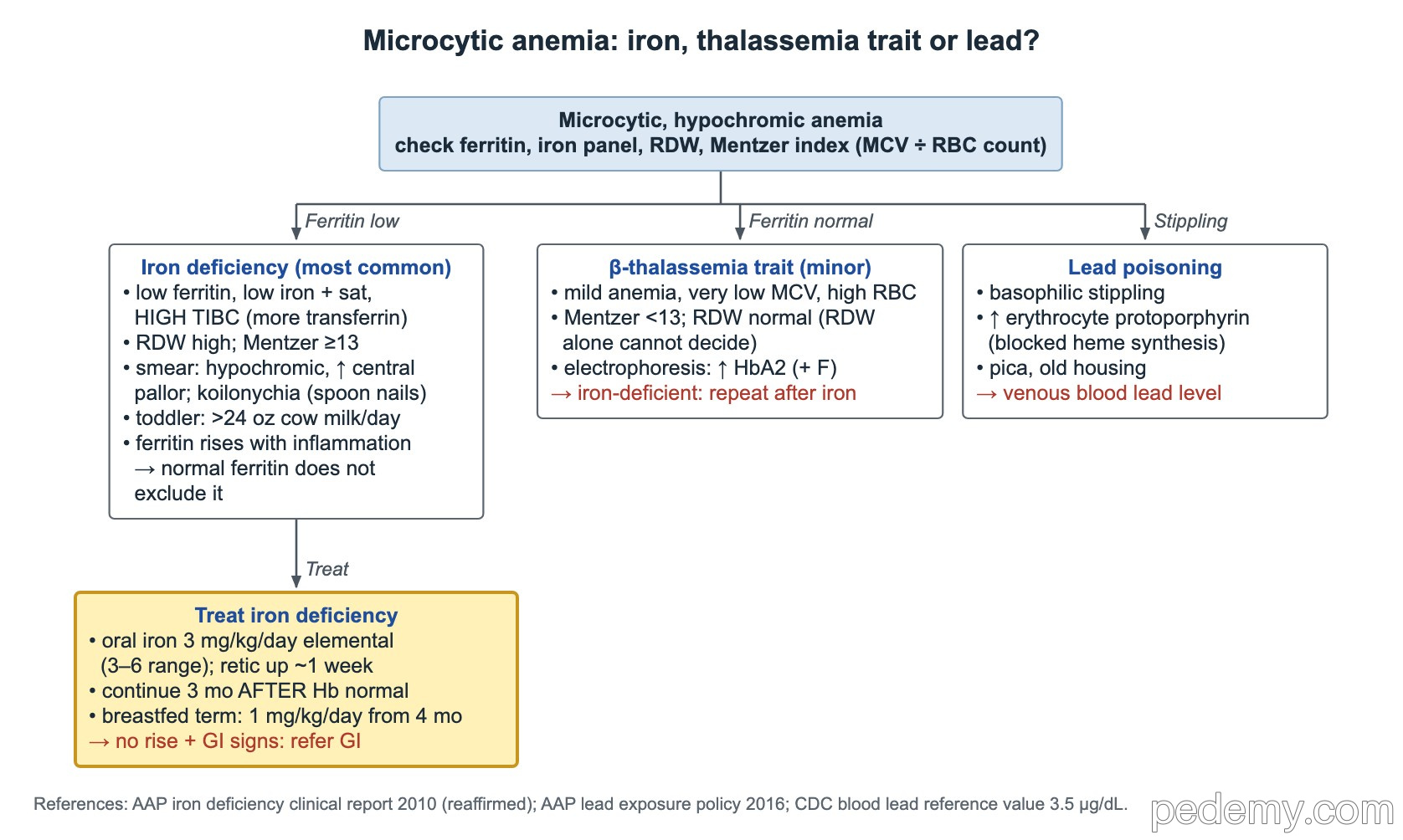
Main decision tree
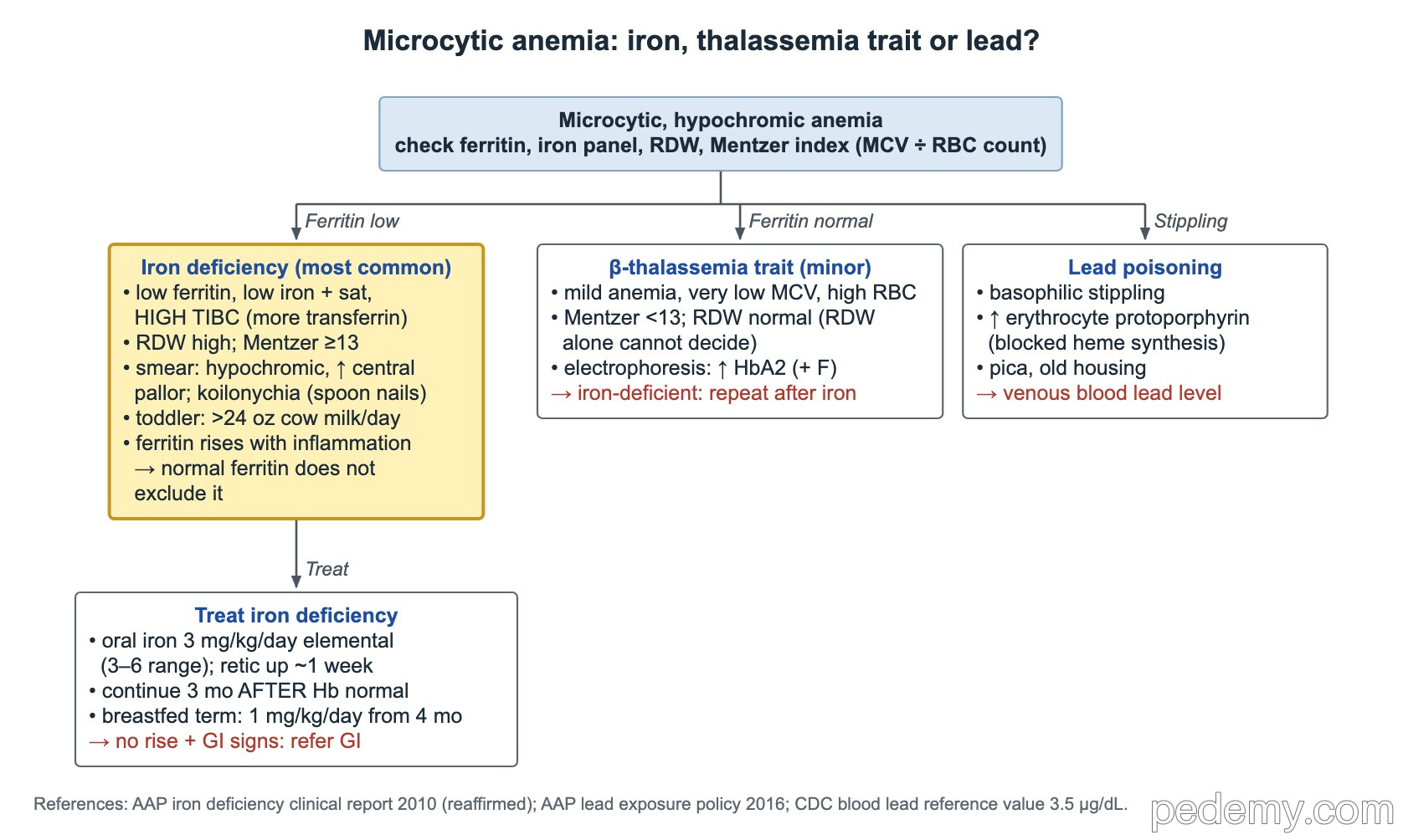
Microcytic anemia: iron, thalassemia trait or lead?
Key points
- Iron deficiency: low ferritin, low iron and transferrin saturation, high TIBC, high RDW, Mentzer index ≥13.
- Ferritin is an acute-phase reactant: a normal ferritin during infection or inflammation does not exclude iron deficiency.
- Mentzer index = MCV ÷ RBC count; <13 suggests thalassemia trait. β-thalassemia trait has a raised HbA2.
- Lead poisoning: basophilic stippling and raised erythrocyte protoporphyrin; CDC blood lead reference value is 3.5 µg/dL.
- Treatment: elemental iron 3 mg/kg/day (range 3–6); continue for at least 3 months after hemoglobin is normal.
- Exclusively breastfed term infants: iron drops 1 mg/kg/day from 4 months until iron-rich foods are eaten.
- Toddlers: limit cow milk to about 16–24 oz a day.
Diagnose iron deficiency
Iron deficiency is the most common cause of microcytic anemia. The body makes more transferrin when iron is short, so the TIBC rises while ferritin, serum iron and transferrin saturation fall.
- Labs: low ferritin, low serum iron and saturation, high TIBC.
- RDW is usually high and the Mentzer index is ≥13.
- Smear: microcytic, hypochromic red cells with more central pallor.
- Exam: pallor; spoon-shaped nails (koilonychia) in long-standing deficiency.
- Classic toddler cause: too much cow milk. Milk is low in iron, crowds out iron-rich foods and can cause hidden GI blood loss.
- Ferritin rises with infection and inflammation, so a normal value then does not rule out iron deficiency.
- Soluble transferrin receptor is high in iron deficiency and normal in anemia of inflammation.
Preterm infants and other risk groups
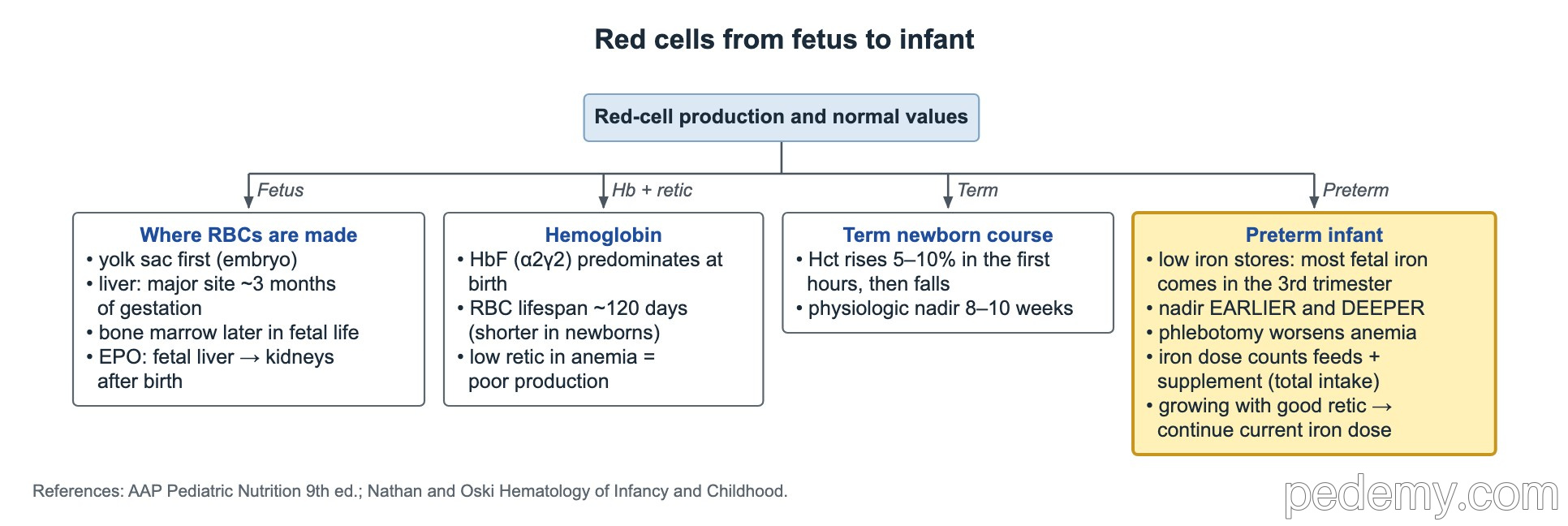
Most fetal iron is laid down in the third trimester, so preterm infants start life with low stores. They also have an earlier, deeper hemoglobin nadir, and frequent blood draws make anemia worse.
- Preterm infants: base the dose on total daily iron intake, counting both the supplement and the feeds.
- A growing preterm infant with a good reticulocyte response: keep giving the current iron dose.
- Other infants with low iron stores: infants of diabetic mothers and infants of mothers with iron-deficiency anemia; start iron early.
- Exclusively breastfed term infants: 1 mg/kg/day of iron drops from 4 months until they eat enough iron-rich foods.
- Avoid cow milk as the main drink before 12 months; after 12 months limit it to about 16–24 oz a day.
Iron deficiency or thalassemia trait?
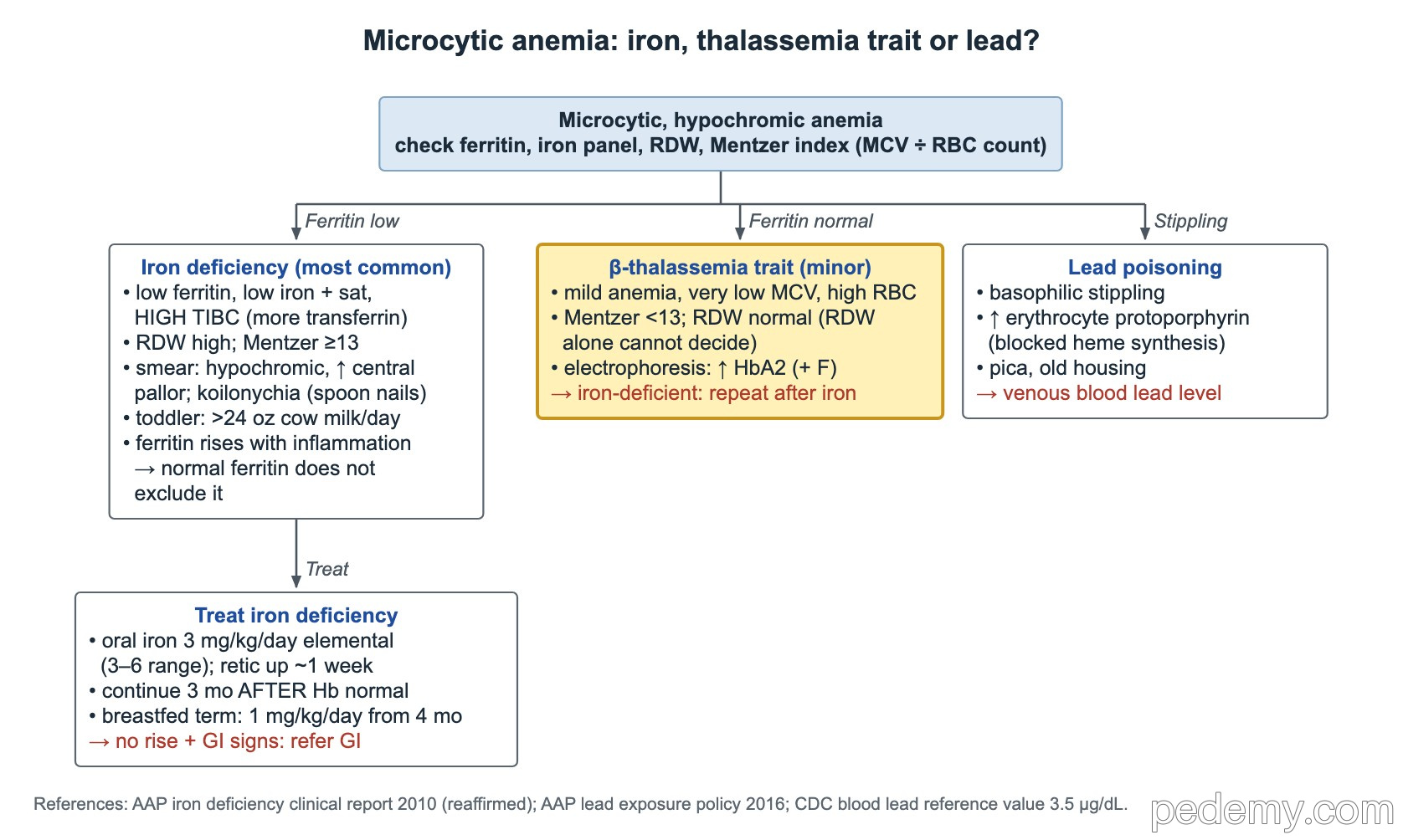
- A high RDW does not prove iron deficiency: the ranges overlap, so RDW alone cannot decide.
- Iron deficiency lowers HbA2 and can hide β-thalassemia trait: repeat electrophoresis after iron repletion.
- Thalassemia trait needs no iron; give genetic counseling.
| Feature | Iron deficiency | β-thalassemia trait |
|---|---|---|
| Anemia | Mild to severe | Mild |
| MCV | Low | Very low for the degree of anemia |
| RBC count | Low | High or normal |
| Mentzer index (MCV ÷ RBC) | ≥13 | <13 |
| RDW | Often high | Often normal |
| Ferritin | Low | Normal |
| Electrophoresis | Normal (HbA2 may be low) | Raised HbA2, sometimes raised HbF |
Lead poisoning
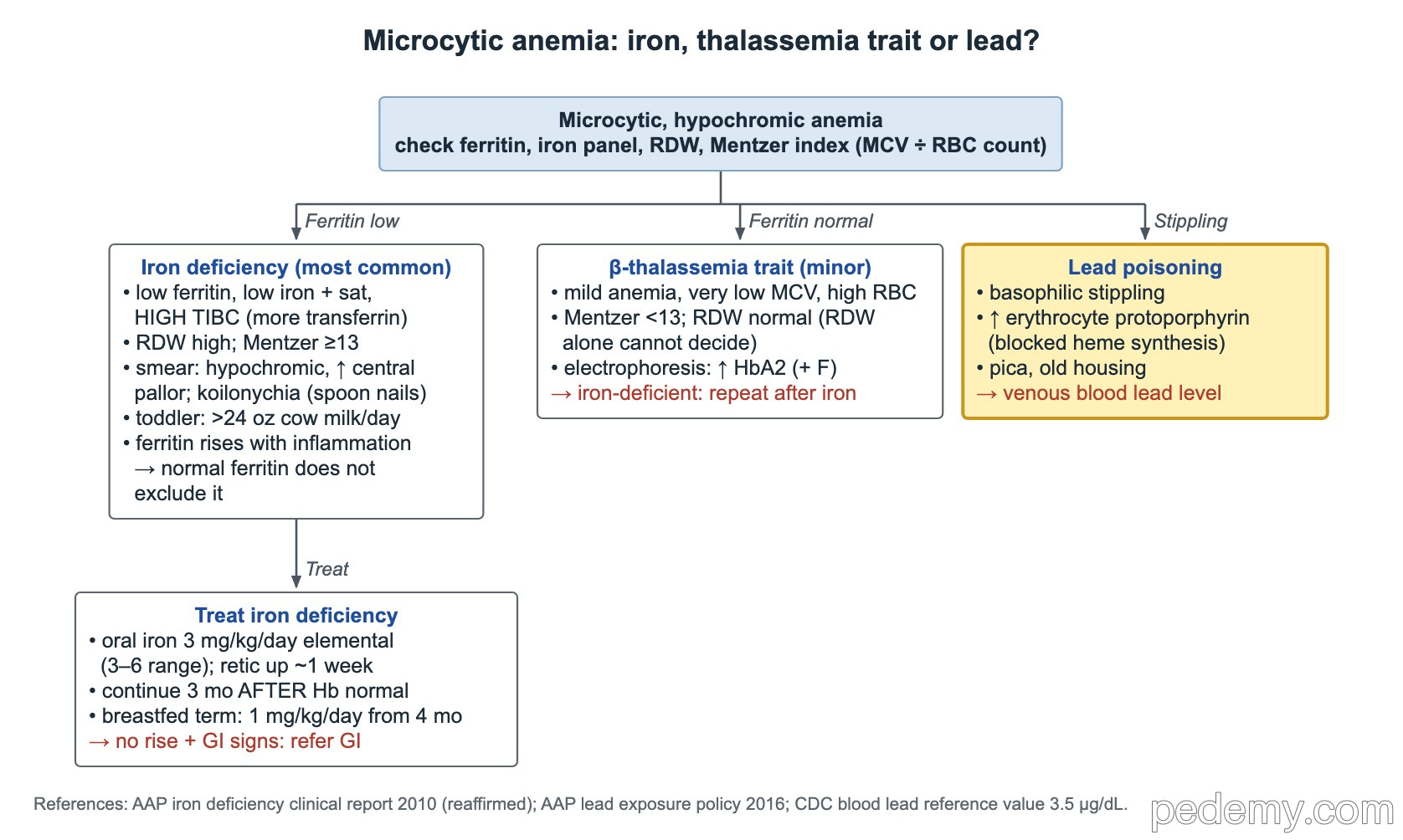
- Think of lead in a toddler with pica, old housing (paint before 1978) or other exposure.
- Smear: basophilic stippling. Lab: raised erythrocyte protoporphyrin, because lead blocks heme synthesis.
- Confirm a raised capillary result with a venous blood lead level.
- CDC blood lead reference value: 3.5 µg/dL.
- Iron deficiency increases lead absorption, so check and treat both.
Treat iron deficiency
- Oral elemental iron 3 mg/kg/day (range 3–6 mg/kg/day), for example as ferrous sulfate.
- Give it between meals, not with milk; vitamin C helps absorption.
- Reticulocytes rise in about 1 week; hemoglobin should rise by about 1 g/dL within 4 weeks.
- Continue for at least 3 months after hemoglobin is normal to refill stores, then recheck hemoglobin and ferritin.
- Cut cow milk to about 16–24 oz a day and add iron-rich foods.
When oral iron does not work
If hemoglobin does not rise after about a month of treatment, ask why before changing the iron.
- Nonadherence or wrong dose: the most common reasons.
- Ongoing blood loss: GI bleeding, heavy menstrual bleeding.
- Malabsorption: celiac disease, inflammatory bowel disease, other duodenal disease.
- Wrong diagnosis: thalassemia trait, anemia of inflammation, lead poisoning.
- A school-age child with a good diet and iron deficiency: look for a cause such as GI blood loss or malabsorption.
- Slow growth or loose stools with poor response: refer to GI and test for celiac disease and IBD.
- IV iron if oral iron fails or cannot be absorbed (for example duodenal disease).
Common questions
How much iron do you give a child with iron deficiency anemia?
Usually 3 mg/kg/day of elemental iron (range 3–6 mg/kg/day), continued for at least 3 months after the hemoglobin is normal.
How do you tell iron deficiency from thalassemia trait?
Thalassemia trait has a high RBC count, a Mentzer index (MCV ÷ RBC) under 13, normal ferritin and, in β-thalassemia trait, a raised HbA2.
How much cow milk should a toddler drink?
About 16–24 oz a day. More than that raises the risk of iron deficiency.
Study this topic
Sources
- AAP Clinical Report: Diagnosis and prevention of iron deficiency in infants and young children (Pediatrics 2010)
- CDC MMWR 2021: Updated blood lead reference value of 3.5 µg/dL
- GeneReviews: Beta-thalassemia (NCBI Bookshelf)
Written for Pedemy in our own words from the sources above; checked November 2026. For education only, not medical advice; check doses and local protocols before treating a patient. Pedemy is independent and not affiliated with or endorsed by the organizations cited.