

Main decision tree
Marrow failure and neutropenia
Key points
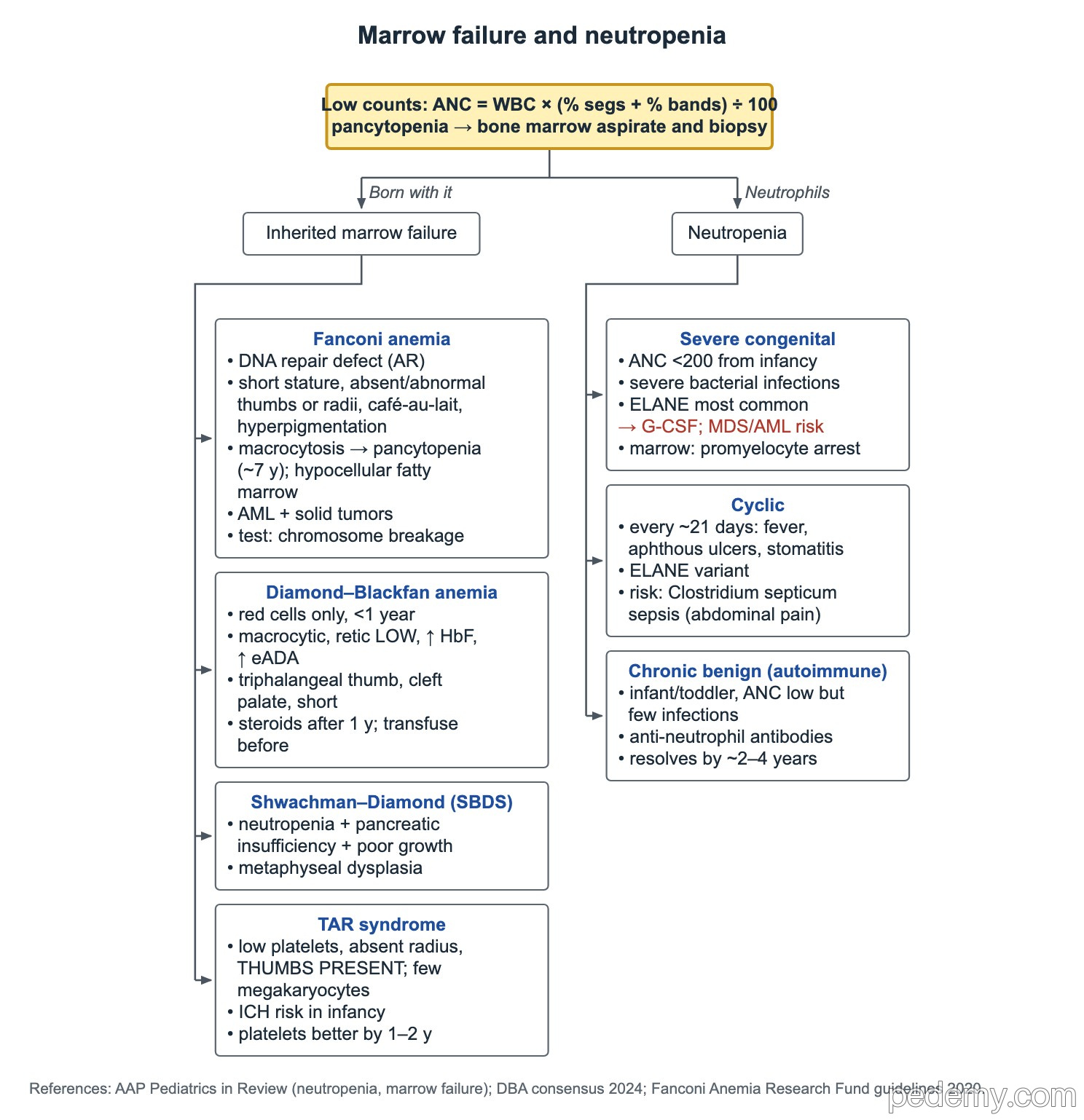
- ANC = WBC × (% segmented neutrophils + % bands) ÷ 100.
- Unexplained pancytopenia → bone marrow aspirate and biopsy.
- Severe congenital neutropenia: severe infections from infancy, ELANE most common, promyelocyte maturation arrest; G-CSF.
- Cyclic neutropenia: fever and mouth ulcers about every 21 days (ELANE); Clostridium septicum sepsis is the feared infection.
- Diamond–Blackfan anemia: macrocytic anemia with low retic in the first year, raised HbF and eADA, thumb anomalies; steroids only after age 1.
- Fanconi anemia: short stature, thumb or radius anomalies, café-au-lait spots, pancytopenia; chromosome breakage test (DEB or MMC).
- TAR syndrome: absent radii with thumbs present; low platelets worst in infancy, better by 1–2 years.
Approach to low counts
Count the absolute neutrophil count (ANC): WBC × (% segmented neutrophils + % bands) ÷ 100. Neutropenia is usually graded mild at 1,000–1,500/µL, moderate at 500–1,000/µL and severe below 500/µL.
A child with unexplained pancytopenia needs a bone marrow aspirate and biopsy to look for marrow failure, leukemia or infiltration.
| Low line | Inherited disorders to consider |
|---|---|
| Neutrophils only | Severe congenital neutropenia, cyclic neutropenia, Shwachman–Diamond syndrome |
| Red cells only | Diamond–Blackfan anemia |
| Platelets only | TAR syndrome (and other inherited thrombocytopenias) |
| All lines | Fanconi anemia and other marrow failure syndromes |
Severe congenital neutropenia and benign neutropenia
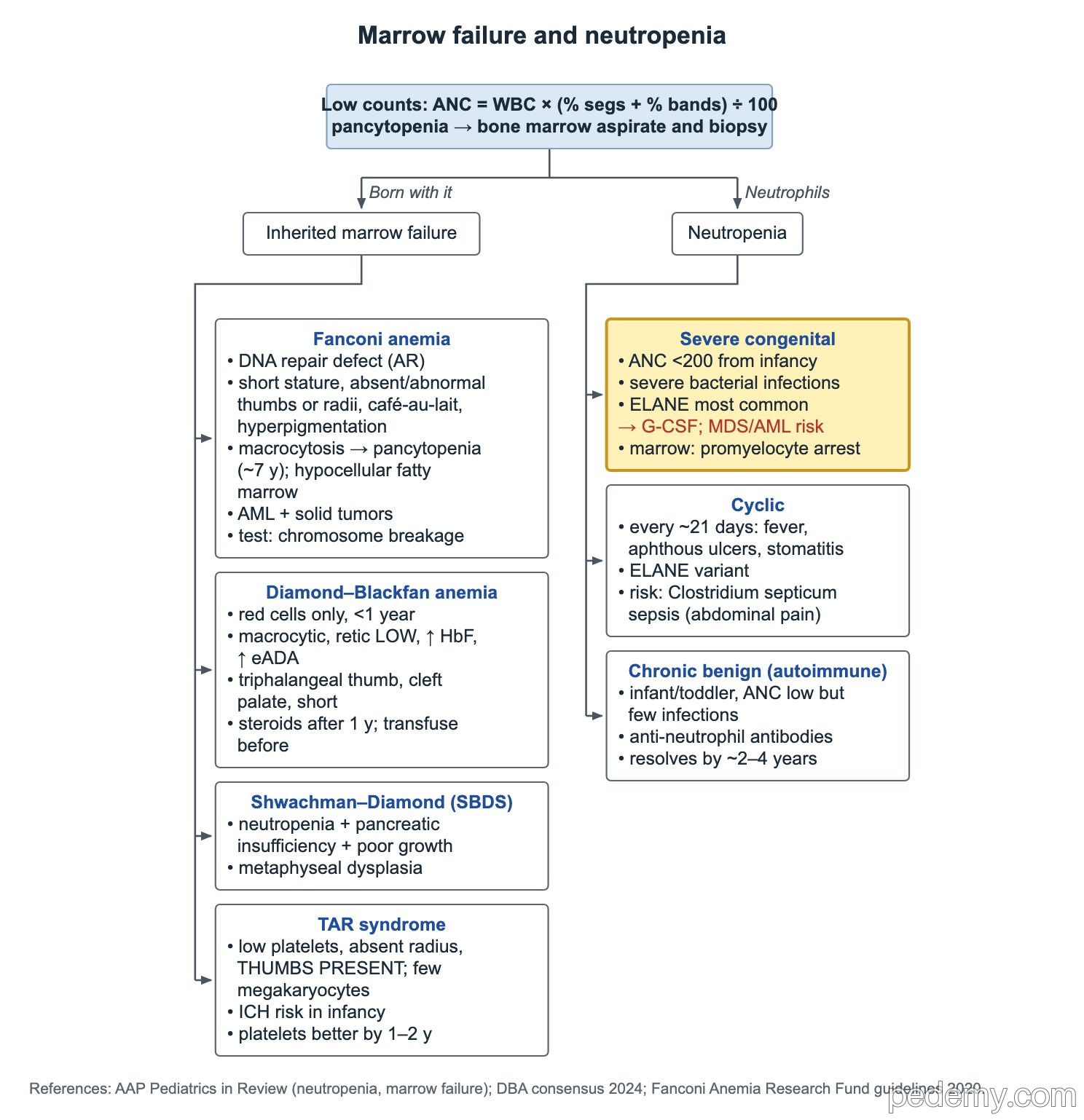
- Severe congenital neutropenia: ANC often <200/µL from infancy with severe bacterial infections (omphalitis, abscesses, pneumonia).
- Most common gene: ELANE.
- Marrow: maturation arrest at the promyelocyte or myelocyte stage.
- Treatment: G-CSF (filgrastim). There is a long-term risk of MDS and AML; stem cell transplant for poor responders.
- Chronic benign (autoimmune) neutropenia of infancy: low ANC but few serious infections, caused by antineutrophil antibodies; usually resolves by about 2–4 years.
Cyclic neutropenia
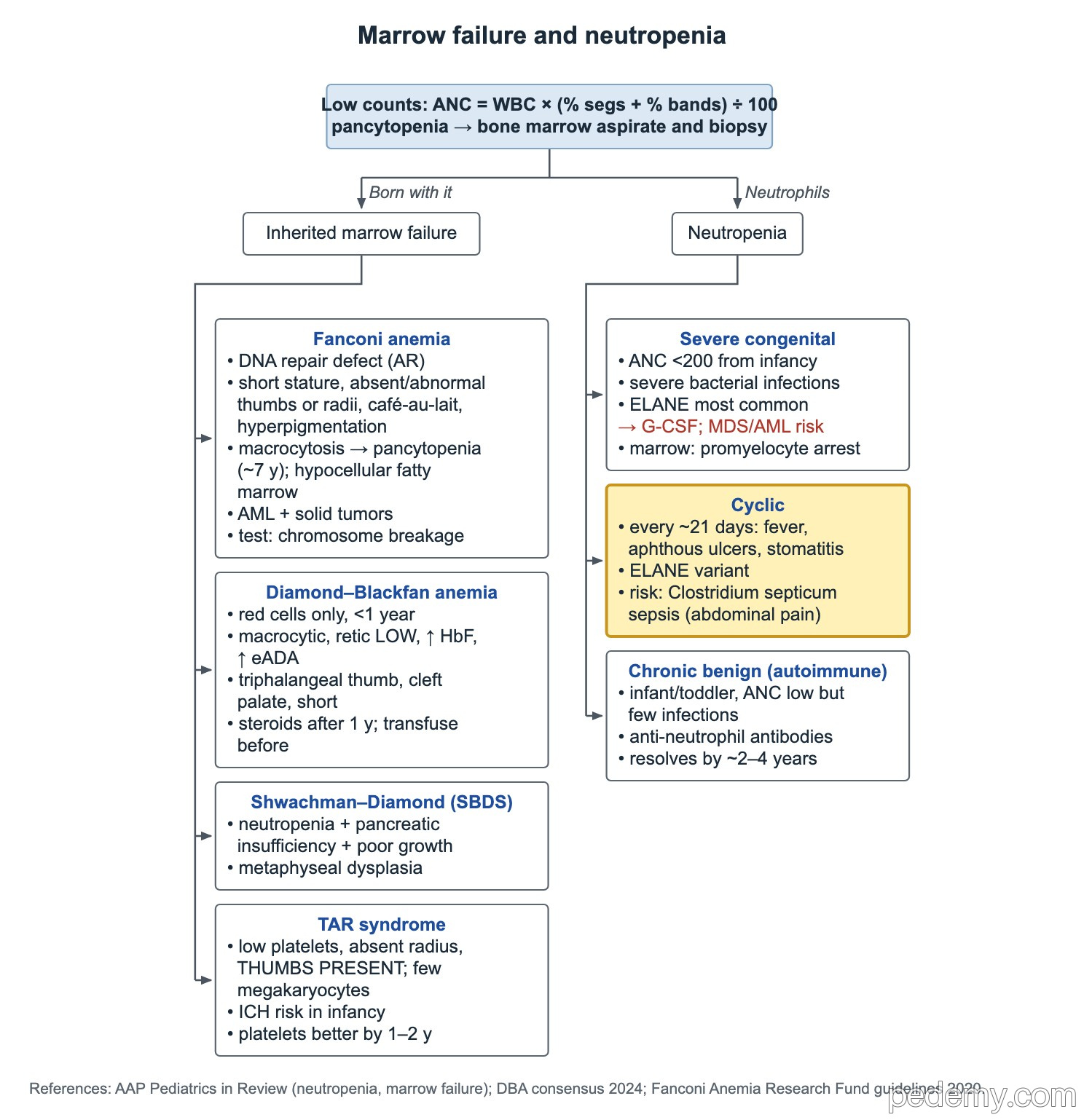
- Fever, aphthous mouth ulcers and stomatitis recur about every 21 days, with a very low ANC during each episode.
- Cause: an ELANE variant.
- Diagnosis: serial CBCs (for example 2–3 times a week for 6 weeks) show the cycle.
- Feared infection at the low point: Clostridium septicum sepsis, often with abdominal pain.
- G-CSF (filgrastim) prevents infections.
Diamond–Blackfan anemia
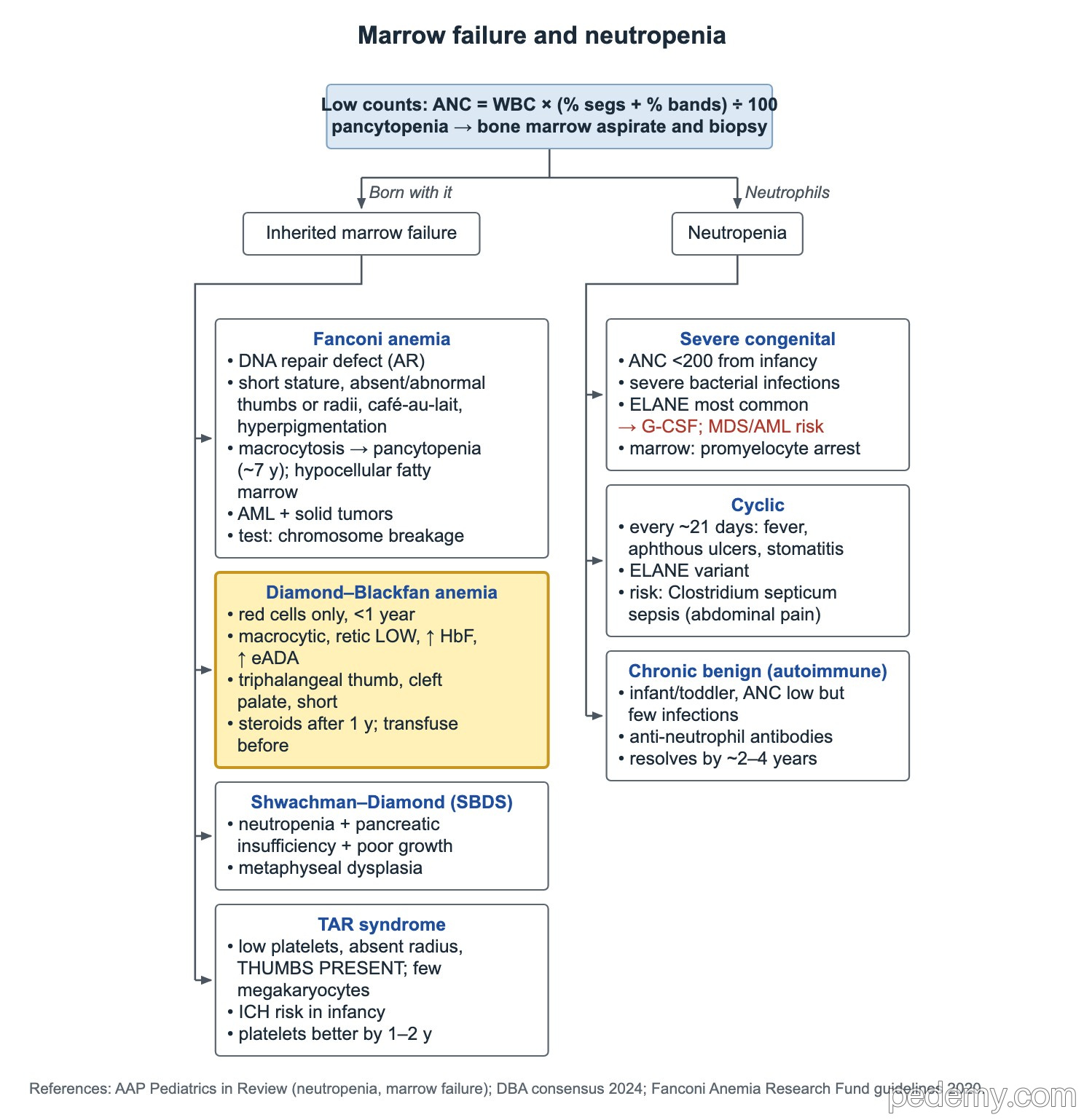
Diamond–Blackfan anemia is a congenital failure of red cell production, usually caused by a ribosomal protein gene variant. It presents in the first year of life.
- Labs: macrocytic anemia with a very low reticulocyte count; WBC and platelets are normal.
- Supporting tests: raised HbF and raised erythrocyte adenosine deaminase (eADA).
- Physical clues: triphalangeal thumb, cleft palate, short stature, heart and kidney anomalies.
- Treatment: red cell transfusions in infancy; a first steroid trial after age 1 year, under specialist care.
- 2024 international consensus: keep pre-transfusion hemoglobin at 9–10 g/dL, steroid maintenance at most 0.3 mg/kg/day of prednisone, start iron chelation early.
- Higher cancer risk (MDS, AML and solid tumors) needs lifelong surveillance.
Fanconi anemia
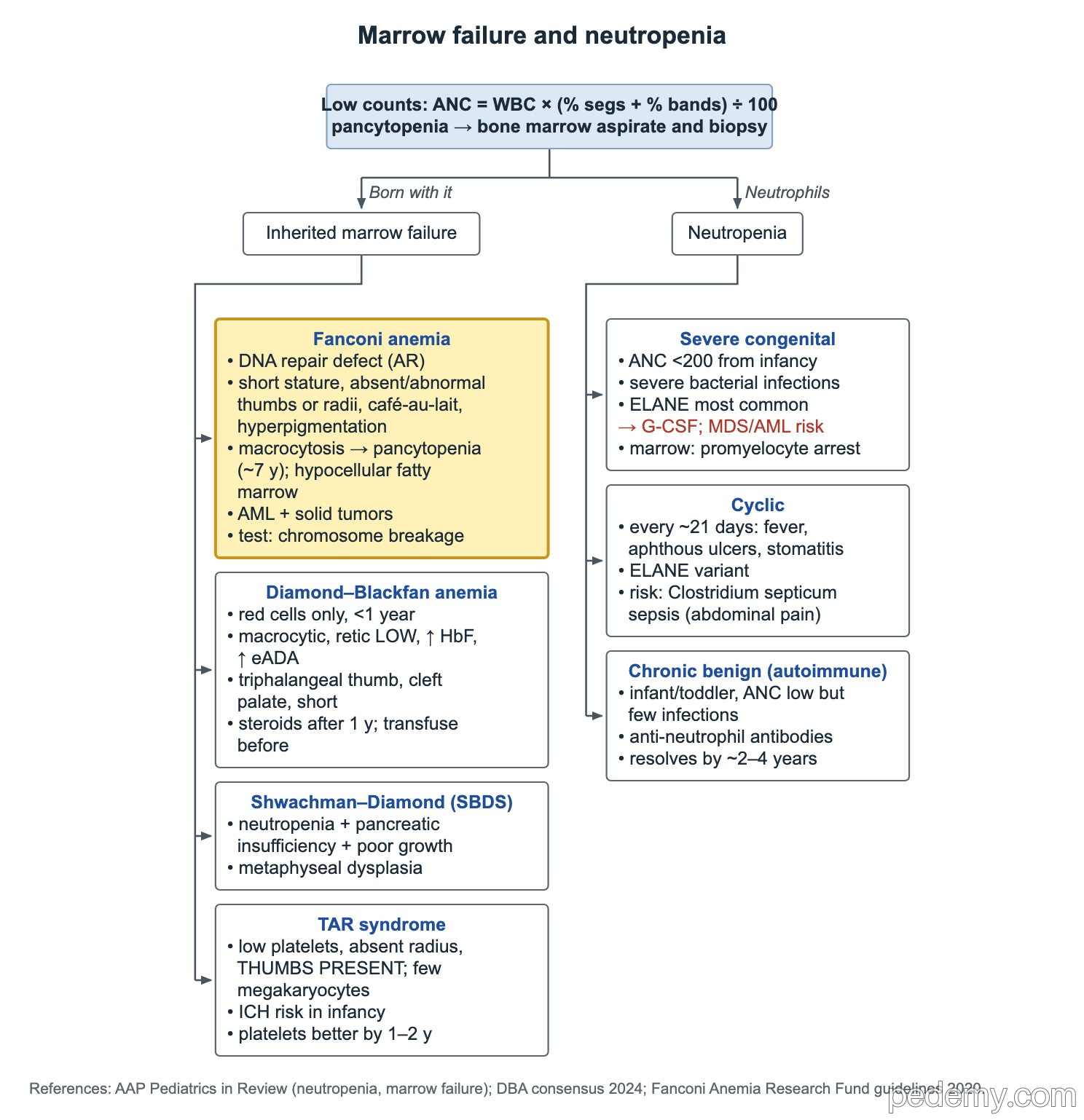
Fanconi anemia is a DNA repair disorder, mostly autosomal recessive. Marrow failure usually appears in school age, around 7 years.
- Physical clues: short stature, absent or abnormal thumbs or radii, café-au-lait spots and other pigment changes.
- Blood: macrocytosis first, then pancytopenia.
- Marrow: hypocellular with fatty replacement.
- Confirm: chromosome breakage test with diepoxybutane (DEB) or mitomycin C (MMC), then genetic testing.
- Cancer risk: AML and MDS, and solid tumors, especially head-and-neck squamous cell cancer.
Shwachman–Diamond syndrome
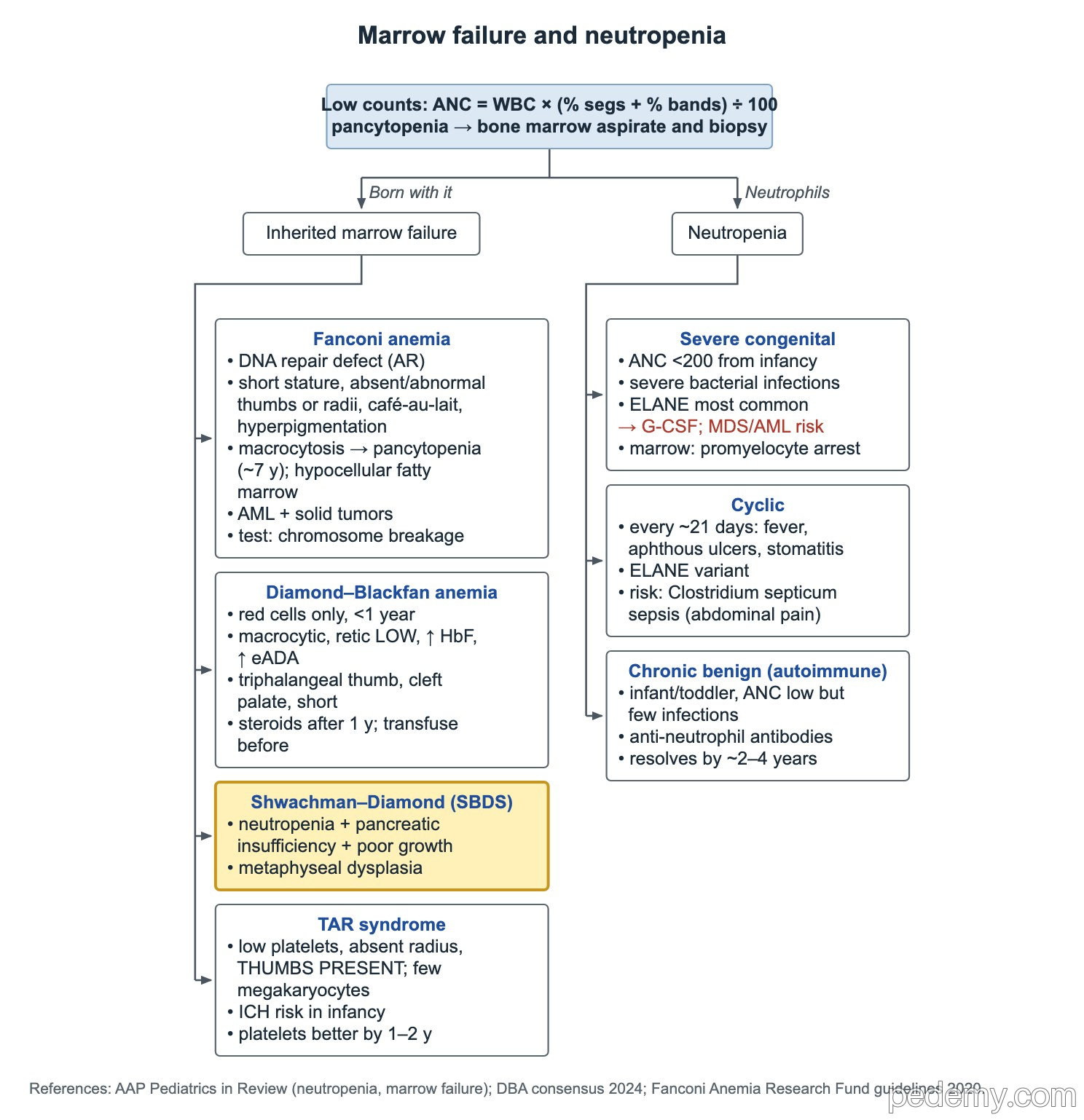
- Triad: neutropenia, exocrine pancreatic insufficiency and poor growth.
- Clue: greasy, fatty stools and recurrent infections with a normal sweat test (unlike cystic fibrosis).
- Gene: SBDS (autosomal recessive).
- Bone X-ray: metaphyseal dysplasia.
- Infections come from the neutropenia; there is also a risk of MDS and AML.
- Treatment: pancreatic enzymes and fat-soluble vitamins; G-CSF for serious infections.
TAR syndrome
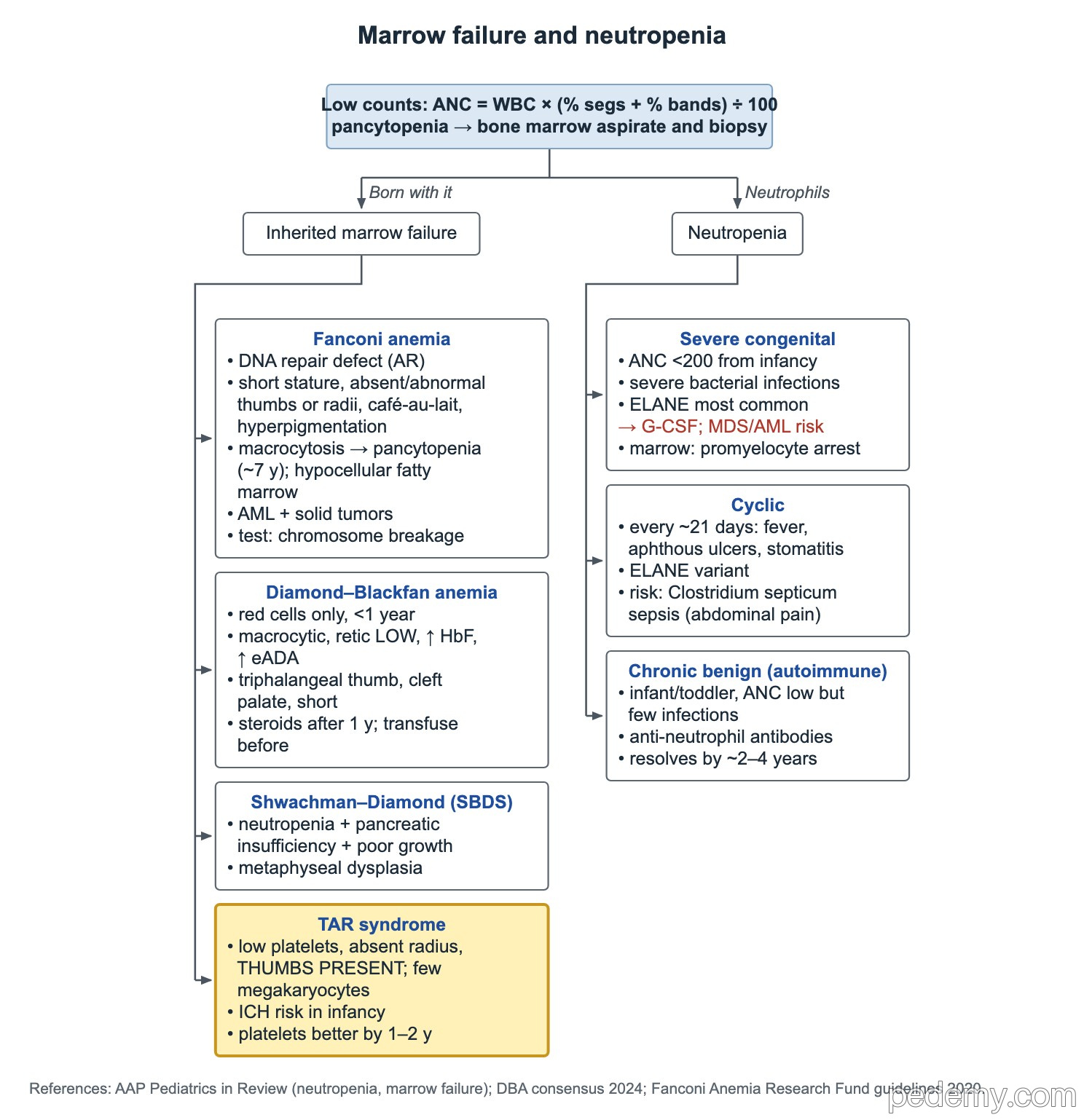
- Thrombocytopenia with absent radii but thumbs present. Absent or abnormal thumbs point to Fanconi anemia instead.
- Marrow: few megakaryocytes.
- Platelet counts are worst in infancy and improve by 1–2 years.
- Most urgent complication: intracranial hemorrhage in infancy; platelet transfusions for bleeding.
Common questions
How do you calculate the absolute neutrophil count?
Multiply the WBC by the percentage of segmented neutrophils plus bands, then divide by 100.
How do you tell TAR syndrome from Fanconi anemia?
In TAR syndrome the radii are absent but the thumbs are present, and only platelets are low. In Fanconi anemia the thumbs are often absent or abnormal and all cell lines fall later in childhood.
When are steroids started in Diamond–Blackfan anemia?
Usually after age 1 year, under a hematologist. Infants are supported with red cell transfusions until then.
Study this topic
Sources
- Diamond–Blackfan anaemia syndrome: international consensus statement (Lancet Haematology 2024)
- GeneReviews: Fanconi anemia (NCBI Bookshelf)
- GeneReviews: Thrombocytopenia absent radius syndrome (NCBI Bookshelf)
Written for Pedemy in our own words from the sources above; checked November 2026. For education only, not medical advice; check doses and local protocols before treating a patient. Pedemy is independent and not affiliated with or endorsed by the organizations cited.