

Main decision tree
Sickle cell disease: complications by system
Key points
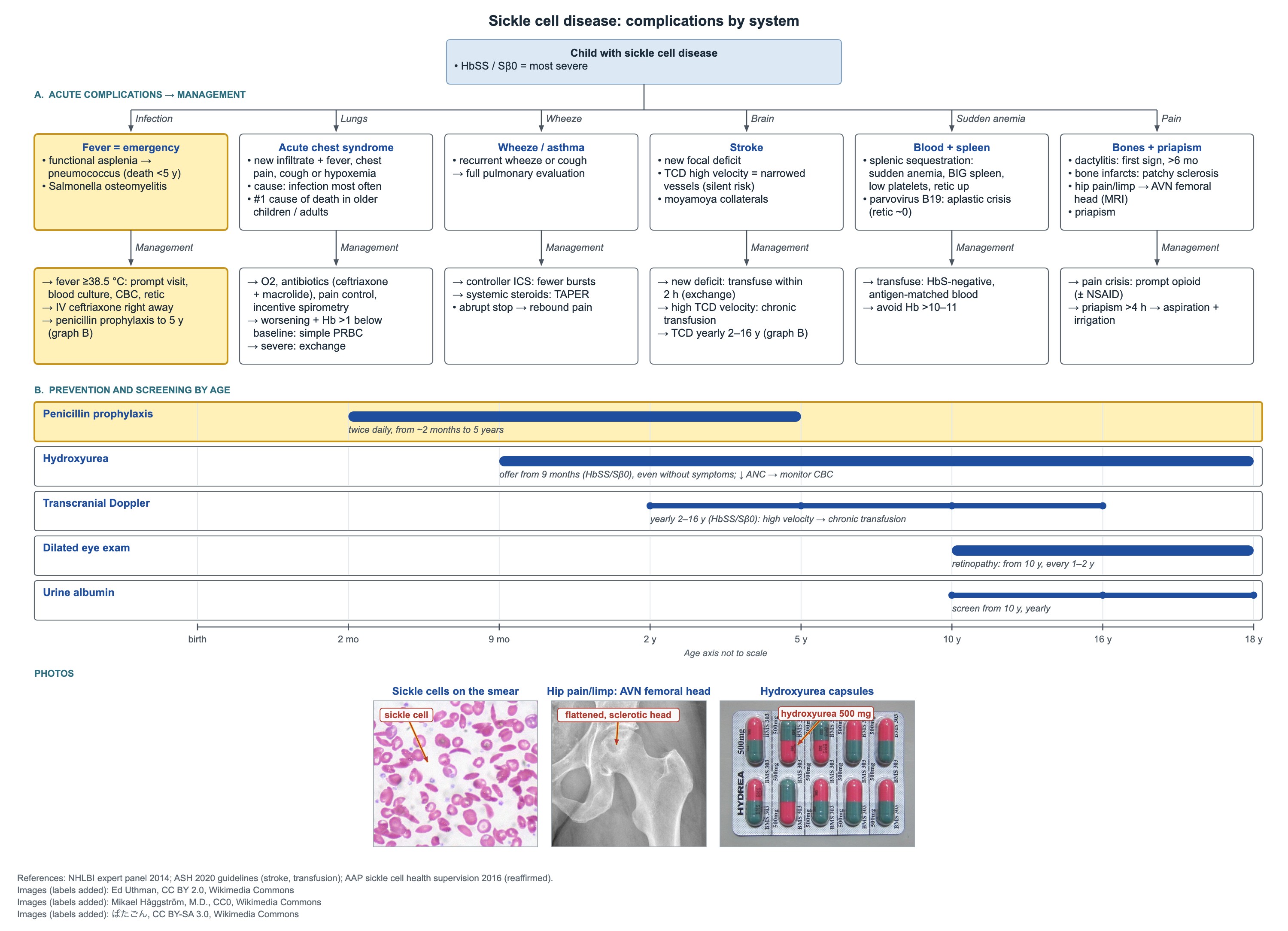
- Fever ≥38.5 °C (101.3 °F) is an emergency: CBC, reticulocyte count, blood culture and IV ceftriaxone right away.
- Oral penicillin twice daily from about 2 months until 5 years of age.
- Transcranial Doppler (TCD) every year from 2 to 16 years in HbSS and HbSβ0; abnormal TCD → chronic transfusion to keep HbS below 30%.
- New focal neurologic deficit: transfuse within 2 hours of arrival, preferably exchange transfusion.
- Acute chest syndrome: oxygen, ceftriaxone plus a macrolide, pain control, incentive spirometry; simple transfusion if Hb is more than 1 g/dL below baseline.
- Hydroxyurea raises HbF; offer it from 9 months of age in HbSS and HbSβ0 and watch the ANC.
- Dilated eye exam and urine albumin screening start at 10 years.
Fever and infection
The tree shows the main complications by organ (top) and the prevention schedule by age (bottom). The highlighted boxes are fever and penicillin prophylaxis.
The spleen is damaged by repeated sickling and stops filtering bacteria in early childhood (functional asplenia). Invasive infection with encapsulated bacteria, mainly Streptococcus pneumoniae, is the leading cause of death in children under 5 years.
- Temperature ≥38.5 °C (101.3 °F): urgent medical evaluation, never watch at home.
- Send CBC with differential, reticulocyte count and blood culture; give IV ceftriaxone without waiting for results.
- Admit if the child looks ill, is under about 12 months, has a very high fever, or has abnormal labs or a new infiltrate.
- Penicillin V: 125 mg twice daily until age 3 years, then 250 mg twice daily, starting by 2 months and continuing until 5 years.
- Give all routine vaccines plus the extra pneumococcal and meningococcal doses recommended for asplenia on the current ACIP schedule.
- Osteomyelitis: nontyphoidal Salmonella is the classic organism in sickle cell disease; Staphylococcus aureus is also common.
Genetics and diagnosis
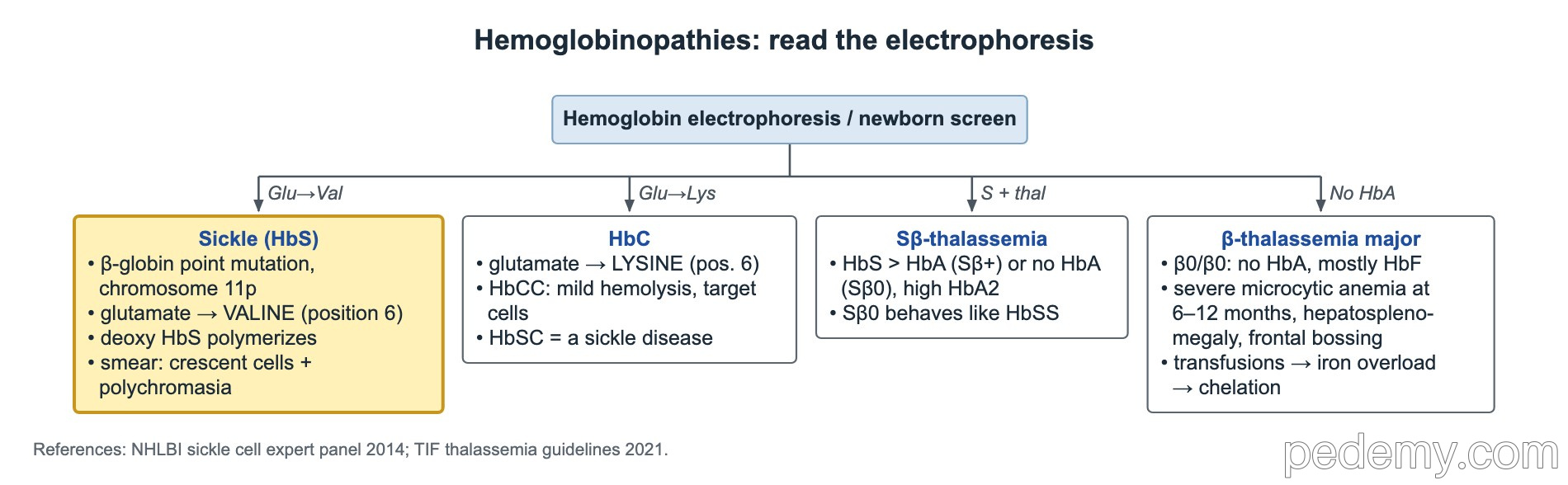
Hemoglobin S comes from a point mutation in the beta-globin gene (HBB) on chromosome 11: glutamate is replaced by valine at position 6. Deoxygenated HbS polymerizes and the red cell becomes rigid and sickle-shaped.
All US newborns are screened. Babies look well at birth because fetal hemoglobin (HbF) protects them; symptoms usually begin after 6 months as HbF falls.
- Smear: crescent (sickled) cells with polychromasia from the high reticulocyte count.
- Howell-Jolly bodies on the smear point to the loss of spleen function.
| Genotype | Key point |
|---|---|
| HbSS (sickle cell anemia) | Most severe form |
| HbSβ0-thalassemia | No HbA; behaves like HbSS |
| HbSC | Milder anemia, but still a sickle disease (retinopathy is common) |
| HbSβ+-thalassemia | Some HbA; usually milder |
| HbAS (trait) | Not a disease; rare problems with extreme exertion or dehydration |
Acute chest syndrome
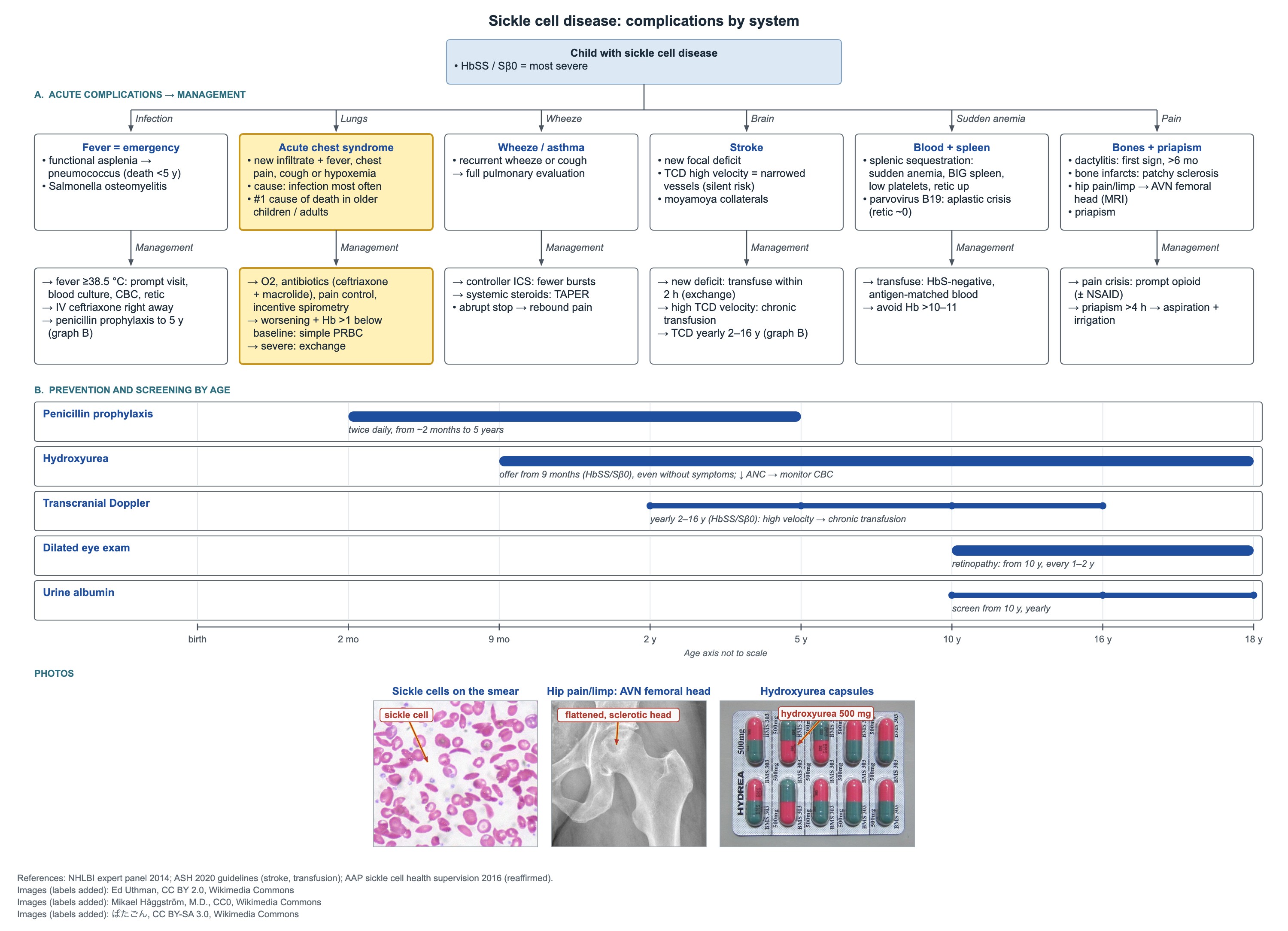
Acute chest syndrome (ACS) is a new infiltrate on chest x-ray plus fever, chest pain, cough, tachypnea or hypoxemia. Infection is the most common cause; fat embolism from bone marrow infarction and low lung volumes from splinting also cause it.
ACS is the leading cause of death in older children and adults with sickle cell disease. It often begins 1–3 days into a pain admission, so new fever or hypoxia in a hospitalized child needs a bedside review and a prompt chest x-ray.
- Oxygen for hypoxemia (SpO2 below 95% or a fall from baseline).
- Empiric antibiotics: IV ceftriaxone (or cefotaxime) plus a macrolide such as azithromycin.
- Pain control that allows deep breaths, without oversedation.
- Incentive spirometry every 1–2 hours while awake, for every child admitted with chest or back pain.
- Worsening ACS with Hb more than 1 g/dL below baseline: simple packed red cell transfusion.
- Rapid progression, falling oxygen saturation or multilobar disease: urgent exchange transfusion.
- Bronchodilators if there is wheeze or a history of asthma.
Stroke and transcranial Doppler screening
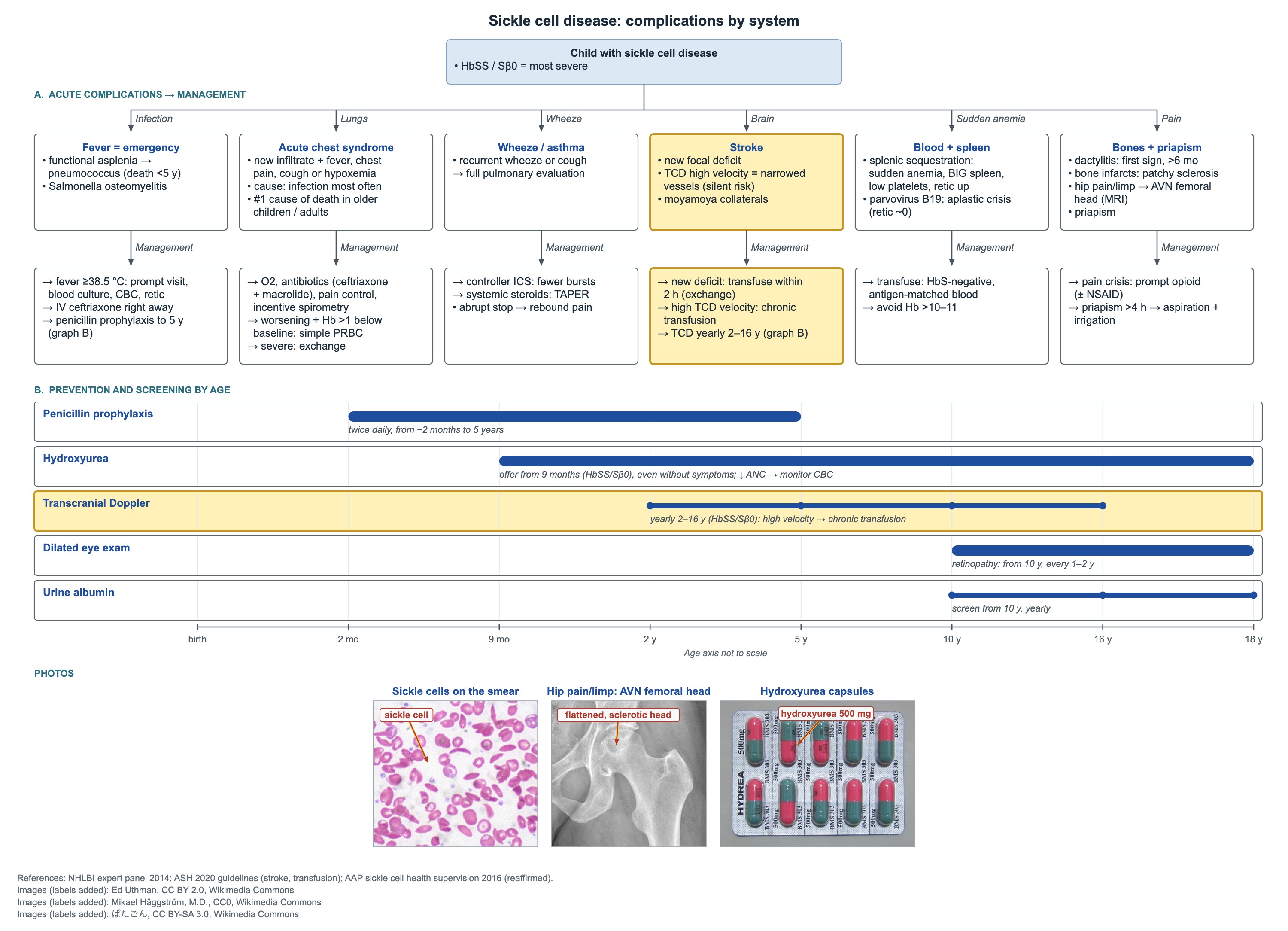
Children with HbSS and HbSβ0 have a high risk of ischemic stroke. TCD measures blood-flow velocity in the large cerebral arteries; a high velocity means the vessels are narrowed, so flow speeds up through them.
Chronic narrowing can lead to moyamoya vasculopathy, a smoke-like network of small collateral vessels at the base of the brain.
- TCD screening every year from 2 to 16 years in HbSS and HbSβ0.
- Abnormal TCD (time-averaged mean maximum velocity ≥200 cm/s): start chronic transfusion to keep HbS below 30%.
- After at least 1 year of transfusion, with no vasculopathy on MRA and a normal TCD, a switch to hydroxyurea can be considered.
- New focal deficit (weakness, aphasia, seizure, severe headache): urgent imaging and transfusion within 2 hours of arrival; exchange transfusion is preferred, simple transfusion if exchange would cause delay.
- After an overt stroke, chronic transfusion continues to prevent a second stroke.
- Brain MRI without sedation at least once in early school age looks for silent infarcts, which affect learning.
Splenic sequestration and aplastic crisis
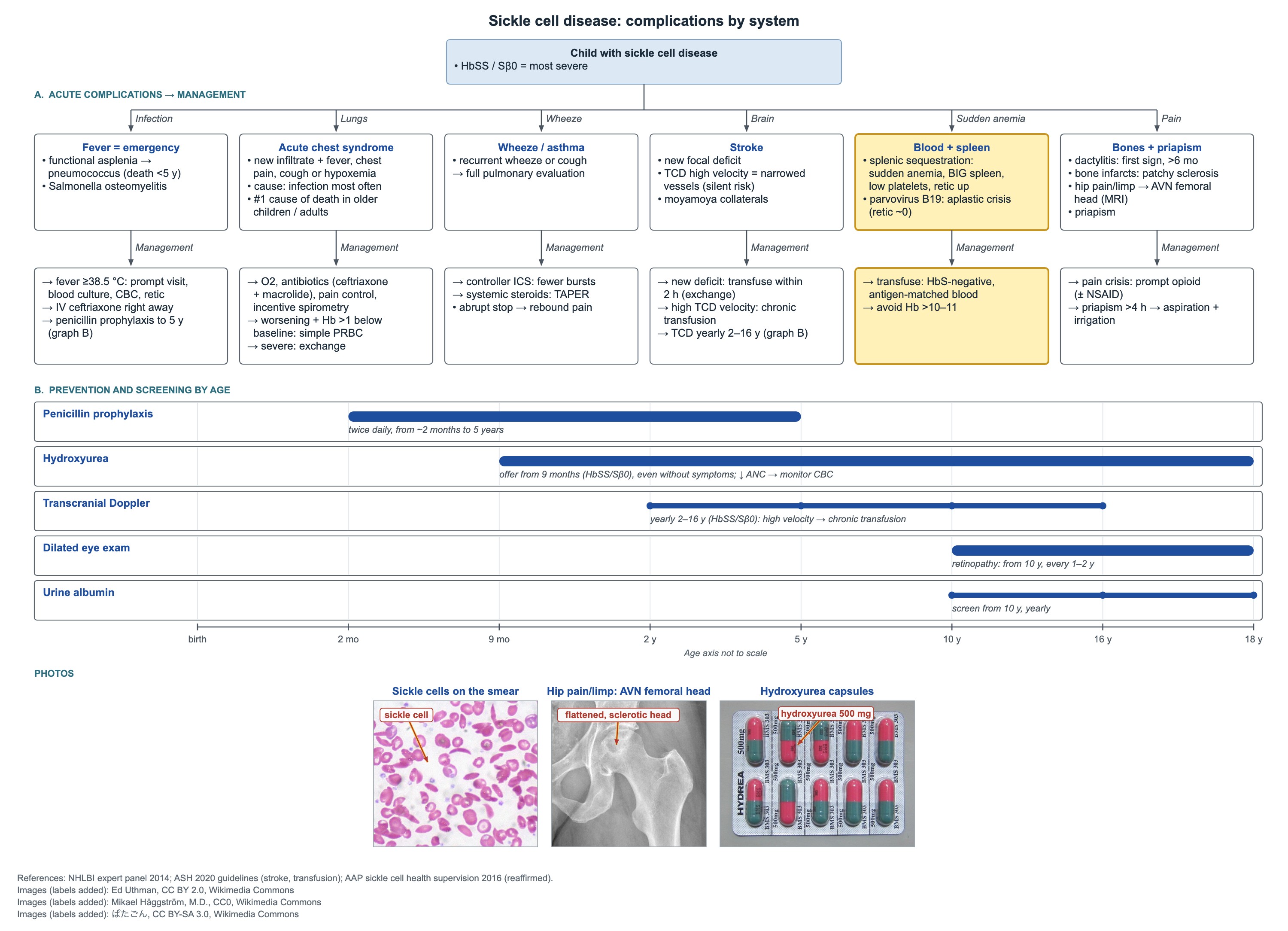
In acute splenic sequestration, sickled cells get trapped in the spleen. A toddler becomes suddenly pale and weak, the spleen enlarges quickly and the platelets fall. It can cause shock within hours.
Aplastic crisis is different: parvovirus B19 stops red cell production for 7–10 days, so the hemoglobin falls and the reticulocyte count is close to 0.
- Treat shock with fluids and give packed red cells in small, careful volumes: trapped cells return to the circulation as the spleen shrinks, so the hemoglobin can overshoot.
- Red cells for sickle cell disease should be HbS-negative and matched for extra antigens (at least Rh C, E and K).
- Avoid raising the hemoglobin above 10–11 g/dL with a simple transfusion: thicker blood can cause stroke or ACS.
- Teach parents to feel for the spleen; recurrent sequestration may need splenectomy.
| Feature | Splenic sequestration | Aplastic crisis |
|---|---|---|
| Typical age | Infants and toddlers (HbSS) | Any age |
| Spleen | Big, enlarging | Not enlarged |
| Reticulocytes | High | Very low (near 0) |
| Platelets | Often low | Usually normal |
| Cause | Trapping in the spleen | Parvovirus B19 |
Pain crises, steroids and wheeze
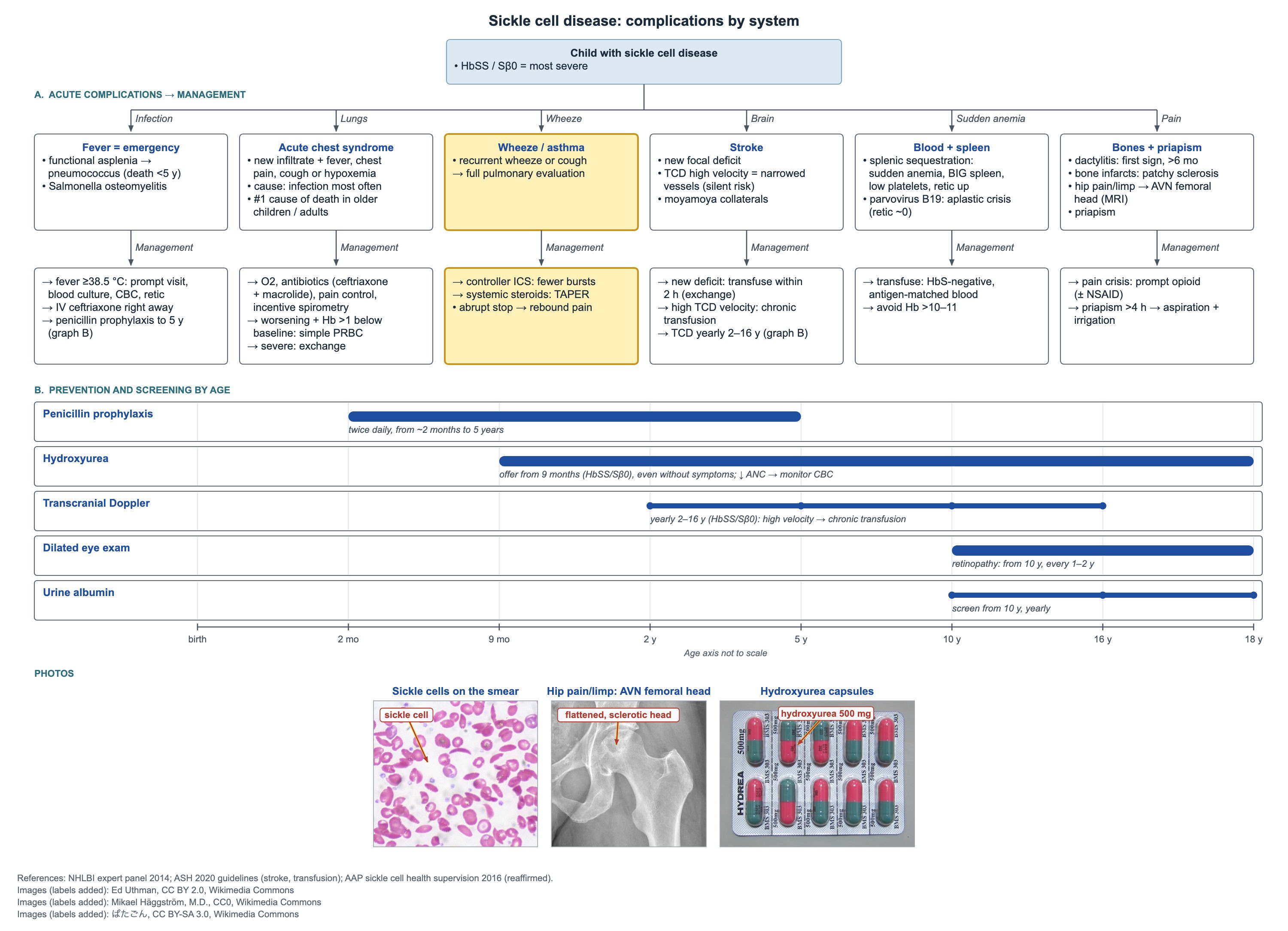
Vaso-occlusive pain is the most common reason for emergency visits. Give an opioid quickly (within 60 minutes of arrival), reassess every 15–30 minutes and add an NSAID if the kidneys are normal. Ketorolac is limited to 5 days in total.
Systemic corticosteroids can trigger rebound vaso-occlusive pain when they are stopped. A child with sickle cell disease who needs steroids should have them tapered, not stopped abruptly, and steroid bursts should be kept to a minimum.
- Recurrent wheeze or cough: full pulmonary evaluation, because asthma raises the risk of ACS and death.
- Treat asthma with a controller inhaled corticosteroid to reduce the need for systemic steroid bursts.
- Pain admission: scheduled analgesia, incentive spirometry while awake and IV fluids only to replace losses (overhydration can cause ACS).
- Dactylitis (hand-foot syndrome): painful swelling of the hands and feet, often the first sign, between 6 months and 2 years.
Bones, priapism, hydroxyurea and screening
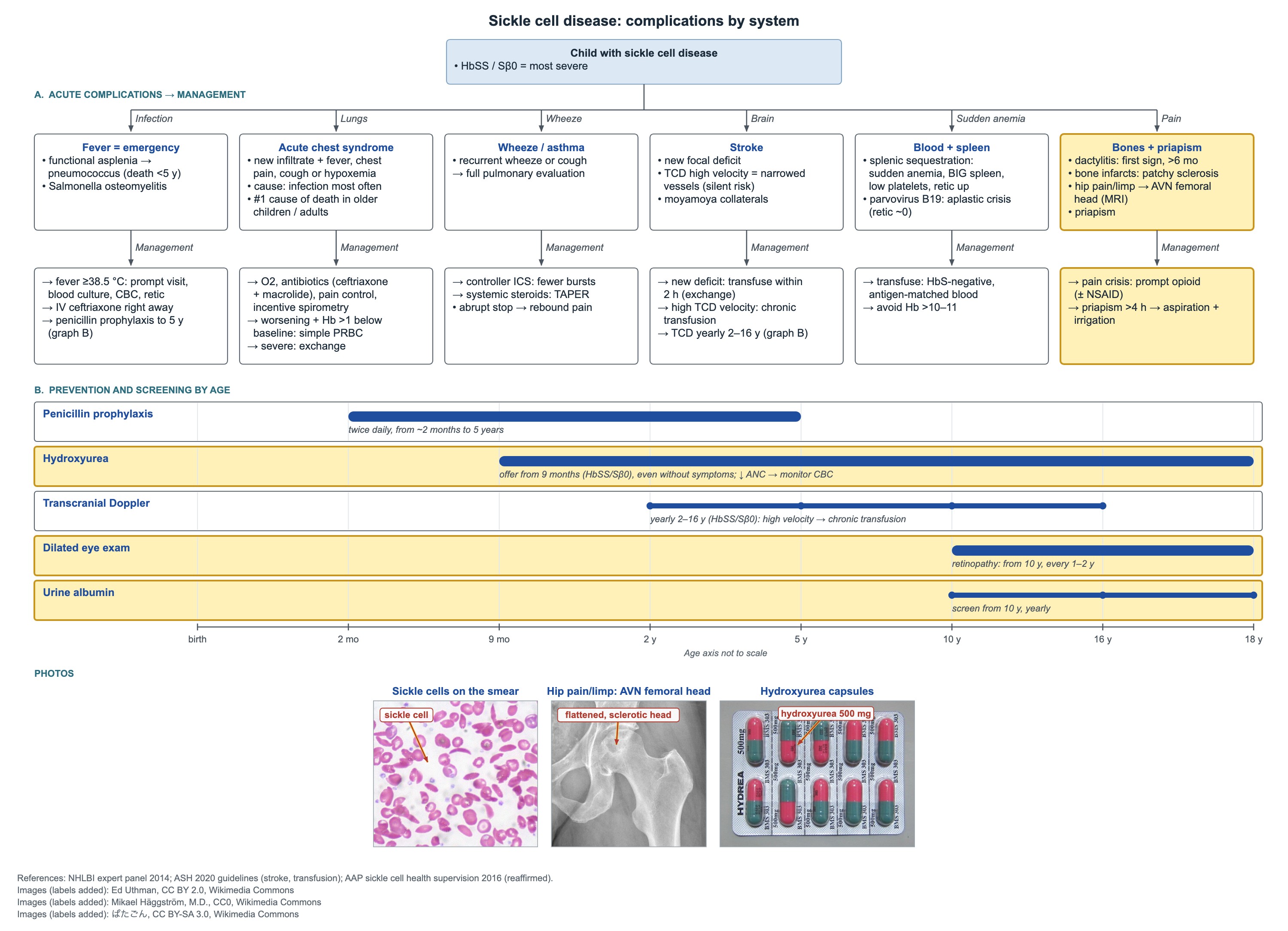
Hydroxyurea is the main disease-modifying drug. It raises fetal hemoglobin (HbF), which slows HbS polymerization, and it lowers the rates of pain, ACS, transfusion and hospital admission. It should be offered from 9 months of age in HbSS and HbSβ0, even without symptoms.
Hydroxyurea is started at about 20 mg/kg once daily and raised to the maximum tolerated dose. The main dose-related effect is a fall in neutrophils, so the CBC is checked regularly.
- Repeated bone infarcts: patchy sclerosis on x-ray ("bone within a bone").
- Hip pain and limp: avascular necrosis of the femoral head; MRI finds it earliest.
- Priapism lasting more than 4 hours: urology for aspiration and irrigation of the corpus cavernosum.
- Retinopathy: dilated eye exam by an ophthalmologist from 10 years, every 1–2 years.
- Kidney: screen the urine for albumin from 10 years, every year.
- Matched sibling stem cell transplant can cure sickle cell disease; gene therapies approved in 2023 are for patients 12 years and older.
Common questions
When should a child with sickle cell disease with fever go to the hospital?
At a temperature of 38.5 °C (101.3 °F) or higher. The child needs urgent assessment, a blood culture and IV ceftriaxone, because the spleen does not protect against bacteria.
How long do children with sickle cell disease take penicillin?
From about 2 months of age until 5 years: 125 mg twice daily until 3 years, then 250 mg twice daily.
What age does TCD screening start in sickle cell disease?
At 2 years, and it is repeated every year until 16 years in children with HbSS or HbSβ0.
How does hydroxyurea work in sickle cell disease?
It raises fetal hemoglobin, which keeps HbS from polymerizing. It can be offered from 9 months of age; the blood count is checked because it can lower neutrophils.
Study this topic
Sources
- NHLBI expert panel 2014: Management of sickle cell disease (JAMA)
- ASH 2020 guidelines: cerebrovascular disease in sickle cell disease (Blood Advances)
- ASH 2020 guidelines: transfusion support in sickle cell disease (Blood Advances)
- ASH 2020 guidelines: acute and chronic pain in sickle cell disease (Blood Advances)
Written for Pedemy in our own words from the sources above; checked November 2026. For education only, not medical advice; check doses and local protocols before treating a patient. Pedemy is independent and not affiliated with or endorsed by the organizations cited.