

Main decision tree
Stem-cell transplant: whose cells?
Key points
- Autologous = the patient's own stored cells; allogeneic = another person's cells; syngeneic = an identical twin.
- GVHD: donor T cells attack the recipient's tissues; it happens only after allogeneic transplant.
- Acute GVHD targets the skin, gut and liver; chronic GVHD looks like autoimmune disease (dry eyes and mouth, tight skin, lungs).
- Acute and chronic GVHD are told apart by their features, not only by the day +100 cut-off.
- EBV causes post-transplant lymphoproliferative disorder (PTLD).
- Revaccinate after transplant; MMR and varicella at ≥24 months only if immunocompetent and free of GVHD.
- Late-effect follow-up is lifelong.
Allogeneic transplant: another person's cells
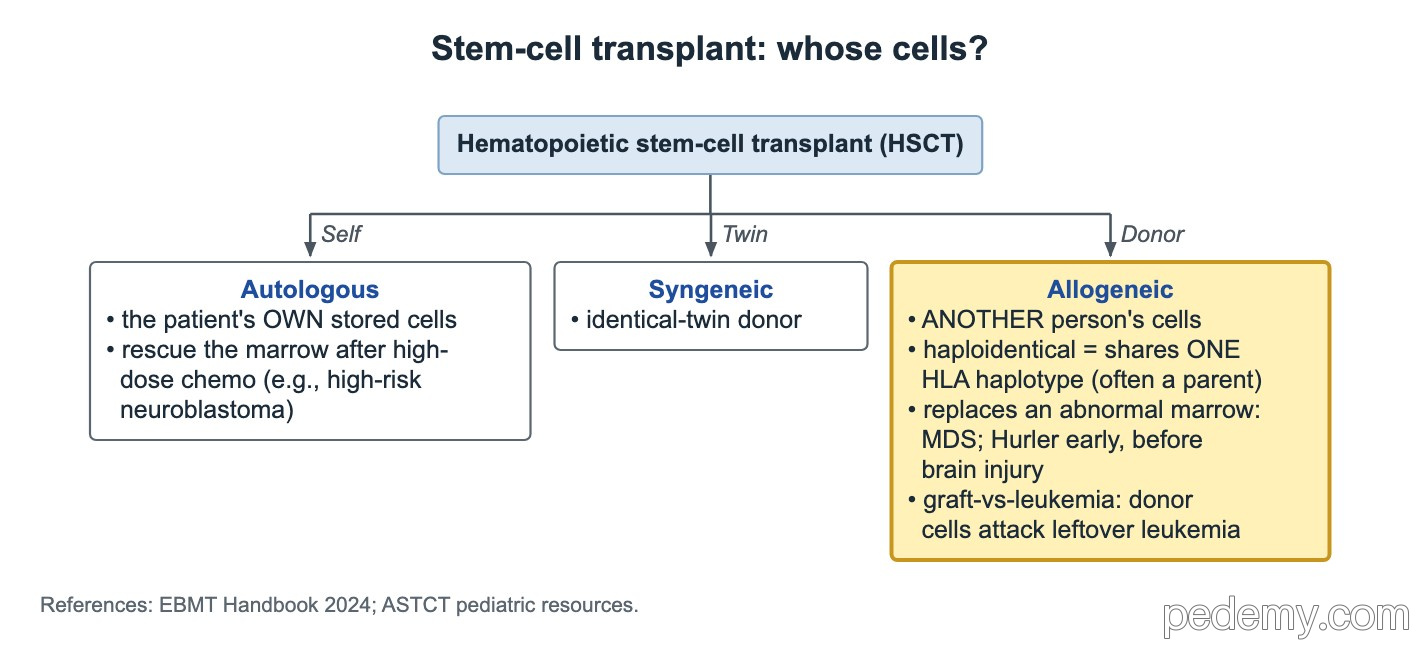
The tree sorts transplants by whose cells are used: the patient's own (autologous), an identical twin's (syngeneic) or another person's (allogeneic). The highlighted box is the allogeneic transplant.
An allogeneic graft replaces an abnormal or failing marrow and brings a new immune system. Donor T cells can also attack leftover leukemia cells: the graft-versus-leukemia effect. The same donor T cells cause GVHD.
- Donors: HLA-matched sibling (best), matched unrelated donor, umbilical cord blood, or haploidentical donor (shares one HLA haplotype, often a parent).
- Stem cell sources: bone marrow, mobilized peripheral blood, or cord blood.
- Before the transplant, conditioning chemotherapy with or without radiation clears the marrow and suppresses the immune system so the graft is not rejected.
Autologous transplant: the patient's own cells
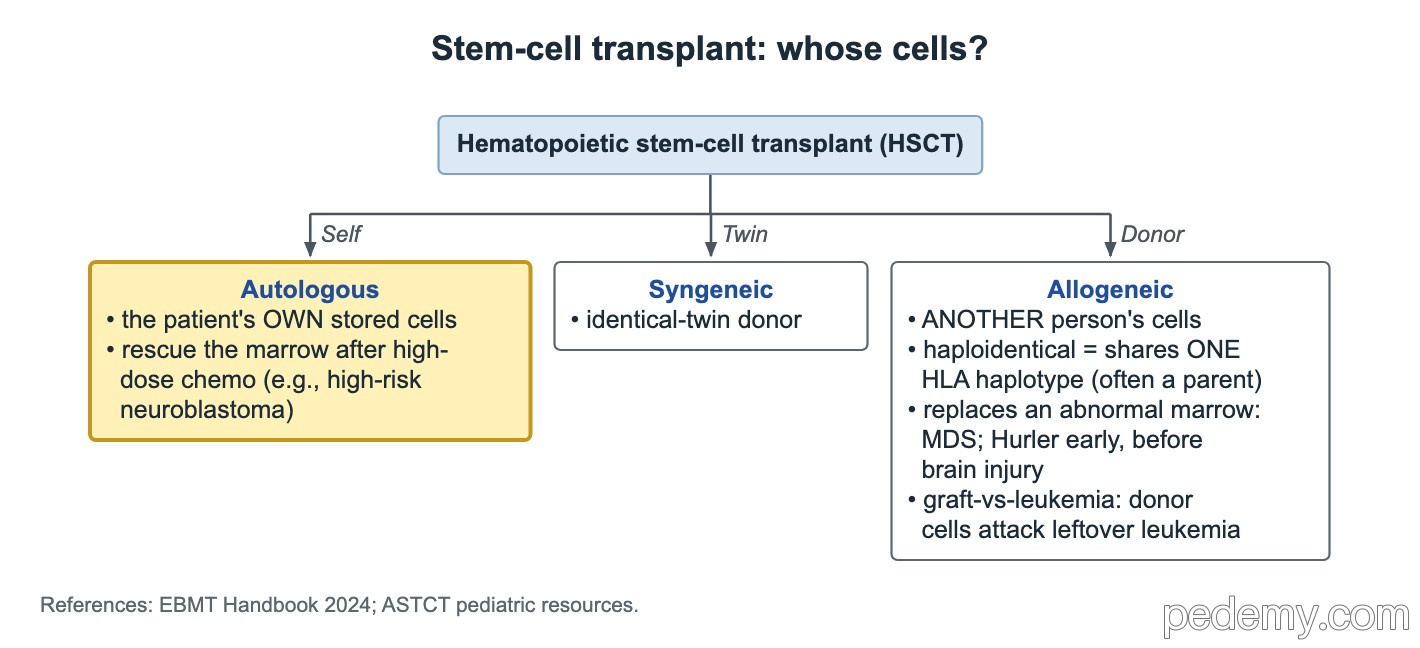
In an autologous transplant the child's own stem cells are collected and frozen, very high-dose chemotherapy is given, and the cells are returned to rescue the marrow. It allows doses that would otherwise destroy the marrow for good.
There is no GVHD and no graft-versus-leukemia effect, and immune recovery is faster than after allogeneic transplant.
- Main pediatric uses: high-risk neuroblastoma, relapsed Hodgkin and some non-Hodgkin lymphomas, and some brain and germ cell tumors.
- A syngeneic (identical twin) graft behaves like an autologous one: little or no GVHD.
Who needs an allogeneic transplant
Allogeneic transplant is used when the marrow or immune system is the problem, or when leukemia is unlikely to be cured by chemotherapy alone.
- Hurler syndrome: refer early, ideally before 2 years of age. Transplant works best before irreversible neurologic injury; it does not reverse bone disease that is already present.
| Group | Examples |
|---|---|
| Malignant | High-risk or relapsed ALL, most AML after relapse or with high-risk features, myelodysplastic syndrome, JMML |
| Marrow failure | Severe aplastic anemia, Fanconi anemia, other inherited marrow failure syndromes |
| Red cell disorders | Sickle cell disease, beta-thalassemia major |
| Immune deficiency | SCID, Wiskott-Aldrich syndrome, chronic granulomatous disease, HLH |
| Metabolic | Hurler syndrome (MPS I), some leukodystrophies |
Graft-versus-host disease
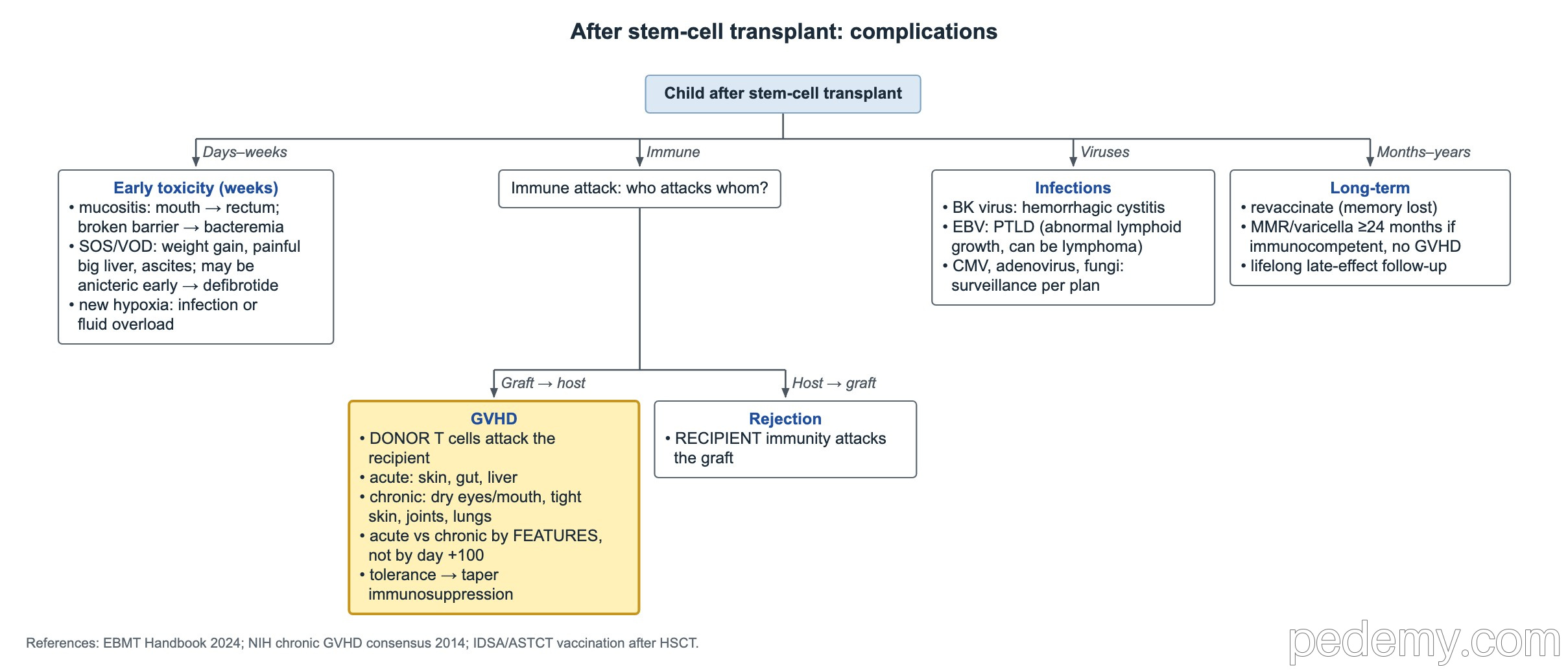
In GVHD the donor T cells see the recipient's tissues as foreign and attack them. The reverse, the recipient's immune system attacking the graft, is graft rejection.
Acute and chronic GVHD are defined by their clinical features. Acute GVHD usually starts in the first 100 days, but late-onset acute GVHD exists, and chronic GVHD can start before day 100.
- Risk rises with HLA mismatch, unrelated donors and peripheral blood grafts.
- Prevention: a calcineurin inhibitor (tacrolimus or cyclosporine) with methotrexate, or post-transplant cyclophosphamide.
- First treatment: systemic corticosteroids; ruxolitinib is used for steroid-refractory disease.
- As tolerance develops, immunosuppression is tapered.
- Transfusion-associated GVHD is a separate problem, prevented by irradiating blood products.
| Feature | Acute GVHD | Chronic GVHD |
|---|---|---|
| Skin | Red maculopapular rash, often palms, soles and ears | Sclerotic, tight skin; lichen planus-like changes |
| Gut | Watery diarrhea, abdominal pain | Swallowing problems, weight loss |
| Liver | Rising bilirubin (cholestasis) | Cholestasis |
| Other | None typical | Dry eyes and mouth, mouth ulcers, joint contractures, bronchiolitis obliterans |
Infections and PTLD
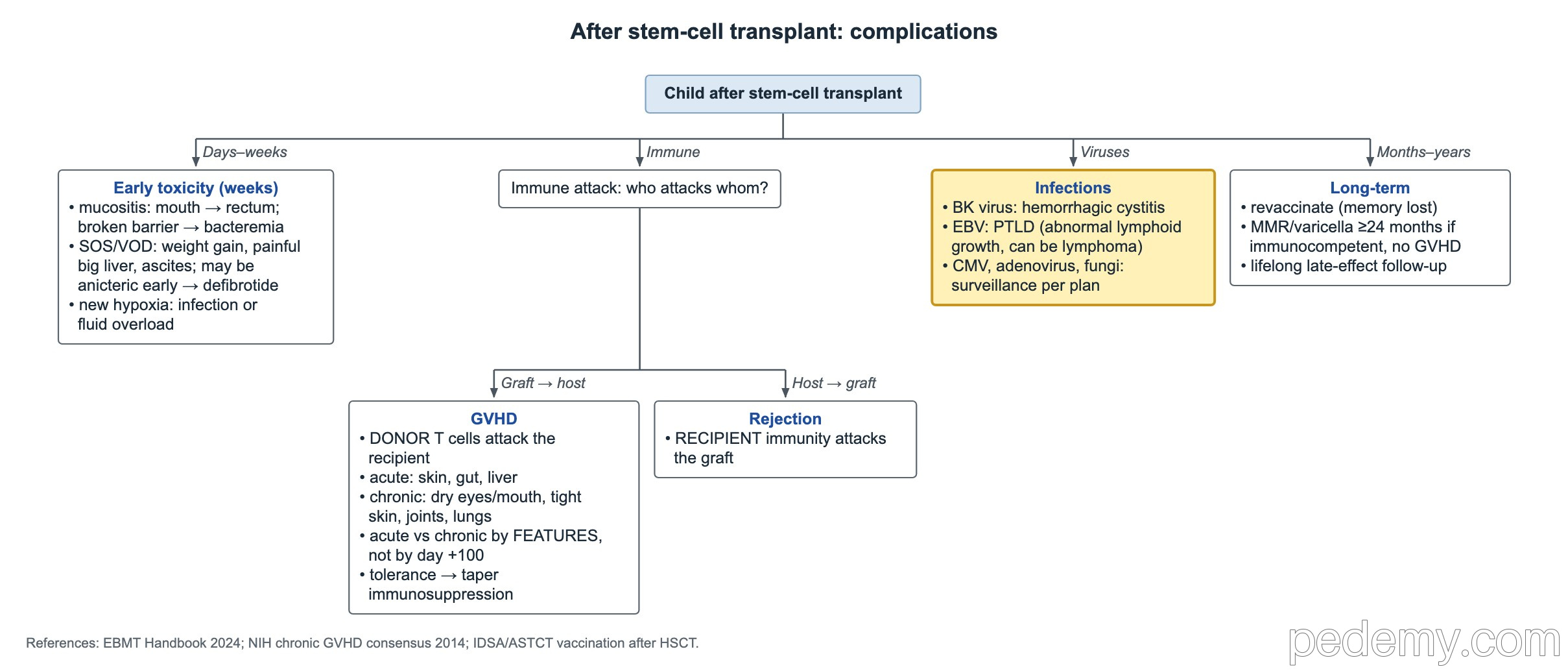
Infection risk follows the phases of immune recovery. Before engraftment, neutropenia and mucositis dominate; after engraftment, weak T-cell immunity lets viruses reactivate; late, chronic GVHD and its treatment keep the risk high.
- EBV drives post-transplant lymphoproliferative disorder (PTLD): abnormal B-cell growth that can become a lymphoma. Watch EBV PCR; treatment includes rituximab and less immunosuppression.
- BK virus causes hemorrhagic cystitis.
- CMV, adenovirus and fungi are watched with surveillance testing and prophylaxis per the transplant plan.
- Early non-infectious problems: mucositis, sinusoidal obstruction syndrome (weight gain, painful enlarged liver, ascites; treated with defibrotide), and fluid overload.
| Phase | Main infections |
|---|---|
| Before engraftment (first 2–4 weeks) | Gut and line bacteria, Candida, Aspergillus, HSV reactivation |
| Early after engraftment (to about day 100) | CMV, adenovirus, BK virus, Pneumocystis, Aspergillus |
| Late (after day 100) | Encapsulated bacteria (especially with chronic GVHD), varicella-zoster reactivation, Pneumocystis |
Revaccination and late effects
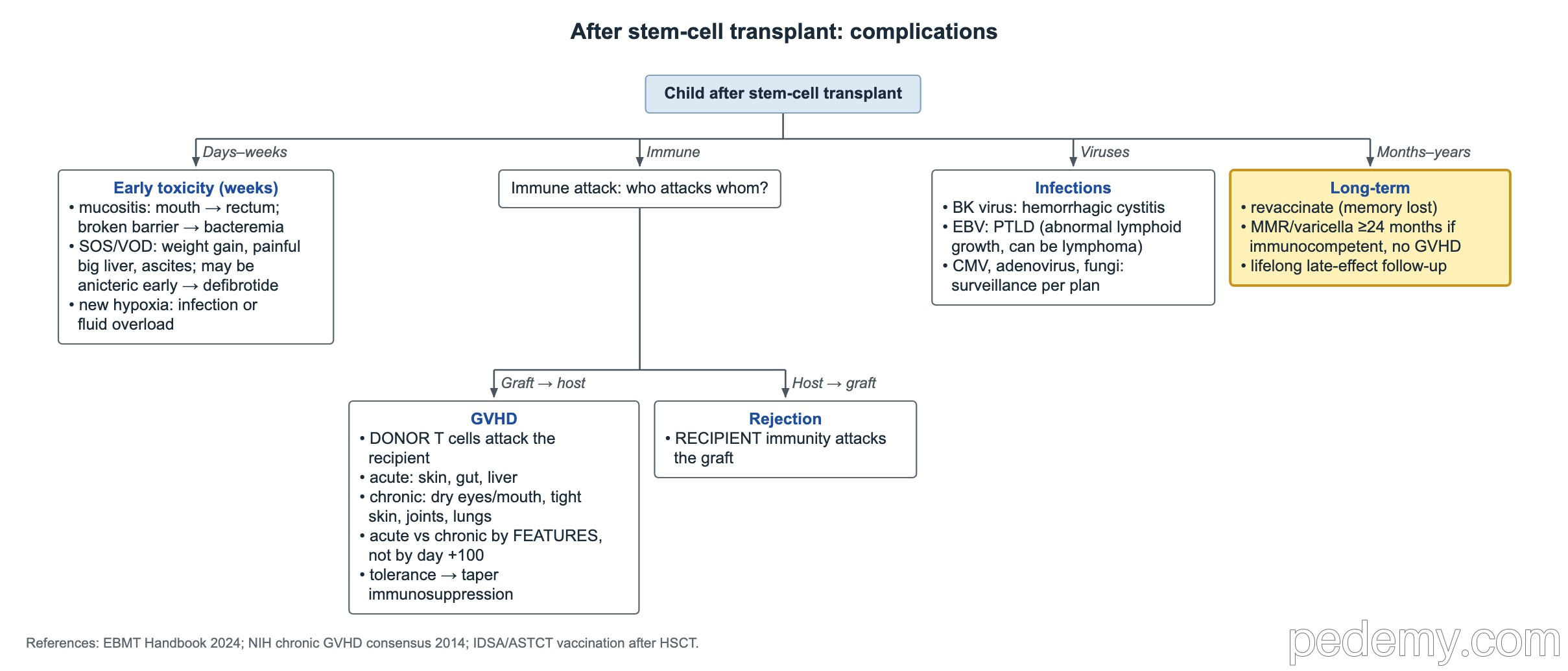
Conditioning wipes out the immune memory from earlier vaccines, so every transplant recipient is revaccinated as if never vaccinated.
Late effects come from the chemotherapy, radiation, GVHD and its treatment. Follow-up is lifelong.
- Inactivated vaccines start about 3–6 months after transplant (pneumococcal conjugate first, then the others from about 6–12 months).
- Inactivated influenza vaccine every year, starting about 6 months after transplant.
- MMR and varicella: at 24 months or later, only if the child is immunocompetent, has no active GVHD and is off immunosuppression.
- Household contacts should be fully vaccinated, including yearly influenza.
- Late effects: poor growth, hypothyroidism, gonadal failure and infertility, cataracts, second cancers, heart and lung damage, low bone density and learning problems.
Common questions
What is the difference between autologous and allogeneic stem cell transplant?
Autologous uses the patient's own stored stem cells to rescue the marrow after high-dose chemotherapy. Allogeneic uses another person's cells; it can cause GVHD but also attacks leftover leukemia.
What organs does acute GVHD affect?
The skin, gastrointestinal tract and liver: rash, diarrhea and a rising bilirubin.
When can children get MMR after a bone marrow transplant?
At 24 months or later, if they are immunocompetent, have no active GVHD and are off immunosuppressive drugs.
Study this topic
Sources
- International recommendations for long-term survivors of transplantation and cellular therapy: 2023 update (Bone Marrow Transplant)
- IDSA 2013 guideline: vaccination of the immunocompromised host (Clin Infect Dis)
Written for Pedemy in our own words from the sources above; checked November 2026. For education only, not medical advice; check doses and local protocols before treating a patient. Pedemy is independent and not affiliated with or endorsed by the organizations cited.