

Main decision tree
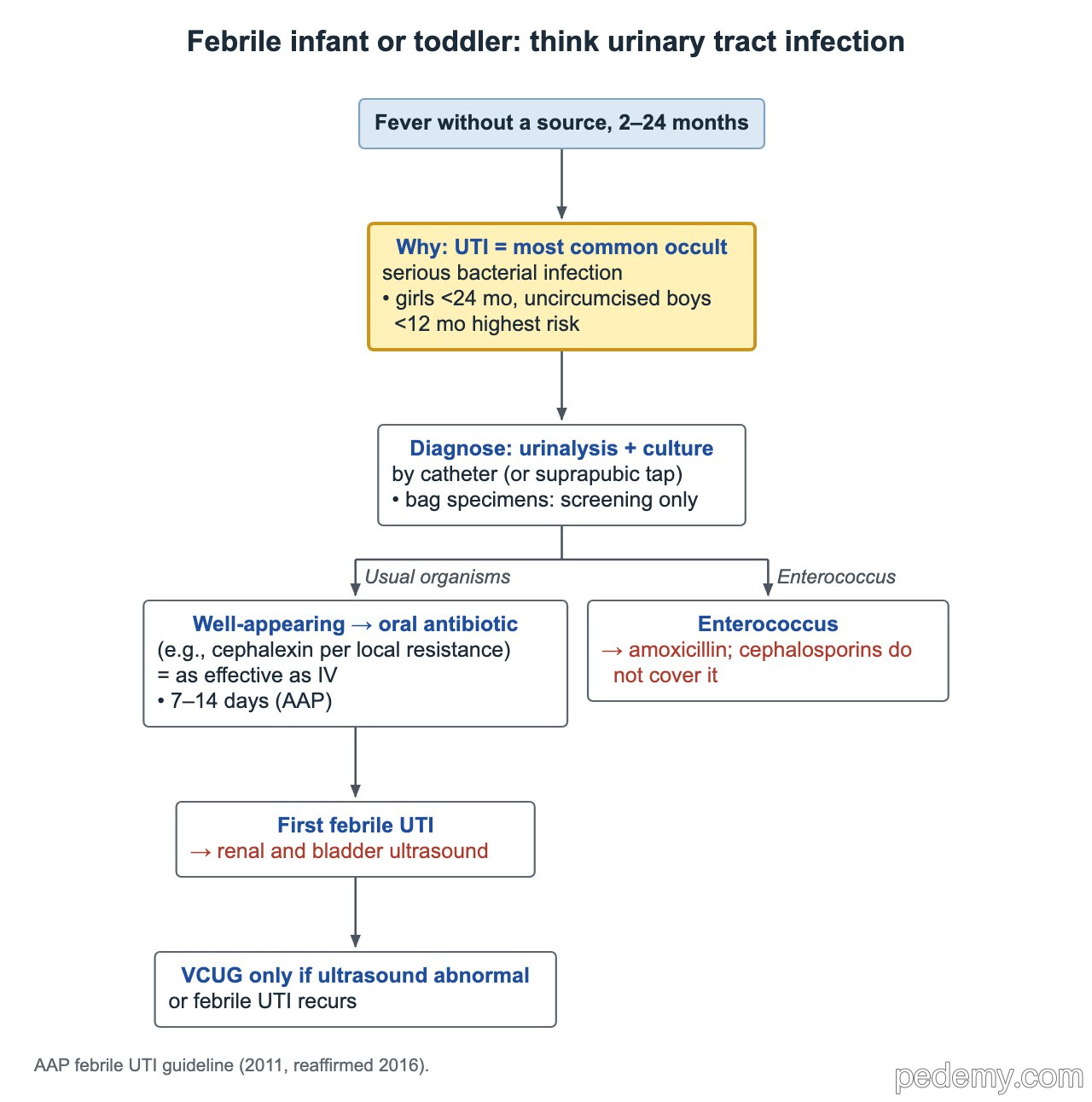
Febrile infant or toddler: think urinary tract infection
Key points
- UTI is the most common occult serious bacterial infection in a febrile 2–24-month-old without a source.
- Diagnose with urinalysis plus culture of a catheter (or suprapubic) sample; bag urine is for screening only.
- Well-appearing children older than 28 days: oral antibiotics work as well as IV; most need 7 days or less (AAP 2026).
- First febrile UTI: renal and bladder ultrasound; VCUG only for higher-risk children, such as an abnormal ultrasound or a second febrile UTI.
- Nitrofurantoin does not reach the kidney: never use it for febrile UTI or pyelonephritis.
- Enterococcus: amoxicillin; cephalosporins and TMP-SMX do not cover it; linezolid only for VRE.
- Prevent recurrence by treating constipation and bladder-bowel dysfunction; no routine prophylaxis or test-of-cure culture.
Why test febrile infants for UTI
In a febrile infant or toddler with no source on examination, UTI is the most common occult serious bacterial infection. Risk is highest in girls under 24 months and in uncircumcised boys under 12 months.
The 2026 AAP guideline advises evaluating children 2 months to 5 years who have fever without a source, or urinary symptoms, for UTI, and it no longer uses race as a risk factor.
Diagnosis: urinalysis, culture and the young infant
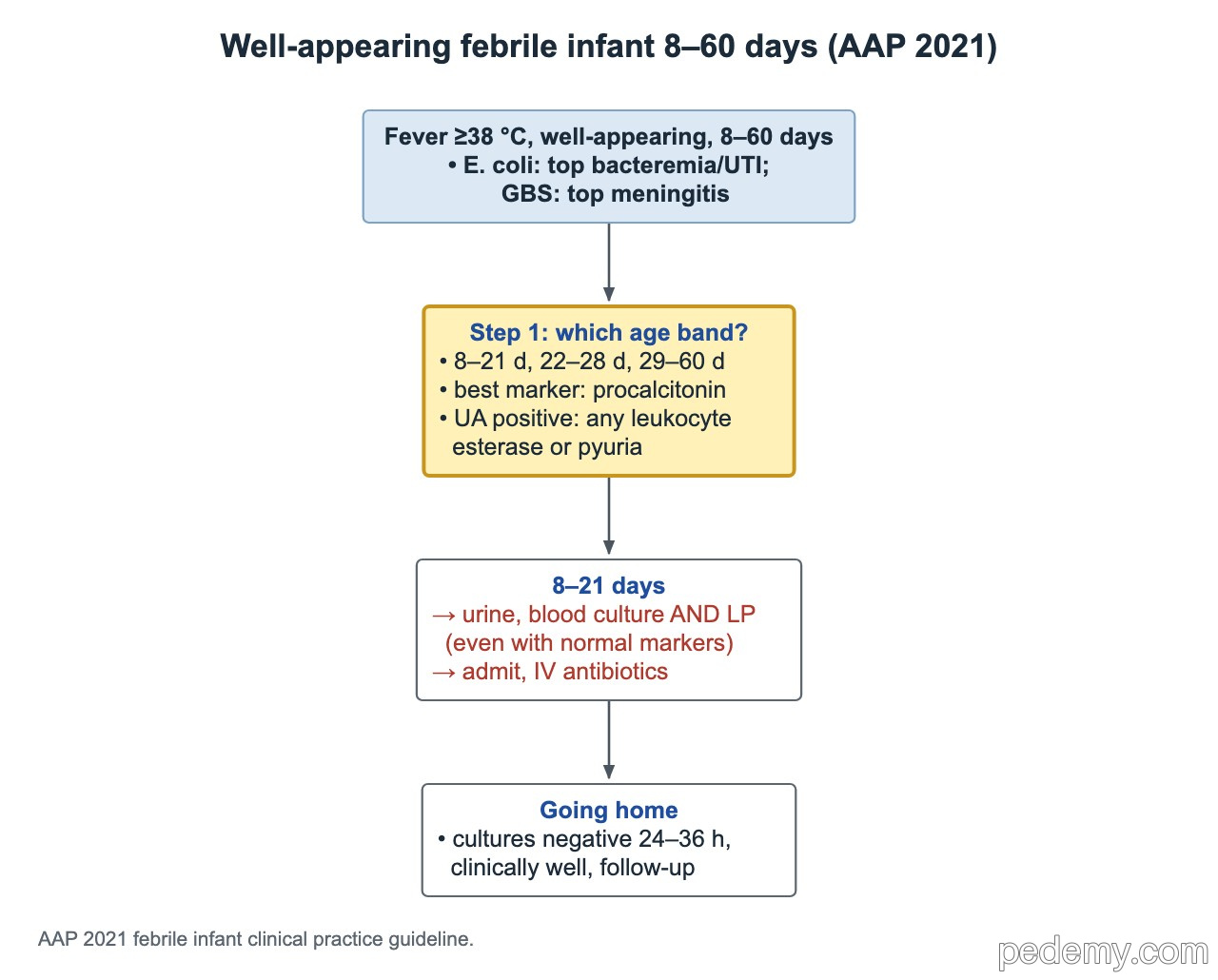
- Diagnosis needs both pyuria on urinalysis and growth of a single uropathogen in culture.
- Culture a catheter or suprapubic specimen in children not toilet trained. A bag specimen is useful only to screen: a negative bag urinalysis can rule out UTI, but a positive one must be confirmed by catheter.
- The 2026 AAP guideline lowered the colony-count thresholds: about 10,000 CFU/mL for catheter samples and 100,000 CFU/mL for clean-catch samples.
- Well febrile infant 8–60 days: the urinalysis is positive with any leukocyte esterase or pyuria.
- Enterococcus can cause UTI with little or no pyuria.
Treatment: oral antibiotics for most children
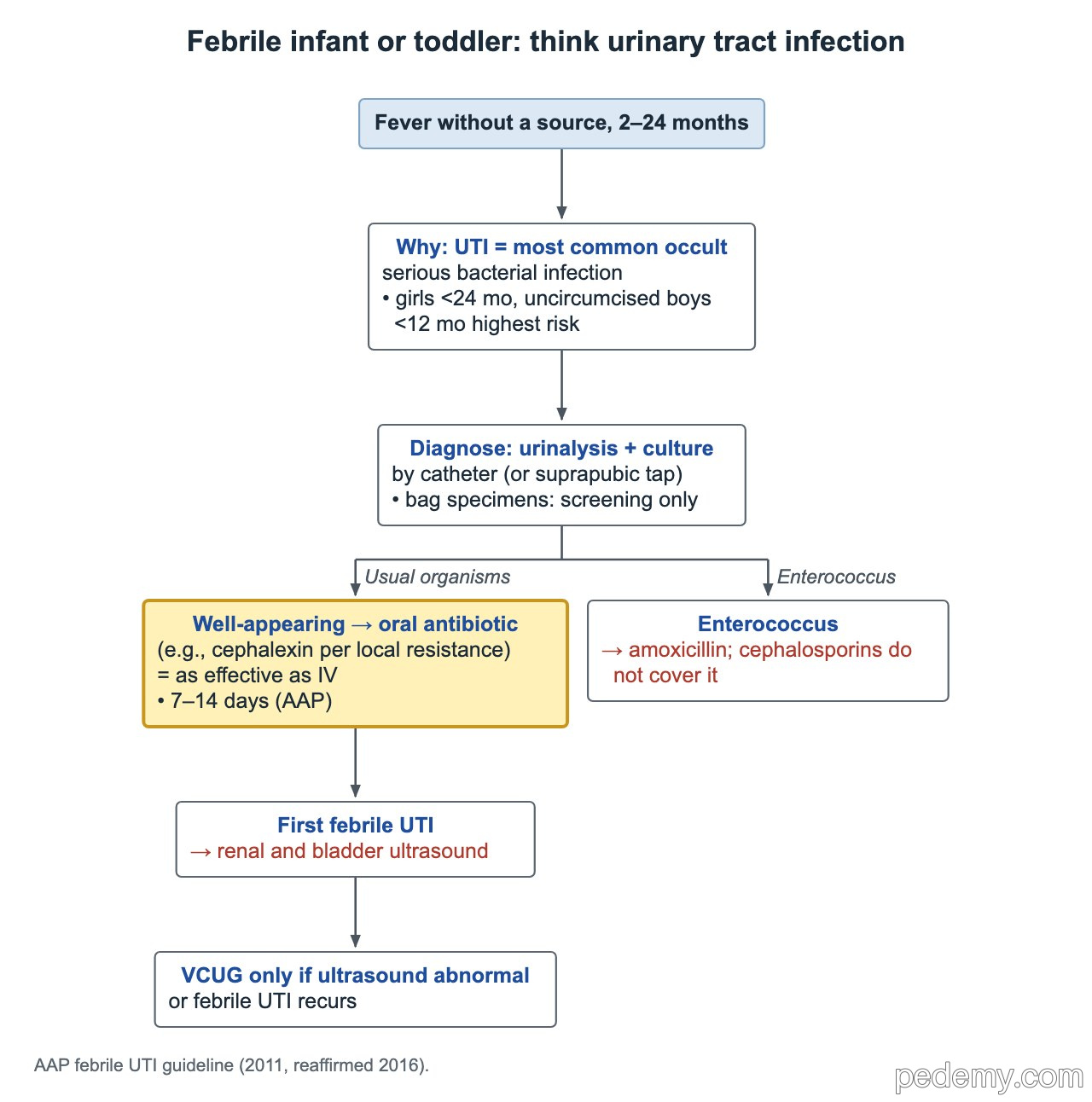
A well-appearing child older than 28 days with an uncomplicated febrile UTI can take an oral antibiotic from the start; it works as well as IV therapy. Choose by local susceptibility, for example cephalexin or another cephalosporin. Infants 8–28 days start with IV antibiotics and switch to oral once improving.
- Duration: the 2026 AAP guideline prefers 7 days or less for most children older than 28 days; longer courses are kept for young infants and higher-risk children.
- Nitrofurantoin is not acceptable for febrile UTI or suspected pyelonephritis: it does not reach useful levels in blood or kidney tissue.
- Adjust the drug when culture and susceptibility results return.
Imaging after the first febrile UTI
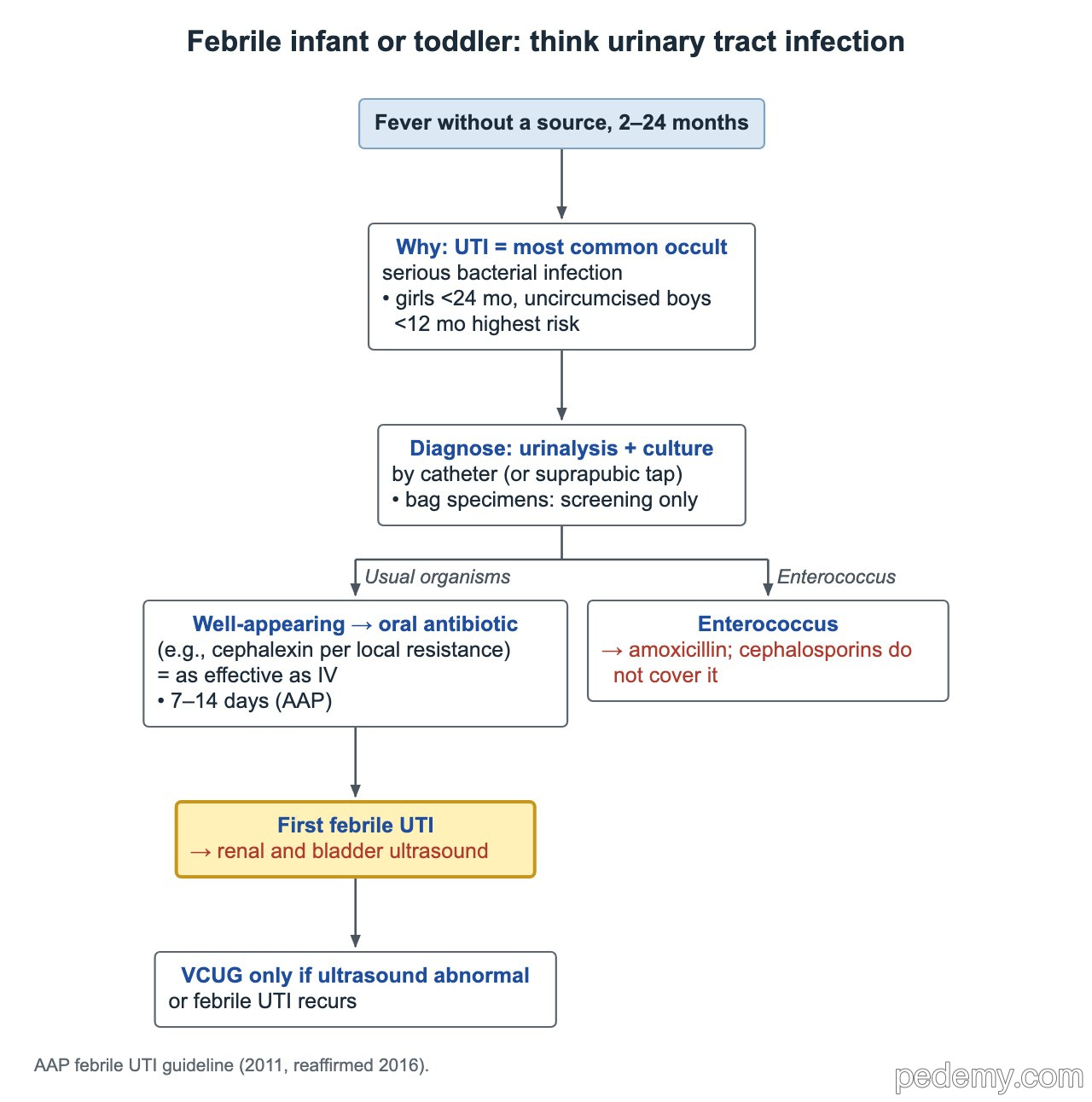
- First febrile UTI: renal and bladder ultrasound to look for structural problems.
- VCUG is not routine. It is kept for higher-risk children, for example an ultrasound showing hydronephrosis, scarring or signs of high-grade reflux or obstruction, a second febrile UTI, or an atypical course.
- Routine antibiotic prophylaxis is not recommended for children with lower-grade vesicoureteral reflux.
Enterococcal UTI
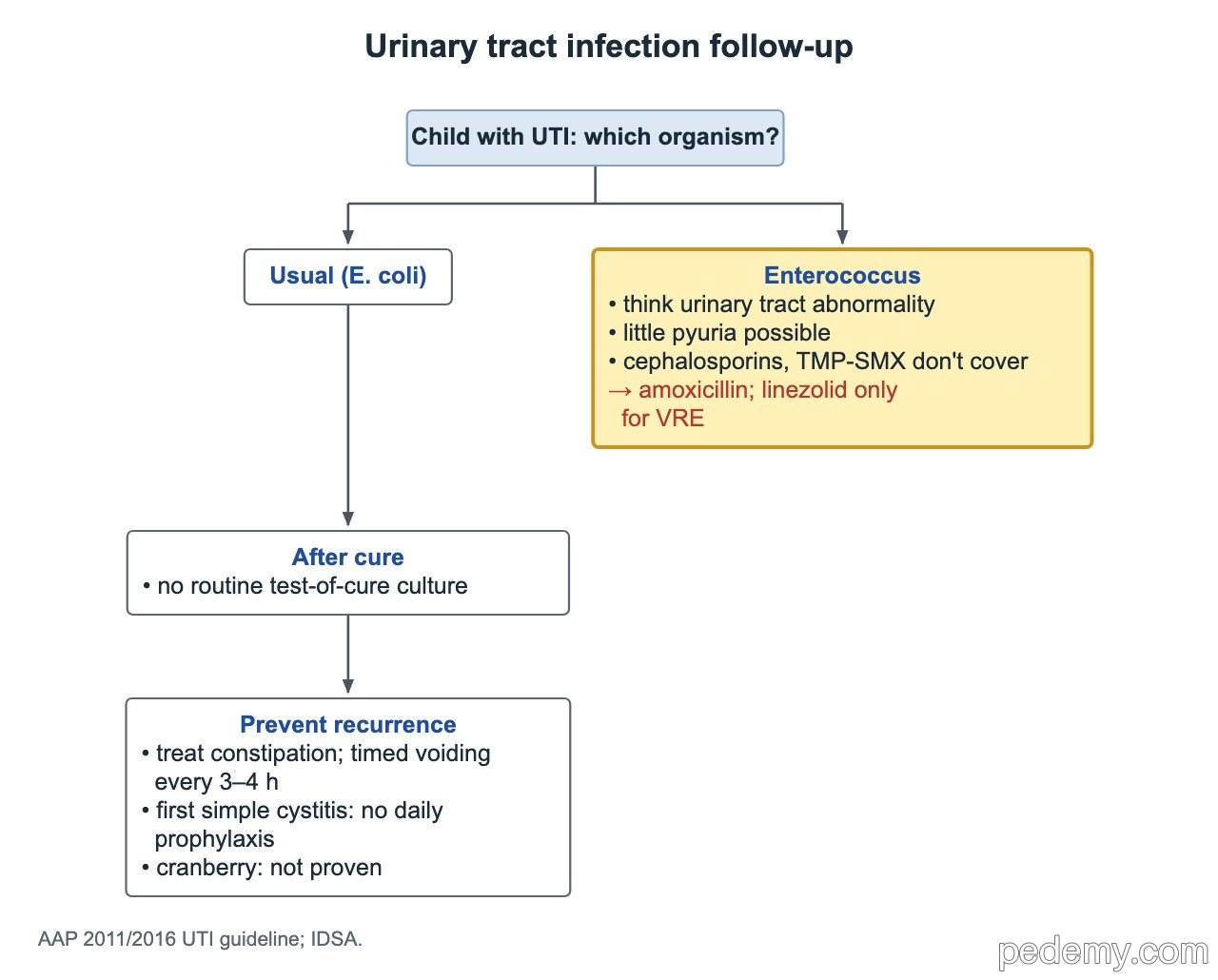
- An infant with enterococcal febrile UTI should prompt a search for an anatomic or functional urinary tract abnormality.
- Ampicillin-susceptible E. faecalis: oral amoxicillin is the drug of choice.
- First- and third-generation cephalosporins do not cover Enterococcus.
- TMP-SMX should not be used: enterococci resist it in the body even when a lab test looks susceptible.
- Linezolid is kept for vancomycin-resistant Enterococcus (VRE).
After treatment: no test-of-cure culture
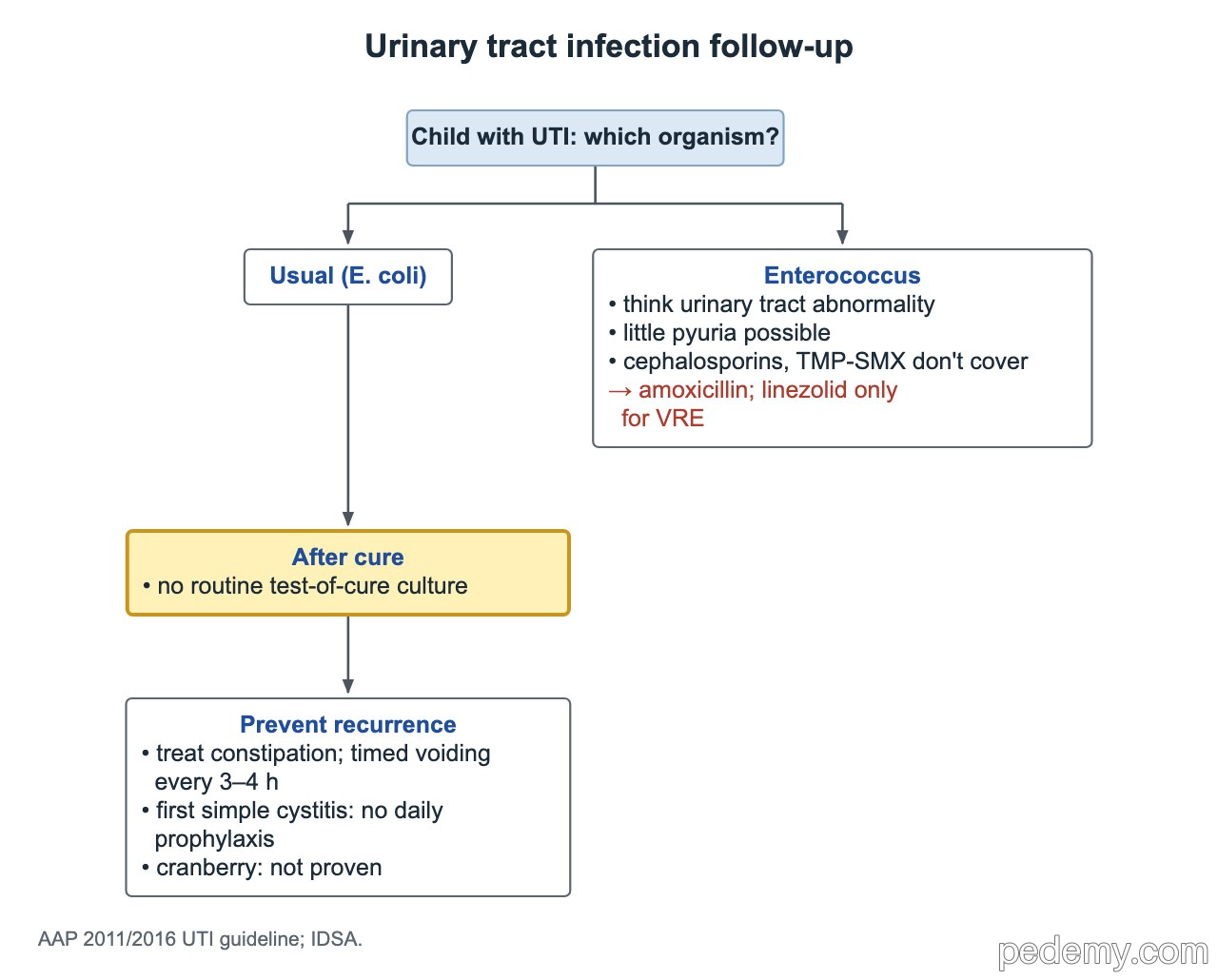
A child whose cystitis was treated and who is now well does not need a repeat urine culture. Instead, teach families to seek prompt testing for any future fever so a recurrence is found early.
Preventing recurrence: bladder and bowel dysfunction
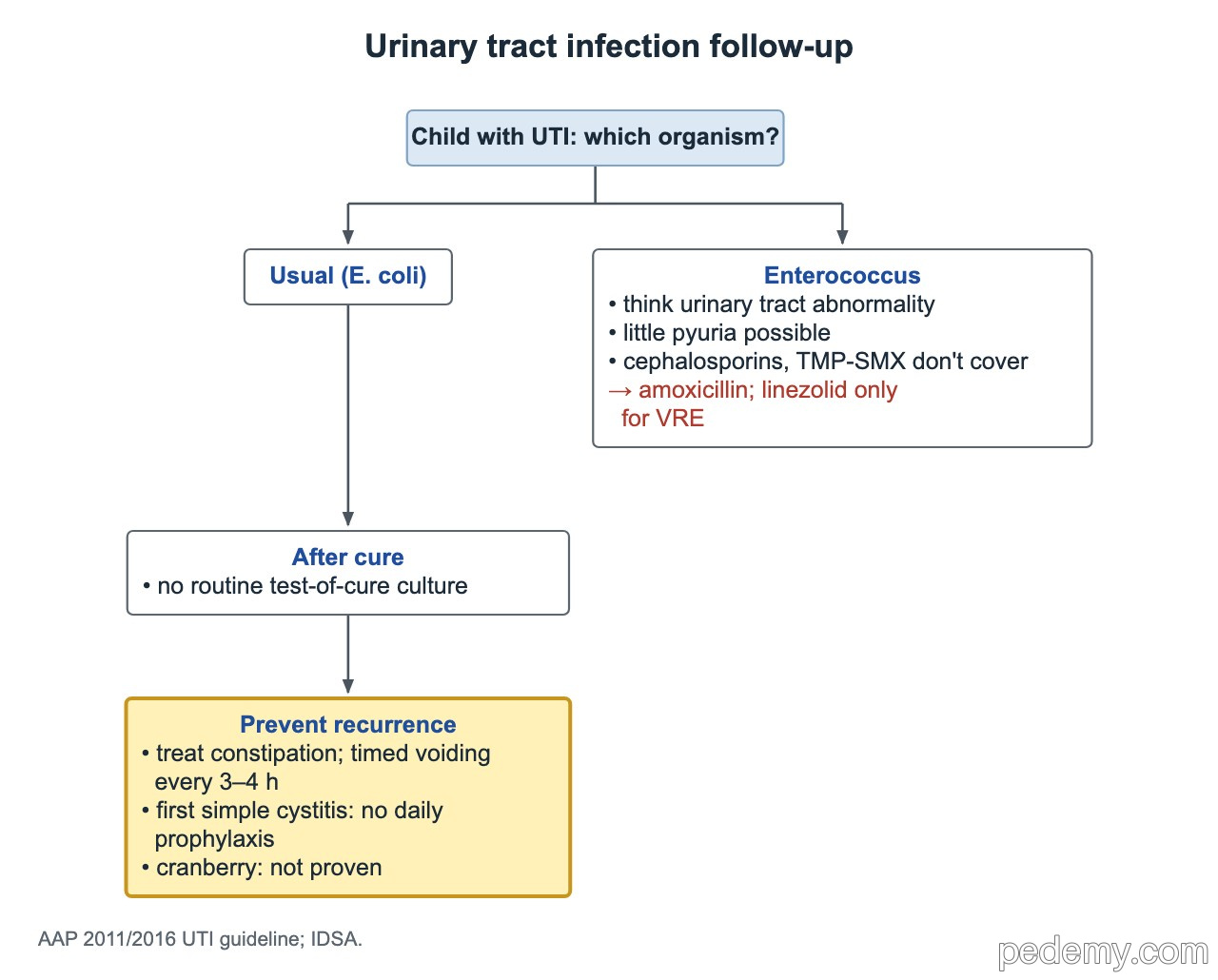
- Constipation and bladder-bowel dysfunction are major risk factors. In a toilet-trained child with constipation, treating the constipation is the main way to prevent the next UTI.
- Standard urotherapy: regular timed voiding every 2–3 hours while awake, good fluid intake, and relaxed posture on the toilet.
- A normal urinary tract with a first uncomplicated cystitis: no daily antibiotic prophylaxis.
- Cranberry products are unproven in children and do not replace treating bladder-bowel dysfunction.
Common questions
Can a febrile UTI in a baby be treated with oral antibiotics?
Yes, for a well-appearing child older than 28 days who can take fluids and medicine by mouth. Infants 8–28 days start with IV antibiotics.
Does every child need a VCUG after a UTI?
No. After a first febrile UTI, a renal and bladder ultrasound is done; VCUG is kept for higher-risk children, such as those with an abnormal ultrasound or a second febrile UTI.
Why not nitrofurantoin for pyelonephritis?
Nitrofurantoin concentrates in the bladder but does not reach therapeutic levels in the blood or kidney, so it fails in febrile UTI.
Study this topic
Sources
- AAP 2026: Clinical practice guideline for UTI in children 8 days to 5 years (Pediatrics)
- AAP 2021: Evaluation and management of well-appearing febrile infants 8 to 60 days old (Pediatrics)
- AAP: UTI clinical practice guideline algorithms
Written for Pedemy in our own words from the sources above; checked November 2026. For education only, not medical advice; check doses and local protocols before treating a patient. Pedemy is independent and not affiliated with or endorsed by the organizations cited.