

Main decision tree
Newborn GI emergencies
Key points
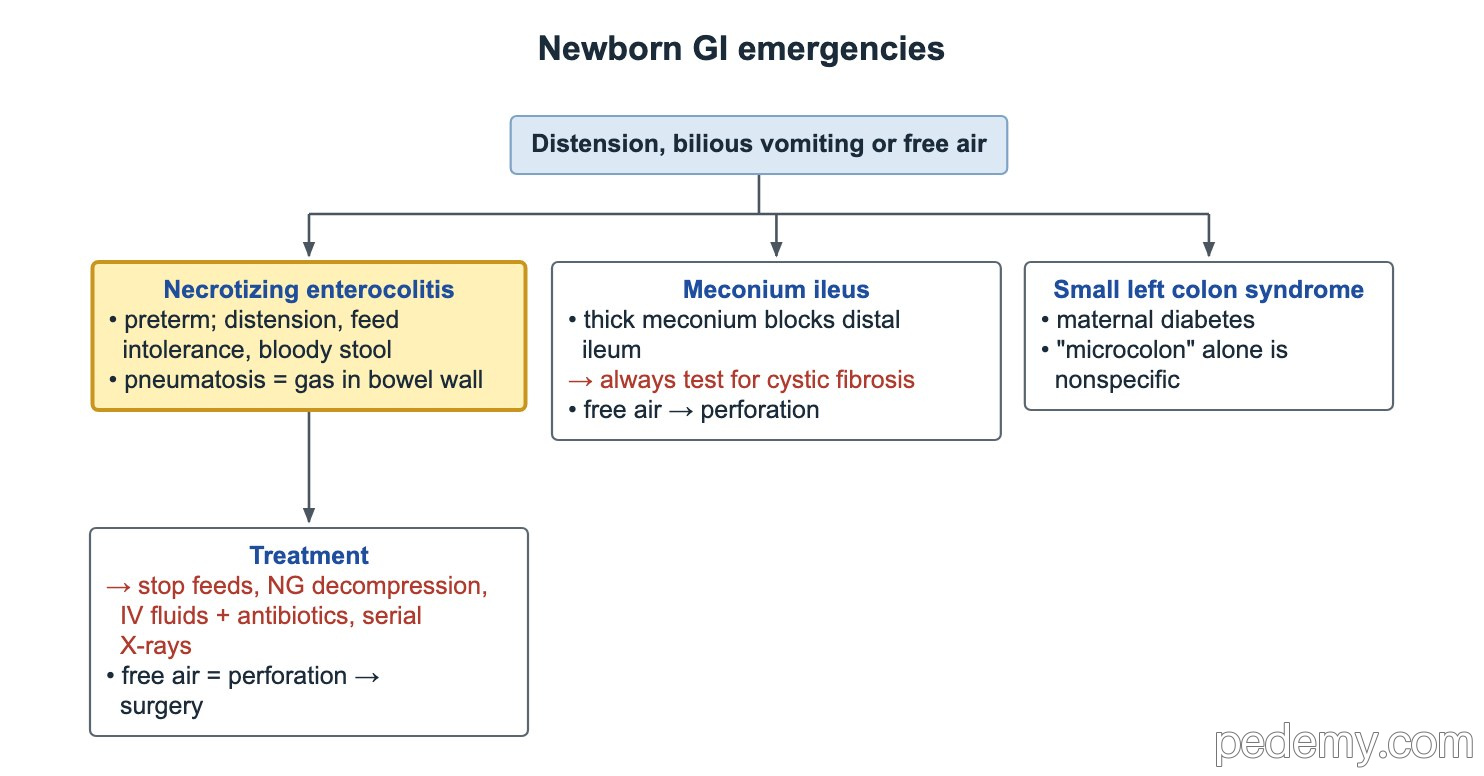
- Preterm baby with distension, feeding intolerance and pneumatosis intestinalis (gas in the bowel wall) → necrotizing enterocolitis.
- Suspected NEC: stop feeds, decompress the stomach, IV fluids and antibiotics, surgical review; free air means perforation.
- Meconium ileus: thick meconium blocks the distal ileum; about 90% have cystic fibrosis → sweat chloride test.
- Intrapartum GBS prophylaxis is adequate only with IV penicillin, ampicillin or cefazolin given at least 4 hours before delivery.
- Congenital syphilis: compare the infant's serum RPR (not cord blood) with the mother's; most affected newborns (60–90%) look normal.
- Proven or highly probable congenital syphilis: aqueous penicillin G 50,000 units/kg IV every 12 hours for the first 7 days, then every 8 hours, for 10 days.
- Chlamydial conjunctivitis (day 5–14): oral erythromycin for 14 days or azithromycin for 3 days; watch for pyloric stenosis.
Necrotizing enterocolitis
NEC is inflammation and necrosis of the bowel wall, mostly in preterm and very low birth weight babies after feeds have started. Human milk is protective.
- Signs: abdominal distension, feeding intolerance, bilious aspirates or vomiting, bloody stools, then apnea, instability and shock.
- X-ray: pneumatosis intestinalis, which is gas in the bowel wall; portal venous gas is a sign of severe disease.
- Modifiable risk factors: formula feeding, dysbiosis after prolonged antibiotics, H2 blockers and other acid suppression, hyperosmolar feeds and hypoxia-ischemia.
NEC: first steps and perforation
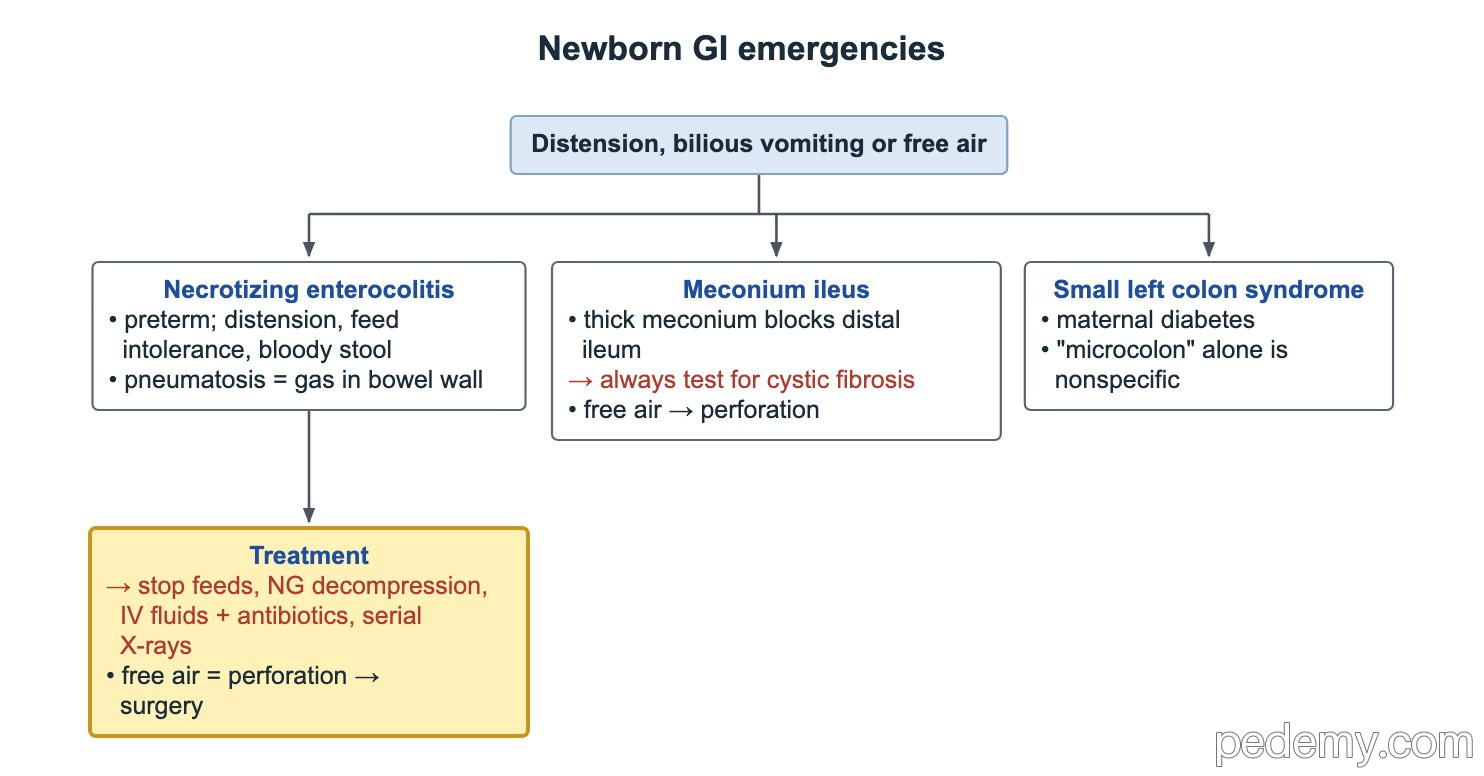
- Stop enteral feeds and decompress the stomach with a tube.
- Give IV fluids and nutrition, and broad-spectrum IV antibiotics after blood culture.
- Get neonatal and surgical assessment early; repeat abdominal X-rays to watch for progression.
- Pneumoperitoneum (free air) means bowel perforation → surgery.
Meconium ileus and small left colon syndrome
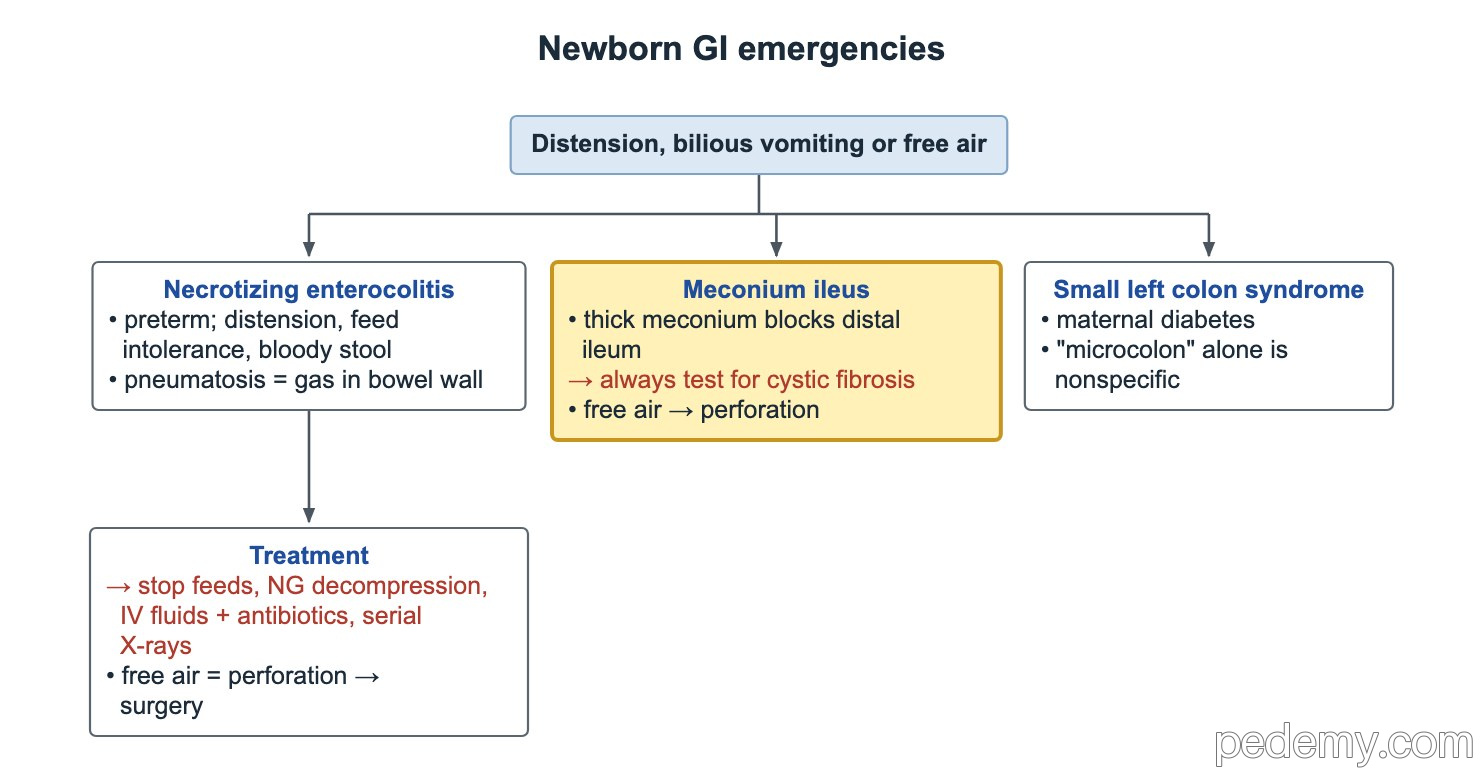
Both cause a low bowel obstruction in the first days, but they point to different maternal or genetic causes.
- 'Microcolon' is a nonspecific imaging description, not a diagnosis.
- After bowel resection, short bowel syndrome without intestinal failure often absorbs better with slow continuous tube feeds.
| Condition | Clues | Next step |
|---|---|---|
| Meconium ileus | Bilious vomiting, no meconium by 48 hours, microcolon, 'soap-bubble' ileum; thick meconium blocks the distal ileum | Sweat chloride test and CF genetics (about 90% have cystic fibrosis), even if the newborn CF screen was normal; contrast enema can be therapeutic |
| Complicated meconium ileus | Free intraperitoneal air or calcifications | Intestinal perforation → surgery |
| Small left colon syndrome | Infant of a diabetic mother; narrow descending colon | Contrast enema is diagnostic and often relieves it |
Preventing early-onset group B strep disease
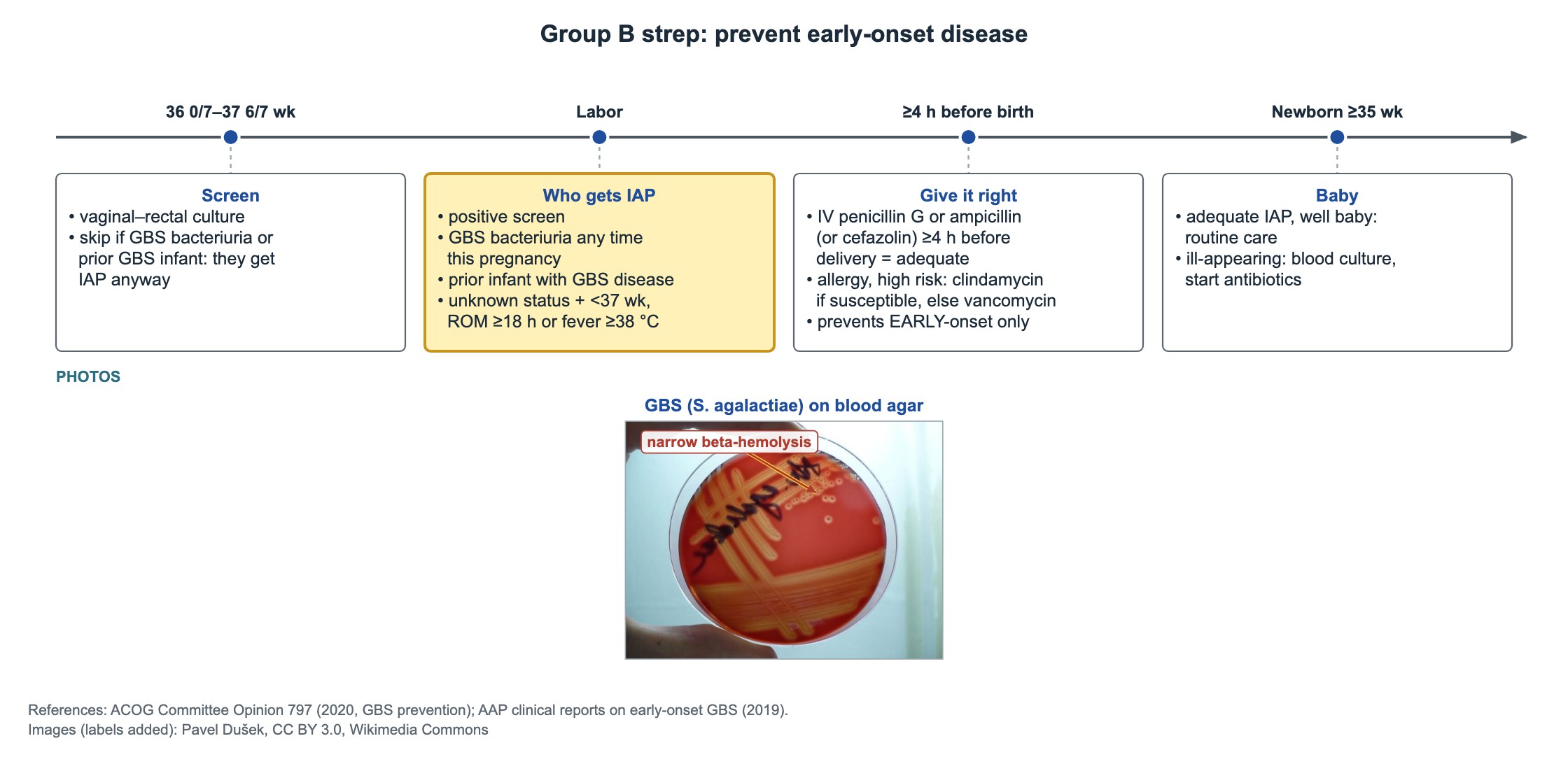
Pregnant patients have a vaginal-rectal GBS culture at 36 0/7–37 6/7 weeks (ACOG 2020). Intrapartum antibiotic prophylaxis (IAP) prevents early-onset GBS disease only, not late-onset disease.
- IAP is given for a positive screen, GBS bacteriuria at any time in this pregnancy, or a previous infant with invasive GBS disease (regardless of screening).
- Unknown GBS status at labor: give IAP for preterm labor (below 37 weeks), membranes ruptured 18 hours or more, or intrapartum fever of 38 °C (100.4 °F) or more.
- Adequate IAP: IV penicillin G, ampicillin or cefazolin started at least 4 hours before delivery.
- Clindamycin or vancomycin alone is not considered adequate for the newborn's risk assessment.
- Well baby of 35 weeks or more after adequate IAP: routine care. Ill-appearing baby: blood culture and antibiotics.
Congenital syphilis: diagnosis and signs
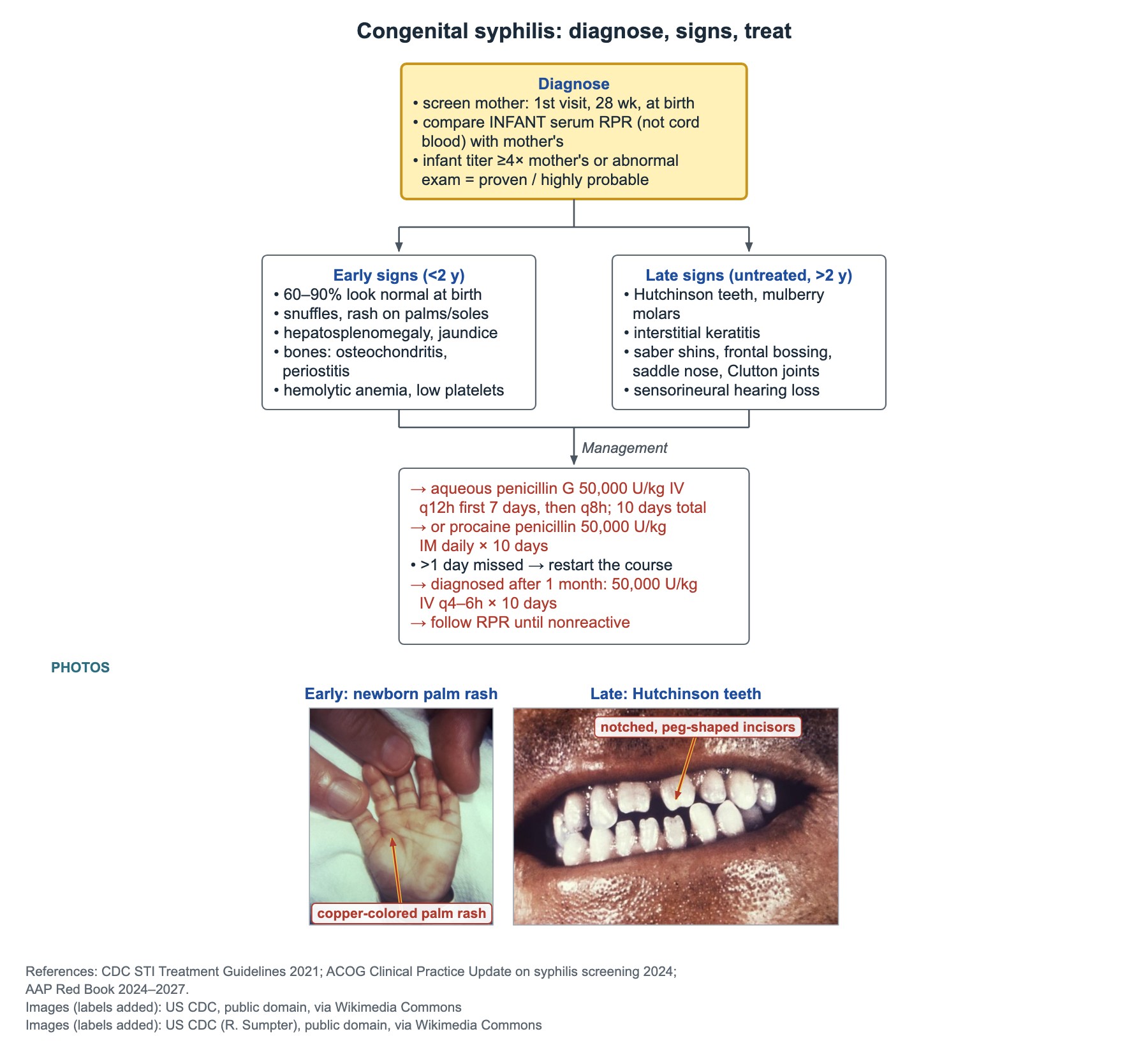
Mothers are screened at the first prenatal visit, at 28 weeks and at delivery. To compare titers, test the infant's serum, not cord blood. An infant titer at least 4 times the mother's, or an abnormal examination, makes the diagnosis proven or highly probable.
- The CSF may show a reactive VDRL and high white cells or protein.
| Stage | Findings |
|---|---|
| Early (under 2 years) | Most (60–90%) look normal at birth; snuffles, rash on palms and soles, hepatosplenomegaly, jaundice; osteochondritis, periostitis and metaphyseal lucent bands; hemolytic anemia and low platelets; pseudoparalysis of a limb (Parrot) |
| Late (untreated, over 2 years) | Hutchinson teeth, mulberry molars, interstitial keratitis, saber shins, frontal bossing, saddle nose, Clutton joints, sensorineural hearing loss |
Congenital syphilis: treatment
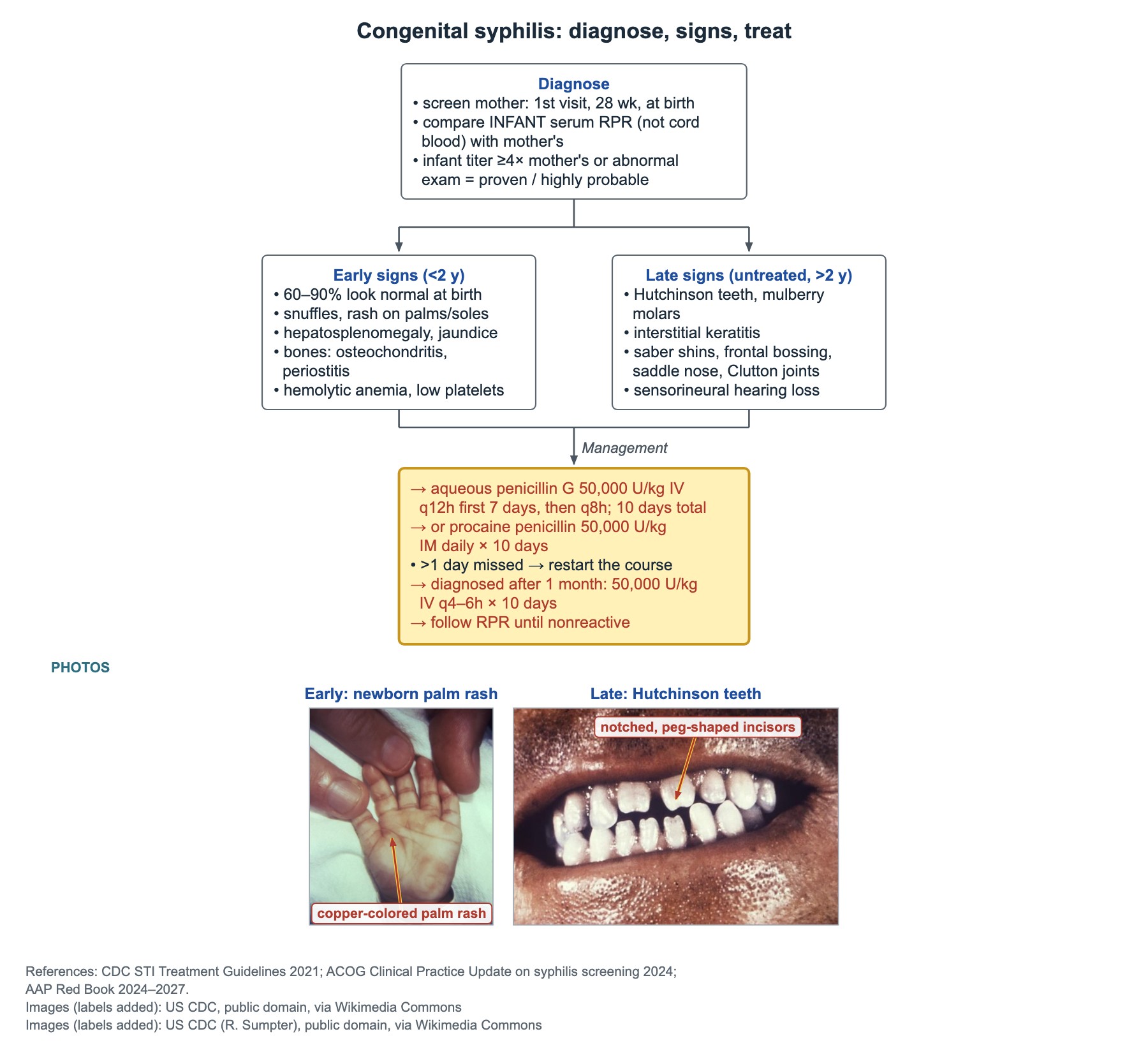
- Proven or highly probable disease: aqueous crystalline penicillin G 50,000 units/kg IV every 12 hours for the first 7 days of life, then every 8 hours, for 10 days in total.
- Alternative: procaine penicillin G 50,000 units/kg IM once daily for 10 days.
- If more than 1 day of treatment is missed, restart the whole course.
- Diagnosed after 1 month of age: aqueous penicillin G 50,000 units/kg IV every 4–6 hours for 10 days.
- Follow nontreponemal titers until they become nonreactive.
Chlamydial conjunctivitis
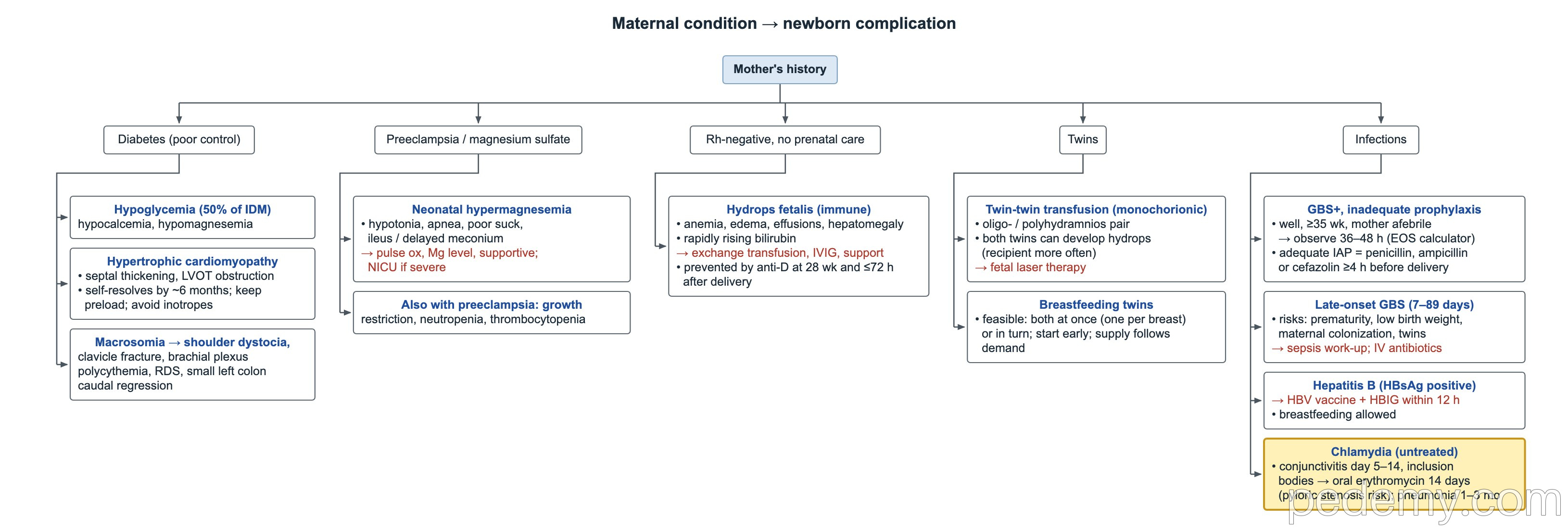
A baby born to a mother with untreated chlamydia can develop conjunctivitis at 5–14 days; scrapings show intracytoplasmic inclusion bodies. Erythromycin eye ointment at birth does not reliably prevent it.
- Treat with oral erythromycin for 14 days or oral azithromycin for 3 days; topical treatment alone is not enough.
- Macrolides in the first weeks of life raise the risk of infantile hypertrophic pyloric stenosis; tell parents to watch for vomiting.
- Untreated infants can develop afebrile pneumonia at 1–3 months with a staccato cough.
- Treat the mother and her partners.
Common questions
What is pneumatosis intestinalis?
Gas in the bowel wall on X-ray. In a preterm baby with distension and feeding intolerance it confirms necrotizing enterocolitis.
When is GBS prophylaxis adequate?
When IV penicillin G, ampicillin or cefazolin is started at least 4 hours before delivery. Clindamycin or vancomycin alone does not count as adequate.
How is congenital syphilis treated?
Aqueous penicillin G 50,000 units/kg IV every 12 hours for the first 7 days, then every 8 hours, for 10 days in total. Procaine penicillin IM daily for 10 days is the alternative.
Study this topic
Sources
- CDC 2021: Sexually transmitted infections treatment guidelines (MMWR)
- ACOG Committee Opinion 797: Prevention of group B streptococcal early-onset disease in newborns (2020)
- AAP 2019: Management of infants at risk for group B streptococcal disease (Pediatrics)
- Cystic Fibrosis Foundation 2017: Diagnosis of cystic fibrosis, consensus guidelines (J Pediatr)
Written for Pedemy in our own words from the sources above; checked November 2026. For education only, not medical advice; check doses and local protocols before treating a patient. Pedemy is independent and not affiliated with or endorsed by the organizations cited.