

Main decision tree
Fetal monitoring and maternal conditions
Key points
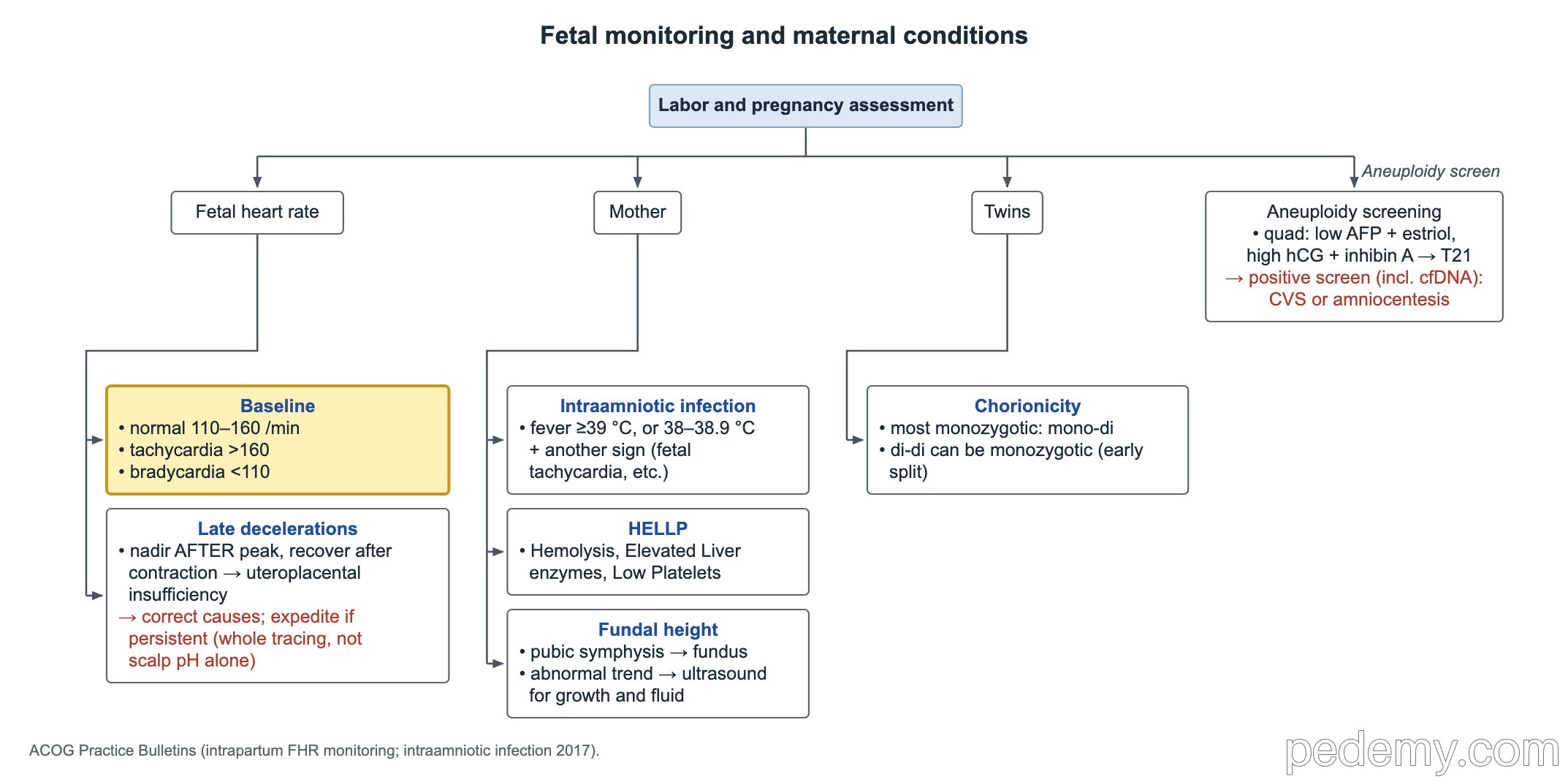
- Normal fetal heart rate baseline is 110–160 beats/min; below 110 is bradycardia and above 160 is tachycardia.
- Late decelerations (nadir after the contraction peak) point to poor uteroplacental oxygen delivery.
- Cell-free DNA screening for trisomy 21 works from 10 weeks; any positive screen needs CVS or amniocentesis.
- Maternal serum AFP well above normal (for example 3.5 MoM) suggests an open neural tube defect.
- GBS screening: vaginal–rectal culture at 36 0/7 to 37 6/7 weeks; GBS bacteriuria in pregnancy means prophylaxis without screening.
- Mother HBsAg positive: hepatitis B vaccine plus HBIG within 12 hours of birth.
- Syphilis screening in pregnancy: first visit, 28 weeks and at delivery.
Fetal heart rate monitoring
The tree sorts labor and pregnancy assessment into four branches: fetal heart rate, the mother, twins and aneuploidy screening. Start with the fetal heart rate baseline, then look at decelerations.
- Recurrent late decelerations need prompt obstetric review and correction of reversible causes: change the mother's position, treat low blood pressure, stop or reduce oxytocin.
- If concerning late decelerations persist, delivery is expedited when indicated.
- Judge the whole tracing and the clinical picture. A single fetal scalp pH cutoff is not a universal modern rule for delivery.
| Finding | Definition | What it suggests |
|---|---|---|
| Normal baseline | 110–160 beats/min | Well-oxygenated fetus |
| Bradycardia | Baseline below 110 beats/min | Hypoxia, cord compression, maternal drugs, fetal heart block |
| Tachycardia | Baseline above 160 beats/min | Maternal fever or intraamniotic infection, fetal hypoxia, maternal drugs |
| Late deceleration | Gradual fall; lowest point after the contraction peak; recovers after the contraction ends | Impaired uteroplacental oxygen delivery |
Prenatal screening for aneuploidy and neural tube defects
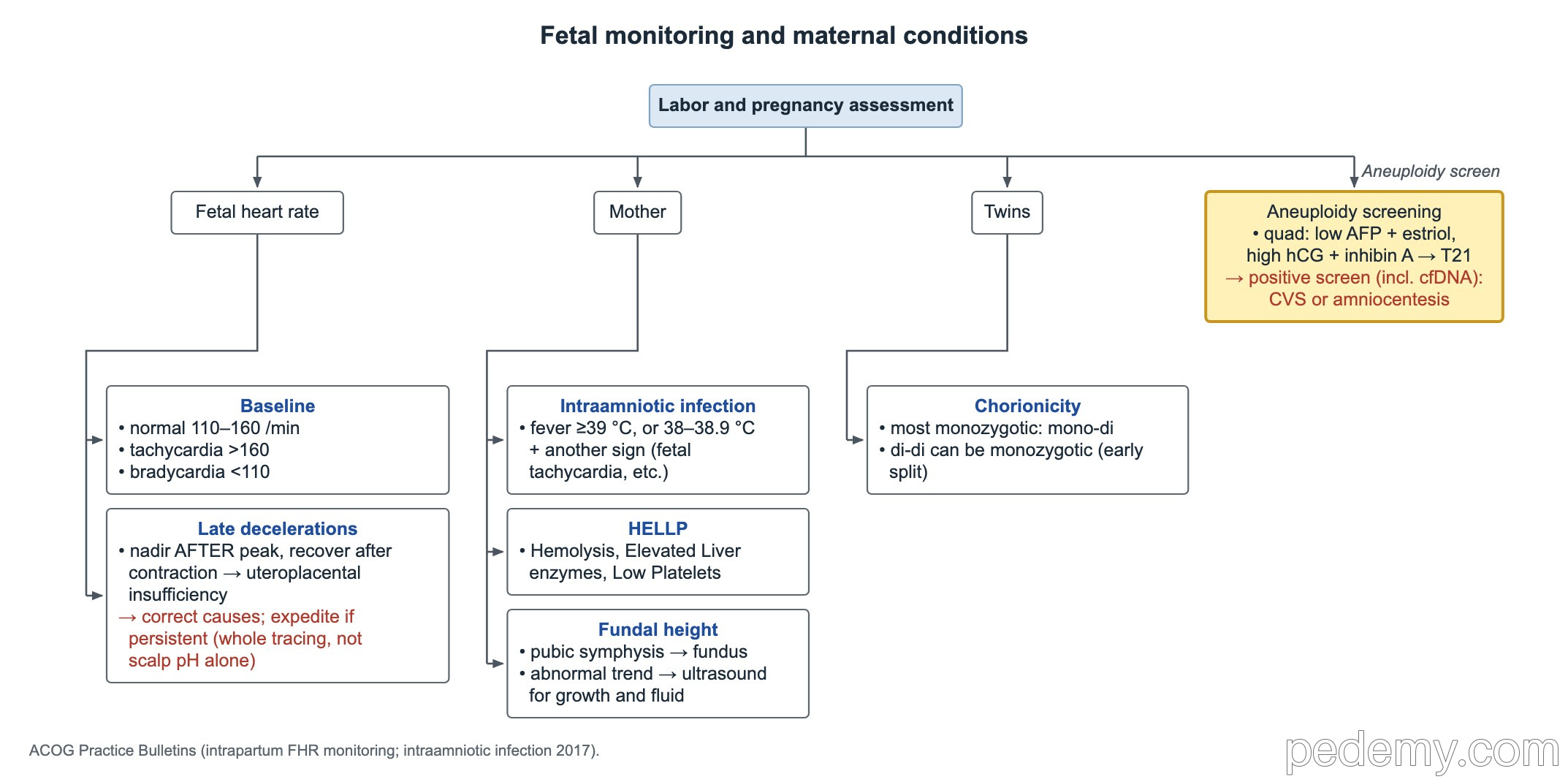
ACOG recommends offering aneuploidy screening and diagnostic testing to all pregnant patients, whatever their age. Screening tests estimate risk; only CVS or amniocentesis diagnose.
- Any positive screen, including a positive cell-free DNA result, needs genetic counseling and a diagnostic test (CVS or amniocentesis) before decisions.
- A high AFP also occurs with abdominal wall defects, multiple gestation and wrong dates, so a detailed ultrasound follows.
| Test | Timing | Key result |
|---|---|---|
| Cell-free fetal DNA | From 10 weeks | Most sensitive screen for trisomy 21 (above 99%) with a very low false-positive rate |
| Quad screen | 15–22 weeks | Trisomy 21: low AFP and estriol, high hCG and inhibin A |
| Maternal serum AFP | 15–20 weeks | High (for example 3.5 MoM): open neural tube defect such as anencephaly or myelomeningocele |
| CVS / amniocentesis | CVS 10–13 weeks; amniocentesis from 15 weeks | Diagnostic karyotype or microarray |
Maternal problems in pregnancy and labor
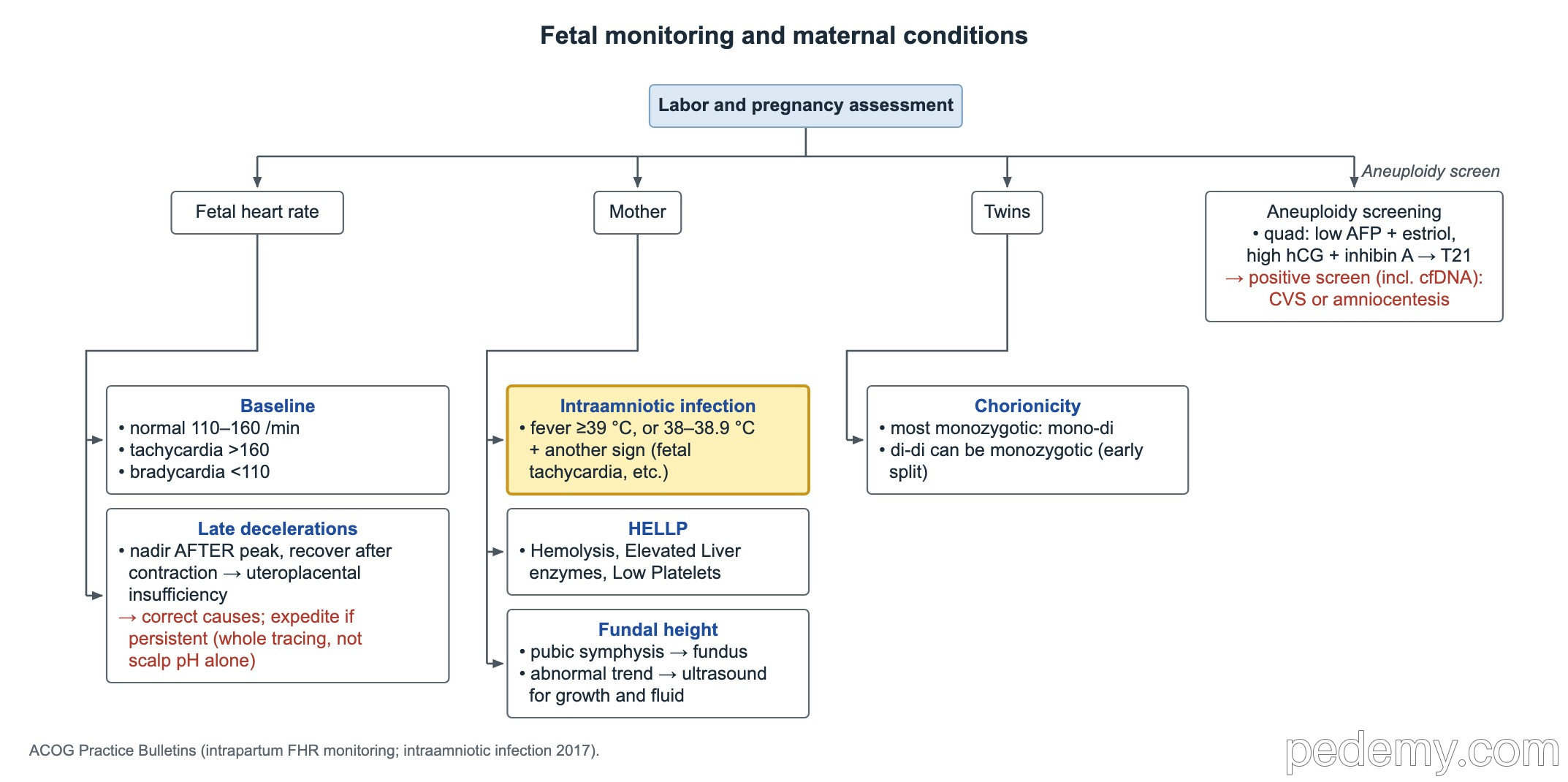
- Intraamniotic infection (ACOG): suspect it with maternal fever of 39.0 °C (102.2 °F) or more, or 38.0–38.9 °C (100.4–102.0 °F) plus another sign such as persistent fetal tachycardia, maternal leukocytosis or purulent cervical fluid.
- Maternal intrapartum fever with persistent fetal tachycardia: think intraamniotic infection; the mother gets intrapartum antibiotics and the newborn needs an early-onset sepsis risk assessment.
- HELLP syndrome: Hemolysis, Elevated Liver enzymes (AST/ALT), Low Platelets. It is a severe form of preeclampsia.
- Preeclampsia is treated with magnesium sulfate for seizure prophylaxis. The newborn can have hypermagnesemia: hypotonia, apnea, poor suck and poor bowel sounds with normal glucose. Care is supportive with close breathing monitoring.
- Fundal height is measured from the pubic symphysis to the top of the uterine fundus. A concerning trend (lagging or too large) needs ultrasound of fetal growth and amniotic fluid.
Group B strep: screening, prophylaxis and the newborn
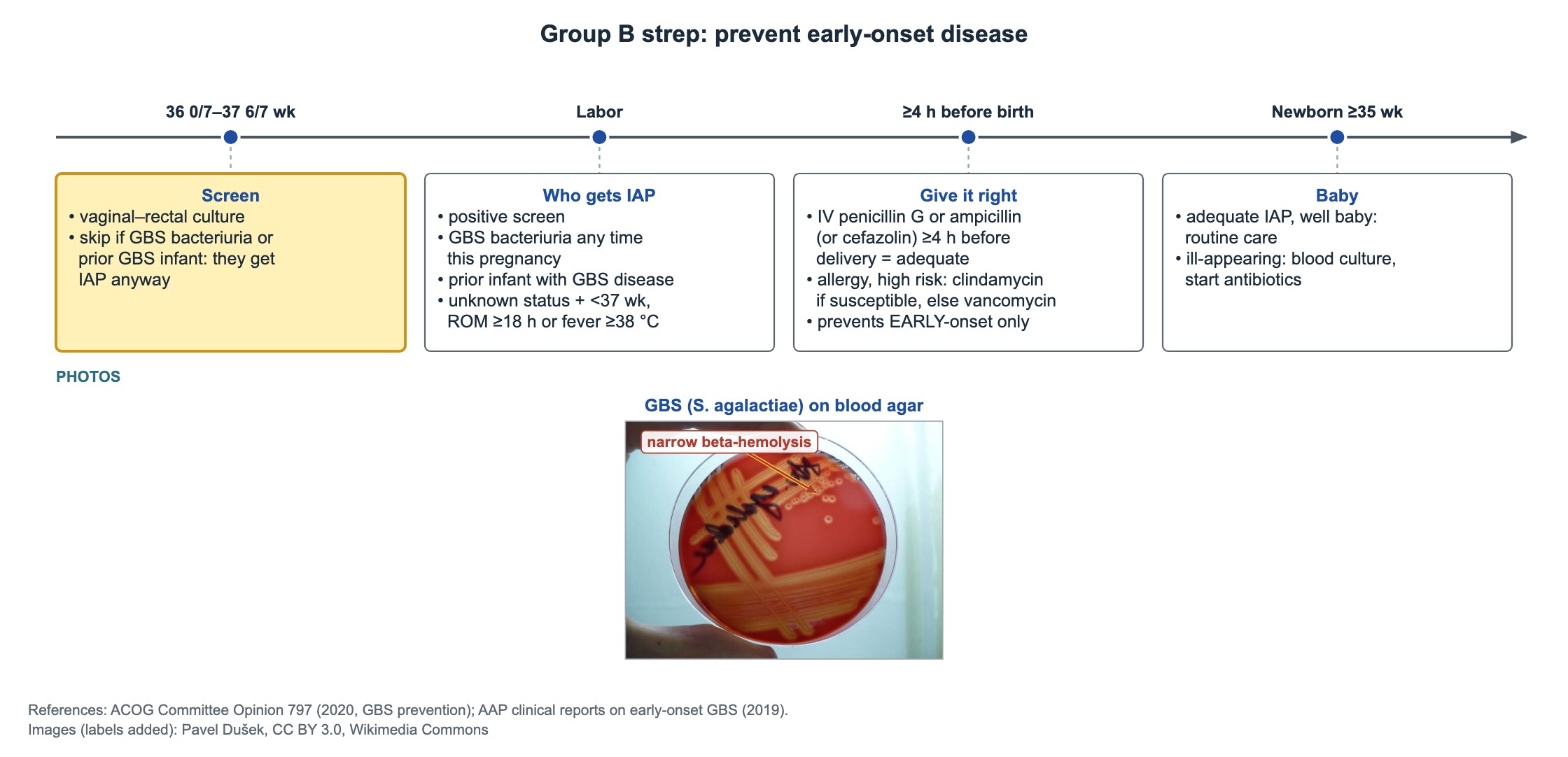
- Screen with a vaginal–rectal culture at 36 0/7 to 37 6/7 weeks.
- Intrapartum prophylaxis (IAP) is indicated for a positive screen, GBS bacteriuria at any concentration in this pregnancy, or a previous infant with GBS disease. The last two skip screening.
- Unknown GBS status: give IAP for labor before 37 weeks, rupture of membranes for 18 hours or more, or intrapartum fever of 38 °C (100.4 °F) or more.
- Adequate IAP: IV penicillin G, ampicillin or cefazolin given 4 hours or more before delivery. Clindamycin (if susceptible) or vancomycin are for high-risk penicillin allergy.
- Well-appearing baby of 35 weeks or more with inadequate IAP (for example, ROM 18 hours): clinical observation for 36–48 hours. No routine cultures or empiric antibiotics; a CBC or CRP does not help decide.
- IAP prevents early-onset disease only. Late-onset GBS (7–89 days) is linked to prematurity and low birth weight, plus maternal colonization and multiple gestation; it needs a full sepsis work-up and IV antibiotics.
Hepatitis B and syphilis in the mother
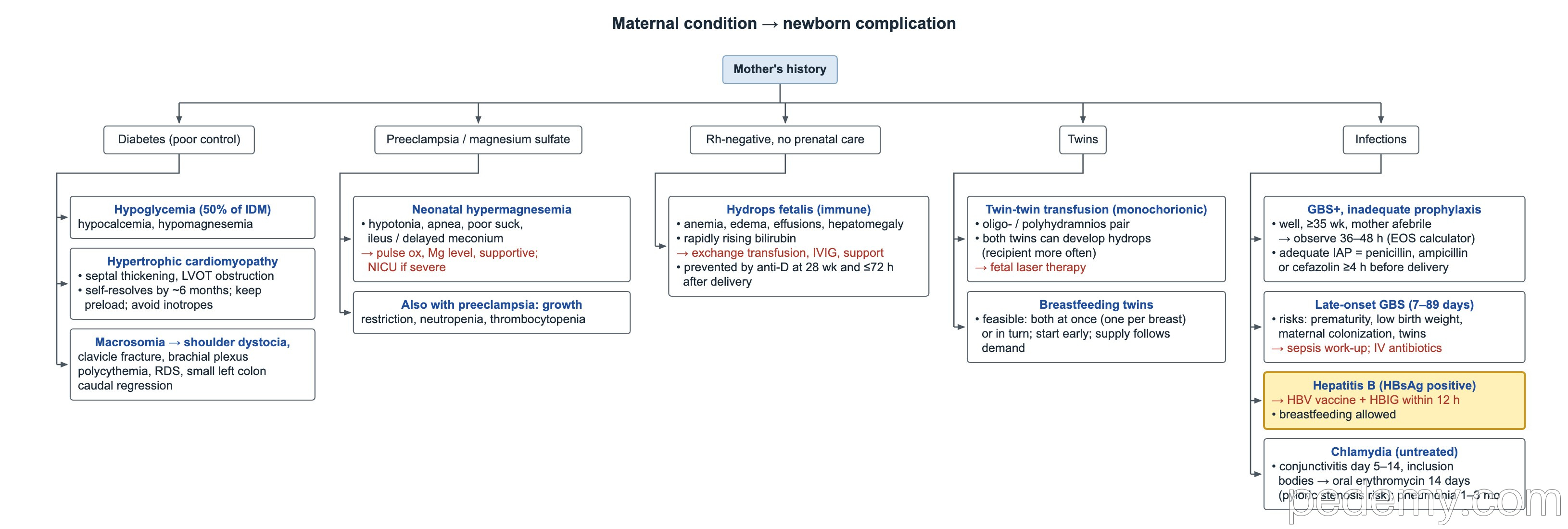
- Mother HBsAg positive (whatever her HBeAg status): hepatitis B vaccine plus hepatitis B immune globulin (HBIG) within 12 hours of birth.
- Complete the vaccine series and test the infant for HBsAg and anti-HBs at 9–12 months. Breastfeeding is allowed.
- Syphilis: screen the mother at the first prenatal visit, again at 28 weeks and at delivery.
- Compare the infant's own serum nontreponemal titer (not cord blood) with the mother's. An infant titer 4-fold higher than the mother's, or an abnormal exam, means proven or highly probable congenital syphilis.
- Treatment for proven or highly probable disease: aqueous penicillin G 50,000 units/kg IV every 12 hours for the first 7 days of life, then every 8 hours, for 10 days in total.
Twins: chorionicity, twin-twin transfusion and feeding
- Most monozygotic twins are monochorionic diamniotic.
- Dichorionic diamniotic twins are not always fraternal: monozygotic twins that split early (within about 3 days) are also di-di.
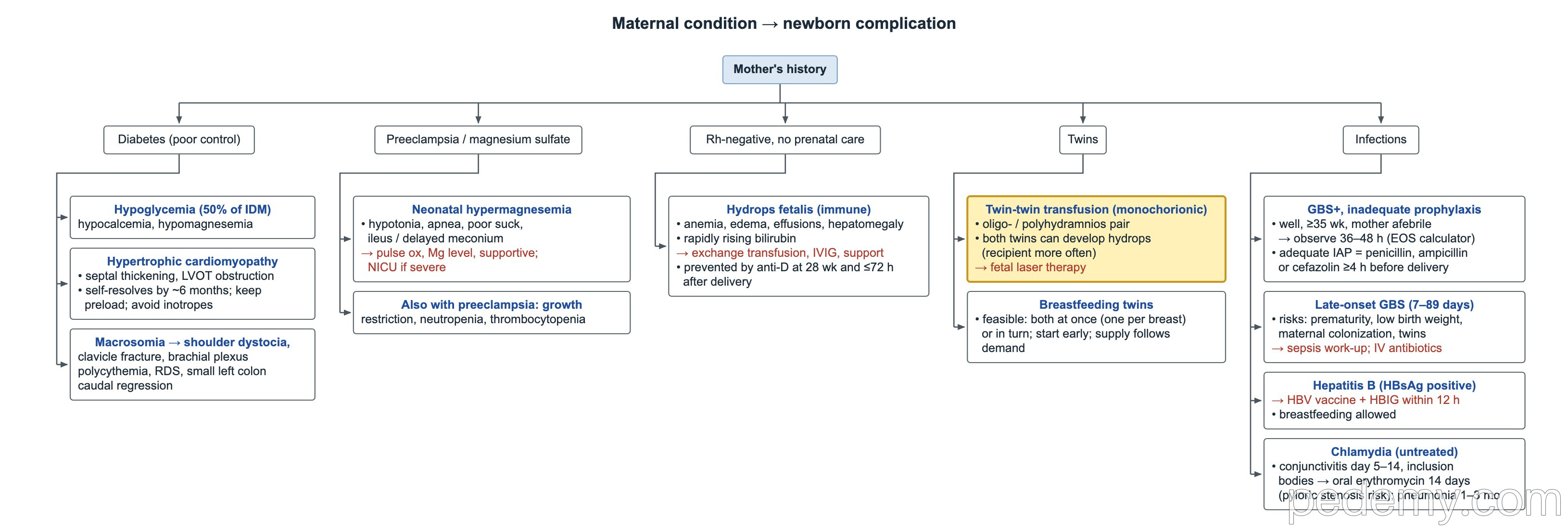
- Twin-twin transfusion syndrome happens in monochorionic twins through shared placental vessels: oligohydramnios in the donor sac and polyhydramnios in the recipient sac.
- Both twins can develop hydrops fetalis, the recipient more often. Fetal laser therapy of the connecting vessels is the main treatment.
- Breastfeeding twins is feasible: feed both at once (one on each breast) or one after the other, start early, and arrange lactation support. Supply follows demand.
Maternal diabetes, Rh disease and oligohydramnios
| Maternal condition | Newborn finding | Key point |
|---|---|---|
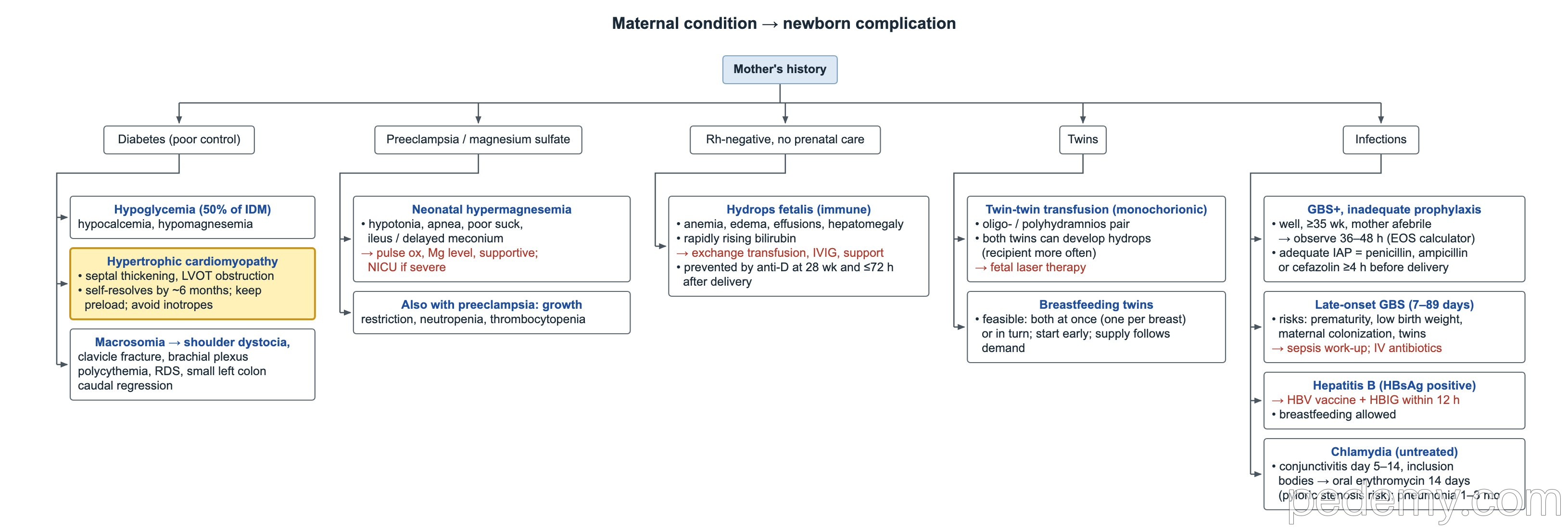
| Poorly controlled diabetes | Hypoglycemia (fetal hyperinsulinism), hypocalcemia, hypomagnesemia | Check glucose early |
| Poorly controlled diabetes | Hypertrophic cardiomyopathy with septal thickening; echo changes in about 30% | Avoid inotropes (they worsen outflow obstruction); keep preload; usually resolves by about 6 months |
| Poorly controlled diabetes | Macrosomia, shoulder dystocia, clavicle fracture, brachial plexus injury, polycythemia, RDS, caudal regression | Small left colon syndrome: expect hypoglycemia soon after birth |
| Rh-negative mother, no prenatal care, prior fetal death | Hydrops with severe anemia and rapidly rising bilirubin | Exchange transfusion, IVIG, support; prevent next time with anti-D at 28 weeks and within 72 hours of delivery |
| Oligohydramnios from bilateral renal agenesis | Potter sequence: flat nose, small chin, low-set ears, clubfeet | Death is usually from pulmonary hypoplasia |
Common questions
What is a normal fetal heart rate?
A baseline of 110–160 beats per minute. Below 110 is fetal bradycardia and above 160 is fetal tachycardia.
When is group B strep screening done in pregnancy?
At 36 0/7 to 37 6/7 weeks, with a vaginal–rectal swab. Women with GBS bacteriuria in this pregnancy or a previous infant with GBS disease get prophylaxis without screening.
What does a positive cell-free DNA test mean?
It is a screen, not a diagnosis. The next step is genetic counseling and CVS or amniocentesis to confirm.
What does a baby need if the mother has hepatitis B?
Hepatitis B vaccine and hepatitis B immune globulin within 12 hours of birth, then the full vaccine series and testing at 9–12 months.
Study this topic
Sources
- ACOG Committee Opinion 797 (2020): Prevention of group B streptococcal early-onset disease in newborns
- AAP 2019: Management of infants at risk for group B streptococcal disease (Pediatrics)
- ACOG Practice Bulletin 226 (2020): Screening for fetal chromosomal abnormalities
- ACOG Committee Opinion 712 (2017): Intrapartum management of intraamniotic infection
- CDC 2021: Sexually transmitted infections treatment guidelines (MMWR)
Written for Pedemy in our own words from the sources above; checked November 2026. For education only, not medical advice; check doses and local protocols before treating a patient. Pedemy is independent and not affiliated with or endorsed by the organizations cited.