

Main decision tree
Weak child: where is the lesion?
Key points
- SMA: biallelic SMN1 loss (exon 7 deletion), autosomal recessive; more SMN2 copies mean milder disease.
- SMA type 1 never sits, type 2 sits but never walks, type 3 walks; newborn screening allows treatment before symptoms.
- Guillain–Barré: ascending weakness and areflexia after Campylobacter or a virus; CSF high protein with normal cells.
- Duchenne: X-linked dystrophin loss, Gowers sign by age 2–6 years, very high CK, high AST/ALT from muscle.
- Duchenne care: daily glucocorticoid slows strength loss; cardiomyopathy is now the leading cause of death.
- Myasthenia gravis: fatigable ptosis and diplopia, normal reflexes, AChR or MuSK antibodies; pyridostigmine first.
- Infant botulism: constipation, poor suck, ptosis, descending weakness → BabyBIG; avoid aminoglycosides and honey before 12 months.
Localize the weakness; spinal muscular atrophy
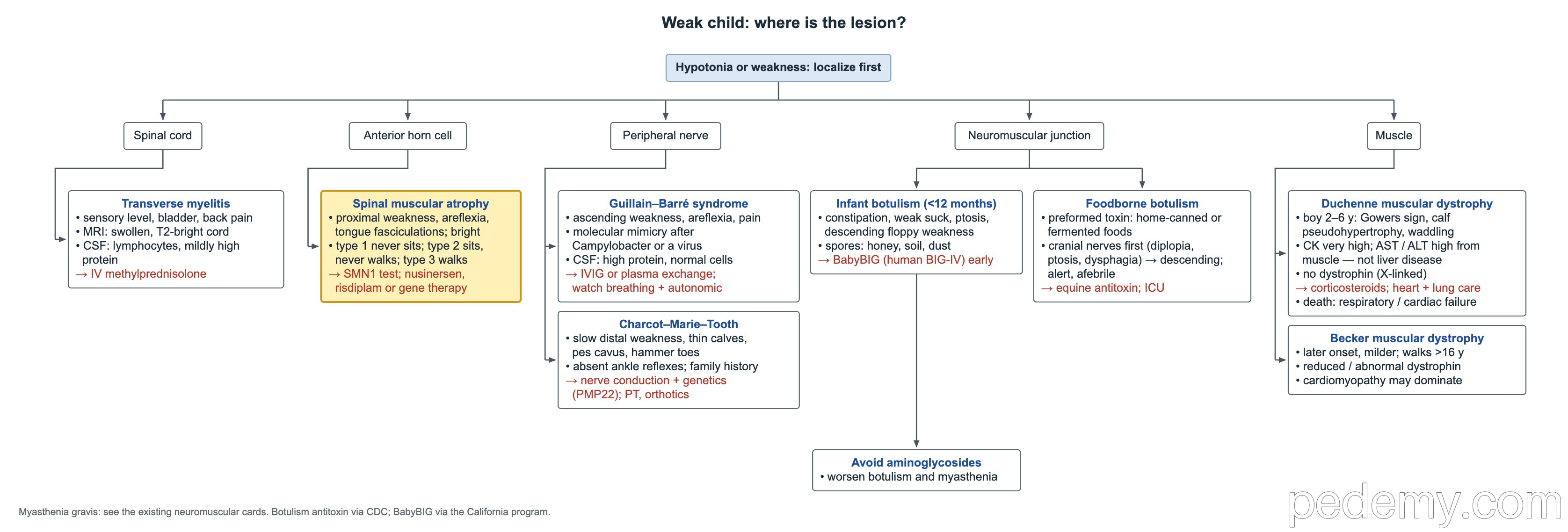
The tree sorts weakness by level. A sensory level and bladder signs point to the spinal cord (transverse myelitis: urgent spine MRI, IV methylprednisolone). Areflexia with normal sensation and tongue fasciculations points to the anterior horn cell: spinal muscular atrophy (SMA).
SMA damages the anterior horn lower motor neurons. Weakness is proximal and symmetric, with areflexia and fasciculations. Sensation, alertness and social smile stay normal.
| Level | Clues |
|---|---|
| Spinal cord | Sensory level, bladder or bowel signs, back pain |
| Anterior horn cell (SMA) | Areflexia, tongue fasciculations, normal sensation, bright child |
| Peripheral nerve | Areflexia; distal or ascending weakness; sensory signs possible |
| Neuromuscular junction | Fatigable or descending weakness, ptosis, reflexes kept |
| Muscle | Proximal weakness, Gowers sign, high CK, reflexes lost late |
SMA genetics, types and treatment
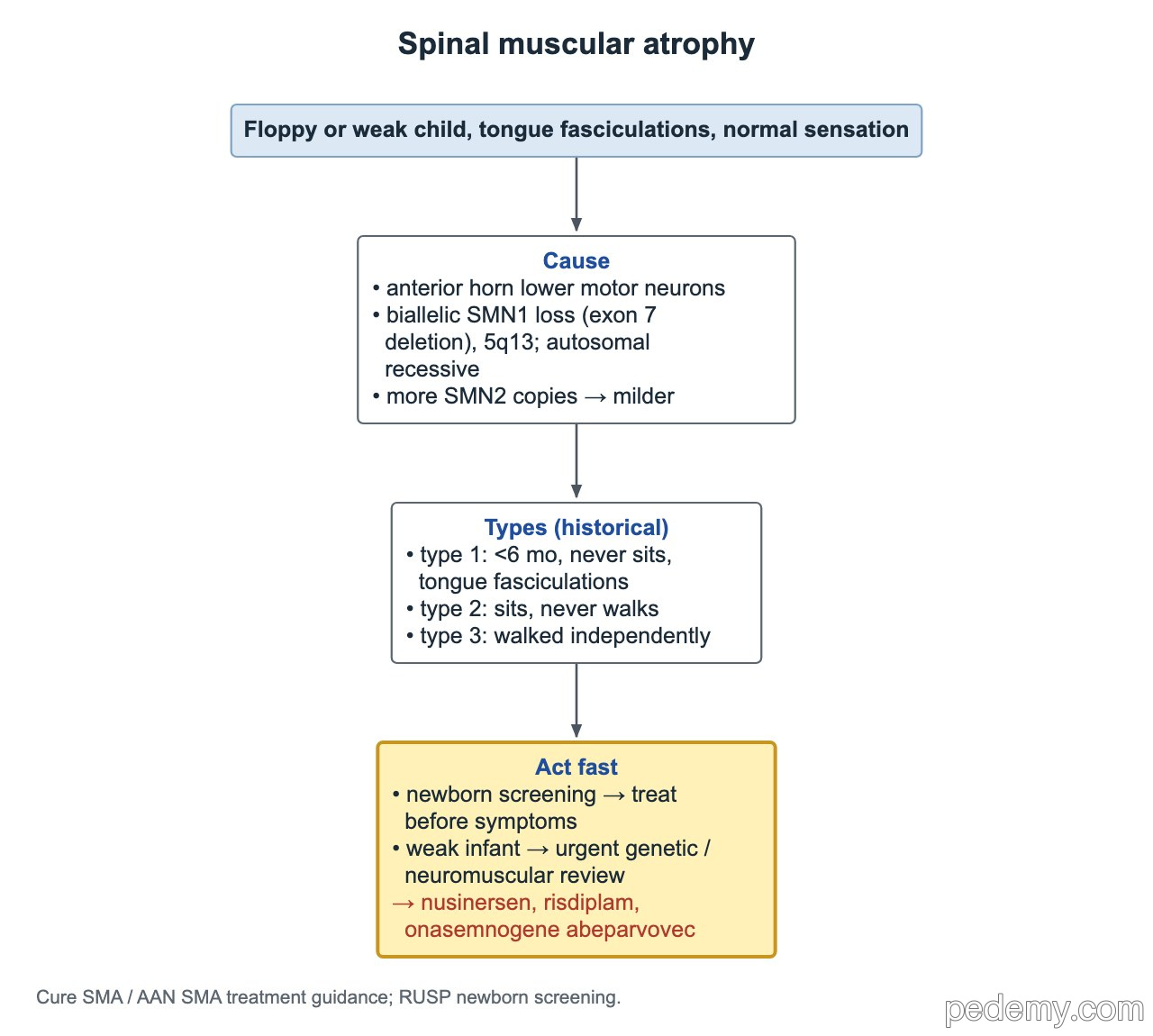
- Cause: homozygous deletion of SMN1 exon 7 on chromosome 5q13; autosomal recessive.
- SMN2 is the modifying gene: more SMN2 copies make a milder phenotype.
- Type 1: onset before 6 months, never sits. Type 2: sits but never walks. Type 3: walked independently. These types are historical labels now that treatment changes the course.
- SMA is on the US Recommended Uniform Screening Panel (added 2018), so most cases are found before symptoms.
- A weak infant with suspected SMA needs urgent genetic testing and neuromuscular referral: treatment works best before motor neurons are lost.
- Disease-modifying drugs: nusinersen (intrathecal), risdiplam (oral) and onasemnogene abeparvovec (one-time IV gene therapy).
Peripheral nerve: Guillain–Barré syndrome and Charcot–Marie–Tooth
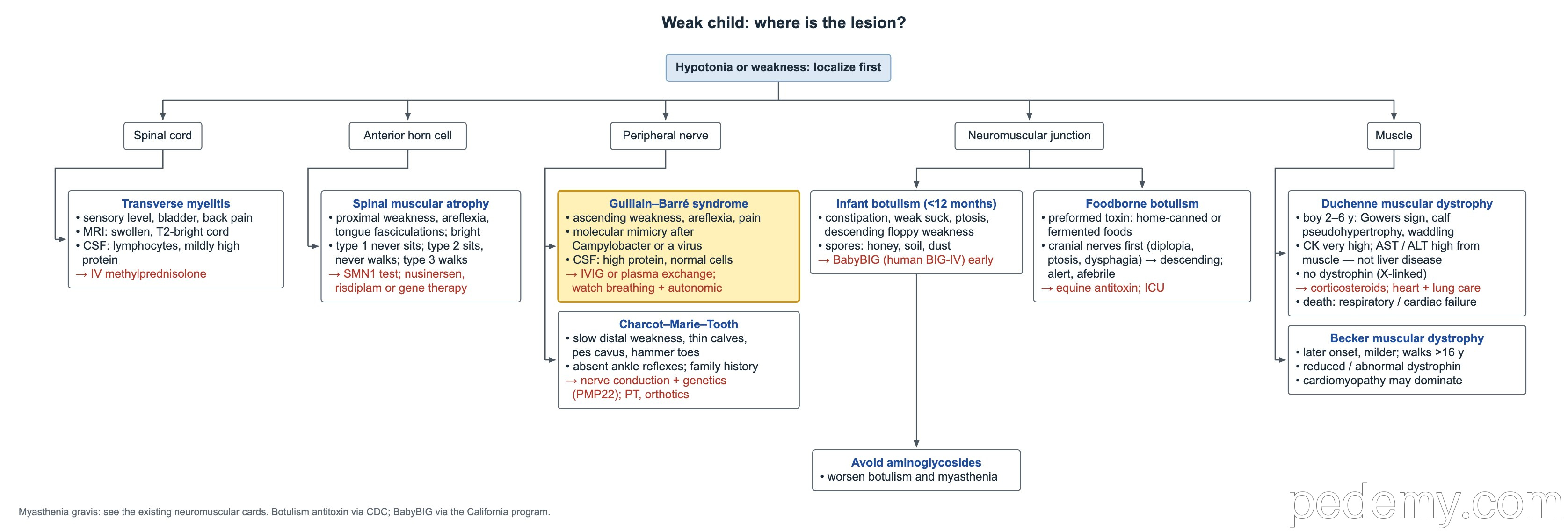
Guillain–Barré syndrome (GBS) starts 1–4 weeks after an infection, classically Campylobacter jejuni diarrhea. Antibodies made against the microbe cross-react with nerve gangliosides (molecular mimicry).
Charcot–Marie–Tooth disease (CMT) is the slow, inherited counterpart: distal weakness over years rather than days.
- GBS: ascending symmetric weakness, lost reflexes, often back or leg pain.
- GBS CSF: high protein with a normal cell count (albuminocytologic dissociation).
- GBS treatment: IVIG or plasma exchange; watch breathing (vital capacity) and autonomic instability (heart rate, blood pressure).
- CMT: slowly progressive distal leg wasting, thin calves, high-arched feet (pes cavus), hammer toes, absent ankle reflexes, often a family history.
- CMT1A, from a PMP22 duplication, is the most common form; confirm with nerve conduction studies and genetic testing; treat with physical therapy and orthotics.
Friedreich ataxia
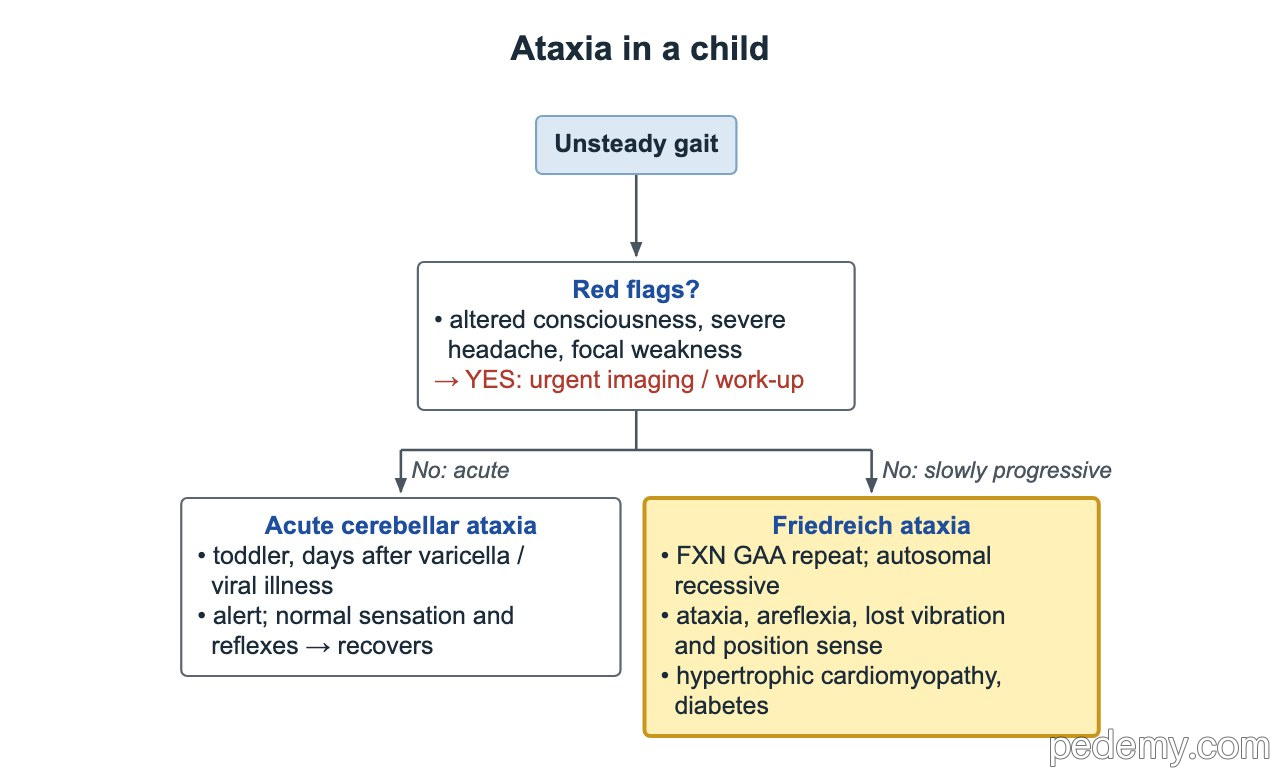
Slowly progressive ataxia with lost reflexes and lost vibration and position sense suggests Friedreich ataxia. An acute ataxia in a toddler a few days after varicella or another viral illness, with normal reflexes and sensation, is usually acute cerebellar ataxia and recovers.
- Genetics: expanded GAA repeat in FXN (frataxin); autosomal recessive.
- Neurology: gait ataxia, areflexia, loss of vibration and proprioception.
- Non-neurologic: hypertrophic cardiomyopathy and diabetes mellitus; screen for both.
Duchenne and Becker muscular dystrophy
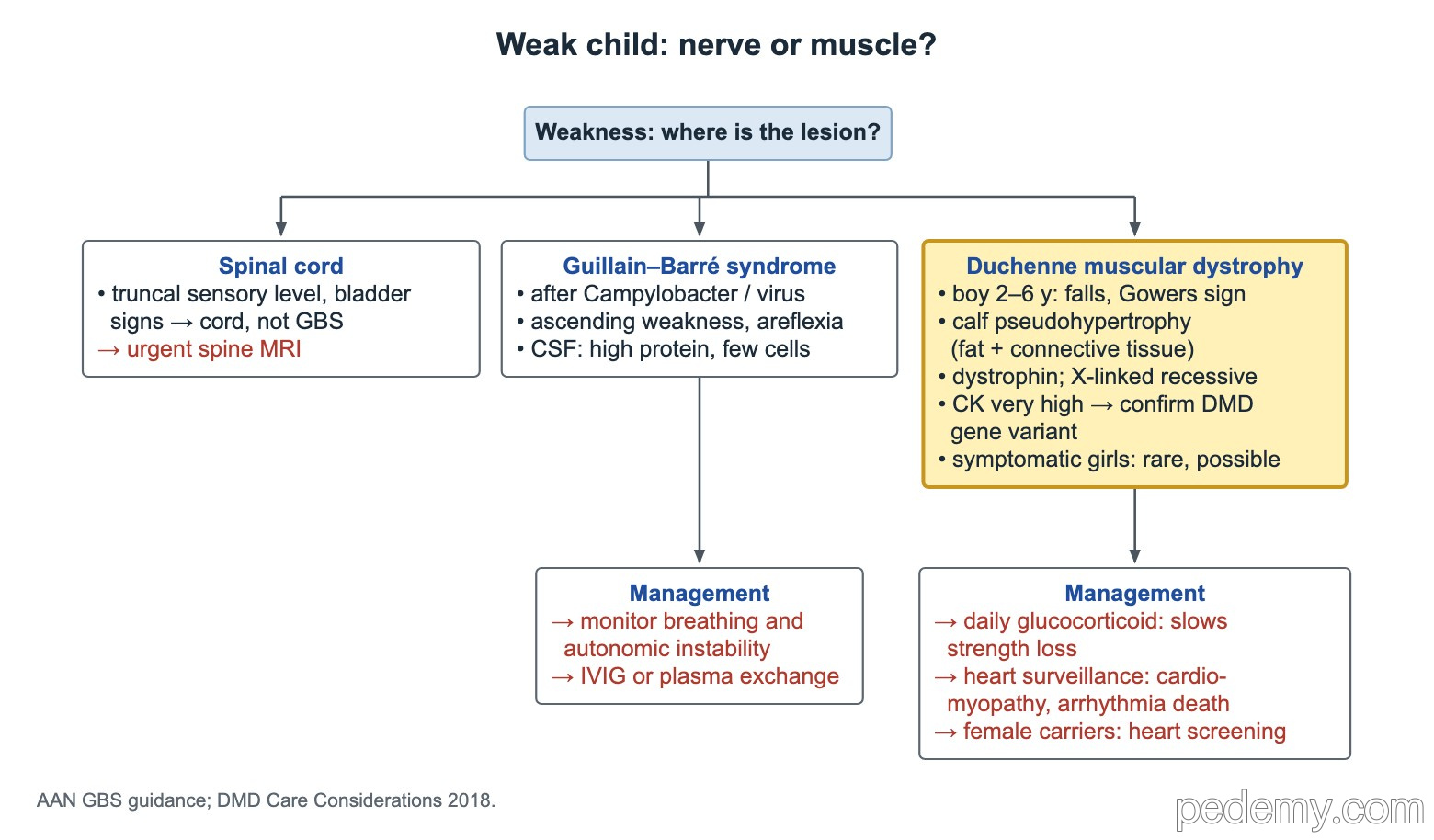
A boy aged 2–6 years who falls often, waddles and climbs up his legs to stand (Gowers sign) has Duchenne muscular dystrophy (DMD) until proven otherwise. The big calves are pseudohypertrophy: muscle replaced by fat and connective tissue.
- Inheritance: X-linked recessive; absent dystrophin. Symptomatic girls are uncommon but possible.
- First test: creatine kinase (CK), usually many times normal.
- High AST and ALT come from muscle, not liver: check CK before a liver work-up.
- Confirm with genetic testing for a pathogenic DMD gene variant.
- Becker muscular dystrophy: later onset and milder; reduced or abnormal (not absent) dystrophin; raised CK; walking often continues past 16 years; cardiomyopathy may dominate.
Duchenne care: steroids, heart and lungs
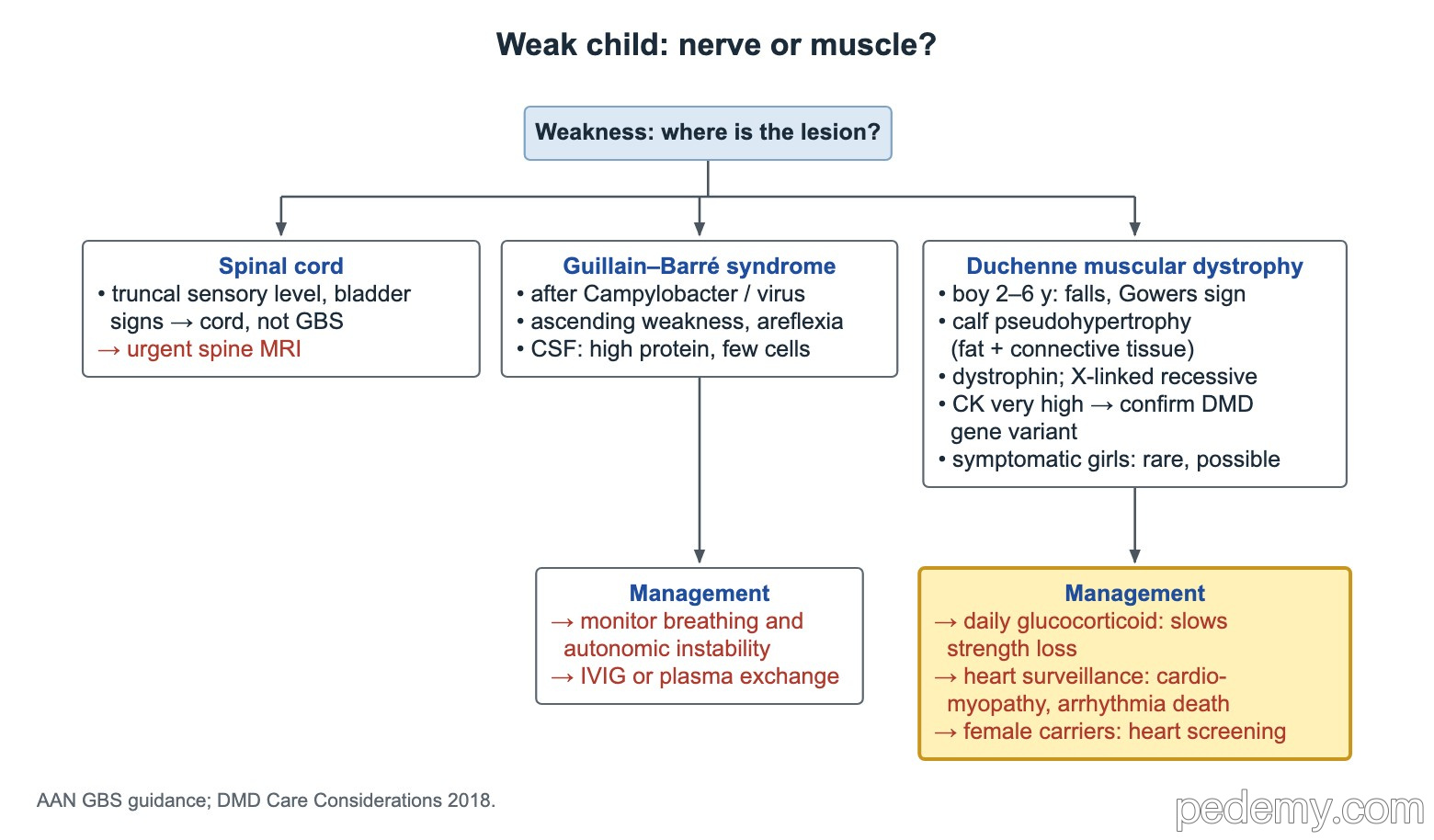
- A daily glucocorticoid slows the loss of strength and prolongs walking (prednisone, deflazacort or vamorolone).
- Heart: regular cardiac surveillance; cardiomyopathy and arrhythmias can cause sudden death.
- With ventilatory support for respiratory failure, cardiomyopathy is now the leading cause of death.
- Female carriers can develop cardiomyopathy and need periodic heart screening.
Neuromuscular junction: myasthenia gravis and botulism
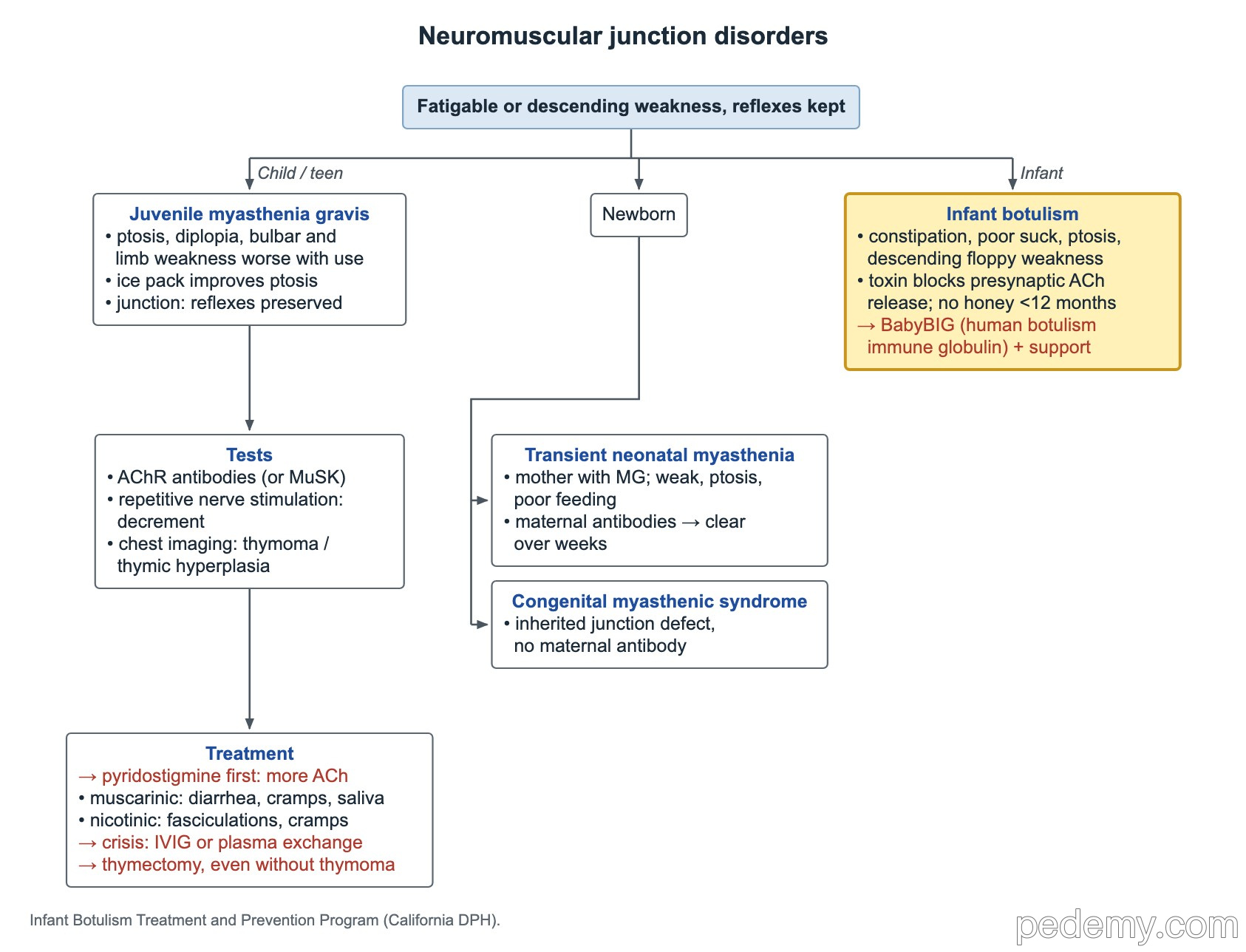
Junction disorders cause fatigable or descending weakness with reflexes kept and sensation normal. Age points to the cause: juvenile myasthenia gravis in a child or teen, transient neonatal myasthenia or a congenital myasthenic syndrome in a newborn, and botulism in an infant.
- Juvenile myasthenia gravis: ptosis, diplopia, bulbar and limb weakness that worsens with use. An ice pack on the eyelid for about 2 minutes improves the ptosis.
- Tests: acetylcholine receptor (AChR) or MuSK antibodies; slow repetitive nerve stimulation shows a decrement; chest CT or MRI looks for thymoma or thymic hyperplasia.
- Pyridostigmine is first-line symptomatic treatment: it slows acetylcholine breakdown. Muscarinic effects: diarrhea, cramps, salivation. Nicotinic effects: fasciculations, muscle cramps.
- Myasthenic crisis or severe worsening: IVIG or plasma exchange. Thymectomy helps AChR antibody-positive generalized disease even without a thymoma.
- Transient neonatal myasthenia: maternal antibodies cross the placenta; weak cry, ptosis, poor feeding; improves over weeks as the antibodies clear.
- Congenital myasthenic syndrome: an inherited junction defect, with no maternal antibody.
- Infant botulism (under 12 months): swallowed spores make toxin that blocks presynaptic acetylcholine release. Constipation comes first, then poor suck, ptosis and descending floppy weakness. Treat early with human botulism immune globulin (BabyBIG) and supportive care.
- No honey before 12 months. Aminoglycosides such as gentamicin worsen the blockade in botulism and myasthenia and can stop breathing.
- Foodborne botulism: preformed toxin from home-canned or fermented food; hours later diplopia, ptosis, dysphagia, then descending weakness in an alert, afebrile patient. Treat with equine heptavalent botulism antitoxin and ICU care.
Common questions
What is the Gowers sign?
A child with weak hip and thigh muscles stands up from the floor by pushing on the knees and thighs with the hands. It is classic for Duchenne muscular dystrophy but can appear in any proximal weakness.
Why does a baby with botulism get constipation first?
Botulinum toxin blocks acetylcholine release at autonomic as well as motor nerve endings, so gut slowing often comes days before the weakness.
Is SMA on the newborn screen?
Yes. SMA was added to the US Recommended Uniform Screening Panel in 2018, so most babies are diagnosed before symptoms start.
Study this topic
Sources
- Birnkrant et al. 2018: Diagnosis and management of Duchenne muscular dystrophy, part 1 (Lancet Neurol)
- EAN/PNS 2023: Guideline on diagnosis and treatment of Guillain–Barré syndrome (Eur J Neurol)
- International consensus guidance for management of myasthenia gravis: 2020 update (Neurology)
Written for Pedemy in our own words from the sources above; checked November 2026. For education only, not medical advice; check doses and local protocols before treating a patient. Pedemy is independent and not affiliated with or endorsed by the organizations cited.