

Main decision tree
Seizure or not? Name the type
Key points
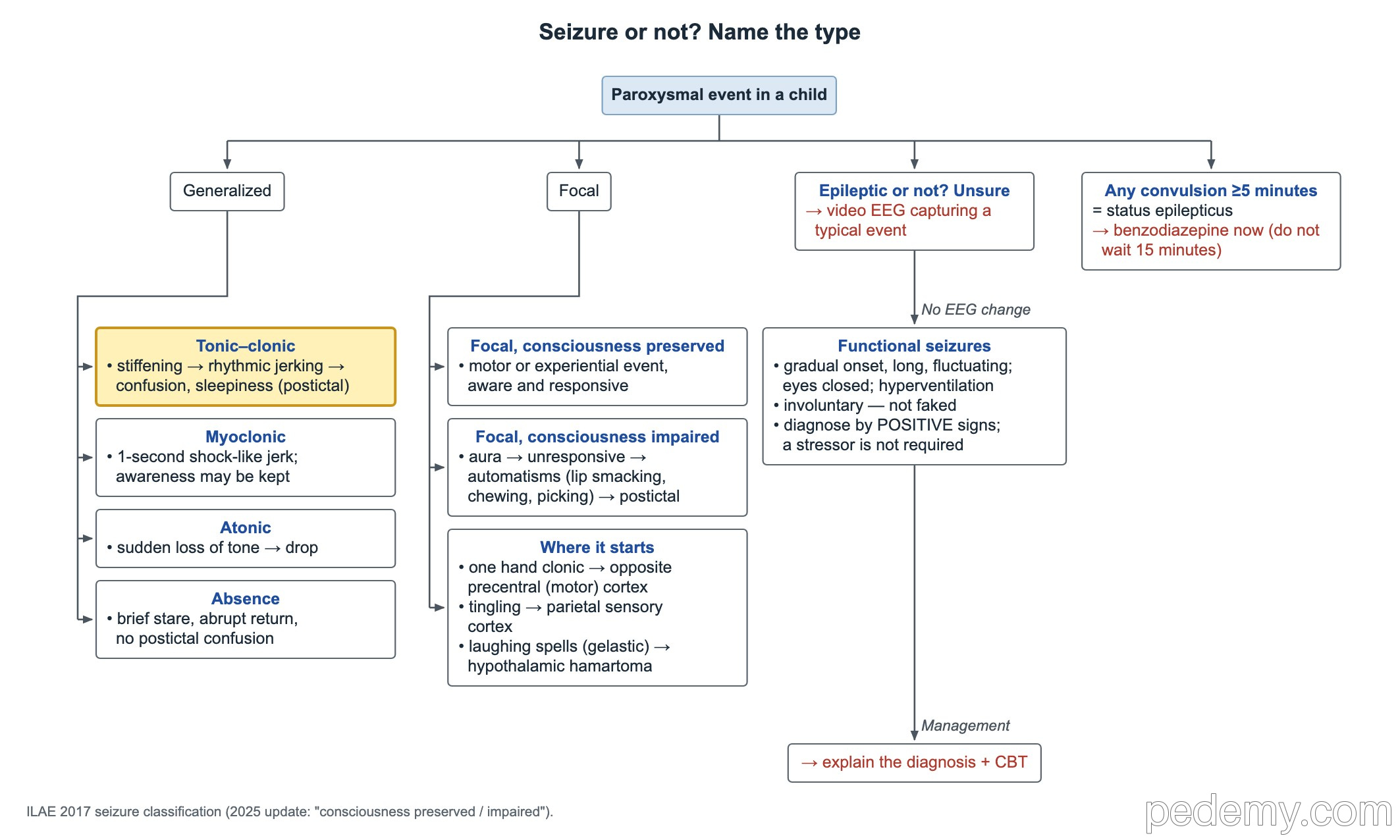
- Any convulsive seizure lasting 5 minutes or more: give a benzodiazepine; do not wait 15 minutes.
- Simple febrile seizure: generalized, under 15 minutes, once in 24 hours, age 6–60 months; no routine EEG or imaging.
- Neonatal seizures: confirm with continuous video EEG; IV phenobarbital is first line (ILAE 2023).
- Infantile spasms: clusters on waking, regression, hypsarrhythmia → ACTH or high-dose prednisolone and/or vigabatrin.
- Childhood absence epilepsy: age 4–10 years, 3-Hz spike-wave, provoked by hyperventilation → ethosuximide.
- Juvenile myoclonic epilepsy: morning jerks, 4–6 Hz polyspike-wave; usually lifelong; avoid carbamazepine and oxcarbazepine.
- Side effects: valproate → hyperammonemia and liver injury; topiramate → non-gap acidosis; oxcarbazepine → low sodium.
Seizure or not? Name the type
The 2025 ILAE classification sorts seizures as focal or generalized, and describes focal seizures by whether consciousness is preserved or impaired (the older terms were focal aware and focal impaired awareness).
- Clonic jerking of one hand starts in the opposite primary motor cortex (precentral gyrus); tingling starts in the parietal somatosensory cortex.
- Repeated unprovoked laughing attacks are gelastic seizures from a hypothalamic hamartoma.
- Unclear spells: ask the family to video an episode; video EEG that records a typical event is the best test.
- Functional (psychogenic nonepileptic) seizures: gradual onset, long waxing and waning shaking, eyes closed. They are involuntary, are diagnosed by positive clinical features, and do not need an identified stressor. Treatment: explain the diagnosis, then cognitive behavioral therapy.
| Type | What you see |
|---|---|
| Tonic–clonic | Stiffening, then rhythmic jerking, then postictal confusion and sleepiness |
| Myoclonic | A shock-like jerk of about 1 second; awareness may be kept |
| Atonic | Sudden loss of tone causing a drop |
| Absence | A 10–20 second stare with abrupt return and no postictal confusion |
| Focal, consciousness preserved | Motor or experiential event; the child stays aware and responsive |
| Focal, consciousness impaired | Aura, then unresponsiveness with automatisms (lip smacking, chewing, picking), then postictal confusion |
Convulsive status epilepticus
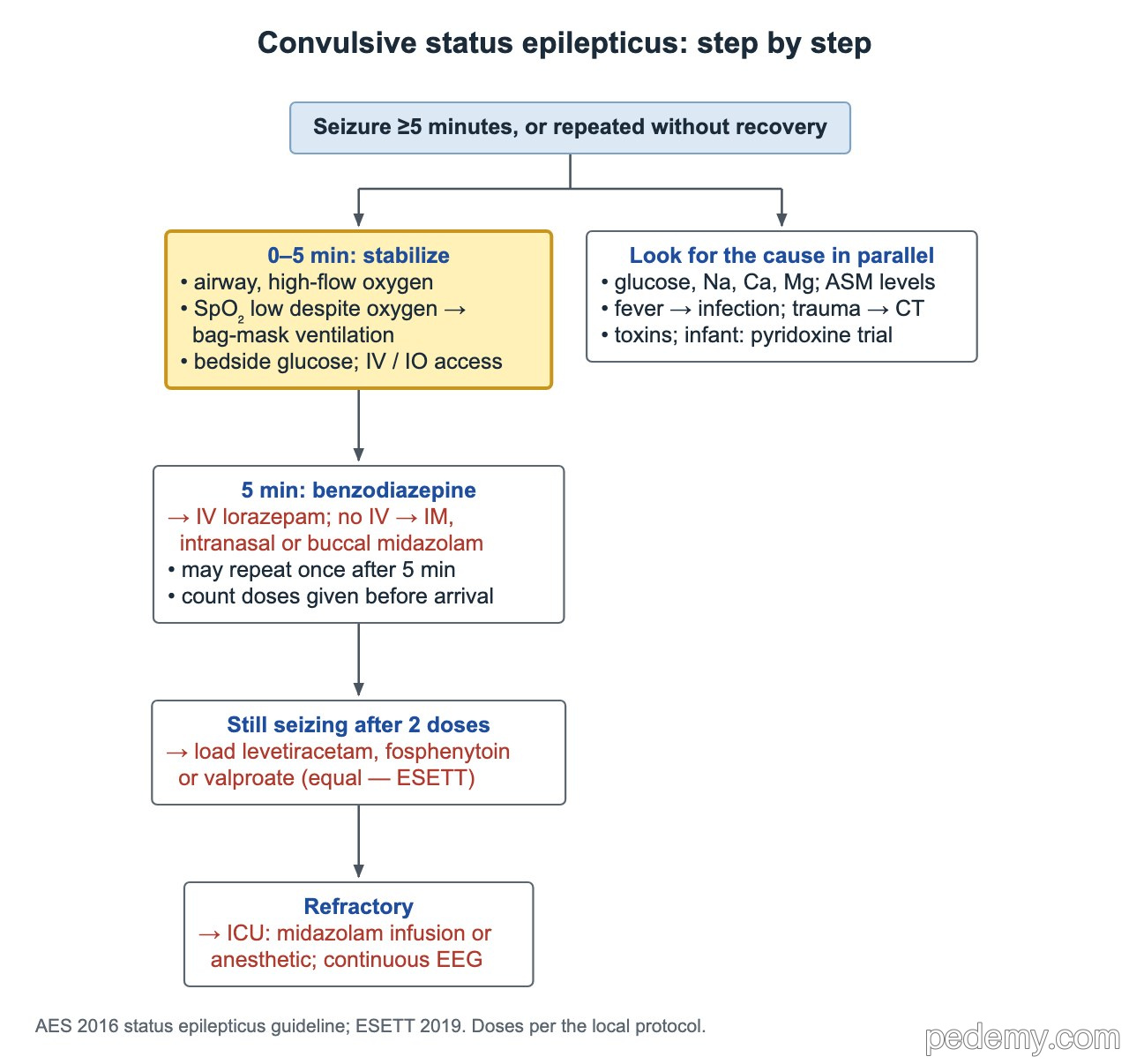
- 0–5 minutes: airway, high-flow oxygen, bedside glucose, IV or IO access. If SpO2 stays low despite a non-rebreather mask, start bag-mask ventilation.
- At 5 minutes: IV lorazepam; without IV access, IM, intranasal or buccal midazolam. One repeat dose after 5 minutes; count doses given before arrival.
- Still seizing after 2 benzodiazepine doses: load levetiracetam, fosphenytoin or valproate (equally effective in the ESETT trial).
- Refractory status: ICU, midazolam infusion or an anesthetic agent, continuous EEG.
- Look for the cause in parallel: glucose, sodium, calcium, magnesium, drug levels, infection, trauma (CT), toxins; in an infant consider a pyridoxine trial.
Febrile seizures
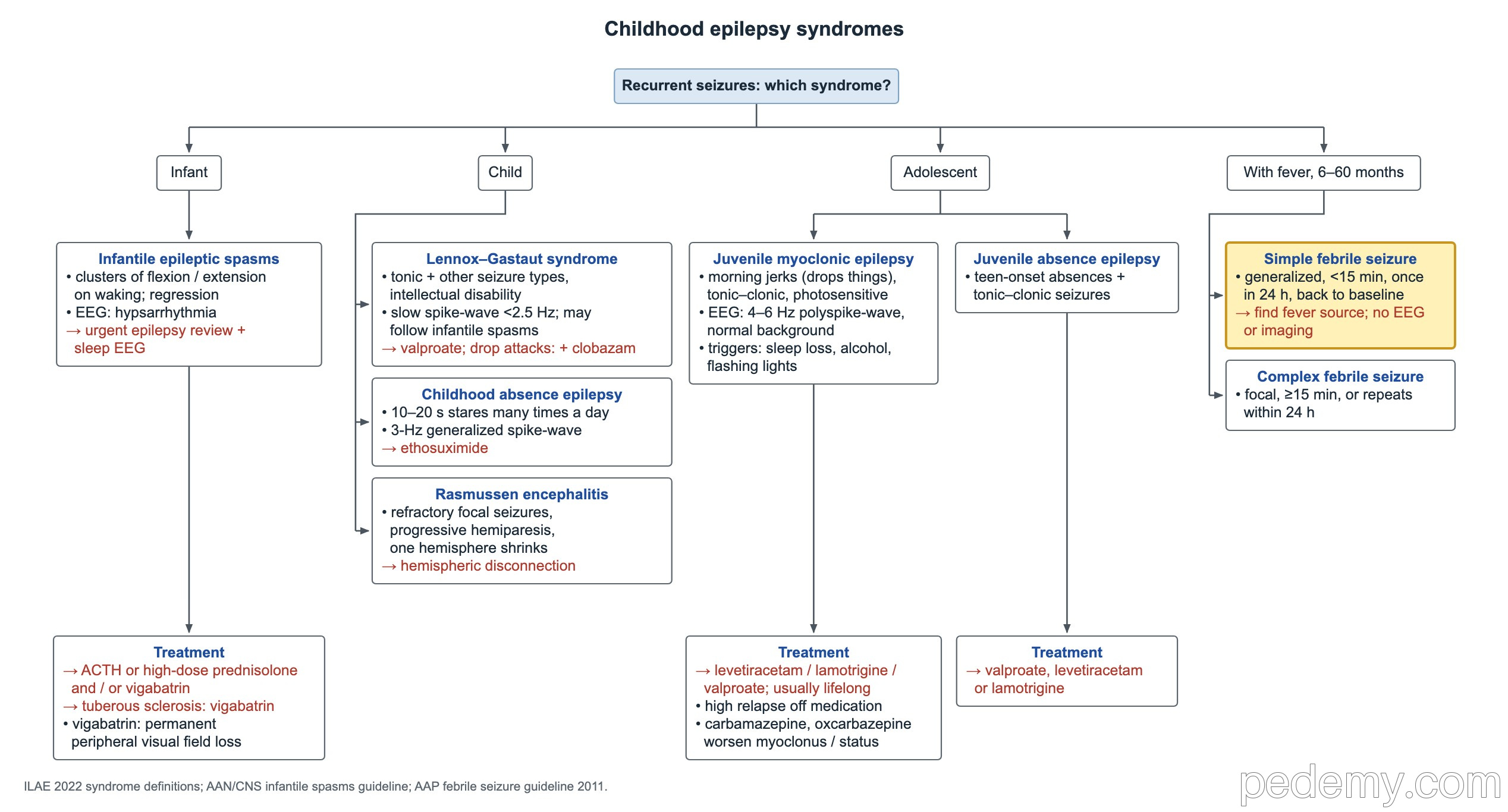
- Simple febrile seizure: age 6–60 months, generalized, under 15 minutes, only once in 24 hours, back to baseline.
- Complex febrile seizure: focal, 15 minutes or longer, or more than one in 24 hours.
- After a simple febrile seizure in a well child, look for the fever source; routine EEG, neuroimaging and blood tests are not needed.
- Long-term daily antiseizure drugs are not recommended for simple febrile seizures.
- A child with prolonged febrile seizures (15 minutes or more) can be sent home with a rescue benzodiazepine: rectal diazepam or intranasal or buccal midazolam.
- Prolonged, often one-sided febrile seizures before age 1 year, then drug-resistant epilepsy and delay, suggest Dravet syndrome (SCN1A).
Neonatal seizures
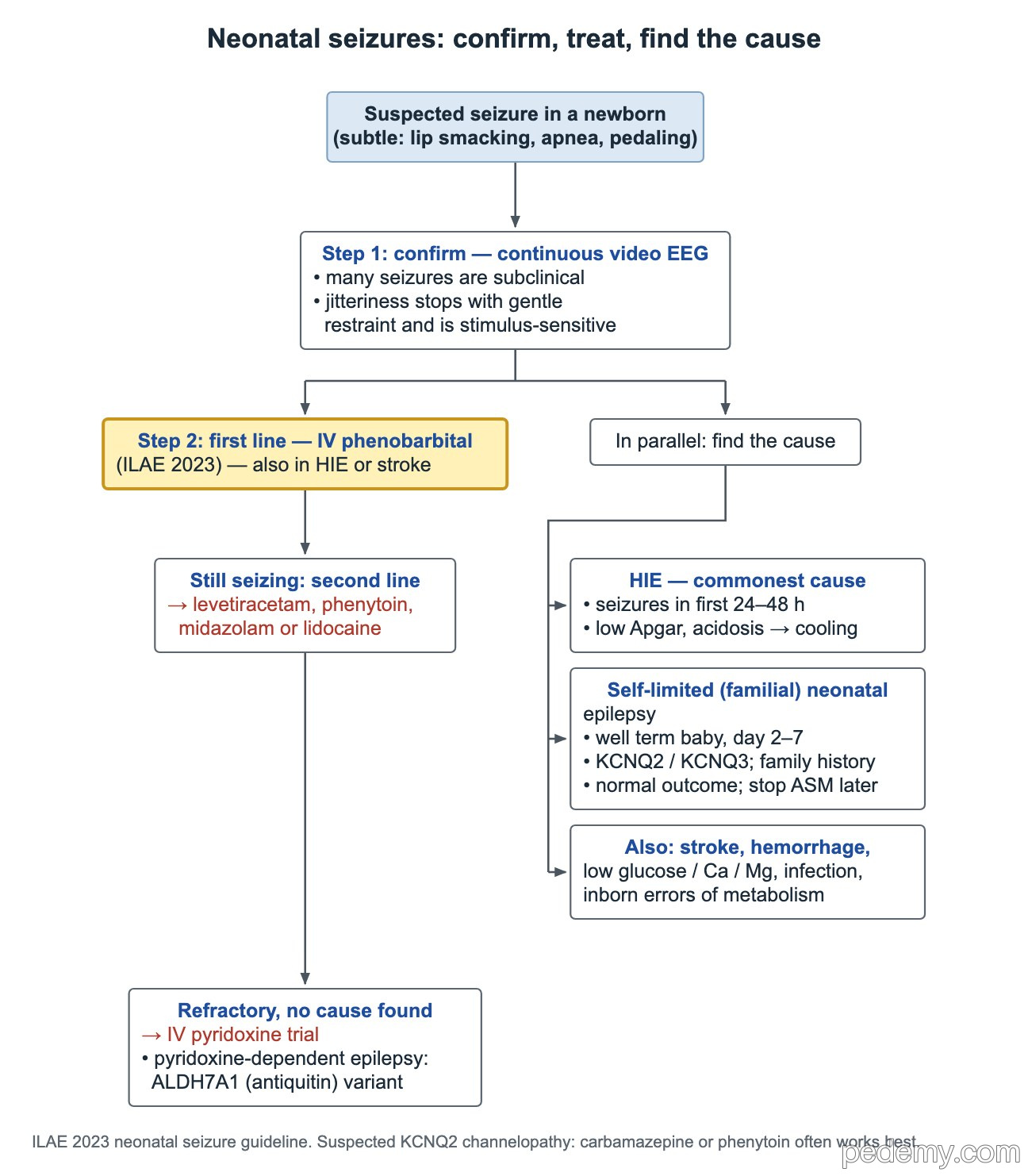
Newborn seizures are often subtle (lip smacking, apnea, pedaling) and many are seen only on EEG. Jitteriness stops with gentle restraint and is stimulus-sensitive; a seizure does not.
- Confirm with continuous video EEG, especially when the metabolic and laboratory work-up is normal.
- First line: IV phenobarbital loading dose, also in hypoxic-ischemic encephalopathy (HIE) or stroke. Second line: levetiracetam, phenytoin, midazolam or lidocaine.
- HIE is the commonest cause: seizures in the first 24–48 hours after low Apgar scores and acidosis.
- Other causes: stroke, hemorrhage, low glucose, calcium or magnesium, infection, inborn errors of metabolism.
- Self-limited (familial) neonatal epilepsy: well term baby, seizures from day 2–7, KCNQ2 or KCNQ3, family history; development is normal and long-term treatment is not needed.
- Seizures that resist phenobarbital and phenytoin and stop after IV pyridoxine: pyridoxine-dependent epilepsy (ALDH7A1, antiquitin).
- Tonic seizures from the first weeks of life with a burst-suppression EEG: early infantile developmental and epileptic encephalopathy (often KCNQ2; formerly Ohtahara syndrome).
Infantile spasms, Lennox–Gastaut and Rasmussen
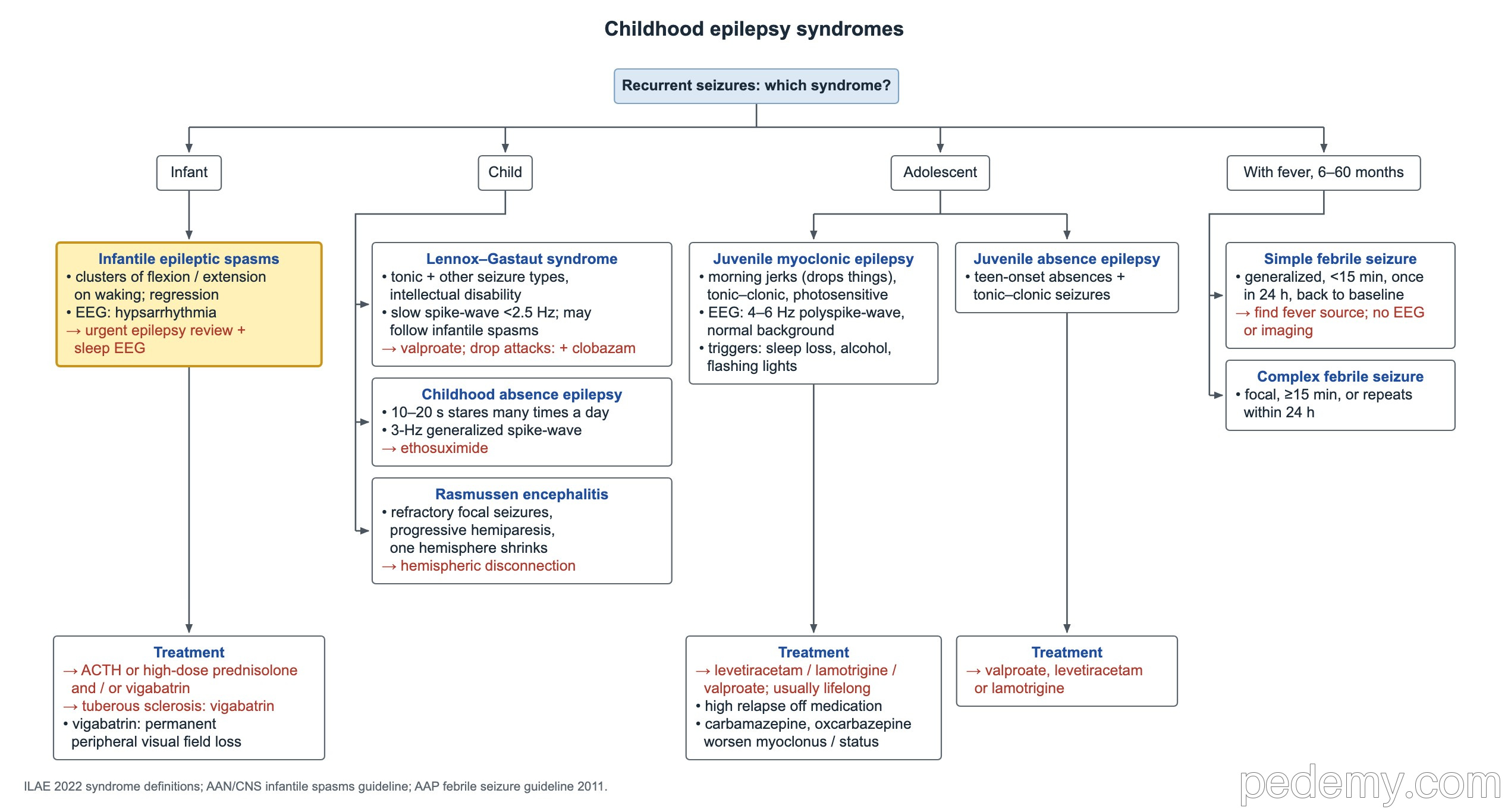
- Infantile epileptic spasms: clusters of flexion or extension, often on waking, with developmental regression. EEG: hypsarrhythmia. Needs urgent epilepsy assessment and a sleep EEG.
- Treatment: hormonal therapy (ACTH or high-dose prednisolone) and/or vigabatrin. In tuberous sclerosis, vigabatrin is first line; it can cause permanent peripheral visual field loss.
- In epileptic encephalopathies the heavy load of epileptic activity itself is thought to drive the developmental impairment.
- Lennox–Gastaut syndrome (LGS): tonic seizures plus other types, intellectual disability, slow spike-wave under 2.5 Hz (about 2 Hz) and generalized paroxysmal fast activity in sleep. It often follows infantile spasms.
- LGS treatment: valproate first; for drop attacks add clobazam (or rufinamide, cannabidiol, fenfluramine). Carbamazepine and oxcarbazepine can worsen drop attacks. Drug-resistant drop attacks: corpus callosotomy.
- Felbamate is limited by aplastic anemia and liver failure.
- Drug-resistant epilepsy that is not surgical: ketogenic diet or vagus nerve stimulation.
- Rasmussen encephalitis: refractory focal seizures, progressive hemiparesis, one shrinking hemisphere; hemispheric disconnection (hemispherectomy) in selected children.
Absence epilepsies, SeLECTS and JME
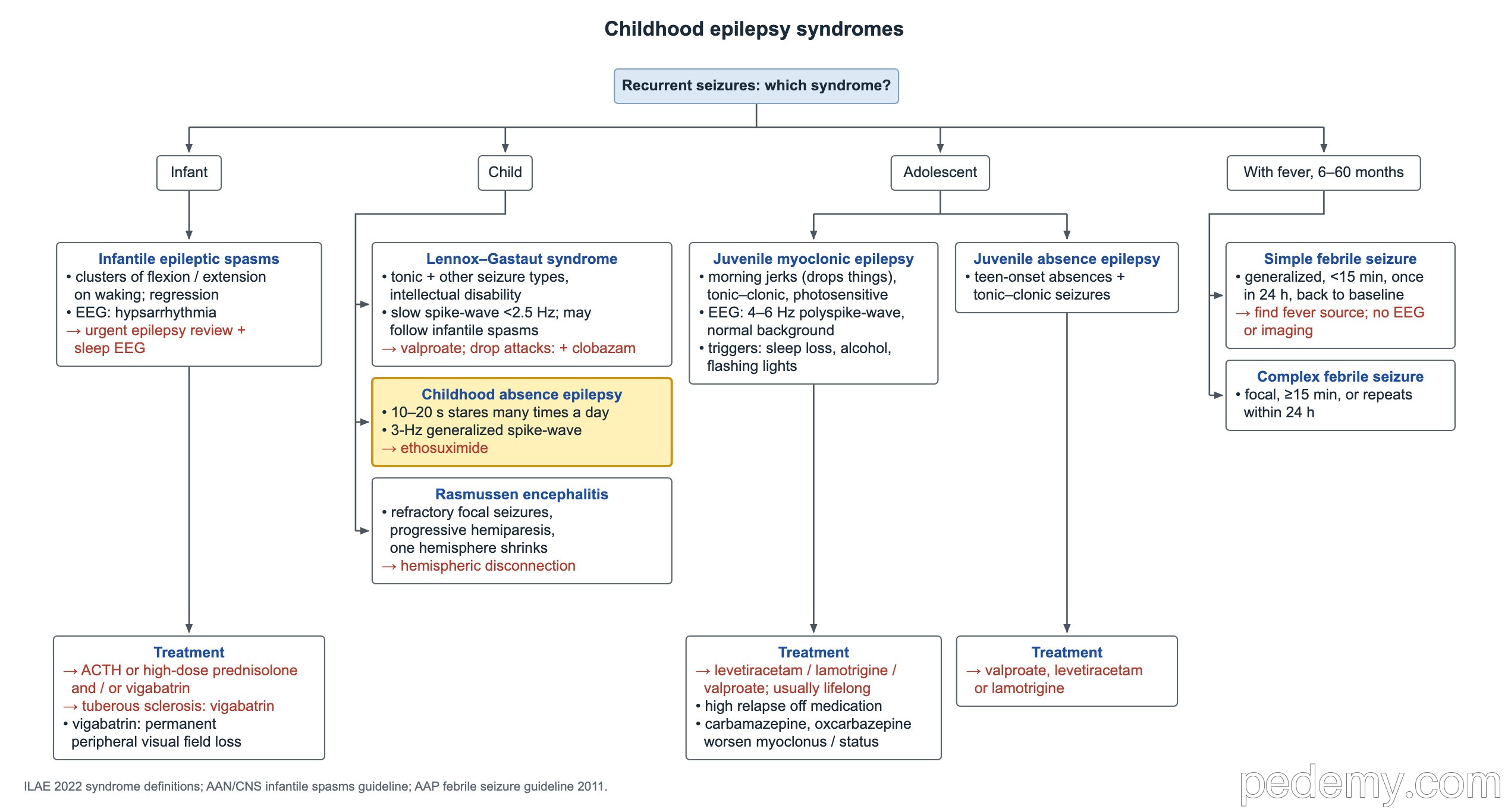
- Carbamazepine, oxcarbazepine and phenytoin worsen absences and myoclonus.
- Absence seizures starting before age 4 years: test for GLUT1 deficiency syndrome.
- JME triggers: sleep loss, alcohol and flashing lights. Most relapse if drugs are stopped, even after years seizure-free.
| Syndrome | Key features | Treatment |
|---|---|---|
| Childhood absence epilepsy | Age 4–10 years; many 10–20 s stares a day; 3-Hz generalized spike-wave; hyperventilation for about 3 minutes provokes a spell | Ethosuximide (T-type calcium channel blocker, absence only); then valproate or lamotrigine |
| Juvenile absence epilepsy | Teen-onset absences plus tonic–clonic seizures; spike-wave faster than 3.5 Hz | Broad-spectrum drug: valproate, levetiracetam or lamotrigine; ethosuximide alone is not enough |
| Juvenile myoclonic epilepsy | Morning jerks that drop objects, tonic–clonic seizures, often absences, photosensitivity; 4–6 Hz polyspike-wave with normal background | Levetiracetam or lamotrigine (valproate if pregnancy is not possible); usually lifelong |
| Self-limited epilepsy with centrotemporal spikes (SeLECTS) | School age, normal development; nocturnal one-sided face twitching, drooling, speech arrest; sleep-activated centrotemporal spikes | Often none; remits by mid-adolescence |
Antiseizure drug side effects
| Drug | Side effect to know |
|---|---|
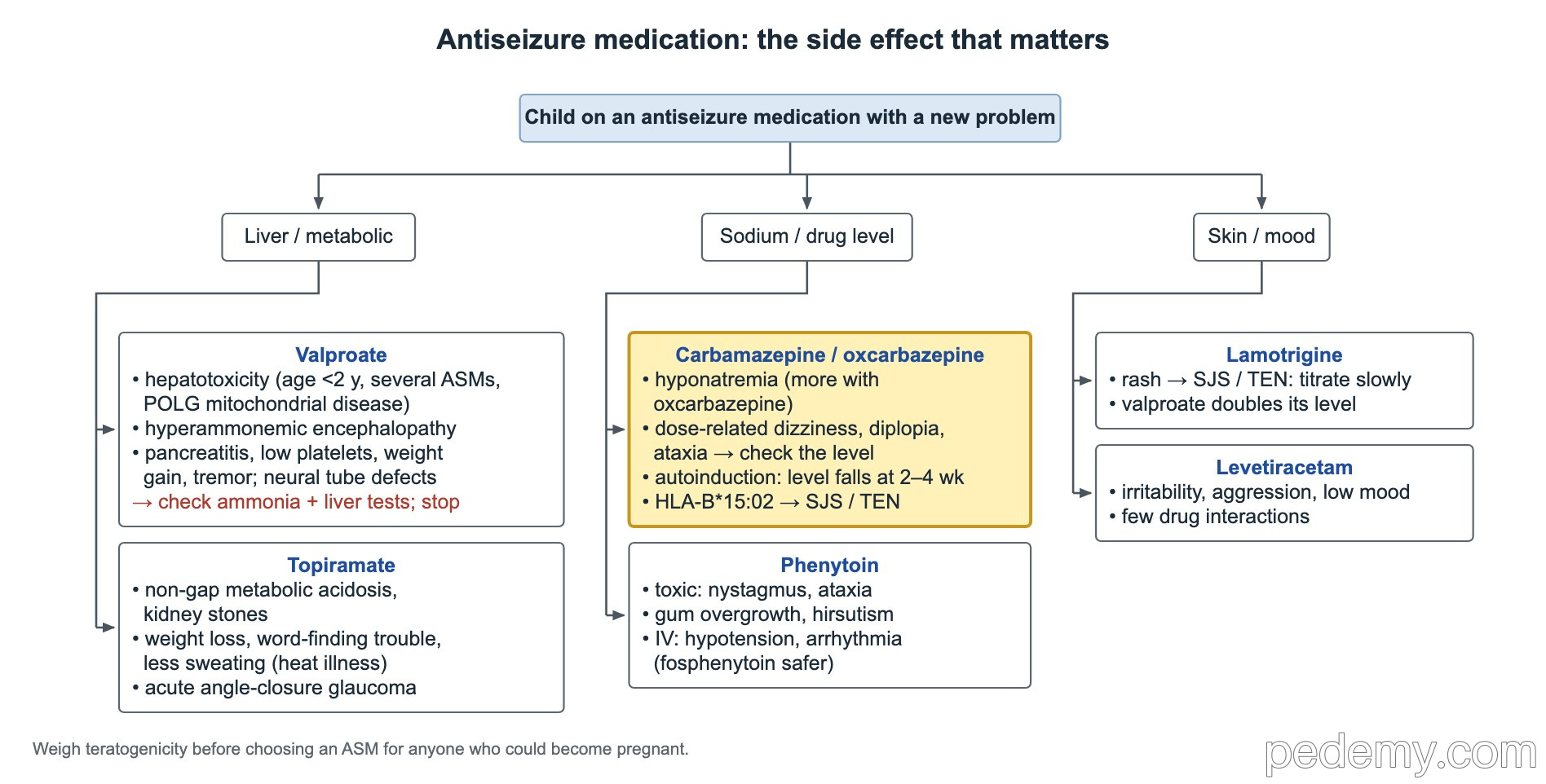
| Valproate | Hyperammonemic encephalopathy (lethargy, confusion; treat with L-carnitine), liver failure (age under 2 years, several drugs, POLG disease), pancreatitis, low platelets, weight gain, tremor, neural tube defects |
| Topiramate | Non-anion-gap metabolic acidosis (carbonic anhydrase inhibition), kidney stones, weight loss, word-finding trouble, less sweating, angle-closure glaucoma |
| Carbamazepine, oxcarbazepine | Low sodium (more with oxcarbazepine); dose-related dizziness, diplopia and ataxia → check the level; autoinduction; HLA-B*15:02 and SJS/TEN |
| Phenytoin | Nystagmus and ataxia when toxic, gum overgrowth, hirsutism; IV hypotension and arrhythmia (fosphenytoin is safer) |
| Lamotrigine | Rash up to SJS/TEN, so titrate slowly; valproate doubles its level |
| Levetiracetam | Irritability, aggression, low mood; few drug interactions |
Common questions
How long does a seizure have to last before giving rescue medicine?
Treat any convulsive seizure that has lasted 5 minutes. Waiting longer makes it harder to stop.
Does a child need an EEG after a simple febrile seizure?
No. A well child who is back to baseline after a simple febrile seizure needs a search for the fever source, not an EEG or brain imaging.
What is the first-line drug for childhood absence epilepsy?
Ethosuximide. Valproate or lamotrigine are alternatives; carbamazepine and oxcarbazepine can make absences worse.
Study this topic
Sources
- ILAE 2025: Updated classification of epileptic seizures (Epilepsia)
- ILAE 2022: Epilepsy syndromes with onset in childhood (Epilepsia)
- ILAE 2023: Treatment of seizures in the neonate (Epilepsia)
- American Epilepsy Society 2016: Treatment of convulsive status epilepticus (Epilepsy Curr)
- AAP 2011: Neurodiagnostic evaluation of the child with a simple febrile seizure (Pediatrics)
Written for Pedemy in our own words from the sources above; checked November 2026. For education only, not medical advice; check doses and local protocols before treating a patient. Pedemy is independent and not affiliated with or endorsed by the organizations cited.