

Main decision tree
Stroke and perinatal brain injury
Key points
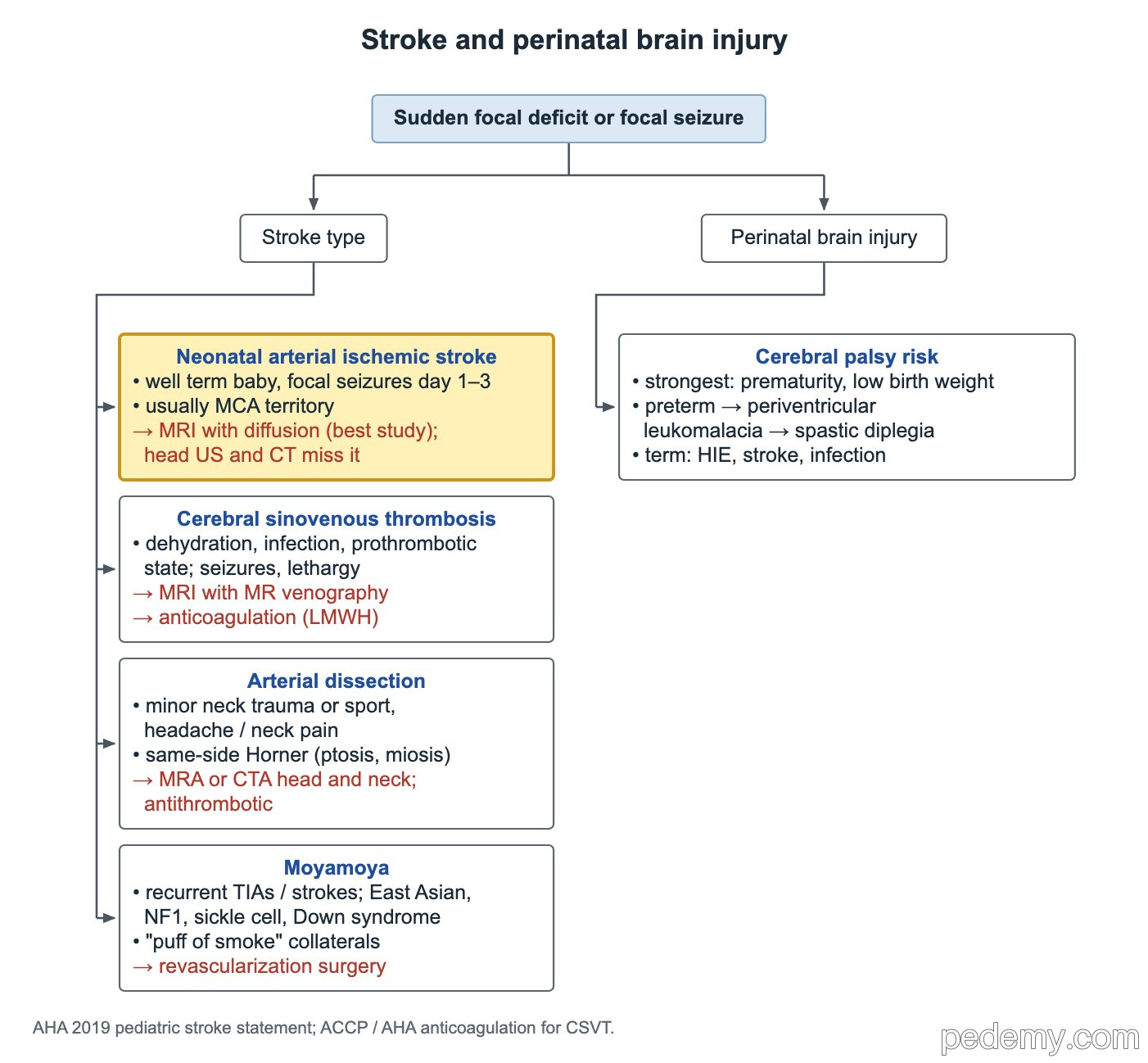
- Neonatal arterial ischemic stroke: well term baby with focal clonic seizures on day 1–3, usually in the middle cerebral artery territory.
- Best test for neonatal stroke: brain MRI with diffusion-weighted imaging; head ultrasound and CT can miss it.
- Cerebral sinovenous thrombosis: dehydration, infection or a clotting tendency; MRI with MR venography; anticoagulation with LMWH or heparin if no major bleed.
- Carotid dissection: headache or neck pain after minor trauma, same-side ptosis and miosis (partial Horner) → MRA or CTA of head and neck.
- Moyamoya: TIAs, narrowed distal internal carotid arteries, puff-of-smoke collaterals; linked to sickle cell, NF1 and Down syndrome; treated with revascularization surgery.
- Sickle cell disease (HbSS or HbSβ0), ages 2–16 years: yearly transcranial Doppler screening for stroke risk.
- Factor V Leiden mainly raises venous clot risk; antiphospholipid syndrome = thrombosis plus persistent lupus anticoagulant or anticardiolipin antibodies.
Neonatal arterial ischemic stroke
A well-appearing term newborn after a normal pregnancy and delivery who develops focal clonic seizures, often of one arm, on day 1–3 has a neonatal arterial ischemic stroke until proven otherwise. The middle cerebral artery territory is the usual site.
- Best study: brain MRI with diffusion-weighted imaging. Head ultrasound and CT often miss an early infarct.
- Many infants have no deficit at first; hemiparesis and early hand preference appear months later.
- The same tree lists cerebral palsy risks: prematurity and low birth weight are the strongest; preterm periventricular leukomalacia leads to spastic diplegia; in term infants HIE, stroke and infection.
Cerebral sinovenous thrombosis
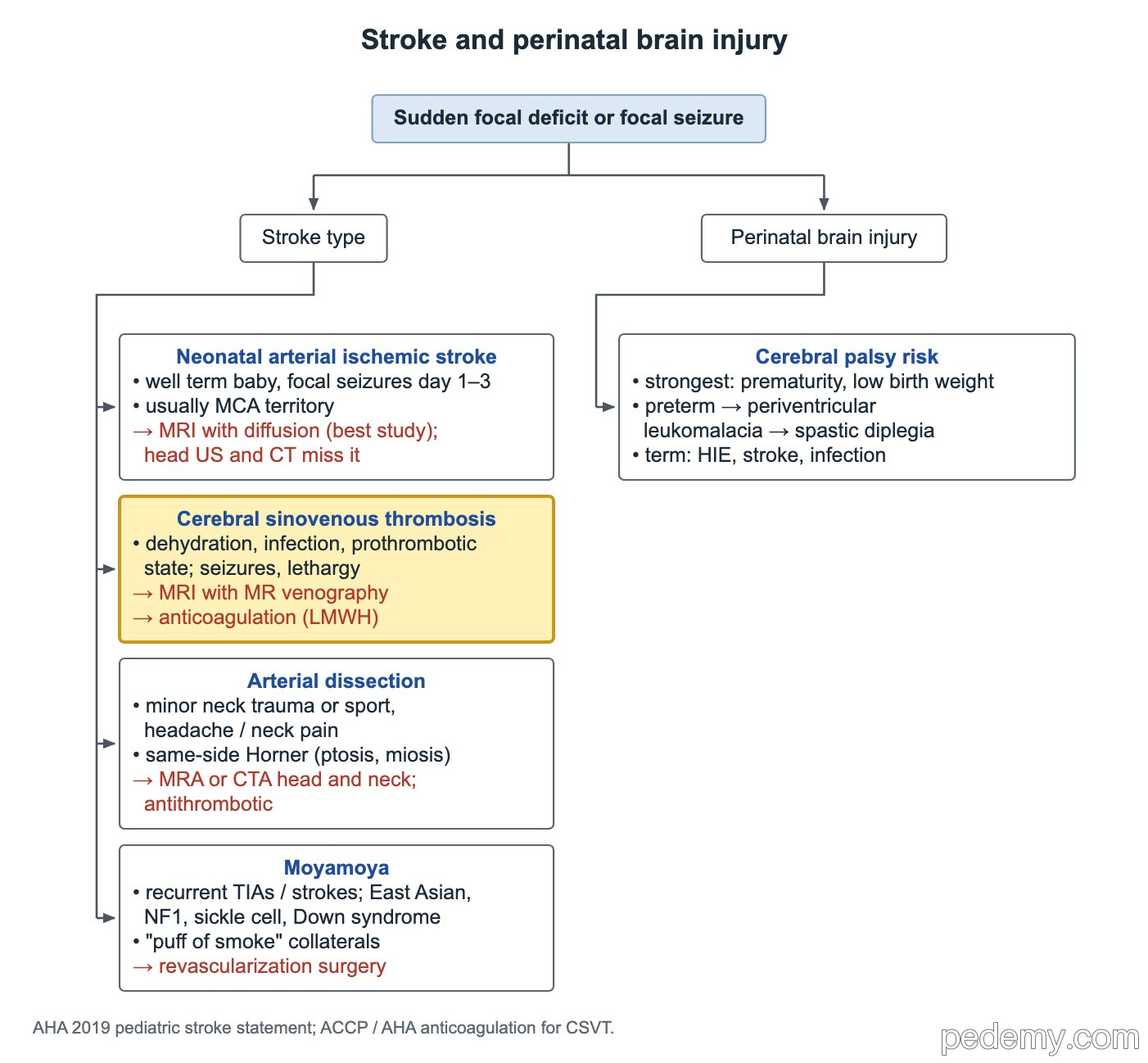
- Think of it in a dehydrated or infected neonate or child with seizures, lethargy, headache or vomiting.
- A noncontrast CT can be normal: get brain MRI with MR venography.
- Treatment: fluids and treatment of the cause, plus anticoagulation (low-molecular-weight heparin or unfractionated heparin) when there is no major hemorrhage.
- Look for a prothrombotic state, such as an inherited thrombophilia.
Arterial dissection
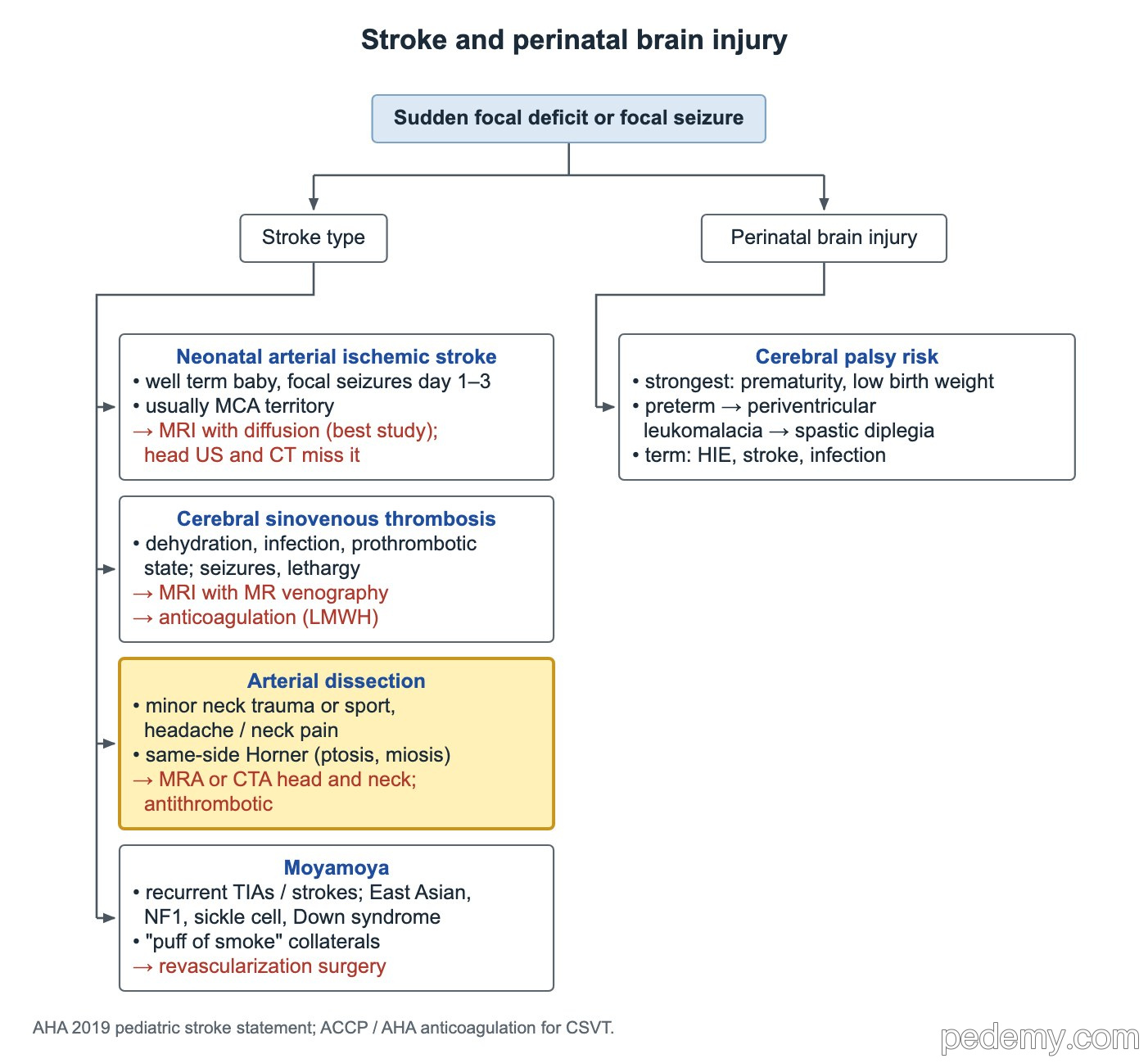
- Story: minor neck trauma or sport (a trampoline fall, a twisting injury), then one-sided headache or neck pain.
- Same-side ptosis and miosis = partial Horner syndrome from internal carotid artery dissection.
- Imaging: MRA or CTA of the head and neck.
- Treatment: antithrombotic therapy (antiplatelet or anticoagulant), chosen with neurology.
Moyamoya arteriopathy
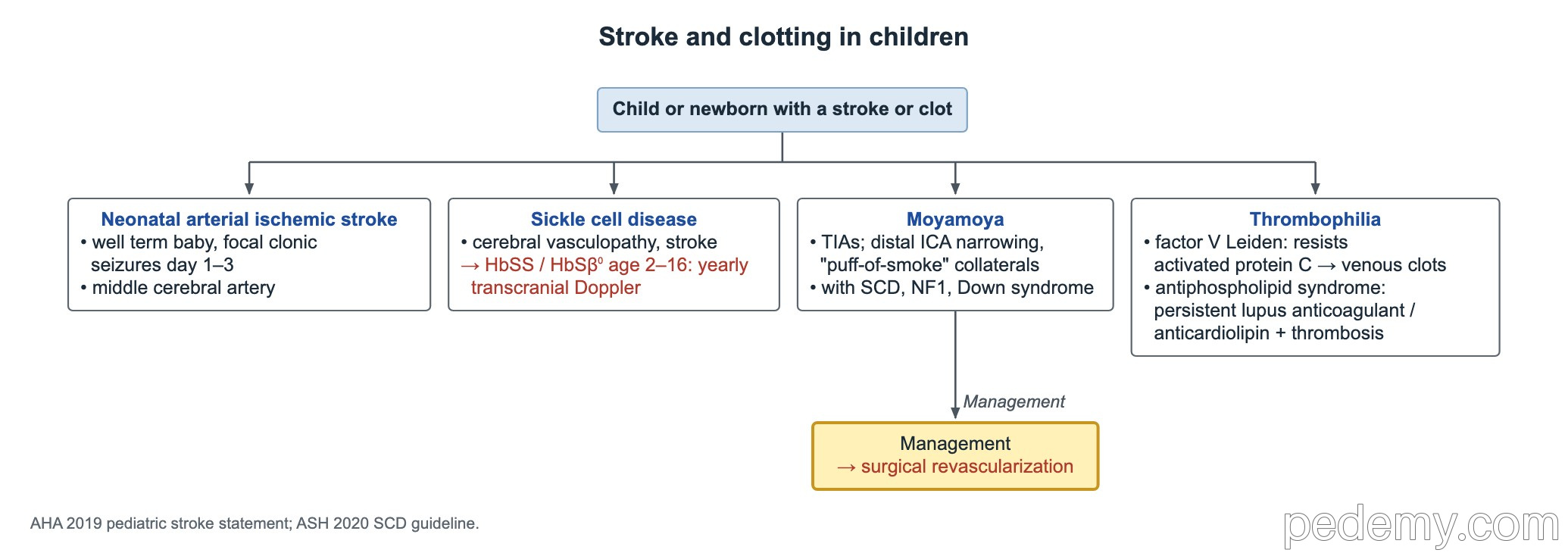
- Recurrent TIAs or strokes, often brought on by crying or hyperventilation.
- Angiography: narrowing of the terminal internal carotid arteries with a 'puff-of-smoke' network of collaterals.
- Associations: sickle cell disease, neurofibromatosis type 1, Down syndrome; more common in people of East Asian descent.
- Definitive treatment: surgical revascularization.
Sickle cell disease and stroke
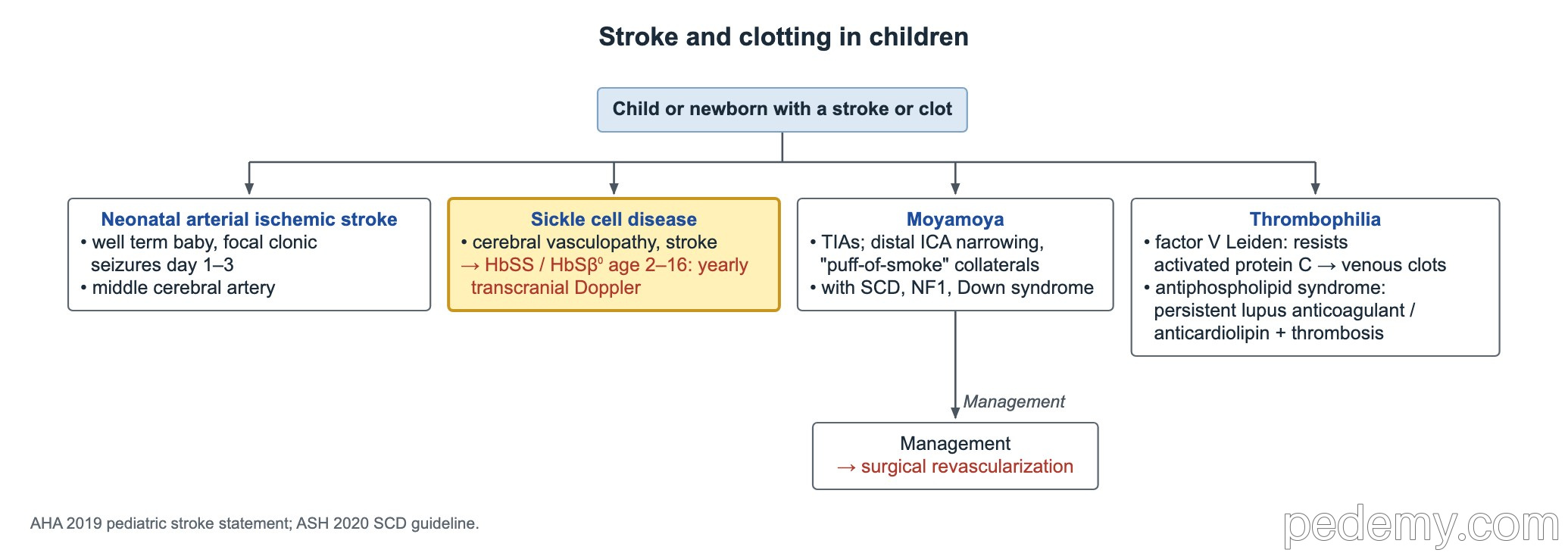
Sickle cell disease is a major cause of cerebral vasculopathy and ischemic stroke in children. Screening finds the children at high risk before a first stroke.
- Children with HbSS or HbSβ0 thalassemia aged 2–16 years: transcranial Doppler every year (ASH 2020).
- An abnormal transcranial Doppler leads to regular blood transfusions to prevent a first stroke.
- Acute stroke in sickle cell disease needs urgent transfusion with hematology.
Thrombophilia
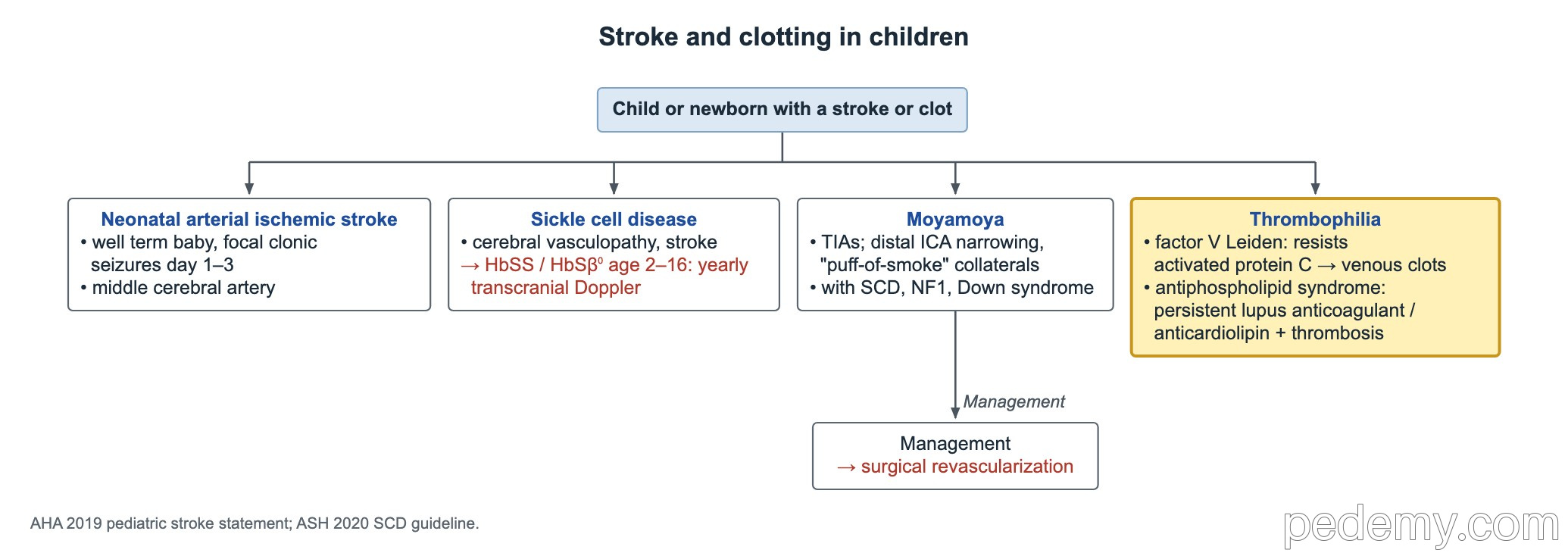
- Factor V Leiden makes factor V resistant to activated protein C; it mainly predisposes to venous thromboembolism.
- Antiphospholipid syndrome: arterial or venous thrombosis plus persistently positive lupus anticoagulant or anticardiolipin (or anti-β2-glycoprotein I) antibodies.
Common questions
What is the best test for a suspected stroke in a newborn?
Brain MRI with diffusion-weighted imaging. Head ultrasound and CT can miss an early arterial infarct.
Which children with sickle cell disease need transcranial Doppler screening?
Children with HbSS or HbSβ0 thalassemia, every year from age 2 to 16 years.
Study this topic
Sources
- AHA/ASA 2019: Management of stroke in neonates and children (Stroke)
- ASH 2020: Sickle cell disease guidelines on cerebrovascular disease (Blood Adv)
Written for Pedemy in our own words from the sources above; checked November 2026. For education only, not medical advice; check doses and local protocols before treating a patient. Pedemy is independent and not affiliated with or endorsed by the organizations cited.