

Main decision tree
Concussion: return to sport
Key points
- A normal head CT or MRI does not rule out concussion; diagnosis is clinical.
- After concussion: relative rest for 24–48 hours, back to school in 1–2 days with supports, then 6 return-to-sport steps of at least 24 hours each.
- Stop an exercise session if symptoms rise more than 2 points (0–10 scale) or the rise lasts more than 1 hour; try again the next day.
- Concussion symptoms beyond 4 weeks are persisting symptoms: treat sleep, headache, mood and vestibular problems, and give graded aerobic exercise.
- Exertional syncope or chest pain: no sport until a cardiac evaluation is done.
- Type 1 diabetes: check glucose before exercise; aim for 90–250 mg/dL; above 250 mg/dL check ketones and do not exercise if they are raised.
- Myocarditis or MIS-C: no competitive sport for 3–6 months and cardiology clearance before return.
Assessing a sport-related concussion
Concussion is a clinical diagnosis made from the injury, symptoms and examination. Imaging looks for bleeding or fracture, not concussion, so a normal CT or MRI does not exclude it.
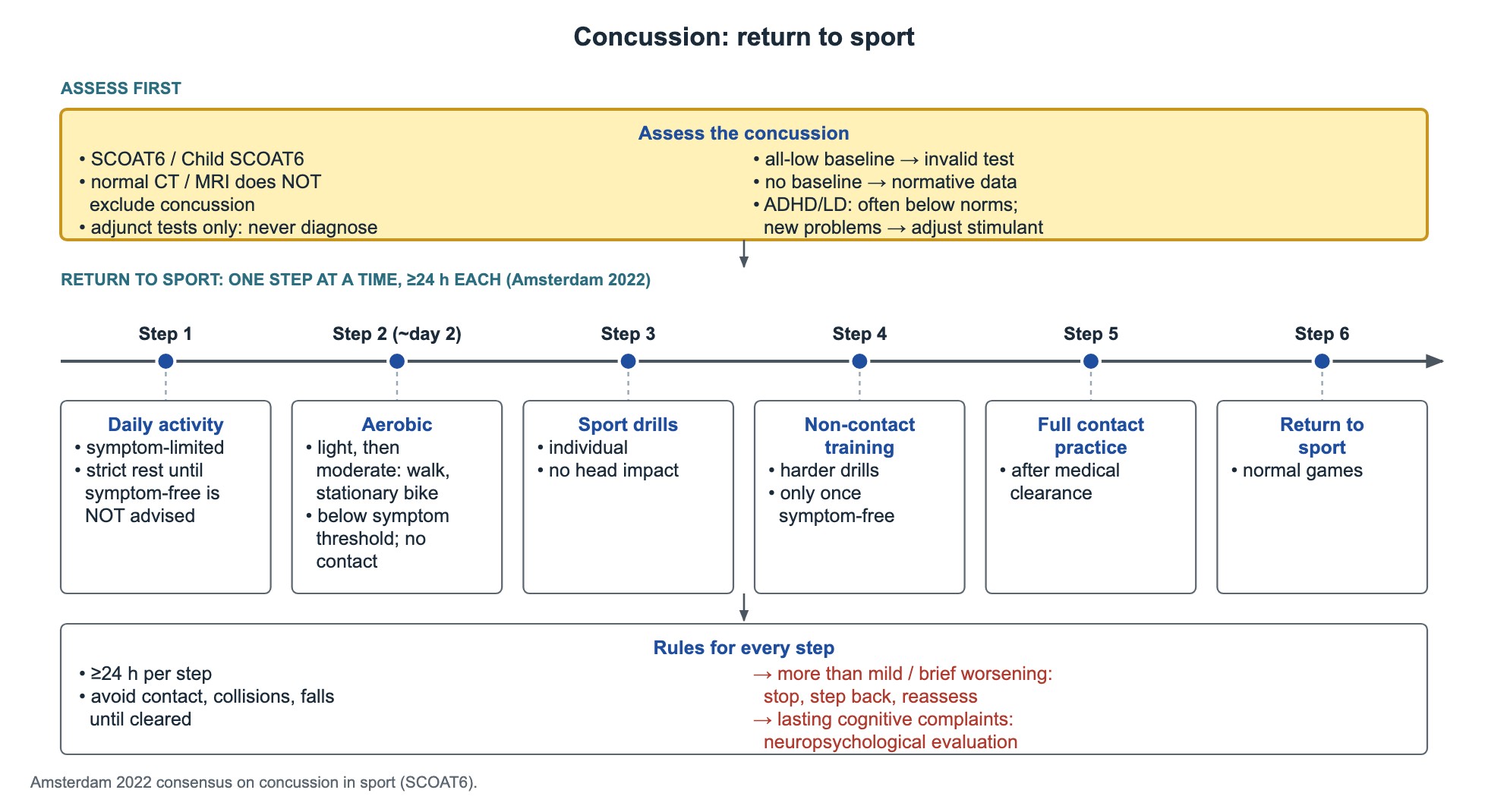
Office tools give structure. The SCOAT6 is used from age 13 and the Child SCOAT6 for ages 8–12. Computerized neurocognitive tests are adjuncts only: they never make or exclude the diagnosis, and they never decide play by themselves.
- Uniformly low preseason (baseline) scores in a well athlete usually mean an invalid test, not a brain problem: reassure and, if wanted, retest in a quiet setting.
- No baseline on file: compare post-injury scores with age-matched normative data for that test.
- ADHD or a learning disability: baseline scores are often below age norms, so compare with the athlete's own baseline when possible.
- A child with ADHD who has new academic or behavior problems after a concussion may benefit from starting or adjusting stimulant treatment.
- Lasting thinking or memory complaints: refer for formal neuropsychological evaluation.
Return to learn comes first
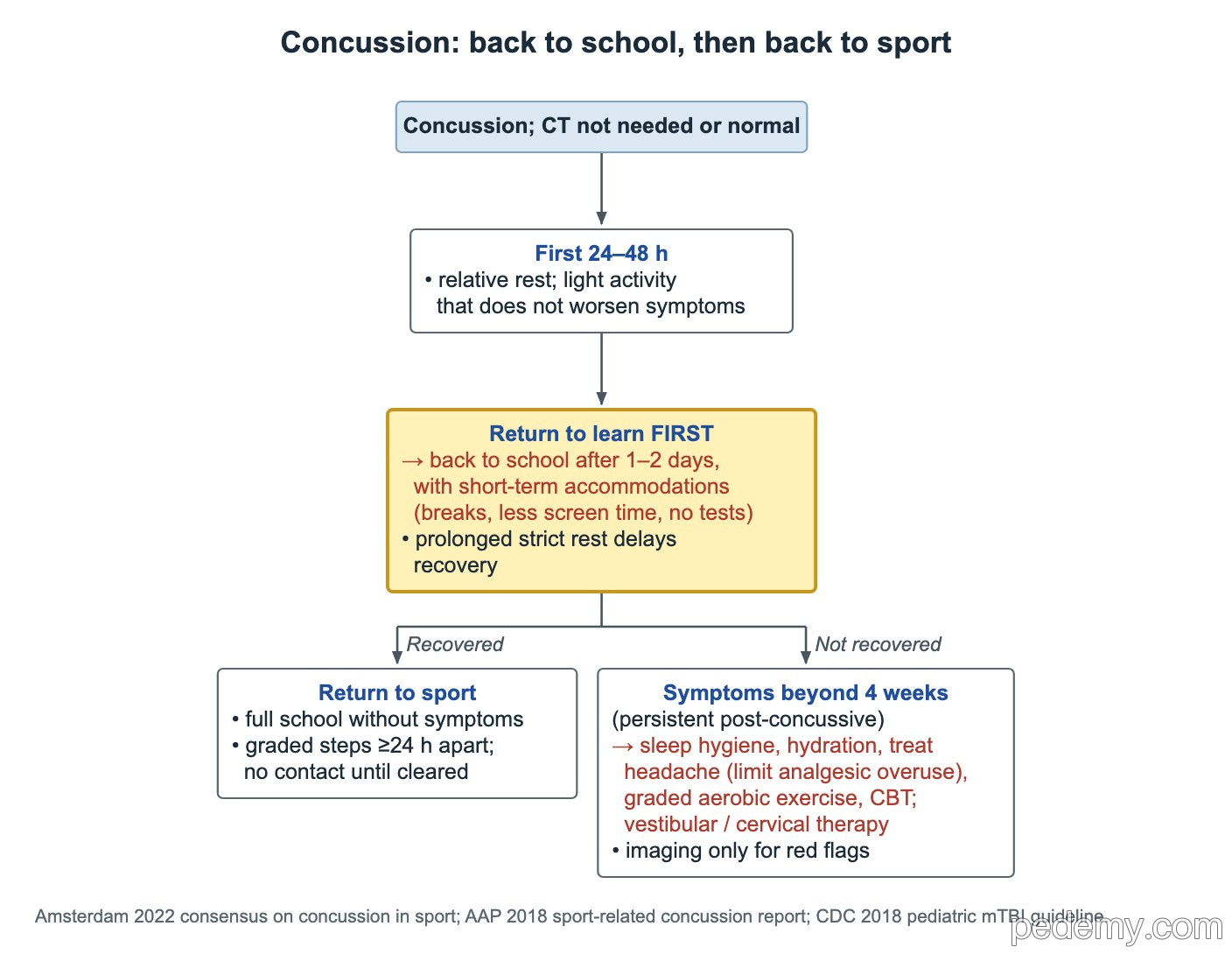
Strict rest until all symptoms are gone is no longer advised; it slows recovery. In the first 24–48 hours the child takes relative rest and may do light activity that does not clearly worsen symptoms.
Most children go back to school after 1–2 days with short-term supports, then remove them as symptoms settle. A child should be back at full school without symptoms before returning to contact or full sport.
- Supports: rest breaks, shorter days, less screen time, extra time, and no tests at first.
- Light aerobic exercise (walking, stationary bike) can start alongside return to learn, at a level below the symptom threshold.
- Avoid anything with a risk of contact, collision or falls until medically cleared.
Graded return to sport
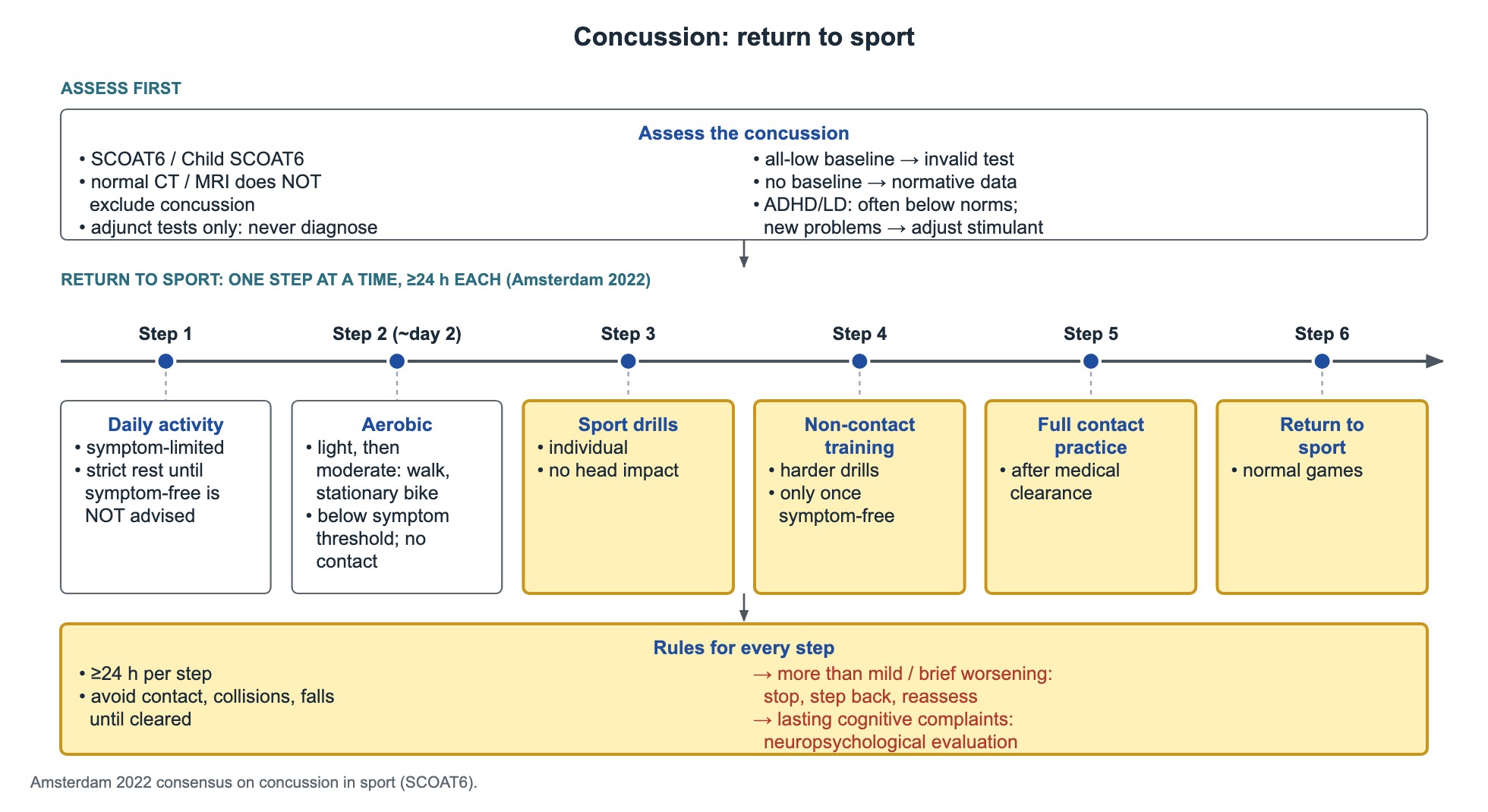
The return-to-sport strategy has 6 steps. Each step takes at least 24 hours. Steps 1–3 can begin while mild symptoms remain; step 4 onward starts only once the athlete is symptom-free, and full-contact practice needs medical clearance.
- Mild, brief symptom increase is acceptable.
- Symptoms rise more than 2 points on a 0–10 scale, or the rise lasts more than 1 hour: stop that session and try again the next day.
- More than mild worsening at any step: step back and reassess.
| Step | Activity | Goal |
|---|---|---|
| 1 | Symptom-limited daily activity | Gradual return to normal daily life |
| 2 | Aerobic exercise: light, then moderate (walking, stationary bike) | Raise heart rate; no contact or resistance risk |
| 3 | Individual sport-specific drills, no head impact | Add movement and coordination |
| 4 | Non-contact training drills, harder intensity | Only once symptom-free |
| 5 | Full-contact practice | Only after medical clearance |
| 6 | Return to sport | Normal games |
Persisting symptoms after concussion
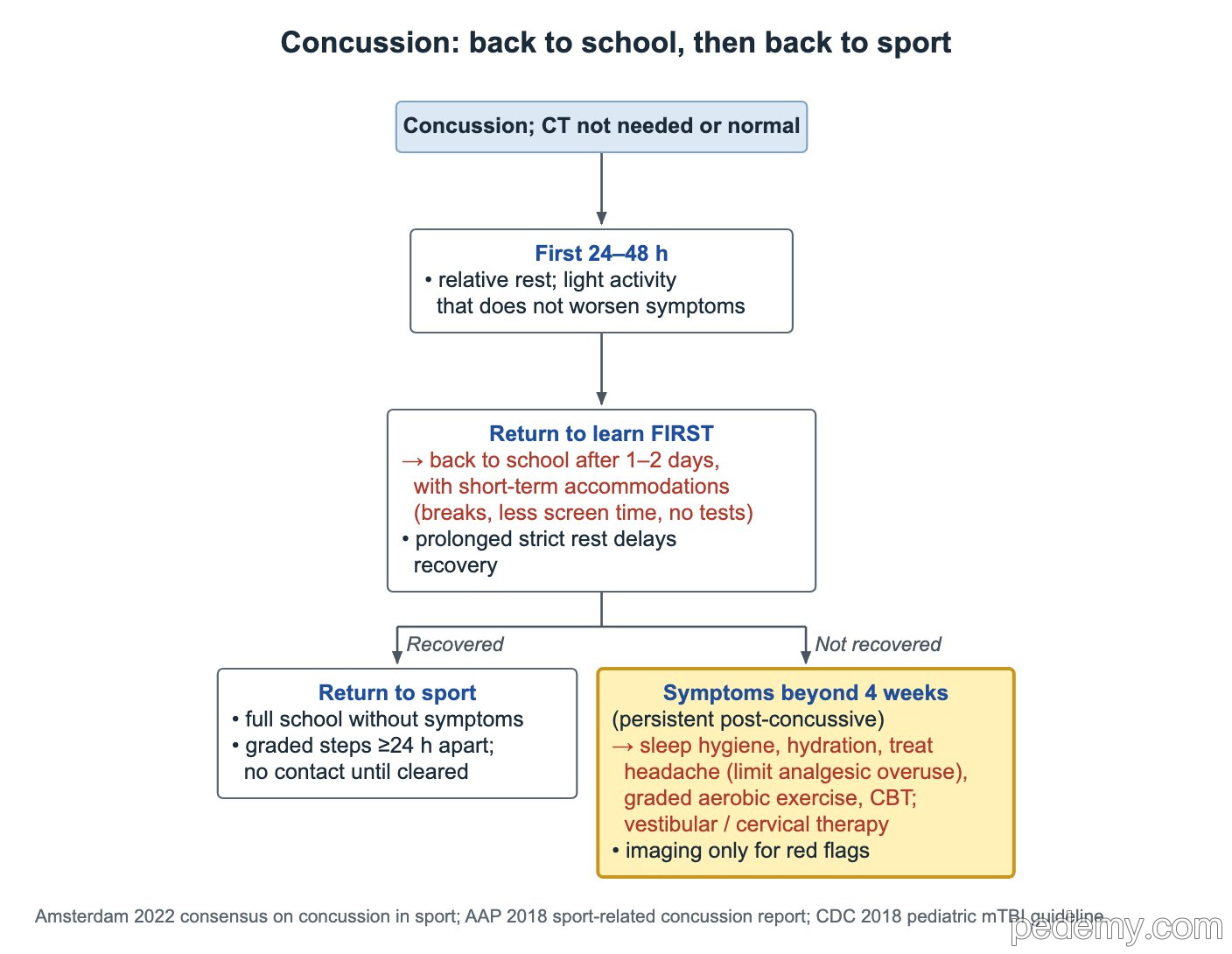
Most children recover within 4 weeks. Symptoms beyond 4 weeks are called persisting post-concussive symptoms. A teen with headaches, poor sleep and poor concentration 6 weeks after injury and a normal exam does not need more rest or routine imaging; image only for red flags.
- Sleep hygiene and regular hydration.
- Treat headache, but limit analgesics to avoid medication-overuse headache.
- Graded, symptom-limited aerobic exercise.
- Cognitive behavioral therapy for mood, anxiety or coping problems.
- Vestibular or cervical (neck) physical therapy for dizziness or neck pain.
Clearance with heart, neurologic and other conditions
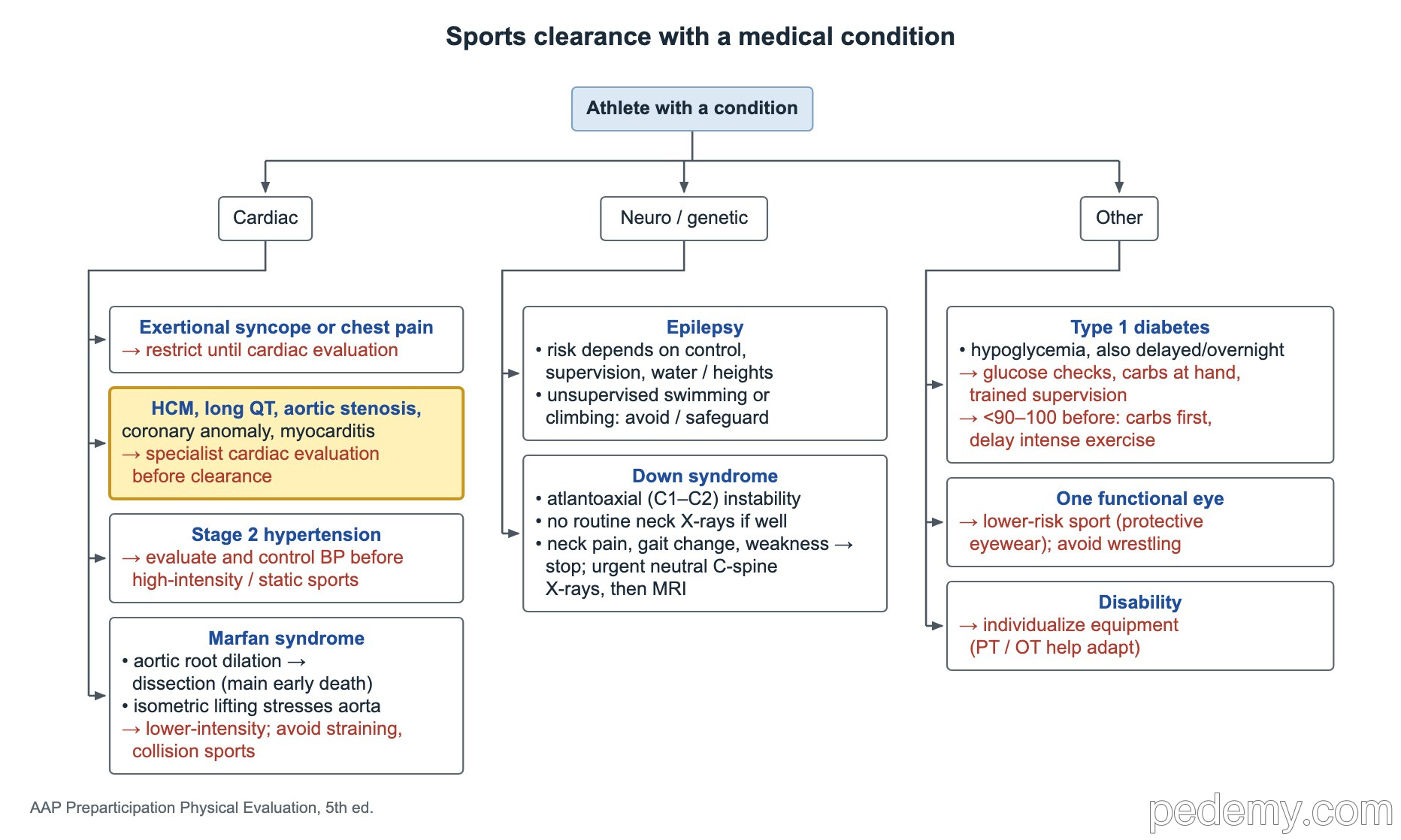
Cardiac red flags stop sport until they are explained. Syncope or chest pain during exercise can be the first sign of hypertrophic cardiomyopathy, an arrhythmia or a coronary artery anomaly. Known HCM, long QT syndrome, significant aortic stenosis, coronary anomalies and myocarditis need a pediatric cardiologist before clearance; current AHA/ACC guidance uses shared decision-making rather than automatic exclusion for many of these.
| Condition | What to do for sport |
|---|---|
| Exertional syncope or chest pain | Restrict until cardiac evaluation |
| HCM, long QT, aortic stenosis, coronary anomaly, myocarditis | Specialist cardiac evaluation before clearance |
| Elevated BP or stage 1 hypertension, no symptoms | May play while being evaluated |
| Stage 2 hypertension | Evaluate and control BP before high-intensity or high-static sports |
| Marfan syndrome | Lower-intensity activity; avoid heavy isometric lifting and collision sports; beta-blocker or losartan slows aortic root growth |
| Epilepsy | Most sports are fine when seizures are controlled; swimming and climbing never unsupervised |
| Down syndrome | Atlantoaxial (C1–C2) instability: no routine neck X-rays if well; new neck pain, gait change or weakness → stop, urgent neutral C-spine X-rays, then MRI |
| One functional eye (best-corrected vision worse than 20/40) | Polycarbonate protective eyewear for all sports; choose lower eye-risk sports and avoid boxing, full-contact martial arts and wrestling |
| One testicle | Contact sports allowed with a protective cup |
| Disability or chronic illness | Adapted sport is encouraged; PT or OT can modify equipment and rules |
Type 1 diabetes and sport
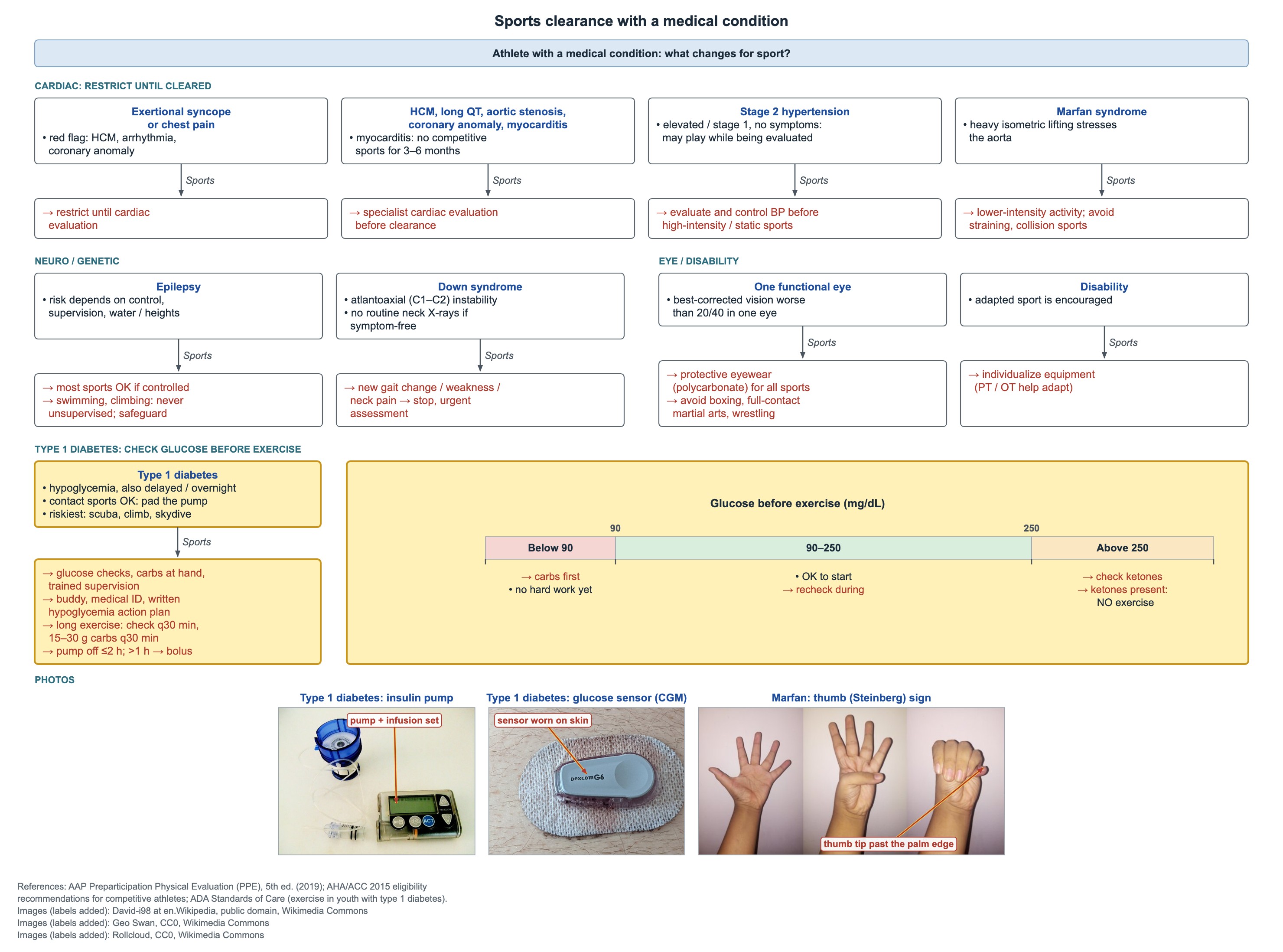
Children with type 1 diabetes can play any sport, including contact sports, with a plan. The main acute risk is hypoglycemia, and it can be delayed: lows can occur hours later and overnight after exercise.
- Long exercise: check glucose about every 30 minutes and take about 15–30 g carbohydrate every 30 minutes; keep checking for hours afterward.
- Insulin pump: secure and pad it for contact sport, or remove it briefly. Off for no more than about 2 hours; if off for more than 1 hour, give supplemental insulin to cover the gap.
- Highest-risk sports, where a low could be fatal: scuba diving, rock climbing and skydiving.
- Endurance events such as marathons or open-water swims: train and compete with a buddy.
- Wear a medical ID at all times and keep fast carbohydrate on hand.
- Coaches need a written emergency action plan for hypoglycemia and trained supervision.
| Glucose before exercise | Action |
|---|---|
| Below 90 mg/dL | Eat carbohydrate first; delay intense or endurance exercise |
| 90–250 mg/dL | OK to start; recheck during exercise |
| Above 250 mg/dL | Check ketones; no exercise if ketones are raised |
Recent illness, sickle cell trait and Marfan diving
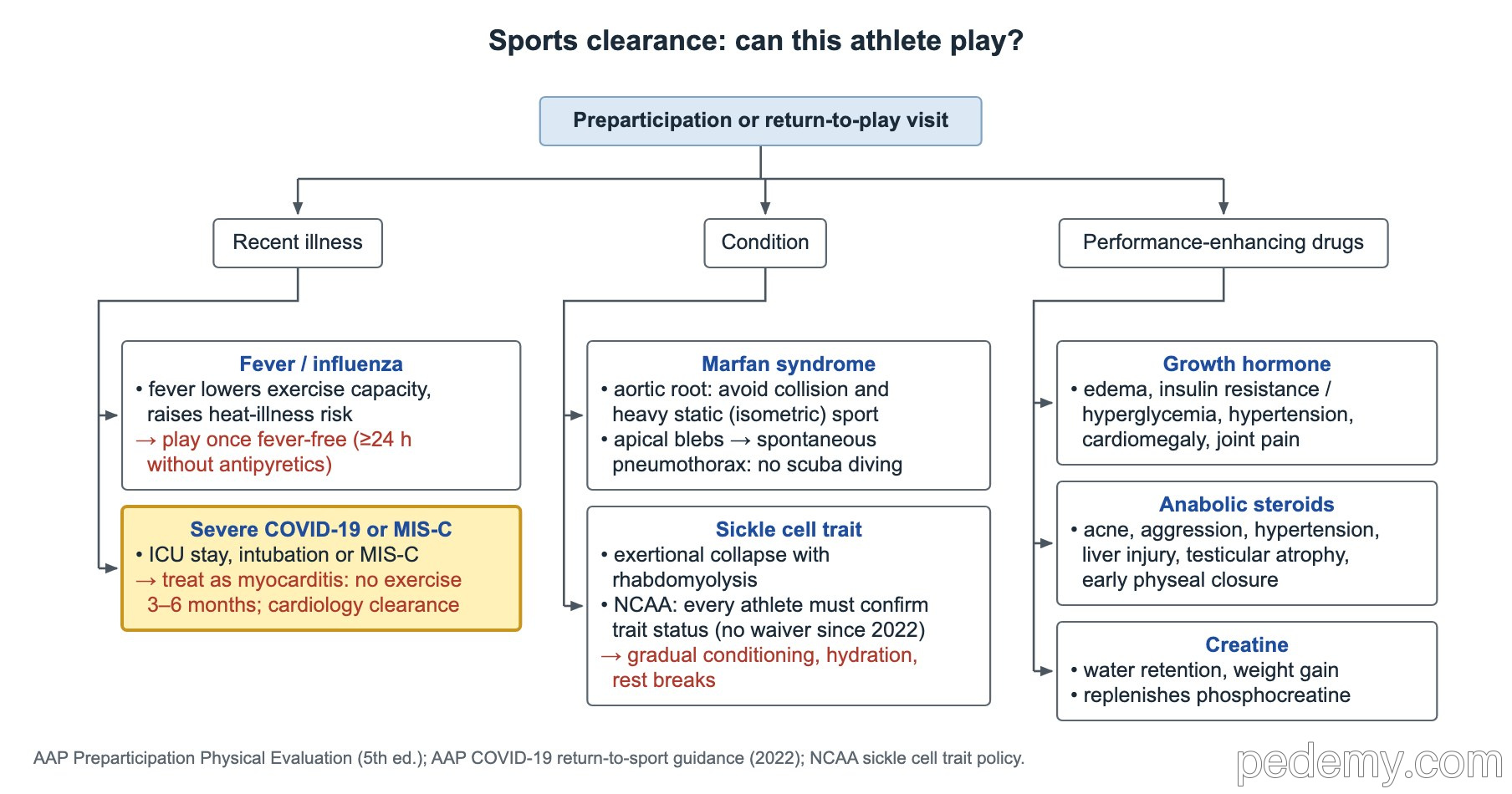
- Fever or influenza: fever lowers exercise capacity and raises heat-illness risk. Return once fever-free for at least 24 hours without antipyretics.
- Severe COVID-19 (ICU stay, intubation) or MIS-C: treat as myocarditis, with no exercise for 3–6 months and cardiology clearance before return.
- Sickle cell trait: risk of exertional collapse with rhabdomyolysis. The NCAA requires college athletes to confirm their trait status. Prevent with gradual conditioning, hydration and rest breaks.
- Marfan syndrome and scuba diving: apical lung blebs can rupture with pressure changes and cause a spontaneous pneumothorax, so diving is not advised.
Common questions
When can a child go back to sports after a concussion?
After a short period of relative rest, the child returns to school first, then moves through 6 graded steps of at least 24 hours each. Contact practice needs medical clearance once the child is symptom-free, so the minimum is about a week.
Can a teen with type 1 diabetes play contact sports?
Yes. The pump is secured and padded or removed briefly, glucose is checked before and during play, and coaches have a written hypoglycemia plan.
Do children with Down syndrome need neck X-rays before sports?
Not if they have no symptoms. Screen for neck pain, gait change or weakness at each visit; any of these needs urgent neutral C-spine X-rays and then MRI.
Study this topic
Sources
- Consensus statement on concussion in sport: 6th International Conference, Amsterdam 2022 (Br J Sports Med 2023)
- AAP clinical report: Sport-related concussion in children and adolescents (Pediatrics 2018)
- AHA/ACC 2025: Clinical considerations for competitive sports participation for athletes with cardiovascular abnormalities (JACC)
- ADA Standards of Care in Diabetes 2026: Children and adolescents (Diabetes Care)
- AAP 2017 clinical practice guideline: High blood pressure in children and adolescents (Pediatrics)
Written for Pedemy in our own words from the sources above; checked November 2026. For education only, not medical advice; check doses and local protocols before treating a patient. Pedemy is independent and not affiliated with or endorsed by the organizations cited.