

Main decision tree
Heat, fluids and food for young athletes
Key points
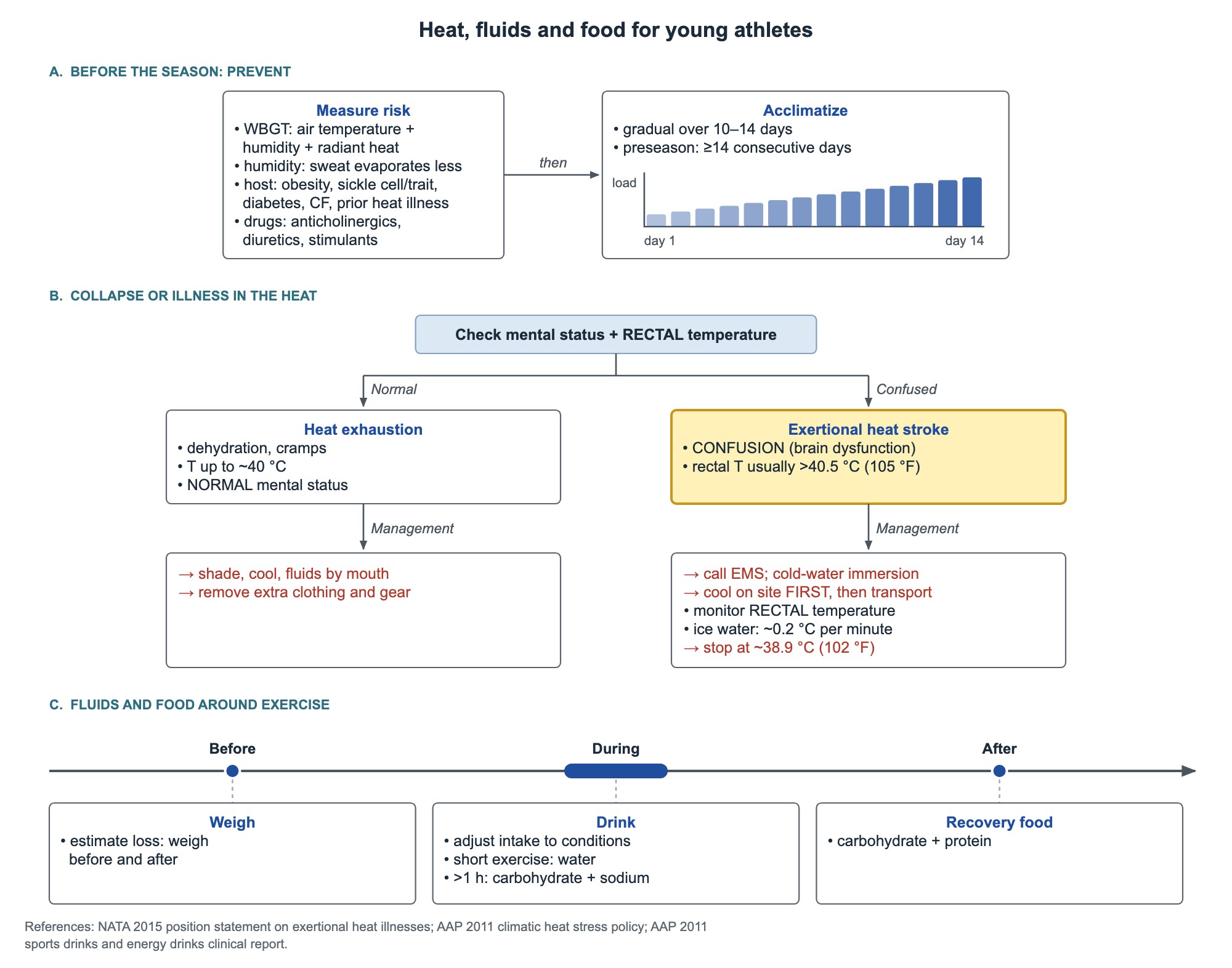
- Exertional heat stroke: core temperature above 40 °C (104 °F) plus CNS dysfunction such as confusion.
- Heat stroke: measure rectal temperature, cool on site in cold water first (about 0.2 °C per minute), stop near 38.9 °C (102 °F), then transport.
- Preseason heat acclimatization takes at least 14 consecutive days.
- Water for most short exercise; add carbohydrate and sodium for exercise longer than about 1 hour or in heat.
- Overuse prevention: at least 1–2 days off a week and 1 month off at least 3 times a year from the main sport.
- Resistance training has no minimum age; 20–30 minutes, 2–3 times a week on nonconsecutive days, with supervision.
- The AAP advises against creatine and other performance-enhancing supplements under age 18.
Heat exhaustion vs exertional heat stroke
For any athlete who collapses or looks unwell in the heat, check mental status and a rectal temperature. Oral, tympanic and skin readings are unreliable after exercise. Mental status is what separates the two main diagnoses.
- Cold-water (ice-water) immersion is the best cooling method and lowers core temperature by roughly 0.2 °C per minute.
- Monitor rectal temperature during cooling and stop near 38.9 °C (102 °F) to avoid overshooting into hypothermia.
- Exertional sickling (sickle cell trait): the athlete slumps and feels weak during sprints but stays alert, without the locked muscles of a cramp. Stop exercise, give oxygen, cool and call EMS.
| Heat exhaustion | Exertional heat stroke | |
|---|---|---|
| Mental status | Normal | Abnormal: confusion, odd behavior, collapse, seizure |
| Rectal temperature | Up to about 40 °C (104 °F) | Above 40 °C (104 °F), often above 40.5 °C (105 °F) |
| Other features | Dehydration, cramps, fatigue | Can progress to organ failure and death |
| Management | Stop exercise, shade, remove extra gear, cool, oral fluids | Call EMS; cold-water immersion on site first, then transport |
Heat risk and acclimatization
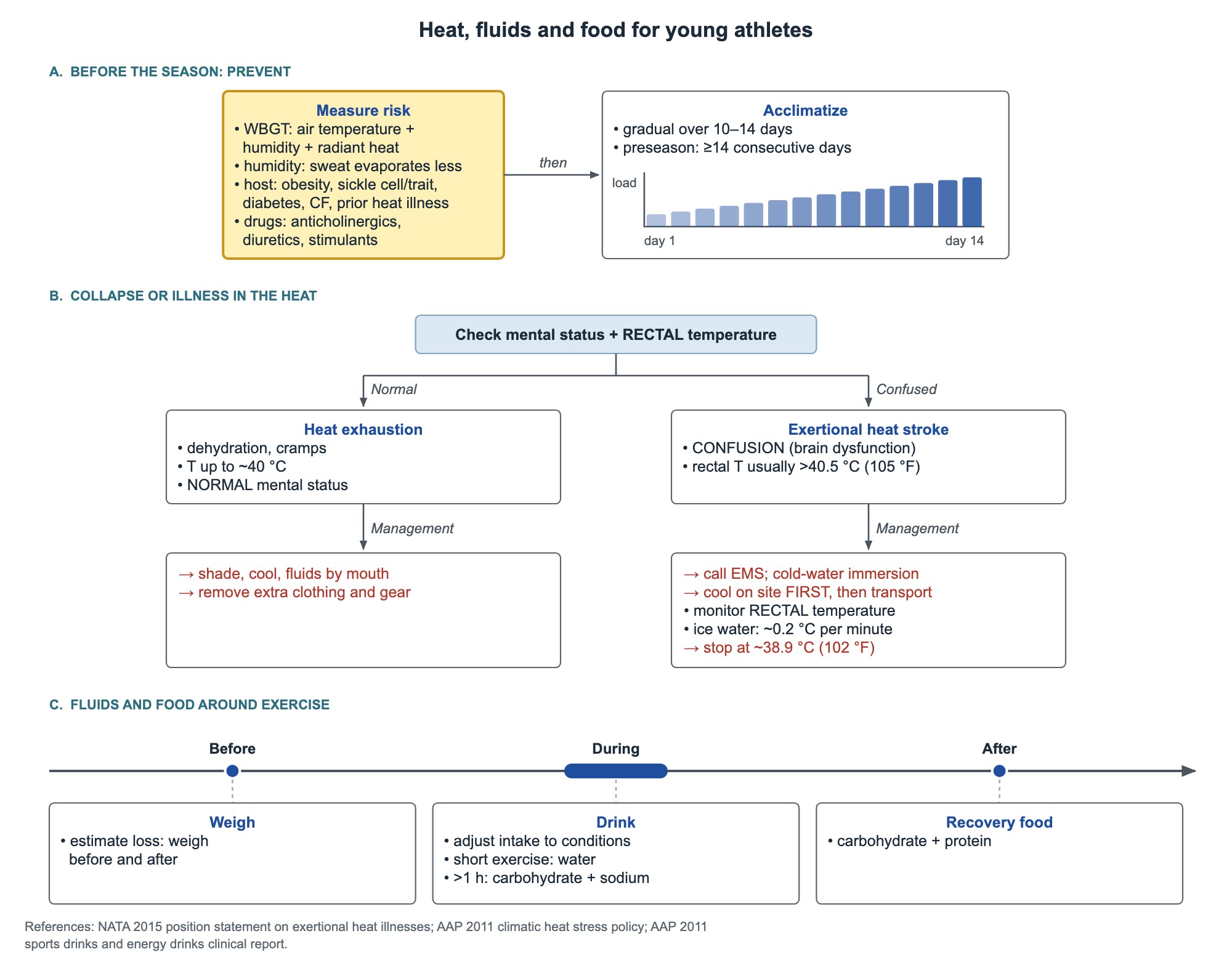
The wet bulb globe temperature (WBGT) is the heat index used for sport. It combines air temperature, humidity, sun (radiant heat) and wind. Humidity matters because sweat evaporates less, so the body cools less.
- Host risk factors: obesity, sickle cell trait or disease, diabetes, cystic fibrosis, and past heat illness.
- Drugs that raise risk: anticholinergics (including many antihistamines), diuretics, and stimulants or other sympathomimetics.
- Acclimatize gradually over 10–14 days; high-school preseason practice should build up over at least 14 consecutive days.
- Fever lowers exercise capacity and raises heat-illness risk.
- An athlete with past heat illness may play again, with gradual acclimatization.
Fluids and food around exercise
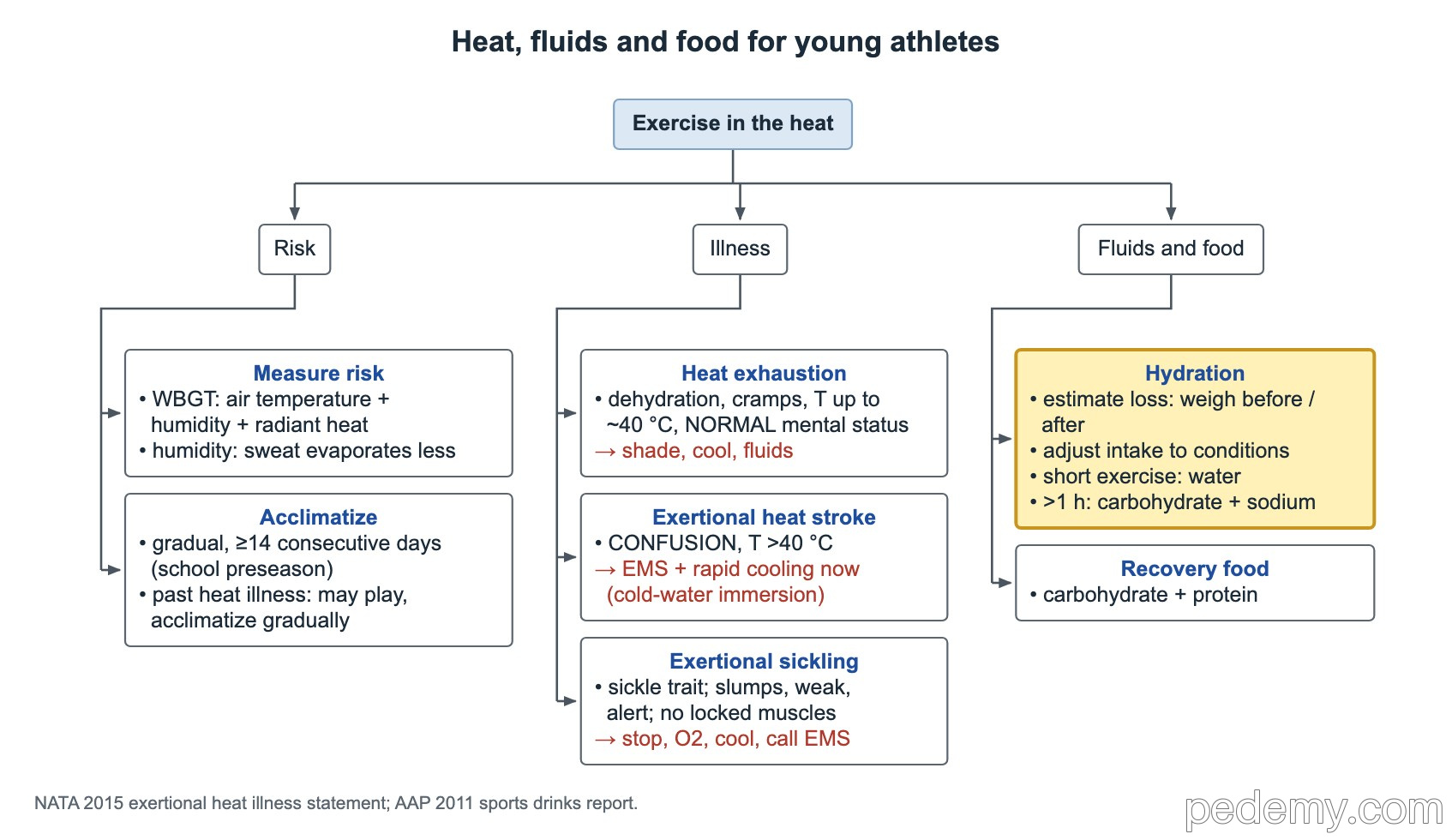
- Estimate sweat loss by weighing the athlete before and after practice.
- Set fluid intake to the athlete's sweat loss and the conditions; there is no single fixed amount.
- Short exercise: water is the usual drink.
- Exercise longer than about 1 hour, or in heat: a sports drink with carbohydrate and sodium.
- Energy drinks are not sports drinks; their caffeine and other stimulants have no place in children's hydration.
- Recovery food after exercise combines carbohydrate and protein.
Overuse injuries in growing athletes
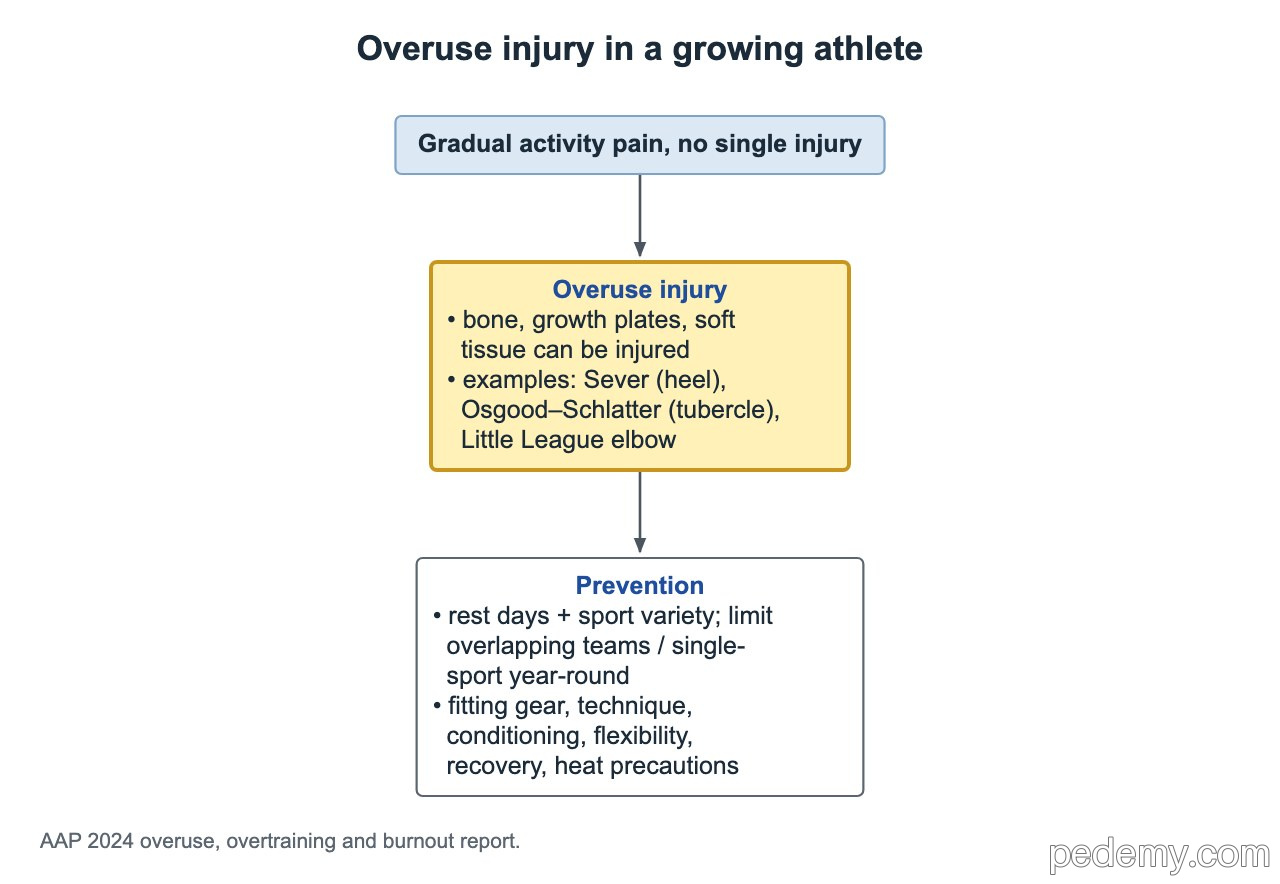
Think of overuse when pain builds gradually with activity and there was no single injury. In a growing athlete, repeated stress can injure bone (stress fractures), growth plates and apophyses, and soft tissues such as tendons.
| Overuse condition | Site |
|---|---|
| Sever disease | Calcaneal apophysis (heel) |
| Osgood–Schlatter disease | Tibial tubercle |
| Little League elbow | Medial epicondyle apophysis of the throwing elbow |
Preventing overuse and burnout
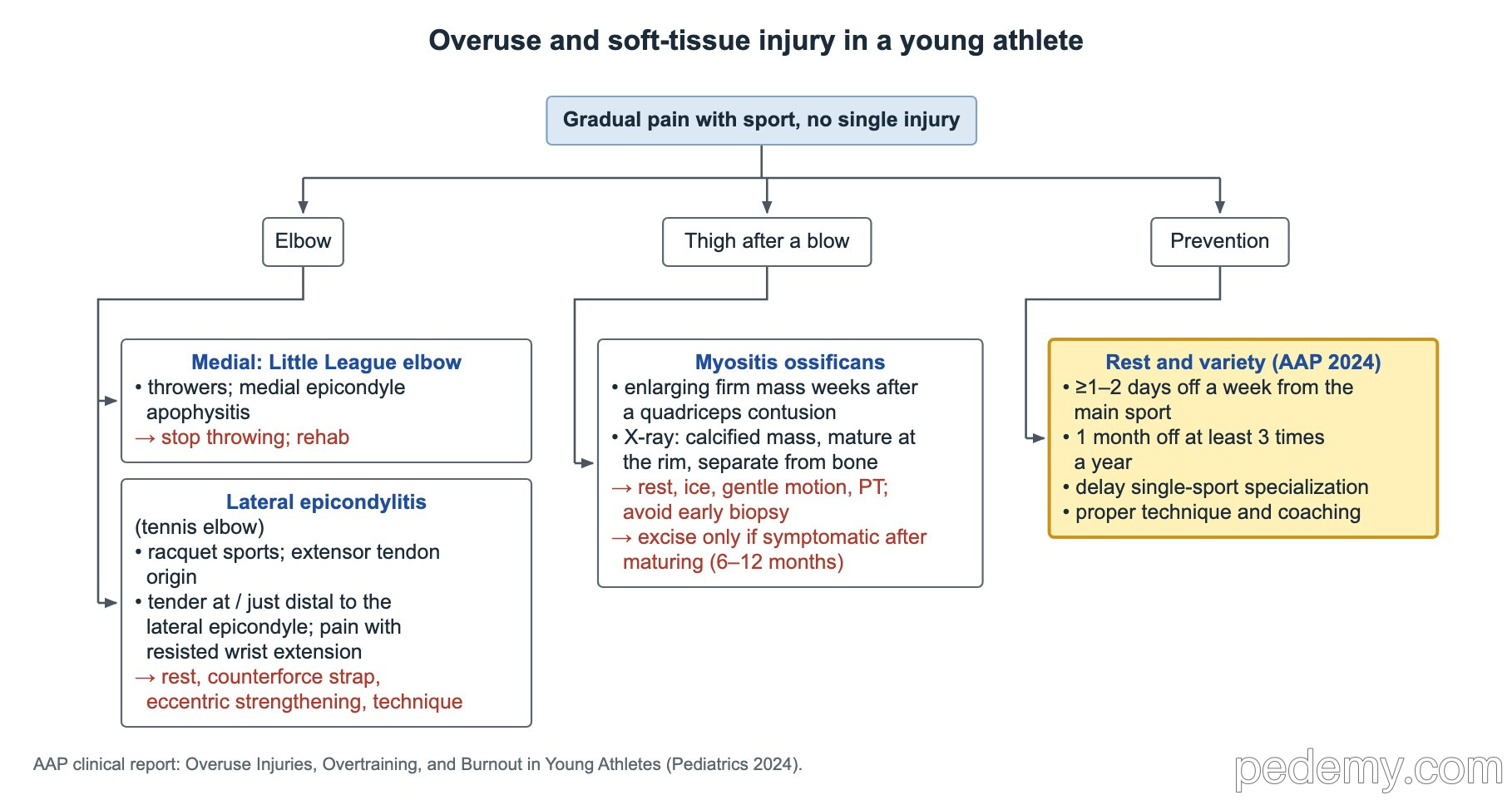
- At least 1–2 days off a week from the main sport.
- 1 month off from the main sport at least 3 times a year.
- Delay single-sport specialization; play a variety of sports.
- Limit overlapping teams in the same sport and year-round single-sport play.
- Proper technique and coaching, gear that fits, conditioning and flexibility, recovery time and heat precautions.
Physical activity and resistance training
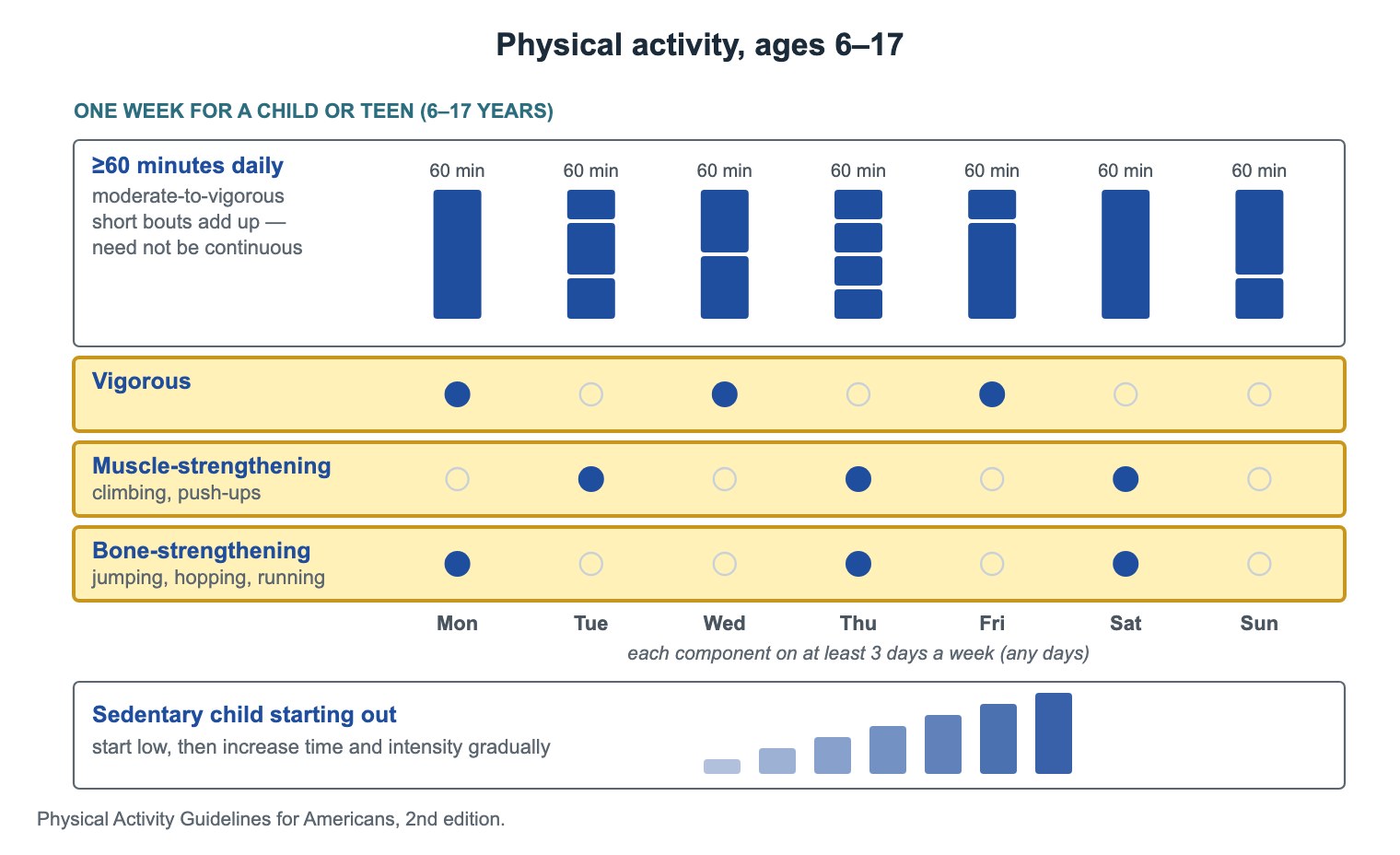
Children and teens aged 6–17 need at least 60 minutes of moderate-to-vigorous activity a day, which can be built from short bouts. Vigorous activity, muscle-strengthening and bone-strengthening activity should each happen on at least 3 days a week. Supervised resistance training is a safe way to meet the muscle-strengthening goal.
- No minimum age: a child can start once able to follow instructions safely.
- Before puberty, strength rises through neural adaptation (better motor unit recruitment), not muscle hypertrophy.
- Supervised training does not harm growth plates or linear growth.
- Sessions of 20–30 minutes, 2–3 times a week on nonconsecutive days, after a 10–15 minute dynamic warm-up and with a cool-down.
- Master technique with light loads before adding weight; multi-joint moves before single-joint moves.
- Most injuries come from poor technique, wrong-size equipment and lack of supervision.
- Benefits: strength, sport performance, fewer sports injuries and better bone density. In children with obesity: more lean mass, higher metabolic rate and better insulin sensitivity.
- Wait for medical clearance with uncontrolled hypertension or a seizure disorder.
Supplements and performance-enhancing drugs
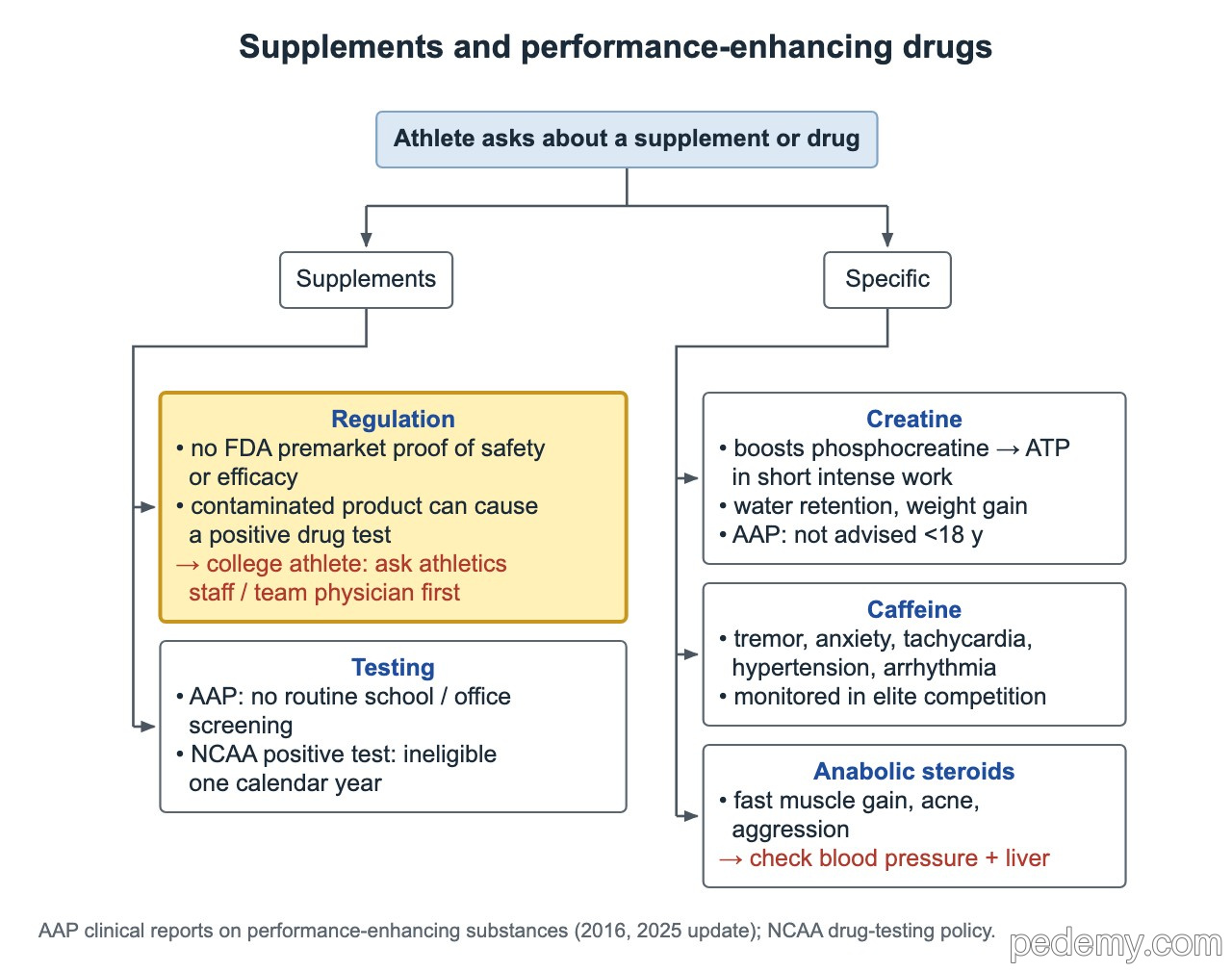
The FDA does not check dietary supplements for safety or effectiveness before they are sold. Products can contain banned substances that are not on the label, so a supplement with only permitted ingredients listed can still cause a positive drug test. College athletes should check any supplement with athletics staff and the team physician first.
- The AAP does not support routine drug testing of adolescent athletes in schools.
- NCAA: a positive test for a performance-enhancing drug means 365 days of ineligibility and loss of a season of competition.
| Substance | What to know |
|---|---|
| Creatine | Boosts phosphocreatine regeneration of ATP for short, intense bursts; water retention in muscle adds 1–2 kg early; AAP advises against use under 18 |
| Caffeine | High doses: jitteriness, anxiety, tachycardia, hypertension, arrhythmias; monitored in elite sport, and some bodies restrict high levels |
| Anabolic steroids | Rapid muscle gain, acne, aggression, hypertension, liver injury, testicular atrophy, early physeal closure; check blood pressure and liver tests |
| Growth hormone | Edema (hand swelling), insulin resistance and hyperglycemia, hypertension, cardiomegaly, joint pain |
Common questions
Is weight lifting safe for children?
Yes, when supervised, with good technique and suitable loads. It does not stunt growth or damage growth plates, and it has no set minimum age.
How do you treat exertional heat stroke?
Call EMS and start cold-water immersion on site right away. Monitor rectal temperature, stop cooling near 38.9 °C (102 °F), then transport.
Is creatine safe for teenagers?
The AAP advises against creatine and other performance-enhancing supplements for athletes under 18. Supplements are not checked by the FDA before sale and can be contaminated.
Study this topic
Sources
- AAP clinical report: Overuse injuries, overtraining, and burnout in young athletes (Pediatrics 2024)
- AAP clinical report: Resistance training for children and adolescents (Pediatrics 2020)
- NATA position statement: Exertional heat illnesses (J Athl Train 2015)
- AAP clinical report: Use of performance-enhancing substances (Pediatrics 2016)
- NIH Office of Dietary Supplements: Dietary supplements for exercise and athletic performance
Written for Pedemy in our own words from the sources above; checked November 2026. For education only, not medical advice; check doses and local protocols before treating a patient. Pedemy is independent and not affiliated with or endorsed by the organizations cited.