

Main decision tree
Recurrent pneumonia: look for a clearance or immune problem
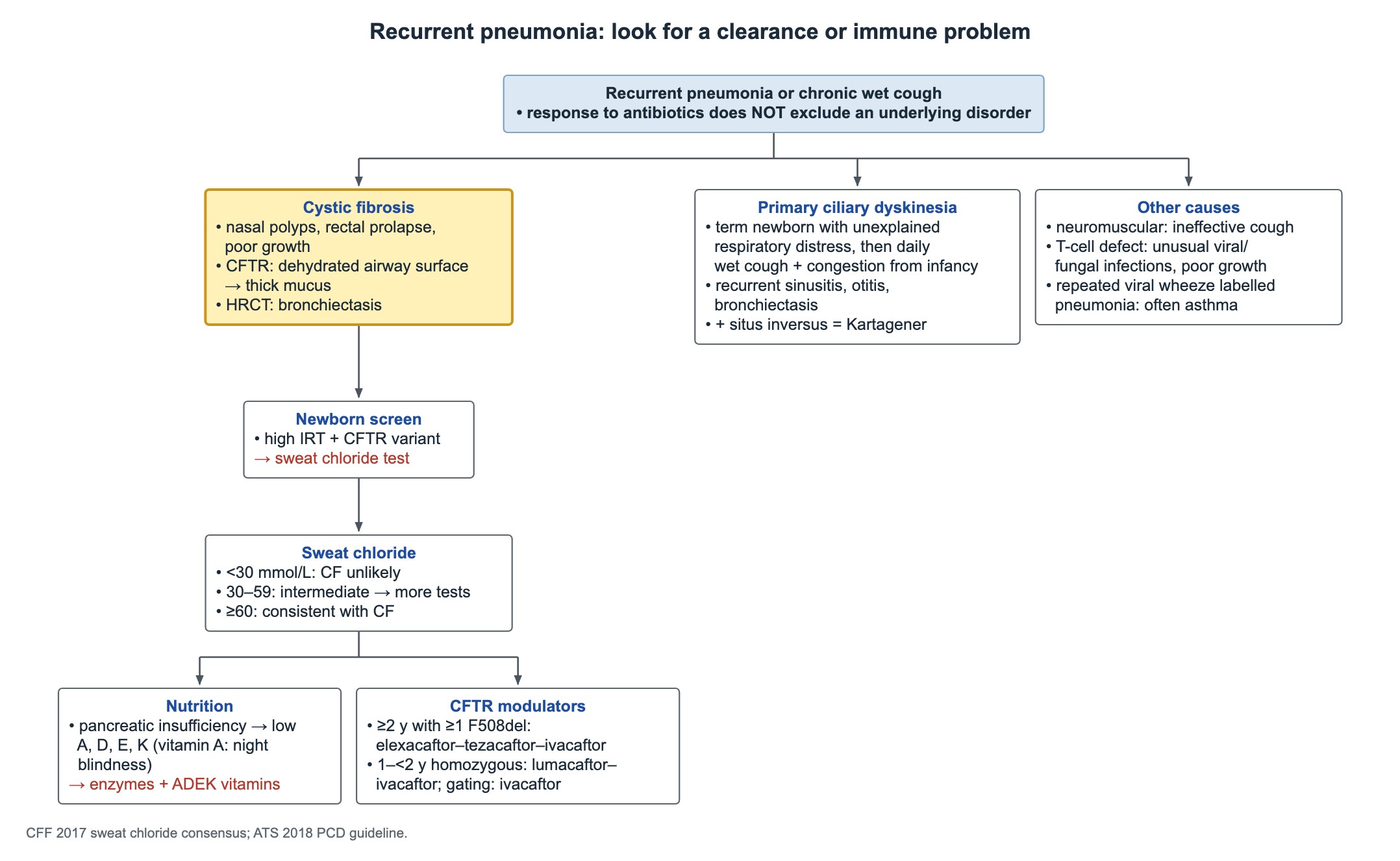
Key points
- Nasal polyps or rectal prolapse in a young child → evaluate for CF.
- Infant with hypochloremic, hypokalemic metabolic alkalosis and no vomiting → think CF salt loss in sweat.
- High IRT on the newborn screen plus one CFTR variant → sweat chloride test.
- Sweat chloride: <30 mmol/L CF unlikely; 30–59 intermediate; ≥60 consistent with CF.
- Homozygous F508del → pancreatic insufficiency and risk of low vitamins A, D, E and K.
- Elexacaftor–tezacaftor–ivacaftor is used from age 2 with at least one F508del variant.
- Chronic sinusitis, bronchiectasis and situs inversus = Kartagener syndrome, a form of PCD.
When to think of cystic fibrosis
A faulty CFTR channel leaves the airway surface dehydrated, so mucus is thick and hard to clear. Infection and inflammation follow, and the end result is bronchiectasis: dilated, thick-walled airways on high-resolution CT in a child with a daily wet cough.
- Nasal polyps in a young child.
- Recurrent rectal prolapse.
- Poor growth with greasy stools (pancreatic insufficiency).
- Infant with hypochloremic, hypokalemic metabolic alkalosis and low urine chloride without vomiting: salt lost in sweat.
- Chronic wet cough, recurrent pneumonia, digital clubbing.
Newborn screening
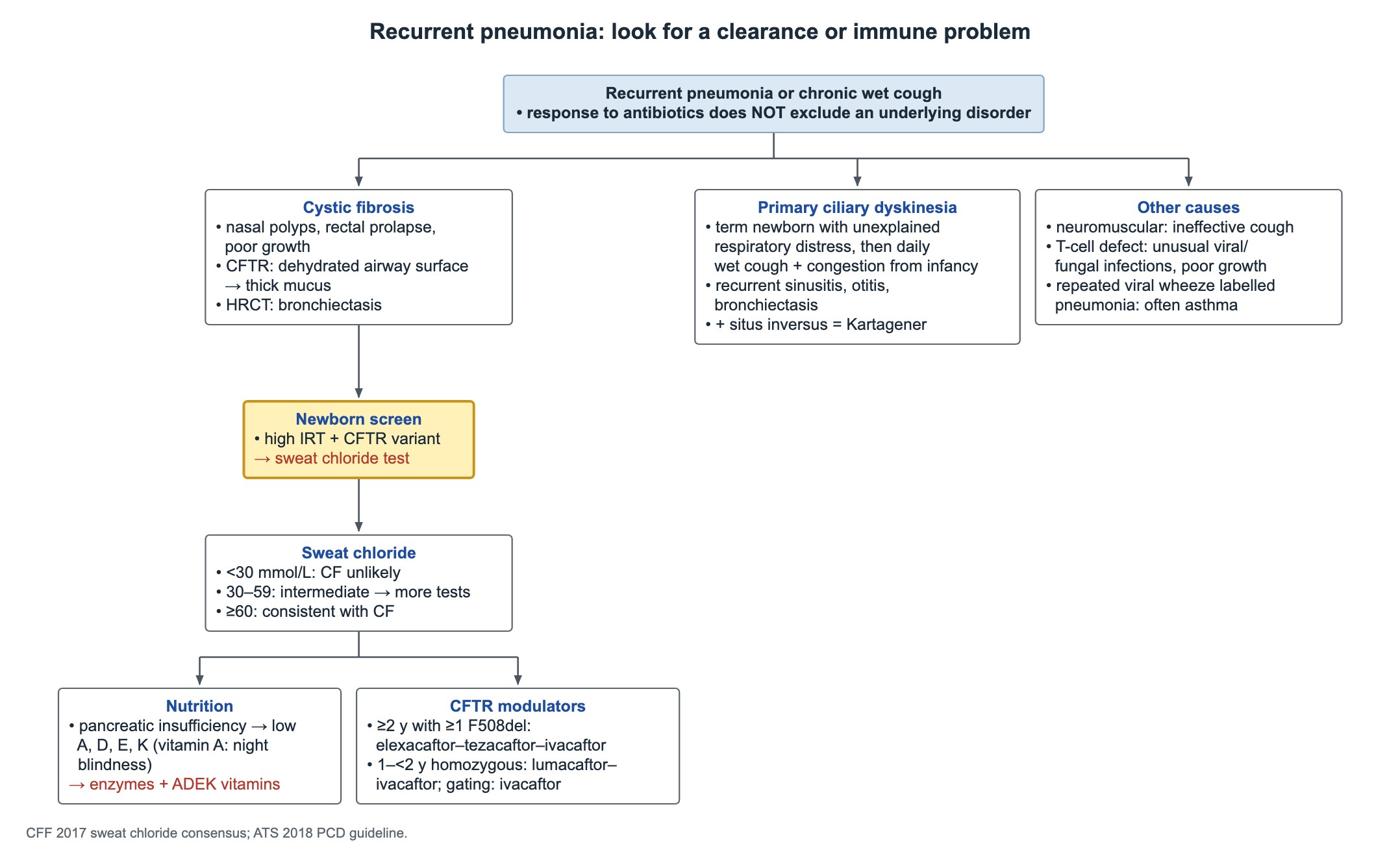
All US states screen newborns for CF. A raised immunoreactive trypsinogen (IRT), usually followed by CFTR variant testing, makes the screen positive. A positive screen is not a diagnosis: the next step is a sweat chloride test at an accredited CF center.
Infants with a positive screen but inconclusive sweat and genetic results are labelled CFTR-related metabolic syndrome or CF screen positive, inconclusive diagnosis (CRMS/CFSPID) and are followed over time.
Sweat chloride results
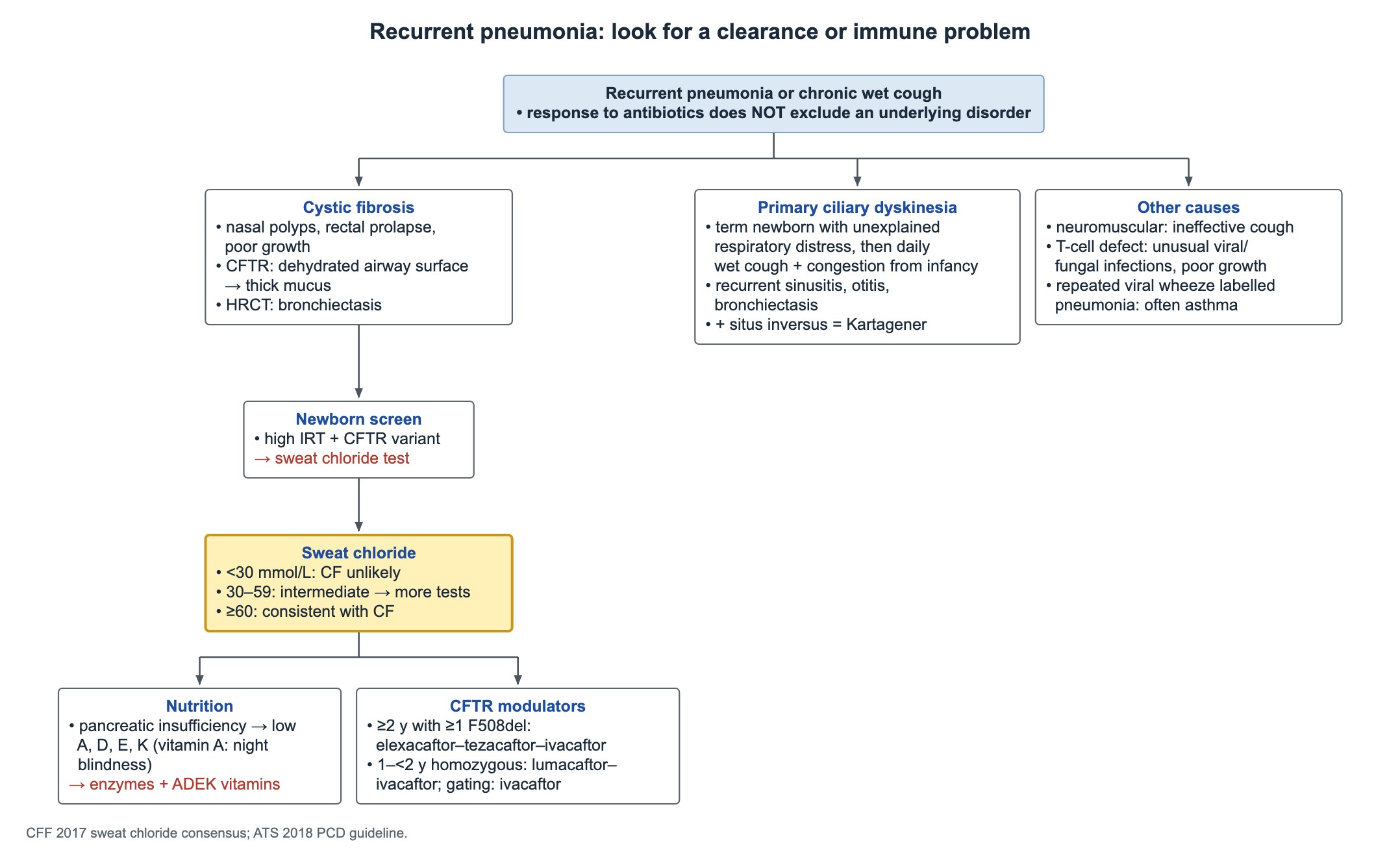
The sweat chloride test measures CFTR function and confirms the diagnosis at any age, from newborn to adult.
| Sweat chloride | Meaning |
|---|---|
| <30 mmol/L | CF unlikely |
| 30–59 mmol/L | Intermediate: needs CFTR genetic testing and more evaluation |
| ≥60 mmol/L | Consistent with CF in the right clinical setting |
Pancreas, nutrition and vitamins
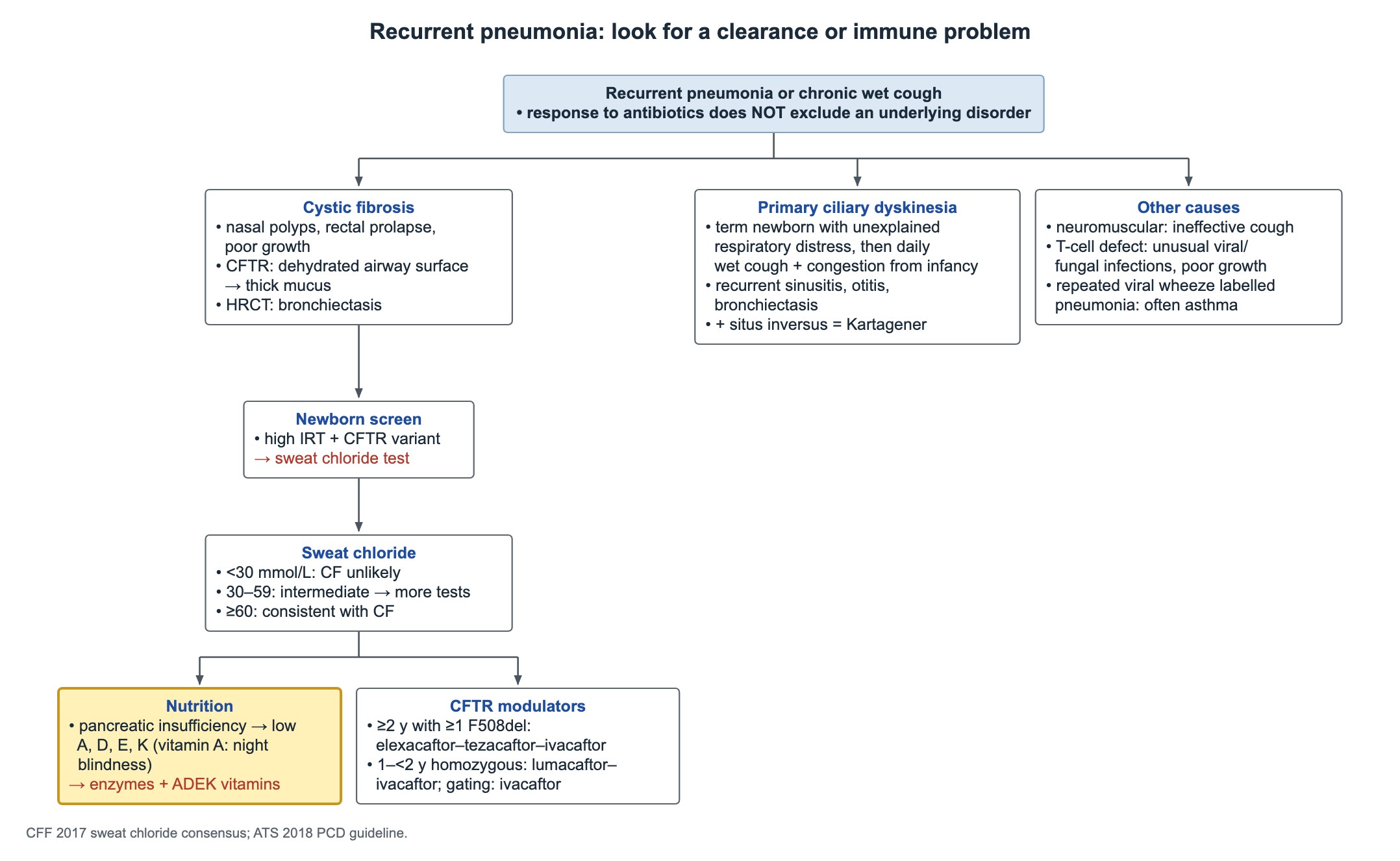
Most children with two severe variants, such as homozygous F508del, are pancreatic insufficient. Fat is poorly absorbed, so the fat-soluble vitamins run low.
- Vitamin A: night blindness.
- Vitamin D: rickets and low bone density.
- Vitamin E: hemolysis and neuropathy.
- Vitamin K: bruising and bleeding.
- Treatment: pancreatic enzymes with meals and CF-specific ADEK vitamins.
CFTR modulators
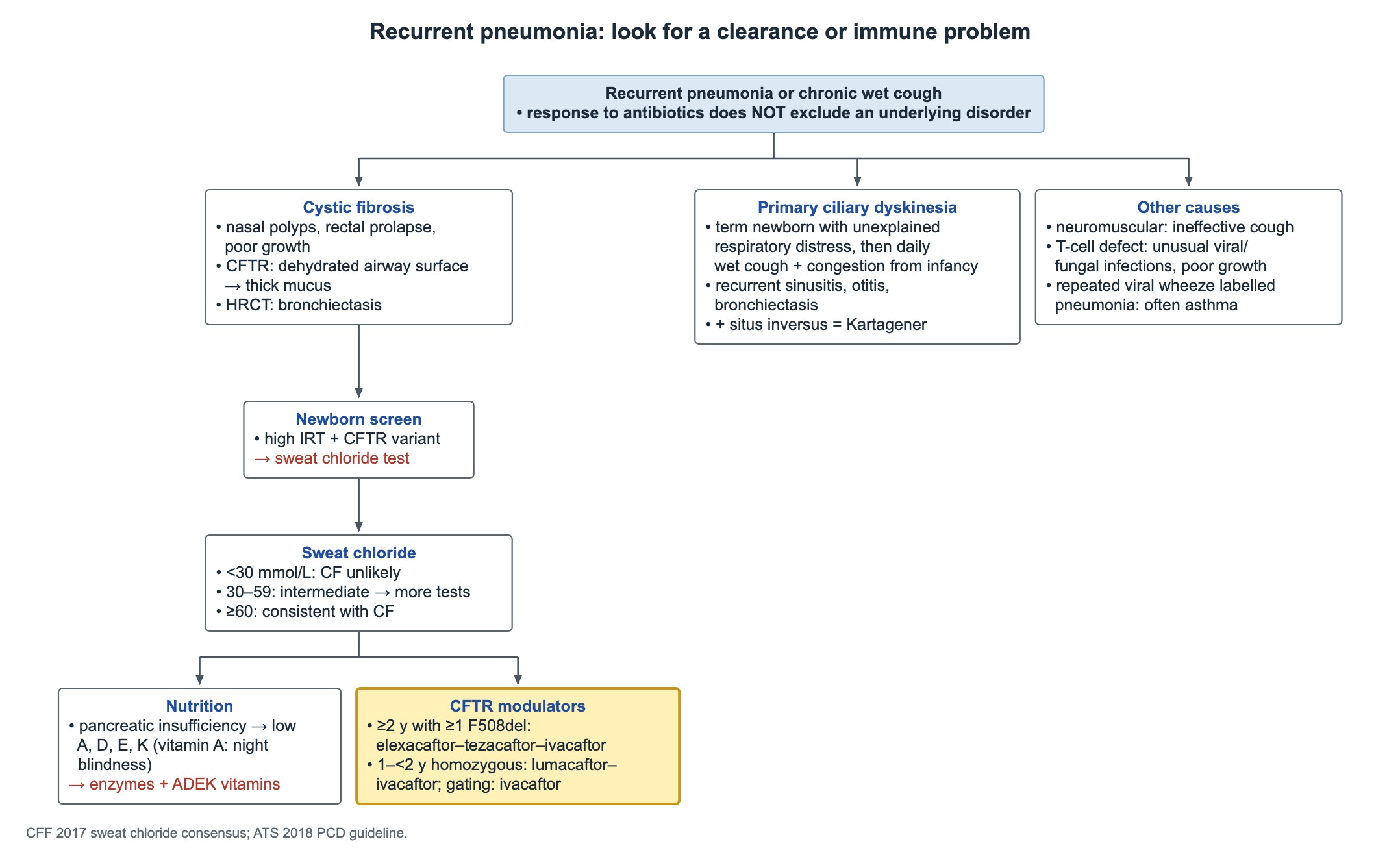
Modulators help the faulty CFTR protein reach the cell surface or open better. They are chosen by the child's variants and age, alongside daily airway clearance and nutrition care at a CF center.
| Variants | Modulator |
|---|---|
| At least one F508del (or another responsive variant), age ≥2 years | Elexacaftor–tezacaftor–ivacaftor |
| Homozygous F508del, age 1 to <2 years | Lumacaftor–ivacaftor |
| Gating variants | Ivacaftor |
Primary ciliary dyskinesia and Kartagener syndrome
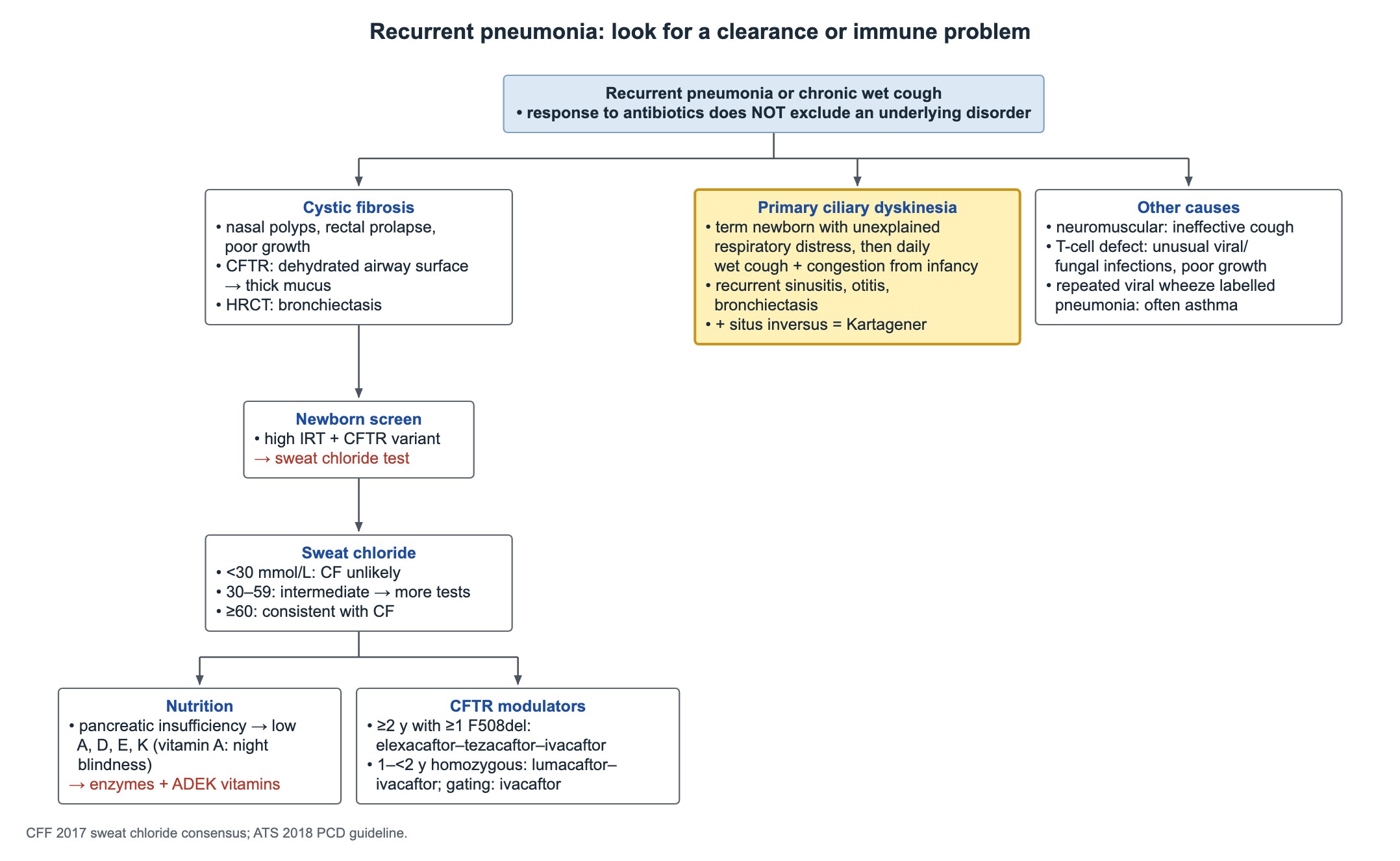
In PCD the cilia do not beat normally, so mucociliary clearance fails throughout the airway. Infection recurs in the sinuses, lungs and middle ears.
Suspect PCD even without situs inversus when a term newborn has unexplained respiratory distress and then a daily wet cough and nasal congestion from early infancy. Chronic sinusitis, bronchiectasis and situs inversus together form Kartagener syndrome.
- Diagnosis (ATS 2018): low nasal nitric oxide in children old enough to cooperate, genetic testing, and ciliary electron microscopy when needed.
- Care: daily airway clearance, early treatment of infections, ENT and hearing follow-up.
Other reasons for recurrent pneumonia
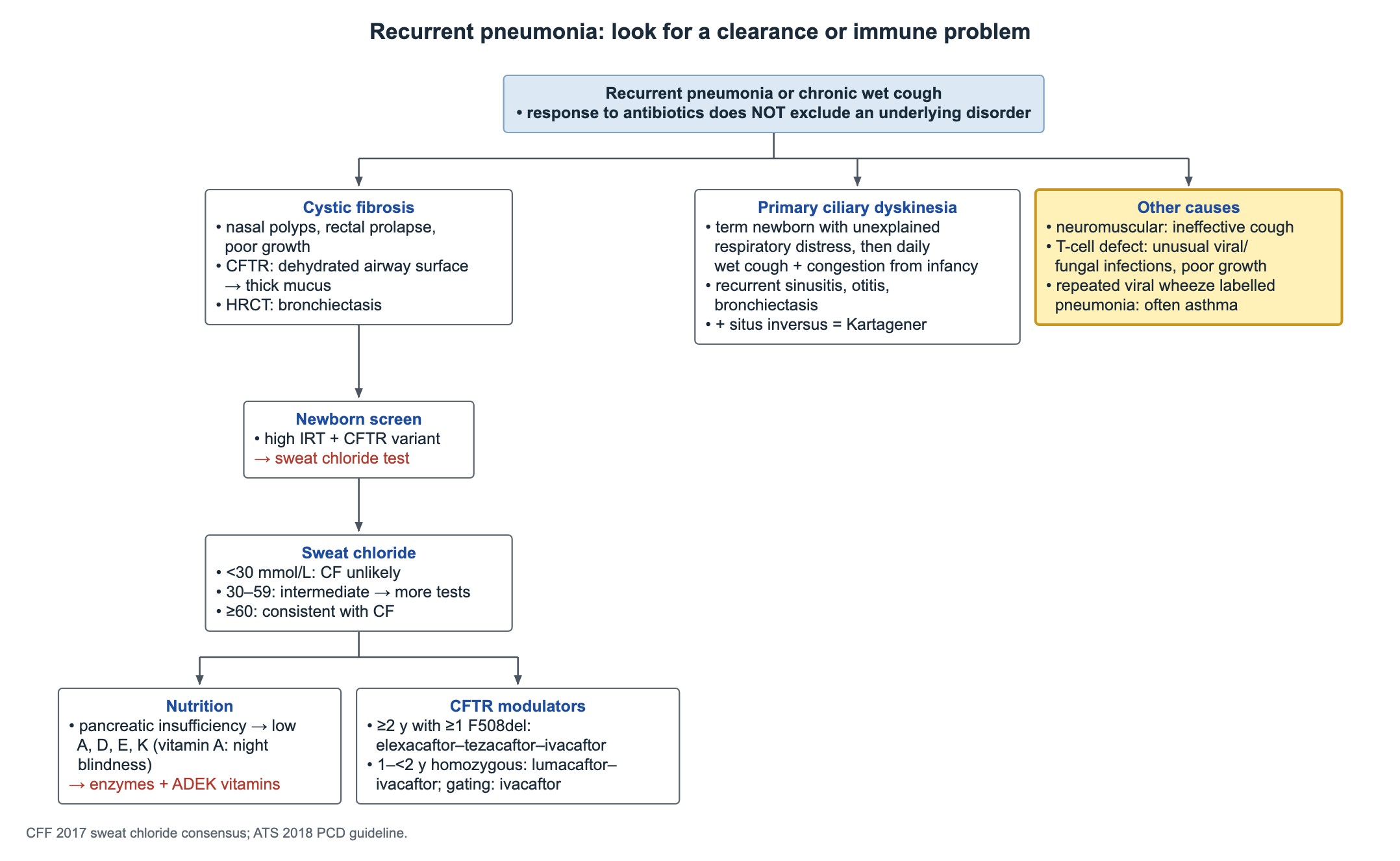
Infections that clear with antibiotics every time do not rule out an underlying disorder. Keep looking when pneumonia keeps coming back.
- Neuromuscular weakness: an ineffective cough.
- T-cell defects: unusual viral or fungal infections and poor growth.
- Repeated viral wheeze labelled as pneumonia: often asthma.
Common questions
What sweat chloride level means cystic fibrosis?
A sweat chloride of 60 mmol/L or more is consistent with CF. Below 30 makes CF unlikely, and 30–59 is intermediate and needs more testing.
What is the difference between Kartagener syndrome and primary ciliary dyskinesia?
Kartagener syndrome is the form of PCD with situs inversus, chronic sinusitis and bronchiectasis. Many children with PCD have normal organ position.
What happens after a positive CF newborn screen?
The infant has a sweat chloride test at a CF center. A positive screen alone does not diagnose CF.
Study this topic
Sources
- Cystic Fibrosis Foundation 2017: Diagnosis of cystic fibrosis, consensus guidelines (J Pediatr)
- ATS 2018: Diagnosis of primary ciliary dyskinesia (Am J Respir Crit Care Med)
Written for Pedemy in our own words from the sources above; checked November 2026. For education only, not medical advice; check doses and local protocols before treating a patient. Pedemy is independent and not affiliated with or endorsed by the organizations cited.