

Main decision tree
Pneumonia with effusion or empyema
Key points
- Abrupt fever, lobar pneumonia and pleuritic pain → Streptococcus pneumoniae; severe pneumonia after influenza with cavities or pneumatoceles → S. aureus, including MRSA.
- School-age child, well enough for school, x-ray worse than exam → Mycoplasma; test with PCR of a respiratory swab.
- Effusion on chest film → chest ultrasound, not CT, for size and loculations.
- Moderate loculated effusion with distress → chest tube with intrapleural fibrinolytic plus IV antibiotics; VATS if still loculated.
- A witnessed aspiration does not automatically need antibiotics.
- Bronchiolitis: support oxygen and hydration; no routine albuterol, epinephrine, hypertonic saline or steroids.
- High-flow nasal cannula (about 1.5–2 L/kg/min) should lower heart rate, breathing rate and work of breathing within about 1 hour.
Which organism? The classic clues
In children older than 3 months, viruses cause most pneumonia in the preschool years. The clues below point to a specific bacterial, atypical or fungal cause.
| Clue | Organism |
|---|---|
| Abrupt fever, lobar consolidation, pleuritic chest pain | Streptococcus pneumoniae |
| Severe pneumonia after influenza; cavities or pneumatoceles | Staphylococcus aureus, including MRSA |
| School-age child, walking pneumonia, x-ray worse than exam; rash, mucositis or hemolytic anemia | Mycoplasma pneumoniae |
| Sore throat or hoarseness, then weeks later a prolonged cough or pneumonia | Chlamydia pneumoniae |
| Hilar nodes after cave, bird or bat dropping exposure in the Ohio and Mississippi River valleys | Histoplasmosis |
| Pneumonia with skin ulcers or verrucous lesions near the Great Lakes | Blastomycosis |
| Pneumonia after travel to or residence in the US Southwest | Coccidioidomycosis |
Mycoplasma pneumoniae
Mycoplasma typically affects school-age children and teens, who often look better than their chest x-ray. It can cause rash (including Stevens–Johnson-like mucositis) and cold-agglutinin hemolytic anemia.
- Best test: PCR (nucleic acid amplification) of a respiratory swab; IgM serology is unreliable.
- Treatment when an atypical cause is likely: a macrolide such as azithromycin.
Aspiration pneumonia
Suspect aspiration pneumonia in a child with dysphagia and recurrent choking who develops persistent fever and a new infiltrate, often in a dependent segment.
Children with neuromuscular disease, such as spinal muscular atrophy, may aspirate silently without coughing or choking with feeds. A videofluoroscopic swallow study shows it.
- A witnessed aspiration event does not automatically need prophylactic antibiotics: many cause only chemical pneumonitis. Treat if fever and infiltrates persist.
- Community-onset aspiration pneumonia is commonly treated with IV ampicillin–sulbactam, which covers mouth flora.
Pleural effusion and empyema
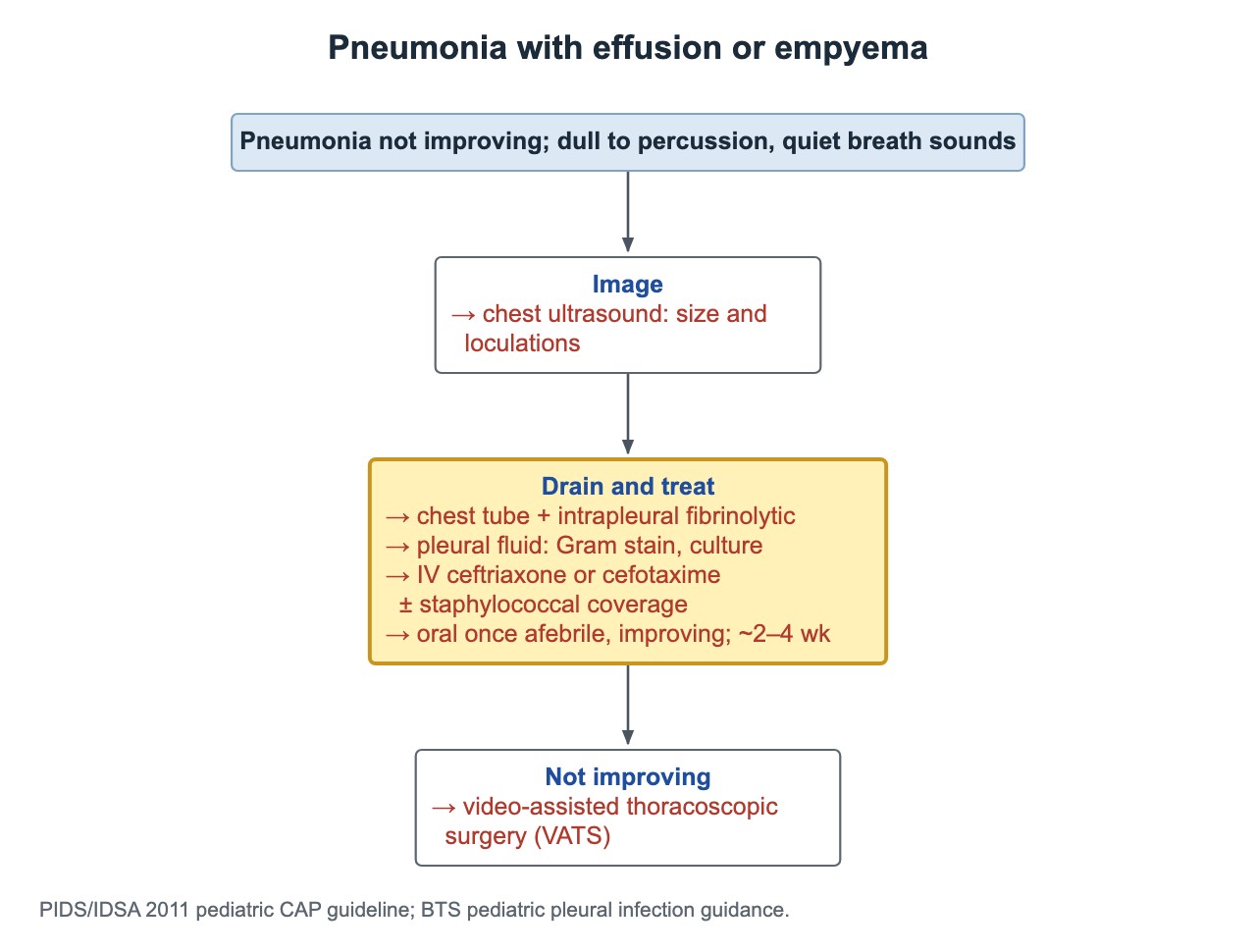
Think of an effusion when pneumonia is not improving and the chest is dull to percussion with quiet breath sounds. Chest ultrasound shows the size and any septations or loculations without radiation; CT is not routine.
- Moderate or large, loculated effusion with respiratory distress: chest tube with intrapleural fibrinolytic therapy, plus IV antibiotics.
- Send the pleural fluid for Gram stain and bacterial culture; these are the most useful tests.
- Empiric IV antibiotics: ceftriaxone or cefotaxime, adding anti-MRSA cover (vancomycin or clindamycin) when S. aureus is likely.
- Switch to oral antibiotics once afebrile and improving; total course usually about 2–4 weeks.
- Still loculated or not improving after chest tube and fibrinolytics: video-assisted thoracoscopic surgery (VATS).
Bronchiolitis: supportive care
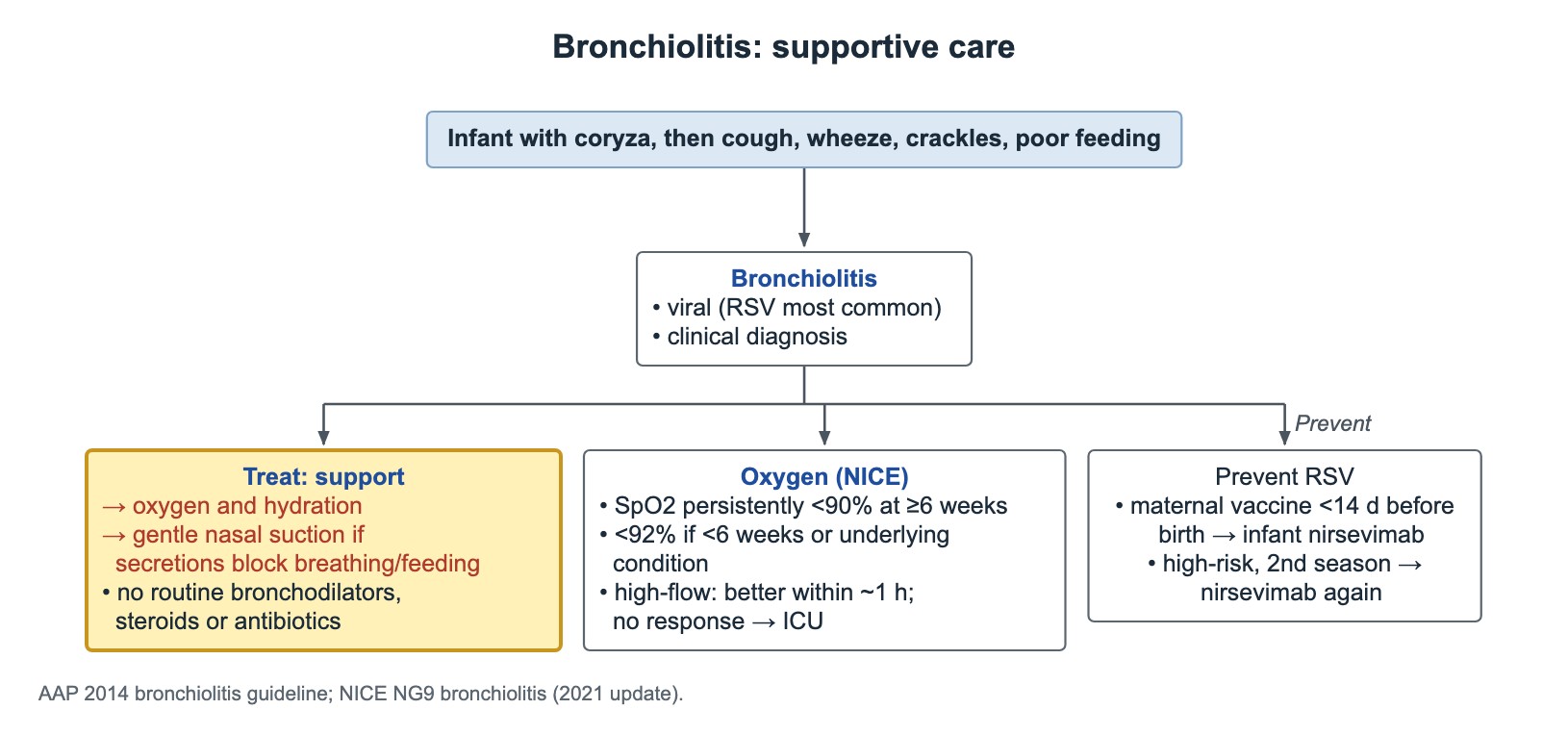
An infant with coryza, then cough, wheeze, crackles, fast breathing and poor feeding has bronchiolitis. RSV is the commonest cause. The diagnosis is clinical: routine chest x-rays and viral tests are not needed.
Most infants admitted with RSV were previously healthy and born at term.
- Treat with support: oxygen when needed, hydration by nasogastric tube or IV if feeding is poor, and gentle nasal suction when secretions block breathing or feeding.
- No routine albuterol, epinephrine, nebulized hypertonic saline, corticosteroids or antibiotics (AAP 2014).
- Oxygen (AAP 2014): clinicians may choose not to give oxygen if SpO2 stays at 90% or above; give it when SpO2 is persistently below 90%.
- Prevention: maternal RSV vaccine during pregnancy, or an RSV monoclonal antibody (nirsevimab or clesrovimab) for the infant; nirsevimab again in the second season for high-risk children.
High-flow nasal cannula and escalation
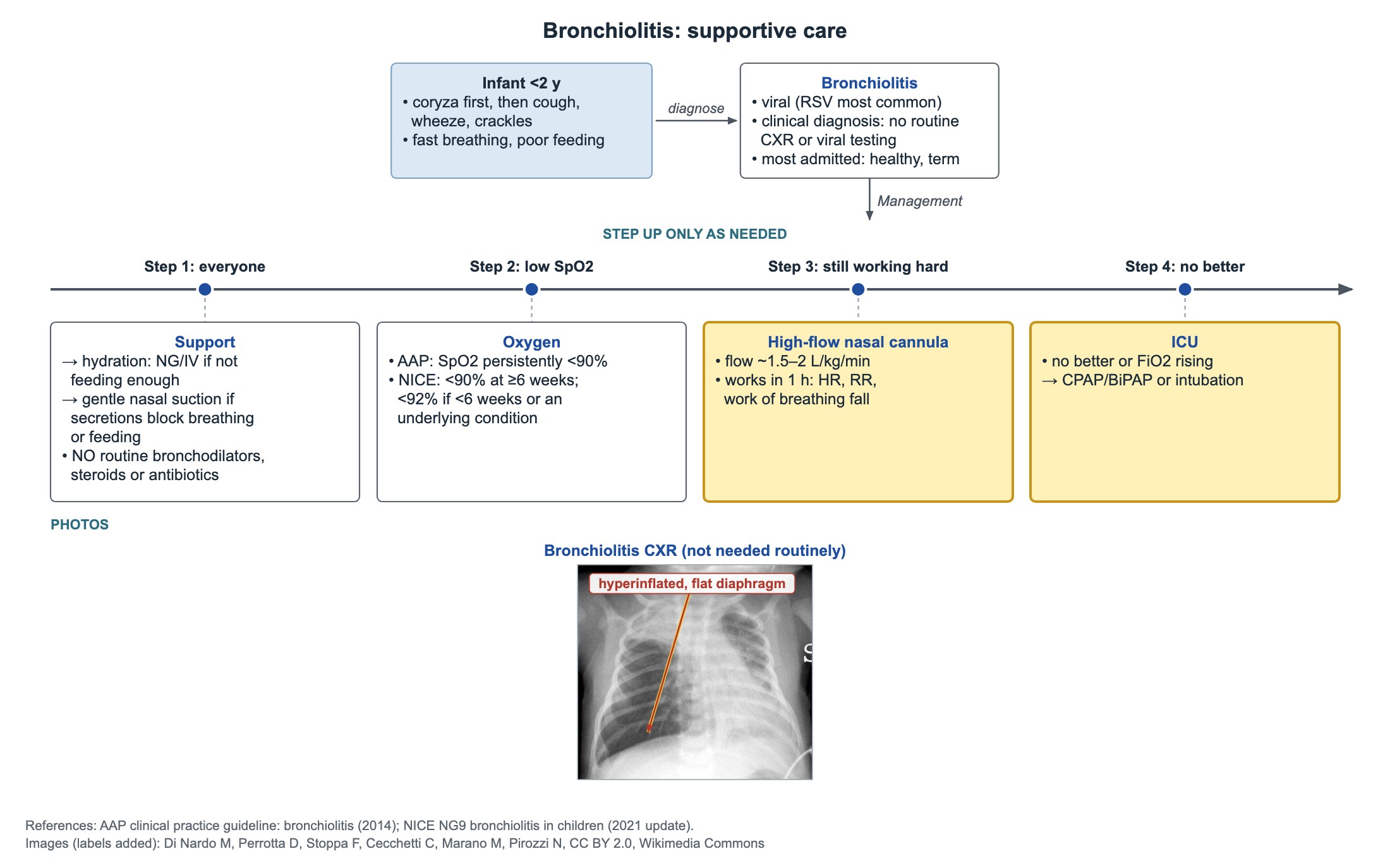
High-flow nasal cannula is used when an infant is still working hard despite simple oxygen. The usual flow is about 1.5–2 L/kg/min.
- Success within about 1 hour: heart rate, breathing rate and work of breathing all fall.
- No improvement, or a rising oxygen need (FiO2): transfer to intensive care for CPAP/BiPAP or intubation.
Common questions
What is the best test for Mycoplasma pneumonia in children?
PCR of a throat or nasopharyngeal swab. IgM serology is unreliable.
Should children get antibiotics after a witnessed aspiration?
Not automatically. Many episodes cause only chemical irritation; treat if fever and new infiltrates persist.
Is albuterol recommended for bronchiolitis?
No. The AAP advises against routine albuterol, epinephrine, hypertonic saline and steroids in bronchiolitis.
Study this topic
Sources
- PIDS/IDSA 2011: Community-acquired pneumonia in infants and children older than 3 months (Clin Infect Dis)
- AAP 2014: Diagnosis, management and prevention of bronchiolitis (Pediatrics)
Written for Pedemy in our own words from the sources above; checked November 2026. For education only, not medical advice; check doses and local protocols before treating a patient. Pedemy is independent and not affiliated with or endorsed by the organizations cited.