

Main decision tree
Pneumonia in neuromuscular weakness
Key points
- Neuromuscular weakness causes two breathing problems: hypoventilation and a weak cough that cannot clear secretions.
- Neuromuscular child with pneumonia: get a blood gas for CO2 retention; borderline SpO2 (about 93%) → emergency department.
- Asthma or CF with mucus plugs, eosinophilia and high IgE → evaluate for ABPA; IgE ≥500 IU/mL alone does not make the diagnosis.
- ABPA treatment: oral glucocorticoid or itraconazole, plus control of the asthma or CF.
- Iron-deficiency anemia with recurrent infiltrates or hemoptysis → diffuse alveolar hemorrhage.
- Alveolar hemorrhage plus glomerulonephritis with linear IgG on the basement membrane → anti-GBM (Goodpasture) disease.
- Bilateral hilar nodes without lung infiltrates = stage I sarcoidosis; other organs still need checking.
Pneumonia in neuromuscular weakness
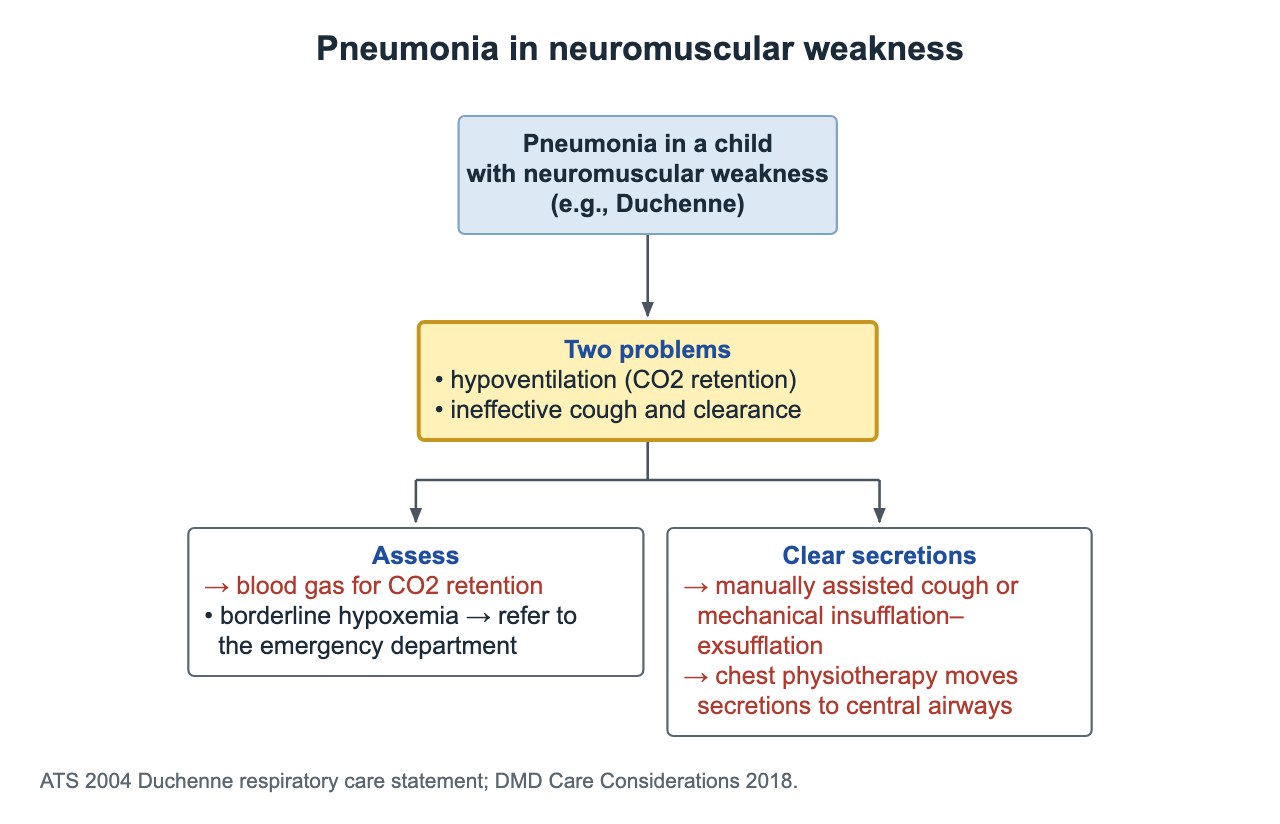
Children with Duchenne muscular dystrophy, spinal muscular atrophy and other weakness have two linked problems: they hypoventilate and retain CO2, and their weak, ineffective cough cannot clear secretions. Repeated pneumonia follows.
- Assess: a blood gas shows CO2 retention that pulse oximetry misses.
- Even borderline hypoxemia (SpO2 about 93%) with a chest infection needs emergency department care, because these children can tip quickly into respiratory failure.
- Clear secretions: manually assisted cough or mechanical insufflation–exsufflation (cough assist).
- Chest physiotherapy moves secretions from small airways toward the central airways, where they can be coughed out or suctioned.
- Avoid giving oxygen alone without watching CO2; it can hide hypoventilation.
Allergic bronchopulmonary aspergillosis (ABPA)
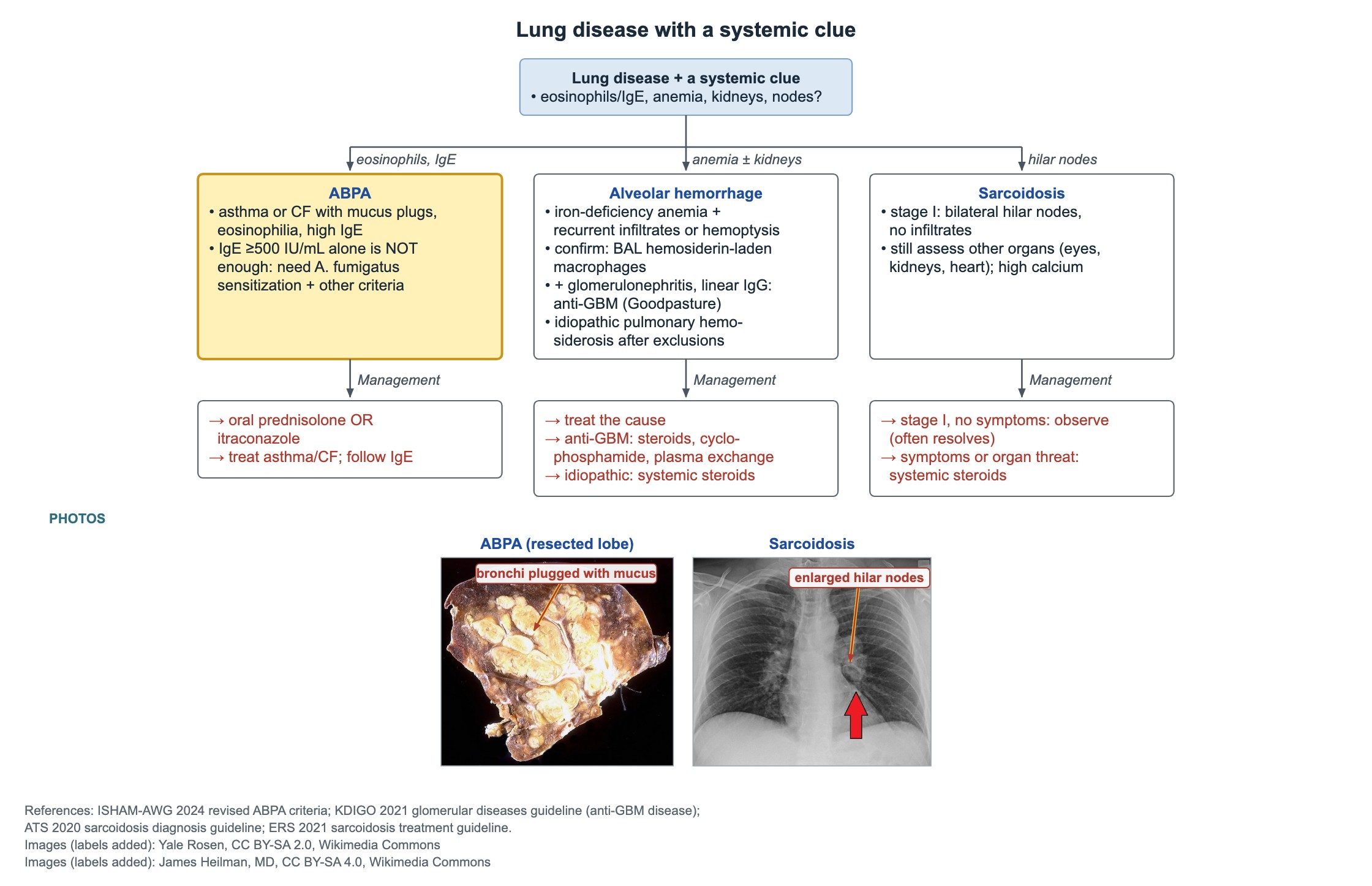
ABPA is an allergic reaction to Aspergillus growing in the airways of children with asthma or CF. Think of it when asthma or CF worsens with recurrent mucus plugs, eosinophilia and a high total IgE.
Under the revised 2024 ISHAM working group criteria, a total IgE of 500 IU/mL or more is not enough on its own. Aspergillus fumigatus sensitization (specific IgE or skin test) and other supporting findings are also needed.
- Treatment: oral glucocorticoid (prednisolone) or itraconazole; steroids remain the mainstay in acute ABPA.
- Treat the underlying asthma or CF and follow total IgE to judge response and relapse.
Diffuse alveolar hemorrhage
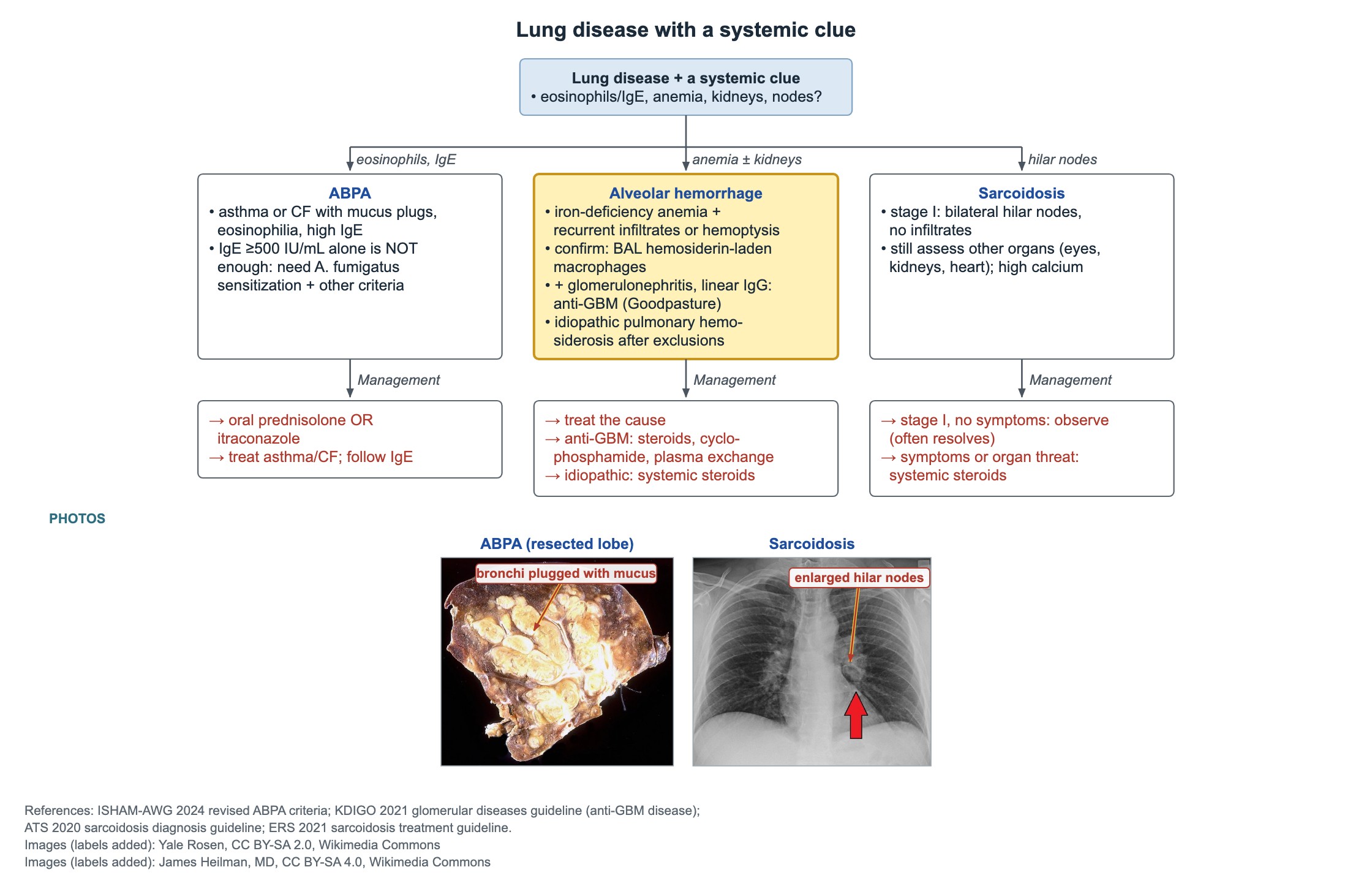
Bleeding into the alveoli may not cause visible hemoptysis. Suspect it in a child with unexplained iron-deficiency anemia and recurrent lung infiltrates.
- Confirm: bronchoalveolar lavage shows hemosiderin-laden macrophages.
- With glomerulonephritis and linear IgG along the basement membrane: anti-GBM disease (Goodpasture syndrome when lung and kidney are both involved). Treat with steroids, cyclophosphamide and plasma exchange.
- Idiopathic pulmonary hemosiderosis is a diagnosis made after other causes are excluded; it is treated with systemic steroids.
Sarcoidosis
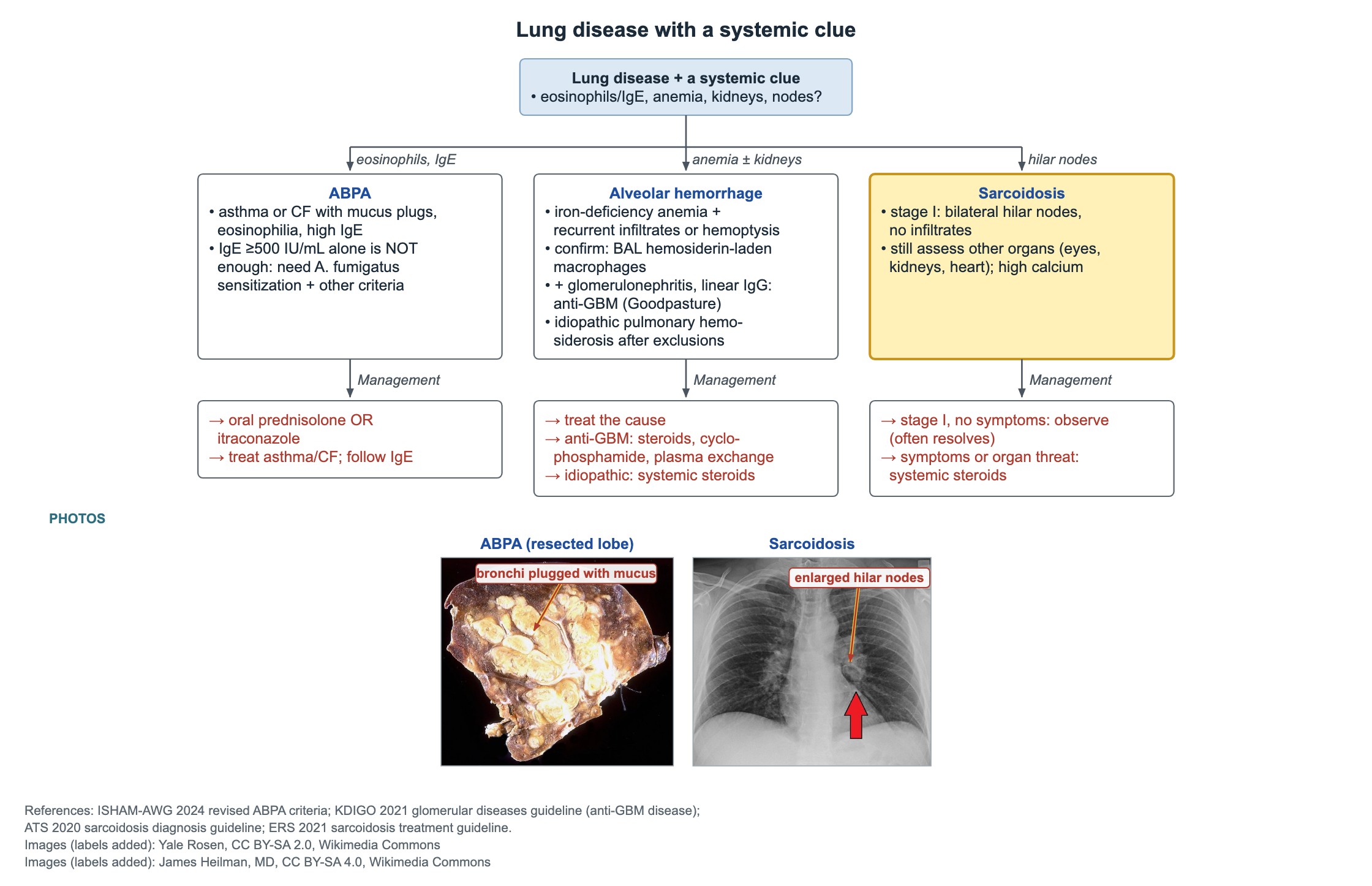
After other causes of granulomas are excluded, bilateral hilar adenopathy with no lung infiltrates is stage I sarcoidosis.
Even a child with no symptoms needs a search for disease elsewhere. The ATS 2020 guideline advises baseline eye examination, serum calcium, kidney and liver tests, and an ECG for the heart.
- Stage I without symptoms: observe; it often resolves.
- Symptoms or a threatened organ: systemic steroids.
Congenital lung malformations
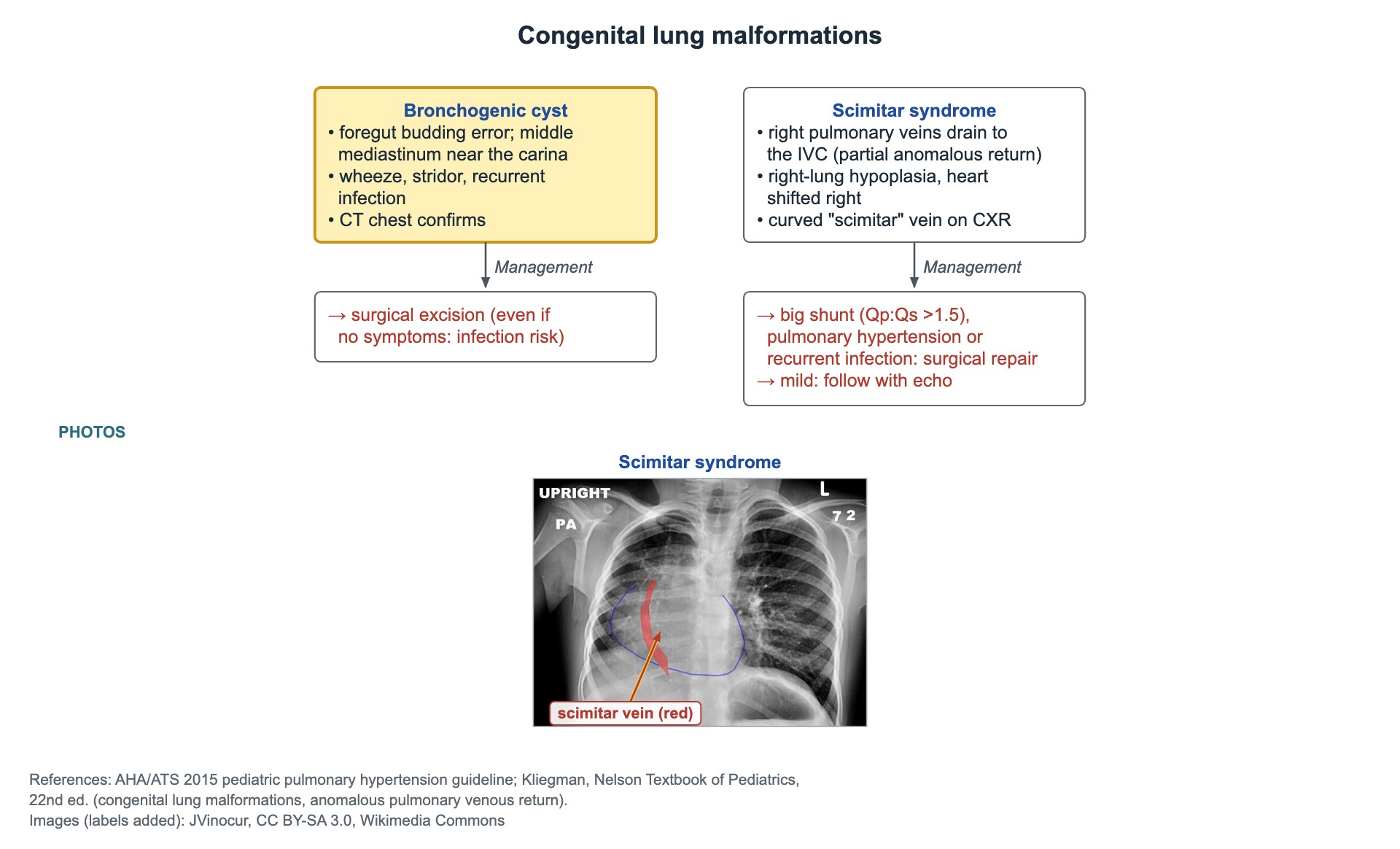
| Condition | Key features | Management |
|---|---|---|
| Bronchogenic cyst | Abnormal budding of the foregut (tracheal diverticulum); cyst in the middle mediastinum near the carina; wheeze, stridor or recurrent infection; CT confirms | Surgical excision, even without symptoms, because of infection risk |
| Scimitar syndrome | Right pulmonary veins drain to the inferior vena cava (partial anomalous return); right-lung hypoplasia; heart shifted right; curved 'scimitar' vein on chest x-ray | Surgical repair for a large shunt (Qp:Qs >1.5), pulmonary hypertension or recurrent infection; mild cases followed with echo |
Common questions
How is ABPA treated in children with asthma or cystic fibrosis?
With an oral glucocorticoid or itraconazole, plus good control of the asthma or CF. Total IgE is followed to judge response.
Why do children with muscular dystrophy get pneumonia?
Their cough is too weak to clear secretions and they hypoventilate. Cough assist and airway clearance help prevent and treat infection.
Study this topic
Sources
- DMD Care Considerations 2018, Part 2: respiratory, cardiac and orthopaedic management (Lancet Neurol)
- Revised ISHAM-ABPA working group guidelines 2024 (Eur Respir J)
- ATS 2020: Diagnosis and detection of sarcoidosis (Am J Respir Crit Care Med)
Written for Pedemy in our own words from the sources above; checked November 2026. For education only, not medical advice; check doses and local protocols before treating a patient. Pedemy is independent and not affiliated with or endorsed by the organizations cited.