

Main decision tree
Food allergy: prevent it, or work up a reaction
Key points
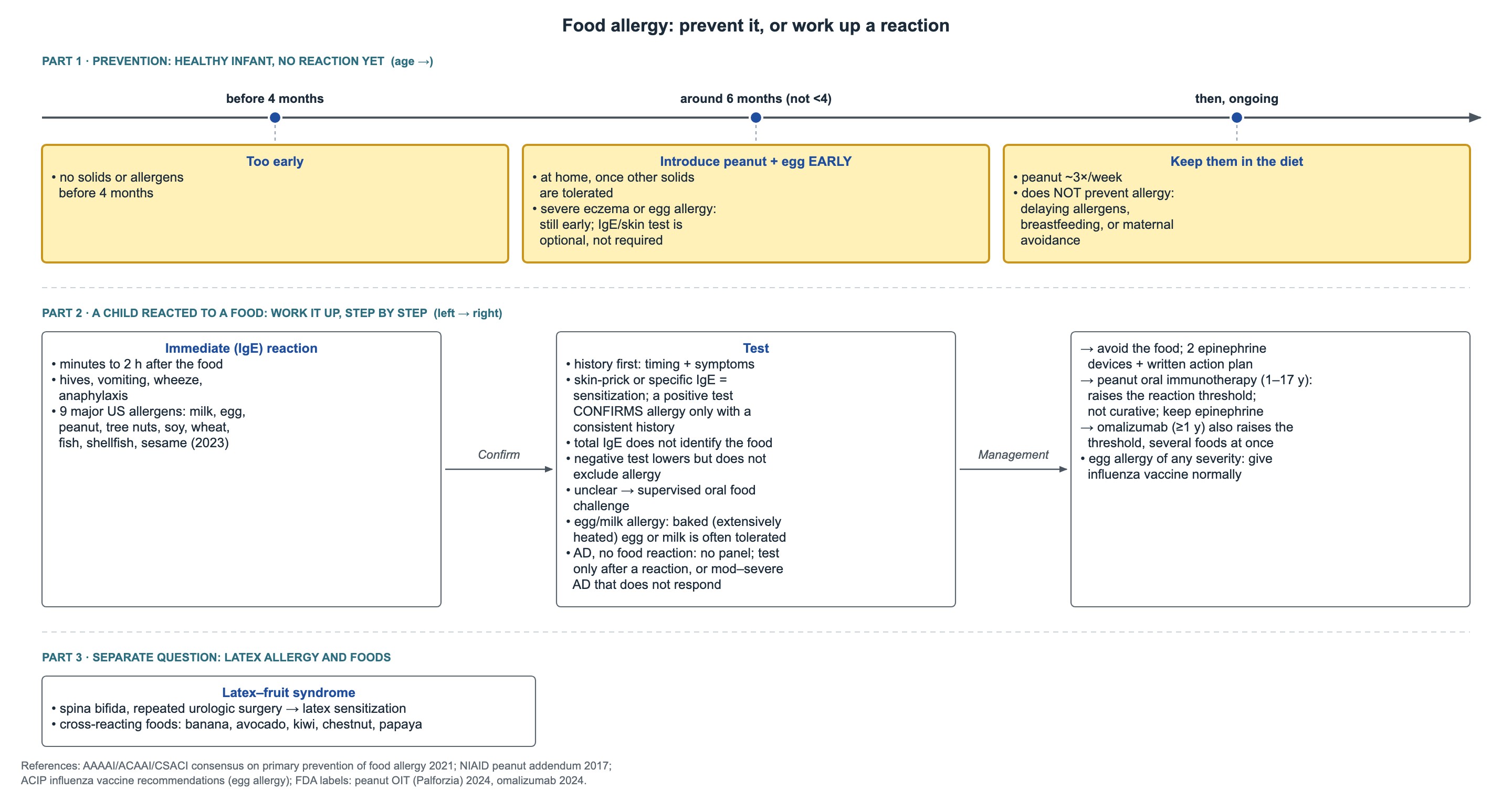
- Introduce peanut and egg around 6 months (not before 4 months), at home, once other solids are tolerated.
- Severe eczema or egg allergy: still introduce early; screening tests are optional, not required.
- Once tolerated, keep peanut in the diet regularly, about 3 times a week.
- Delaying allergenic foods, maternal avoidance and breastfeeding do not prevent food allergy.
- A positive skin-prick or specific IgE test shows sensitization; it confirms allergy only with a consistent history.
- Unclear history plus testing → supervised oral food challenge.
- 9 major US labeled allergens: milk, egg, peanut, tree nuts, soy, wheat, fish, shellfish and sesame (since January 1, 2023).
Preventing food allergy: introduce early
- Before 4 months: no solids or allergens.
- Around 6 months (not before 4): introduce peanut and egg at home once the infant takes other solids.
- Mild to moderate eczema: start peanut around 6 months, after other solids.
- Severe eczema or egg allergy: still introduce early; peanut IgE or skin testing beforehand is optional, not required.
- A family history of food allergy alone does not put an infant in a high-risk peanut group.
- Keep the food in the diet: peanut about 3 times a week.
- Delaying allergenic foods beyond infancy has no benefit; do not prescribe maternal avoidance for prevention, and do not promise that breastfeeding prevents food allergy (encourage it for its other benefits).
Immediate (IgE-mediated) food reactions
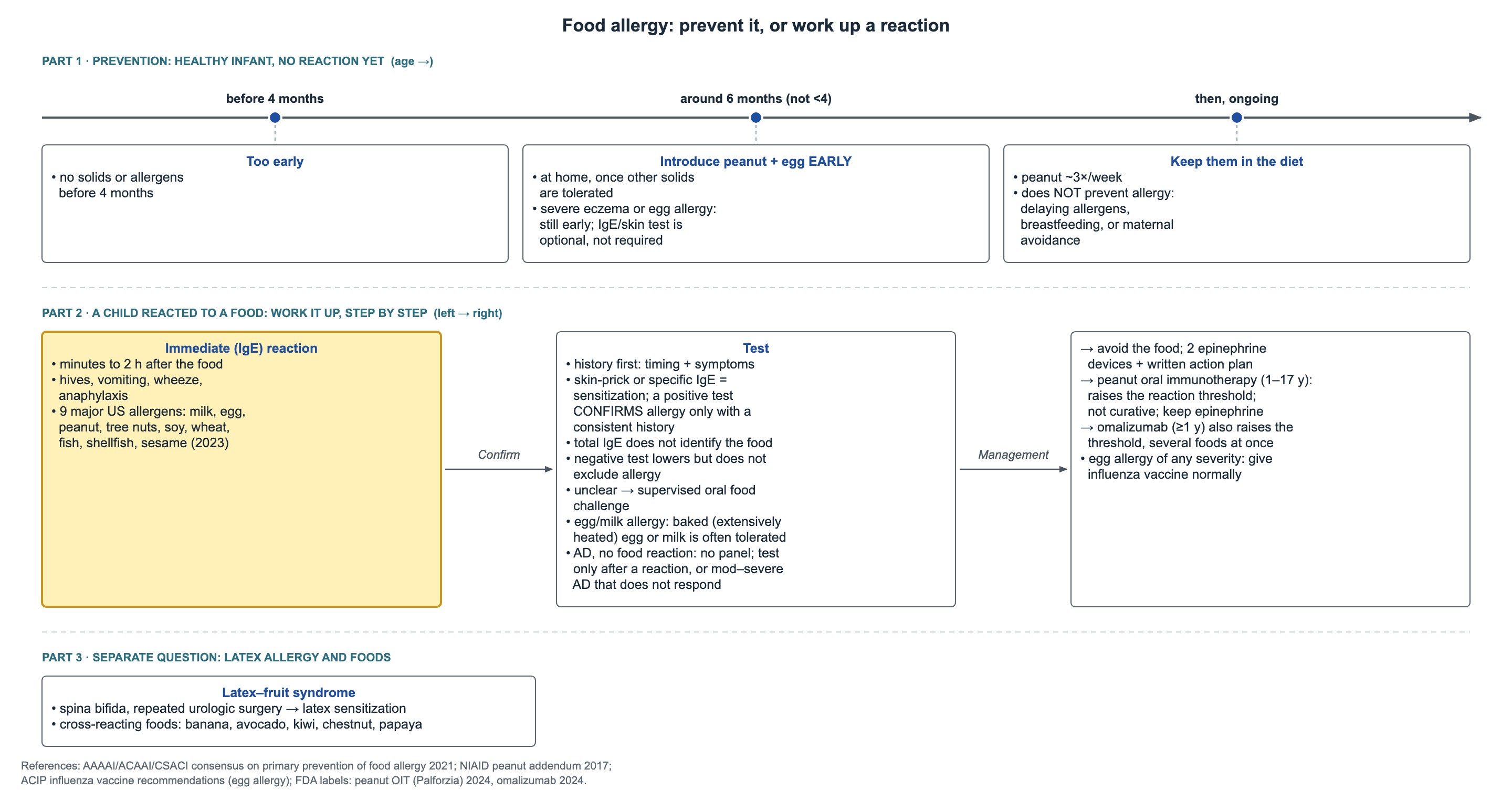
IgE reactions start within minutes to 2 hours of eating the food: hives, vomiting, wheeze or anaphylaxis.
US labels must declare 9 major allergens: milk, egg, peanut, tree nuts, soy, wheat, fish, crustacean shellfish and sesame. Sesame became the ninth on January 1, 2023.
What allergy tests mean
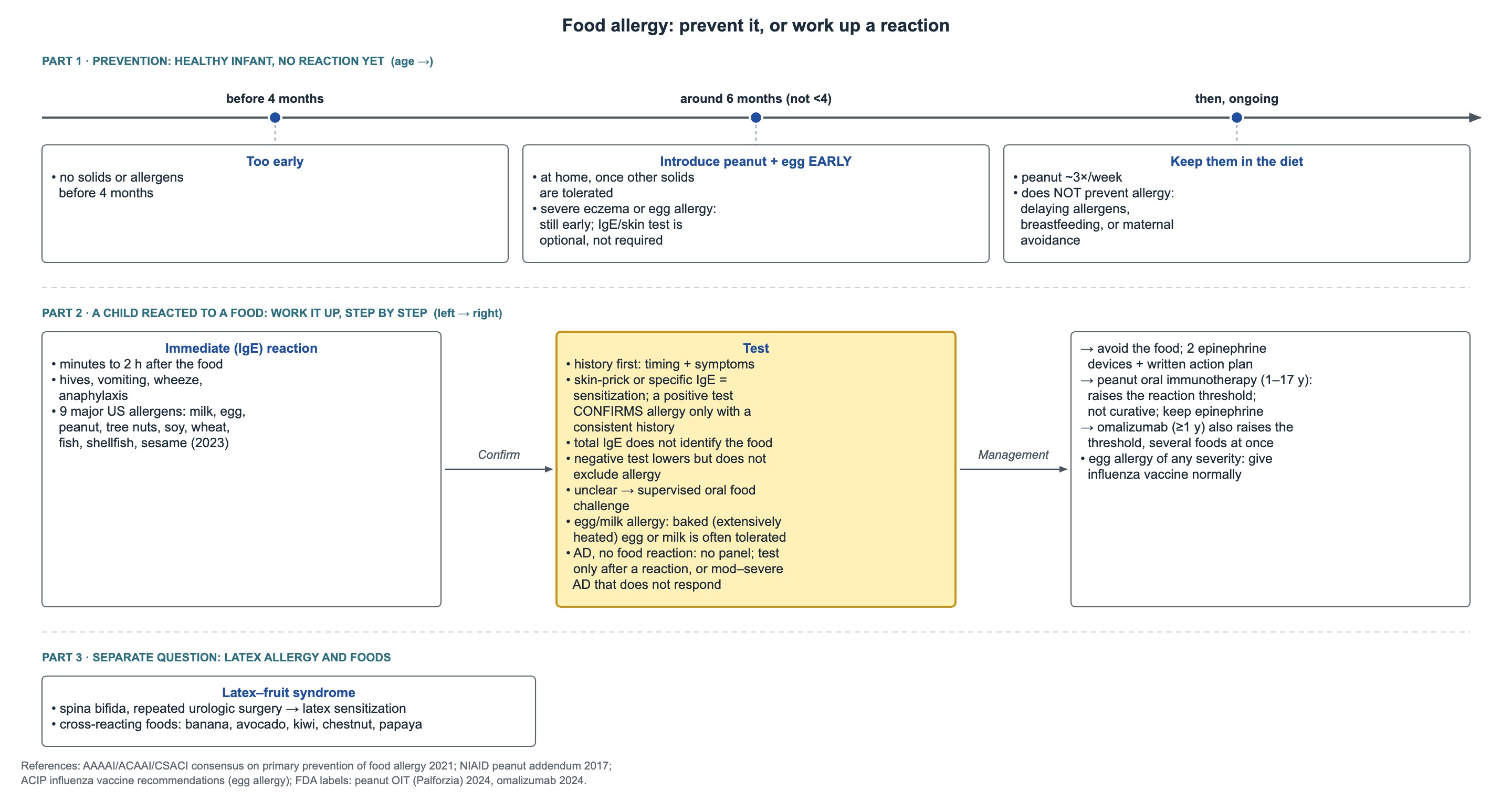
- History first: what food, how much, how soon and what symptoms.
- A positive skin-prick test or food-specific IgE shows sensitization, not necessarily clinical allergy.
- A positive test confirms IgE-mediated allergy only when the child has a consistent immediate reaction to that food.
- A negative skin-prick test lowers the likelihood of IgE allergy but does not exclude it, and does not test non-IgE disease.
- Total IgE does not identify the food causing symptoms.
- When history and tests leave doubt: a supervised oral food challenge confirms or excludes allergy.
- Many children allergic to lightly cooked egg or milk tolerate baked (extensively heated) forms; test this with a supervised baked egg challenge.
- Atopic dermatitis without food reactions: do not order food IgE panels. Test only after a reaction to a specific food, or in moderate to severe eczema that does not respond to optimal care.
Living with food allergy: avoidance, OIT and vaccines
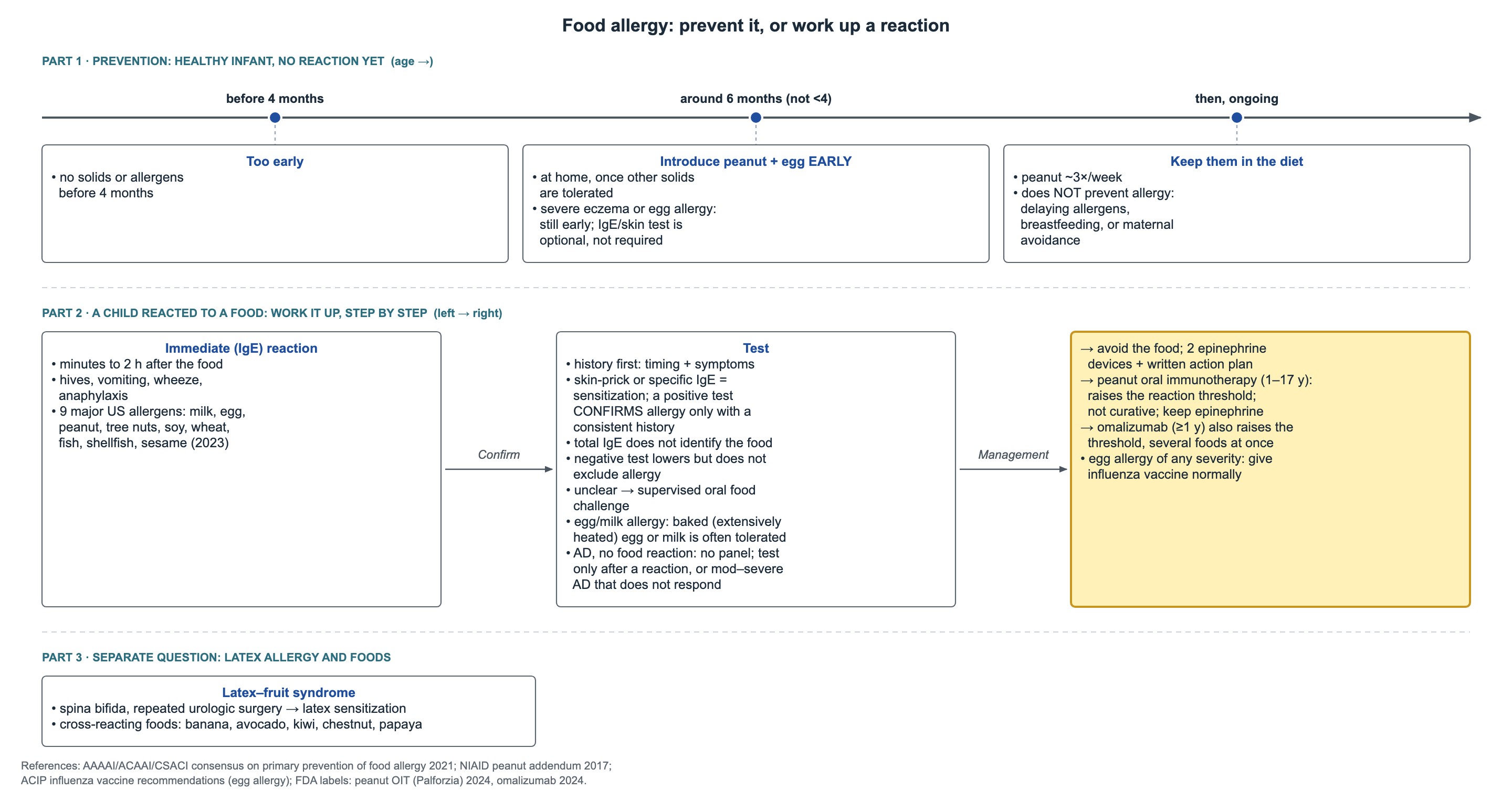
- Avoid the food; prescribe 2 epinephrine autoinjectors and a written emergency plan.
- Peanut oral immunotherapy (ages 1–17 years) raises the dose that triggers a reaction. It is not a cure; the child keeps carrying epinephrine.
- Omalizumab (age 1 year and older) also raises the reaction threshold, for several foods at once.
- Egg allergy of any severity: give the influenza vaccine in the usual way, with no special precautions.
Food protein-induced allergic proctocolitis
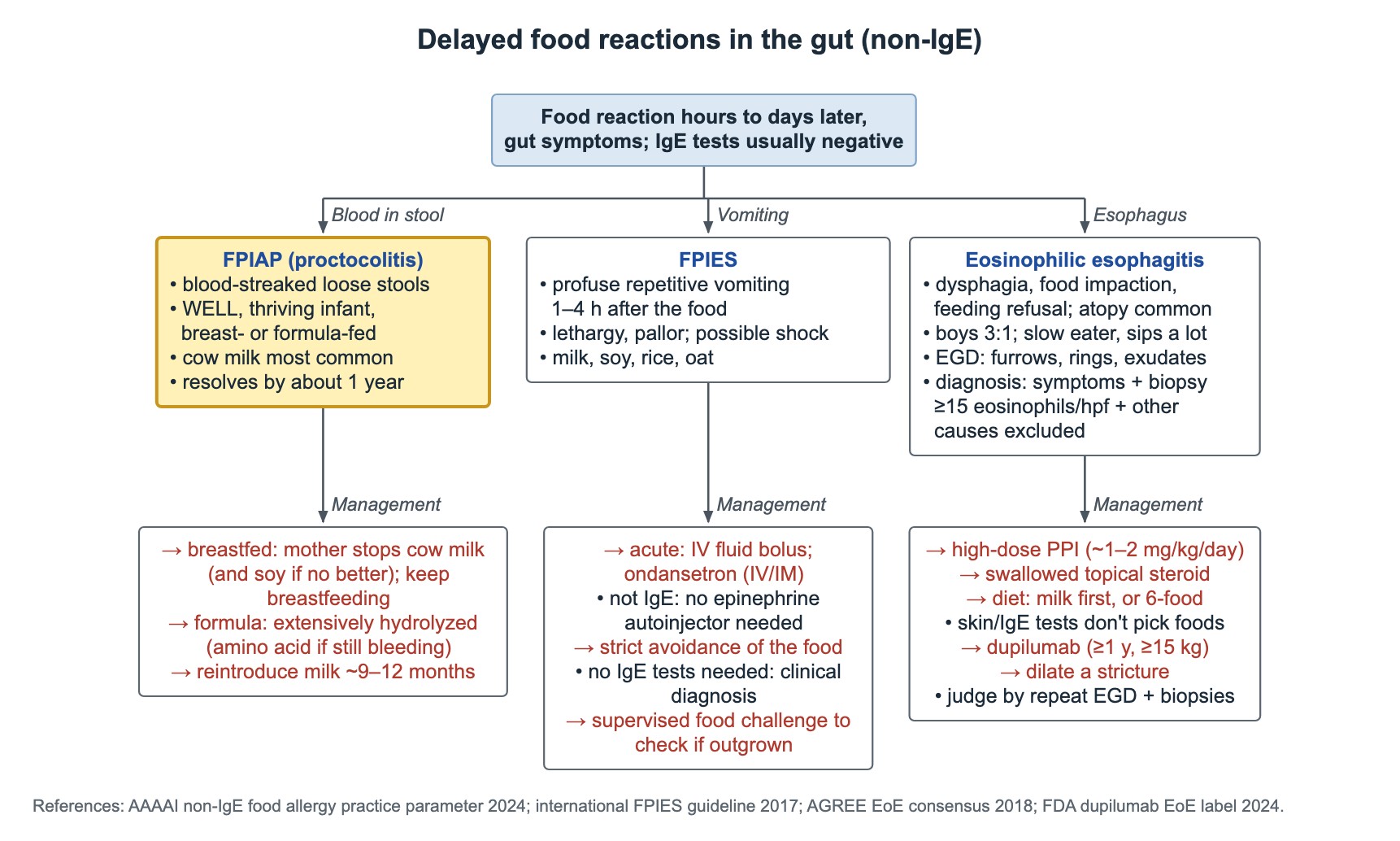
A well, thriving 1- to 2-month-old with blood-streaked loose stools, breastfed or formula-fed, most likely has food protein-induced allergic proctocolitis (FPIAP). Cow's milk is the usual trigger. IgE tests are not useful.
- Breastfed: the mother removes cow's milk (and soy if no better) and keeps breastfeeding.
- Formula-fed: switch to an extensively hydrolyzed formula; amino acid formula if bleeding continues.
- Most outgrow it by about 1 year; reintroduce milk around 9–12 months.
| Non-IgE gut reaction | Clue |
|---|---|
| FPIAP | Blood in stool, well infant |
| FPIES | Repeated profuse vomiting 1–4 hours after the food, pallor, lethargy; treat with IV fluids and ondansetron |
| Eosinophilic esophagitis | Dysphagia, food impaction, feeding refusal; biopsy with 15 or more eosinophils per high-power field |
Oral allergy (pollen-food) syndrome
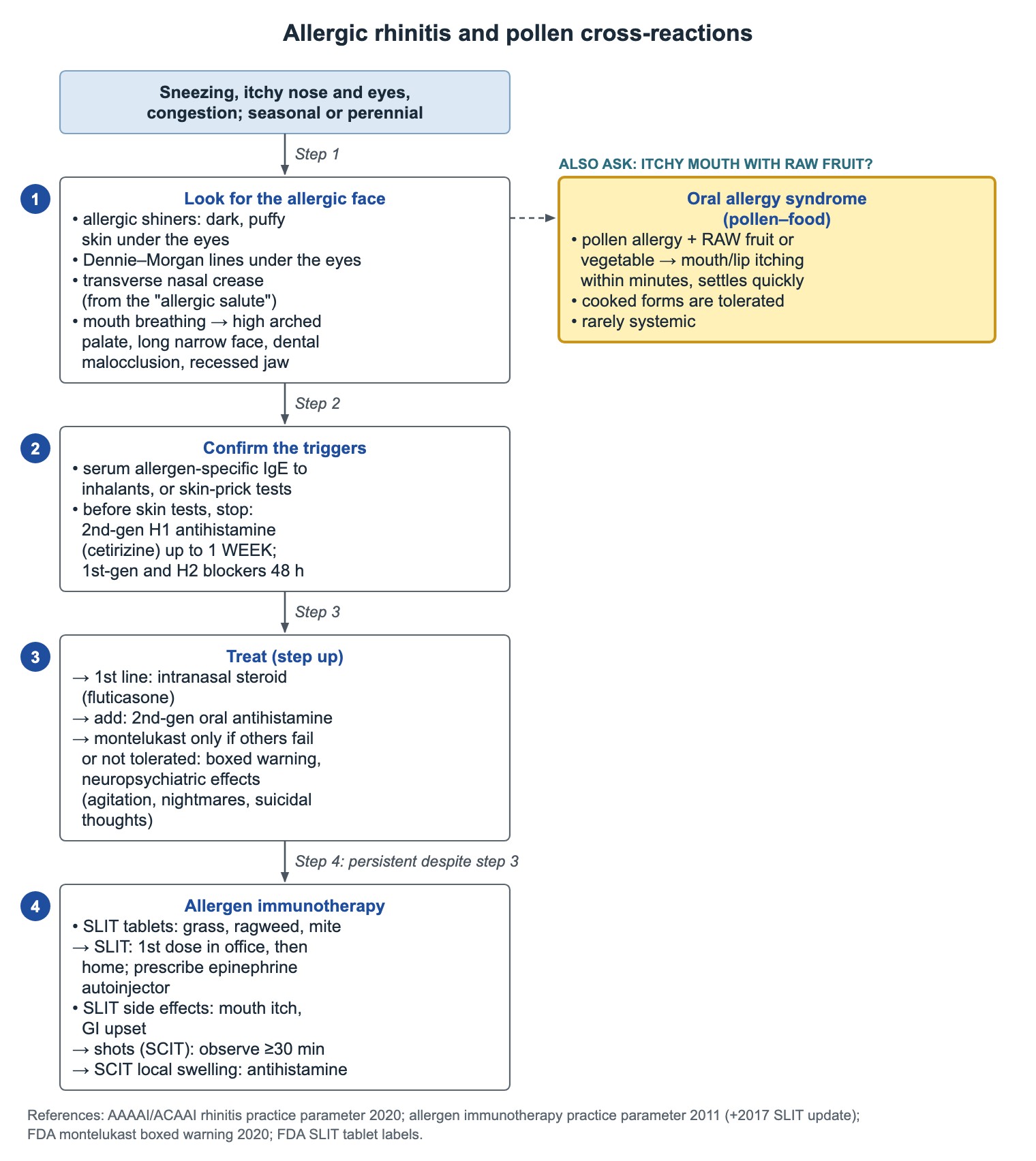
A teen with pollen allergy whose lips and mouth itch within minutes of raw apple, but who tolerates cooked apple, has oral allergy syndrome. Pollen proteins cross-react with heat-labile proteins in raw fruit and vegetables.
Symptoms stay in the mouth and settle quickly; systemic reactions are rare. Cooked or peeled forms are usually tolerated.
Latex allergy and latex-fruit syndrome
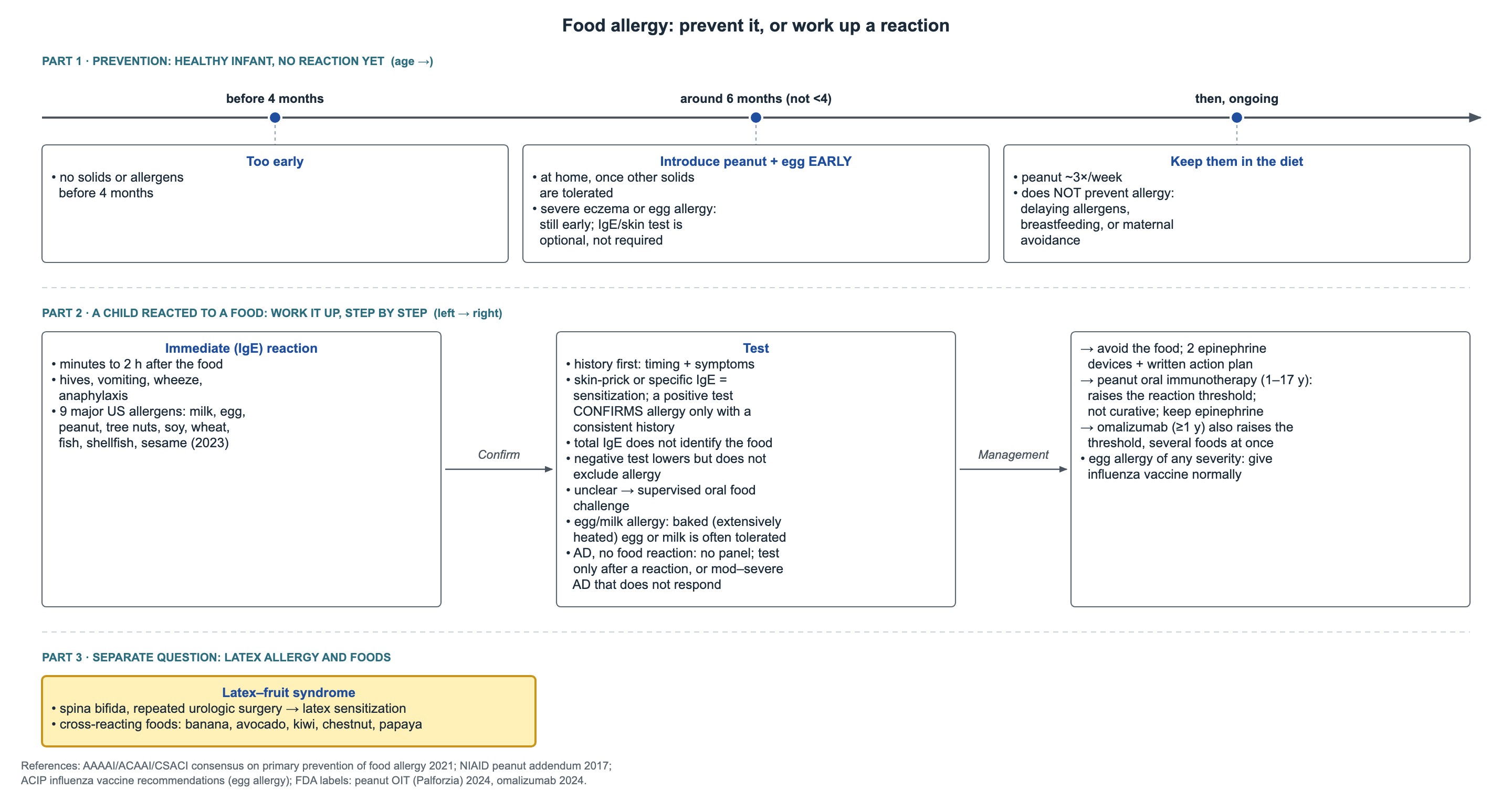
Children with spina bifida or repeated urologic surgery are at high risk of latex allergy, because repeated exposure to natural rubber latex proteins causes sensitization. Use latex-free care from birth.
Latex allergy cross-reacts with banana, avocado, kiwi, chestnut and papaya; fig, peach, tomato, potato and bell pepper are other reported foods.
Common questions
When should babies start peanut?
Around 6 months, not before 4 months, once the baby eats other solids. Babies with severe eczema or egg allergy should still start early; testing first is optional.
Does a positive skin-prick test mean my child is allergic?
Not by itself. It shows sensitization. It means allergy only when the child has had symptoms after eating that food.
Can a child with egg allergy get the flu shot?
Yes. Children with egg allergy of any severity get the influenza vaccine in the usual way, with no extra precautions.
Study this topic
Sources
- AAAAI/ACAAI/CSACI: A consensus approach to the primary prevention of food allergy through nutrition (J Allergy Clin Immunol Pract 2021)
- NIAID: Addendum guidelines for the prevention of peanut allergy in the United States (J Allergy Clin Immunol 2017)
- AAP clinical report: Effects of early nutritional interventions on the development of atopic disease (Pediatrics 2019)
- FDA: Food allergies and the major food allergens
Written for Pedemy in our own words from the sources above; checked November 2026. For education only, not medical advice; check doses and local protocols before treating a patient. Pedemy is independent and not affiliated with or endorsed by the organizations cited.