

Main decision tree
Dose-related side effects to know (type A)
Key points
- Zidovudine for an HIV-exposed infant can cause anemia and neutropenia: check a CBC.
- Amphotericin B causes hypokalemia, hypomagnesemia and kidney injury: follow K, Mg and creatinine.
- Isoniazid: hepatotoxicity; counsel on symptoms and check liver tests only in children at risk.
- Ethambutol: optic neuritis with red-green color loss. Pyrazinamide: high uric acid.
- Vancomycin infusion reaction (flushing, itch of face and upper body) is rate-related, not IgE allergy: slow the infusion.
- Oral vancomycin is not absorbed: it treats only C. difficile colitis, never bacteremia or UTI.
- Gentamicin intervals in newborns depend on gestational and postnatal age because renal clearance matures.
Zidovudine and amphotericin B
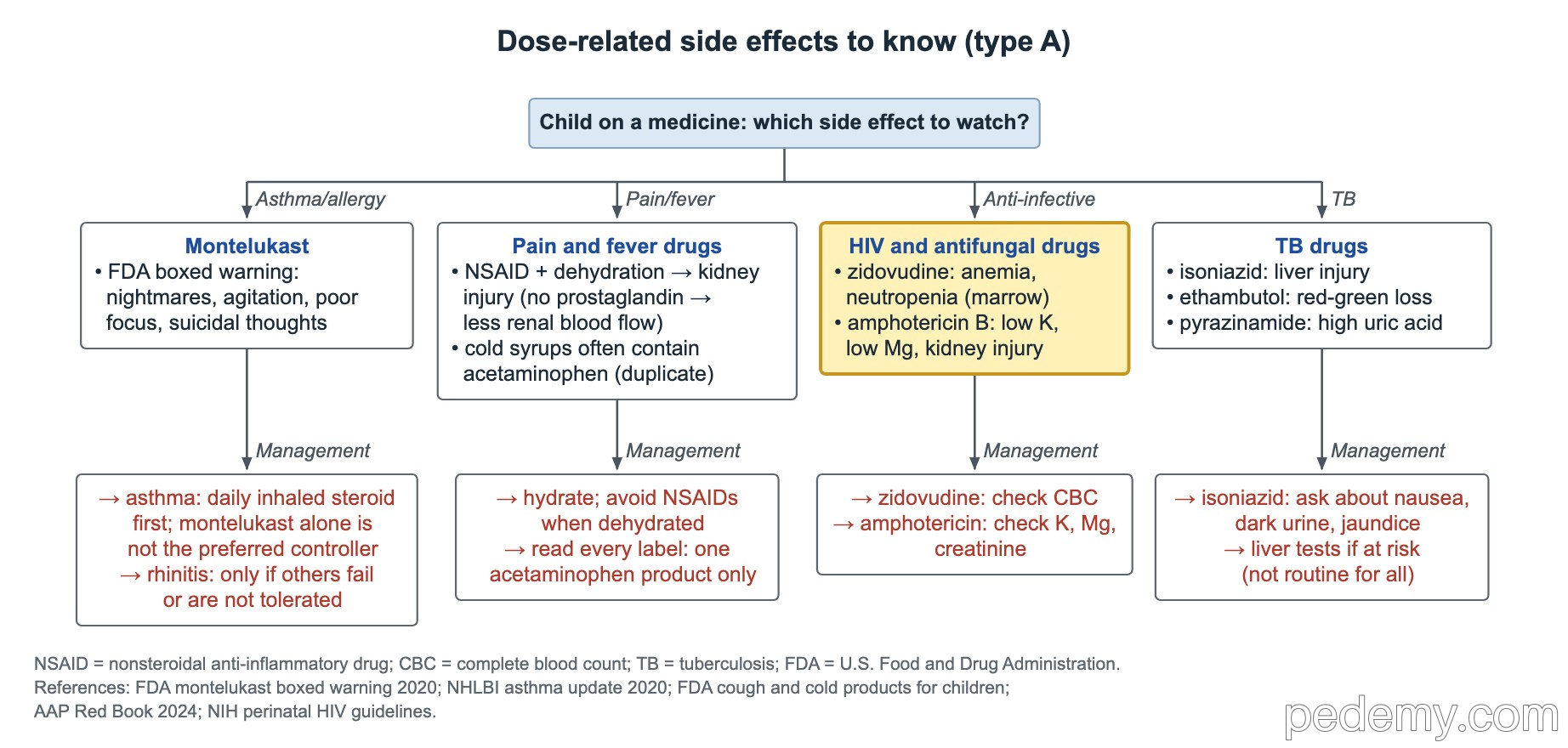
The tree sorts common type A (dose-related) side effects by drug class. The highlighted box shows the two anti-infectives most often tested for blood and kidney toxicity.
- Zidovudine (HIV-exposed newborn prophylaxis): marrow suppression with anemia and neutropenia. Check a CBC; the anemia is usually mild and recovers after the course ends.
- Amphotericin B: renal tubular injury with potassium and magnesium wasting and a rising creatinine. Check K, Mg and creatinine often during therapy.
- Lipid (liposomal) amphotericin is less nephrotoxic than the conventional deoxycholate form.
- Infusion fever, chills and rigors are also common with amphotericin.
Tuberculosis drugs
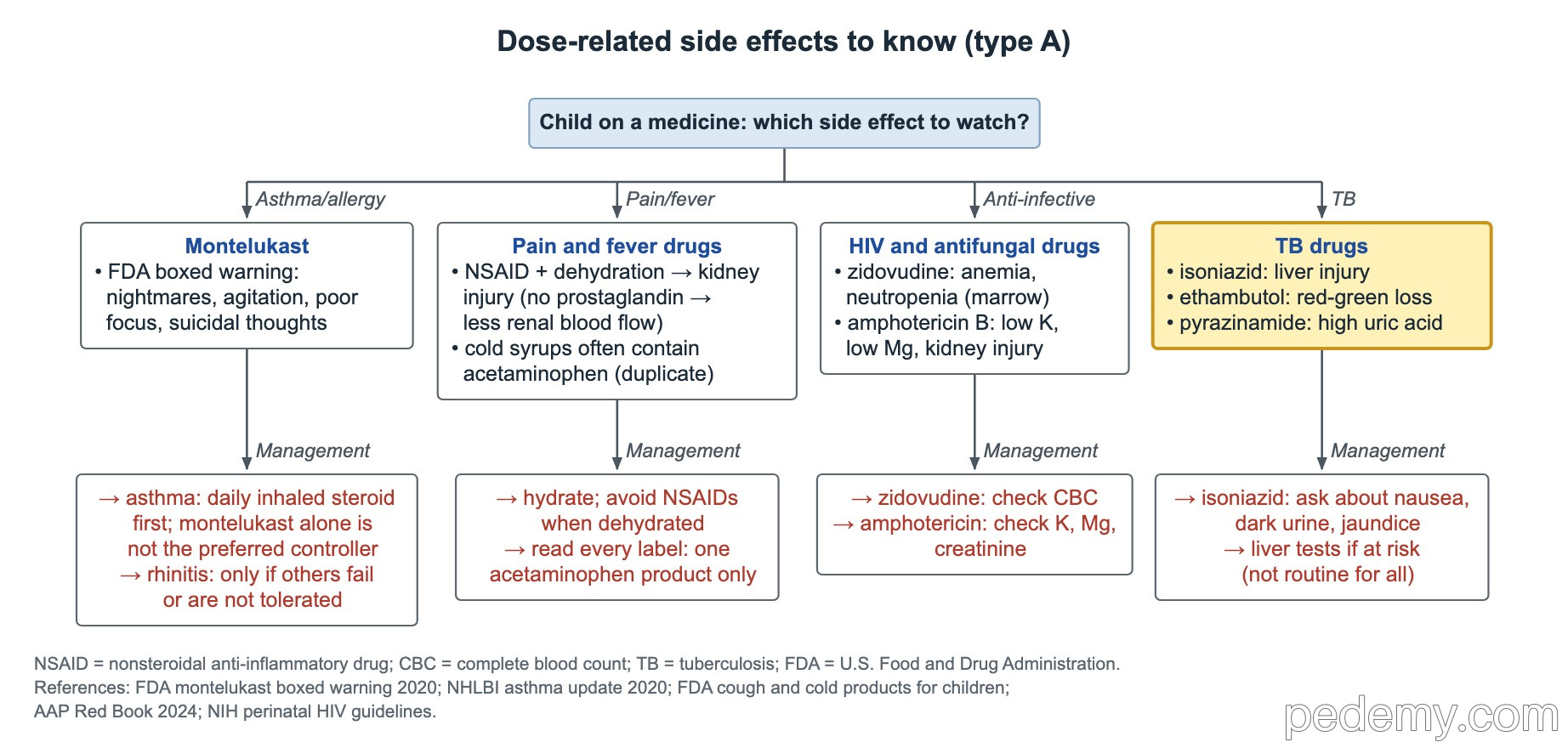
Baseline and monthly liver tests are not routine for healthy children on isoniazid. They are for children with liver disease, HIV, other hepatotoxic drugs, or symptoms, and for pregnant or postpartum teens.
For latent TB infection, US guidance prefers the shorter rifamycin regimens (3 months of weekly isoniazid plus rifapentine, 4 months of daily rifampin, or 3 months of daily isoniazid plus rifampin) because they are safer and more often completed.
| Drug | Key toxicity | What to do |
|---|---|---|
| Isoniazid | Hepatitis; peripheral neuropathy | Teach families to stop and call for nausea, vomiting, dark urine or jaundice; pyridoxine for breastfed infants, poor diet, HIV or pregnant teens |
| Rifampin | Orange urine, tears and sweat; many drug interactions (it induces liver enzymes) | Warn about stained contact lenses; hormonal contraception becomes unreliable |
| Ethambutol | Optic neuritis: lower acuity and red-green color loss | Baseline and monthly vision and color checks |
| Pyrazinamide | High uric acid; hepatitis | Ask about joint pain; usually no routine uric acid testing |
Vancomycin: infusion reaction and the oral form
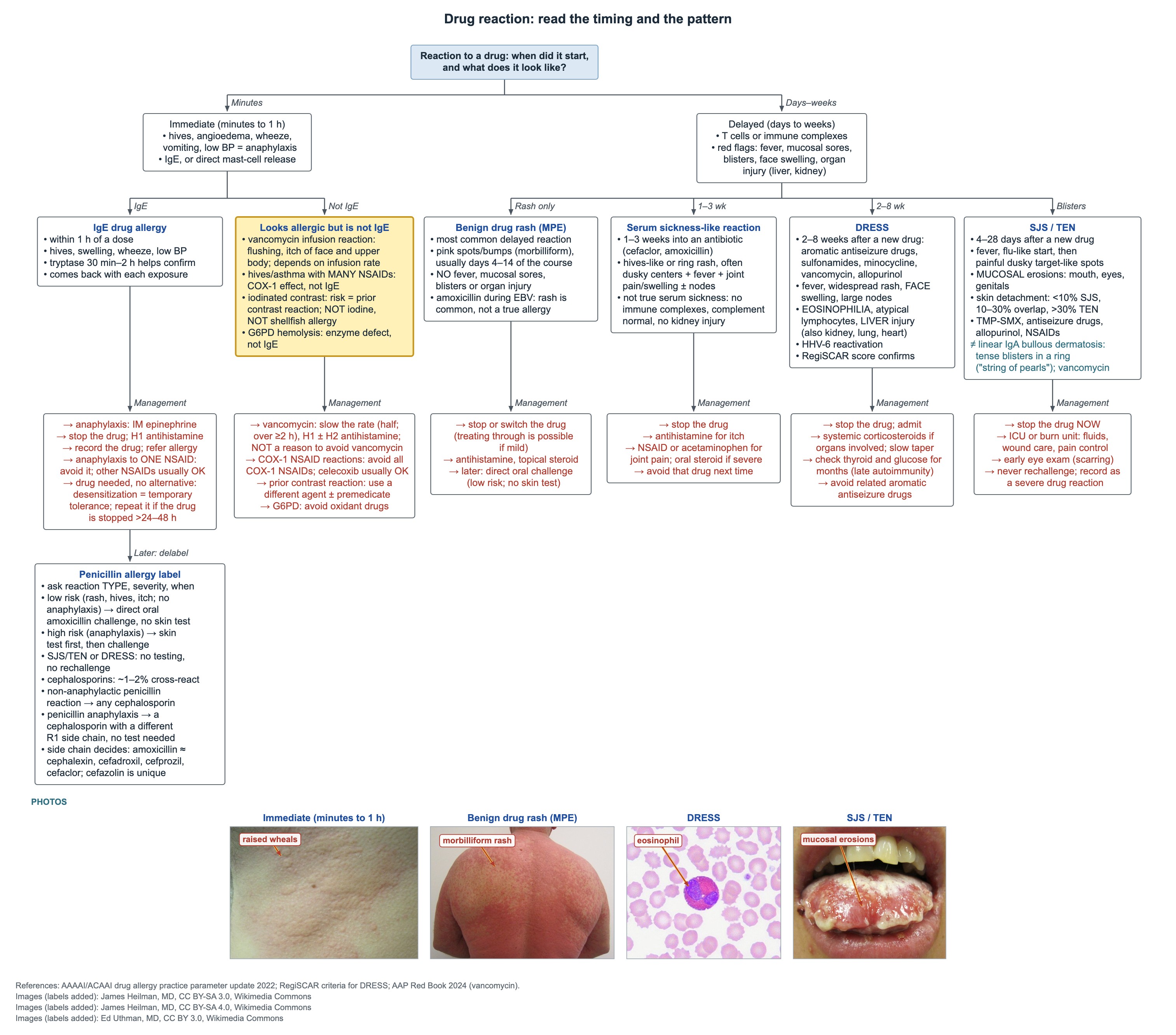
The highlighted box covers reactions that look allergic but are not IgE-mediated. Vancomycin infusion reaction is flushing, itching and sometimes low blood pressure of the face, neck and upper body during or soon after the infusion. Vancomycin releases histamine directly from mast cells, and the risk rises with a fast rate.
It is not a reason to avoid vancomycin. Stop or slow the infusion, give an H1 antihistamine (with or without an H2 blocker), then restart over at least 2 hours. Pretreatment with an antihistamine helps if it happens again.
- Oral vancomycin stays in the gut: use it for C. difficile colitis only.
- IV vancomycin does not reach the colon lumen well, so it does not treat C. difficile.
- For enterococcal UTI or bacteremia, use an IV or absorbed drug chosen by susceptibility (often ampicillin or amoxicillin).
Renal dosing: gentamicin and vancomycin
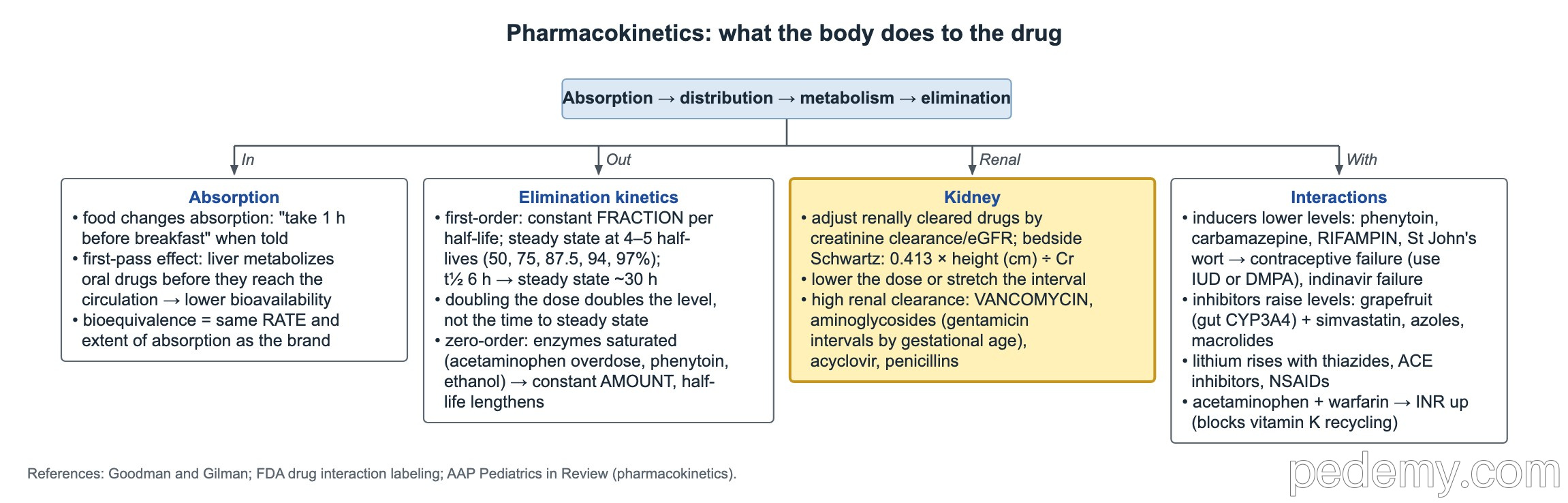
Aminoglycosides and vancomycin are cleared by the kidney. Newborn kidney function matures with both gestational and postnatal age, so preterm and young infants need longer gentamicin dosing intervals.
When clearance falls, lower the dose or stretch the interval. Estimate kidney function in children with the bedside Schwartz equation: eGFR = 0.413 × height (cm) ÷ serum creatinine (mg/dL).
- Gentamicin: monitor levels; toxicities are kidney injury and hearing or vestibular damage.
- Vancomycin for serious MRSA: dose by AUC-guided monitoring (target AUC about 400–600 mg·h/L) rather than trough alone, to limit kidney injury.
- Avoid stacking nephrotoxins (aminoglycoside, vancomycin, NSAID, IV contrast) when possible.
Common questions
Is red man syndrome a vancomycin allergy?
No. Now called vancomycin infusion reaction, it is direct histamine release linked to a fast infusion. Slow the rate and give an antihistamine; the drug can still be used.
Which TB drug causes red-green color blindness?
Ethambutol, through optic neuritis. Check vision and color discrimination at baseline and during treatment.
Why give oral vancomycin only for C. difficile?
Oral vancomycin is not absorbed. It reaches high levels in the colon but almost none in blood or urine.
Study this topic
Sources
- NTCA/CDC 2020: Guidelines for the treatment of latent tuberculosis infection (MMWR)
- ASHP/IDSA/PIDS/SIDP 2020: Therapeutic monitoring of vancomycin for serious MRSA infections
- NIH Clinicalinfo: Perinatal HIV clinical guidelines
- AAP Red Book Online
Written for Pedemy in our own words from the sources above; checked November 2026. For education only, not medical advice; check doses and local protocols before treating a patient. Pedemy is independent and not affiliated with or endorsed by the organizations cited.