

Main decision tree
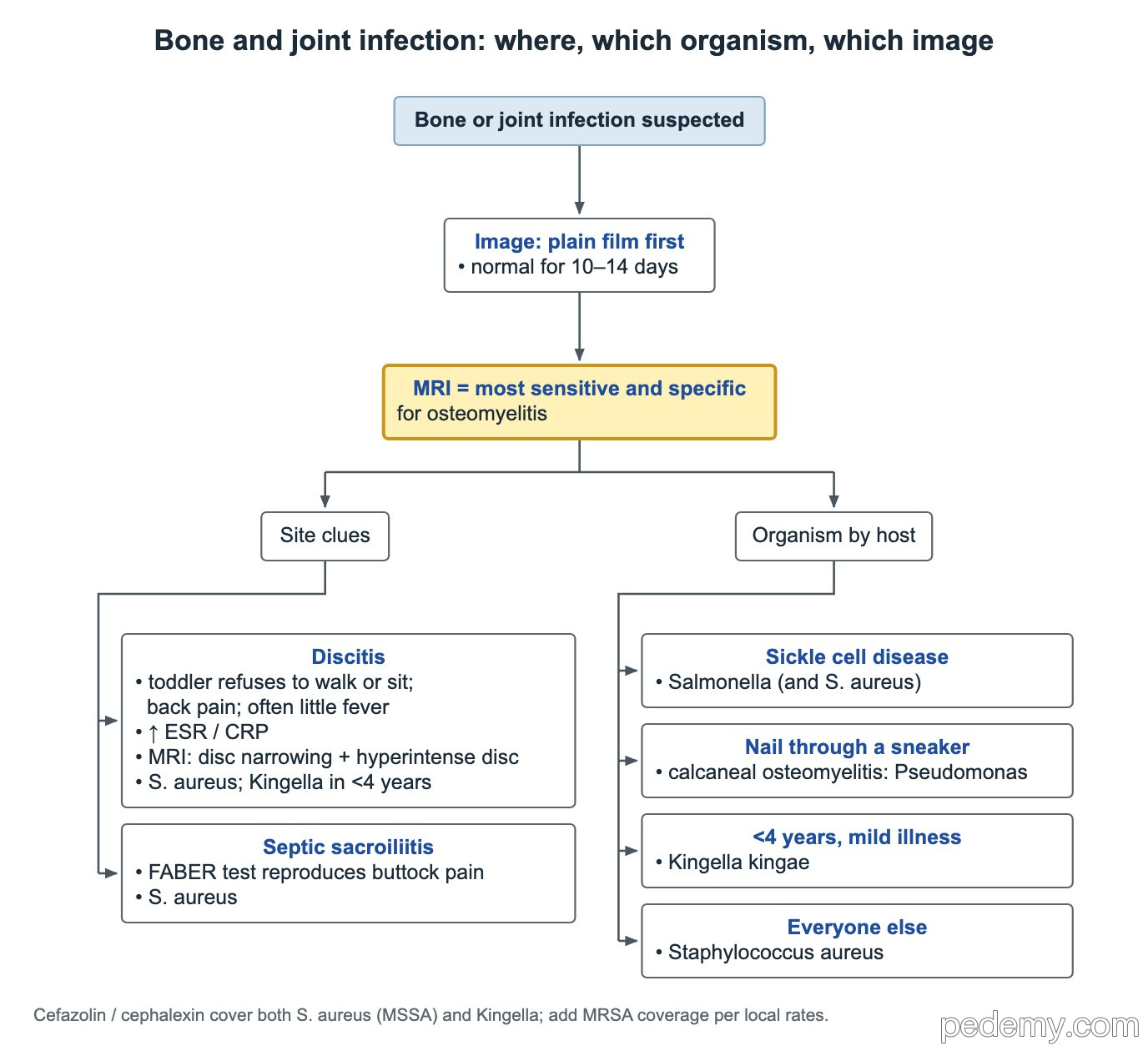
Bone and joint infection: where, which organism, which image
Key points
- Start with plain films to rule out other causes; bone changes of osteomyelitis often take 10–14 days to appear.
- MRI is the most sensitive and specific imaging test for osteomyelitis.
- S. aureus is the most common cause overall; Kingella kingae is common in children under 4 years.
- Sickle cell disease: Salmonella (and S. aureus) osteomyelitis.
- Nail through a rubber-soled sneaker → Pseudomonas aeruginosa osteomyelitis of the foot.
- Discitis: toddler refuses to sit or walk, raised ESR, MRI shows disc narrowing; S. aureus, Kingella in young children.
- Septic sacroiliitis: fever and buttock pain reproduced by the FABER test.
Imaging: plain film first, then MRI
Get plain radiographs first. They are often normal early, because visible bone destruction usually takes 10–14 days, but they exclude fracture or tumor.
When osteomyelitis is suspected and the film is normal, MRI is the most accurate test. It shows marrow edema early and also finds abscesses that need drainage. Ultrasound helps for a joint effusion or a subperiosteal collection.
- Blood culture before antibiotics when the child is stable; it is positive in a large minority of cases.
- CRP and ESR support the diagnosis and are followed to show response; CRP falls first.
- Bone or joint fluid culture raises the yield; ask for PCR for Kingella in young children, because it grows poorly.
Organisms by host and history
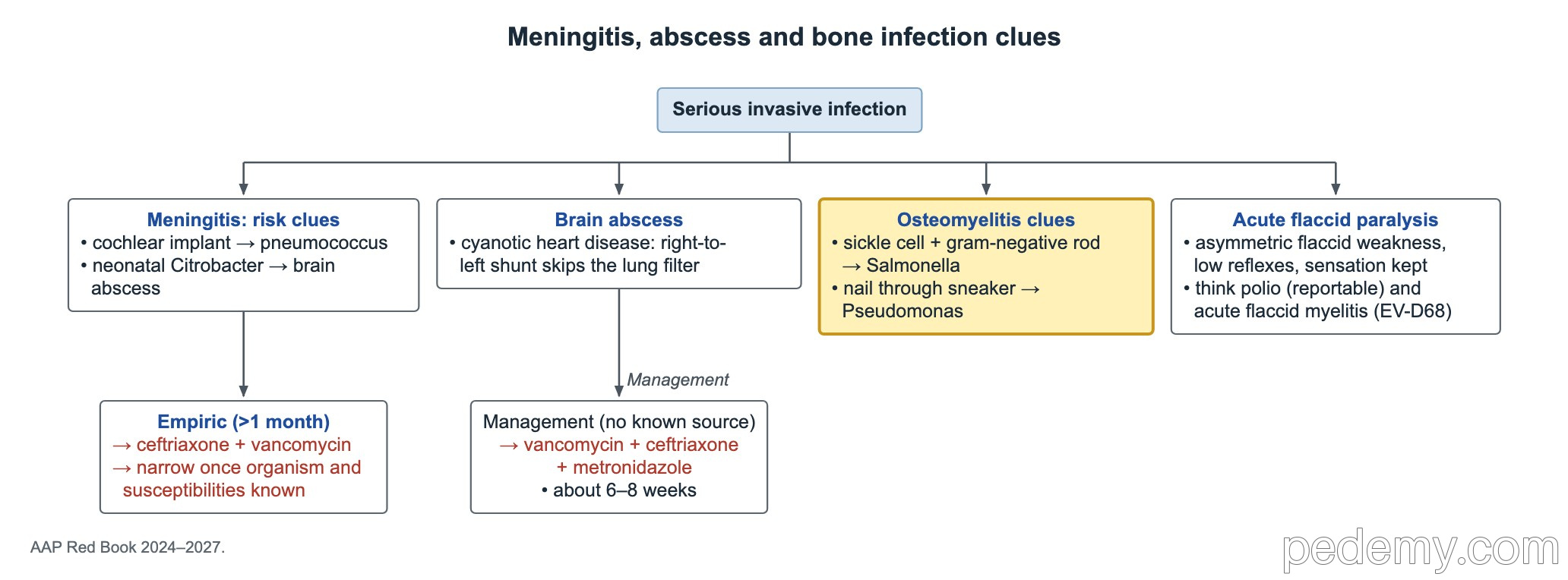
Pseudomonas lives in the foam layer of sneakers. Puncture-wound osteomyelitis or osteochondritis of the foot usually needs surgical debridement plus an antipseudomonal drug.
| Clue | Likely organism |
|---|---|
| Any age, no special clue | Staphylococcus aureus (MSSA or MRSA) |
| Under 4 years, mild illness, modest fever | Kingella kingae |
| Sickle cell disease | Salmonella (and S. aureus) |
| Puncture through a rubber-soled sneaker | Pseudomonas aeruginosa |
| Newborn | S. aureus, group B streptococcus, gram-negative rods |
Discitis
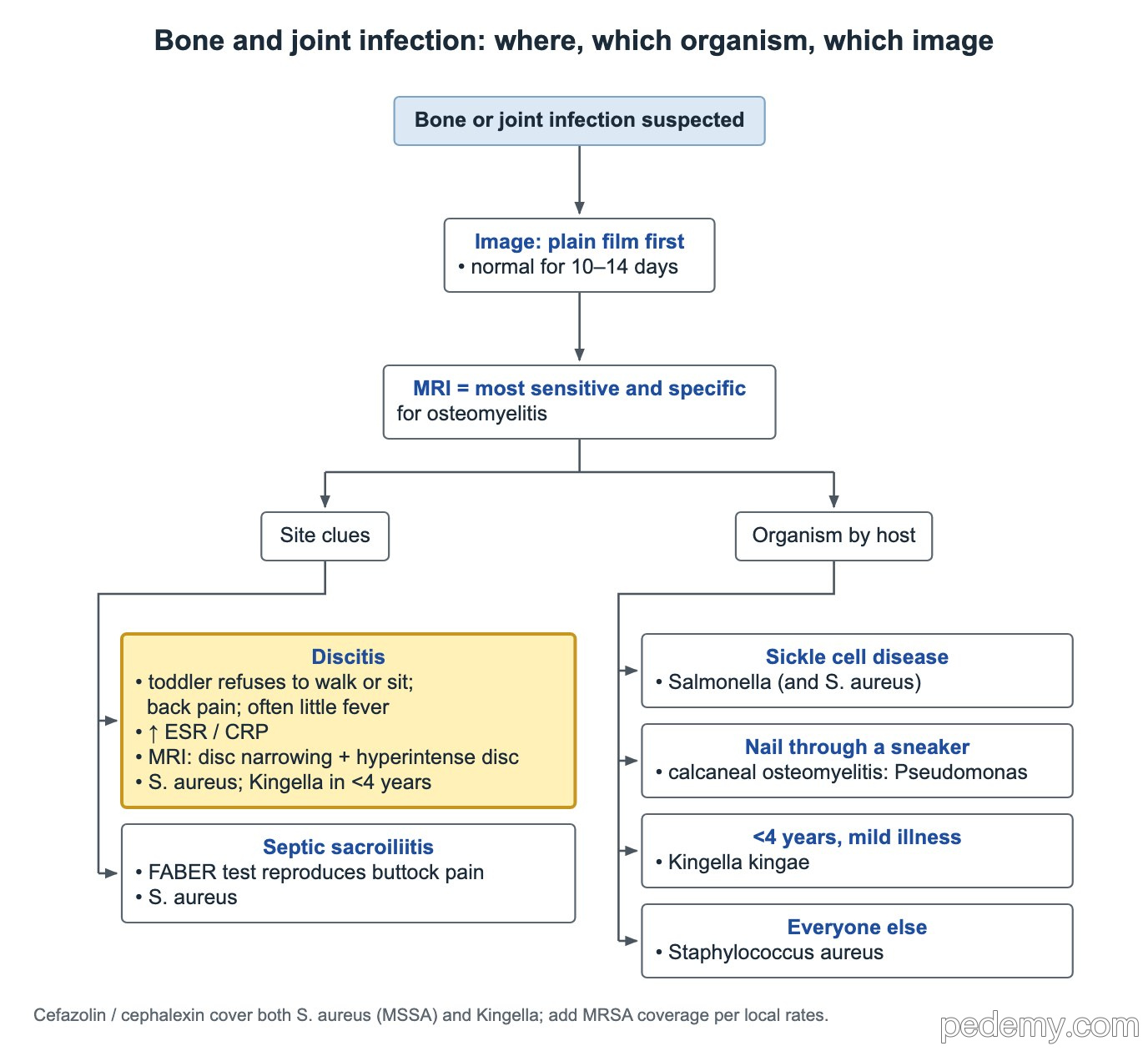
Discitis is infection of the intervertebral disc, most common in toddlers. The child refuses to sit or walk, has back or abdominal pain, and often has little fever.
ESR and CRP are raised. MRI shows a narrowed disc with abnormal signal. The usual cause is S. aureus, with Kingella common in children under 4 years.
Septic sacroiliitis
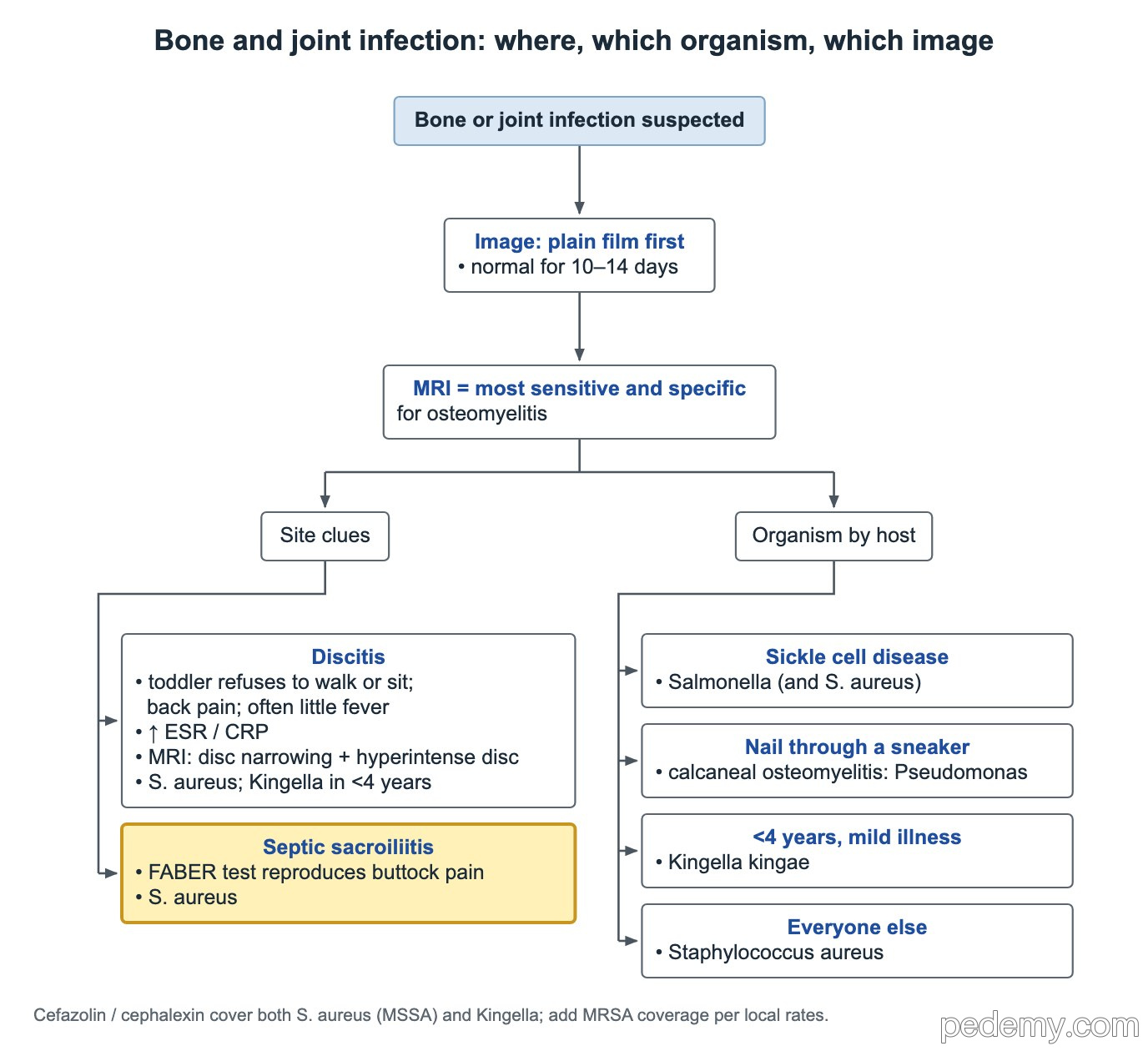
Fever with buttock, hip or low back pain and a limp suggests septic sacroiliitis. The FABER test (flexion, abduction, external rotation of the hip) stresses the sacroiliac joint and reproduces the pain.
S. aureus is the usual organism. MRI confirms the diagnosis.
Treatment basics
- Empiric therapy must cover S. aureus. Cefazolin covers MSSA and Kingella.
- Where MRSA is common, use clindamycin or vancomycin; clindamycin does not cover Kingella.
- Switch to oral therapy once the child improves clinically and CRP is falling; prolonged IV therapy is not needed for most uncomplicated cases.
- Drain abscesses and debride dead bone; septic arthritis is a surgical emergency.
Common questions
What is the best imaging test for osteomyelitis in children?
MRI. Plain films come first but are often normal for the first 10–14 days.
Which organism causes osteomyelitis after a nail goes through a sneaker?
Pseudomonas aeruginosa, which lives in the shoe's foam sole.
Which organism causes osteomyelitis in sickle cell disease?
Salmonella is the classic cause, though S. aureus is also common.
Study this topic
Sources
- PIDS/IDSA 2021: Guideline on acute hematogenous osteomyelitis in pediatrics
- IDSA 2011: Treatment of MRSA infections in adults and children
- AAP Red Book Online
Written for Pedemy in our own words from the sources above; checked November 2026. For education only, not medical advice; check doses and local protocols before treating a patient. Pedemy is independent and not affiliated with or endorsed by the organizations cited.