

Main decision tree
Meningitis or brain abscess
Key points
- Suspected bacterial meningitis beyond the newborn period: ceftriaxone (or cefotaxime) plus vancomycin; narrow once the organism and susceptibilities are known.
- Cochlear implant → pneumococcal meningitis; neonatal Citrobacter or Cronobacter meningitis → brain abscess risk.
- Focal signs or papilledema: image (contrast MRI) before any lumbar puncture.
- Brain abscess, unknown source: vancomycin + ceftriaxone + metronidazole for about 6–8 weeks.
- HSV encephalitis: focal seizures and temporal-lobe changes → CSF HSV PCR and IV acyclovir at once.
- Endocarditis: at least 3 separate blood cultures before antibiotics; viridans streptococci cause most subacute disease.
- Possible central-line infection: cultures from the catheter and a peripheral vein; a clean exit site does not exclude it.
Bacterial meningitis: risks and empiric therapy
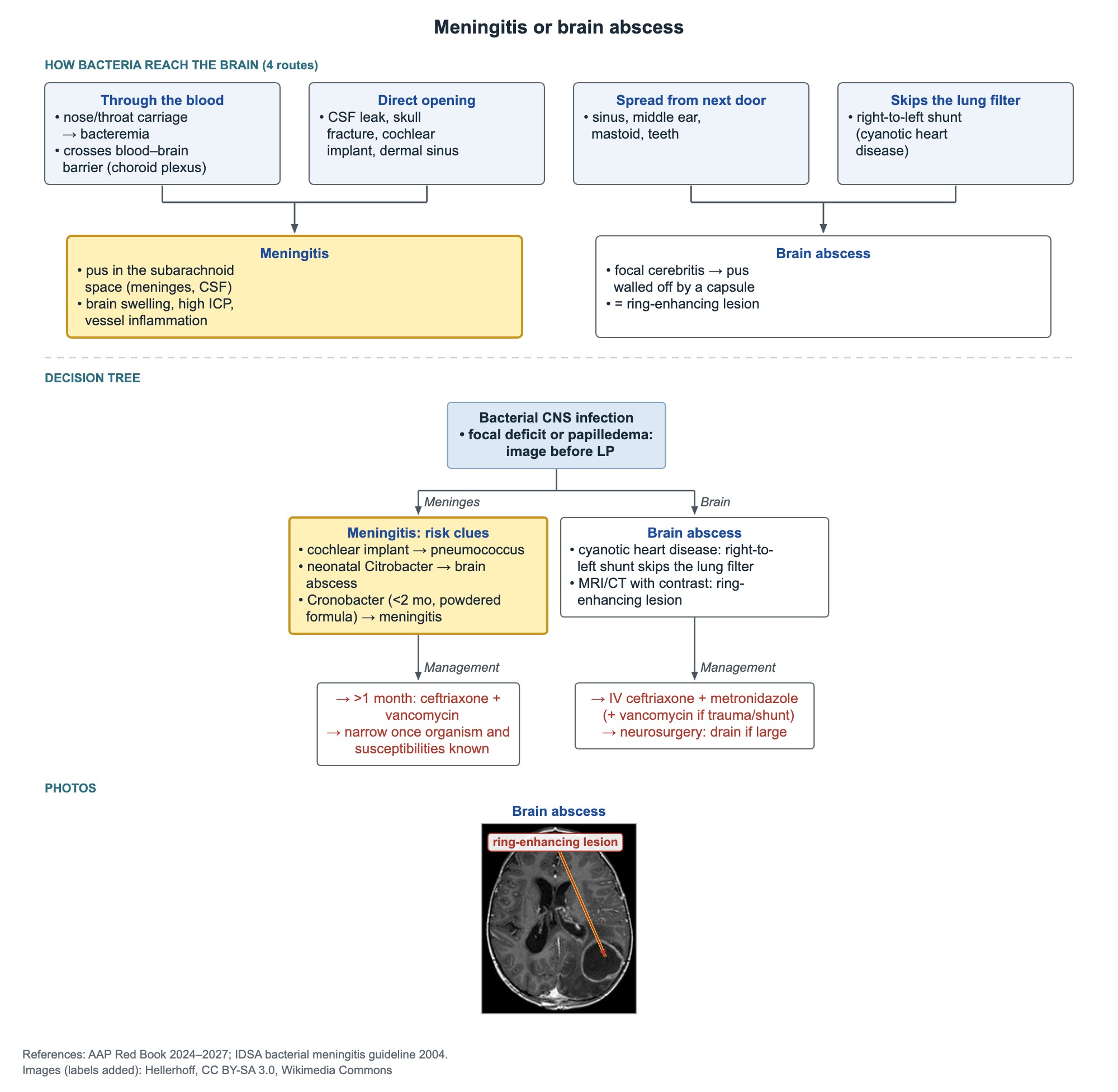
Bacteria reach the meninges through the blood (after nose or throat carriage) or through a direct opening such as a CSF leak, skull fracture, cochlear implant or dermal sinus. Spread from a sinus, ear or tooth, or a right-to-left heart shunt, tends to cause brain abscess instead.
Beyond the first month, start ceftriaxone (or cefotaxime) plus vancomycin. Vancomycin alone is not enough: the cephalosporin is the backbone and vancomycin covers resistant pneumococci. Narrow therapy once the organism and its susceptibilities are known.
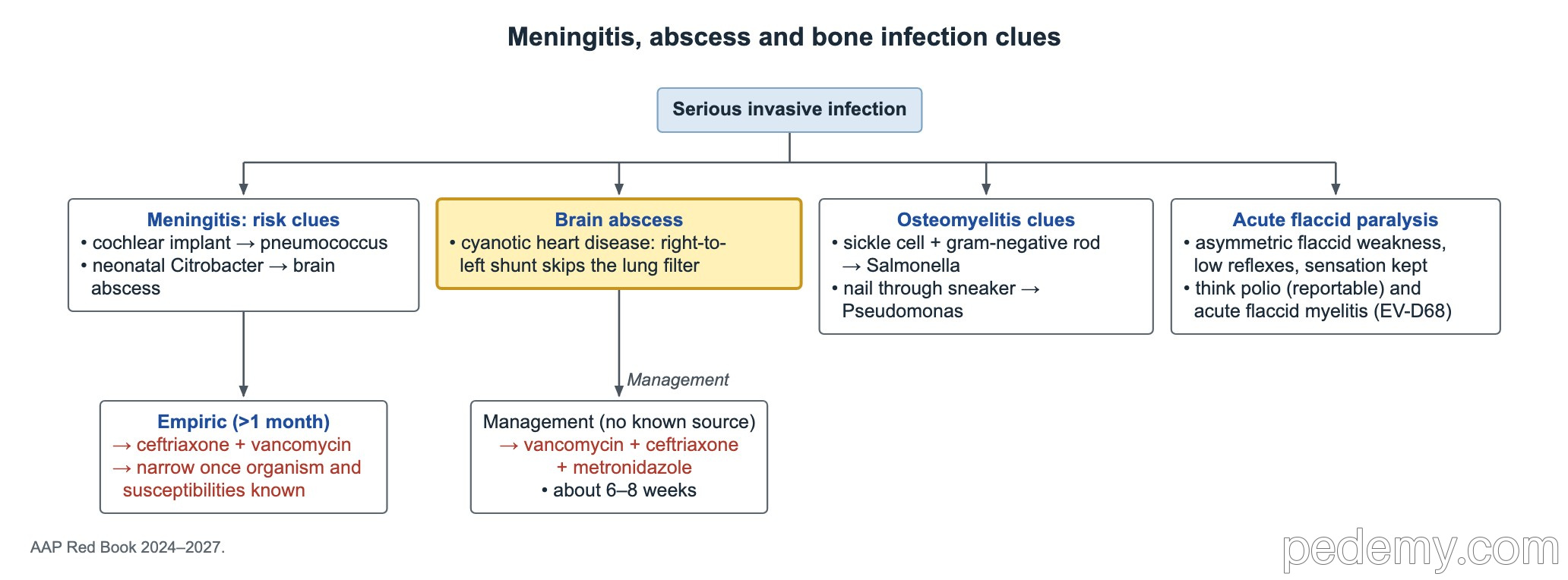
- Cochlear implant: higher risk of pneumococcal meningitis; these children need pneumococcal vaccines on the high-risk schedule.
- Terminal complement (C5–C9) deficiency: recurrent Neisseria infection.
- Most meningococcal disease in US infants under 1 year is serogroup B.
- Cronobacter (linked to powdered infant formula): infants under 2 months are at risk of meningitis. Cronobacter infection in infants under 1 year has been nationally notifiable since 2024: report it to the state health department.
- Neonatal Citrobacter (and Cronobacter) meningitis often causes brain abscess: image the brain.
- Unvaccinated 4-month-old with fever, no source and WBC 19,000: blood culture and ceftriaxone, because pneumococcus and Hib bacteremia are the feared causes.
Viral meningitis, HSV encephalitis and flaccid paralysis
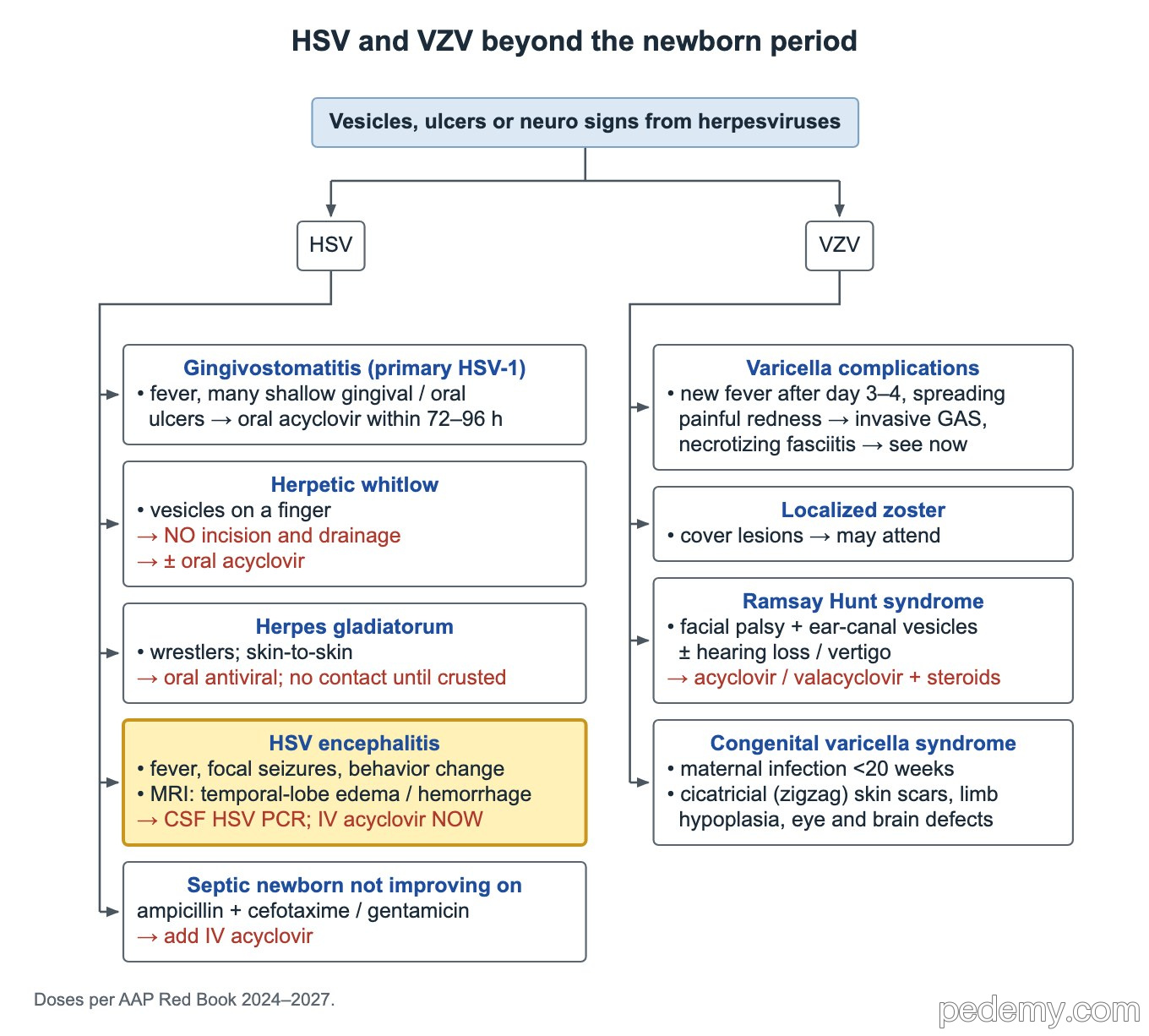
HSV encephalitis presents with fever, behavior change, focal seizures and confusion. MRI shows temporal-lobe edema, often with hemorrhage. Send CSF HSV PCR and start IV acyclovir immediately, without waiting for results. An early PCR can be falsely negative; repeat it if suspicion stays high.
- Enteroviruses cause most aseptic meningitis, peaking in summer and fall: a well-appearing child with fever and headache, CSF lymphocytes, normal glucose. Confirm with CSF enterovirus PCR.
- Acute asymmetric flaccid weakness with low reflexes and normal sensation: think poliomyelitis or acute flaccid myelitis (often enterovirus D68). Acute flaccid paralysis is reportable; send stool and respiratory samples and get a spine MRI.
Brain abscess
Sinusitis followed by one-sided headache, a focal seizure or papilledema suggests brain abscess. Get a contrast MRI before any lumbar puncture; LP adds little and risks herniation.
In cyanotic congenital heart disease, a right-to-left shunt lets venous blood bypass the lung's filtering capillary bed, so bacteria seed the brain directly.
- Empiric therapy with no known source: vancomycin + ceftriaxone (or cefotaxime) + metronidazole.
- Usual duration is about 6–8 weeks, guided by repeat imaging.
- Neurosurgery drains or aspirates large abscesses; the aspirate guides therapy.
Infective endocarditis
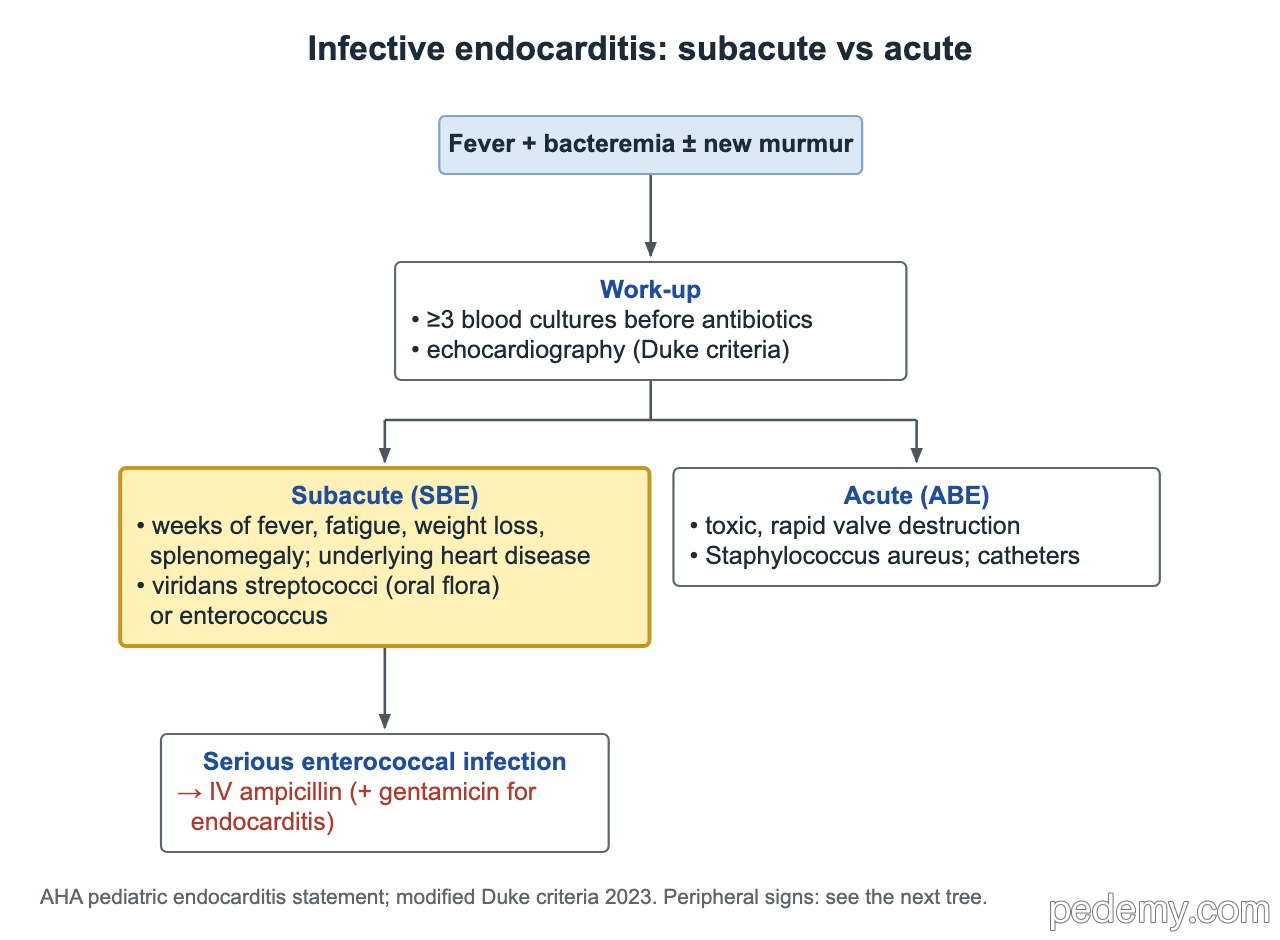
Subacute endocarditis: weeks of low-grade fever, fatigue, weight loss, splenomegaly and a new murmur, usually in a child with heart disease. Viridans group streptococci (mouth flora) are the classic cause; enterococci are next. Acute endocarditis is toxic and destroys valves quickly; S. aureus is the usual cause, often with a catheter.
Take at least 3 separate blood cultures before antibiotics, then echocardiography. Persistent viridans streptococcal bacteremia with a compatible picture should prompt evaluation for endocarditis using the 2023 Duke-ISCVID criteria.
- Serious enterococcal infection: IV ampicillin; add gentamicin for synergy in endocarditis.
- Invasive Listeria with severe penicillin allergy: trimethoprim-sulfamethoxazole.
| Peripheral sign | What it is |
|---|---|
| Osler nodes | Painful violaceous nodules in finger and toe pads (immunologic) |
| Janeway lesions | Painless macules on palms and soles (embolic) |
| Roth spots | Retinal hemorrhages with pale centers (immunologic) |
| Splinter hemorrhages | Linear nail-bed bleeds (embolic) |
Bacteremia and central-line infection
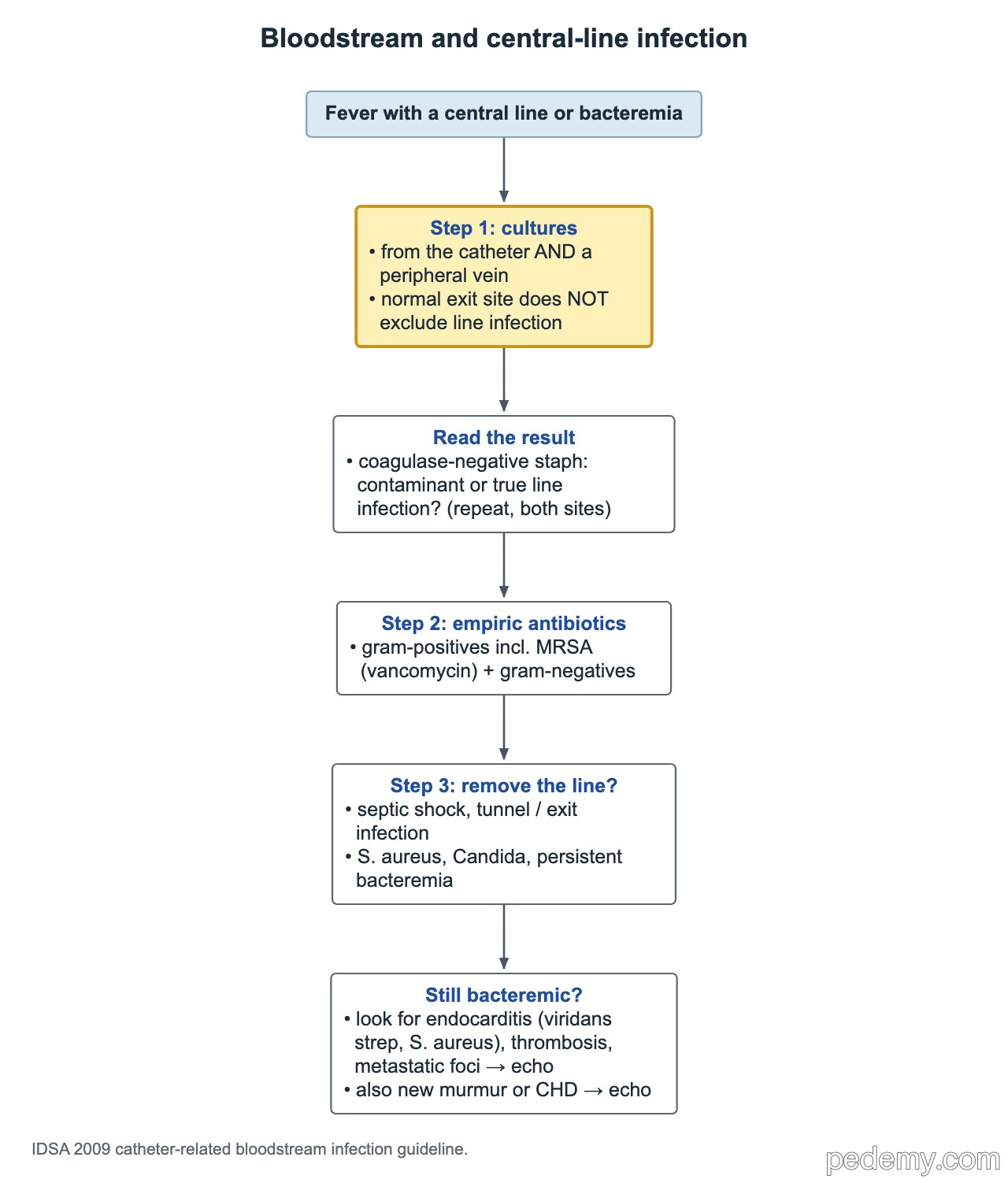
- Draw blood cultures from the catheter and from a peripheral vein before antibiotics.
- A clean-looking exit site does not exclude central-line-associated bloodstream infection.
- Coagulase-negative staphylococci: decide between contamination and true device infection by repeat cultures from both sites.
- Empiric therapy covers gram-positives including MRSA and CoNS (vancomycin) plus gram-negatives.
- Remove the catheter for septic shock, tunnel or exit-site pus, S. aureus, Candida or persistent bacteremia.
- Persistent S. aureus bacteremia on therapy: look for endocarditis, septic thrombosis and metastatic foci; get an echo. Also echo for a new murmur or congenital heart disease.
Classic organism clues
| Clue | Organism |
|---|---|
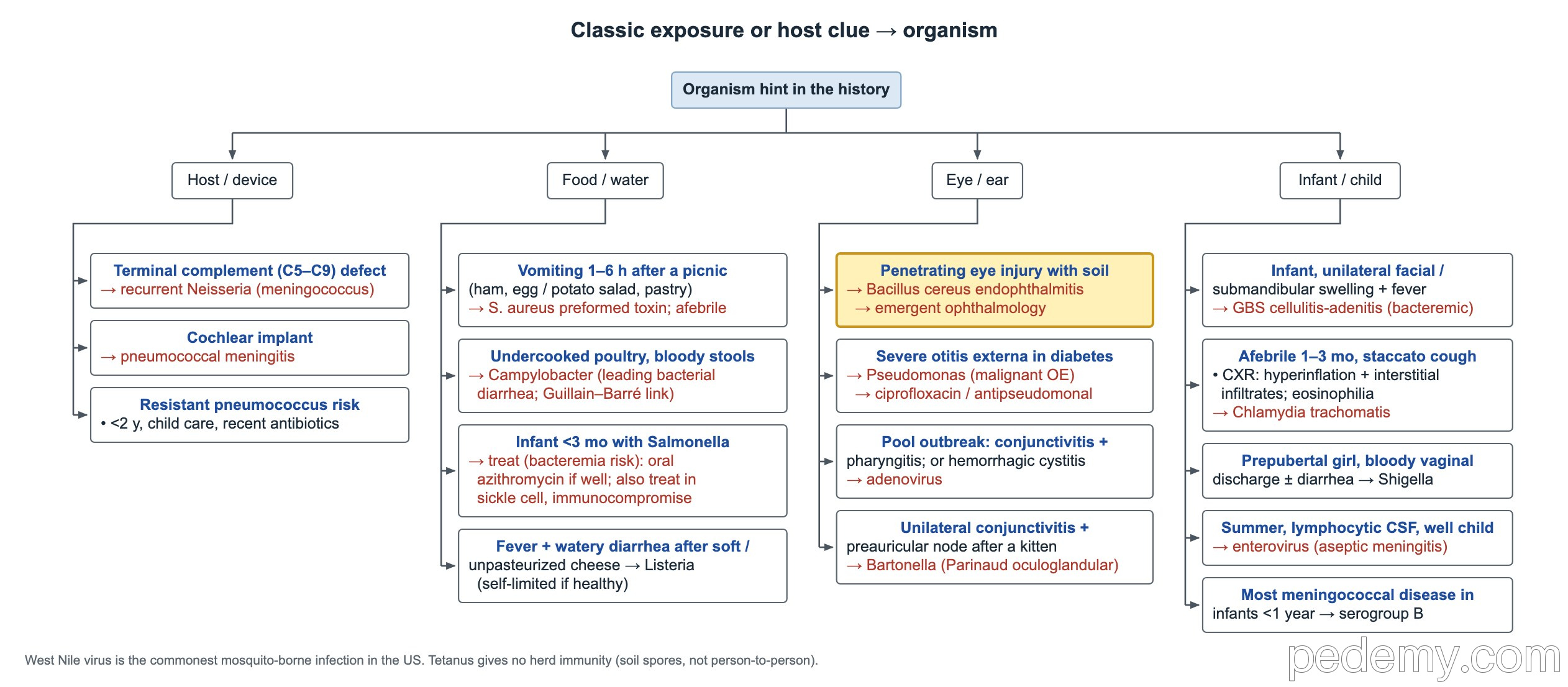
| Penetrating eye injury with soil or plant material; severe pain and vision loss within a day | Bacillus cereus endophthalmitis: emergent ophthalmology |
| Summer, lymphocytic CSF, well child | Enterovirus |
| Infant under 1 year with meningococcal disease | Serogroup B |
| Cochlear implant | Pneumococcus |
| Suspected serious MRSA bacteremia | Start IV vancomycin |
Common questions
What is the empiric antibiotic for bacterial meningitis in children?
Ceftriaxone (or cefotaxime) plus vancomycin beyond the newborn period, narrowed once cultures return.
Should you do a lumbar puncture before imaging in suspected brain abscess?
No. With focal signs or papilledema, get a contrast MRI first; LP can cause herniation and rarely changes management.
What are Osler nodes and Janeway lesions?
Osler nodes are painful nodules on finger and toe pads; Janeway lesions are painless spots on palms and soles. Both are signs of endocarditis.
Where should blood cultures be drawn for a possible central-line infection?
From the catheter and from a peripheral vein, before antibiotics.
Study this topic
Sources
- IDSA 2004: Practice guidelines for the management of bacterial meningitis
- AHA 2015: Infective endocarditis in childhood (Circulation)
- 2023 Duke-ISCVID criteria for infective endocarditis
- IDSA 2009: Intravascular catheter-related infection
- AAP Red Book Online
Written for Pedemy in our own words from the sources above; checked November 2026. For education only, not medical advice; check doses and local protocols before treating a patient. Pedemy is independent and not affiliated with or endorsed by the organizations cited.