

Main decision tree
Bacterial diarrhea and food poisoning
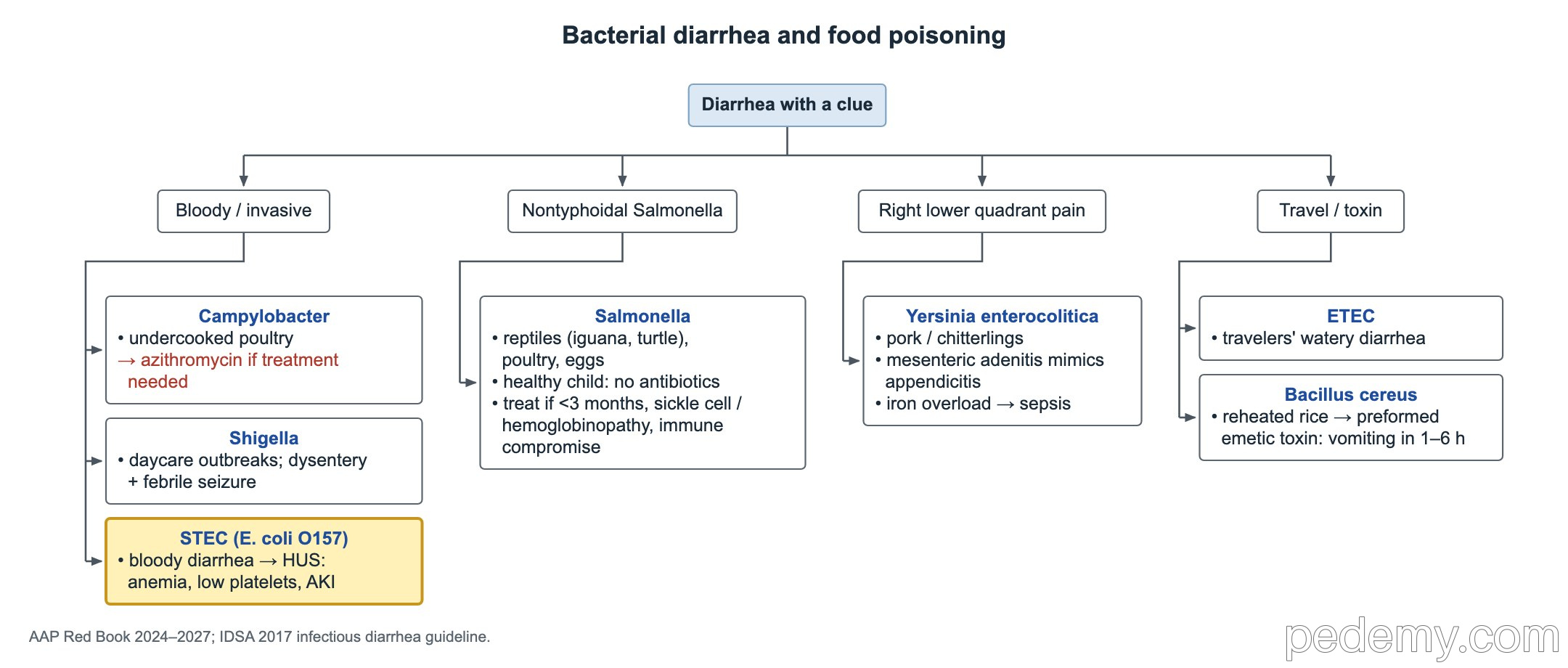
Key points
- Bloody diarrhea after undercooked poultry: Campylobacter; azithromycin if treatment is needed.
- STEC O157:H7 (undercooked ground beef) → HUS: hemolytic anemia with schistocytes, low platelets and acute kidney injury; avoid antibiotics.
- Nontyphoidal Salmonella in a healthy child: no antibiotics. Treat infants under 3 months, sickle cell disease and immunocompromise.
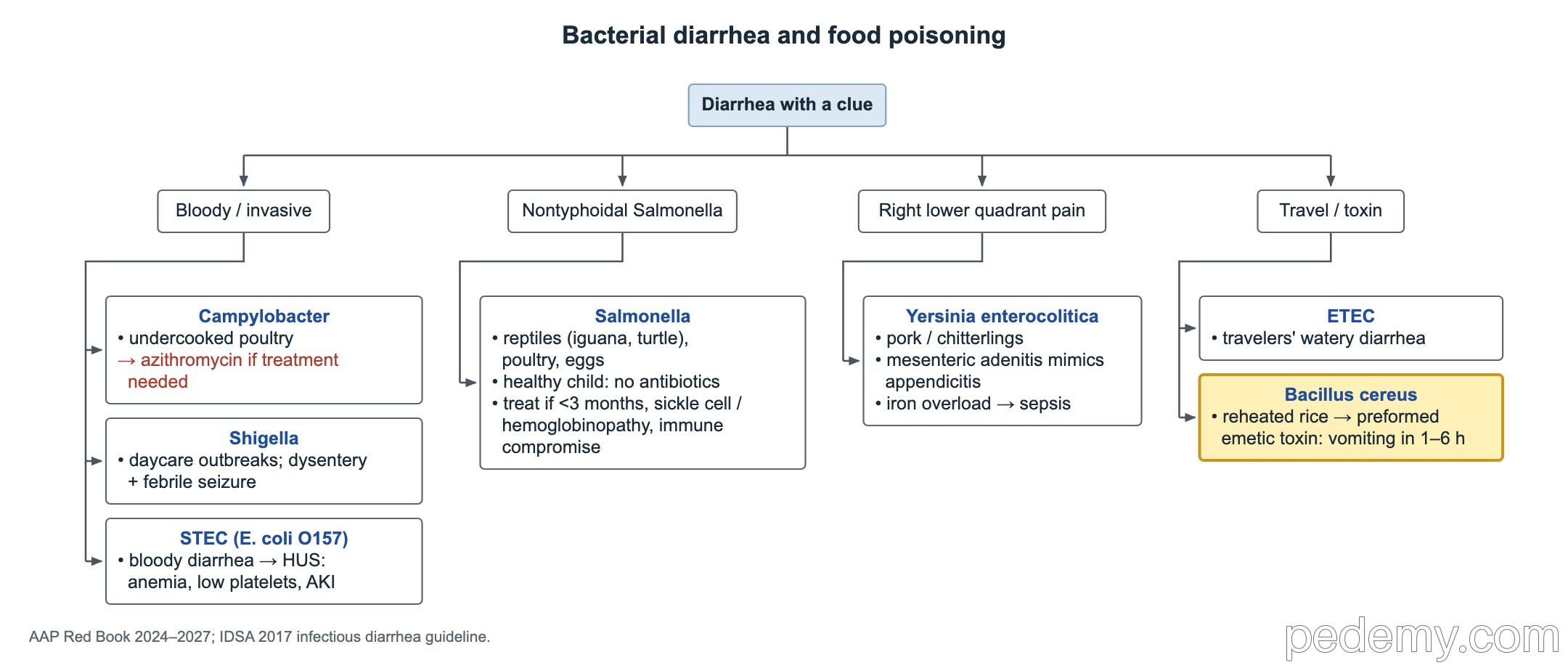
- Preformed toxins: S. aureus (2–4 h after ham or potato salad) and B. cereus (1–6 h after reheated rice) cause vomiting without fever; no antibiotics.
- Norovirus: all ages, abrupt vomiting in outbreaks, incubation about 12–48 h; the leading cause of viral gastroenteritis in the US.
- Do not test for C. difficile under 12 months: infants are often colonized.
- C. difficile: oral vancomycin 10 mg/kg (max 125 mg) 4 times daily for 10 days; no test of cure; soap and water for hand hygiene.
Bloody diarrhea: Campylobacter, Shigella and STEC
The tree sorts bacterial diarrhea by its main clue. The highlighted box is the one not to miss: Shiga toxin-producing E. coli (STEC), usually O157:H7 from undercooked ground beef, raw milk or produce. A few days after bloody diarrhea, up to about 15% of young children with O157 infection develop hemolytic uremic syndrome: pallor, low platelets, helmet cells (schistocytes) and acute kidney injury.
Do not give antibiotics or antimotility drugs for suspected STEC; they may raise the HUS risk. Give IV fluids and monitor blood counts and creatinine.
- Campylobacter jejuni: undercooked poultry; bloody diarrhea and high fever; linked to Guillain-Barré syndrome. Azithromycin if treatment is needed.
- Shigella: child-care outbreaks, dysentery with high fever; can trigger a seizure. Treat with azithromycin (ceftriaxone if severe).
- Bloody vaginal discharge in a prepubertal girl, sometimes after diarrhea: think Shigella (often S. flexneri); treat with azithromycin or ceftriaxone.
Nontyphoidal Salmonella
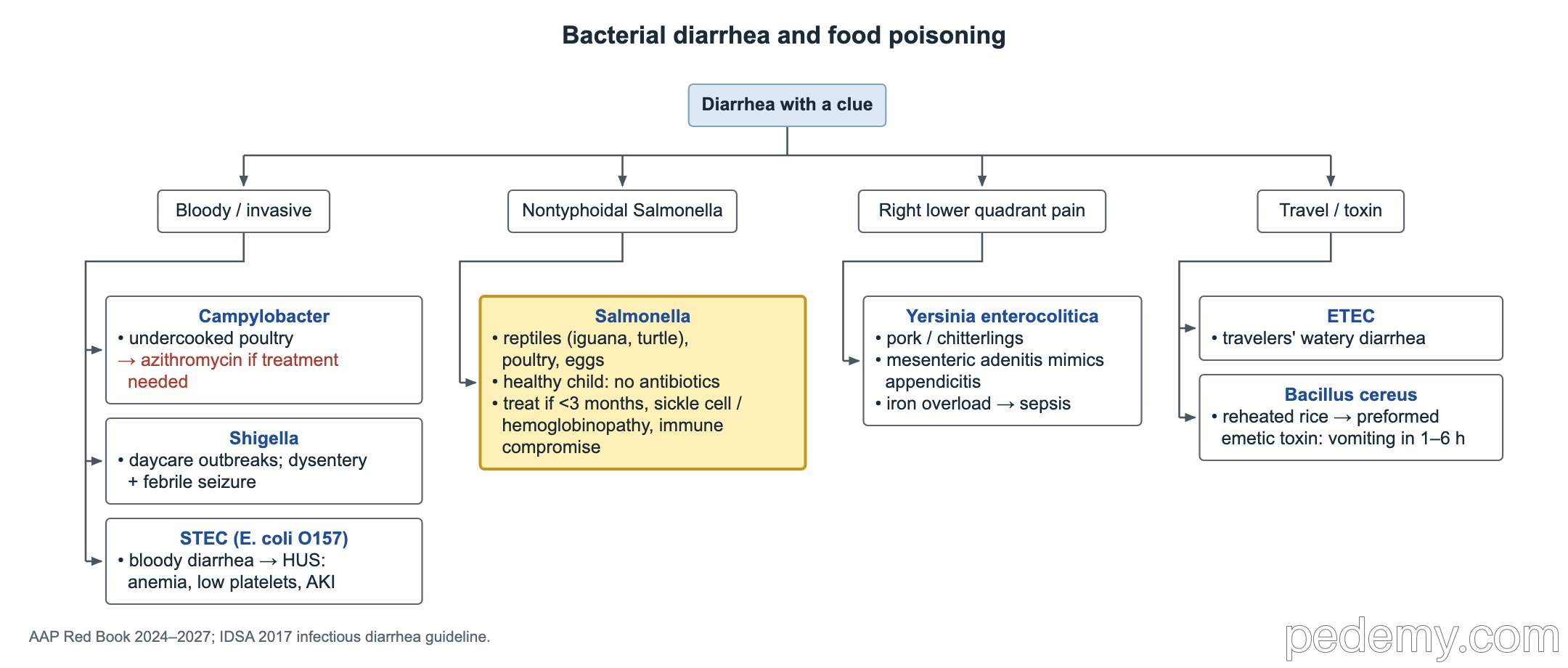
Sources are poultry, eggs and reptiles or amphibians (turtles, iguanas, frogs). Uncomplicated Salmonella gastroenteritis in a healthy child needs only supportive care: antibiotics do not shorten illness and prolong carriage.
Treat children at risk of bacteremia and focal infection: infants under 3 months (even if well-appearing, after evaluation for bacteremia), sickle cell disease or other hemoglobinopathy, and immunocompromise. Sickle cell disease also raises the risk of Salmonella osteomyelitis.
Food poisoning, travel and water
| Clue | Organism | Key point |
|---|---|---|
| Vomiting 1–6 h after reheated or poorly stored rice | Bacillus cereus emetic toxin | Preformed toxin; fluids only |
| Group vomits 2–4 h after ham, egg or potato salad, no fever | Staphylococcus aureus enterotoxin | Preformed toxin; no antibiotics |
| Fever and watery diarrhea after soft unpasteurized cheese | Listeria monocytogenes | Self-limited febrile gastroenteritis in healthy people |
| Pork or chitterlings, diarrhea and right lower quadrant pain | Yersinia enterocolitica | Mesenteric adenitis mimics appendicitis; iron overload raises sepsis risk |
| Traveler, abrupt nonbloody watery diarrhea, no fever | Enterotoxigenic E. coli (ETEC) | Fluids; most cases resolve in a few days |
| Family moves to a home with a private well | E. coli | Test well water for bacteria every year |
Viral gastroenteritis: norovirus, sapovirus, rotavirus
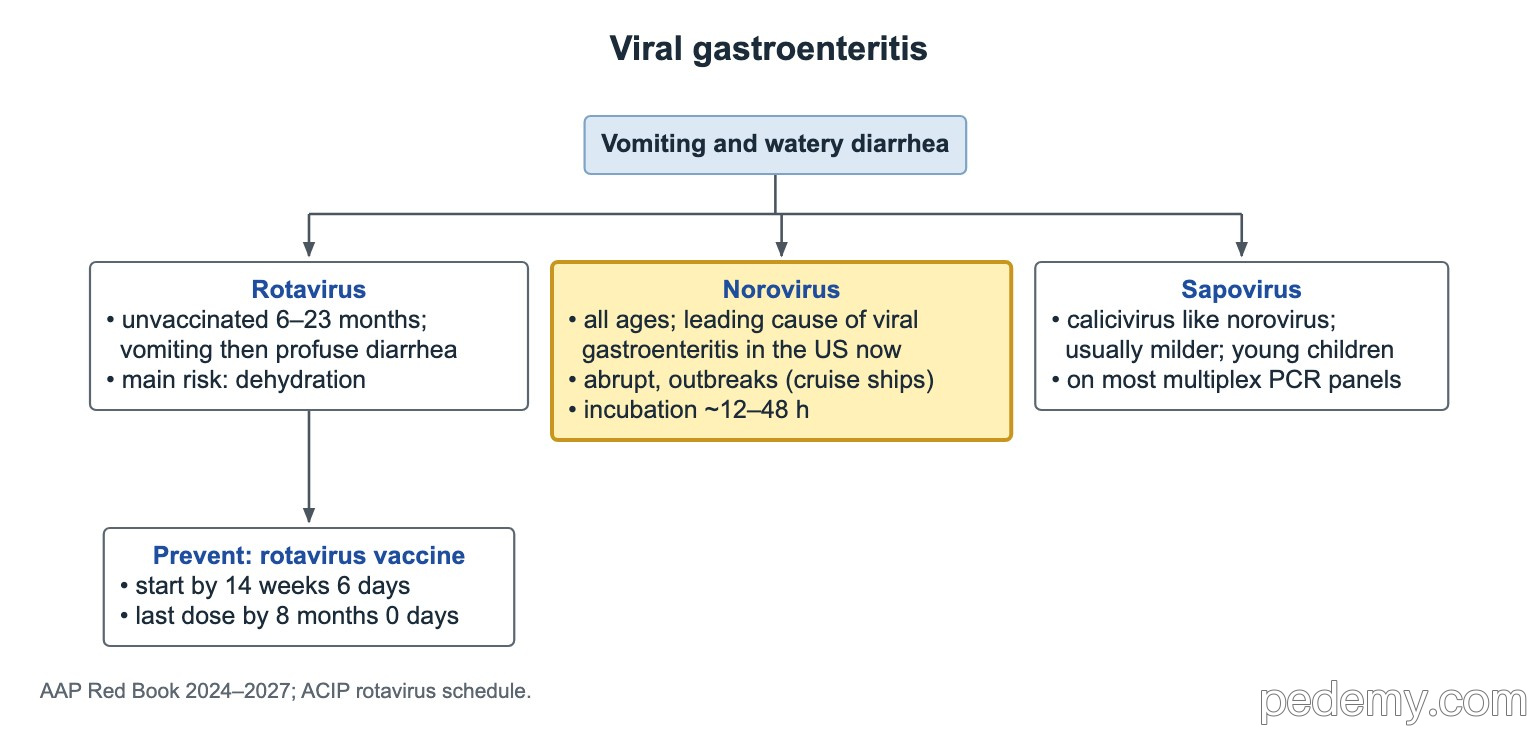
- Norovirus: affects all ages; abrupt vomiting and diarrhea that spread quickly on cruise ships and in closed settings; incubation about 12–48 hours. It is the leading cause of viral gastroenteritis in the US.
- Sapovirus: a calicivirus like norovirus (family Caliciviridae); usually milder; young children in child care. Some, not all, stool multiplex PCR panels detect it, so a calicivirus-positive, norovirus-negative result points to sapovirus.
- Rotavirus: in unvaccinated children, peak age about 6–24 months, in winter and spring; fever and vomiting, then profuse watery diarrhea. The main acute danger is dehydration with electrolyte problems.
- Rotavirus vaccine: first dose by 14 weeks 6 days; last dose by 8 months 0 days.
Parasites
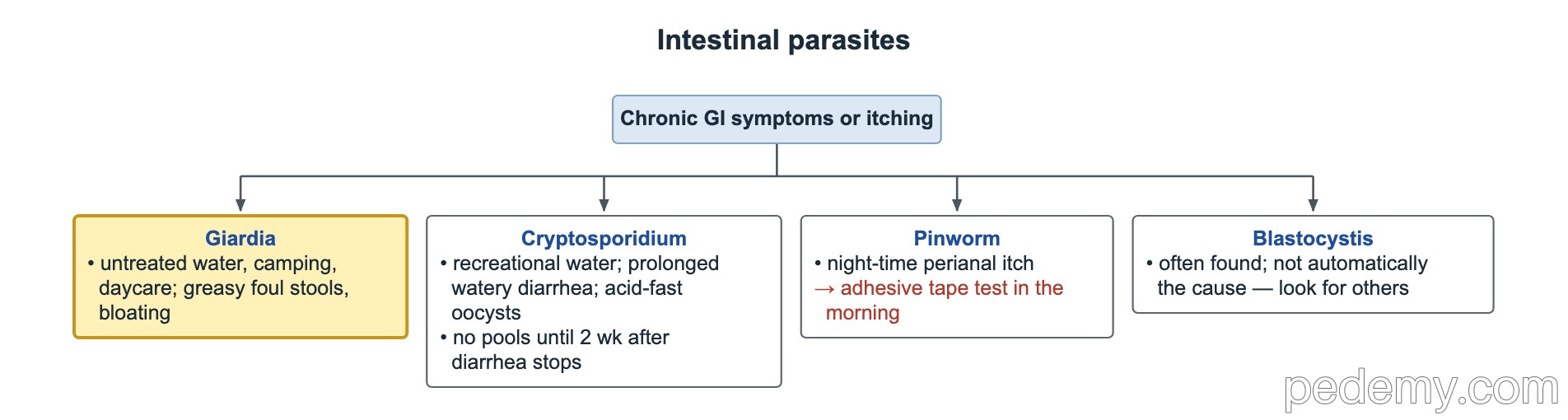
- Giardia duodenalis (G. lamblia): untreated water, camping, child care; greasy, foul-smelling stools, bloating and gas. Diagnose by stool antigen or PCR.
- Cryptosporidium: recreational water outbreaks; prolonged watery diarrhea; acid-fast oocysts in stool. Keep children out of pools until 2 weeks after diarrhea stops (chlorine does not kill it quickly).
- Pinworm: night-time perianal itch; adhesive tape test first thing in the morning, before bathing or toileting.
- Blastocystis: often found in stool and often harmless; look for another cause before blaming it.
C. difficile: diagnosis and treatment
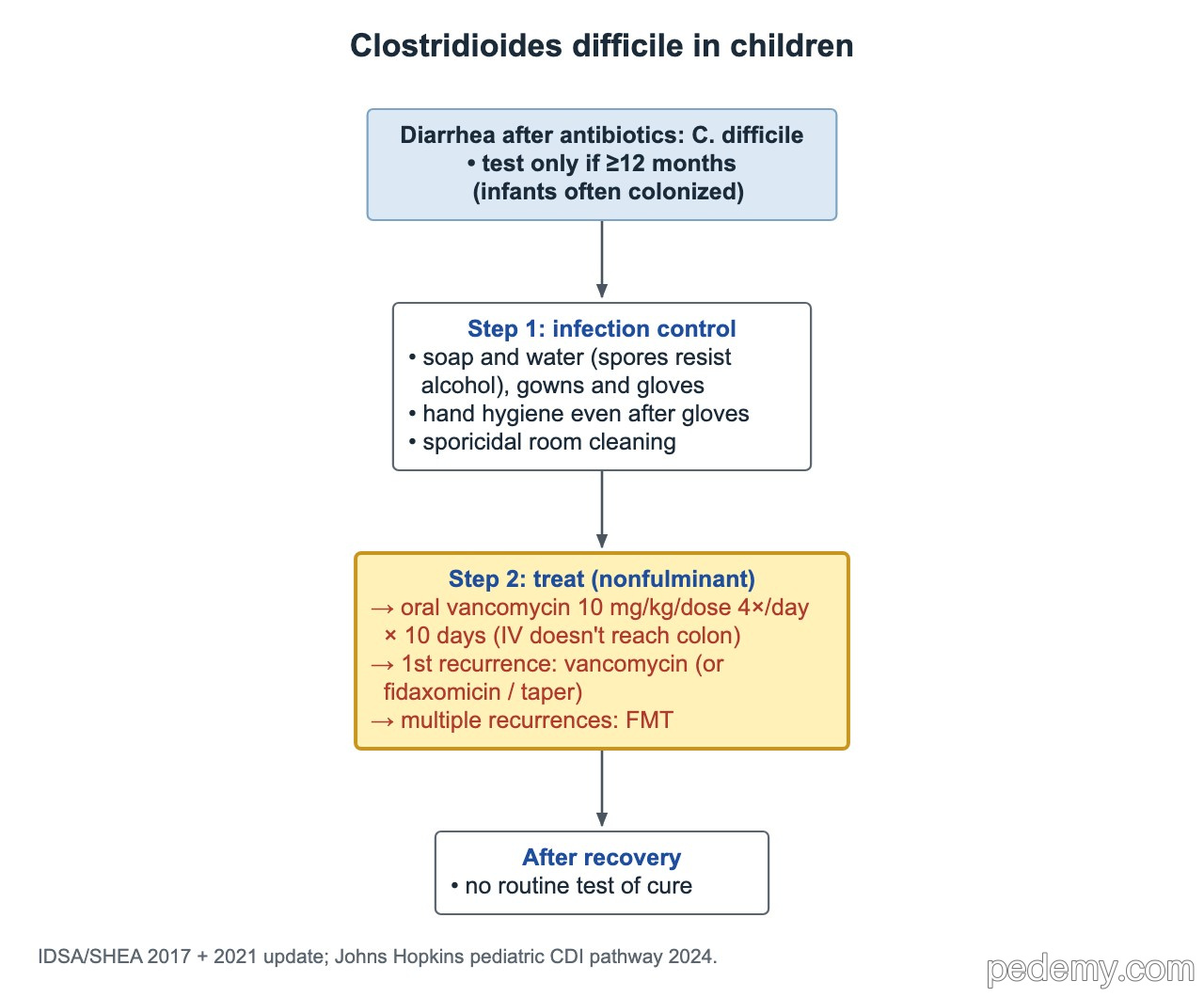
Suspect C. difficile with fever, cramps, watery diarrhea and a high WBC after antibiotics; clindamycin carries the highest risk, followed by cephalosporins, fluoroquinolones and broad-spectrum penicillins. Test only children 12 months or older with 3 or more unformed stools in 24 hours: infants are often colonized without disease.
- Nonfulminant first episode: oral vancomycin 10 mg/kg per dose (max 125 mg) 4 times daily for 10 days. Metronidazole remains an option for mild disease in children; fidaxomicin is an alternative.
- IV vancomycin does not reach the colon and does not treat C. difficile.
- First recurrence: oral vancomycin (standard course, or a taper and pulse if vancomycin was used first) or fidaxomicin.
- Multiple recurrences: fecal microbiota transplant.
- Stop the inciting antibiotic when possible.
C. difficile: infection control and follow-up
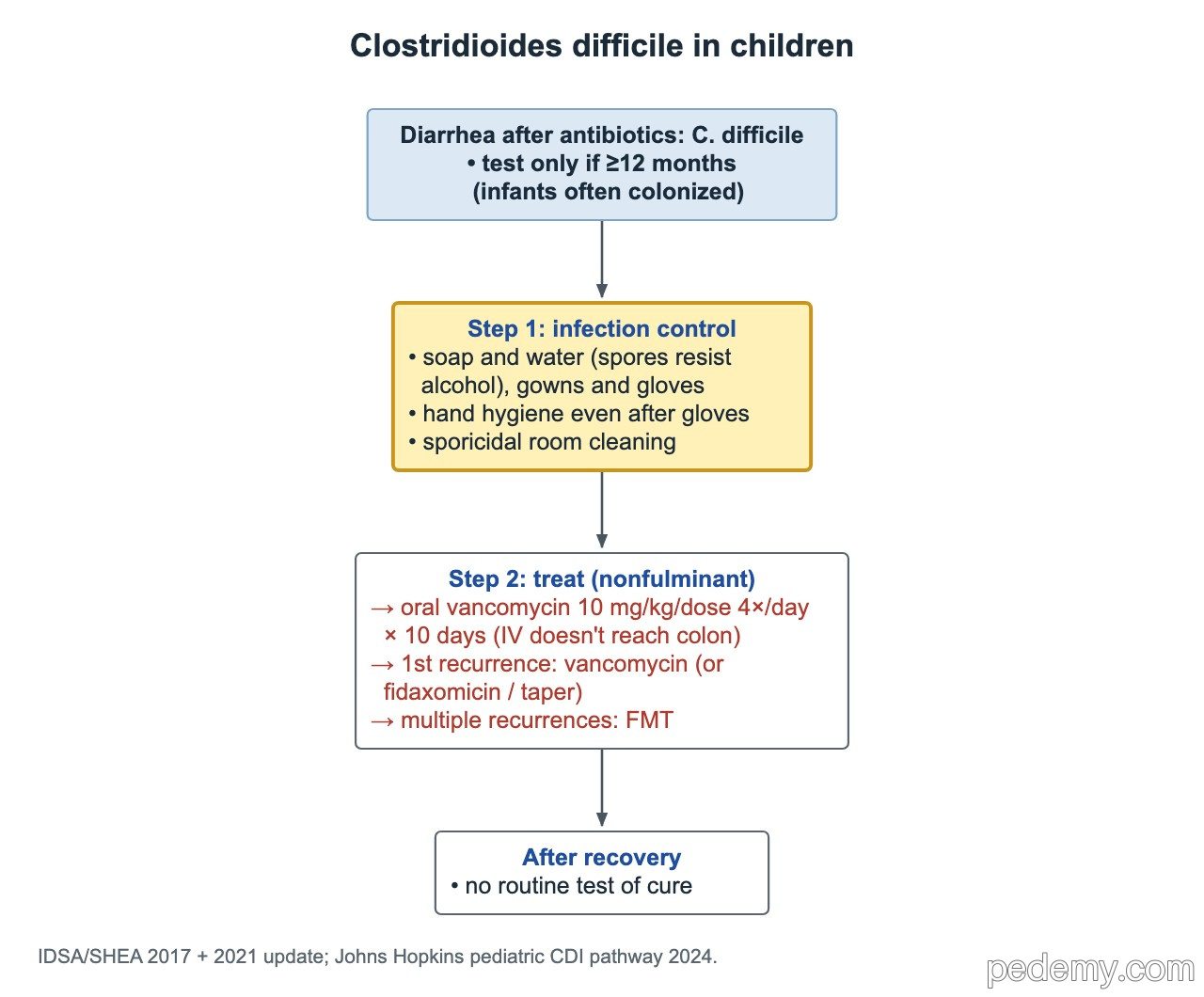
- Contact precautions: gown and gloves for all care.
- Wash hands with soap and water during outbreaks: alcohol does not kill spores.
- Perform hand hygiene even after removing gloves.
- Terminal room cleaning with a sporicidal agent such as a bleach-based disinfectant.
- No test of cure: once stools are formed, do not repeat the stool test, because toxin and spores can persist.
Common questions
Should children with Salmonella diarrhea get antibiotics?
Usually not. Treat only infants under 3 months and children with sickle cell disease, other hemoglobinopathies or immunocompromise.
Why avoid antibiotics in E. coli O157:H7?
They do not help and may raise the risk of hemolytic uremic syndrome.
Should infants be tested for C. difficile?
No. Children under 12 months often carry C. difficile and its toxin without disease.
Does hand sanitizer kill C. difficile?
No. Alcohol does not kill its spores; wash with soap and water.
Study this topic
Sources
- IDSA 2017: Diagnosis and management of infectious diarrhea
- IDSA/SHEA 2017: C. difficile infection in adults and children
- AAP Red Book Online
Written for Pedemy in our own words from the sources above; checked November 2026. For education only, not medical advice; check doses and local protocols before treating a patient. Pedemy is independent and not affiliated with or endorsed by the organizations cited.