

Main decision tree
HIV, Pneumocystis and asplenia
Key points
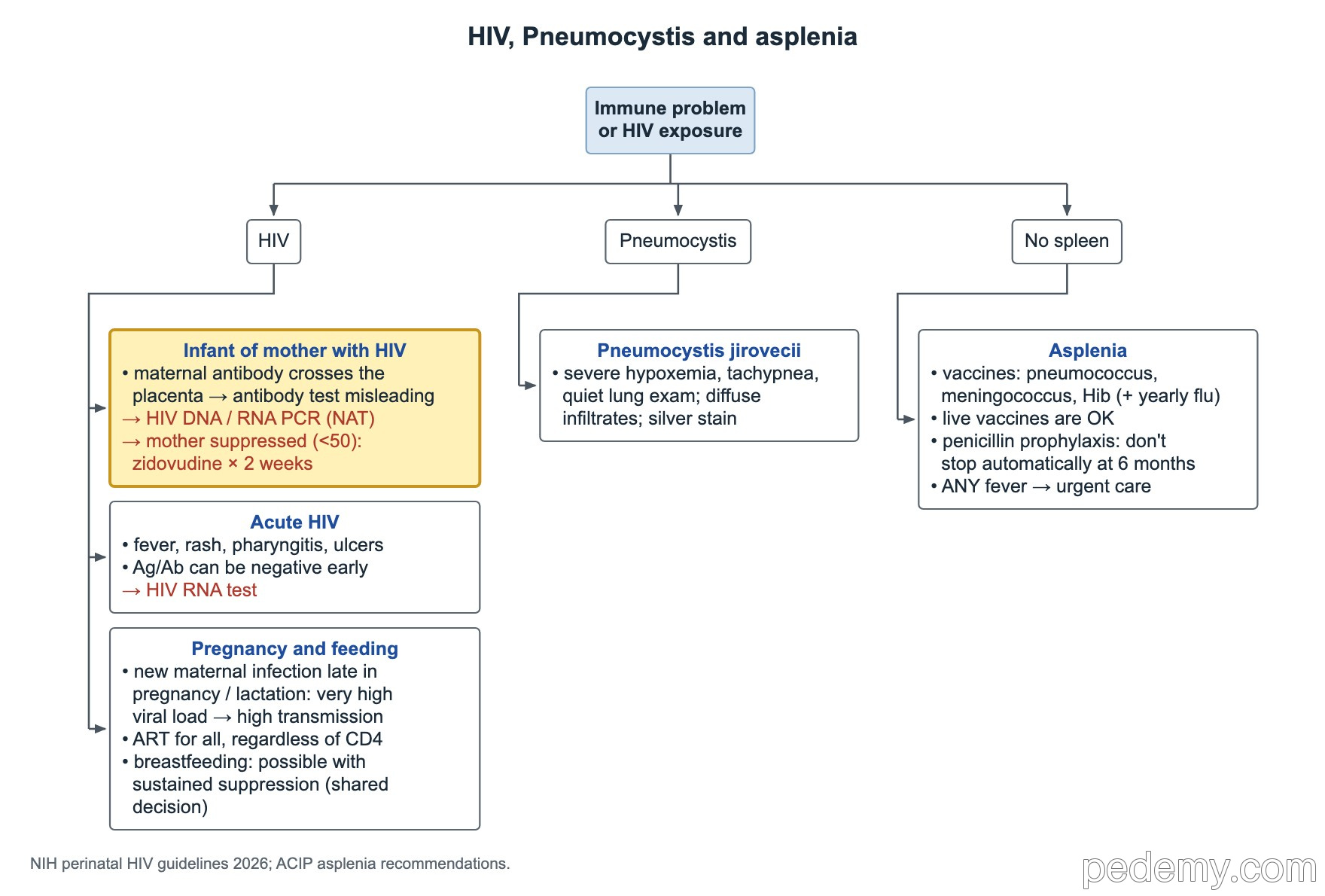
- Under 18 months, a positive HIV antibody test may be maternal IgG: diagnose infant HIV with a nucleic acid test (HIV DNA or RNA PCR).
- Acute HIV (fever, rash, sore throat, mouth ulcers) can give a negative antigen/antibody screen: send HIV RNA.
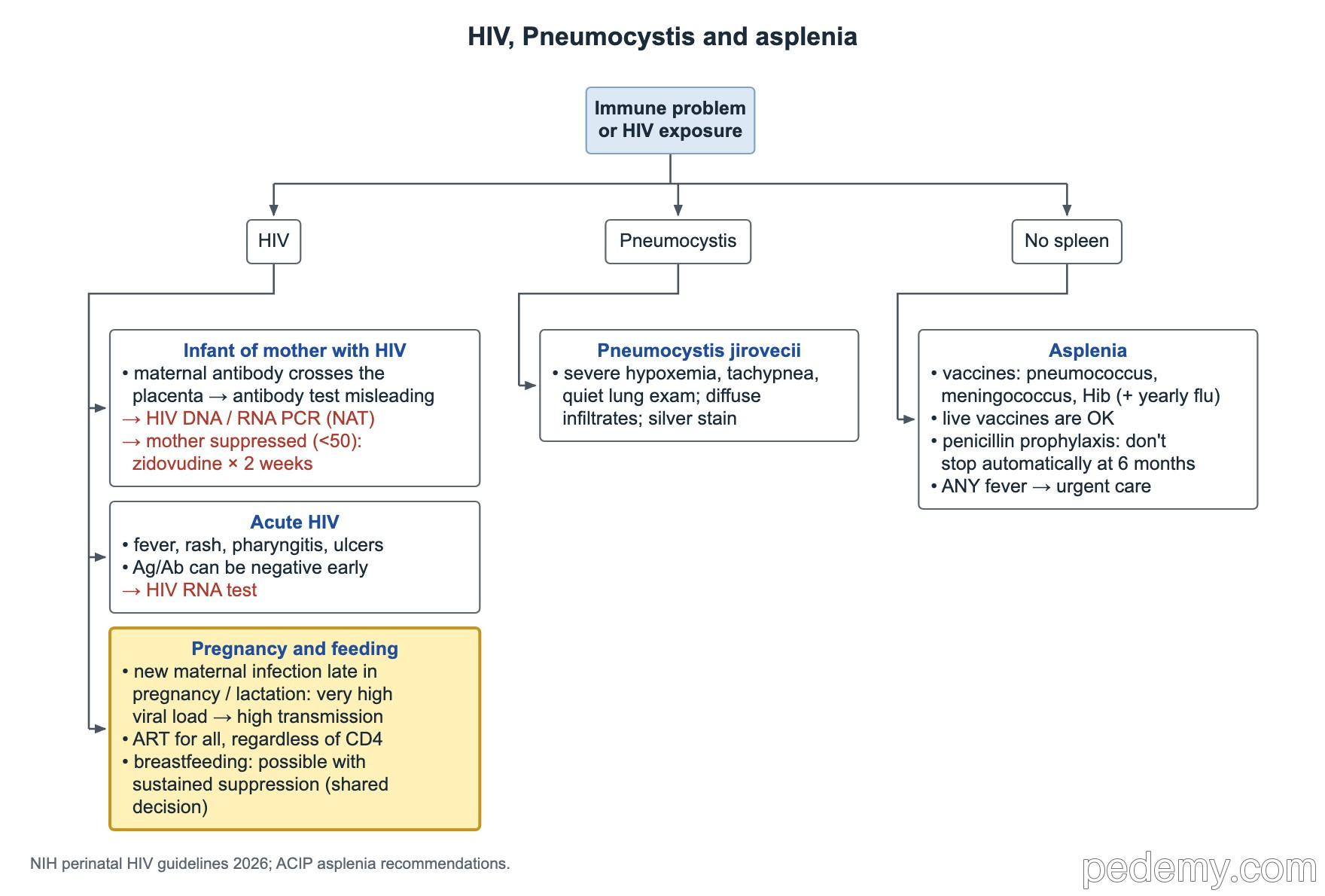
- ART is recommended for every pregnant person with HIV, regardless of CD4 count.
- Breastfeeding with sustained viral suppression (<50 copies/mL) is a supported shared decision; formula or donor milk is the only zero-risk option.
- HIV-exposed infants start TMP-SMX Pneumocystis prophylaxis at 4–6 weeks unless HIV has been presumptively excluded.
- Pneumocystis pneumonia: IV TMP-SMX plus corticosteroids when hypoxemia is moderate to severe.
- Asplenia: pneumococcal, meningococcal and Hib vaccines plus yearly flu; live vaccines are allowed; any fever is an emergency.
The HIV-exposed infant
Maternal IgG crosses the placenta, so nearly every HIV-exposed infant has a positive antibody test that can last up to 18 months (sometimes 24). Antibody tests therefore cannot diagnose infection in a young infant.
Use a nucleic acid test (NAT): HIV DNA PCR or HIV RNA PCR on blood.
- Routine NATs at 14–21 days, 1–2 months and 4–6 months; add a test at birth for high-risk infants.
- Presumptive exclusion: 2 negative NATs, one at 14 days or older and one at 4 weeks or older.
- Definitive exclusion: 2 negative NATs at 1 month or older and at 4 months or older (or 2 negative antibody tests from 6 months).
- Low-risk infant (mother on ART with viral load below 50 copies/mL near delivery): zidovudine for 2 weeks.
- Higher-risk infants (no ART, detectable viral load, acute maternal HIV) get a multidrug regimen chosen with an HIV expert.
Acute HIV infection
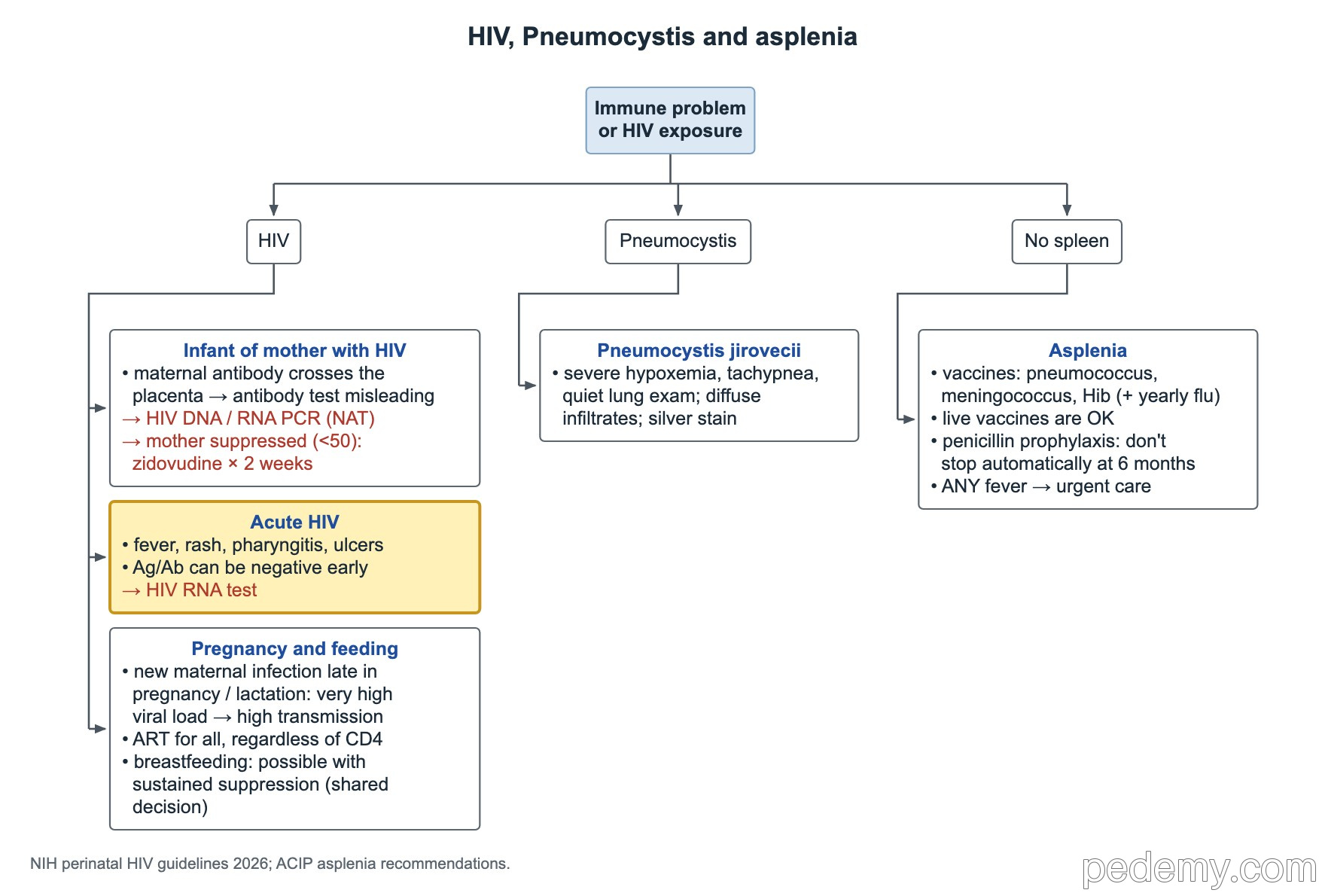
Acute HIV looks like mononucleosis: fever, rash, pharyngitis, swollen nodes and mouth or genital ulcers 2–4 weeks after exposure.
The fourth-generation antigen/antibody test can still be negative in the first weeks. When suspicion is high, send HIV RNA (viral load) at the same time.
- Viral load is very high in acute infection, so transmission risk is highest then.
- A positive RNA with a negative or indeterminate antibody test means acute HIV; repeat serology later to document seroconversion.
HIV in pregnancy and infant feeding
- Test every pregnant person for HIV; repeat in the third trimester when risk continues.
- Start ART in pregnancy as soon as possible, at any CD4 count.
- Maternal viral load above 1,000 copies/mL (or unknown) near delivery: IV zidovudine in labor and scheduled cesarean at 38 weeks.
- New maternal infection late in pregnancy or during breastfeeding carries a very high infant risk because acute HIV produces a very high viral load.
- Breastfeeding: with ART and sustained viral suppression below 50 copies/mL, transmission risk is under 1%; support the parent's informed choice with close infant testing.
- Not on ART or not suppressed: recommend against breastfeeding; formula or pasteurized donor milk removes the risk.
Pneumocystis pneumonia
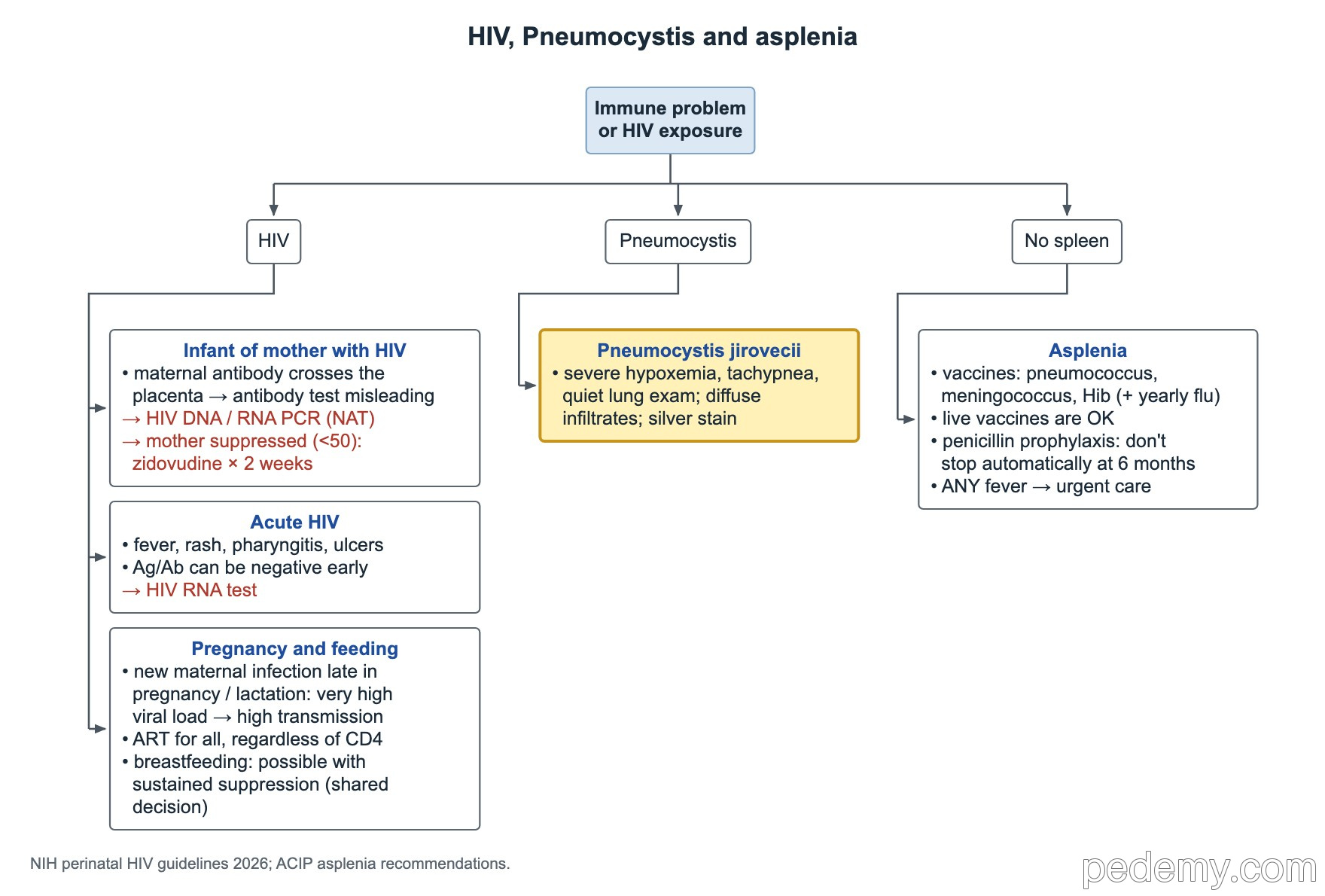
Pneumocystis jirovecii pneumonia (PCP) is the classic AIDS-defining illness of infants with perinatal HIV, peaking at 3–6 months of age. Look for an infant with thrush, fast breathing and severe hypoxemia but a near-normal lung exam.
Chest X-ray shows diffuse bilateral interstitial infiltrates. The organism is seen with silver (methenamine silver) or immunofluorescent stains on induced sputum or bronchoalveolar lavage; LDH is often high.
- Treatment: IV TMP-SMX (15–20 mg/kg/day of the trimethoprim part, divided every 6–8 hours) for 21 days.
- Add corticosteroids when PaO2 is below 70 mm Hg or the A–a gradient is 35 mm Hg or more.
- Other immunocompromised children at risk: leukemia, transplant, long-term high-dose steroids and severe combined immunodeficiency.
Pneumocystis prophylaxis
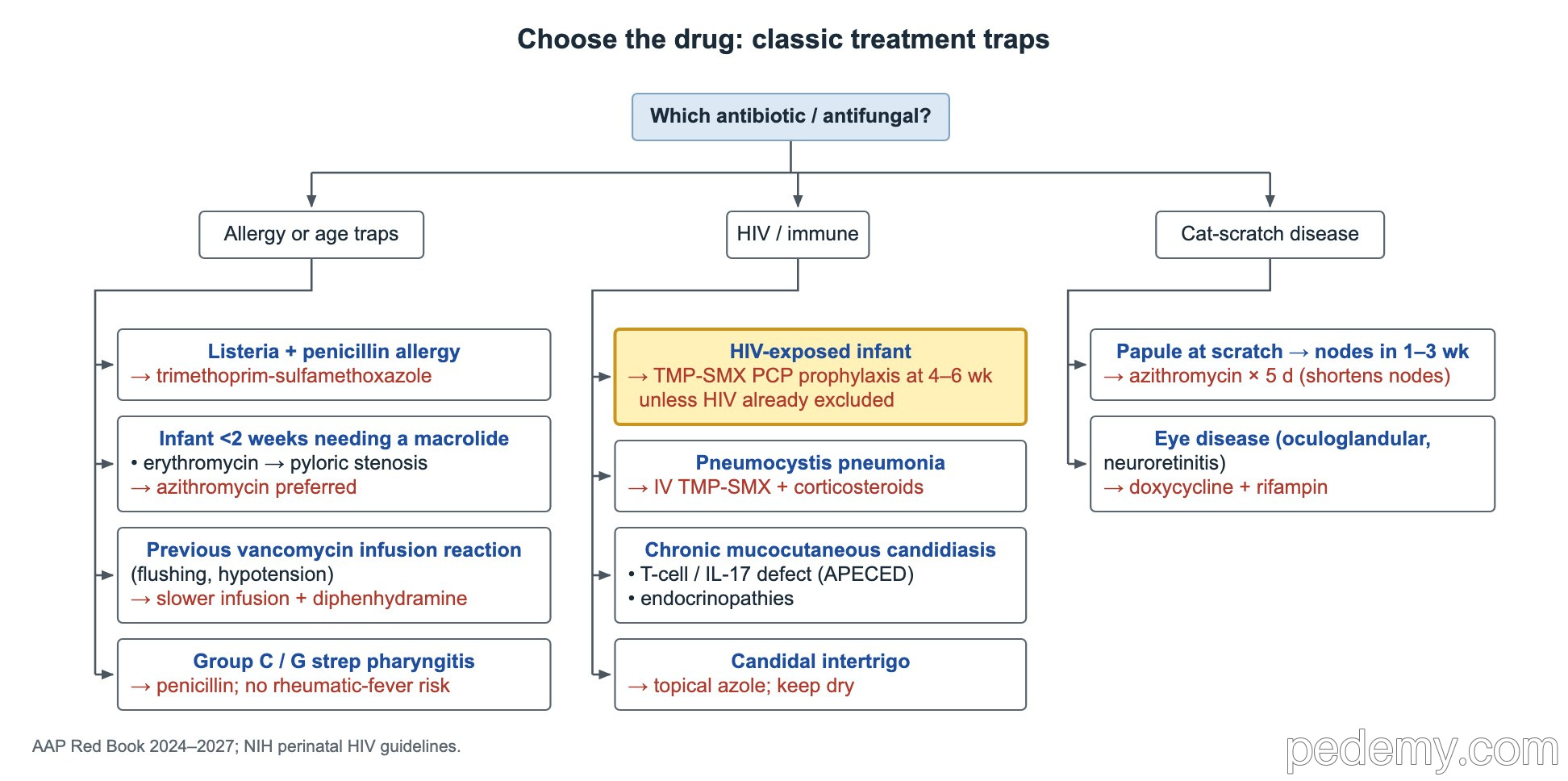
- HIV-exposed infant: TMP-SMX from 4–6 weeks of age, unless HIV infection is already presumptively excluded by negative NATs.
- Infant with HIV: continue through the first year regardless of CD4.
- Age 1–5 years with HIV: CD4 below 500 cells/µL or below 15%. Age 6 years and older: CD4 below 200 cells/µL or below 15%.
- Usual dose: TMP 2.5–5 mg/kg per dose twice daily, often on 3 days each week.
- Prophylaxis can stop once HIV is excluded, or after CD4 recovers on ART for at least 3 months.
Asplenia and functional asplenia
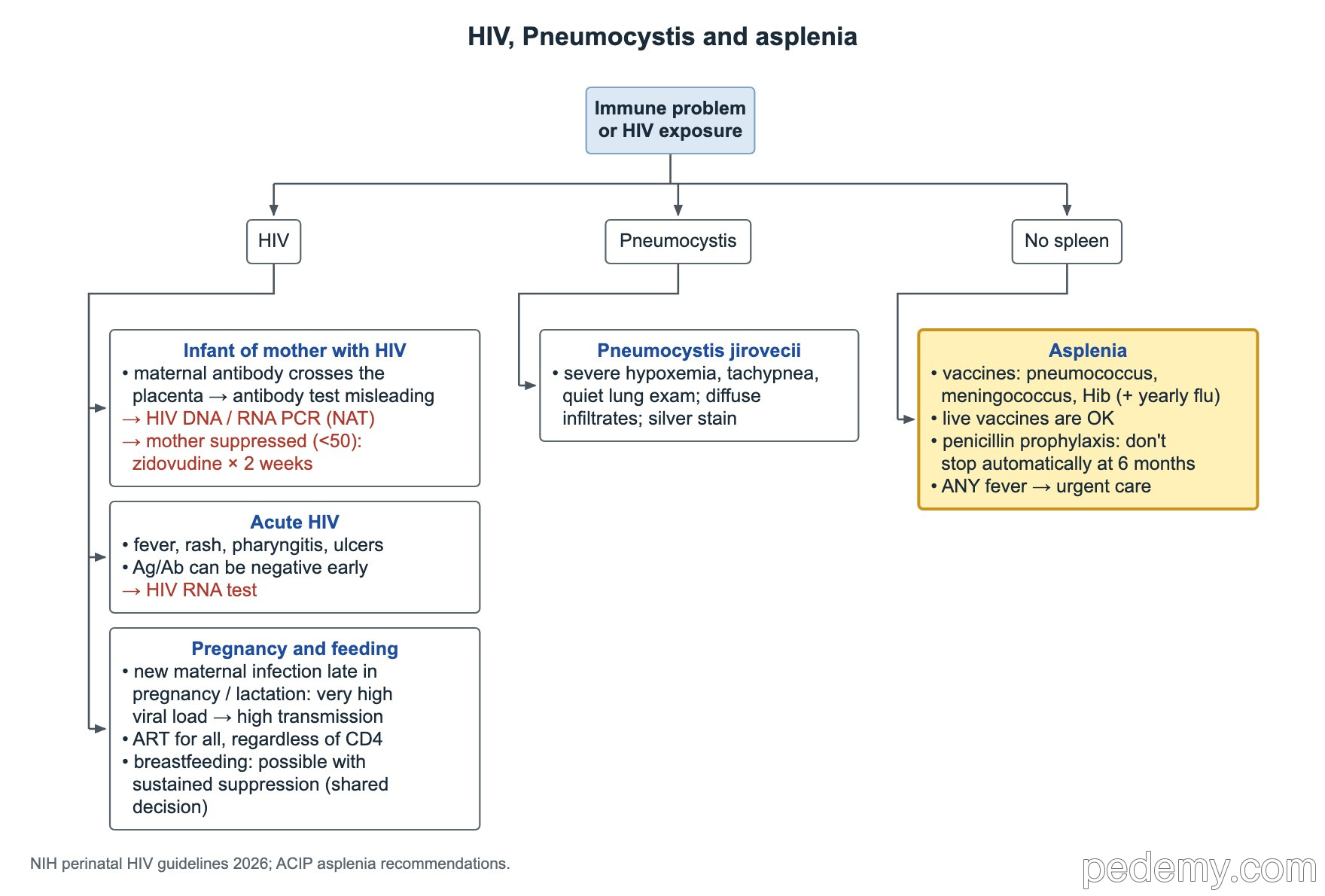
Without a working spleen, children cannot clear encapsulated bacteria. Pneumococcus causes most overwhelming post-splenectomy infection; sickle cell disease causes functional asplenia in early childhood.
- Vaccines: pneumococcal conjugate and polysaccharide per the current schedule, MenACWY (from 2 months, with boosters), MenB from age 10 years, and Hib.
- Inactivated influenza vaccine every year.
- Asplenia alone is not a reason to withhold live vaccines such as MMR and varicella.
- Elective splenectomy: give vaccines at least 2 weeks before surgery when possible.
- Daily penicillin prophylaxis: penicillin V 125 mg twice daily under 3 years, 250 mg twice daily from 3 years. In sickle cell, start by 2 months and continue to at least 5 years; after splenectomy, do not stop just because 6 months have passed.
- Fever of 101.3 °F (38.5 °C) or higher: urgent evaluation, blood culture and IV ceftriaxone without waiting for results.
Primary immune defects and transplant
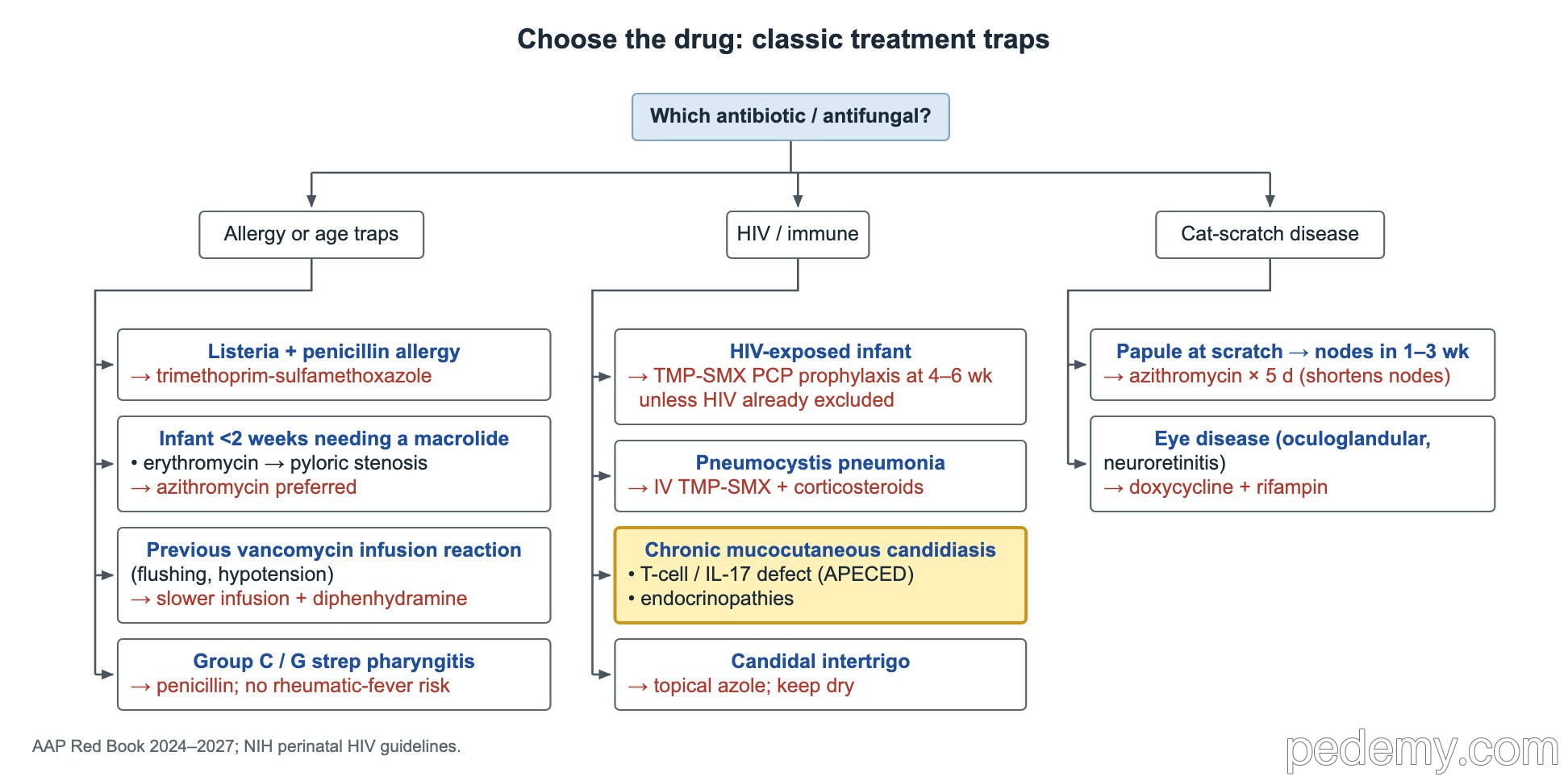
- Chronic mucocutaneous candidiasis: persistent Candida of skin, nails and mouth from a T-cell or IL-17 pathway defect.
- With hypoparathyroidism or adrenal insufficiency, think APECED (APS-1, AIRE gene).
- Treatment: long-term systemic azoles; check calcium and adrenal function over time.
- Solid organ transplant: CMV risk is highest when the donor is CMV-positive and the recipient CMV-negative (D+/R−).
Common questions
Why can't an HIV antibody test diagnose HIV in a baby?
Maternal IgG antibodies cross the placenta and can stay positive up to 18–24 months. Infants are diagnosed with HIV DNA or RNA PCR.
Can a mother with HIV breastfeed in the US?
Formula or donor milk is the only option with no risk. A parent on ART with sustained viral suppression below 50 copies/mL who wants to breastfeed should get supported shared decision-making and close infant follow-up.
When does PCP prophylaxis start in an HIV-exposed infant?
TMP-SMX starts at 4–6 weeks of age unless HIV infection has already been presumptively excluded with negative nucleic acid tests.
Study this topic
Sources
- NIH: Recommendations for the use of antiretroviral drugs during pregnancy and interventions to reduce perinatal HIV transmission
- AAP 2024: Infant feeding for persons living with and at risk for HIV in the United States (Pediatrics)
- CDC 2021: Sexually transmitted infections treatment guidelines (MMWR)
- IDSA 2013: Vaccination of the immunocompromised host (Clin Infect Dis)
Written for Pedemy in our own words from the sources above; checked November 2026. For education only, not medical advice; check doses and local protocols before treating a patient. Pedemy is independent and not affiliated with or endorsed by the organizations cited.