

Main decision tree
Tuberculosis: infection or disease?
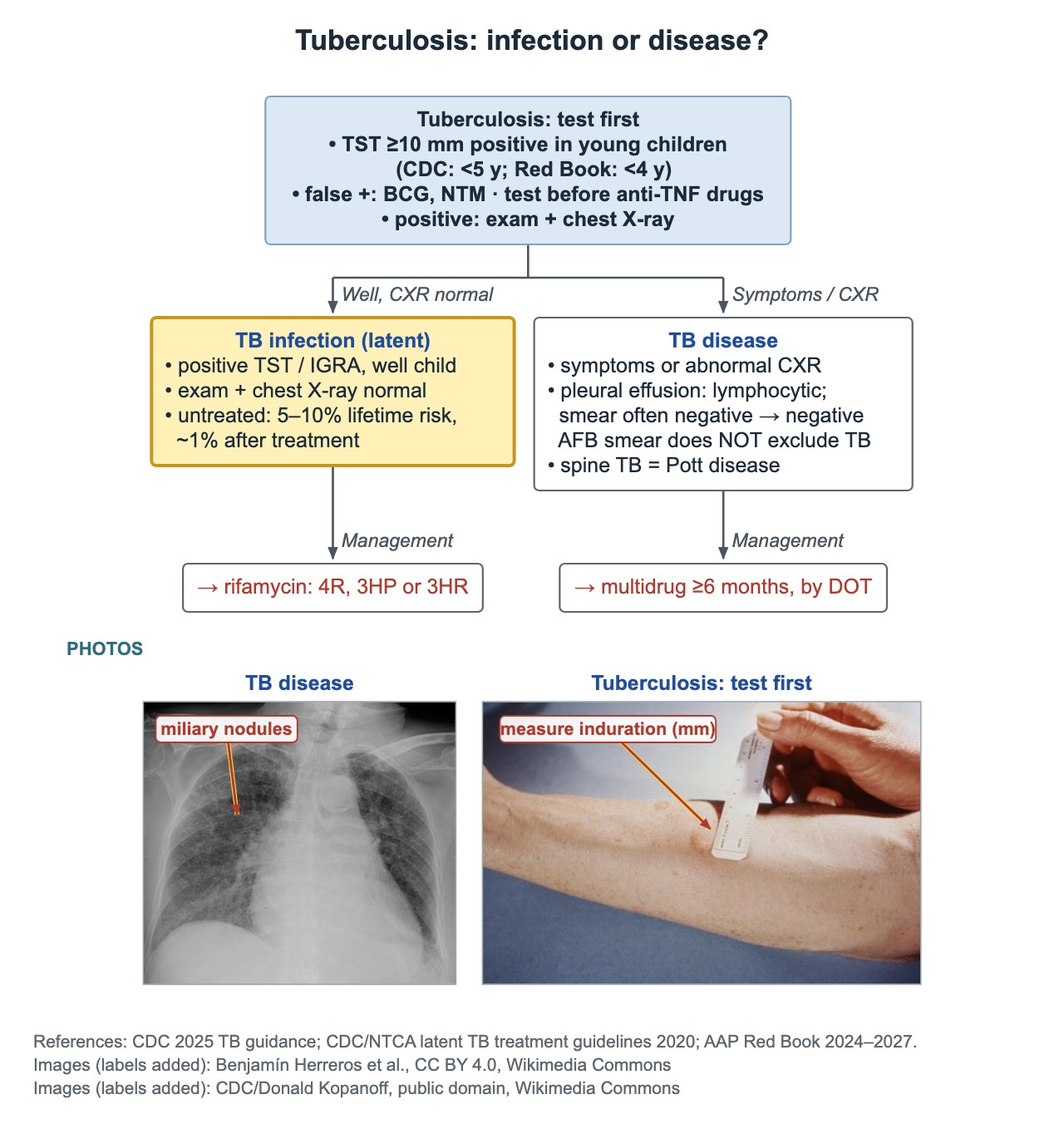
Key points
- TST positive at ≥5 mm (contact, immunosuppressed, abnormal X-ray), ≥10 mm (young child, high-burden country, other risk) or ≥15 mm (older child with no risk factor).
- BCG does not change how a TST is read; an IGRA is preferred in BCG-vaccinated children 2 years and older.
- Any positive test → exam and chest X-ray to separate TB infection from TB disease.
- TB infection: rifamycin regimens are preferred: 4 months rifampin (4R), 12 weekly doses INH-rifapentine (3HP) or 3 months INH-rifampin (3HR).
- Untreated TB infection carries a 5–10% lifetime risk of disease; about 1% after treatment.
- TB disease: multidrug therapy for at least 6 months, given by directly observed therapy.
- Primary pulmonary TB in children: hilar or mediastinal lymph nodes on chest X-ray; a negative AFB smear does not exclude TB.
TB infection or TB disease?
A positive TST or IGRA shows only that the child has met Mycobacterium tuberculosis. The next step is always a history, exam and chest X-ray.
- Well child, normal exam and chest X-ray: TB infection (latent). Treat to prevent disease.
- Symptoms (cough, fever, weight loss, night sweats) or an abnormal chest X-ray: TB disease. Collect specimens and start multidrug therapy.
- Infants and children under 5 years progress to disease faster and more often get miliary TB and TB meningitis.
- Test for TB infection before starting anti-TNF drugs such as infliximab, and before other strong immunosuppression.
Reading the TST and choosing an IGRA
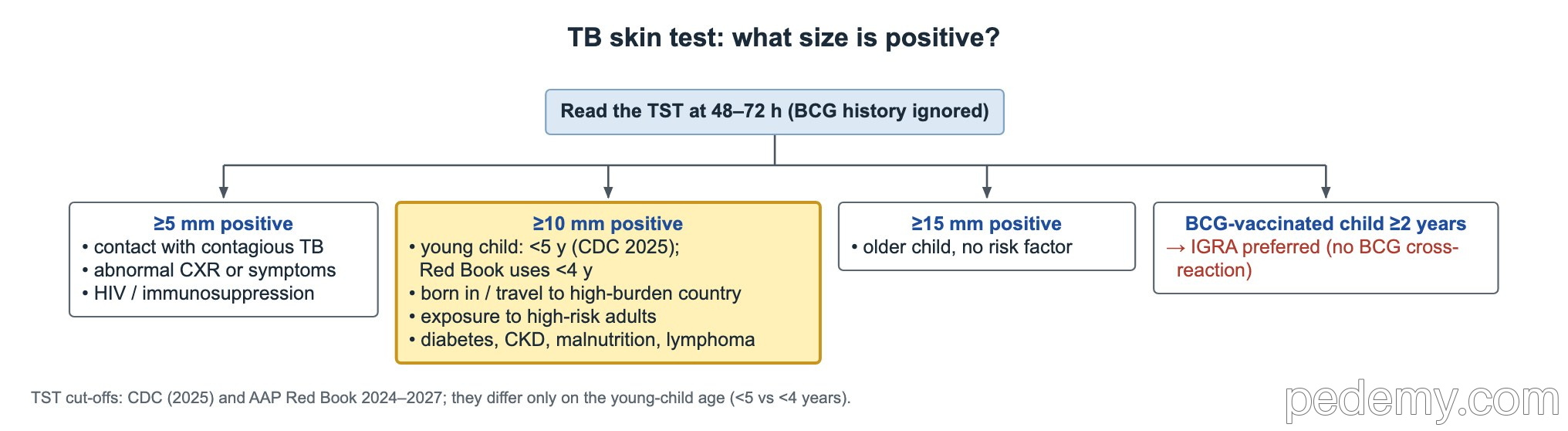
Read the TST at 48–72 hours by measuring induration, not redness. The cut-off depends on the child's risk.
- False-positive TST: prior BCG vaccine and nontuberculous mycobacteria.
- BCG history is ignored when reading the TST.
- IGRA uses antigens absent from BCG and most NTM, so it is preferred in BCG-vaccinated children 2 years and older.
- A positive IGRA in a well child still needs exam and chest X-ray to exclude active TB.
- Malnutrition, HIV, recent infection and very young age can make either test falsely negative.
| Induration | Positive in |
|---|---|
| ≥5 mm | Close contact of contagious TB; abnormal chest X-ray or symptoms; HIV or other immunosuppression |
| ≥10 mm | Young child (under 5 years in CDC guidance; the Red Book uses under 4 years); born in or travel to a high-burden country; exposure to high-risk adults; diabetes, kidney failure, malnutrition, lymphoma |
| ≥15 mm | Older child with no risk factor |
Treating TB infection
- Preferred: 4 months of daily rifampin (4R), any age.
- Preferred: 12 once-weekly doses of isoniazid plus rifapentine (3HP), age 2 years and older.
- Preferred: 3 months of daily isoniazid plus rifampin (3HR).
- Alternative: 6 or 9 months of daily isoniazid; it works but has lower completion and more liver toxicity.
- Rifampin and rifapentine are different drugs and are not interchangeable.
- Treat to cut the 5–10% lifetime risk of TB disease to about 1%.
TB disease in children
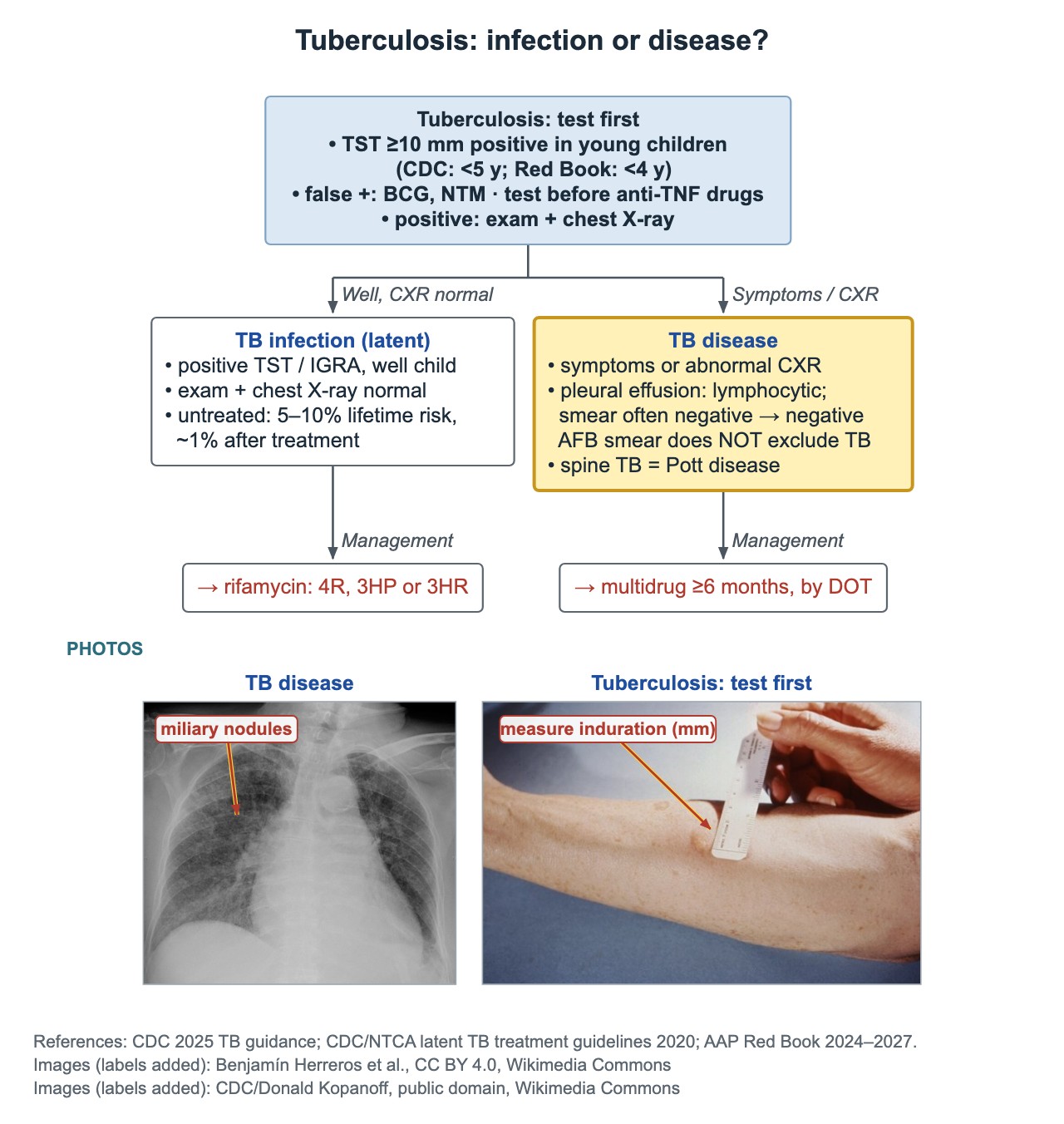
- Primary pulmonary TB: hilar or mediastinal lymphadenopathy with little lung change is the most common chest X-ray finding.
- Children are often paucibacillary: gastric aspirates or sputum are smear-negative in most, so culture and PCR matter and a negative smear never excludes TB.
- Standard regimen: 2 months of isoniazid, rifampin, pyrazinamide and usually ethambutol, then 4 months of isoniazid and rifampin: at least 6 months in total.
- Give treatment by directly observed therapy (DOT).
- TB meningitis and bone or joint TB need longer courses (often 9–12 months); TB meningitis also gets corticosteroids.
- TB of the spine is Pott disease.
- Report every case to the health department, which traces the adult source case.
Drug side effects and isolation
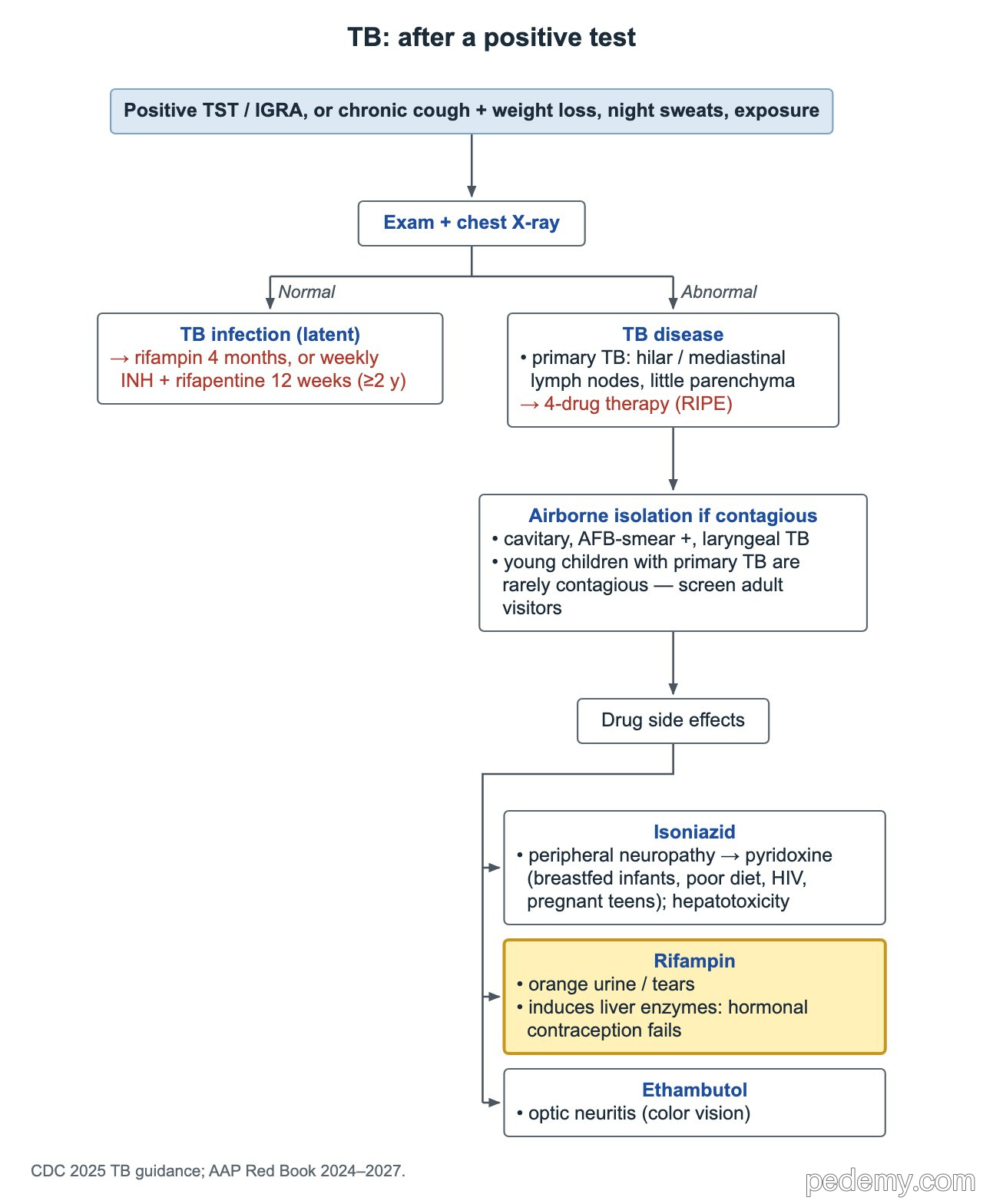
- Airborne precautions (negative-pressure room, N95) for cavitary, AFB-smear-positive or laryngeal TB.
- Stop isolation when the patient is on effective therapy, improving and smear-negative.
- Young children with primary TB are rarely contagious; screen the adults who visit them, who may be the source.
| Drug | Key side effect | Action |
|---|---|---|
| Isoniazid | Peripheral neuropathy (pyridoxine deficiency); hepatitis | Give pyridoxine to exclusively breastfed infants, children with poor diet or HIV, pregnant teens and those with symptoms |
| Rifampin | Orange urine, tears and sweat; induces liver enzymes | Hormonal contraception fails: counsel on another method |
| Pyrazinamide | Hepatitis, high uric acid | Monitor symptoms and liver tests if needed |
| Ethambutol | Optic neuritis (red-green color vision) | Check vision and color vision |
Pleural TB and TB lymphadenitis
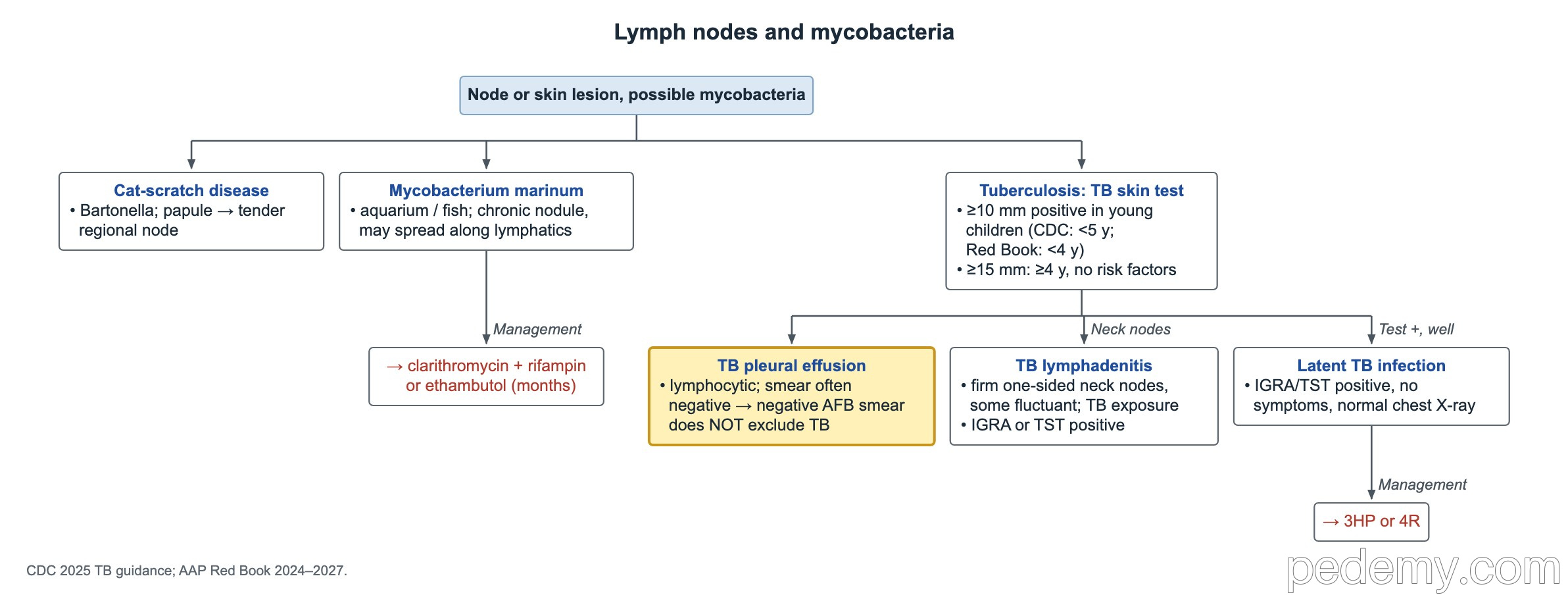
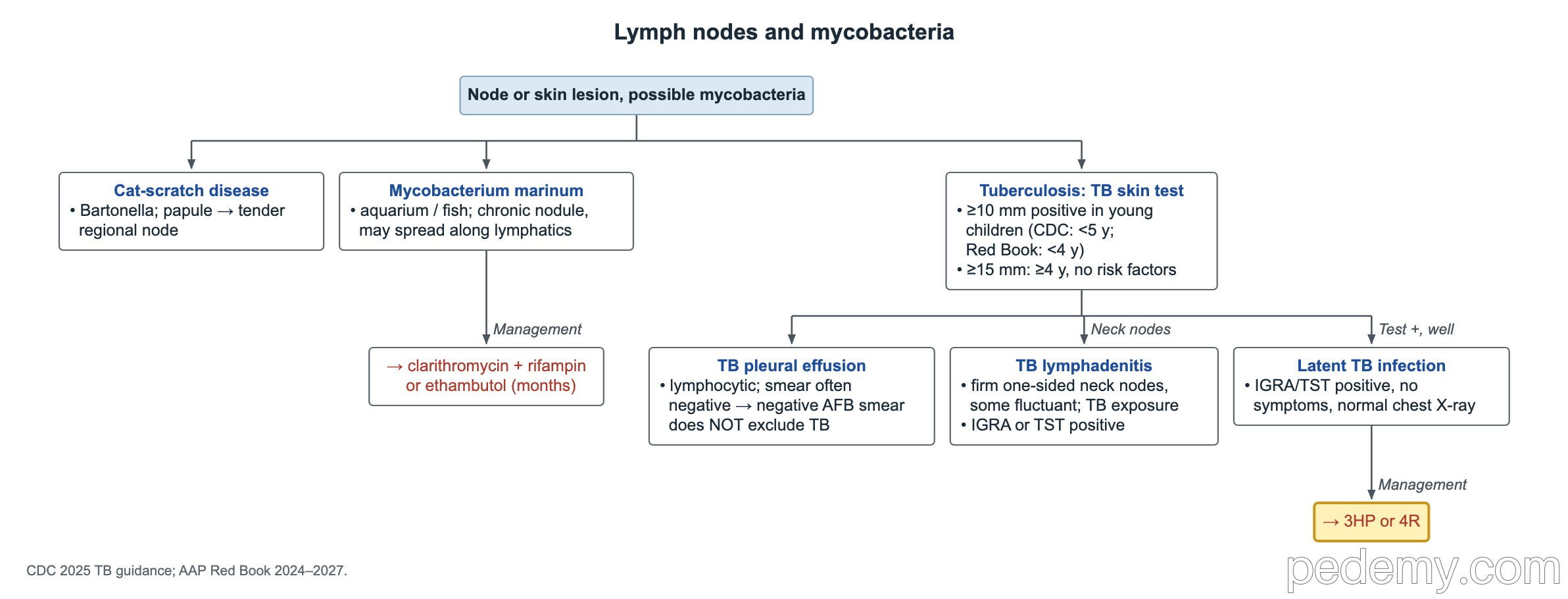
- Adolescent with a positive IGRA and a pleural effusion has TB disease, not latent infection.
- Pleural fluid is lymphocytic and the AFB smear is usually negative; pleural biopsy or culture improves yield.
- A child on a latent TB regimen who develops a large effusion has TB disease: switch to full multidrug treatment.
- TB lymphadenitis (scrofula): firm, matted, one-sided neck nodes, sometimes fluctuant, in a child with TB exposure or from a high-burden country; TST or IGRA is usually positive.
- Treat TB lymphadenitis with standard multidrug therapy; surgery alone is not enough.
Nontuberculous mycobacteria and cat-scratch disease
- Cat-scratch eye disease (Parinaud oculoglandular syndrome or neuroretinitis) is treated with doxycycline plus rifampin.
- NTM can cause a small TST reaction but usually a negative IGRA.
| Infection | Clue | Treatment |
|---|---|---|
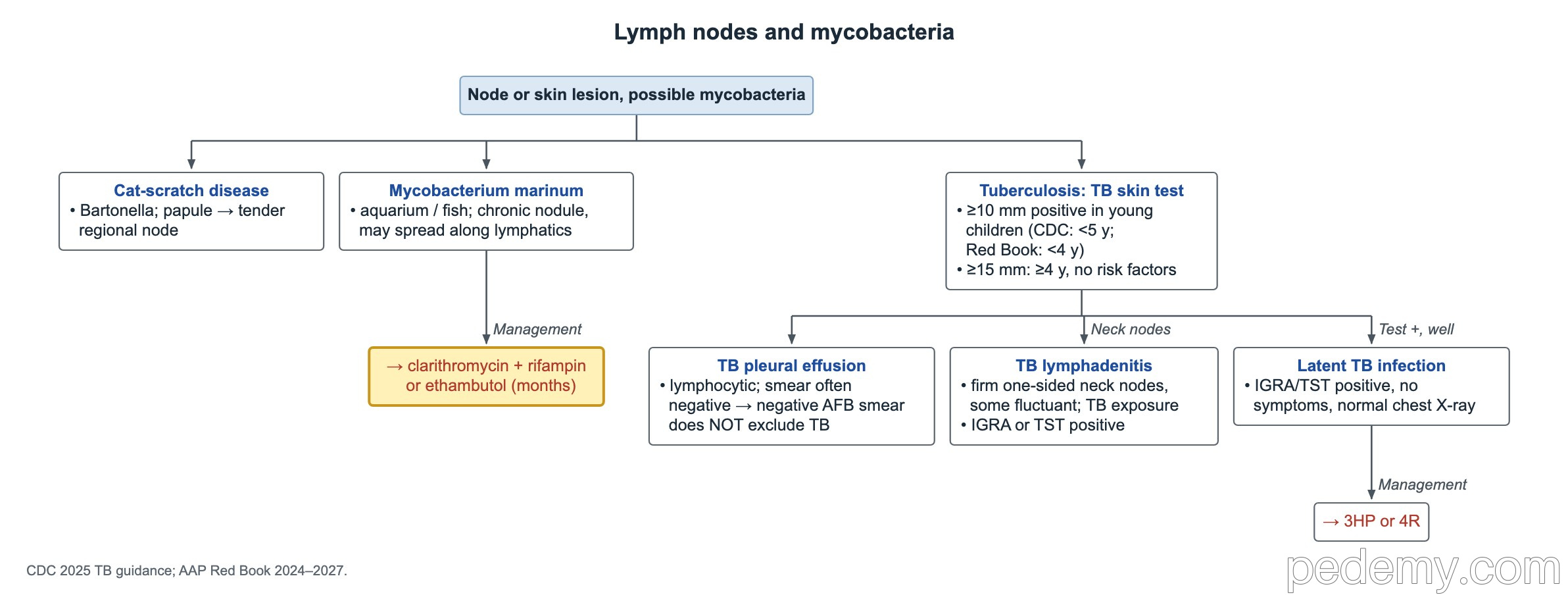
| Mycobacterium marinum | Aquarium or fish exposure; chronic nodule on the hand that may spread along lymphatics | Clarithromycin plus rifampin or ethambutol for months |
| M. fortuitum and other rapid growers | Chronic draining nodules after surgery, trauma or a nail-salon footbath | Drainage plus antibiotics guided by susceptibility |
| NTM lymphadenitis (often M. avium complex) | Toddler with one firm, nontender neck node and violet overlying skin; well; normal chest X-ray | Complete surgical excision |
| Cat-scratch disease (Bartonella henselae) | Kitten scratch, papule, then tender regional node 1–3 weeks later | Often self-limited; azithromycin for 5 days speeds node shrinkage |
Common questions
What TST size is positive in a child?
5 mm for contacts, immunosuppressed children or an abnormal X-ray; 10 mm for young children and other risk groups; 15 mm for older children with no risk factors.
What is the preferred treatment for latent TB in children?
A short rifamycin regimen: 4 months of daily rifampin, 12 weekly doses of isoniazid plus rifapentine from age 2 years, or 3 months of isoniazid plus rifampin.
Does BCG cause a positive TB test?
BCG can cause a false-positive TST but not a positive IGRA. BCG history is ignored when reading the TST, and an IGRA is preferred in BCG-vaccinated children 2 years and older.
Study this topic
Sources
- NTCA/CDC 2020: Guidelines for the treatment of latent tuberculosis infection (MMWR)
- ATS/CDC/IDSA 2016: Treatment of drug-susceptible tuberculosis (Clin Infect Dis)
- ATS/IDSA/CDC 2017: Diagnosis of tuberculosis in adults and children (Clin Infect Dis)
- AAP Red Book 2024–2027: Report of the Committee on Infectious Diseases
Written for Pedemy in our own words from the sources above; checked November 2026. For education only, not medical advice; check doses and local protocols before treating a patient. Pedemy is independent and not affiliated with or endorsed by the organizations cited.