

Main decision tree
Colds, strep carriers and atypical pneumonia
Key points
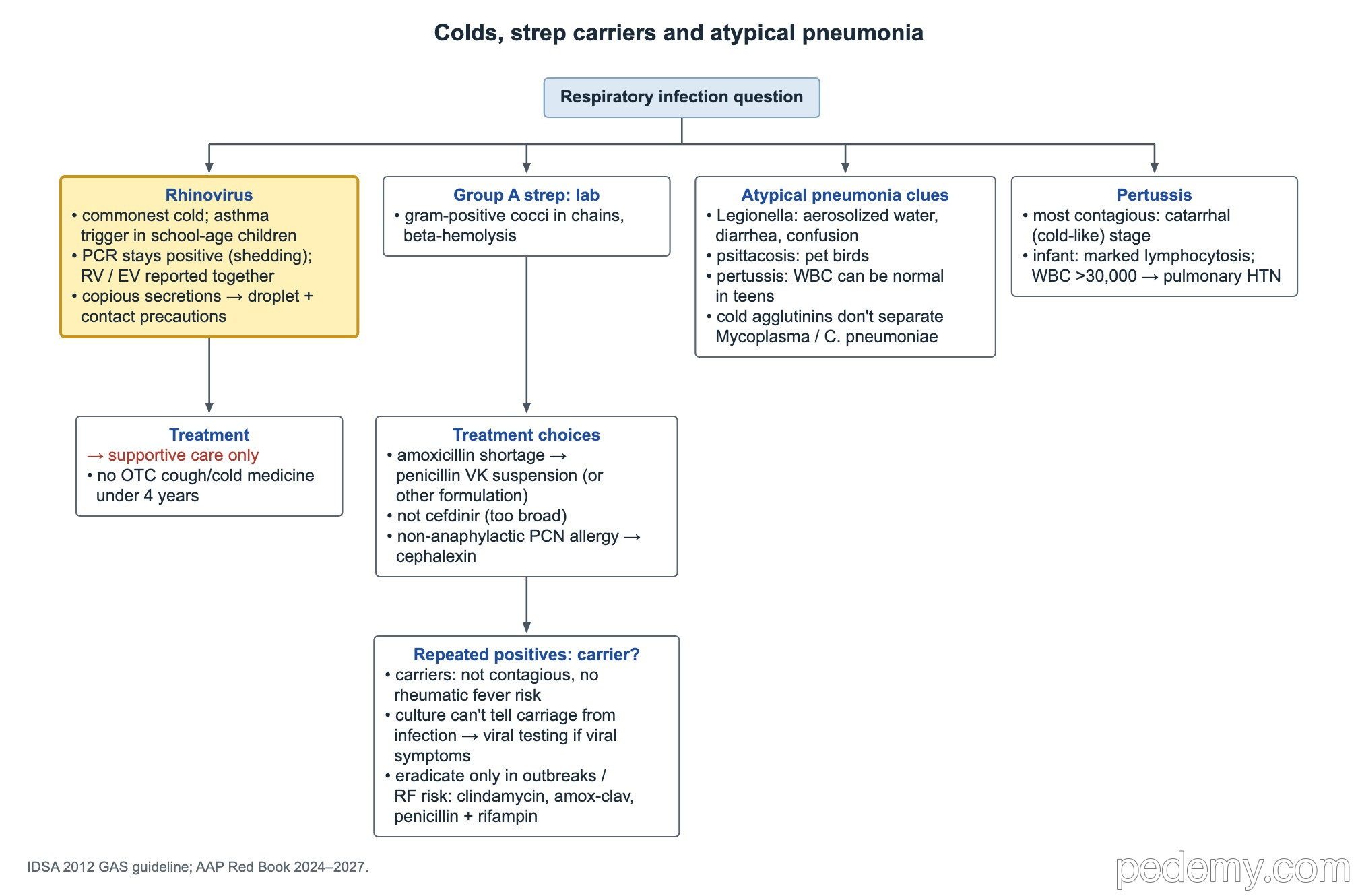
- Rhinovirus is the commonest cause of colds and of virus-triggered asthma flares; its PCR can stay positive for weeks.
- Strep throat: amoxicillin or penicillin V; cephalexin for a non-anaphylactic penicillin allergy; avoid broad cefdinir.
- A positive GAS test cannot separate infection from carriage; carriers do not spread GAS or get rheumatic fever.
- Influenza in a high-risk or hospitalized child: start oseltamivir at once, whatever the number of days ill.
- Avoid inhaled zanamivir in asthma or chronic lung disease: it can cause bronchospasm.
- Mono: no sport for the first 21 days; contact sports wait at least 4 weeks; steroids only for airway threat.
- Pertussis is most contagious in the catarrhal stage; WBC over 30,000 in an infant warns of pulmonary hypertension.
Common cold and rhinovirus
Rhinovirus is the single commonest cause of the common cold. In school-age children with asthma it is also the commonest viral trigger of a wheezing flare.
A well toddler with a week of runny nose and mild cough needs supportive care only: fluids, saline and nasal suction, and honey for cough after age 1 year. Do not use over-the-counter cough and cold medicines under 4 years.
- Multiplex PCR reports rhinovirus and enterovirus as one result, because their genomes are too similar to separate reliably.
- Rhinovirus RNA can persist for weeks: a positive preoperative PCR in a child who had a cold 3 weeks ago does not prove a new infection.
- Inpatient isolation: droplet precautions; add contact precautions when there are copious moist secretions and close contact is likely, as in an infant with bronchiolitis.
Strep throat: choosing the drug
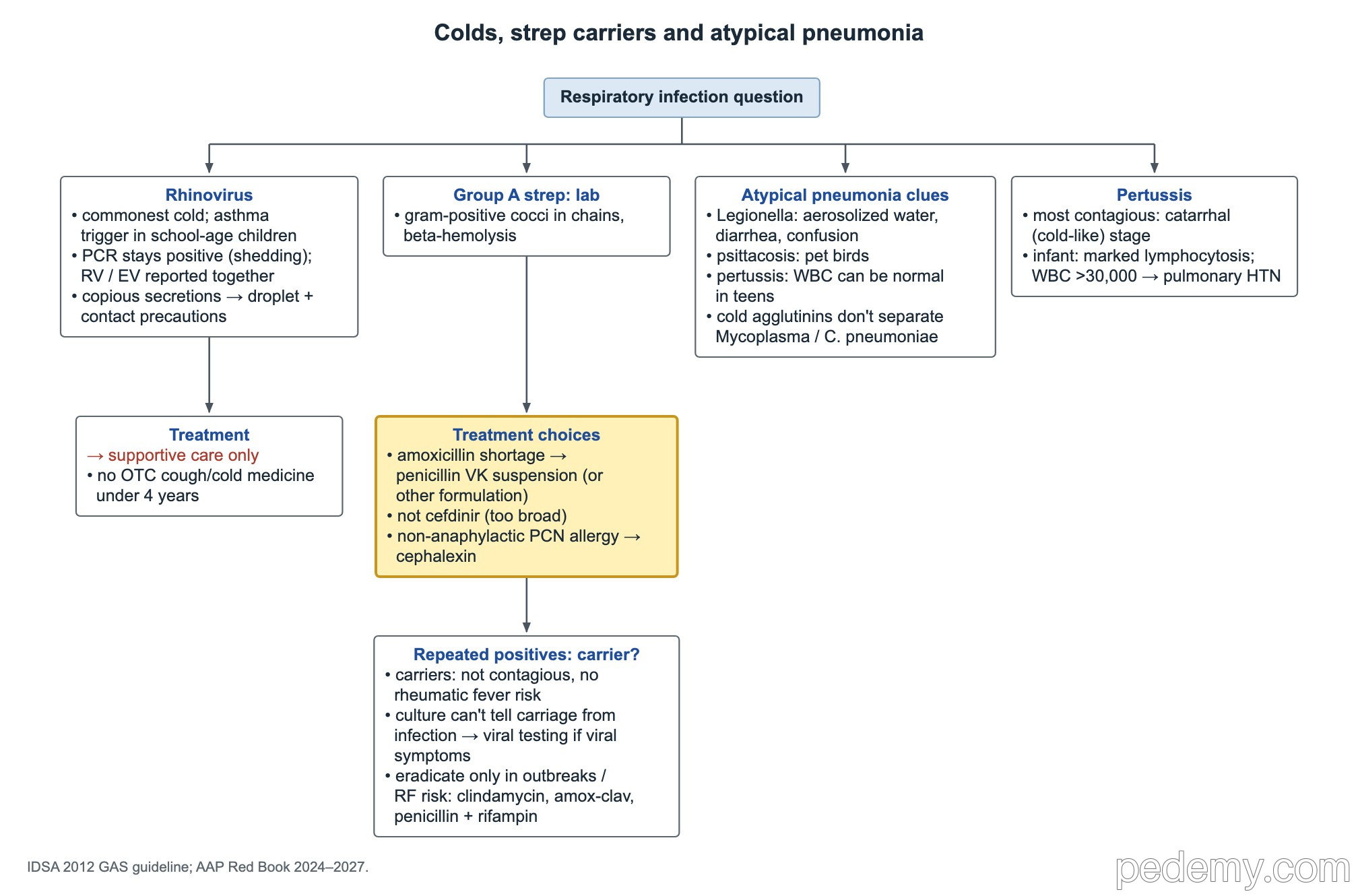
Group A Streptococcus (S. pyogenes) is a gram-positive coccus in chains that is beta-hemolytic on blood agar. Amoxicillin or penicillin remains the drug of choice, because GAS stays susceptible to penicillin.
- Amoxicillin suspension unavailable: first try another form of the same drug (chewable tablet, capsule or tablet), or use penicillin V oral suspension.
- Do not switch routinely to cefdinir: it is broader than needed when narrow options work.
- Mild, delayed (non-anaphylactic) penicillin rash: a narrow first-generation cephalosporin such as cephalexin.
- Immediate or anaphylactic penicillin allergy: clindamycin, azithromycin or clarithromycin.
- Group C or G streptococcal pharyngitis: also treated with penicillin or amoxicillin; it does not cause rheumatic fever.
Strep carriers and repeated positive tests
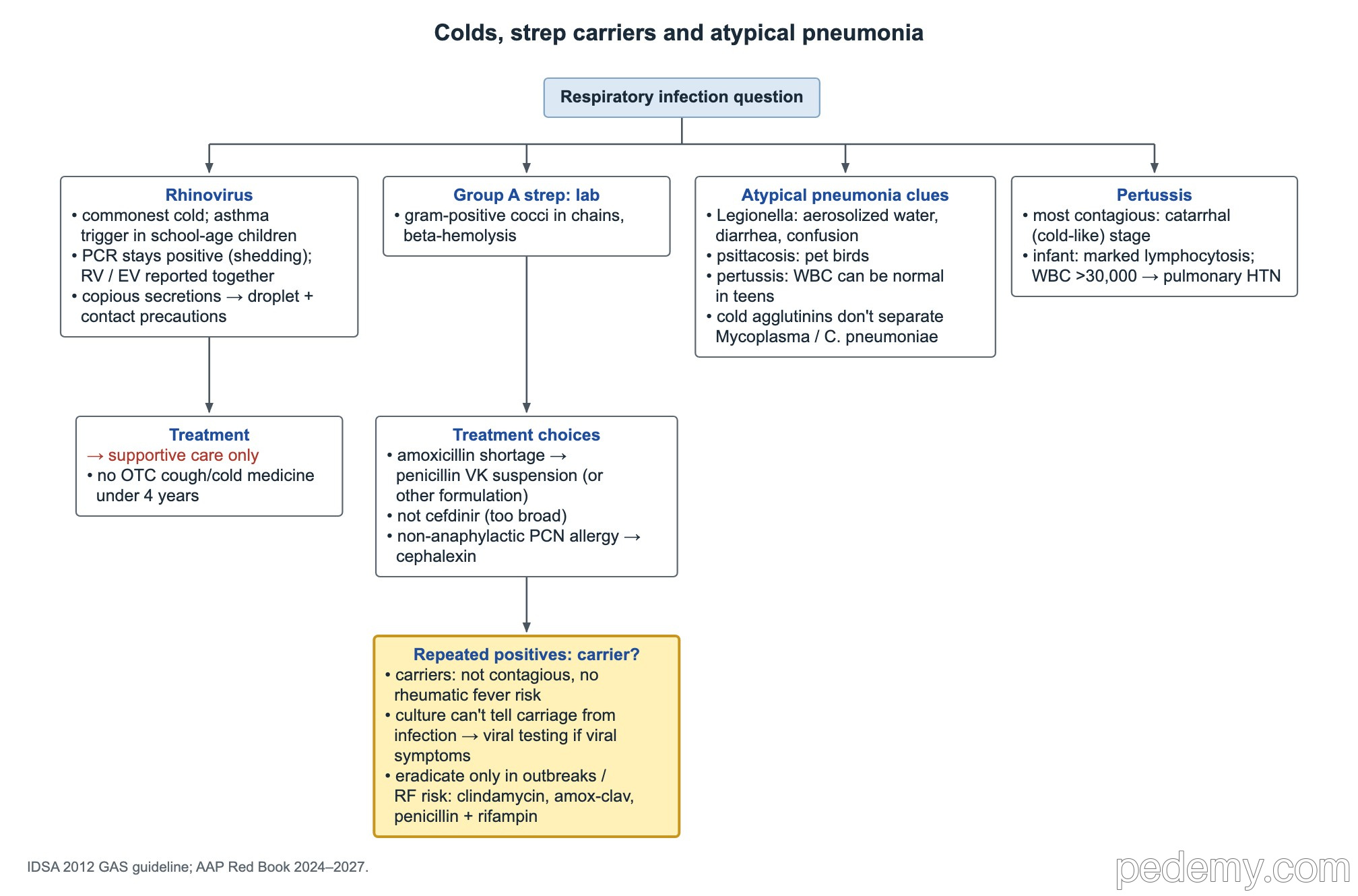
A throat culture or rapid test cannot tell acute GAS infection from carriage. A child who keeps testing positive while having cough, congestion and other viral symptoms is probably a carrier with a viral infection: test for respiratory viruses rather than giving more antibiotics.
- True carriers are not contagious and are not at risk of rheumatic fever.
- A well child with persistent carriage is generally not treated.
- Consider eradication only for outbreaks of rheumatic fever or poststreptococcal glomerulonephritis, outbreaks in closed communities, a family history of rheumatic fever, or repeated ping-pong spread in a family.
- Eradication regimens: clindamycin, amoxicillin-clavulanate, or penicillin plus rifampin.
Influenza and COVID-19
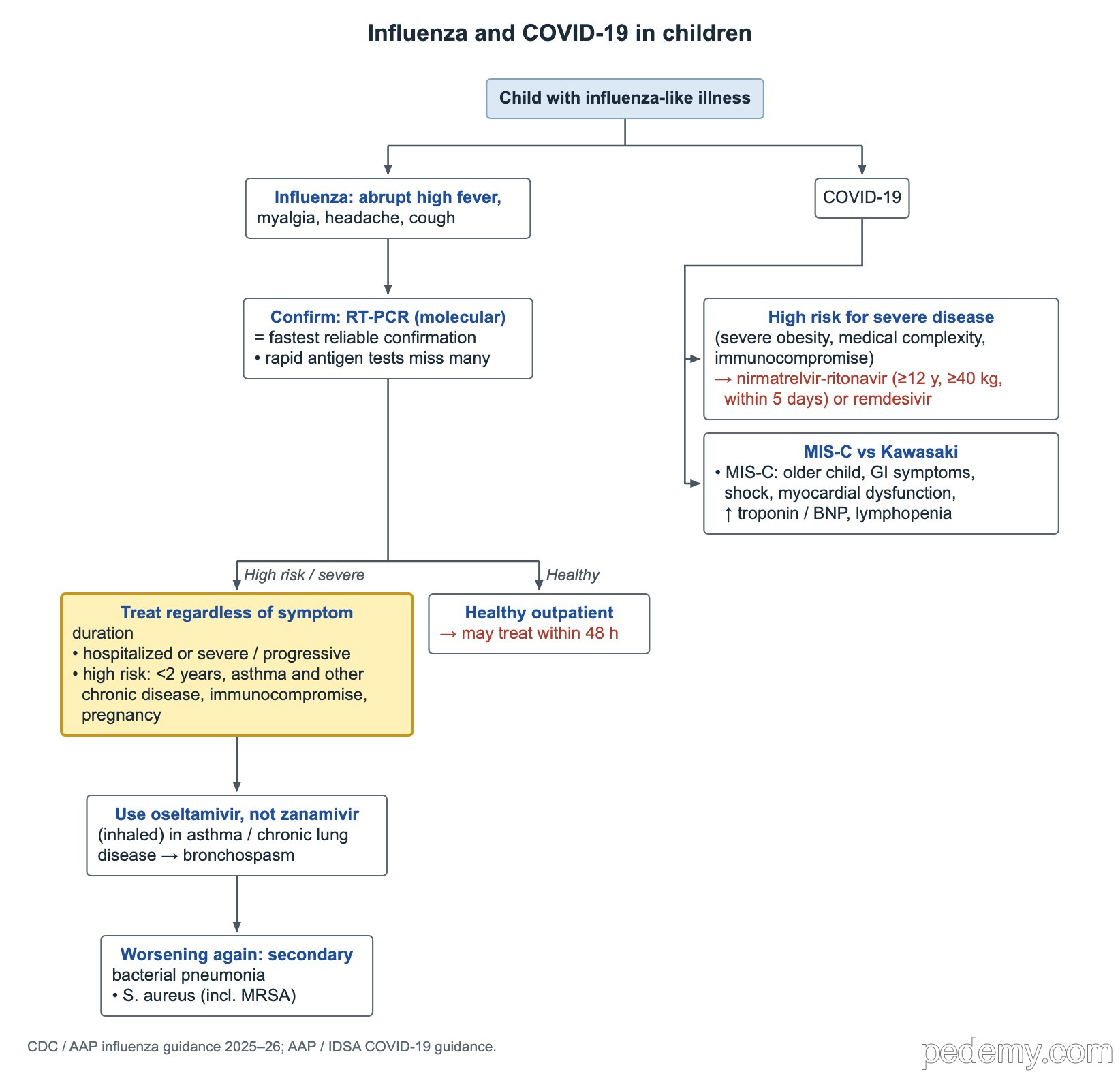
Influenza starts suddenly with high fever, headache, myalgia, red eyes and dry cough. Molecular testing (RT-PCR) is the fastest reliable confirmation; rapid antigen tests miss many cases.
Start antivirals as soon as possible, regardless of symptom duration or vaccine status, in children who are hospitalized, severely ill or getting worse, and in children at high risk: under 2 years, asthma or other chronic disease, immunocompromise, or pregnancy. Treatment can also be offered to healthy outpatients; it helps most within 48 hours.
- Oseltamivir is the usual choice. Avoid inhaled zanamivir in asthma or chronic lung disease because it can cause bronchospasm.
- Fever that returns after initial improvement suggests secondary bacterial pneumonia, often S. aureus including MRSA.
- COVID-19 in a high-risk adolescent (for example severe obesity): nirmatrelvir-ritonavir if 12 years or older and 40 kg or more, within 5 days of symptoms; remdesivir is the alternative.
- MIS-C appears 2–6 weeks after SARS-CoV-2 infection: fever, GI symptoms, rash, swollen hands and feet, shock and myocardial dysfunction with high troponin and BNP and lymphopenia. Kawasaki disease is the main look-alike; MIS-C children are usually older and sicker.
Infectious mononucleosis
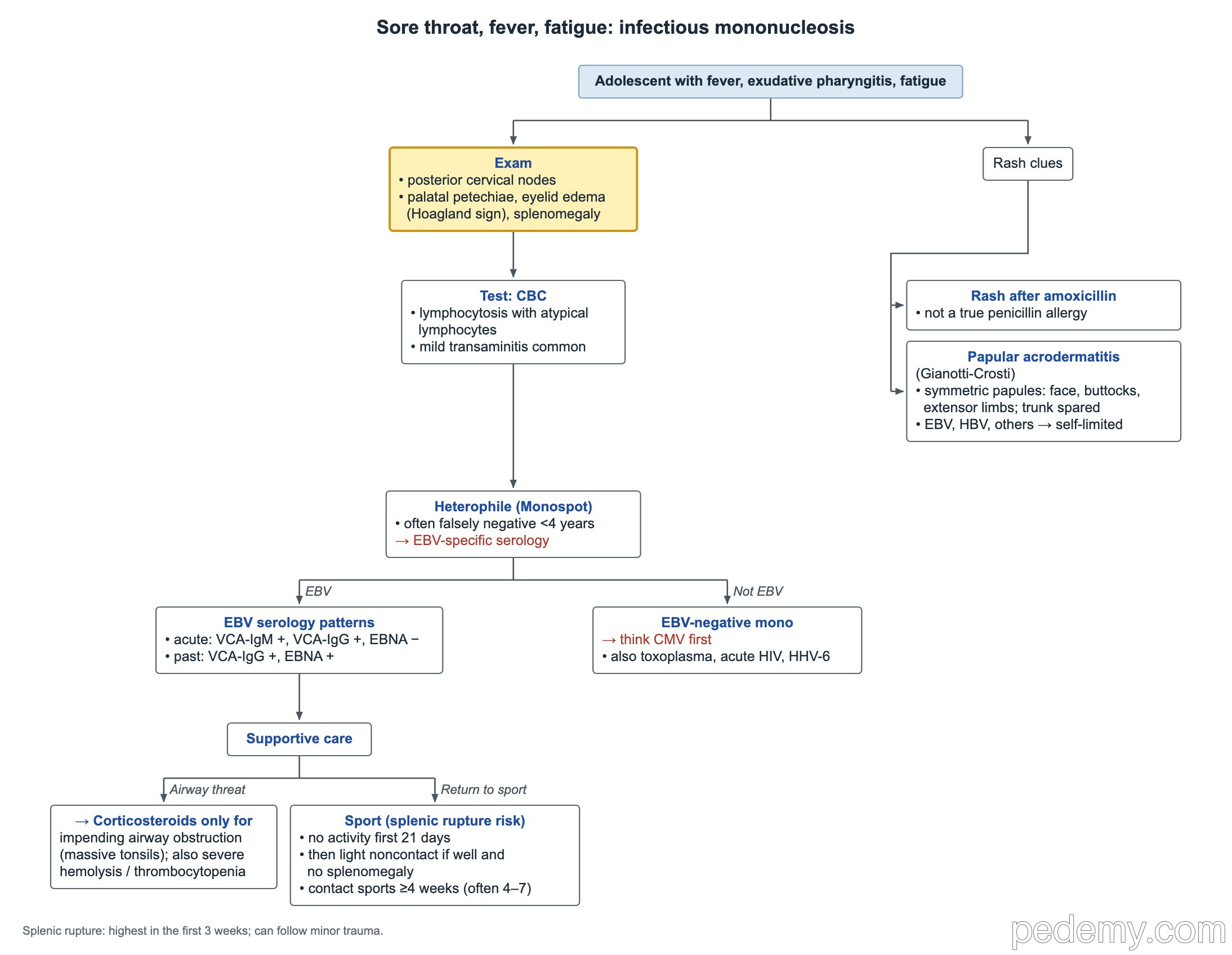
Think of Epstein–Barr virus in a teenager with fever, exudative pharyngitis, posterior cervical nodes, palatal petechiae, splenomegaly and eyelid edema (Hoagland sign). The blood smear shows lymphocytosis with atypical lymphocytes.
- The heterophile (Monospot) test is often falsely negative under 4 years; use EBV-specific serology.
- Acute EBV: VCA-IgM positive, VCA-IgG positive, EBNA negative. Past infection: VCA-IgG and EBNA positive.
- Mono-like illness with negative heterophile and only past EBV: think cytomegalovirus first; also toxoplasma, acute HIV and HHV-6.
- Amoxicillin during mono often causes an itchy morbilliform rash; this is not a true penicillin allergy.
- Corticosteroids only for impending airway obstruction from massive tonsils (or severe hemolysis or thrombocytopenia).
- Sport: no activity for the first 21 days; then light noncontact activity if well with no splenomegaly; contact sports at 4 weeks or later. Clinical recovery decides, not ultrasound or serology.
Atypical pneumonia and pertussis
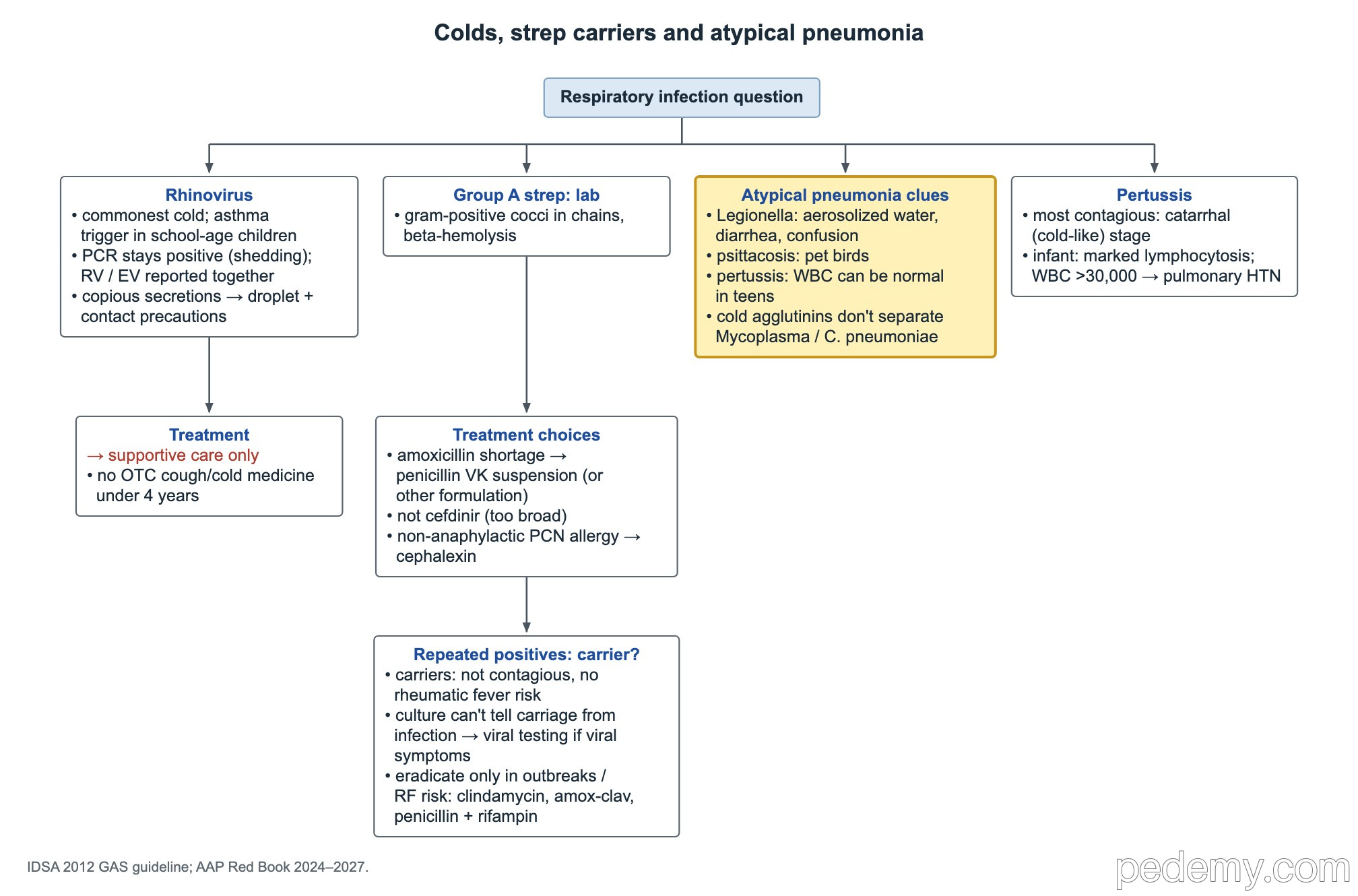
Pertussis is most contagious in the catarrhal (cold-like) stage, before the typical cough starts. Lymphocytosis is common in infants, but its absence does not exclude pertussis in older children.
| Clue | Think of |
|---|---|
| Contaminated water aerosols; pneumonia with diarrhea and confusion | Legionella |
| Close contact with pet birds | Chlamydia psittaci (psittacosis) |
| Positive or negative cold agglutinins | Cannot separate Mycoplasma from C. pneumoniae |
| Teen with paroxysmal cough and a normal WBC | Pertussis is still possible |
| Young infant with pertussis and marked lymphocytosis | WBC over 30,000 warns of pulmonary hypertension |
Other classic respiratory and ENT clues
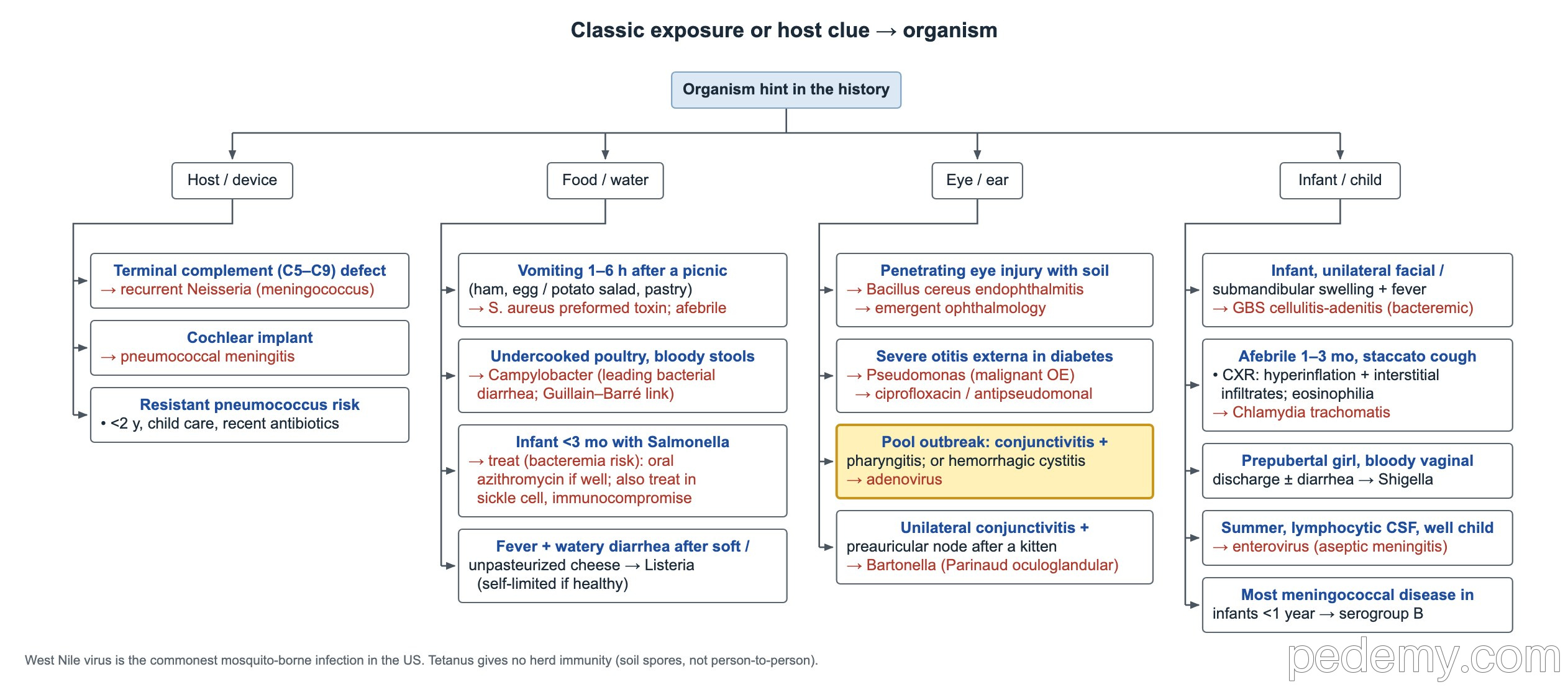
- Adenovirus: pharyngitis with conjunctivitis (pool outbreaks), or fever with hemorrhagic cystitis and gross hematuria.
- Drug-resistant S. pneumoniae: age under 2 years, child-care attendance and recent antibiotics.
- Severe otitis externa with granulation tissue in a teen with diabetes: Pseudomonas (malignant otitis externa); start IV antipseudomonal therapy such as cefepime, with oral ciprofloxacin only as step-down.
- Bronchiolitis on high-flow nasal cannula: responders usually improve within about 1 hour; no improvement means escalation to intensive care.
Common questions
Should a child with asthma get oseltamivir after 4 days of flu symptoms?
Yes. Children at high risk of complications, including those with asthma, should start oseltamivir as soon as possible regardless of how many days they have been ill.
What antibiotic is used for strep throat with a penicillin allergy?
For a mild, delayed rash, a first-generation cephalosporin such as cephalexin. For immediate or anaphylactic reactions, clindamycin, azithromycin or clarithromycin.
When can a teen return to sports after mono?
No activity for the first 21 days. Light noncontact activity can start after that if the teen is well, and contact sports wait at least 4 weeks from onset.
Study this topic
Sources
- IDSA 2012: Diagnosis and management of group A streptococcal pharyngitis (Clin Infect Dis)
- AAP 2026: Recommendations for prevention and control of influenza in children, 2026–2027 (Pediatrics)
- AAP 2014: Diagnosis, management and prevention of bronchiolitis (Pediatrics)
Written for Pedemy in our own words from the sources above; checked November 2026. For education only, not medical advice; check doses and local protocols before treating a patient. Pedemy is independent and not affiliated with or endorsed by the organizations cited.