

Main decision tree
Staph and strep: skin infections and toxin syndromes
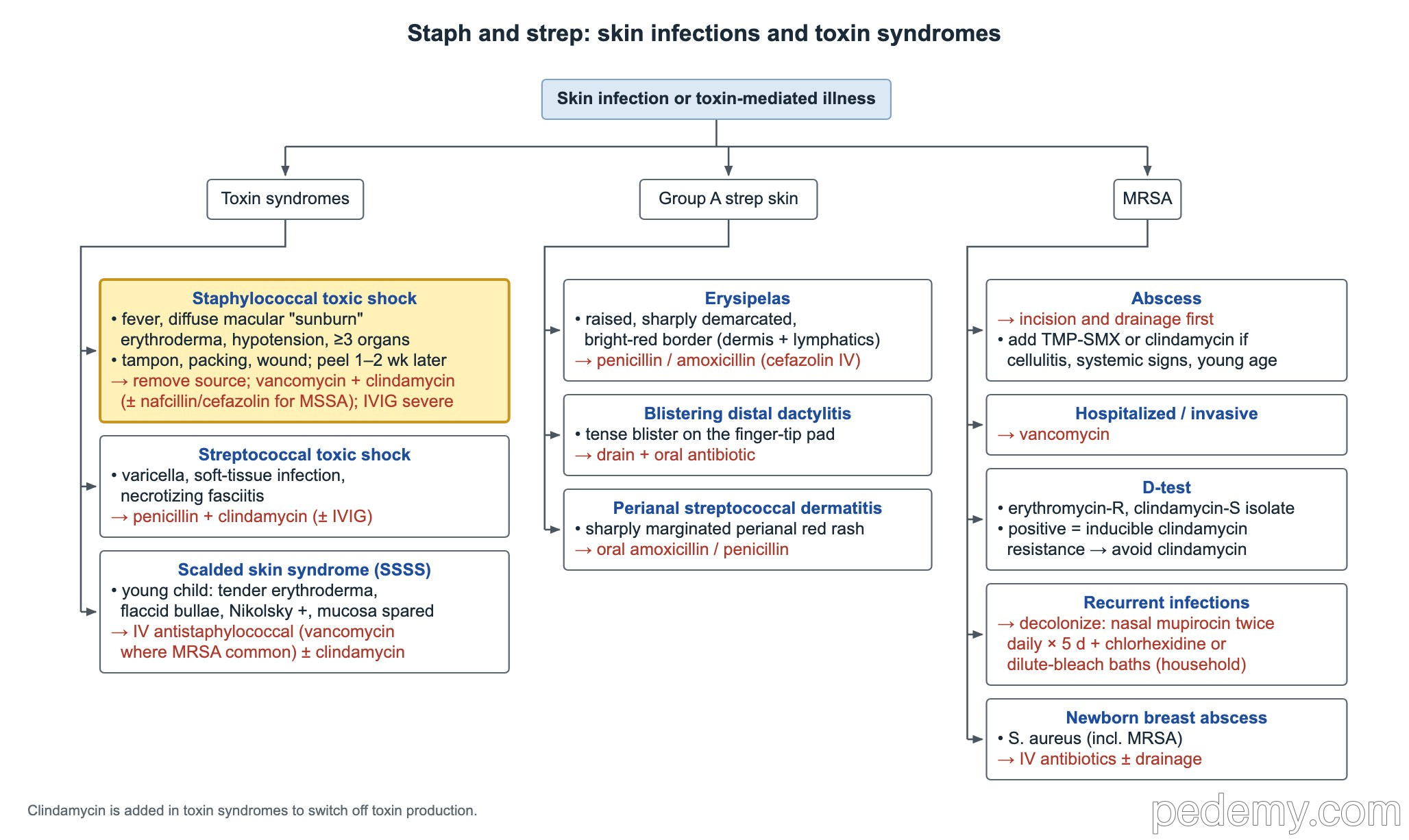
Key points
- Staphylococcal TSS: fever, diffuse sunburn-like erythroderma, hypotension and 3 or more organ systems; palms and soles peel 1–2 weeks later.
- Streptococcal TSS often starts with sudden severe local pain; blood cultures are positive far more often than in staph TSS.
- Treat TSS with source control plus a cell-wall agent and clindamycin; add IVIG for severe refractory cases; no routine steroids.
- MRSA abscess: incision and drainage first; add TMP-SMX or clindamycin for cellulitis, systemic signs or young age.
- Erythromycin-resistant, clindamycin-susceptible isolate: do a D-test; a positive test means avoid clindamycin.
- Recurrent MRSA: nasal mupirocin twice daily for 5 days plus chlorhexidine or dilute-bleach baths for the household.
- GAS skin infection can cause poststreptococcal glomerulonephritis but not rheumatic fever.
Staphylococcal toxic shock syndrome
Think of staphylococcal TSS in a menstruating teen using tampons with fever, hypotension, confusion, red mucosa and a diffuse macular sunburn-like erythroderma. Peeling of the palms and soles follows 1–2 weeks later.
Nonmenstrual TSS follows surgical wounds or nasal packing, burns, the postpartum period or recent influenza. Blood cultures are usually negative.
- Remove the source (tampon, packing) and drain any focus.
- Empiric antibiotics: vancomycin plus clindamycin; switch vancomycin to nafcillin, oxacillin or cefazolin once the isolate is MSSA.
- Clindamycin is added because it stops bacterial toxin production.
- IVIG is an adjunct for severe TSS not improving with fluids and antibiotics.
- Routine corticosteroids are not recommended.
- Mechanism: superantigens bind MHC class II and the T-cell receptor directly, activating huge numbers of T cells at once.
Streptococcal toxic shock syndrome
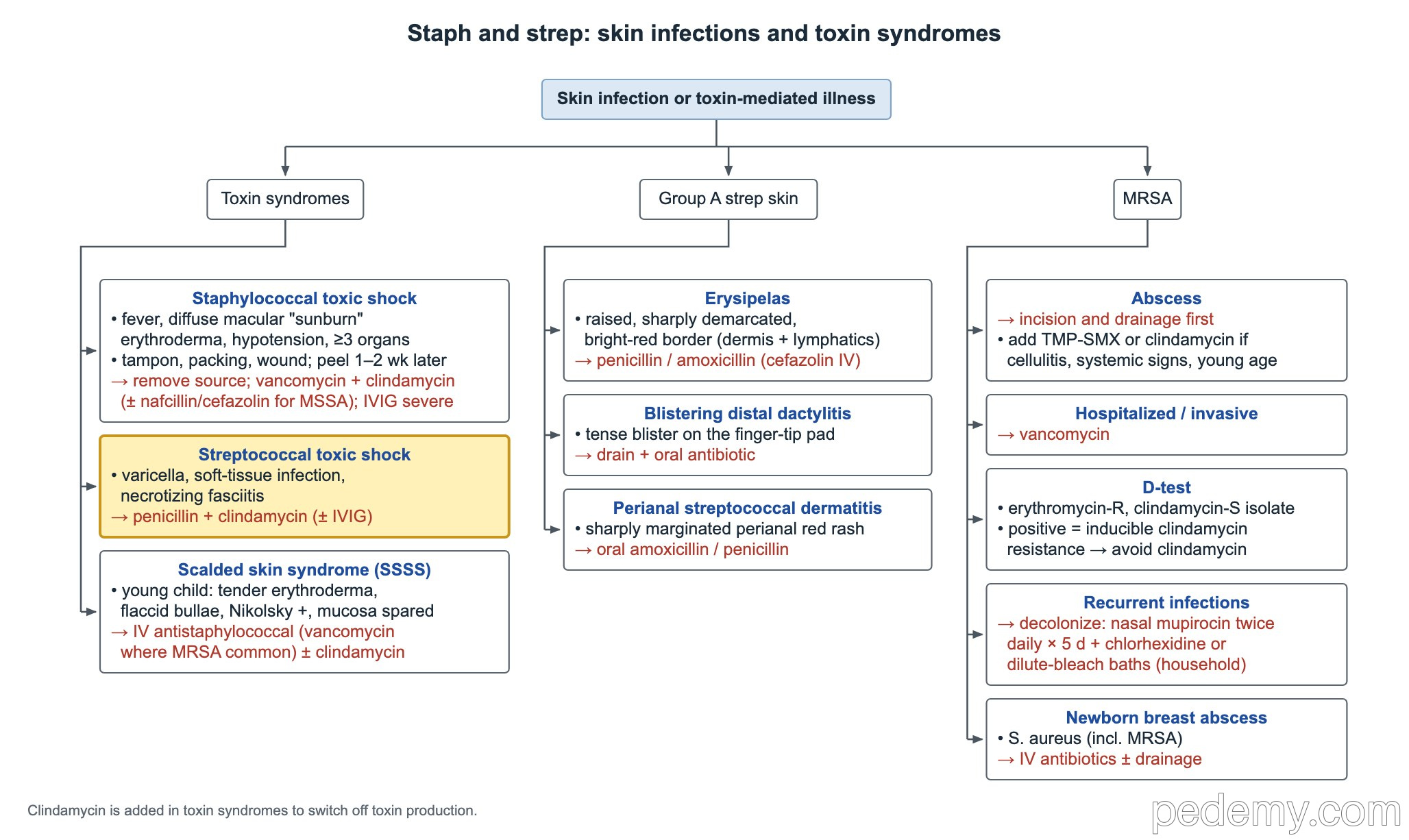
Streptococcal TSS follows varicella, soft-tissue infection or necrotizing fasciitis. The most suggestive first symptom is sudden severe local pain, often before any skin change is visible.
Unlike staphylococcal TSS, blood cultures are often positive.
- Treatment: penicillin (or another beta-lactam) plus clindamycin.
- Urgent surgical debridement when necrotizing fasciitis is suspected.
- IVIG may be added in severe cases.
Staphylococcal scalded skin syndrome
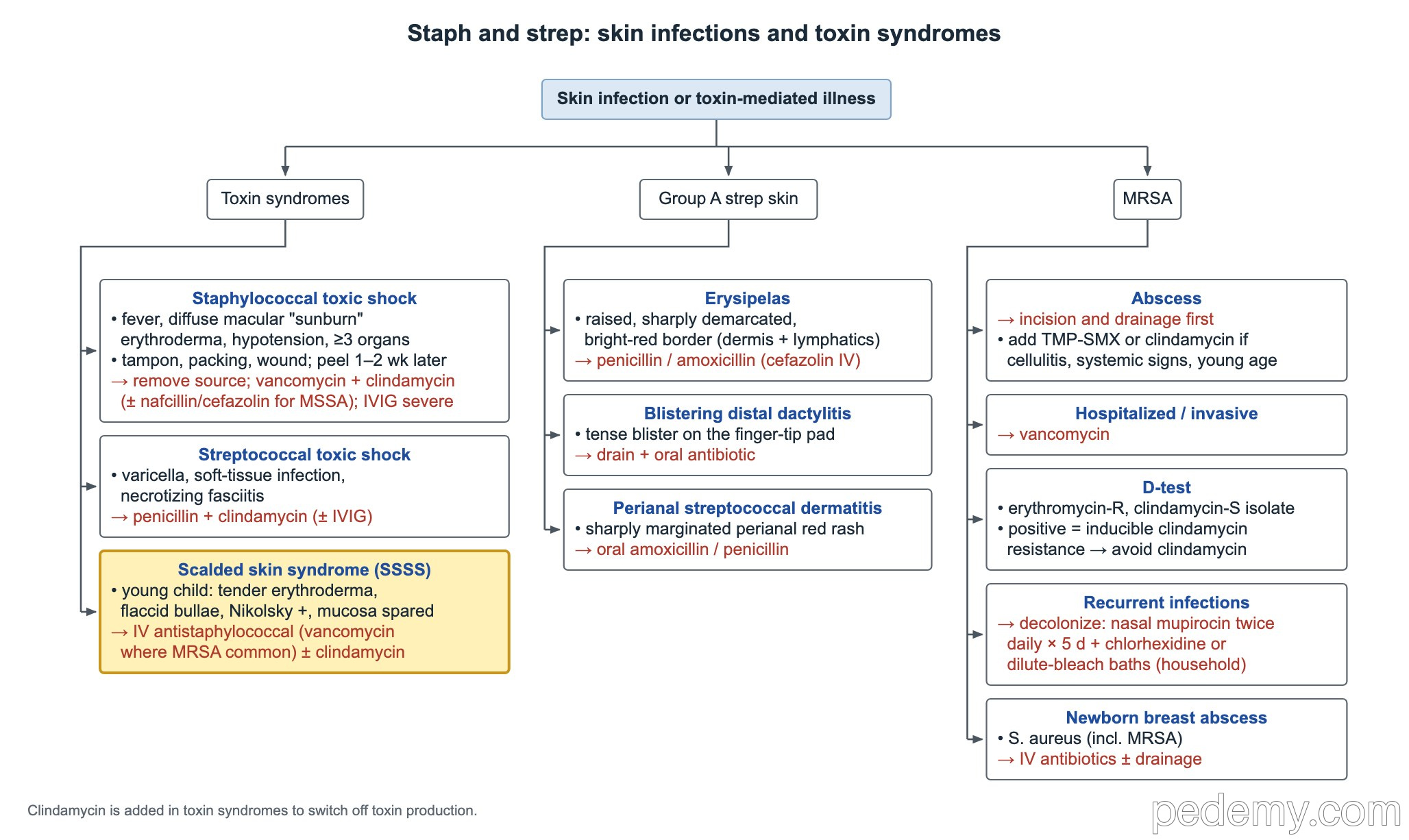
A febrile young child with tender erythroderma, flaccid bullae and a positive Nikolsky sign has SSSS until proved otherwise. The mucosa is spared, which helps separate it from Stevens–Johnson syndrome and TEN.
- Exfoliative toxins split the epidermis high, at the granular layer.
- Treatment: IV antistaphylococcal therapy (vancomycin where MRSA is common), often with clindamycin.
- Supportive care: fluids, pain control and gentle skin care.
Group A strep skin infections
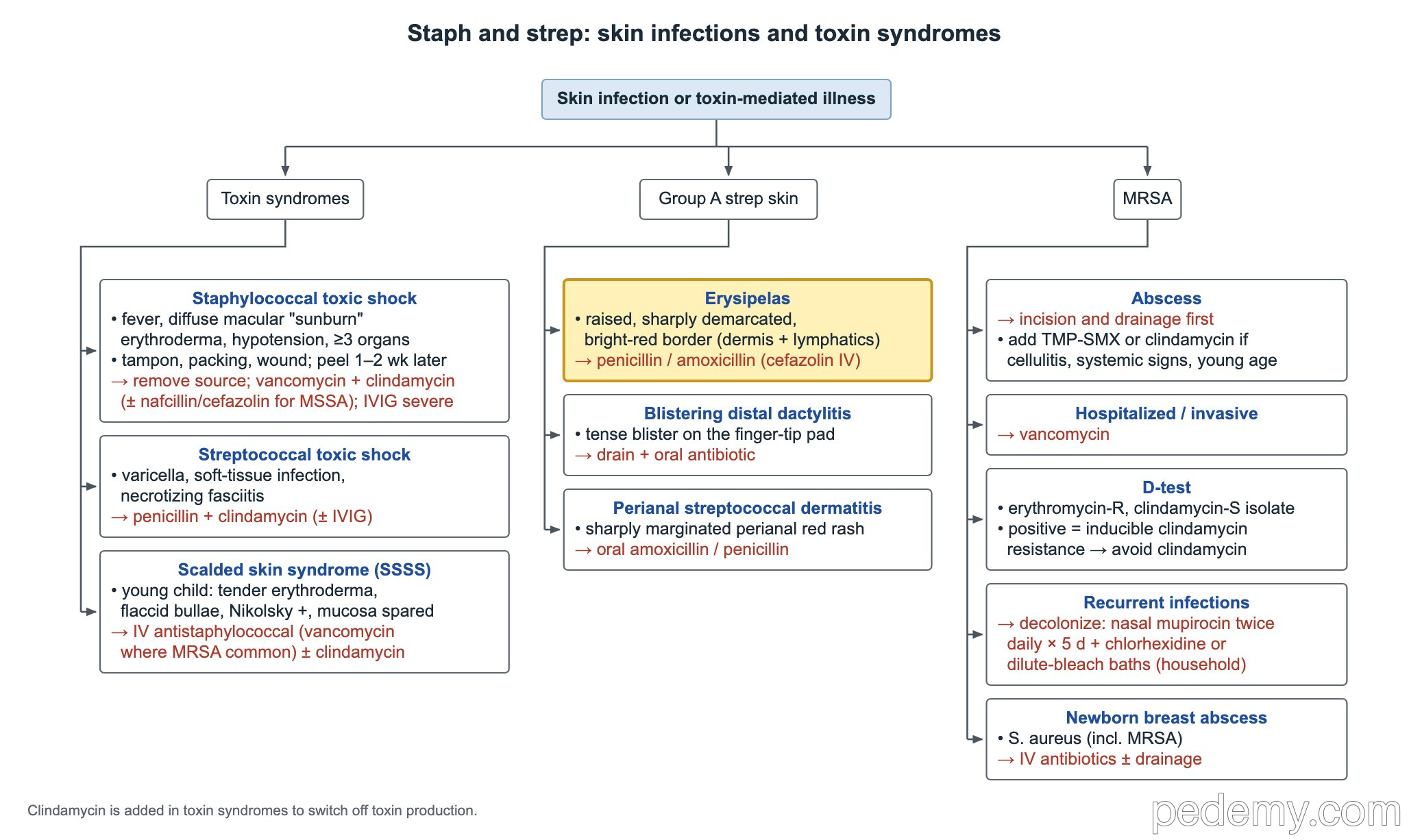
| Infection | Clue | Treatment |
|---|---|---|
| Erysipelas | Raised, bright-red plaque with a sharp border, often on the face or leg, with fever | Penicillin or amoxicillin; cefazolin if IV needed |
| Blistering distal dactylitis | Tense blister on the fingertip pad, often in a child with eczema | Drain plus an oral antibiotic |
| Perianal streptococcal dermatitis | Sharply marginated, bright-red perianal rash; painful or blood-streaked stools | Oral amoxicillin or penicillin |
| GAS vulvovaginitis | Prepubertal girl with dysuria and a sharply bordered red vulva | Oral amoxicillin or penicillin |
After a strep skin infection: GN, not rheumatic fever
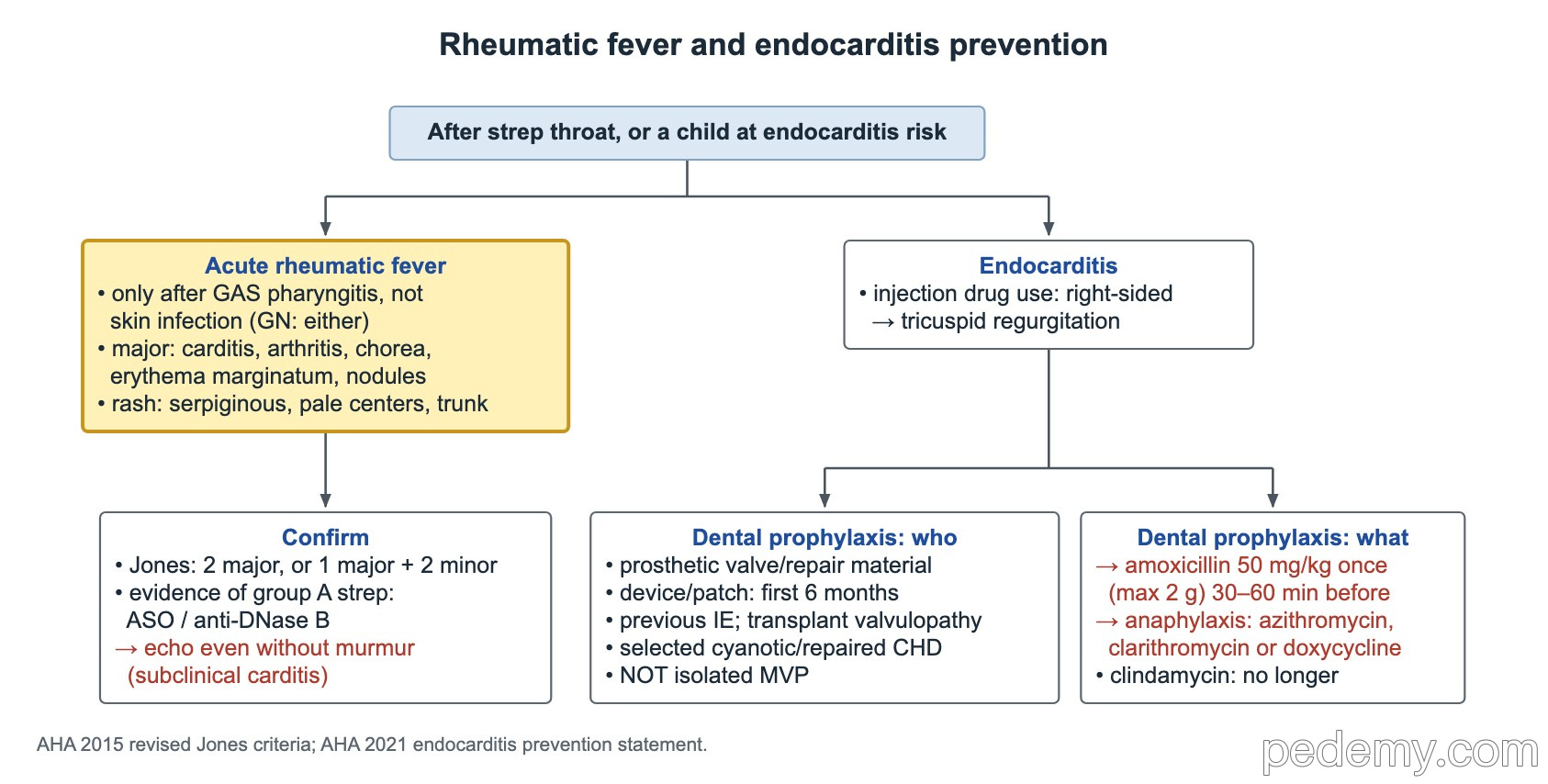
Classic teaching: acute rheumatic fever follows GAS pharyngitis, not skin infection. Poststreptococcal glomerulonephritis can follow either throat or skin infection.
Rheumatic fever is diagnosed with the revised Jones criteria (2 major, or 1 major plus 2 minor) plus evidence of recent GAS infection such as a raised ASO or anti-DNase B titer. Get an echocardiogram even without a murmur, because carditis can be subclinical.
MRSA abscess, cellulitis and the D-test
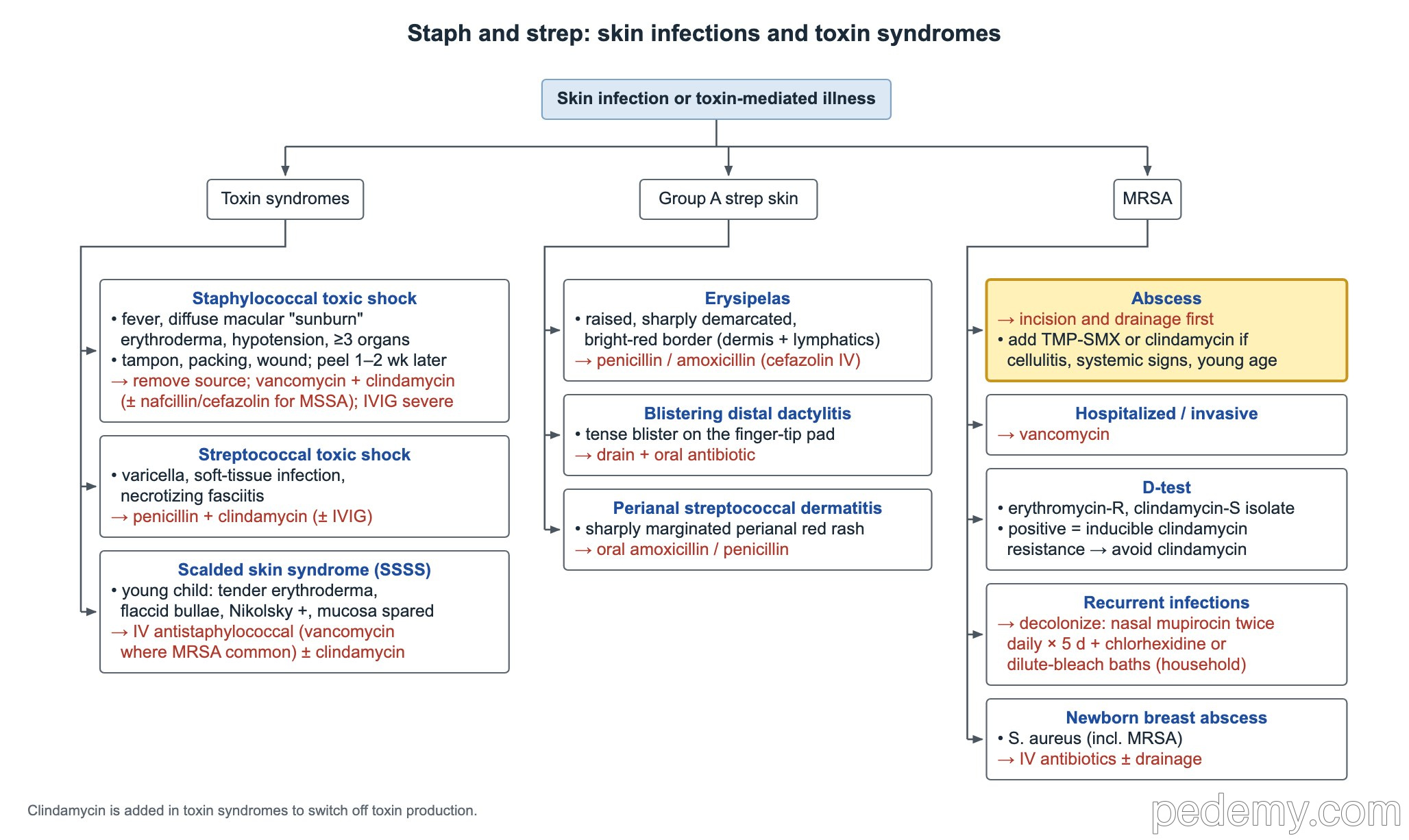
- Incision and drainage is the main treatment for an abscess.
- Add an antibiotic for surrounding cellulitis, systemic signs, very young age or a hard-to-drain site: TMP-SMX, or clindamycin if local clindamycin resistance is low.
- Hospitalized or invasive MRSA infection: vancomycin.
- Isolate resistant to erythromycin but susceptible to clindamycin: ask for a D-test. A positive test shows inducible clindamycin resistance, so avoid clindamycin.
Recurrent MRSA, newborn breast abscess and intertrigo
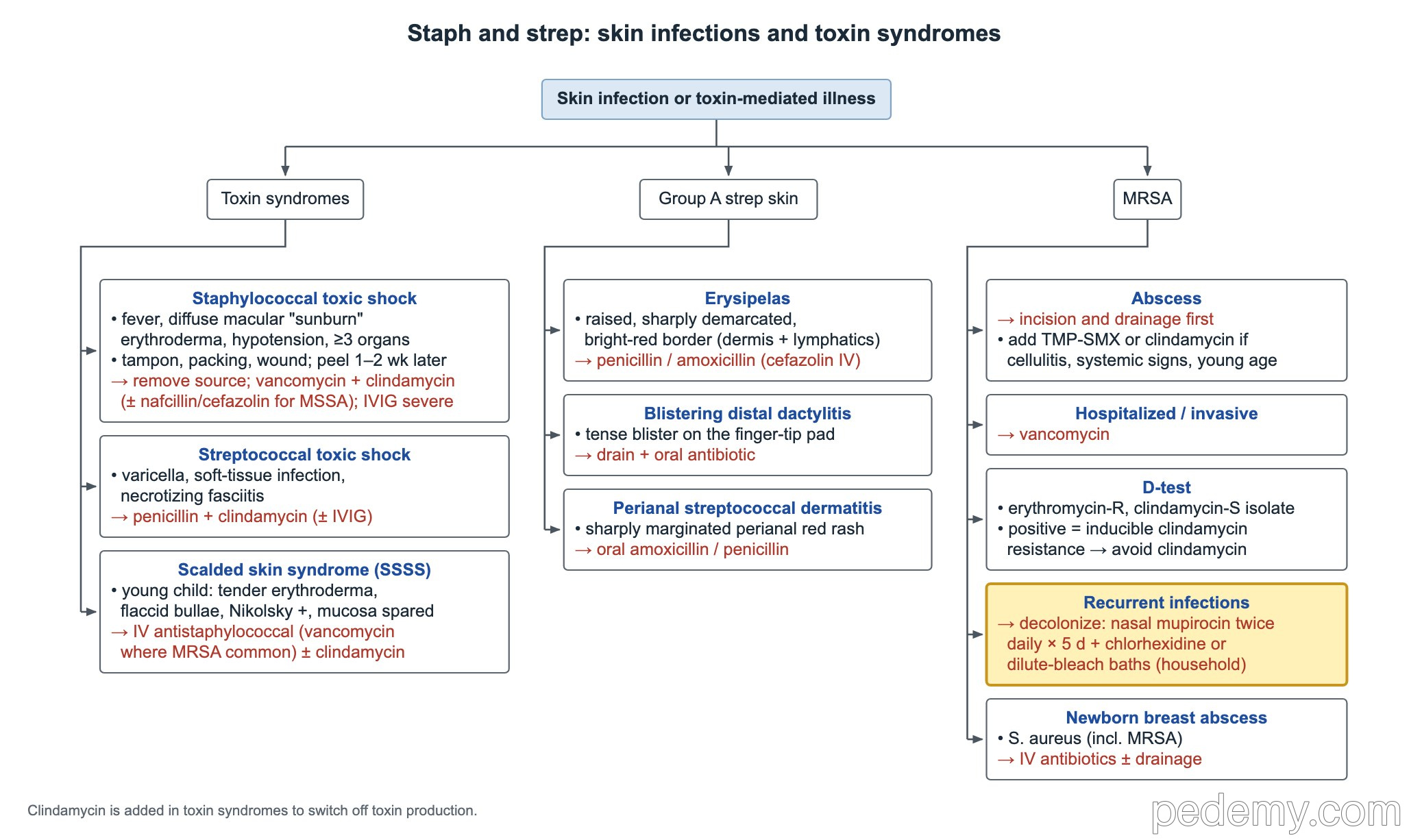
- Recurrent MRSA skin infections in a family: decolonize the household with nasal mupirocin twice daily for 5 days plus chlorhexidine washes or dilute-bleach baths, and stress hygiene and not sharing towels.
- Newborn with a red, swollen, tender, fluctuant breast bud: S. aureus (including MRSA). Treat with IV antibiotics and drainage if needed. Avoid TMP-SMX in the first weeks of life because sulfonamides raise the kernicterus risk.
- Bright-red, moist, macerated erosion between the fingers of someone whose hands are often wet: candidal intertrigo (erosio interdigitalis blastomycetica). Treat with a topical azole and keep the area dry.
Common questions
Why is clindamycin added for toxic shock syndrome?
Clindamycin blocks bacterial protein synthesis and so switches off toxin production, which a cell-wall antibiotic alone does not do.
What is the D-test?
A lab test for inducible clindamycin resistance in staph that is erythromycin-resistant but looks clindamycin-susceptible. A positive D-test means clindamycin should not be used.
How do you tell staphylococcal from streptococcal toxic shock?
Staph TSS is often tampon- or wound-related with negative blood cultures. Strep TSS usually follows a skin or soft-tissue infection or varicella, starts with severe local pain and has positive blood cultures more often.
Study this topic
Sources
- IDSA 2014: Diagnosis and management of skin and soft tissue infections (Clin Infect Dis)
- IDSA 2011: Treatment of MRSA infections in adults and children (Clin Infect Dis)
- AHA 2015: Revision of the Jones criteria for acute rheumatic fever (Circulation)
Written for Pedemy in our own words from the sources above; checked November 2026. For education only, not medical advice; check doses and local protocols before treating a patient. Pedemy is independent and not affiliated with or endorsed by the organizations cited.