

Main decision tree
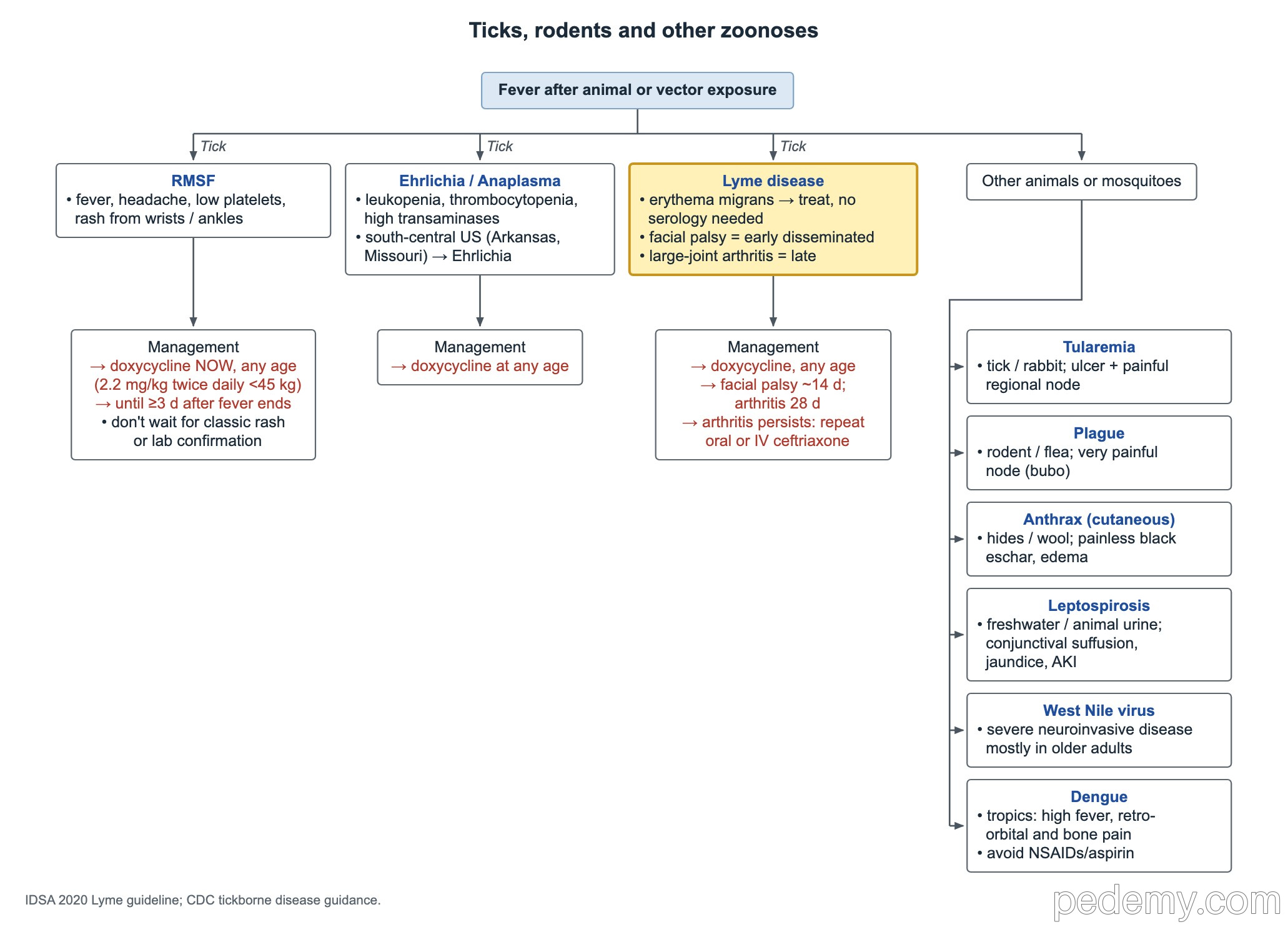
Ticks, rodents and other zoonoses
Key points
- Erythema migrans is a clinical diagnosis: treat without serology, doxycycline for 10 days at any age.
- Lyme prophylaxis only if an engorged Ixodes tick was attached 36 hours or more in an endemic area and removal was within 72 hours: one dose of doxycycline 4.4 mg/kg (max 200 mg).
- Lyme facial palsy: oral doxycycline about 14 days; Lyme arthritis: oral doxycycline 28 days.
- Suspected RMSF: start doxycycline 2.2 mg/kg (max 100 mg) twice daily at once; continue at least 3 days after fever ends.
- Cat-scratch disease: azithromycin for 5 days; eye disease (Parinaud, neuroretinitis) → doxycycline plus rifampin.
- Tularemia: gentamicin; cephalosporins fail against Francisella.
- Severe malaria: IV artesunate, then check for delayed hemolysis weekly for 4 weeks.
Lyme disease by stage
Lyme disease is spread by Ixodes (deer) ticks. Doxycycline is first-line at any age for courses of 21 days or less; amoxicillin or cefuroxime are alternatives.
- Lyme arthritis still swollen after 28 days of treatment: a second oral course or IV ceftriaxone.
- Synovial fluid WBC in Lyme arthritis is usually lower than in septic arthritis.
| Stage | Findings | Treatment |
|---|---|---|
| Early localized (days–weeks) | Expanding erythema migrans at the bite site; no serology needed | Oral doxycycline 10 days (amoxicillin or cefuroxime 14 days) |
| Early disseminated (weeks) | Multiple annular lesions, facial nerve palsy (the commonest neurologic sign), meningitis, carditis with AV block (for example PR 230 ms) | Facial palsy: oral doxycycline about 14 days; meningitis or carditis 14–21 days |
| Late (months) | Mono- or oligoarthritis of large joints, especially a big knee effusion | Oral doxycycline, amoxicillin or cefuroxime for 28 days |
Tick bites: removal, prevention and prophylaxis
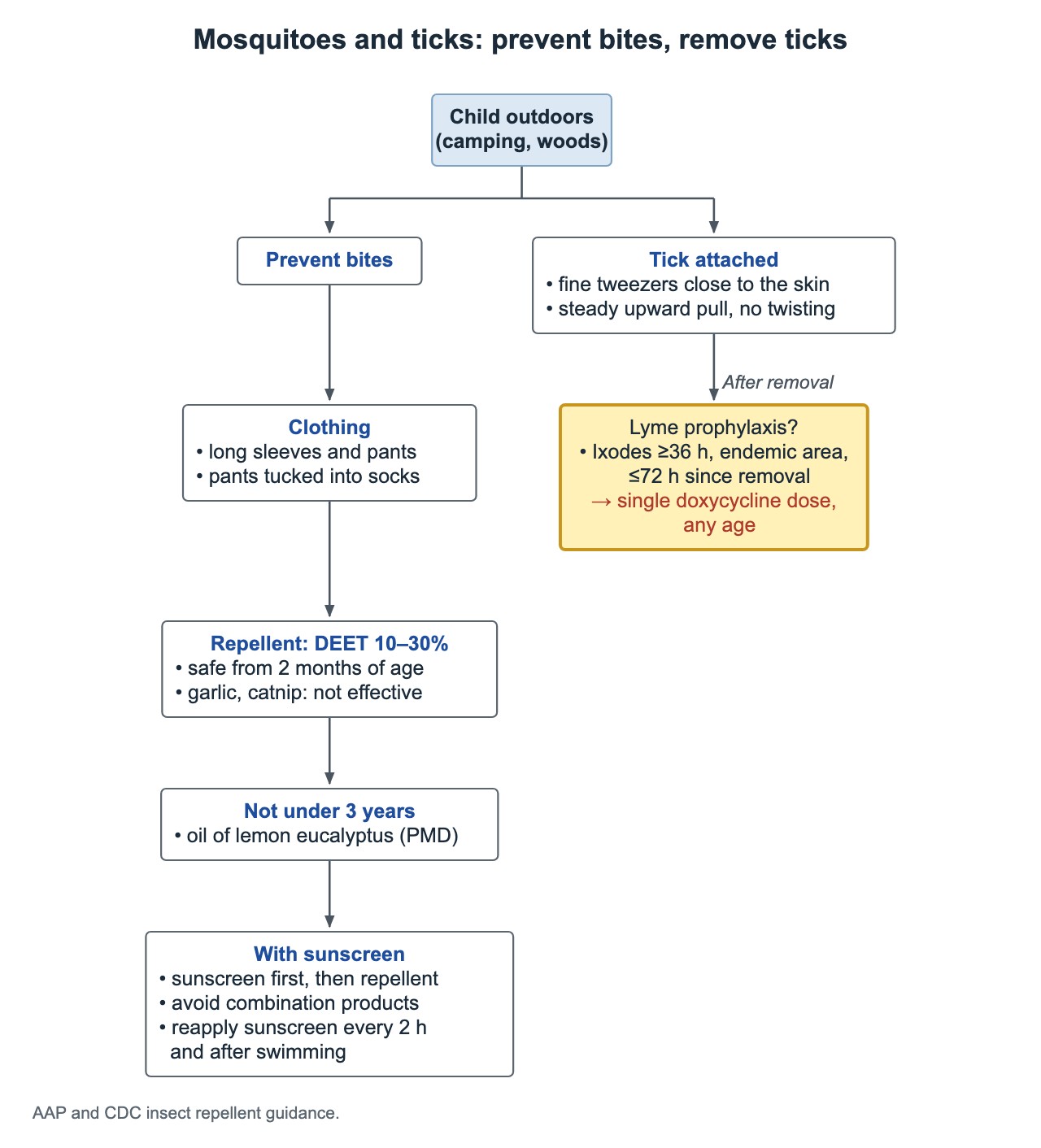
- Remove an attached tick with fine tweezers close to the skin and a steady upward pull, without twisting, squeezing, heat or chemicals.
- Give Lyme prophylaxis only if all apply: Ixodes tick, endemic area, attached 36 hours or more (engorged), and within 72 hours of removal. One dose of doxycycline 4.4 mg/kg (max 200 mg), at any age.
- A flat tick removed after a few hours: education and observation only; watch for rash or fever for 30 days.
- Prevention: long sleeves and pants tucked into socks; DEET 10–30% from 2 months of age; no oil of lemon eucalyptus under 3 years; apply sunscreen first, then repellent.
RMSF, ehrlichiosis, anaplasmosis and babesiosis
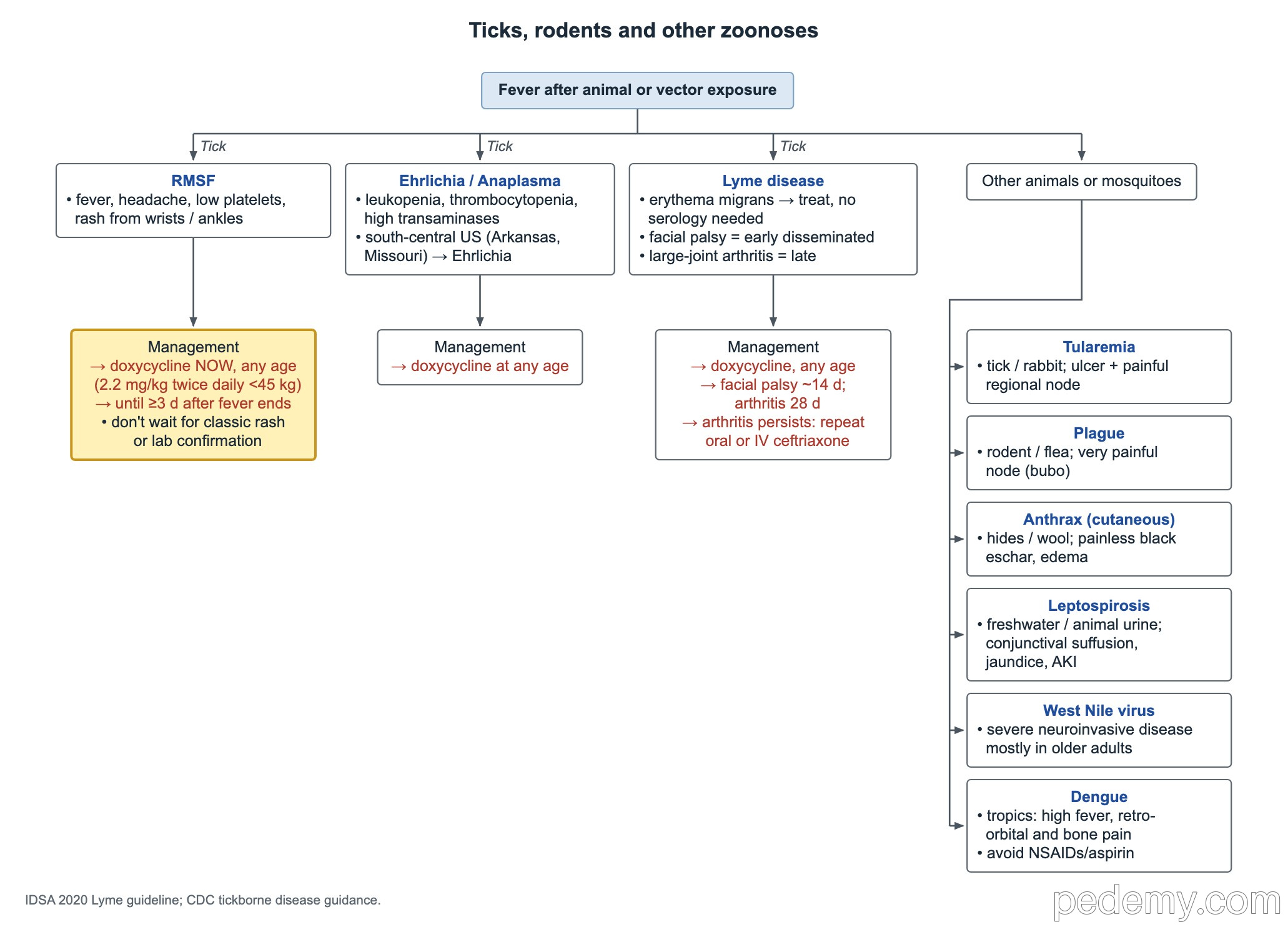
Rocky Mountain spotted fever presents with fever, headache and a rash that begins at the wrists and ankles, with thrombocytopenia and hyponatremia. Do not wait for a classic rash or laboratory confirmation: delay increases death.
- Doxycycline for any age: 2.2 mg/kg per dose by mouth or IV every 12 hours (max 100 mg per dose) for children under 45 kg, until at least 3 days after the fever ends.
- Ehrlichiosis and anaplasmosis: fever with leukopenia, thrombocytopenia and raised transaminases; rash is less common. Ehrlichiosis is typical in south-central states such as Arkansas and Missouri. Treat with doxycycline at any age.
- Babesiosis: fever with hemolytic anemia after summer in the Northeast, severe in asplenic children. Diagnose by blood smear (ring forms) or Babesia PCR; treat with atovaquone plus azithromycin.
Tularemia, plague, anthrax, leptospirosis and West Nile
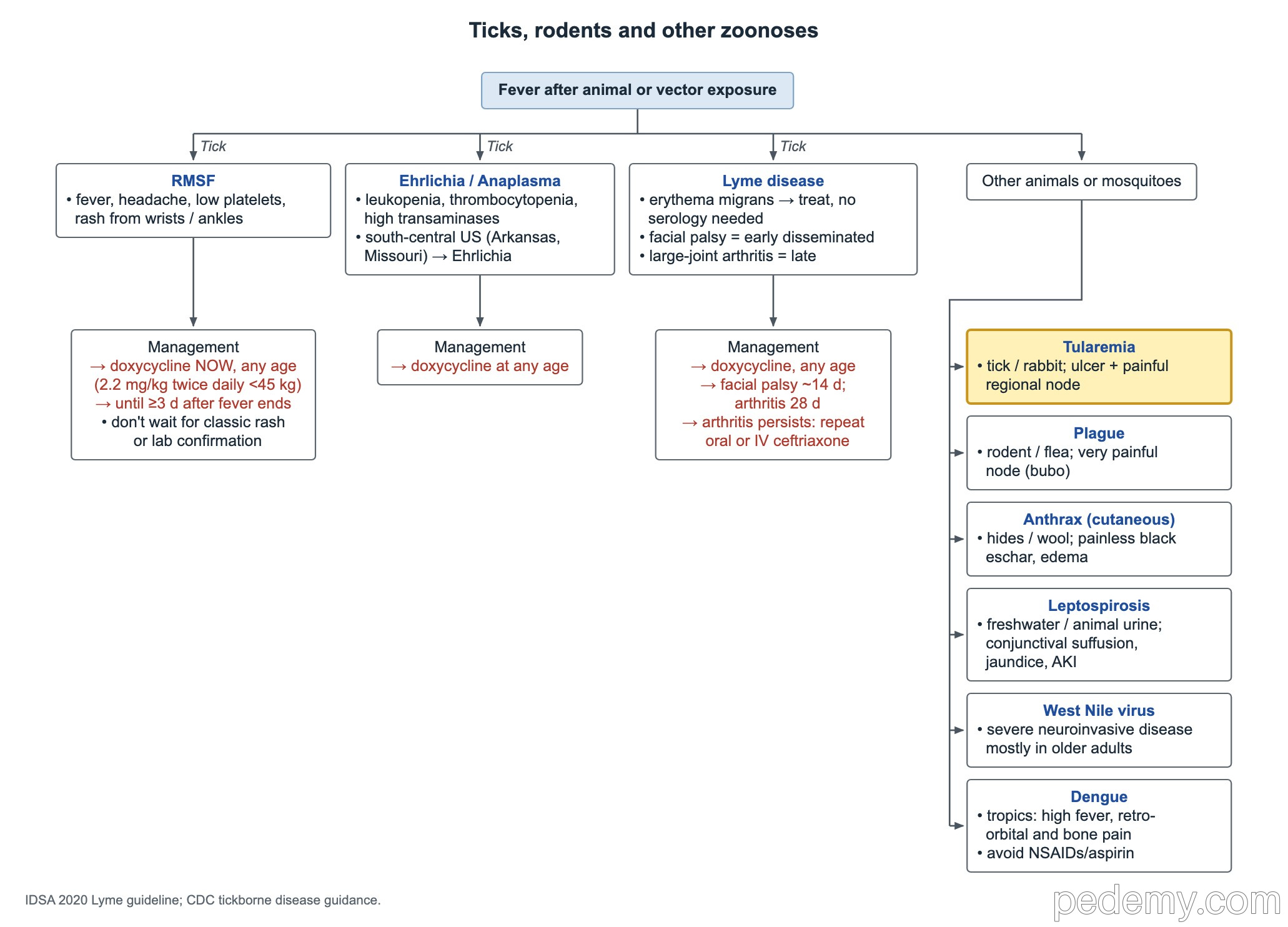
| Exposure and clue | Infection | Key fact |
|---|---|---|
| Tick bite or rabbit contact; ulcer with painful regional nodes | Ulceroglandular tularemia (Francisella tularensis) | Gentamicin; cephalosporins fail |
| Rodent or flea exposure; fever with a very painful large node (bubo) | Bubonic plague (Yersinia pestis) | Aminoglycoside-based treatment |
| Animal hides or wool; painless black eschar with marked edema | Cutaneous anthrax (Bacillus anthracis) | Eschar is painless |
| Freshwater or animal urine; fever, conjunctival suffusion, jaundice, AKI | Leptospirosis; severe hepatorenal form is Weil syndrome | Treat with doxycycline or penicillin |
| Mosquito bite in summer | West Nile virus | Commonest mosquito-borne infection in the continental US; severe neuroinvasive disease mostly in older adults |
Cat-scratch disease
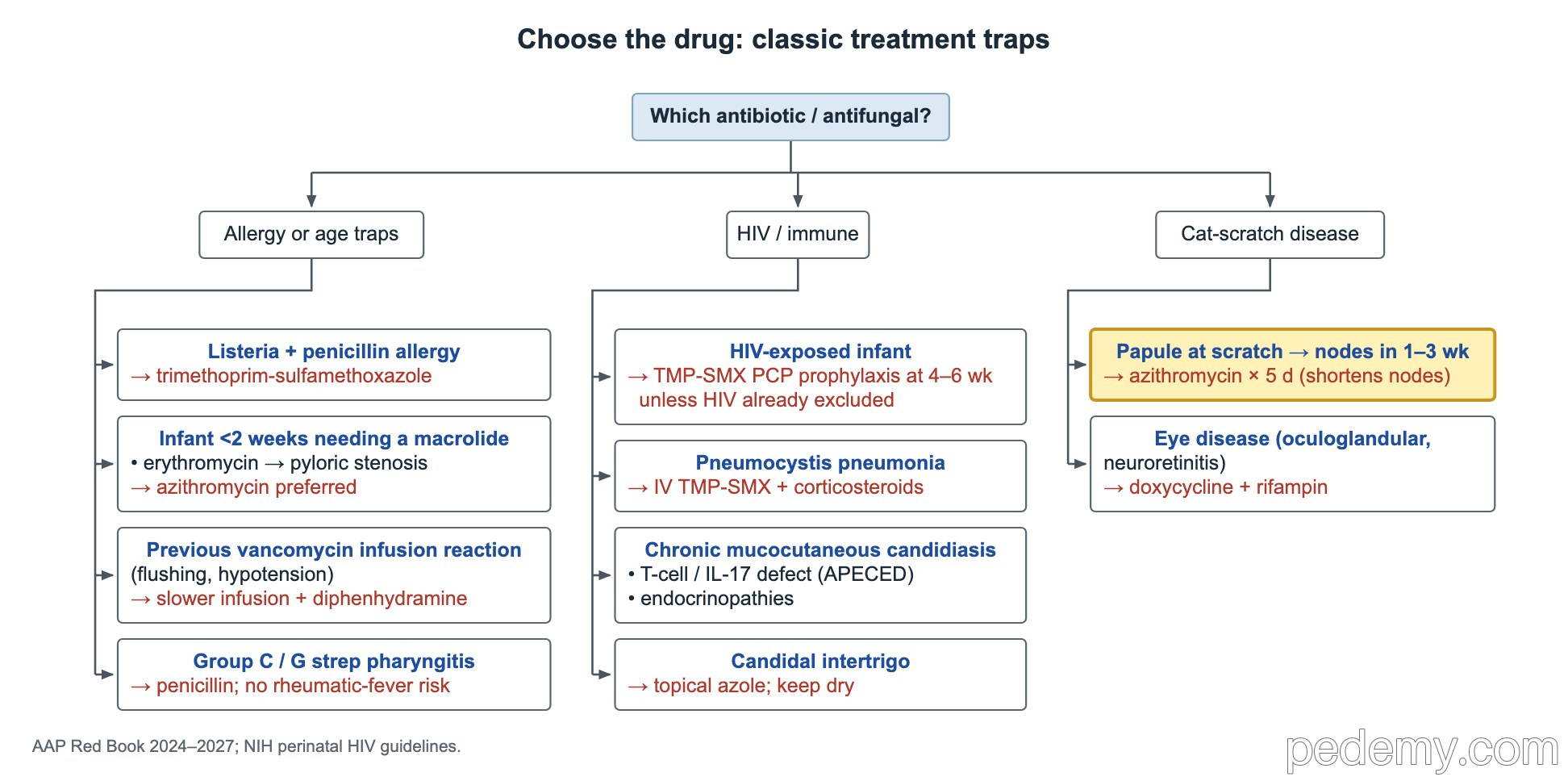
Bartonella henselae spreads from kittens. A papule or pustule appears at the scratch 3–10 days later, then tender regional nodes (often axillary) 1–3 weeks after that.
- Immunocompetent child with node disease: azithromycin for 5 days shortens node swelling.
- Clindamycin, often used for skin infection, does not cover Bartonella.
- Parinaud oculoglandular syndrome: unilateral granulomatous conjunctivitis with preauricular nodes after a kitten scratch.
- Eye disease (oculoglandular or neuroretinitis): doxycycline plus rifampin.
Animal bites and pets
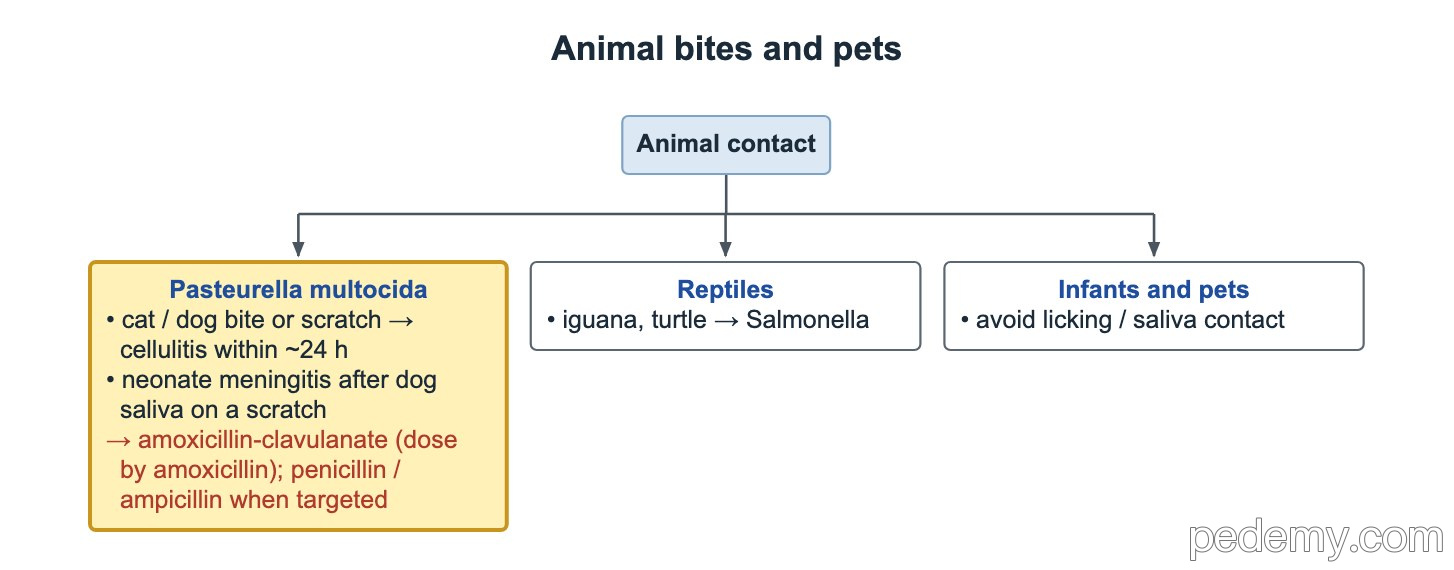
- Pasteurella multocida causes cellulitis within about 24 hours of a cat or dog bite or scratch.
- Empiric bite treatment: amoxicillin-clavulanate, dosed by the amoxicillin component (22.5 mg/kg per dose twice daily). Once P. multocida is isolated, penicillin or ampicillin is the targeted drug.
- An infant with meningitis and gram-negative coccobacilli after a dog licked the face: P. multocida. Advise families of newborns to prevent pet licking and saliva contact.
- Pet iguana or turtle and a toddler with gastroenteritis: nontyphoidal Salmonella. Reptiles are not advised for children under 5 years.
- Gram-negative sepsis in a child with iron overload: Yersinia enterocolitica, which thrives on iron.
Severe malaria and post-artesunate hemolysis
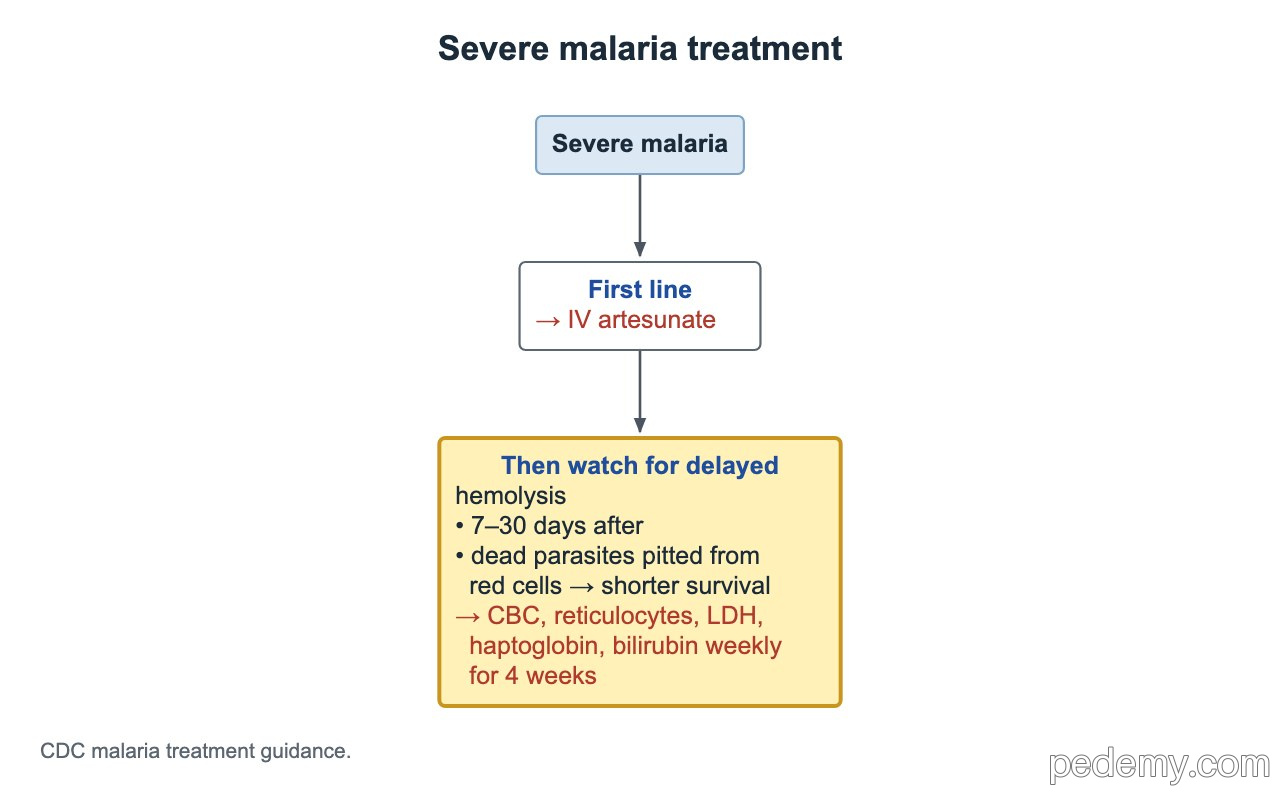
Falciparum malaria with altered mental status, parasitemia of 5% or more, or other signs of severe disease needs IV artesunate as first-line therapy.
- Delayed hemolysis is common about 7–30 days after starting artesunate: a pale, tired child 2 weeks after treatment.
- Mechanism: the spleen pits dead parasites out of infected red cells, which then survive a shorter time and break down together.
- Monitor CBC, reticulocyte count, LDH, haptoglobin and total bilirubin weekly for 4 weeks.
Common questions
Can young children take doxycycline for Lyme disease or RMSF?
Yes. Short courses of doxycycline (21 days or less) do not stain teeth, so it is used at any age for Lyme disease, RMSF, ehrlichiosis and anaplasmosis.
When is Lyme prophylaxis given after a tick bite?
Only for an Ixodes tick attached 36 hours or more in an endemic area, within 72 hours of removal: one dose of doxycycline 4.4 mg/kg, maximum 200 mg.
What is the treatment for cat-scratch disease?
Many cases resolve alone; azithromycin for 5 days speeds node shrinkage. Eye disease is treated with doxycycline plus rifampin.
Study this topic
Sources
- IDSA/AAN/ACR 2020: Prevention, diagnosis and treatment of Lyme disease (Clin Infect Dis)
- CDC 2016: Diagnosis and management of tickborne rickettsial diseases (MMWR Recomm Rep)
- IDSA 2014: Diagnosis and management of skin and soft tissue infections, including bites (Clin Infect Dis)
Written for Pedemy in our own words from the sources above; checked November 2026. For education only, not medical advice; check doses and local protocols before treating a patient. Pedemy is independent and not affiliated with or endorsed by the organizations cited.