

Main decision tree
Congenital infection: the distinguishing clue
Key points
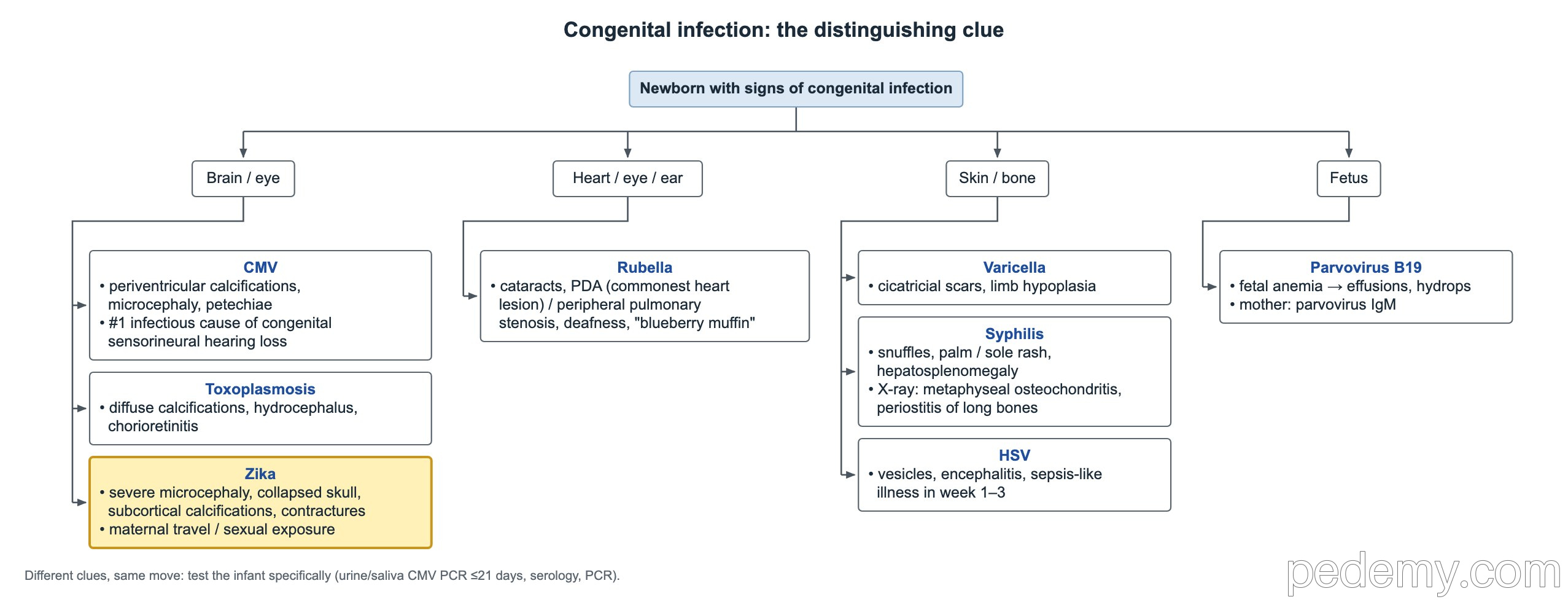
- Periventricular calcifications = CMV; diffuse calcifications with hydrocephalus and chorioretinitis = toxoplasmosis.
- Congenital CMV: test urine or saliva PCR in the first 21 days; about 10% of infected newborns have symptoms at birth.
- Neonatal HSV: start IV acyclovir at once; 14 days for skin-eye-mouth disease, 21 days for CNS or disseminated disease, then oral suppression for 6 months.
- Early-onset GBS is day 0–6 (sepsis, pneumonia); late-onset is day 7–89 (meningitis).
- Listeria (gram-positive rods) is resistant to all cephalosporins: give ampicillin.
- Conjunctivitis onset: chemical within 24 hours, gonococcal day 2–5, chlamydial day 5–14.
- Well febrile infant 8–21 days: urine, blood culture and lumbar puncture, then admit for IV antibiotics.
Recognize the congenital infection: TORCH, syphilis and parvovirus
Whatever the clue, the next step is the same: test the infant directly with the right PCR or serology, and test early.
- Toxoplasmosis prevention in pregnancy: someone else changes the cat litter daily (or wear gloves), cook meat well, wash produce and hands after gardening.
- Rubella is prevented by MMR before pregnancy; MMR is not given during pregnancy.
- Suspect congenital syphilis with snuffles, palm and sole rash, hepatosplenomegaly or bone changes, especially with no prenatal care.
- Compare the infant's serum RPR (not cord blood) with the mother's; an infant titer fourfold higher than the mother's confirms likely infection.
- Treatment: aqueous penicillin G 50,000 units/kg IV every 12 hours in the first 7 days of life, then every 8 hours, for 10 days. Procaine penicillin 50,000 units/kg IM daily for 10 days is an alternative.
- If more than 1 day of treatment is missed, restart the whole course.
- Parvovirus B19 infects red-cell precursors: fetal red-cell production stops, causing severe anemia, high-output heart failure and nonimmune hydrops.
- Pregnant person exposed to a child with slapped-cheek rash: check parvovirus IgG and IgM. If acute infection, follow the fetus with serial middle cerebral artery Doppler for anemia.
| Infection | Classic clues | Key management |
|---|---|---|
| CMV | Microcephaly, periventricular calcifications, petechiae, hearing loss | Valganciclovir for moderate to severe disease |
| Toxoplasmosis | Hydrocephalus, chorioretinitis, diffuse calcifications | Pyrimethamine + sulfadiazine + folinic acid for about 12 months |
| Rubella | Cataracts, sensorineural hearing loss, PDA or peripheral pulmonary stenosis, blueberry-muffin rash; unvaccinated mother | Supportive; eye, heart and hearing follow-up; contact precautions to age 1 year (sheds virus) |
| Zika | Severe microcephaly, collapsed skull, subcortical calcifications, contractures; maternal travel or sexual exposure | Supportive; eye, hearing and development follow-up |
| Varicella (maternal infection at 8–20 weeks) | Zigzag cicatricial skin scars, limb hypoplasia, eye and brain defects | Supportive |
| Syphilis | Snuffles, palm and sole rash, hepatosplenomegaly; metaphyseal osteochondritis and periostitis | IV penicillin G |
| Parvovirus B19 | Fetal anemia, effusions, nonimmune hydrops | Fetal monitoring; intrauterine transfusion |
Congenital and postnatal CMV
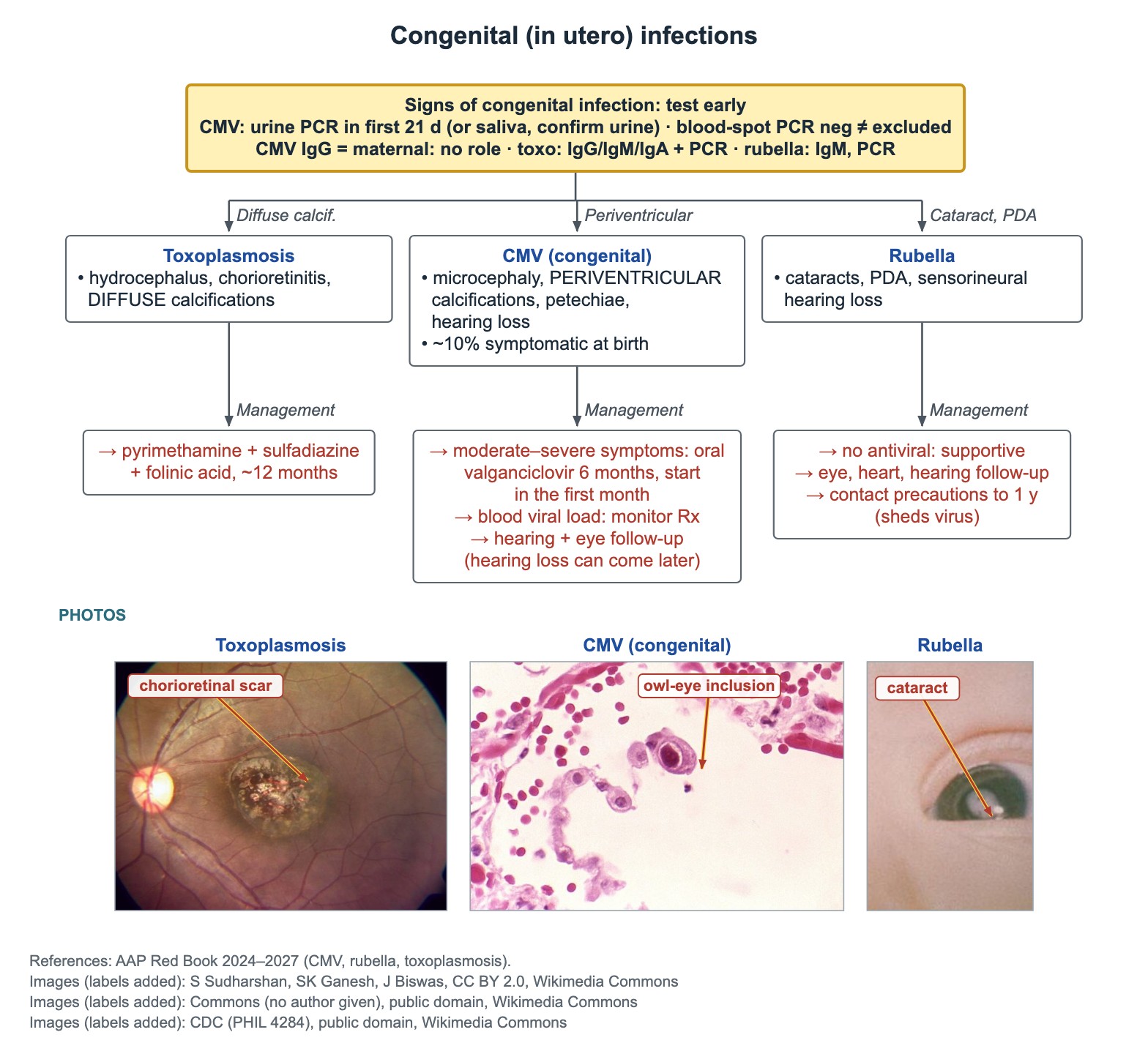
- CMV is the most common congenital infection and the leading non-genetic cause of sensorineural hearing loss.
- Diagnose congenital CMV with urine PCR (or saliva PCR confirmed by urine) in the first 21 days of life.
- CMV IgG in the newborn has no role: it is maternal antibody.
- A negative dried blood spot PCR does not exclude congenital CMV (low sensitivity); a positive one confirms it.
- Moderate to severe symptomatic disease: oral valganciclovir for 6 months, starting in the first month. Watch for neutropenia.
- Blood viral load is used to monitor treatment, not to diagnose.
- Follow hearing and eyes: hearing loss can appear or worsen later.
- Postnatal CMV: negative tests in the first 3 weeks, positive after 21 days. It affects very-low-birth-weight preterm infants, usually from their mother's breast milk.
- Postnatal CMV looks like sepsis with neutropenia, thrombocytopenia, raised transaminases, hepatitis or pneumonitis. Confirm with urine PCR.
- Breast milk benefits still outweigh the risk; freezing or pasteurizing milk lowers it.
Neonatal HSV and neonatal varicella
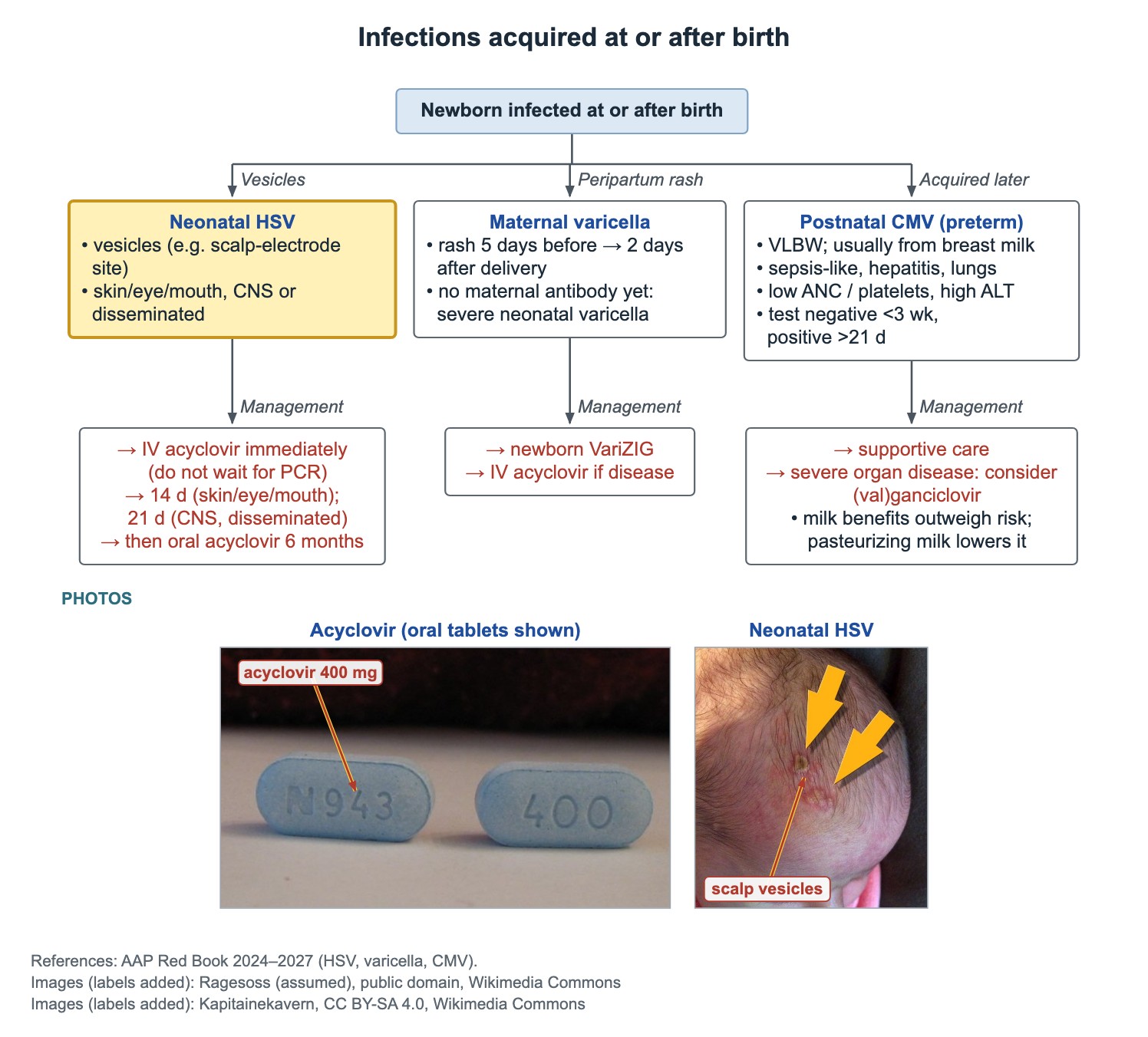
Most neonatal HSV is caught during delivery, often from a mother with no known history of herpes. It presents in the first 1–3 weeks as skin-eye-mouth disease, CNS disease or disseminated disease; many babies never have vesicles.
- Grouped vesicles, including at a scalp-monitor site: start IV acyclovir 60 mg/kg/day divided every 8 hours right away; do not wait for PCR.
- Add acyclovir to a septic neonate who is not improving on ampicillin and a cephalosporin, or who has seizures, raised ALT or CSF pleocytosis.
- Work-up: surface swabs PCR, blood PCR, CSF PCR and ALT.
- MRI in HSV encephalitis may show temporal-lobe edema and hemorrhagic necrosis.
- Treat 14 days for skin-eye-mouth disease and 21 days for CNS or disseminated disease (repeat CSF PCR before stopping in CNS disease), then oral acyclovir suppression for 6 months.
- Maternal varicella rash from 5 days before to 2 days after delivery: the baby gets virus without maternal antibody. Give VariZIG as soon as possible, and IV acyclovir if disease develops.
Neonatal sepsis, GBS, Listeria and Candida
- GBS prevention: vaginal-rectal culture at 36 0/7–37 6/7 weeks. Intrapartum penicillin or ampicillin (or cefazolin) at least 4 hours before delivery is adequate; clindamycin or vancomycin alone is not.
- Intrapartum prophylaxis prevents early-onset GBS only, not late-onset disease.
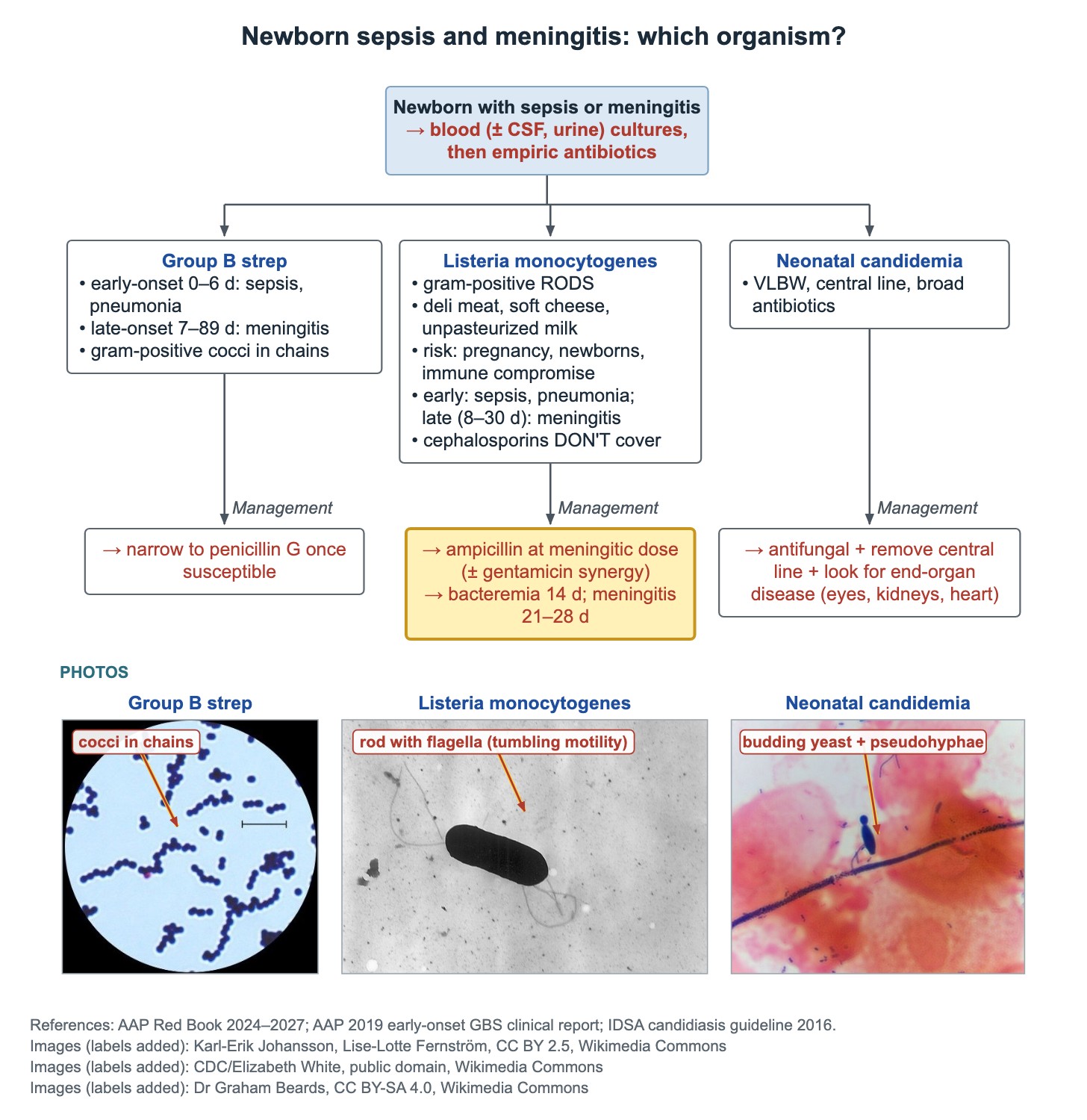
- Listeria is intrinsically resistant to all cephalosporins, and vancomycin is not a substitute: ampicillin is required.
- Pregnant people, newborns and immunocompromised people have the highest risk of invasive Listeria; pregnant people should avoid unpasteurized milk, soft cheese, deli meats, hot dogs (unless steaming hot) and smoked seafood.
- Empiric early-onset sepsis therapy: ampicillin plus gentamicin. For meningitis, add a broad-spectrum cephalosporin such as cefepime or ceftazidime.
- Avoid ceftriaxone in neonates: it displaces bilirubin from albumin and precipitates with IV calcium.
| Organism | Clues | Treatment |
|---|---|---|
| Group B Streptococcus | Early onset (day 0–6): sepsis, pneumonia. Late onset (day 7–89): meningitis, bone or joint infection, cellulitis-adenitis of the face or neck | Narrow to IV penicillin G (or ampicillin) once susceptible |
| Listeria monocytogenes | Gram-positive rods; mother ate deli meat, hot dogs, soft or unpasteurized cheese or smoked fish. Early: sepsis and pneumonia. Late: meningitis | Ampicillin at meningitic dose plus gentamicin for synergy; about 14 days for bacteremia, 21 days or more for meningitis |
| E. coli | Most common cause of bacteremia and UTI in young infants; important in preterm early-onset sepsis | Gentamicin or a cephalosporin per susceptibility |
| Candida | Very-low-birth-weight infant with a central line and broad antibiotics | Antifungal, remove the central line, and look for eye, kidney, heart and CNS disease |
Newborn conjunctivitis and chlamydial pneumonia
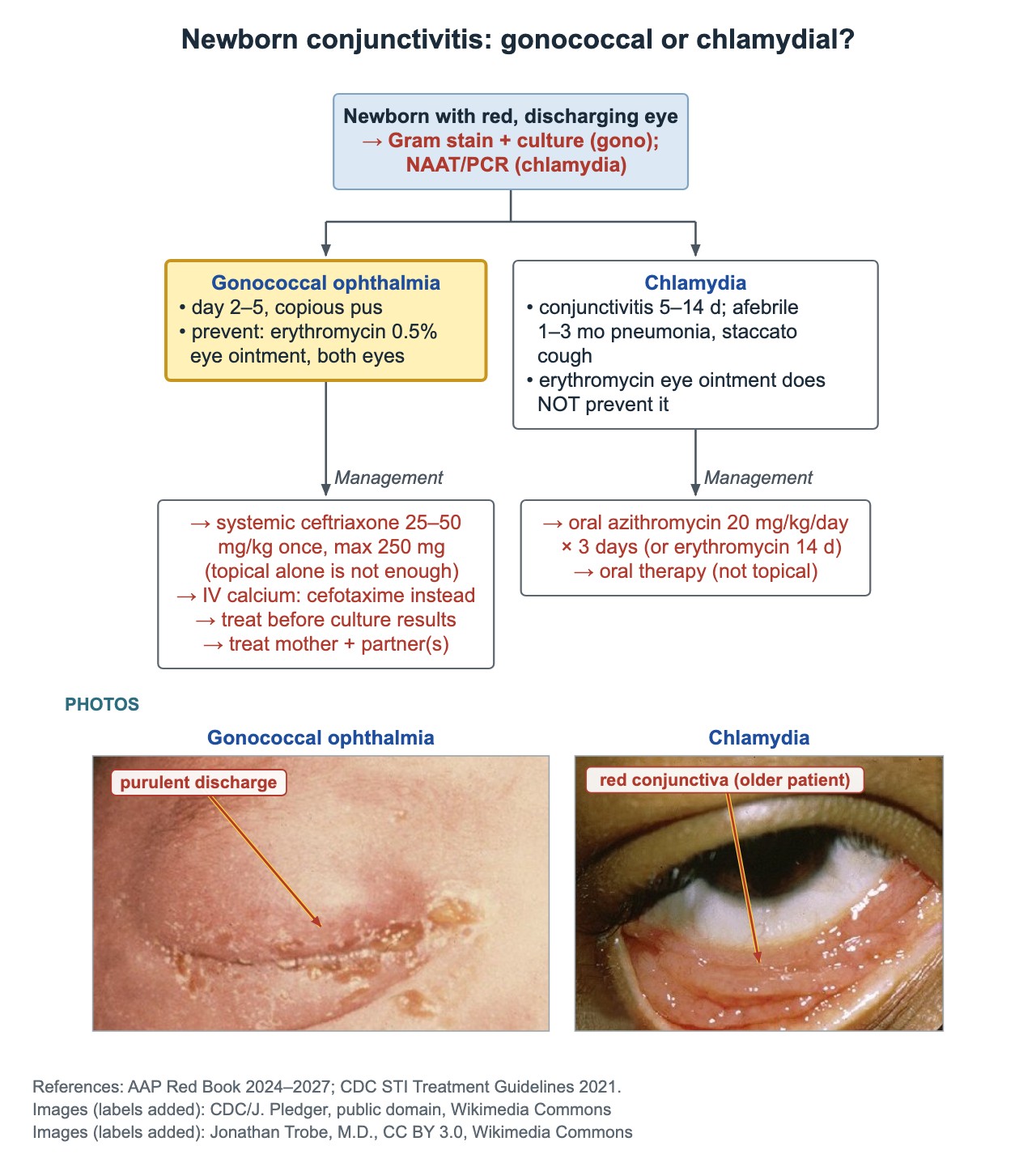
- Timing: chemical conjunctivitis within 24 hours, gonococcal on day 2–5, chlamydial on day 5–14.
- Prevention: erythromycin 0.5% ophthalmic ointment to both eyes at birth prevents gonococcal ophthalmia, not chlamydial infection.
- Gonococcal ophthalmia (copious pus): Gram stain and culture, then treat at once without waiting for results.
- Treatment: ceftriaxone 25–50 mg/kg IV or IM once (maximum 250 mg). Topical treatment alone is not enough. Look for disseminated infection.
- If the infant receives IV calcium or has high bilirubin, use cefotaxime 100 mg/kg once instead.
- Evaluate and treat the mother and her partners for STIs.
- Chlamydial conjunctivitis or pneumonia: oral azithromycin 20 mg/kg once daily for 3 days, or erythromycin for 14 days. Oral, not topical, because nasopharyngeal carriage causes pneumonia.
- Chlamydial pneumonia: afebrile infant aged 1–3 months with staccato cough, hyperinflation with interstitial infiltrates and peripheral eosinophilia.
- Macrolides in the first weeks raise the risk of pyloric stenosis; watch for vomiting.
The well-appearing febrile infant 8–60 days
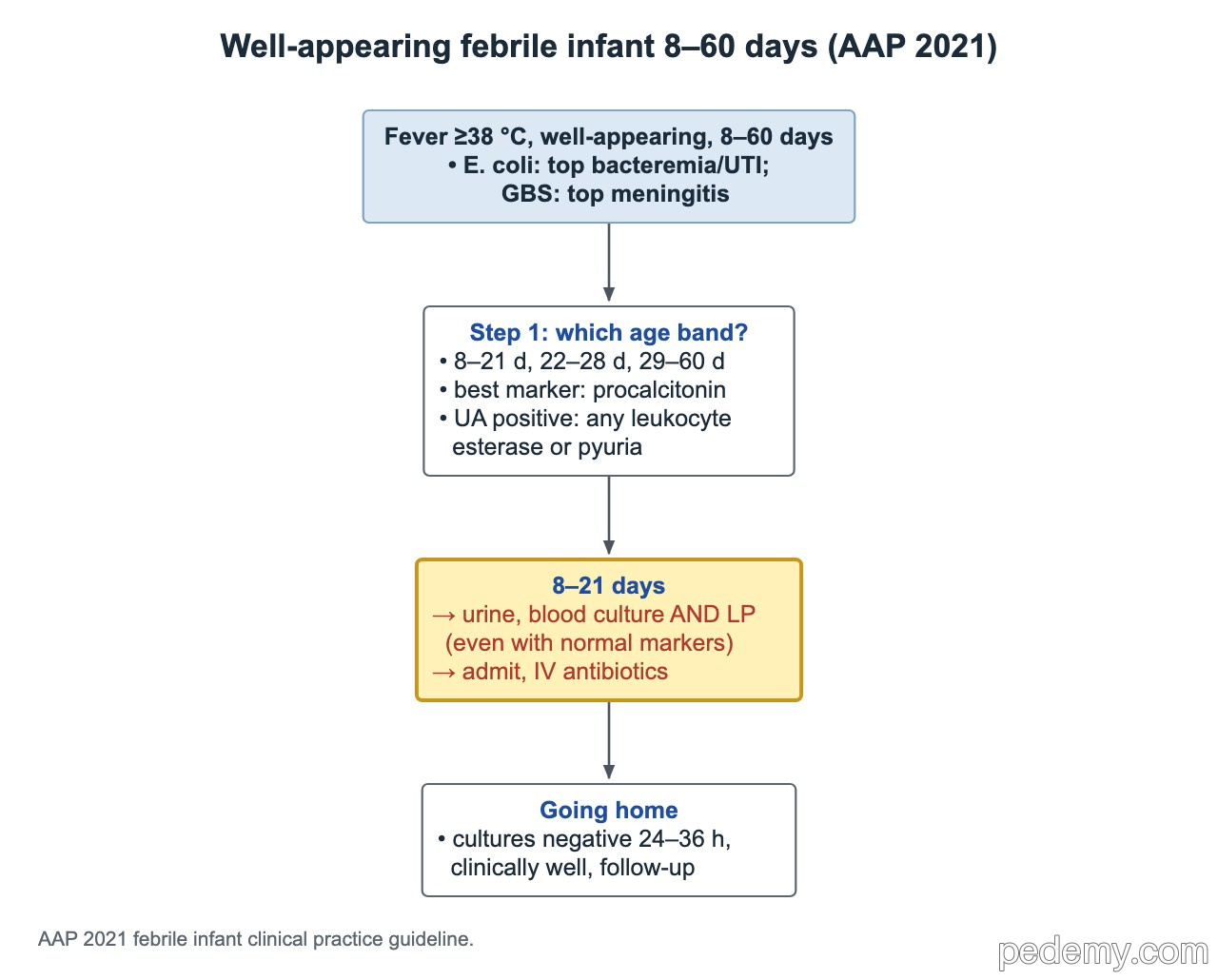
The AAP 2021 guideline applies to well-appearing term infants with a temperature of 100.4 °F (38.0 °C) or higher. It uses 3 age groups: 8–21 days, 22–28 days and 29–60 days. E. coli is the top cause of bacteremia and UTI; GBS remains a top cause of meningitis.
- 8–21 days: urinalysis (and urine culture), blood culture and CSF analysis and culture, even if inflammatory markers are normal. Admit and give parenteral antibiotics.
- 22–28 days: urine and blood culture plus inflammatory markers; LP is done when markers are abnormal and may be done when they are normal.
- 29–60 days: urine, blood culture and inflammatory markers; many can go home with close follow-up if all are reassuring.
- Procalcitonin is the preferred marker (abnormal above 0.5 ng/mL); others are CRP above 2.0 mg/dL and ANC above 4,000/µL.
- A positive urinalysis is any leukocyte esterase or pyuria.
- Discharge after admission when cultures are negative at 24–36 hours, the infant is well and follow-up is arranged.
Maternal infection and breastfeeding
| Maternal condition | Breastfeeding |
|---|---|
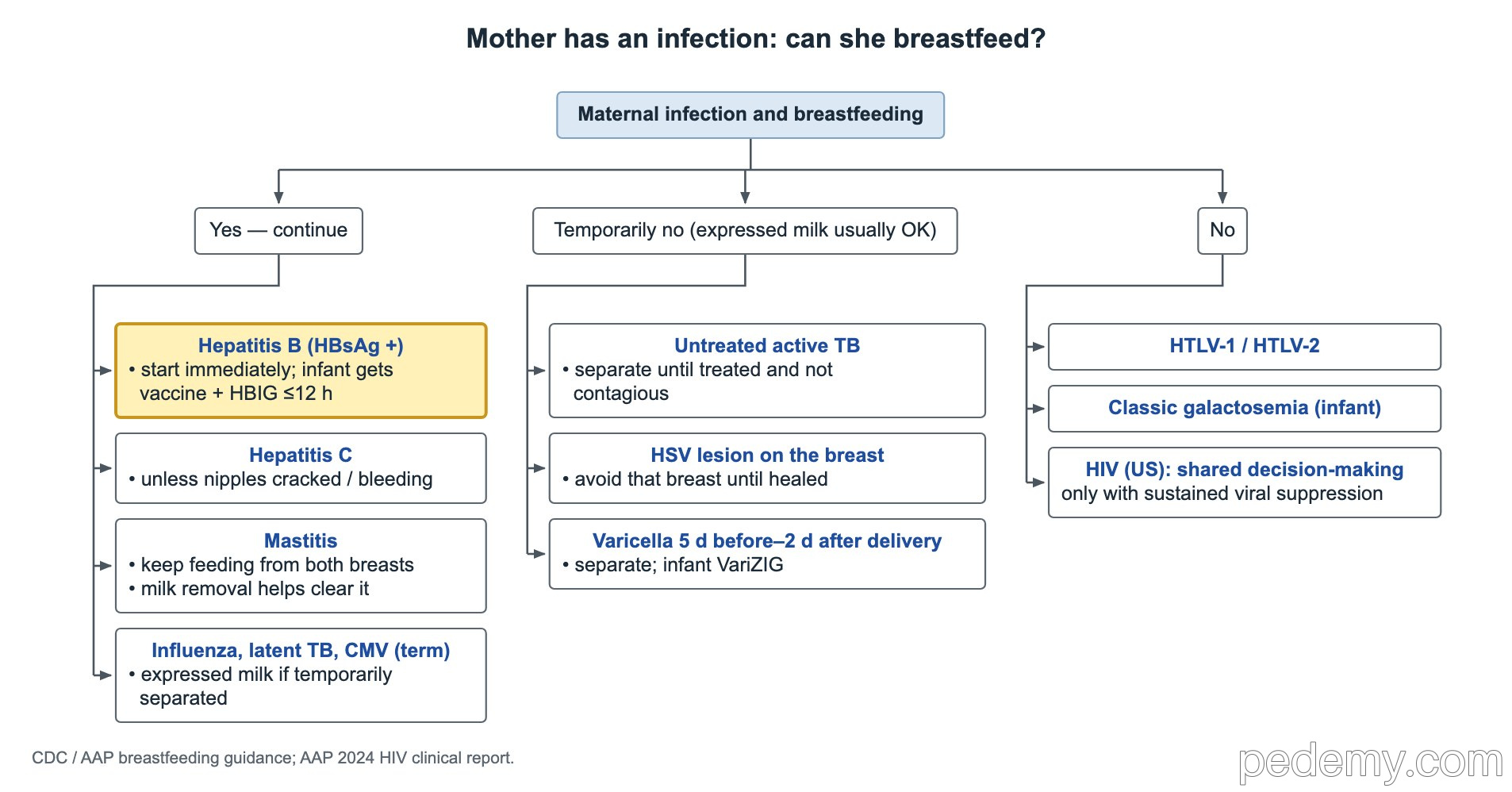
| Hepatitis B (HBsAg-positive) | Start immediately; the infant gets hepatitis B vaccine and HBIG within 12 hours, no need to wait for them |
| Hepatitis C | Yes, unless nipples are cracked or bleeding |
| Mastitis | Keep feeding from both breasts; milk removal helps it clear |
| Influenza, latent TB, CMV in a term infant | Yes; expressed milk if temporarily separated |
| Untreated active TB | Separate until treated (about 2 weeks) and not contagious; expressed milk can be given |
| HSV lesion on one breast | Avoid that breast until healed; feed from the other side |
| Varicella from 5 days before to 2 days after delivery | Separate; expressed milk can be given; infant gets VariZIG |
| HTLV-1 or HTLV-2 | No |
| Classic galactosemia in the infant | No |
| HIV (US) | Shared decision-making only with sustained viral suppression |
Common questions
How do you diagnose congenital CMV?
Urine CMV PCR, or saliva PCR confirmed with urine, collected in the first 21 days of life. After 21 days, a positive test cannot separate congenital from postnatal infection.
Does erythromycin eye ointment prevent chlamydial conjunctivitis?
No. Newborn erythromycin ointment is given to prevent gonococcal ophthalmia. Chlamydial conjunctivitis needs oral azithromycin or erythromycin.
Why do newborns with possible Listeria need ampicillin?
Listeria is intrinsically resistant to cephalosporins, so cefotaxime or ceftazidime alone does not cover it. Ampicillin, often with gentamicin, is the treatment.
Can a mother with hepatitis B breastfeed?
Yes, right away. The baby gets hepatitis B vaccine and HBIG within 12 hours of birth, and breastfeeding does not need to wait for them.
Study this topic
Sources
- AAP 2021: Evaluation and management of well-appearing febrile infants 8 to 60 days old (Pediatrics)
- AAP 2019: Management of infants at risk for group B streptococcal disease (Pediatrics)
- CDC 2021: Sexually transmitted infections treatment guidelines (MMWR)
- Congenital cytomegalovirus infection: international consensus recommendations (Lancet Infect Dis 2017)
- AAP 2022: Policy statement on breastfeeding and the use of human milk (Pediatrics)
Written for Pedemy in our own words from the sources above; checked November 2026. For education only, not medical advice; check doses and local protocols before treating a patient. Pedemy is independent and not affiliated with or endorsed by the organizations cited.