

Main decision tree
Parasites, pets and travel
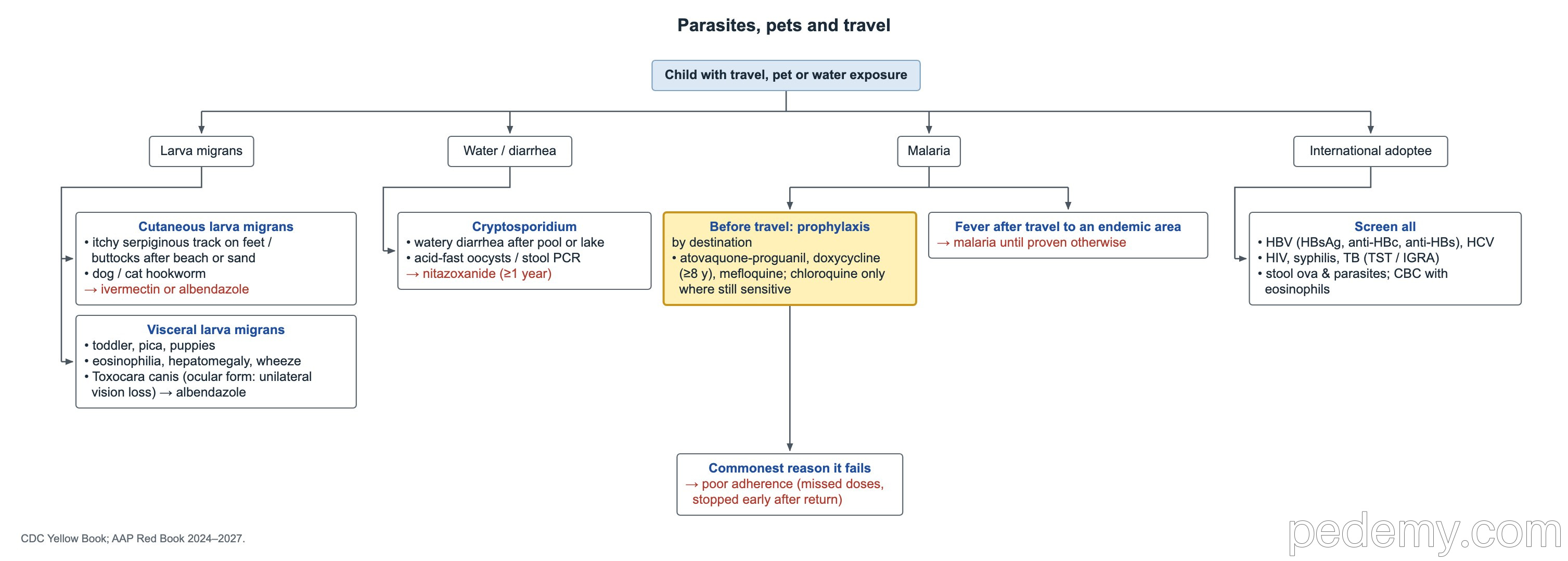
Key points
- Malaria prophylaxis most often fails because doses are missed or stopped too early after return.
- Chloroquine-resistant areas: atovaquone-proguanil (any weight from 5 kg) or doxycycline (8 years and older).
- After leaving: doxycycline for 4 weeks, atovaquone-proguanil for 7 days.
- Watery diarrhea after a pool with acid-fast oocysts = Cryptosporidium; nitazoxanide from age 1 year.
- Toddler with pica, puppies, eosinophilia, big liver and wheeze = Toxocara (visceral larva migrans).
- Itchy, moving serpiginous track after a beach = cutaneous larva migrans; oral albendazole or single-dose ivermectin.
- Dengue: high fever with retro-orbital and bone pain; use acetaminophen and avoid NSAIDs and aspirin.
Malaria prophylaxis
The drug depends on the destination and the resistance pattern there. Chloroquine is used only where malaria is still chloroquine-sensitive; most of the world needs another drug.
- Add bite prevention: DEET or picaridin repellent, long sleeves and insecticide-treated bed nets.
- Children visiting friends and relatives in their parents' home country have the highest risk and often skip prophylaxis.
| Drug | Start before travel | Continue after leaving | Notes |
|---|---|---|---|
| Atovaquone-proguanil | 1–2 days | 7 days | Daily; pediatric tablets from 5 kg |
| Doxycycline | 1–2 days | 4 weeks | Daily; age 8 years and older; sun sensitivity |
| Mefloquine | At least 2 weeks | 4 weeks | Weekly; avoid with seizures or psychiatric illness |
| Chloroquine | 1–2 weeks | 4 weeks | Weekly; only for chloroquine-sensitive areas |
Why prophylaxis fails and fever after travel
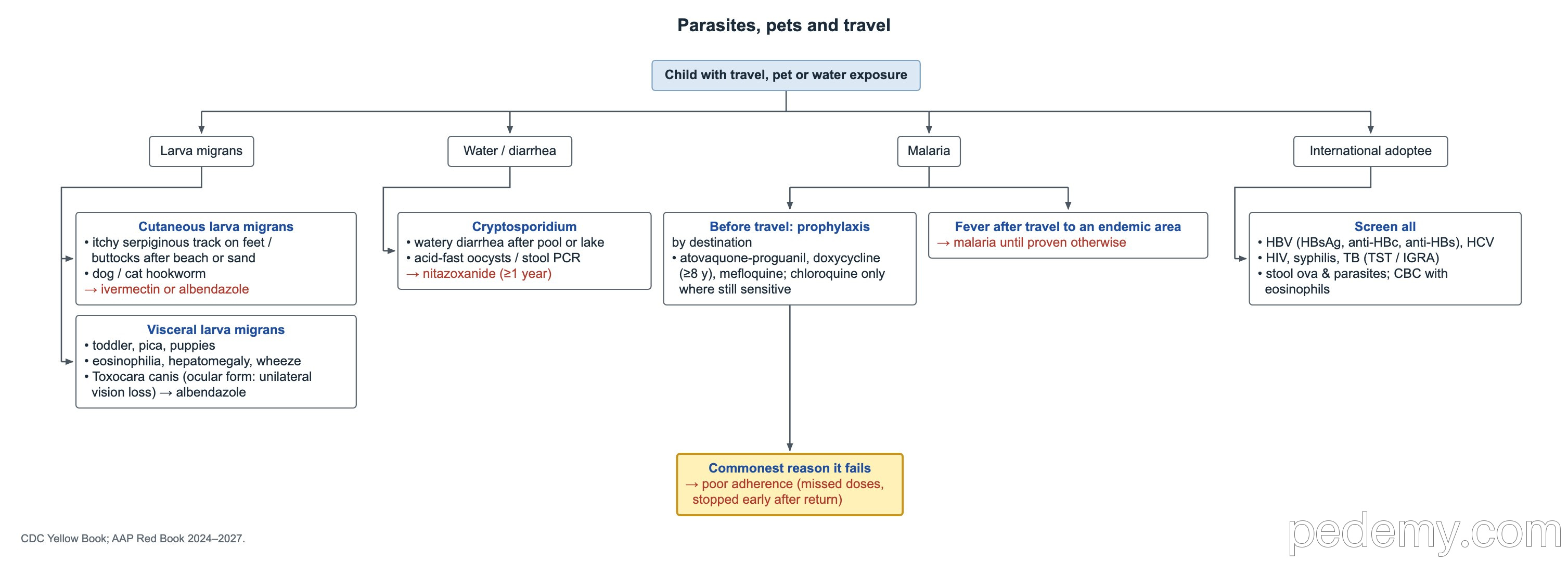
- The most common reason is poor adherence: missed doses or stopping the drug too soon after coming home.
- No drug is 100% protective. Fever within 3 months after travel to a malaria area is malaria until proven otherwise, even after full prophylaxis.
- Test the same day: thick and thin blood smears (with a rapid antigen test where available), repeated every 12–24 hours for a total of 3 sets if negative.
- Plasmodium falciparum can become severe within hours; treat as soon as it is confirmed.
Cryptosporidium
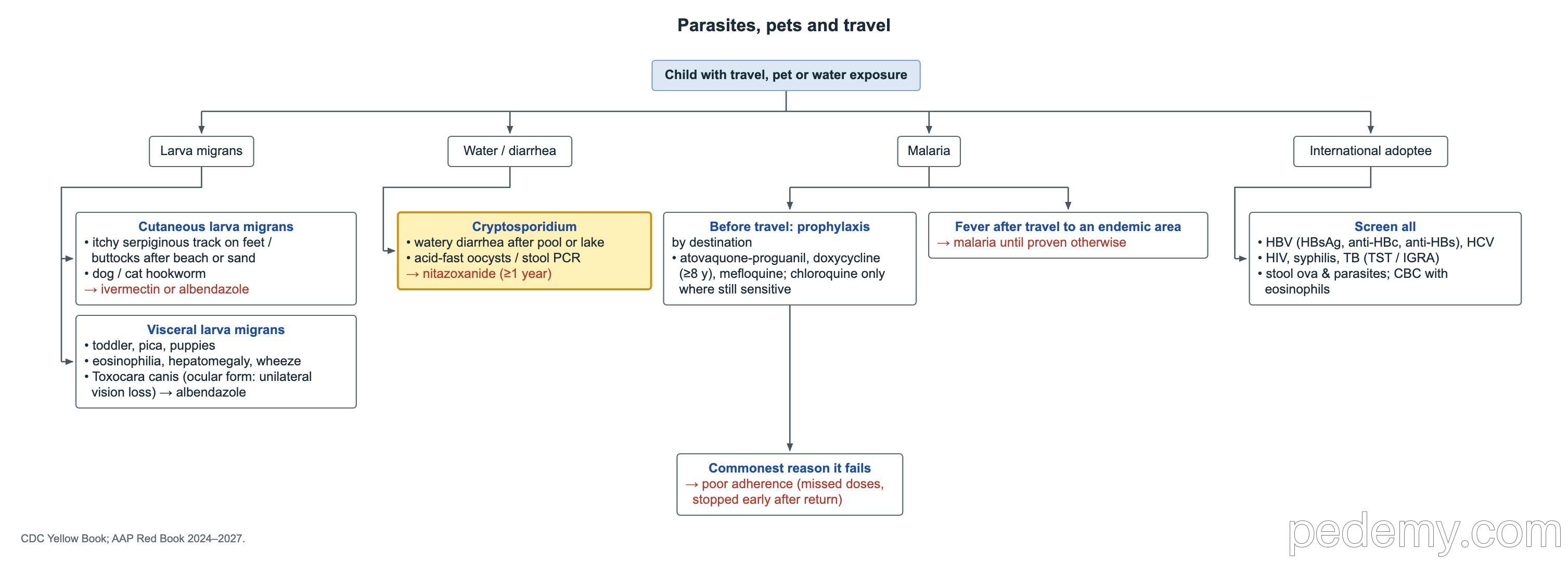
Cryptosporidium is resistant to chlorine, so it spreads in treated swimming pools and water parks as well as lakes. It causes prolonged watery diarrhea.
- Diagnosis: stool PCR panel, antigen test or modified acid-fast stain showing oocysts.
- Healthy child: usually self-limited; nitazoxanide for 3 days shortens illness, approved from age 1 year.
- Immunocompromised child: can be chronic and severe; restoring immune function is key.
- No swimming for 2 weeks after diarrhea stops.
Visceral larva migrans (Toxocara)
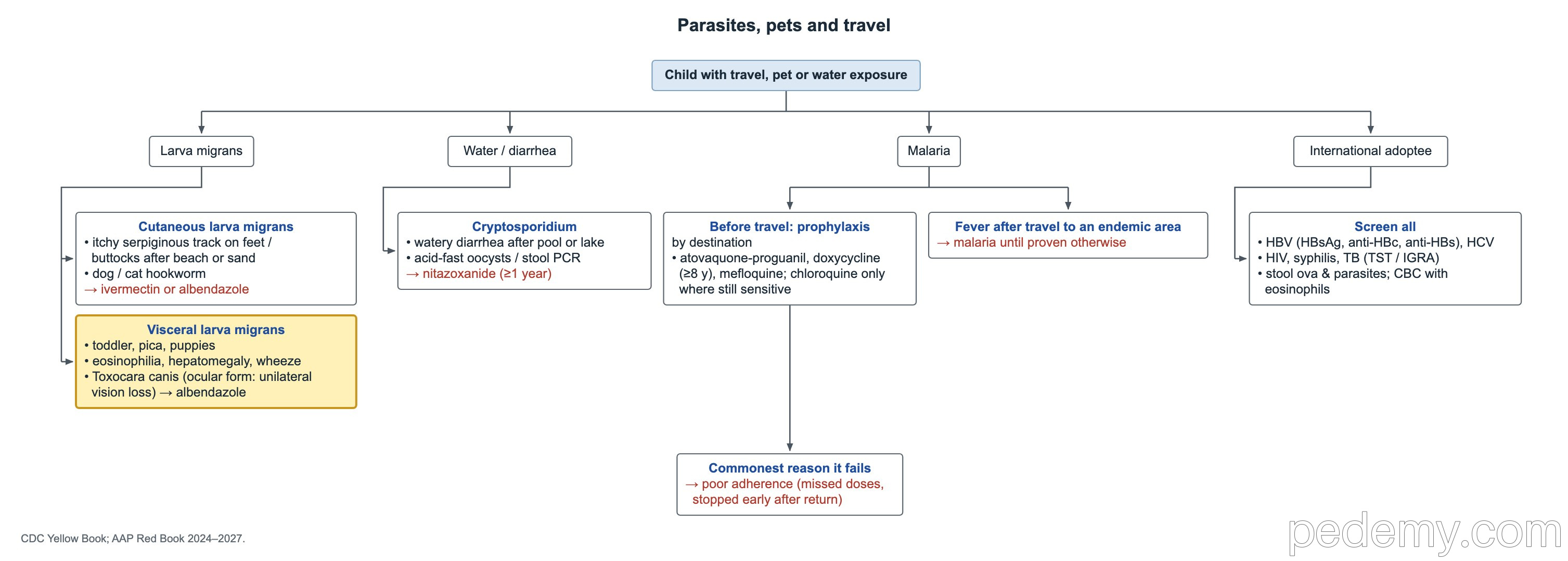
- Cause: swallowed eggs of Toxocara canis (dogs, especially puppies) or T. cati from soil.
- Typical child: toddler with pica and a new puppy.
- Findings: marked eosinophilia, hepatomegaly, wheeze or cough, sometimes high IgE.
- Ocular larva migrans: older child with one-sided vision loss or strabismus, often without eosinophilia.
- Diagnosis: Toxocara serology. Treatment: albendazole (5 days), with steroids for severe or eye disease.
- Prevention: deworm pets, clean up dog feces, wash hands after soil play.
Cutaneous larva migrans
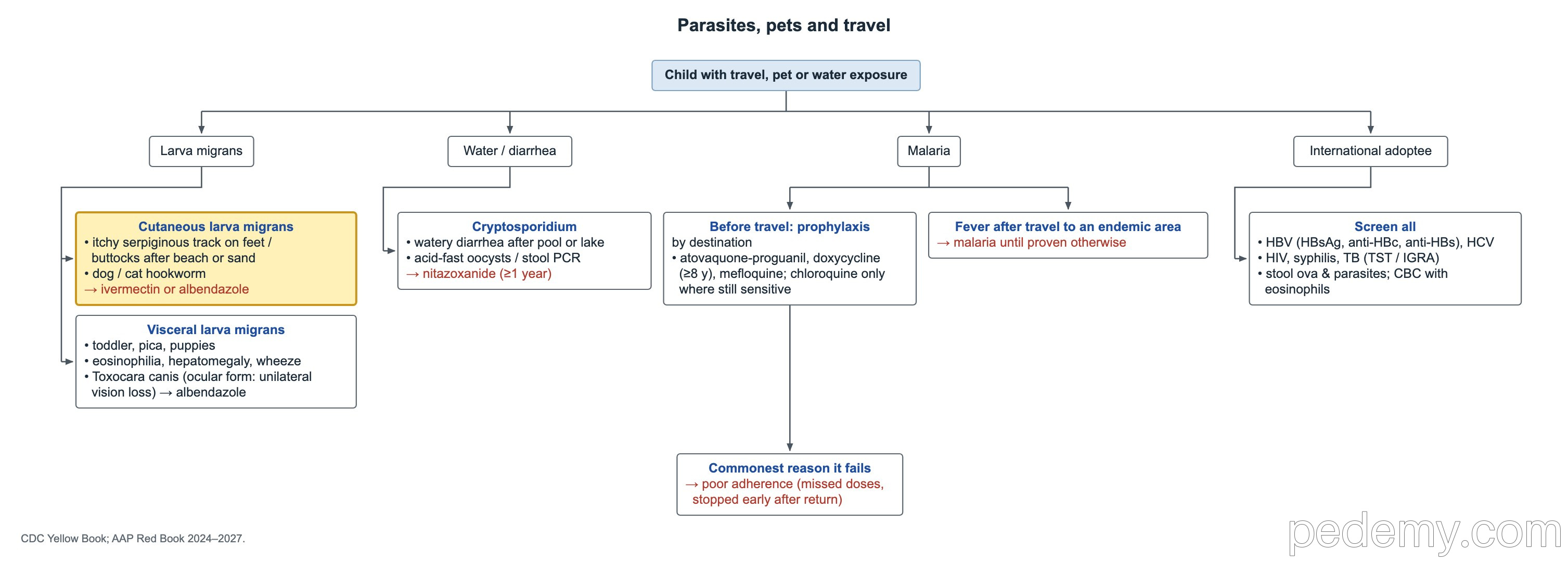
- Cause: dog or cat hookworm larvae (Ancylostoma braziliense) entering bare skin on beaches or sand.
- Sign: intensely itchy, raised, serpiginous track on the feet or buttocks that moves a few millimeters to centimeters a day.
- Clinical diagnosis; no test needed.
- Treatment: oral albendazole for 3 days or a single dose of ivermectin. It is self-limited but treatment eases the itch.
- Prevention: shoes on the beach and a towel or mat between skin and sand.
Dengue
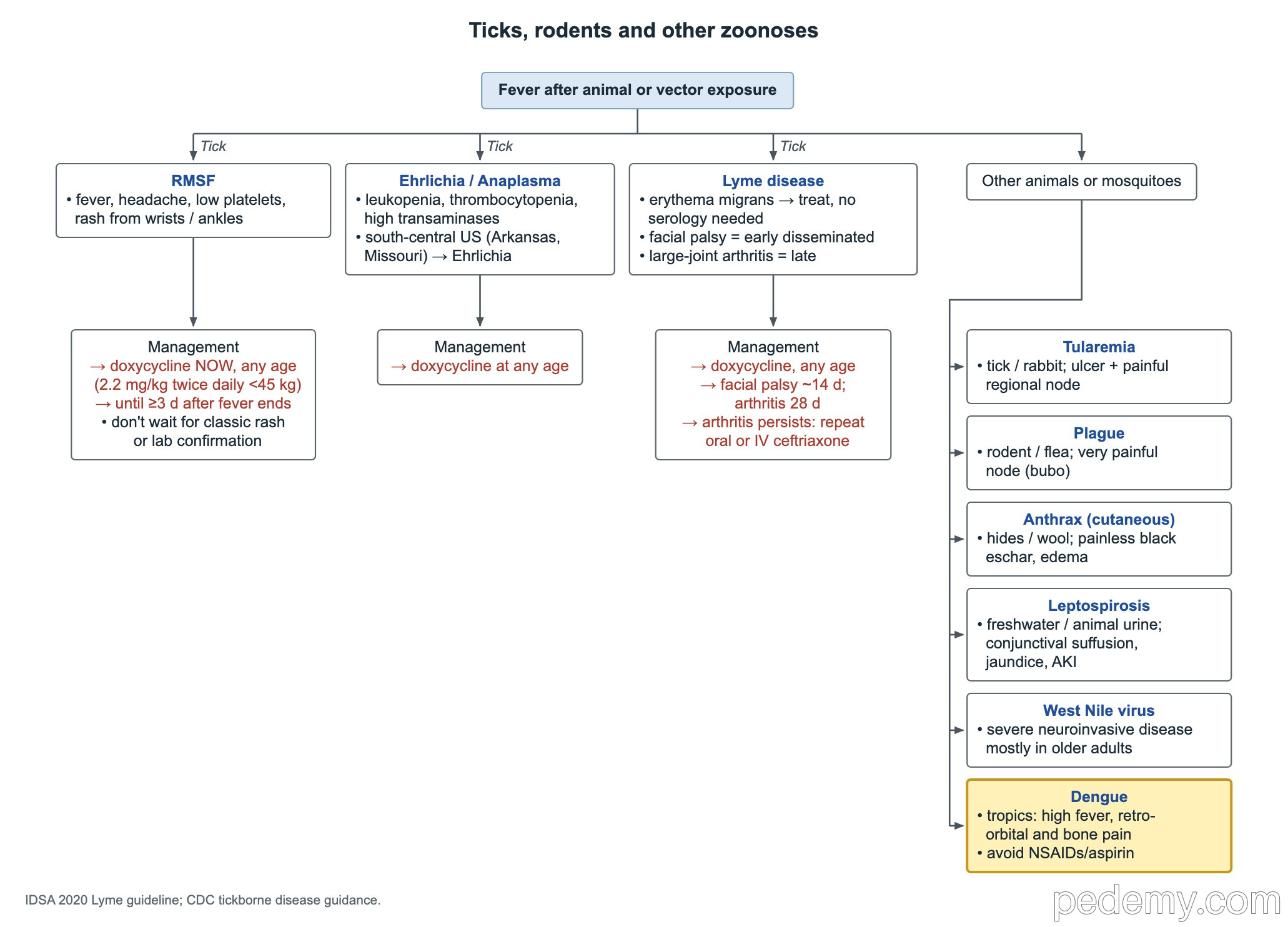
Dengue is spread by Aedes mosquitoes in the tropics, including the Caribbean, Latin America, Puerto Rico and Southeast Asia. Incubation is 3–14 days.
- Symptoms: high fever, severe headache, retro-orbital pain, bone and muscle pain, rash, low white count and platelets.
- The critical phase starts as the fever falls (days 3–7): watch for plasma leak and bleeding.
- Warning signs: abdominal pain, persistent vomiting, mucosal bleeding, lethargy, a large liver, rising hematocrit with falling platelets.
- Tests: dengue RT-PCR or NS1 antigen in the first 7 days, plus IgM.
- Treatment: fluids and acetaminophen. Avoid NSAIDs and aspirin because of bleeding risk.
- A second infection with a different serotype carries a higher risk of severe dengue.
Screening internationally adopted children
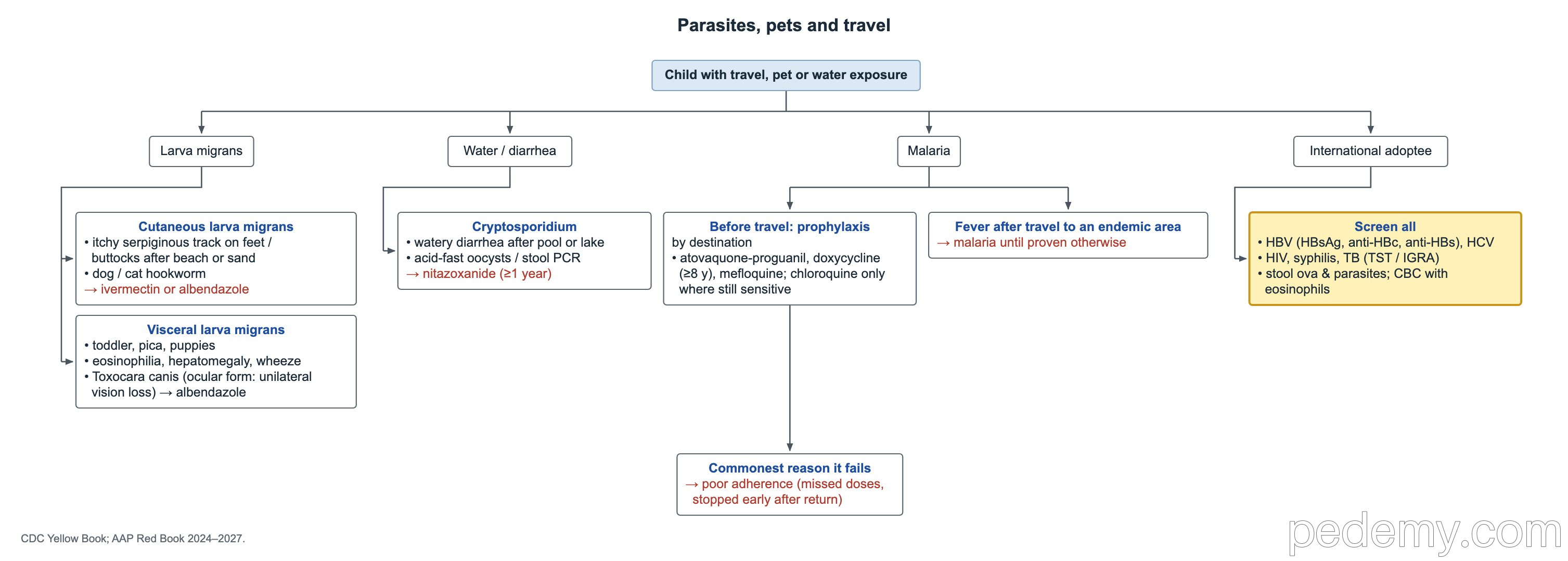
Children adopted from abroad may have infections even when they look well and records say they were tested. Screen every child, whatever the history.
- Hepatitis B (HBsAg, anti-HBc, anti-HBs) and hepatitis C.
- HIV and syphilis serology.
- TB: TST or IGRA. If negative on arrival, repeat in 3–6 months, because malnutrition and recent exposure can cause false negatives.
- Stool ova and parasites, and a CBC with differential to look for eosinophilia.
- Repeat HIV, hepatitis B and hepatitis C tests 6 months after arrival.
- Also check lead level, growth, vision, hearing and vaccine records or titers.
Common questions
How long do you take malaria pills after leaving?
Doxycycline, mefloquine and chloroquine continue for 4 weeks after leaving the malaria area. Atovaquone-proguanil continues for 7 days.
Can children take doxycycline for malaria prevention?
For malaria prophylaxis, doxycycline is used from 8 years of age. Younger children usually take atovaquone-proguanil or mefloquine, depending on the destination.
Why avoid ibuprofen in dengue?
Dengue lowers platelets and can cause bleeding. NSAIDs and aspirin add to bleeding risk, so acetaminophen is used for fever and pain.
Study this topic
Sources
- CDC Yellow Book: Malaria
- CDC: Dengue clinical guidance for healthcare providers
- AAP Red Book 2024–2027: Report of the Committee on Infectious Diseases
Written for Pedemy in our own words from the sources above; checked November 2026. For education only, not medical advice; check doses and local protocols before treating a patient. Pedemy is independent and not affiliated with or endorsed by the organizations cited.