

At a glance
- Remove an attached tick right away; do not wait to see a doctor first.
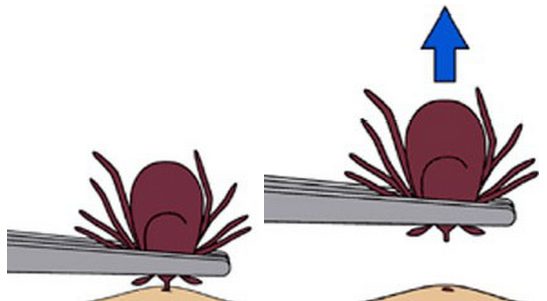
- Grip the tick close to the skin with fine-tipped tweezers and pull straight out with steady pressure.
- Skip petroleum jelly, heat or nail polish; they delay removal and may push germs into the skin.
- See a doctor for a rash or fever within several weeks of a tick bite, and mention the bite.
- The Lyme rash starts 3 to 30 days after the bite and is not always a bull's-eye.
- Commercial tick testing is not recommended, and its results should not guide treatment.
- Showering within 2 hours of coming indoors lowers the risk of Lyme disease.
How to remove a tick
- Grasp the tick as close to the skin as you can with clean, fine-tipped tweezers.
- Pull upward with steady, even pressure; twisting or jerking can leave the mouthparts behind.
- If mouthparts stay in and do not lift out easily, leave them; the skin will push them out as it heals.
- Clean the bite and your hands with soap and water, rubbing alcohol or hand sanitizer.
- Never crush the tick with your fingers; seal it in a bag or container, wrap it in tape, drop it in alcohol or flush it.
- Check the rest of your child's body, because there may be more than one tick.
- Never use petroleum jelly, heat, nail polish or other products to make the tick let go, since they can push infected fluid into the skin.
Removing a tick in 5 steps
- GripFine-tipped tweezers, as close to the skin as possible.
- PullStraight up, steady and even; no twisting.
- CleanThe bite and your hands, with soap and water or alcohol.
- DisposeSealed bag, tape, alcohol or toilet; never crush it.
- CheckLook over the whole body for more ticks.

What to watch for after the bite
Some ticks carry germs, such as the bacteria that cause Lyme disease. Watch your child for several weeks and look for these early signs:
- A rash at the bite that appears 3 to 30 days later, about 7 days on average, and slowly grows.
- The rash can reach 12 inches (30 cm) or more across, feels warm and is rarely itchy or painful.
- It may or may not clear in the center, so do not wait for a bull's-eye shape.
- Fever, chills, headache, tiredness, muscle or joint aches, or swollen glands, with or without a rash.
- At the visit, say when the bite happened and where your child most likely picked up the tick.
After a tick bite: what to expect
- Day 0Remove the tick and note the date and place.
- Days 3 to 30A growing Lyme rash may appear at the bite, most often around day 7.
- Several weeksKeep watching for fever or rash and see a doctor if either appears.
- Days to monthsUntreated, later signs can affect the nerves, joints or heart.
Later signs that need prompt care
Untreated Lyme disease can cause other problems days to months after the bite:
- Severe headache with a stiff neck.
- Drooping on one or both sides of the face.
- Swollen, painful knees or other large joints.
- A racing or irregular heartbeat, dizziness or shortness of breath.
- New rashes on other parts of the body.
Tick bite: when to get help
- Call 911Very hard to wake, struggling to breathe, or a seizure.
- Get care todaySevere headache with stiff neck, facial droop, or a racing or irregular heartbeat.
- Call the doctorRash or fever in the weeks after the bite, or to ask about preventive medicine.
- Watch at homeTick removed and child well: check the bite and keep the date.
Preventive medicine and tick testing
Where Lyme disease is common, a doctor may offer a preventive antibiotic after some tick bites. Call soon after the bite to ask whether it fits your child; it is not needed after every bite.
Sending the tick to a commercial lab is not recommended. A positive result does not prove infection, a negative one can falsely reassure, and a sick child should never wait for results.
Preventing tick bites
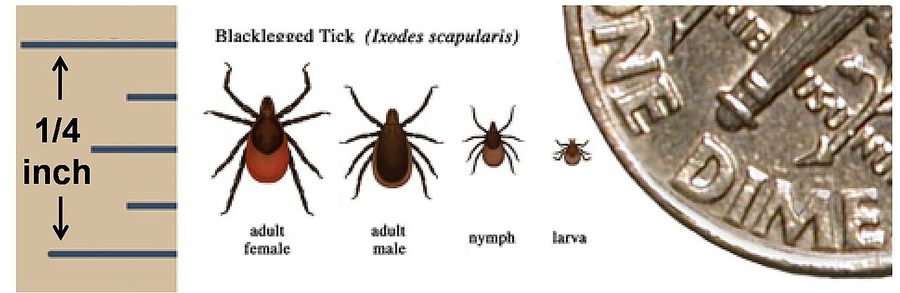
- Ticks live in grassy, brushy or wooded areas, including backyards, and are most active from April to September.
- Use an EPA-registered repellent such as DEET, picaridin or IR3535, but no oil of lemon eucalyptus or PMD under age 3.
- Treat clothing, shoes and gear, never skin, with 0.5% permethrin.
- After time outdoors, check the hair, ears, armpits, belly button, behind the knees, between the legs and around the waist.
- Tumble-dry dry clothes on high heat for 10 minutes to kill ticks, and check pets and backpacks too.

Common questions
Does every tick bite cause Lyme disease?
No. Only some ticks carry the bacteria, and the risk depends on the kind of tick and where the bite happened.
What if the tick's head stays in the skin?
Lift it out with tweezers if that is easy. If not, leave it alone; digging can hurt the skin, and the body pushes it out while healing.
What does a Lyme disease rash look like on a child?
It is a warm, red patch that spreads outward from the bite over days. Some have a clear center like a target, but many are evenly colored.
Should I save the tick or get it tested?
Lab testing of the tick is not advised. Treatment decisions rest on your child's symptoms, not on a tick result.
Does my child need antibiotics after a tick bite?
Not usually. In places where Lyme disease is common, call the doctor soon after the bite to ask whether a preventive dose makes sense for your child.
How can I keep ticks off my child?
Use a registered repellent on skin, permethrin on clothes, a shower soon after coming in, and a careful daily tick check.
Sources
- CDC — What to do after a tick bite
- CDC — Signs and symptoms of untreated Lyme disease
- CDC — Preventing tick bites
- AAP — How to choose an insect repellent for your child
Written for Pedemy in our own words from the sources above; checked October 2026. For education only, not medical advice. Pedemy is independent and not affiliated with or endorsed by the organizations cited.