

At a glance
- Scabies causes intense itching, worst at night, with small bumps and tiny lines (burrows) in the skin.
- Babies and toddlers can have the rash on the head, face, neck, palms and soles.
- The first time, itching starts 3 to 6 weeks after contact; a child can spread mites before it starts.
- Permethrin 5% cream is the usual treatment: left on 8 to 14 hours overnight, then repeated a week later.
- Treat everyone in close contact on the same night, even if they do not itch.
- Children can go back to school or child care the day after the first treatment.
- Itching can last several weeks after the mites are dead; it does not mean treatment failed.
Signs of scabies
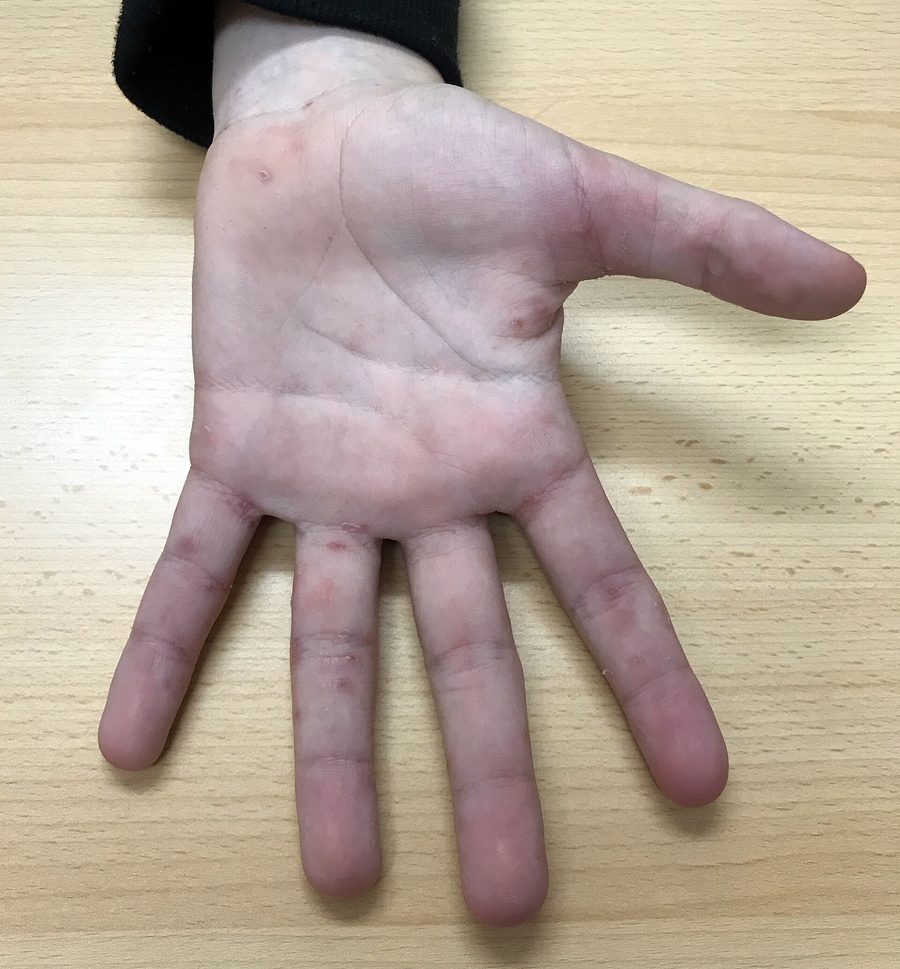
The main sign is strong itching that is worse at night. Small red bumps, blisters or scratch marks appear, sometimes with thin, wavy lines where mites have burrowed.
In older children it shows up between the fingers, on the wrists, elbows and armpits, and around the waist, buttocks and genitals.
In babies and toddlers the rash can cover the whole body, including the head, palms and soles. A baby may be fussy and sleep poorly.
After a first exposure, symptoms take 3 to 6 weeks to appear; with a repeat infection they start within 1 to 4 days. Other family members often begin itching too.

Treatment
- Scabies needs a prescription; permethrin 5% cream is the medicine used most for infants, children and adults.
- Under age 2, the cream goes on the scalp, neck and whole body down to the toes.
- For older children, it goes from the neck down to the toes, but not on the face.
- Leave it on overnight for 8 to 14 hours, wash it off in the morning, and repeat the treatment a week later.
- For young babies, use only the product your child’s doctor recommends.
- Some people are given a medicine by mouth instead; the doctor chooses based on age and situation.
Treatment night, step by step
- Everyone togetherPlan the same bedtime treatment for the child and every close contact.
- ApplyCover all the skin the doctor named, including skin folds, down to the toes.
- Leave onKeep it on overnight, 8 to 14 hours, then wash it off.
- Clean laundryPut on clean clothes and hot-wash the bedding, towels and clothes used in the past 3 days.
- RepeatDo the whole treatment again a week later.
Treating the household and laundry
- Treat everyone who has regular close contact at the same time, including babysitters and grandparents.
- Wash clothes, towels and bedding in hot water and dry them on a hot cycle; heat above 50°C (122°F) for 10 minutes kills mites and eggs.
- Seal items you cannot wash, such as stuffed toys, in a plastic bag for at least 72 hours.
- Vacuum sofas, carpets, car seats and strollers; mites usually die within 2 to 3 days away from skin.
- Pets do not carry human scabies, and you do not need pest control or insect sprays.
Scabies: what to expect over time
- 3 to 6 weeks after contactItching and rash start after a first exposure.
- Treatment nightThe child and all close contacts are treated together.
- Next dayBack to school or child care.
- A week laterSecond treatment for everyone.
- The next few weeksItching slowly fades; new bumps two weeks after the last treatment need a recheck.
When to call the doctor
- Seek care the same day for fever, sores with spreading redness or pus, or a child who seems ill.
- Book a visit for any new very itchy rash, especially if others at home are itching too.
- Ask for a recheck if new bumps or burrows appear two weeks after the last treatment.
- Ask about another treatment if itching lasts more than 2 to 4 weeks after treatment.
- Call promptly if the skin becomes thick and crusted, or your child has a weak immune system.
School and itching after treatment
Your child can return to school or child care the day after the first overnight treatment. Let the program know so other families can watch for itching.
The itch is a reaction to dead mites and their waste, so it can go on for weeks. Ask the doctor about anti-itch creams or medicine for sleep-disturbing itching.
Common questions
How do you get scabies?
Mostly through long skin-to-skin contact, such as holding a child or sharing a bed. It has nothing to do with being dirty.
Does the whole family need scabies treatment?
Yes, anyone in regular close contact should be treated on the same night, with or without symptoms. Otherwise the mites pass back and forth.
Why is my child still itchy after scabies treatment?
The skin keeps reacting to the dead mites for a while. Only new bumps or burrows suggest the mites are back.
How long can scabies mites live on bedding or furniture?
Not long; they generally die within 2 to 3 days off the body. That is why bagging unwashable things for 72 hours works.
Can my dog or cat give my child scabies?
No. Human scabies spreads between people, so pets do not need treatment for it.
Sources
- CDC — Symptoms of Scabies
- CDC — Treatment of Scabies
- CDC — Preventing Scabies
- AAP — Scabies: A Very Itchy But Curable Rash
Written for Pedemy in our own words from the sources above; checked October 2026. For education only, not medical advice. Pedemy is independent and not affiliated with or endorsed by the organizations cited.