

Ophthalmology flashcards
97 cards · 2 topics · 6% of the board exam, shared with ENT
97 free Ophthalmology flashcards for pediatric board review and rotations, written in our own words with public guideline sources. Topics: Eye Recognition and Emergencies, Visual Development. Ophthalmology is 6% of the board exam, shared with ENT.
Sample Ophthalmology cards
-
Eye Recognition and Emergencies
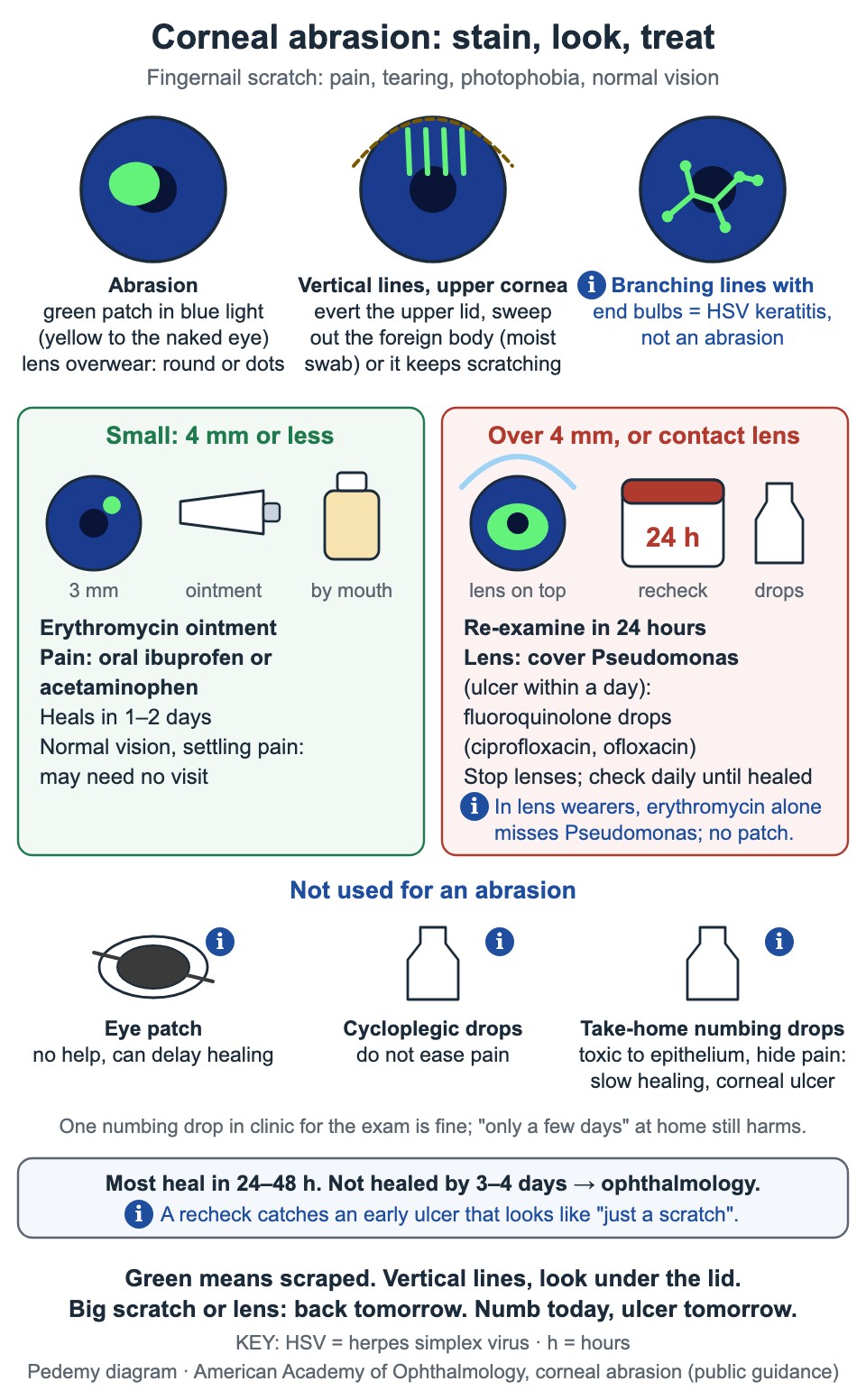
Corneal abrasion → why no take-home topical anesthetic drops? […]
Show answer
Corneal abrasion → why no take-home topical anesthetic drops? They delay epithelial healing and risk corneal ulcers
Why: Repeated anesthetic drops are toxic to corneal epithelium and remove the protective pain signal; one drop in clinic for the exam is fine. Even a few days of take-home drops still harm the cornea. Hook: Numb today, ulcer tomorrow.
Source: Wipperman JL, Dorsch JN. Evaluation and Management of Corneal Abrasions. Am Fam Physician 2013. Rewritten for Pedemy in our own words, November 2026.
Corneal abrasion: stain, look, treat -
Visual Development
Child 5 years or older on an acuity chart → refer if vision is worse than? […]
Show answer
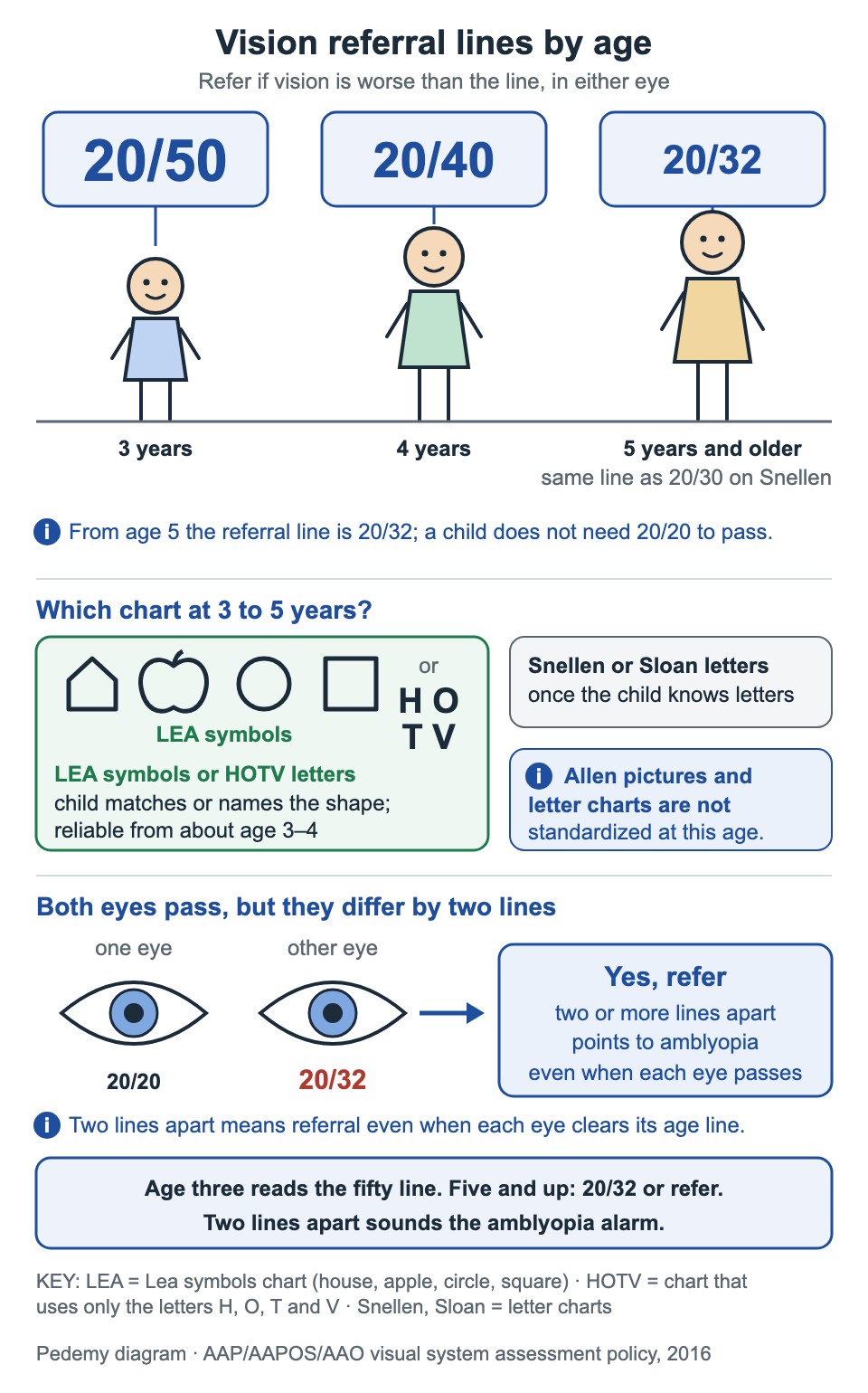
Child 5 years or older on an acuity chart → refer if vision is worse than? 20/32 in either eye
Why: From age 5 the pass line is 20/32 (the same line as 20/30 on a Snellen chart); missing it suggests a refractive error or amblyopia needing an eye exam. A child of 5 is not held to 20/20, and 20/40 is not accepted at this age. Hook: Five and up, thirty-two or refer.
Source: AAP/AAPOS/AAO/AACO policy statement: Visual System Assessment in Infants, Children, and Young Adults by Pediatricians, and its clinical report: Procedures for the Evaluation of the Visual System by Pediatricians (Pediatrics 2016). Rewritten for Pedemy in our own words, November 2026.
Vision referral lines by age -
Eye Recognition and Emergencies
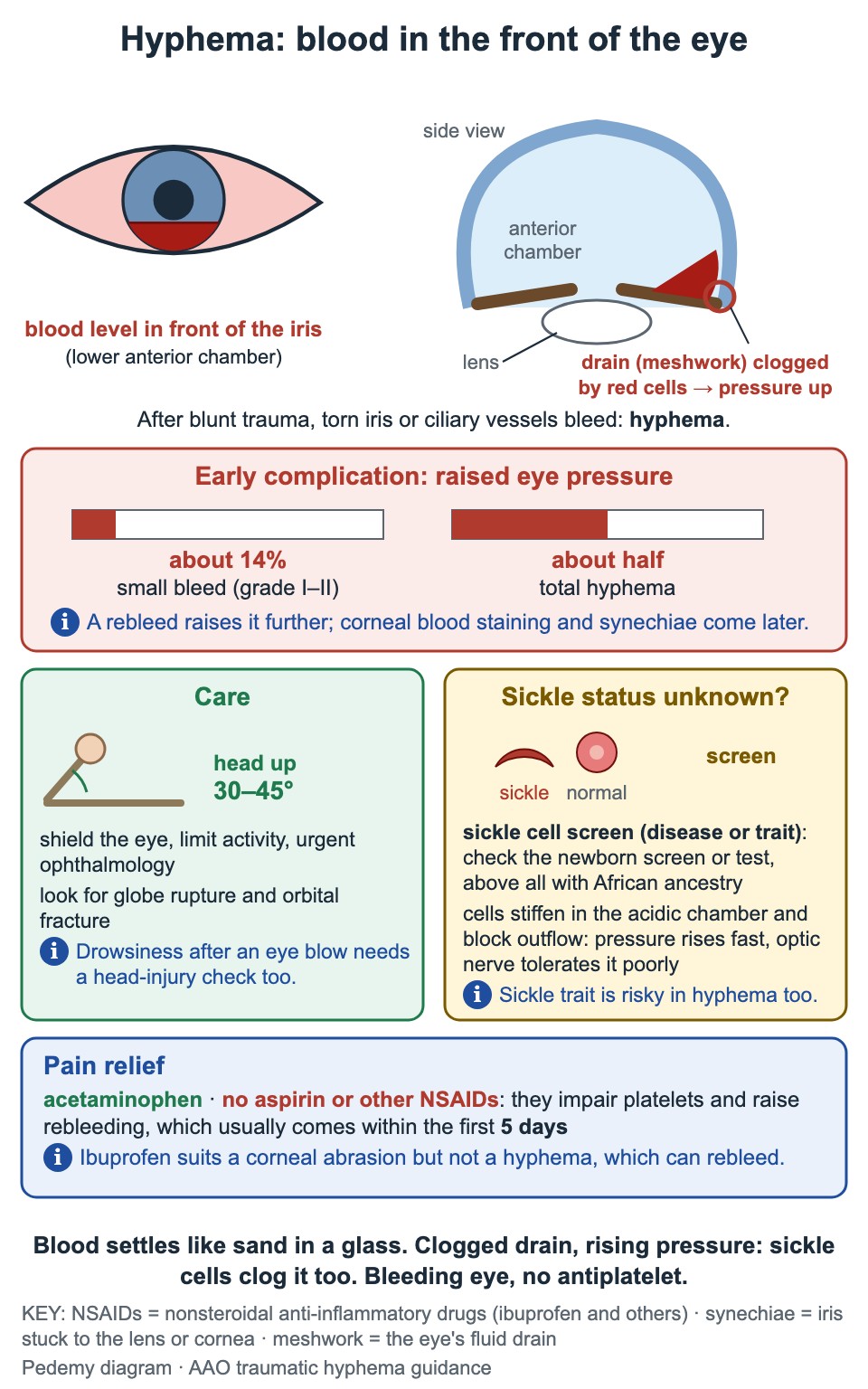
Teen with a traumatic hyphema needs pain relief → which drugs to avoid? […]
Show answer
Teen with a traumatic hyphema needs pain relief → which drugs to avoid? Aspirin and other NSAIDs
Why: They impair platelets and raise the risk of rebleeding, which usually comes within the first 5 days; acetaminophen (Tylenol) is used instead. Ibuprofen (Motrin) suits a corneal abrasion but not a hyphema. Hook: Bleeding eye, no antiplatelet.
Source: AAO EyeWiki: Hyphema. Rewritten for Pedemy in our own words, November 2026.
Hyphema: blood in the front of the eye -
Visual Development
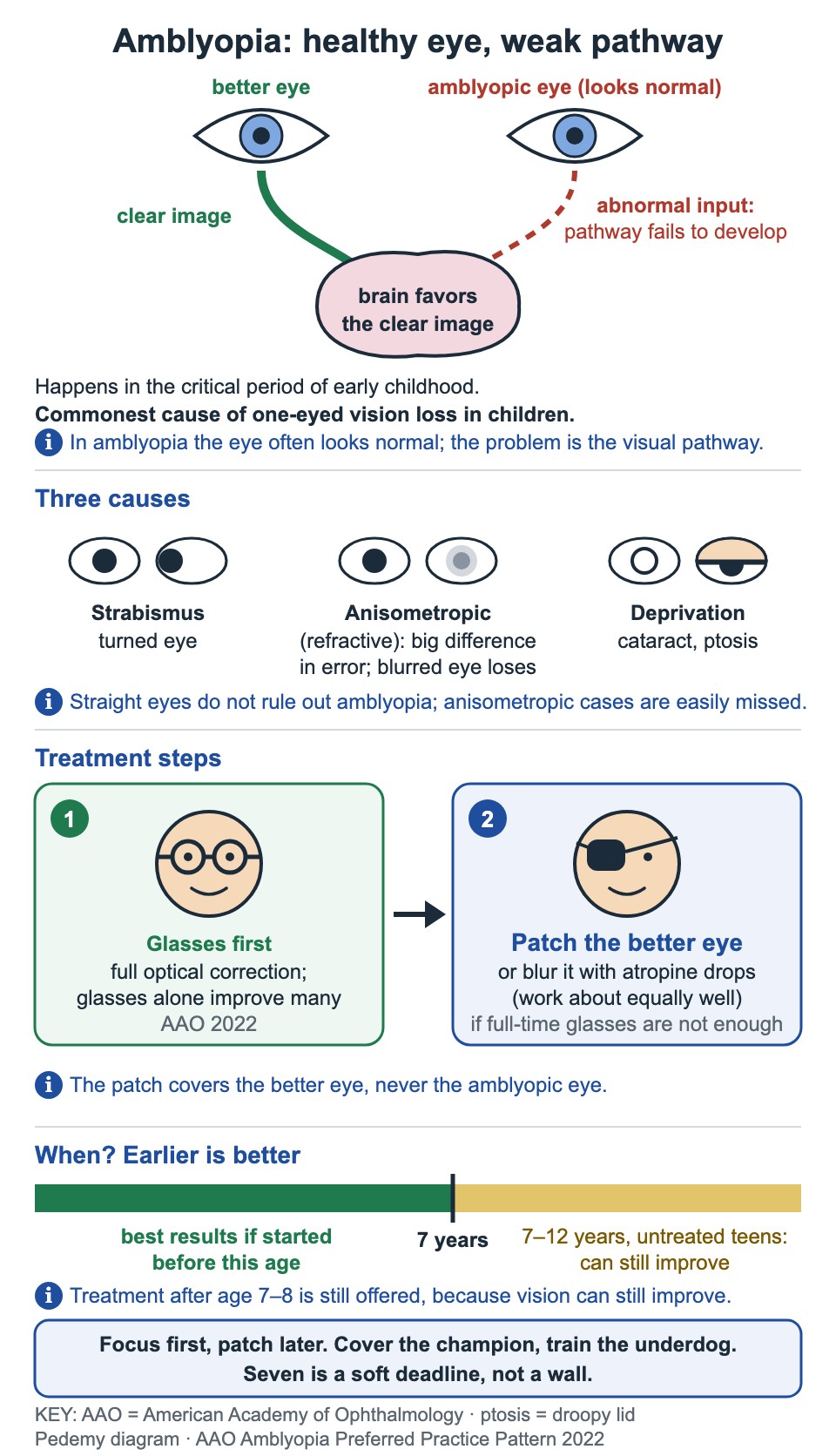
Amblyopia treatment → best results if started before what age? […]
Show answer
Amblyopia treatment → best results if started before what age? 7 years
Why: The visual pathways are most plastic in early childhood, so earlier treatment gives better vision, though children of 7–12 years and previously untreated teens can still improve. Treatment is worth trying after age 7–8. Hook: Seven is a soft deadline, not a wall.
Source: AAO Preferred Practice Pattern: Amblyopia (2022). Rewritten for Pedemy in our own words, November 2026.
Amblyopia: healthy eye, weak pathway -
Eye Recognition and Emergencies
Suspected ruptured globe in the emergency department → what goes over the eye? […]
Show answer
Suspected ruptured globe in the emergency department → what goes over the eye? A rigid shield resting on the orbital bones
Why: A shield on the bony rim protects without touching the globe, and the child then goes to emergency ophthalmology. A gauze pressure patch, as once used for abrasions, can push eye contents out. Hook: Shield, never squeeze.
Source: AAO EyeWiki: Open Globe Injury. Rewritten for Pedemy in our own words, November 2026.
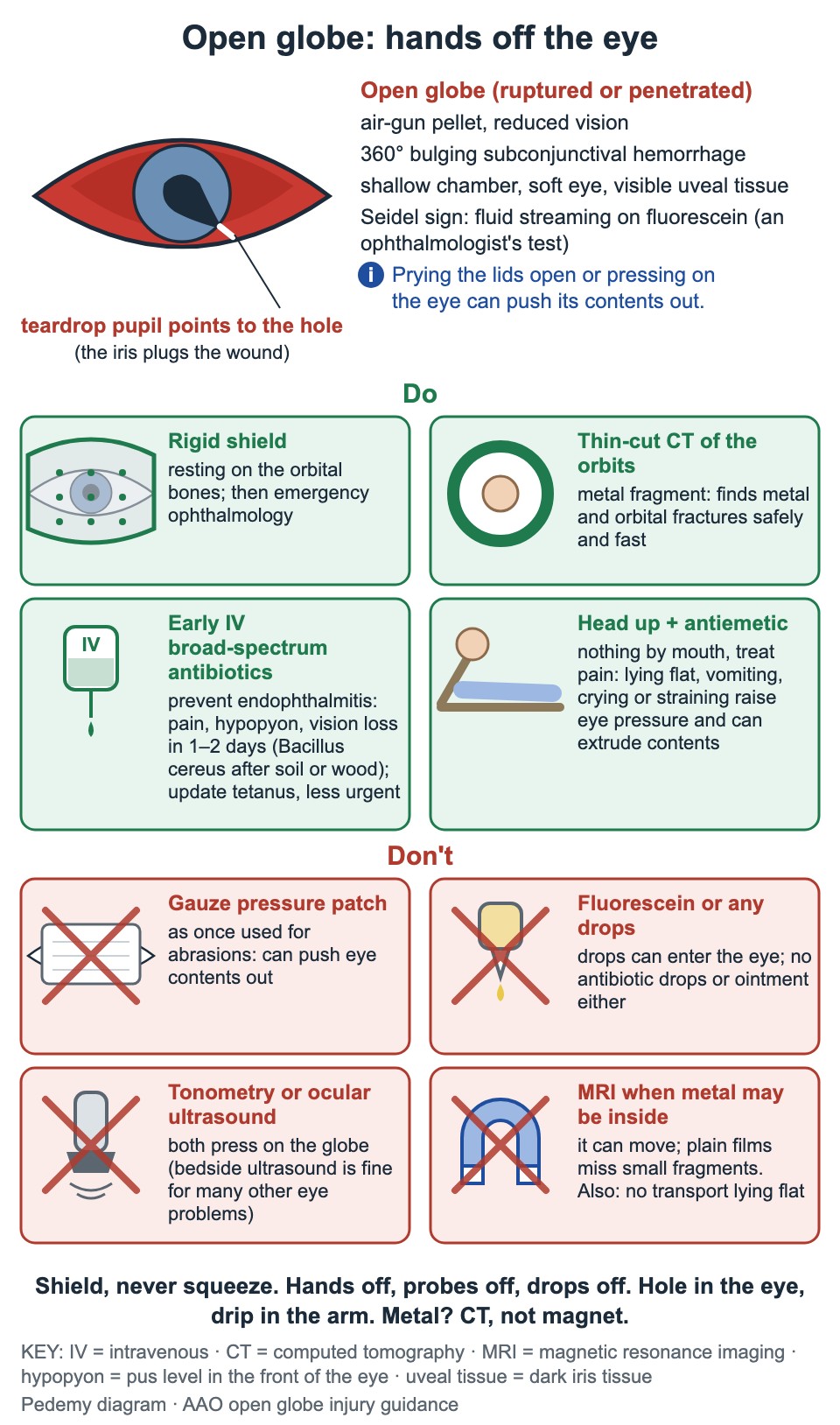
Open globe: hands off the eye -
Visual Development
Pendular nystagmus from 2–3 months, infant fixes and follows poorly → type? […]
Show answer
Pendular nystagmus from 2–3 months, infant fixes and follows poorly → type? Sensory nystagmus from poor vision in both eyes
Why: Early bilateral vision loss (albinism, optic nerve hypoplasia, congenital cataract, retinal dystrophy) stops fixation from developing, so the eyes swing; a full eye exam comes first. Vertical or acquired nystagmus points to the brain and needs MRI. Hook: Eyes that cannot see cannot hold still.
Source: AAO Preferred Practice Pattern: Pediatric Eye Evaluations (2022); AAO EyeWiki: Nystagmus, Infantile. Rewritten for Pedemy in our own words, November 2026.
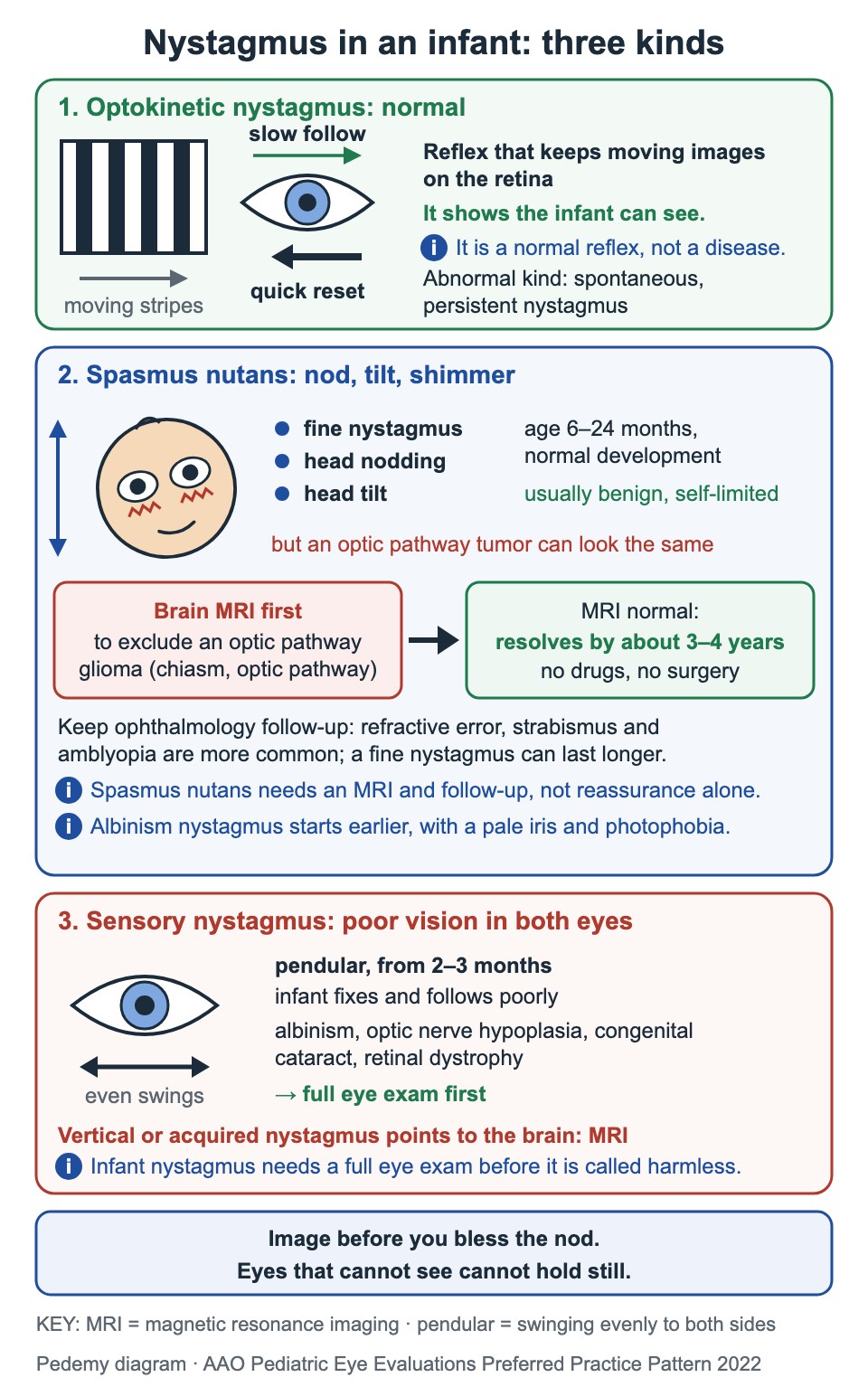
Nystagmus in an infant: three kinds -
Eye Recognition and Emergencies
Eye splash with lye or with acid → which does deeper damage, and why? […]
Show answer
Eye splash with lye or with acid → which does deeper damage, and why? Alkali: liquefactive necrosis penetrates the eye
Why: Alkali dissolves cell membranes and keeps moving into the anterior chamber; acid coagulates surface protein, which limits its spread. Late harm: limbal ischemia, corneal scarring and glaucoma. Acids sting more but usually stay superficial. Hook: Alkali melts, acid seals.
Source: AAO EyeWiki: Chemical (Alkali and Acid) Injury of the Conjunctiva and Cornea. Rewritten for Pedemy in our own words, November 2026.
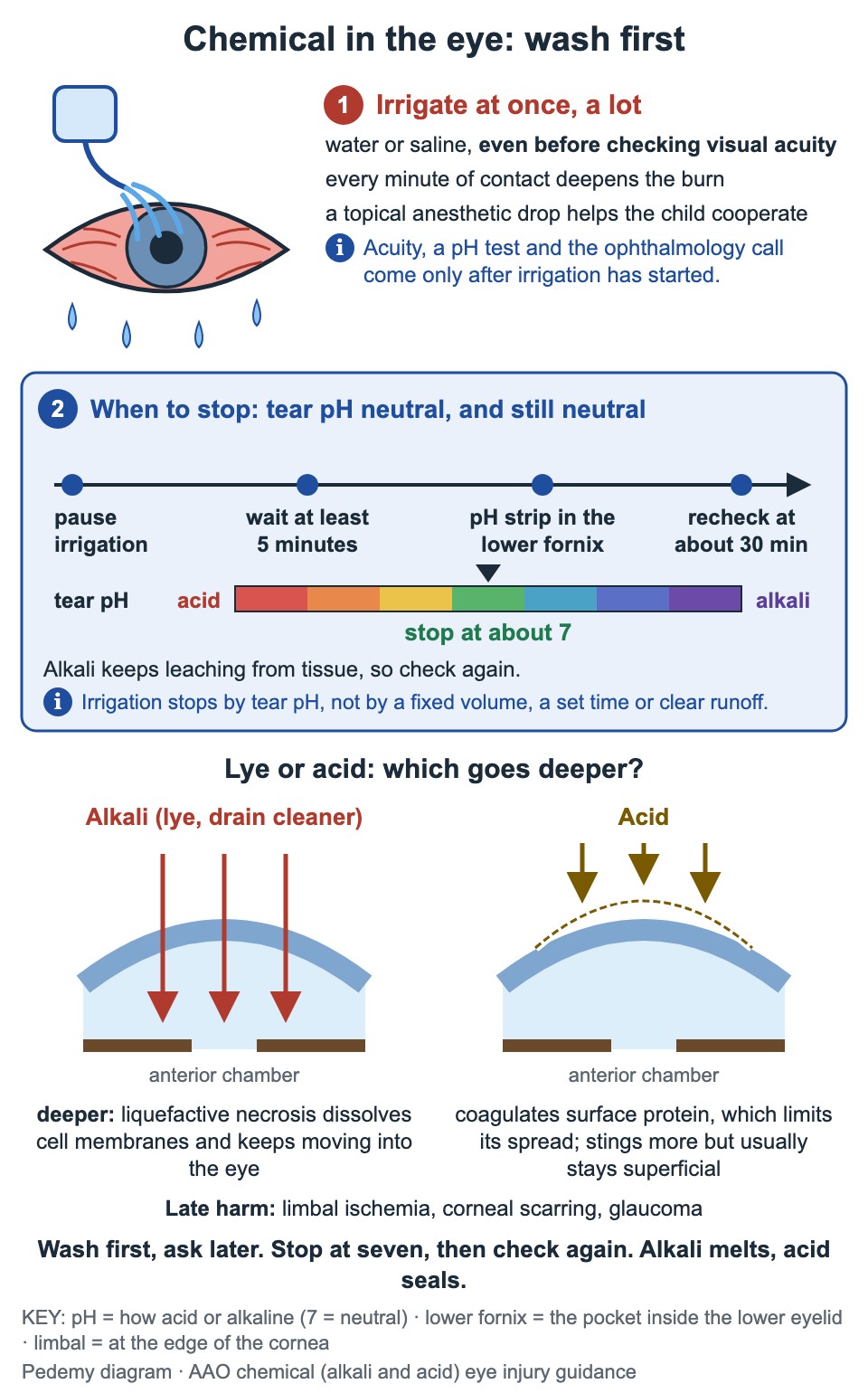
Chemical in the eye: wash first -
Visual Development
Infant looks cross-eyed; wide nasal bridge, epicanthal folds, symmetric corneal light reflexes → diagnosis? […]
Show answer
Infant looks cross-eyed; wide nasal bridge, epicanthal folds, symmetric corneal light reflexes → diagnosis? Pseudostrabismus
Why: Skin folds hide the nasal white of the eye, but the light reflex is centered in both pupils and the cover test shows no refixation. In true esotropia the reflex shifts toward the ear side of the turned eye. Pseudostrabismus is referred only if the exam is uncertain or vision is in doubt. Hook: Folds fool the eye, not the light.
Source: AAPOS: Pseudostrabismus; AAO Preferred Practice Pattern: Esotropia and Exotropia (2022). Rewritten for Pedemy in our own words, November 2026.
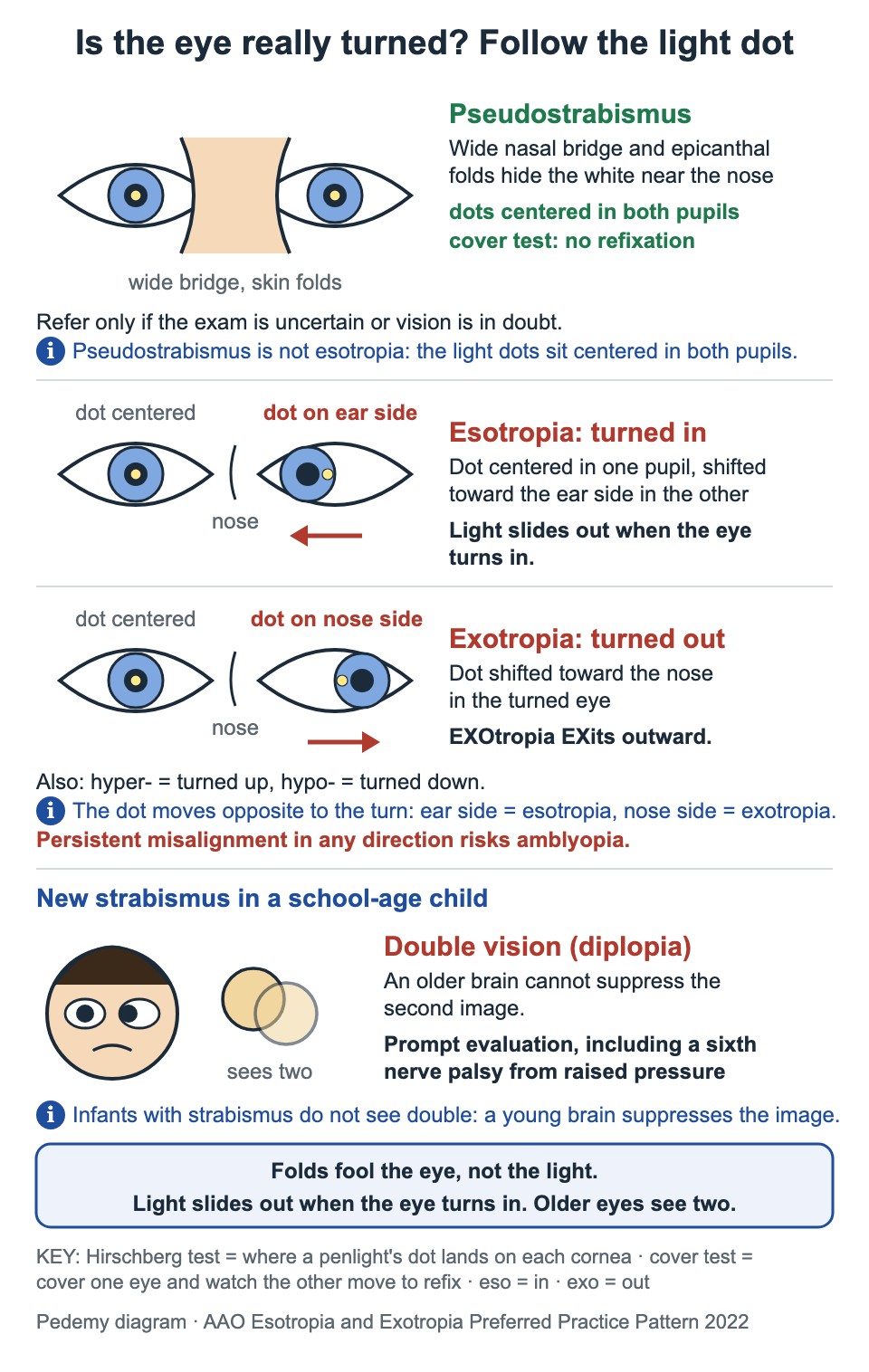
Is the eye really turned? Follow the light dot
Topics in Ophthalmology
Ophthalmology study guides
Clinical tools for Ophthalmology
Sample cards in other subjects
- Growth & Development
- Immunizations & Post-exposure Prevention
- Nutrition
- Well-Child Care & Prevention
- Emergency Medicine
- Infectious Disease
- ENT
- Mental Health
- Adolescent Medicine
- Cardiology
- Gastroenterology
- Pulmonology
- Dermatology
- Musculoskeletal & Sports Medicine
- Neonatology
- Neurology
- Allergy & Immunology
- Behavioral
- Endocrinology
- Hematology
- Nephrology
- Oncology
- Urology
- Biostatistics & Epidemiology
- Genetics
- Medical Ethics
- Metabolic Disorders
- Patient Safety & Quality Improvement
- Rheumatology
- Pharmacology
Free to study without an account. Sign up free to save your spaced-repetition schedule across devices. For education only; check current guidelines before clinical use.