

Patient Safety & Quality Improvement flashcards
48 cards · 2 topics · 2% of the board exam, shared with Biostatistics
48 free Patient Safety & Quality Improvement flashcards for pediatric board review and rotations, written in our own words with public guideline sources. Topics: Patient Safety, Quality Improvement & Care Delivery. Patient Safety & Quality Improvement is 2% of the board exam, shared with Biostatistics.
Sample Patient Safety & Quality Improvement cards
-
Patient Safety
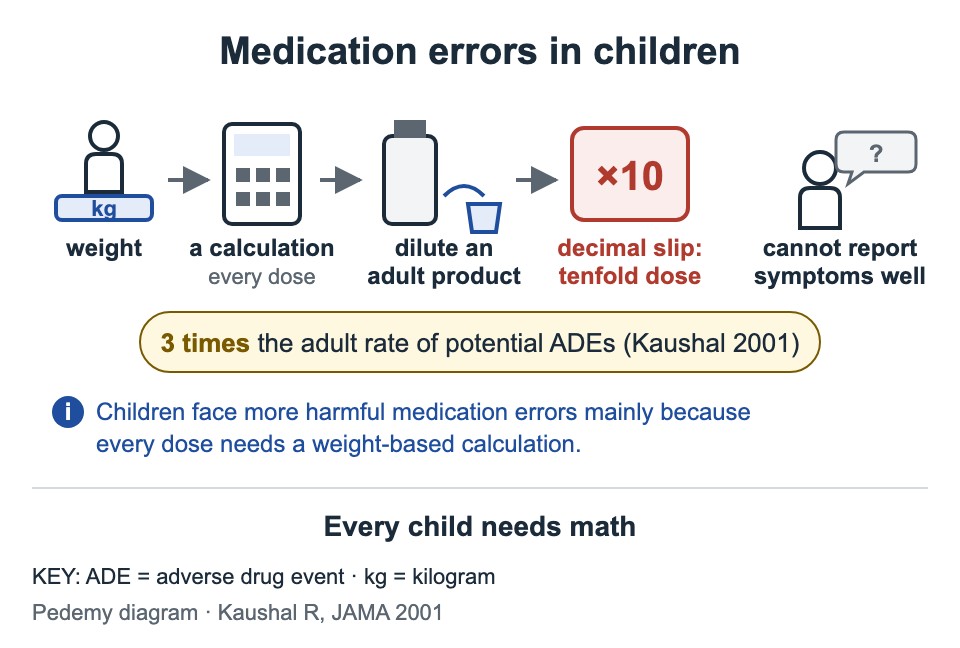
Why are children at higher risk of harmful medication errors than adults? → main reason? […]
Show answer
Why are children at higher risk of harmful medication errors than adults? → main reason? weight-based dose calculations
Why: Each pediatric dose needs a calculation, often a dilution of an adult product, so decimal (tenfold) errors are common; children also cannot report symptoms well. Potential adverse drug events were 3 times the adult rate (Kaushal 2001). Faster drug metabolism is not the main reason. Hook: every child needs math.
Source: AAP policy statement: Principles of Pediatric Patient Safety: Reducing Harm Due to Medical Care (Mueller et al., Pediatrics 2019); Kaushal R et al. JAMA 2001. Rewritten for Pedemy in our own words, November 2026.
Medication errors in children -
Quality Improvement & Care Delivery
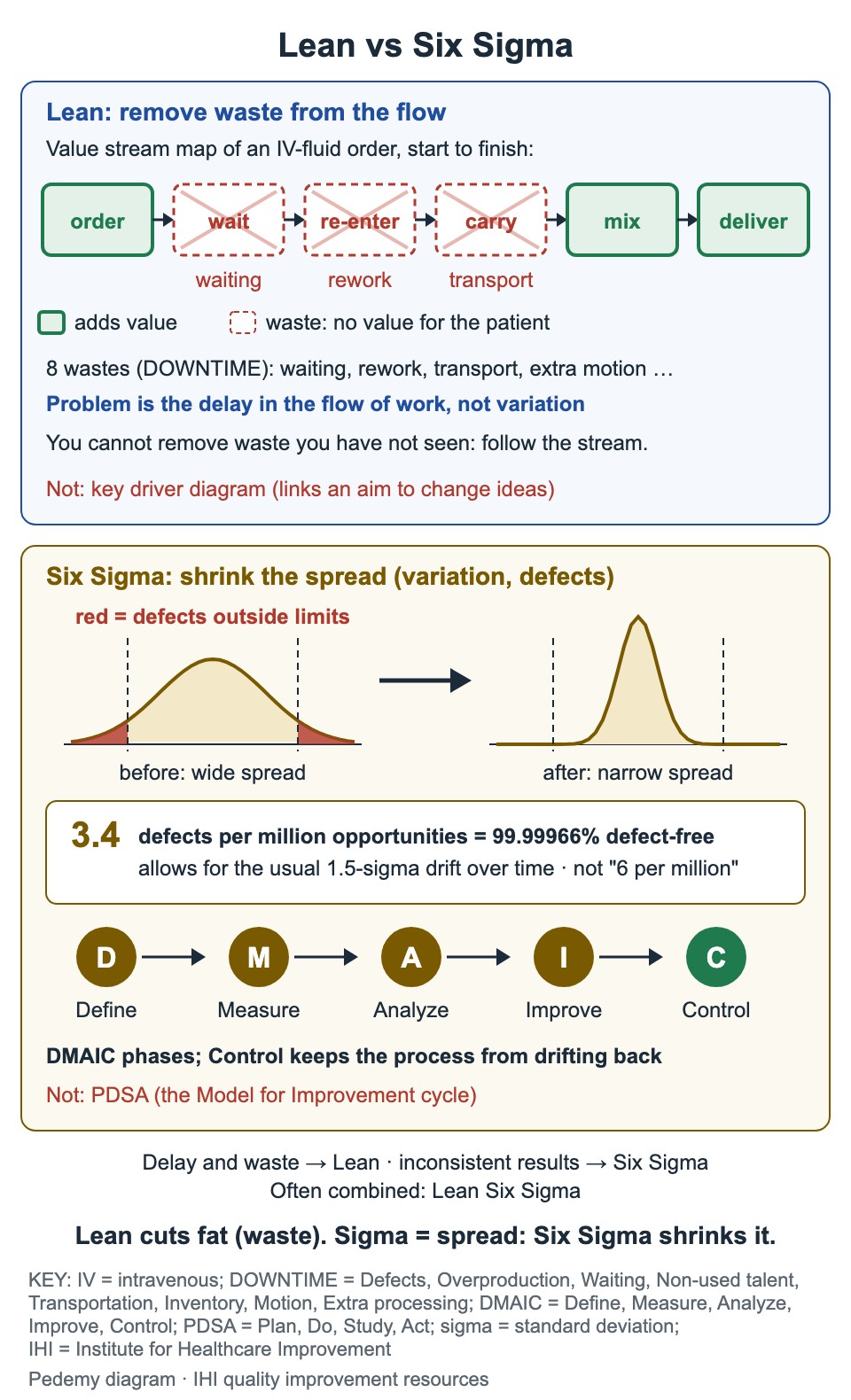
Team removes waiting and needless steps between an IV-fluid order and its delivery → which approach? […]
Show answer
Team removes waiting and needless steps between an IV-fluid order and its delivery → which approach? Lean
Why: Lean raises value for the patient by removing waste, any step that adds no value (waiting, rework, transport, extra motion; 8 wastes "DOWNTIME"). Reason: the delay sits in the flow of work, not in variation. Six Sigma targets variation and defects instead. Hook: Lean cuts fat (waste).
Source: IHI and AHRQ quality improvement resources on Lean (Toyota Production System) and Six Sigma (Motorola), 2024. Rewritten for Pedemy in our own words, November 2026.
Lean vs Six Sigma -
Patient Safety
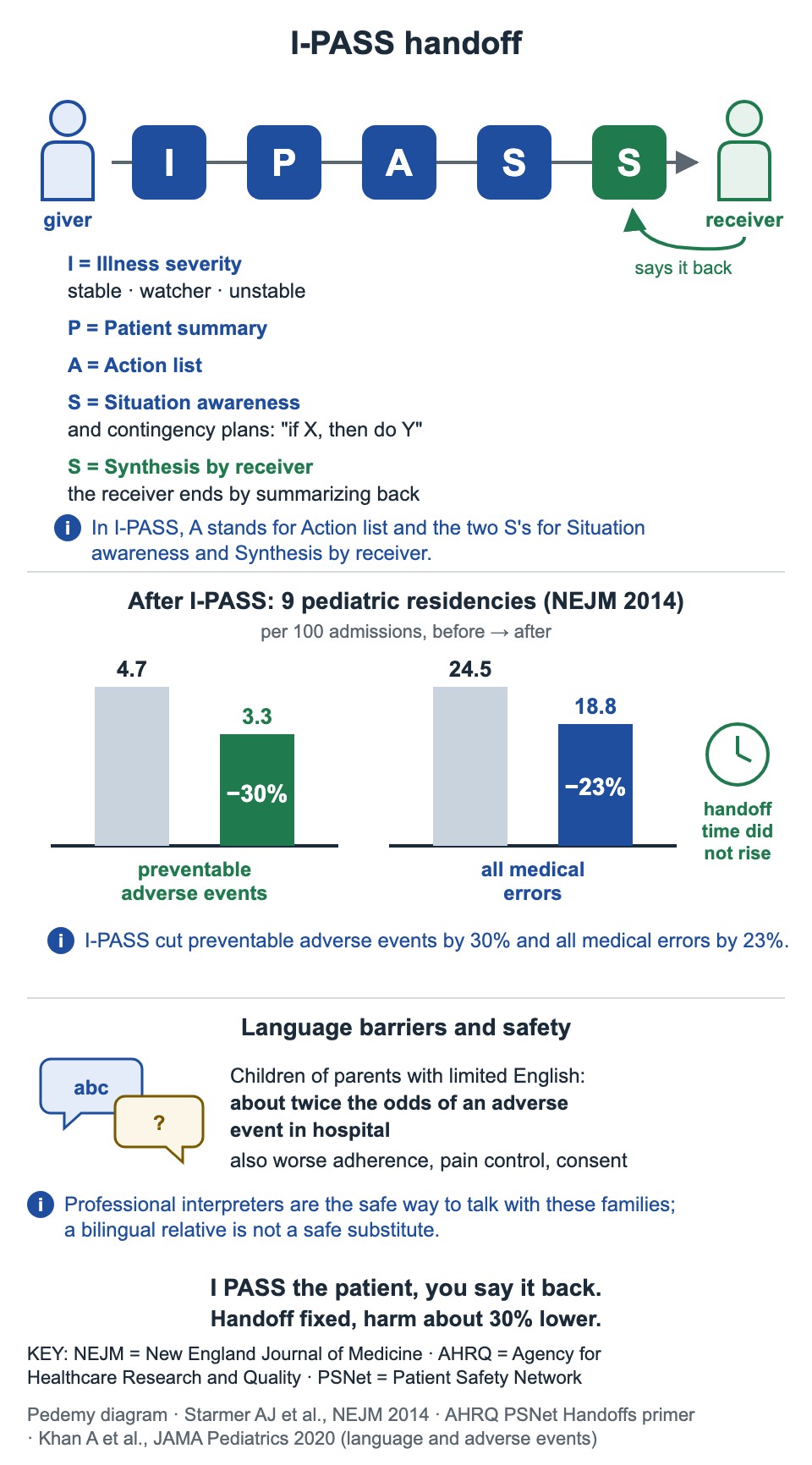
Children whose parents have limited English proficiency, ad hoc interpreting → risk of adverse events? […]
Show answer
Children whose parents have limited English proficiency, ad hoc interpreting → risk of adverse events? higher
Why: Children of parents with limited English have about twice the odds of an adverse event in hospital (Khan 2020); language barriers also hurt adherence, pain control and consent. Fix: professional interpreters. A bilingual relative is not a safe substitute. Hook: lost in translation, harmed in care.
Source: Khan A et al. Association between parent comfort with English and adverse events among hospitalized children. JAMA Pediatr 2020;174(12):e203215; HHS Section 1557 rule, 45 CFR 92.201 (2024). Rewritten for Pedemy in our own words, November 2026.
I-PASS handoff -
Quality Improvement & Care Delivery
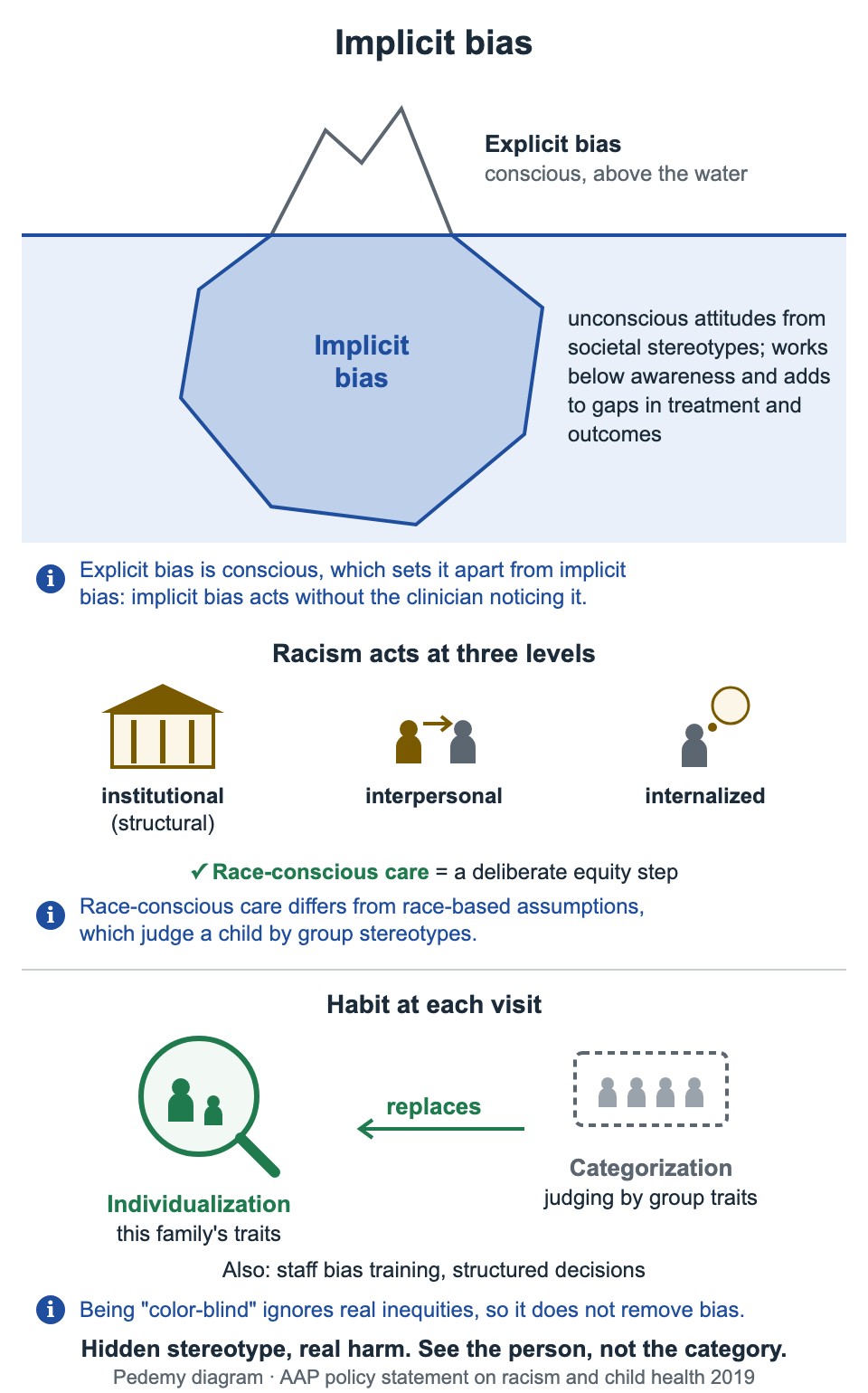
Clinician aware of implicit bias → habit at each visit? […]
Show answer
Clinician aware of implicit bias → habit at each visit? Individualization: focus on this family's traits, not group traits
Why: Individualization replaces categorization (judging by group), alongside staff bias training and structured decisions. Reason: group stereotypes drive biased choices. Being "color-blind" ignores real inequities, so it does not remove bias. Hook: See the person, not the category.
Source: AAP policy statement: The Impact of Racism on Child and Adolescent Health (Trent M et al., Pediatrics 2019). Rewritten for Pedemy in our own words, November 2026.
Implicit bias -
Patient Safety
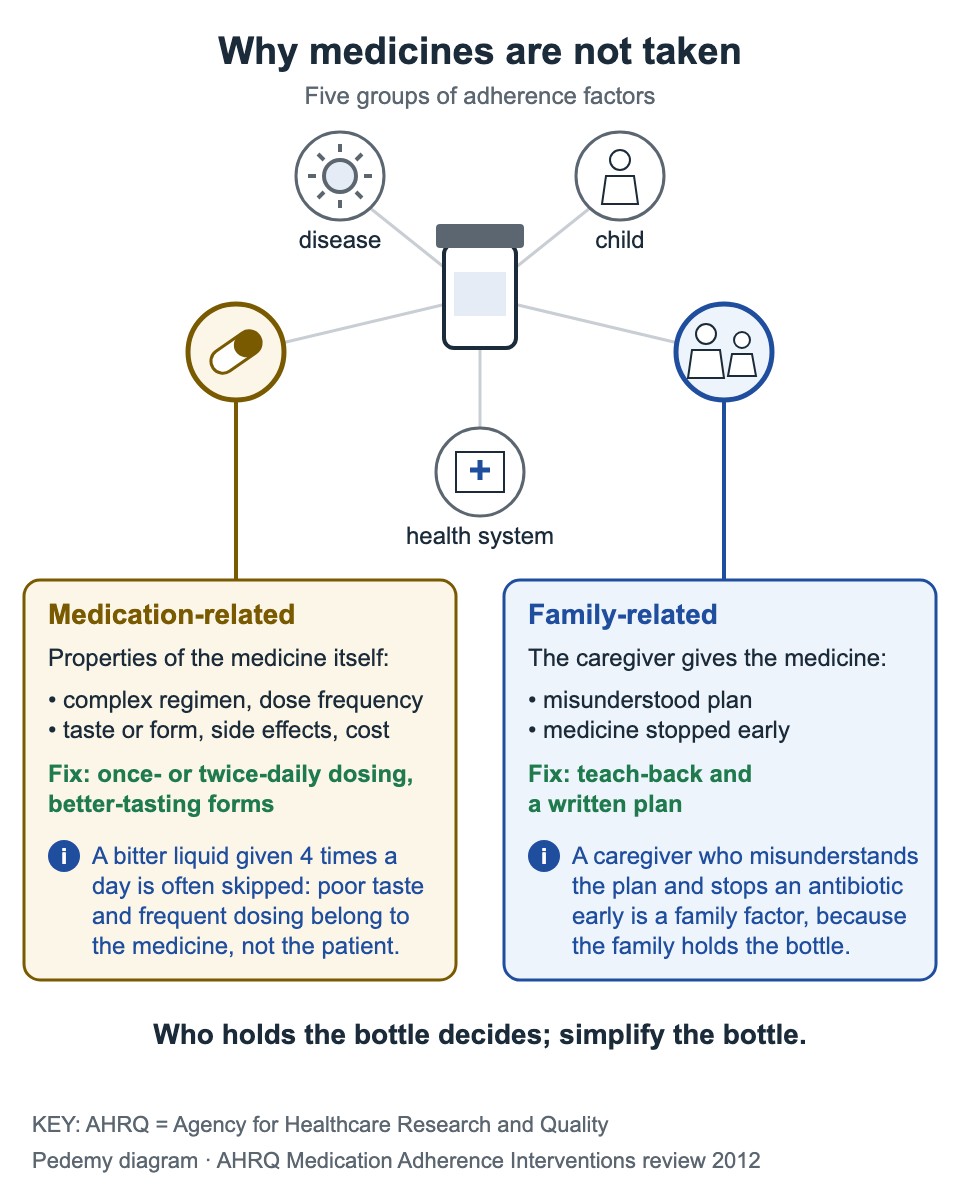
Bitter liquid given 4 times a day is often skipped → adherence factor group? […]
Show answer
Bitter liquid given 4 times a day is often skipped → adherence factor group? medication-related
Why: Medication-related factors: complex regimen, dosing frequency, taste or formulation, side effects and cost. Fix: once- or twice-daily dosing, better-tasting forms. Poor taste and frequent dosing are properties of the medicine, not of the patient. Hook: simplify the bottle, improve the dose count.
Source: Matsui D. Paediatr Drugs 2007; Gardiner P, Dvorkin L. Am Fam Physician 2006. Rewritten for Pedemy in our own words, November 2026.
Why medicines are not taken -
Quality Improvement & Care Delivery
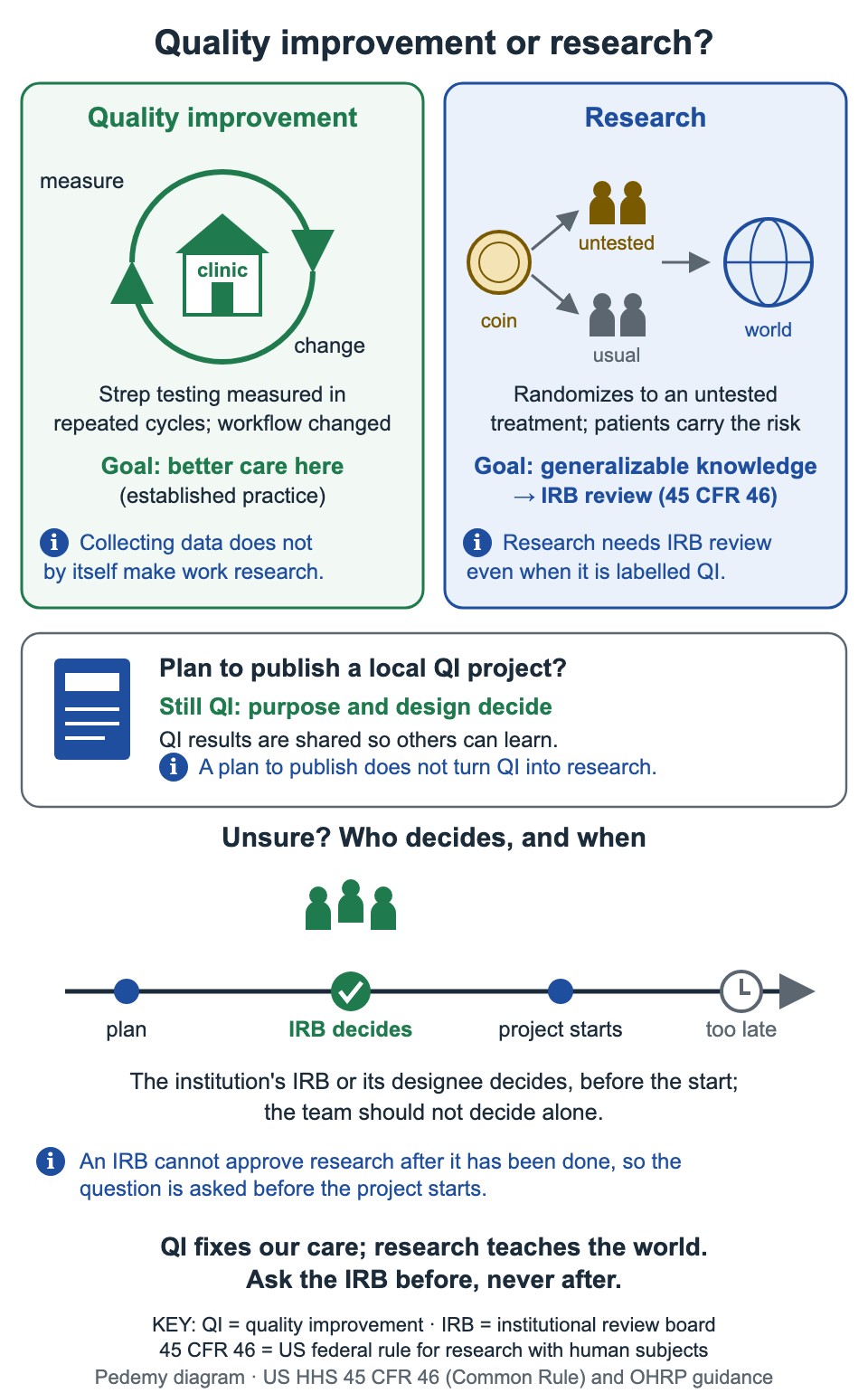
Unsure whether a QI project is research → who decides, and when? […]
Show answer
Unsure whether a QI project is research → who decides, and when? the institution's IRB or its designee, before it starts
Why: The institution's IRB makes the determination; the team should not decide alone. Reason: an IRB cannot approve research after it has been done, so the question must be asked before the project starts. Hook: Ask the IRB before, never after.
Source: HHS OHRP FAQ: Quality Improvement Activities (45 CFR 46, revised Common Rule 2018). Rewritten for Pedemy in our own words, November 2026.
Quality improvement or research? -
Patient Safety
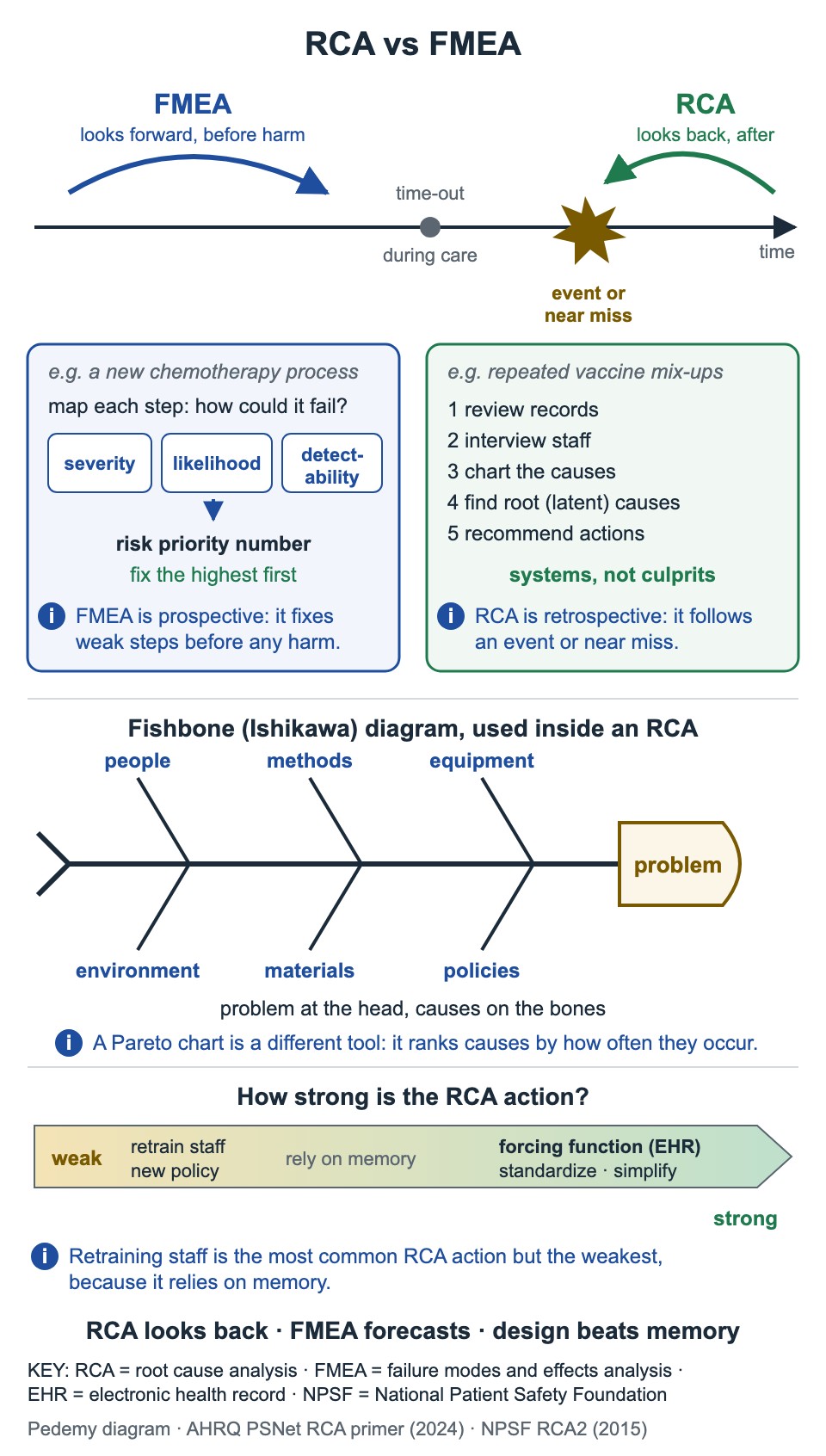
Before any harm, team maps a new chemo process and scores how each step could fail → method? […]
Show answer
Before any harm, team maps a new chemo process and scores how each step could fail → method? FMEA
Why: Failure modes and effects analysis (FMEA) is prospective: list each step, how it could fail, then score severity, likelihood and detectability (risk priority number) and fix the highest first. RCA is different because it is done after an event. Hook: FMEA = failure forecast.
Source: AHRQ PSNet primer: Root Cause Analysis (reviewed 2024); NPSF RCA2: Improving Root Cause Analyses and Actions to Prevent Harm (2015). Rewritten for Pedemy in our own words, November 2026.
RCA vs FMEA -
Quality Improvement & Care Delivery
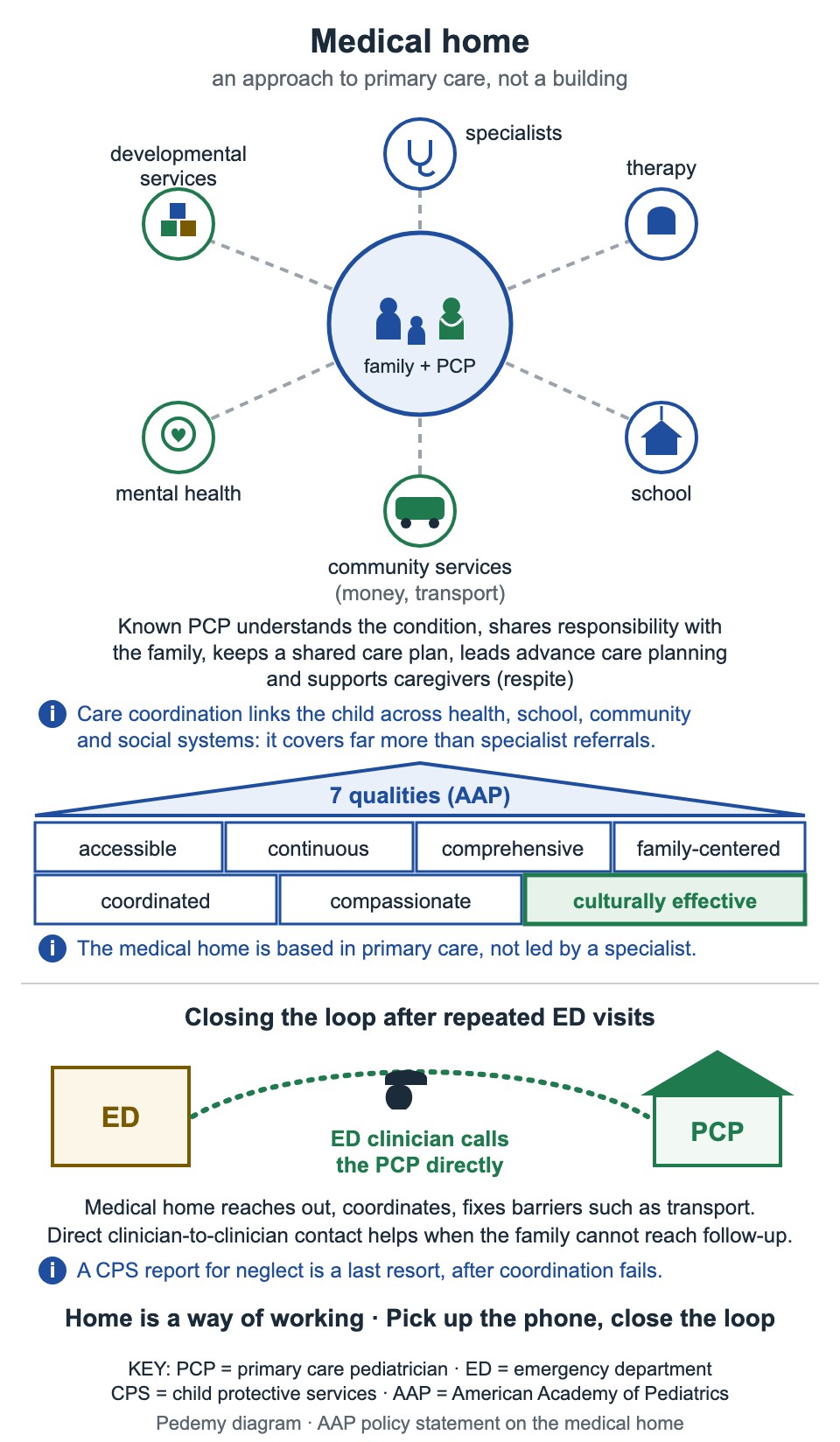
AAP medical home: accessible, continuous, comprehensive, family-centered, coordinated, compassionate and […]
Show answer
AAP medical home: accessible, continuous, comprehensive, family-centered, coordinated, compassionate and culturally effective
Why: Care is delivered or directed by a known primary care pediatrician who shares responsibility with the family. Reason: children with complex needs fall through gaps between many services. Core principles also include high-quality transitions of care and value. The home is primary care based, not specialist-led. Hook: Seven qualities, last one is culture.
Source: AAP policy statement: The Medical Home (Pediatrics 2002); AAP policy: Patient- and Family-Centered Care Coordination (Pediatrics 2014, reaffirmed 2018). Rewritten for Pedemy in our own words, November 2026.
Medical home
Topics in Patient Safety & Quality Improvement
Patient Safety & Quality Improvement study guides
- Patient safety: safety events, error types, just culture, RCA and medication safety
- Quality improvement and care delivery: PDSA, measures, run charts, Lean, medical home
Sample cards in other subjects
- Growth & Development
- Immunizations & Post-exposure Prevention
- Nutrition
- Well-Child Care & Prevention
- Emergency Medicine
- Infectious Disease
- ENT
- Mental Health
- Ophthalmology
- Adolescent Medicine
- Cardiology
- Gastroenterology
- Pulmonology
- Dermatology
- Musculoskeletal & Sports Medicine
- Neonatology
- Neurology
- Allergy & Immunology
- Behavioral
- Endocrinology
- Hematology
- Nephrology
- Oncology
- Urology
- Biostatistics & Epidemiology
- Genetics
- Medical Ethics
- Metabolic Disorders
- Rheumatology
- Pharmacology
Free to study without an account. Sign up free to save your spaced-repetition schedule across devices. For education only; check current guidelines before clinical use.