

Dermatology flashcards
466 cards · 9 topics · 4% of the board exam
466 free Dermatology flashcards for pediatric board review and rotations, written in our own words with public guideline sources. Topics: Contact Dermatitis, Eczema & Scaling Disorders, Genetic Skin Disorders, Infections & Infestations and 5 more. Dermatology is 4% of the board exam.
Sample Dermatology cards
-
Eczema & Scaling Disorders
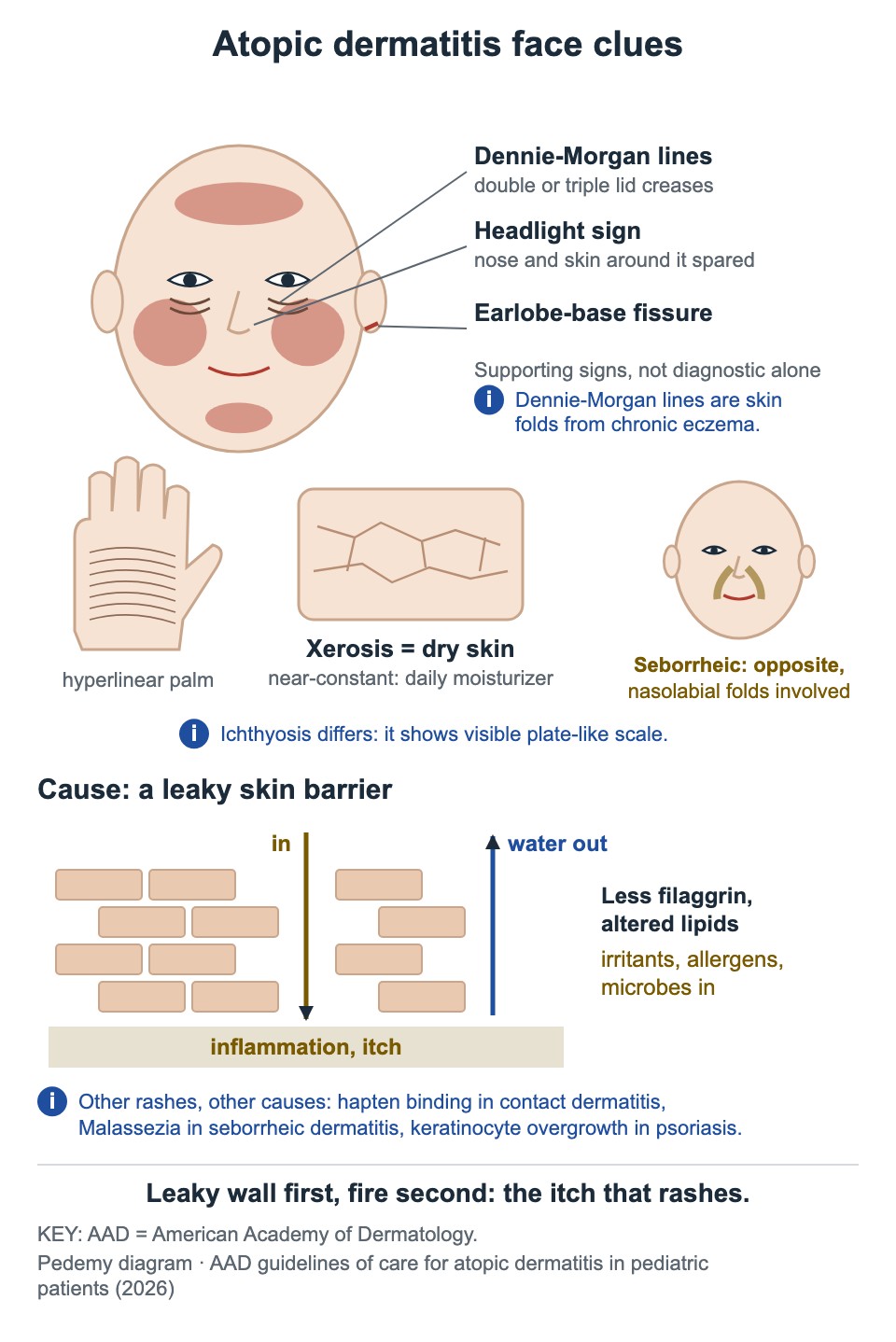
Facial eczema that spares the skin around the nose → name of this sign? → […]
Show answer
Facial eczema that spares the skin around the nose → name of this sign? → Headlight sign
Why: Sparing of the mid-face is a clue to atopic dermatitis. Seborrheic dermatitis does the opposite and involves the nasolabial folds. Hook: The nose shines like a headlight.
Source: StatPearls: Atopic Dermatitis (NCBI Bookshelf, 2026). Rewritten for Pedemy in our own words, November 2026.
Atopic dermatitis face clues -
Genetic Skin Disorders
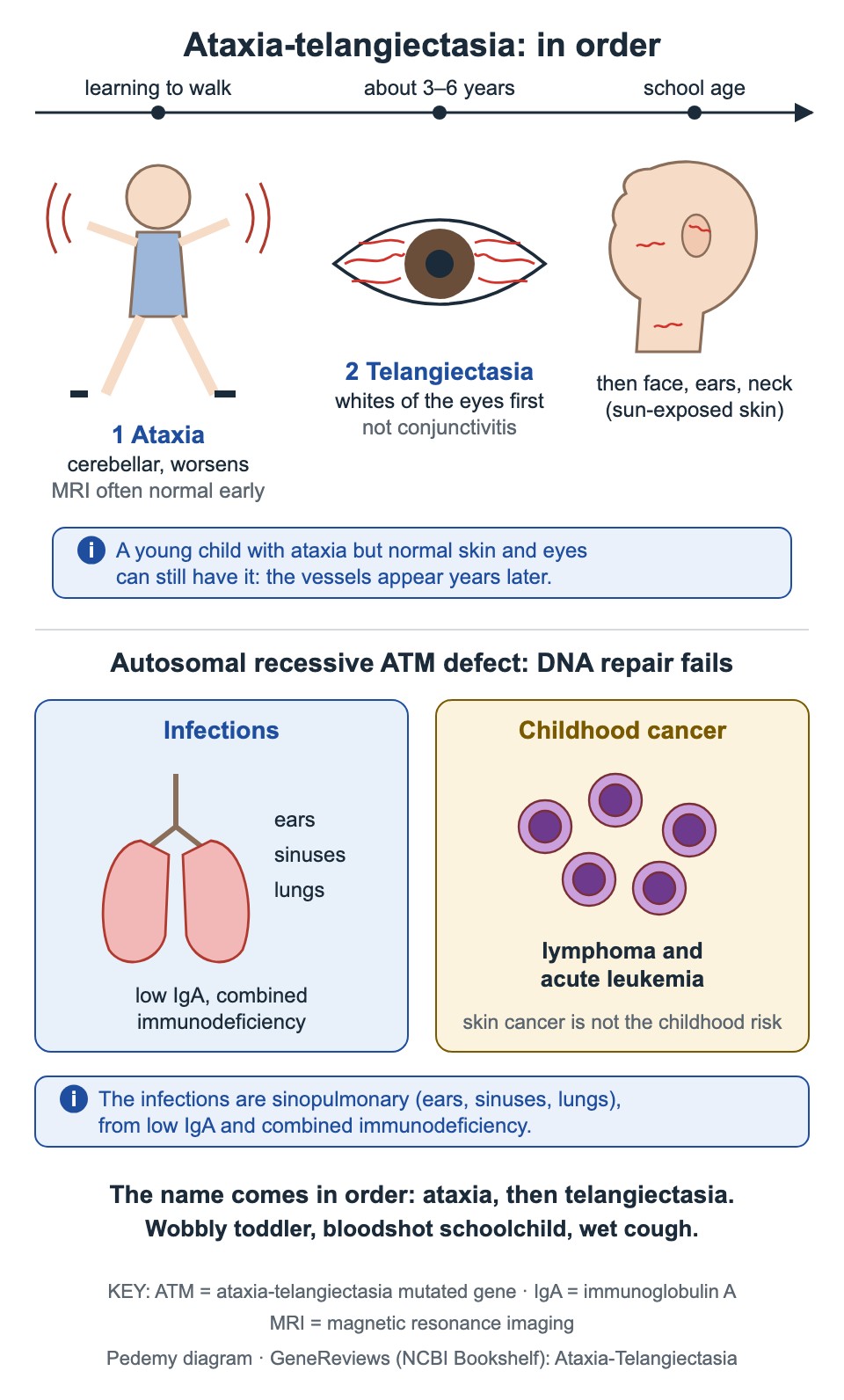
Ataxia-telangiectasia: ataxic toddler with sinus infections, normal skin → telangiectasias appear when? […]
Show answer
Ataxia-telangiectasia: ataxic toddler with sinus infections, normal skin → telangiectasias appear when? At about 3–6 years
Why: They follow the ataxia by years, first on the bulbar conjunctivae, then face, ears and neck; brain MRI is often still normal early. A young child without telangiectasias can still have ataxia-telangiectasia. Hook: the name comes in order: ataxia, then telangiectasia.
Source: GeneReviews: Ataxia-Telangiectasia. Rewritten for Pedemy in our own words, November 2026.
Ataxia-telangiectasia: in order -
Infections & Infestations
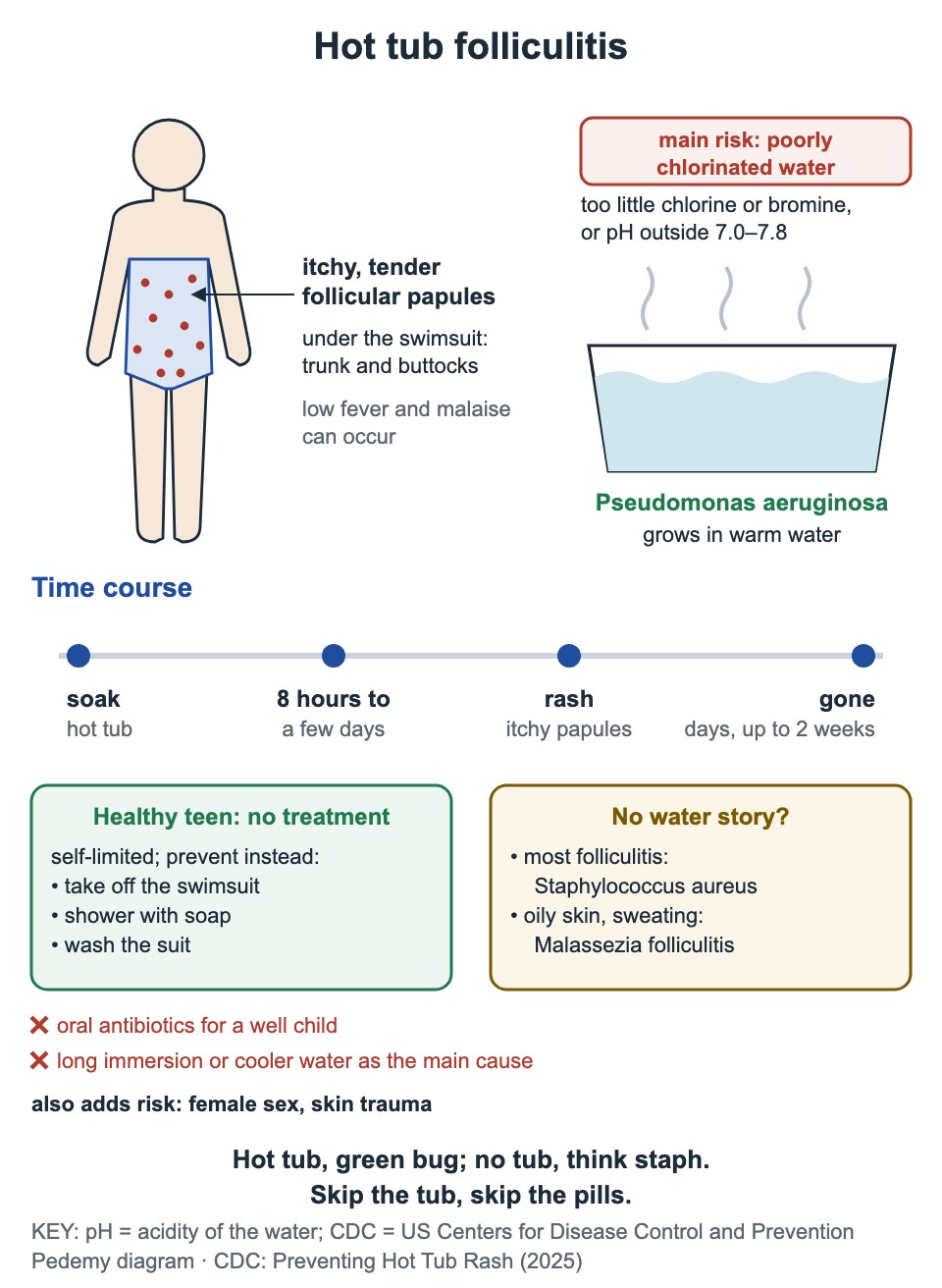
Hot tub folliculitis in a healthy teen → treatment? […]
Show answer
Hot tub folliculitis in a healthy teen → treatment? None: it clears by itself, usually within days (up to 2 weeks)
Why: The rash is benign and self-limited in healthy people, so antibiotics are not given by mouth. Prevention matters more: take off the swimsuit, shower with soap and wash the suit. Hook: skip the tub, skip the pills.
Source: CDC: Preventing Hot Tub Rash (2025). Rewritten for Pedemy in our own words, November 2026.
Hot tub folliculitis -
Newborn & Infant Skin
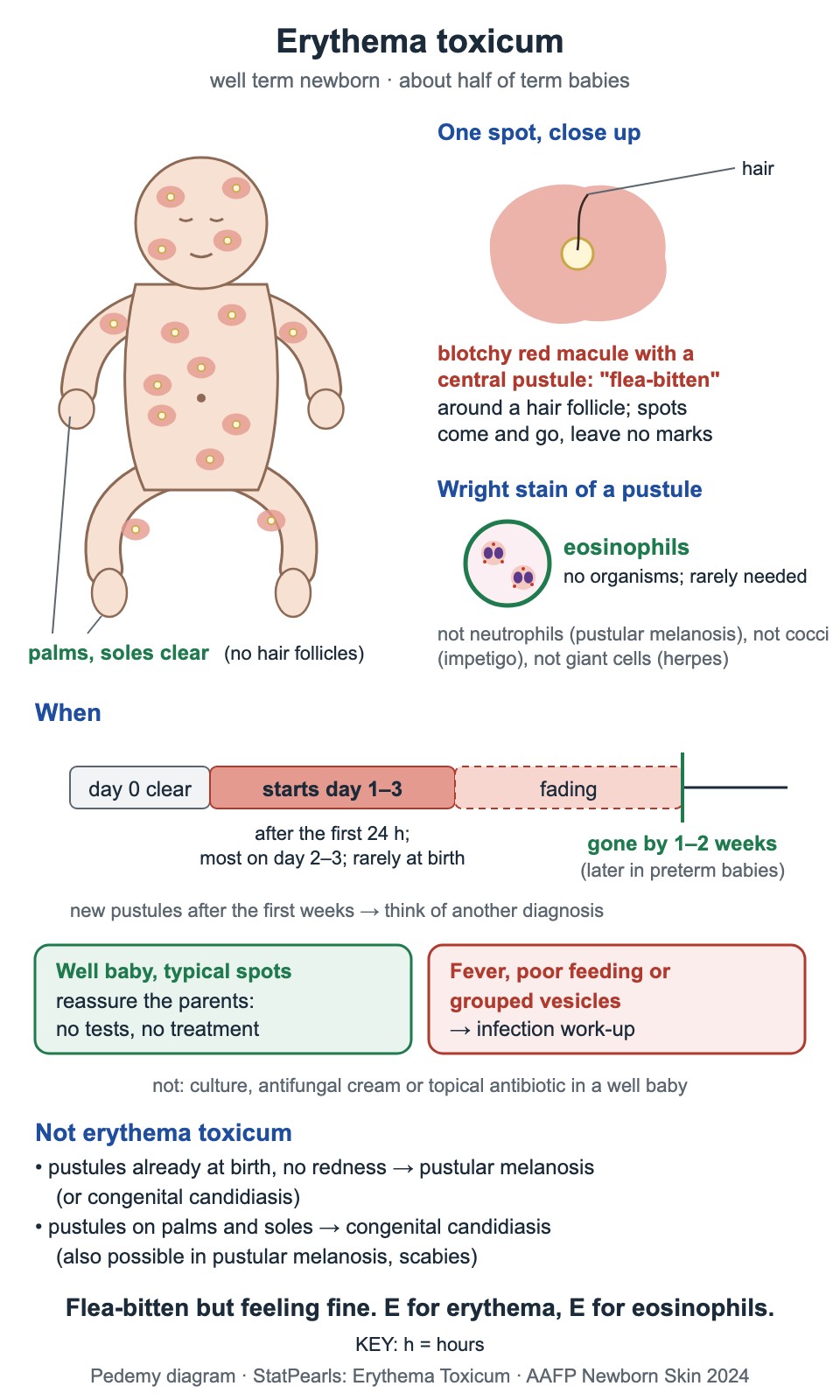
Well term 2-day-old: blotchy red macules with a central pustule; palms and soles clear → diagnosis? […]
Show answer
Well term 2-day-old: blotchy red macules with a central pustule; palms and soles clear → diagnosis? Erythema toxicum neonatorum
Why: Benign rash of about half of term newborns: 'flea-bitten' spots around hair follicles that come and go. Pustules with no redness that are present at birth are pustular melanosis instead. Hook: Flea-bitten but feeling fine.
Source: StatPearls: Erythema Toxicum Neonatorum; AAFP: Newborn Skin Part I, Common Rashes and Skin Changes (Am Fam Physician 2024). Rewritten for Pedemy in our own words, November 2026.
Erythema toxicum -
Pigment Disorders
Teen with vitiligo → most commonly associated disorder (and test)? […]
Show answer
Teen with vitiligo → most commonly associated disorder (and test)? Autoimmune thyroid disease (TSH)
Why: About 1 in 8 children with vitiligo has thyroid antibodies; type 1 diabetes, alopecia areata, Addison disease and pernicious anemia are less common, and most patients have nothing else. A full autoimmune panel for everyone is not needed. Hook: white patches, check the thyroid.
Source: Pediatric vitiligo and thyroid autoimmunity review (Pediatr Dermatol 2026); StatPearls: Vitiligo. Rewritten for Pedemy in our own words, November 2026.
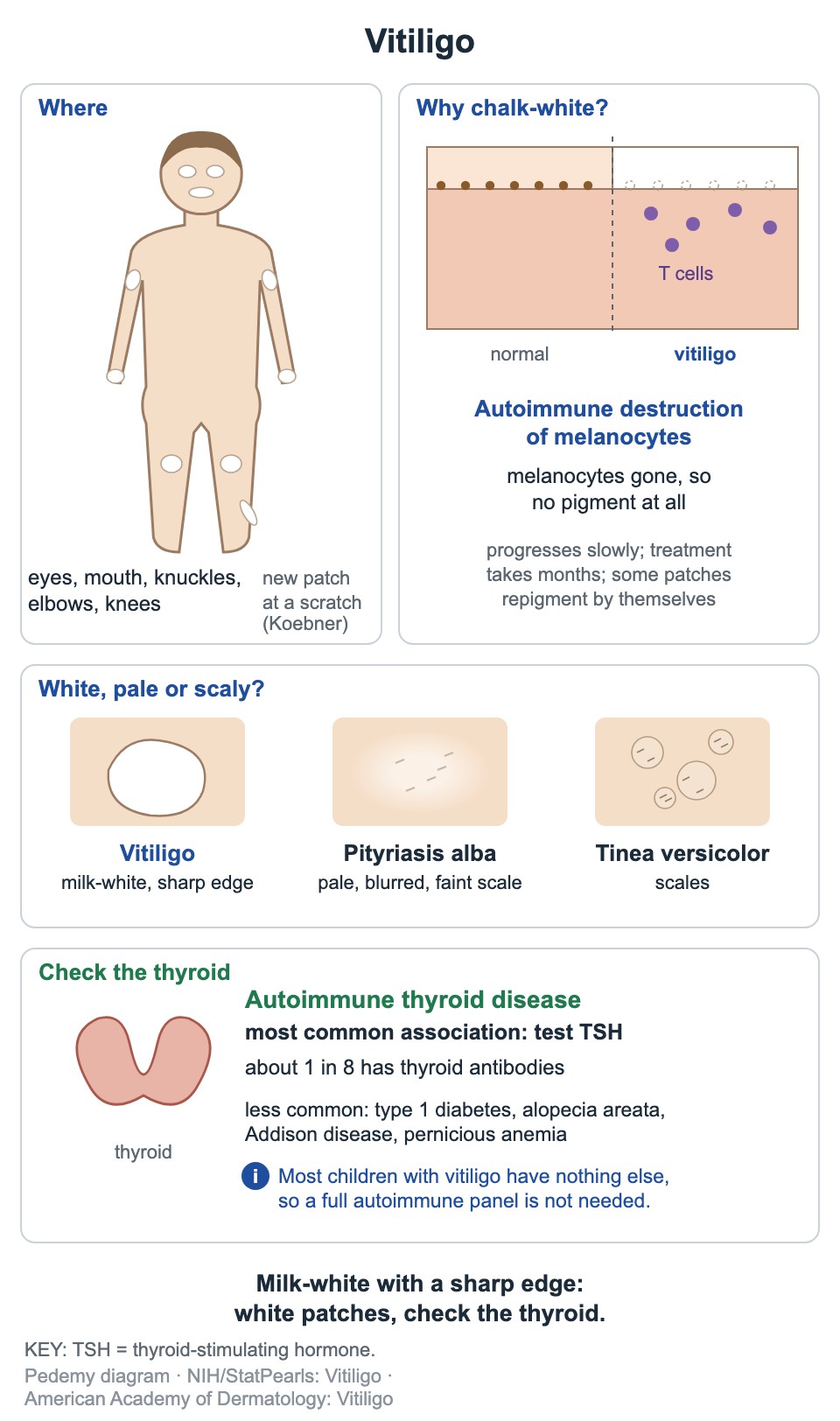
Vitiligo -
Reactive & Inflammatory Rashes
Tetracyclines for acne are avoided up to what age, and why? […]
Show answer
Tetracyclines for acne are avoided up to what age, and why? 8 years and younger: permanent tooth staining
Why: Tetracyclines such as doxycycline (Vibramycin) bind to developing teeth and cause permanent staining, so they are avoided for acne in children 8 years and younger. Acne courses last months, so the short-course exception for doxycycline does not apply. Hook: Wait for the adult teeth.
Source: FDA label: doxycycline; AAD guidelines of care for the management of acne vulgaris (J Am Acad Dermatol 2024). Rewritten for Pedemy in our own words, November 2026.
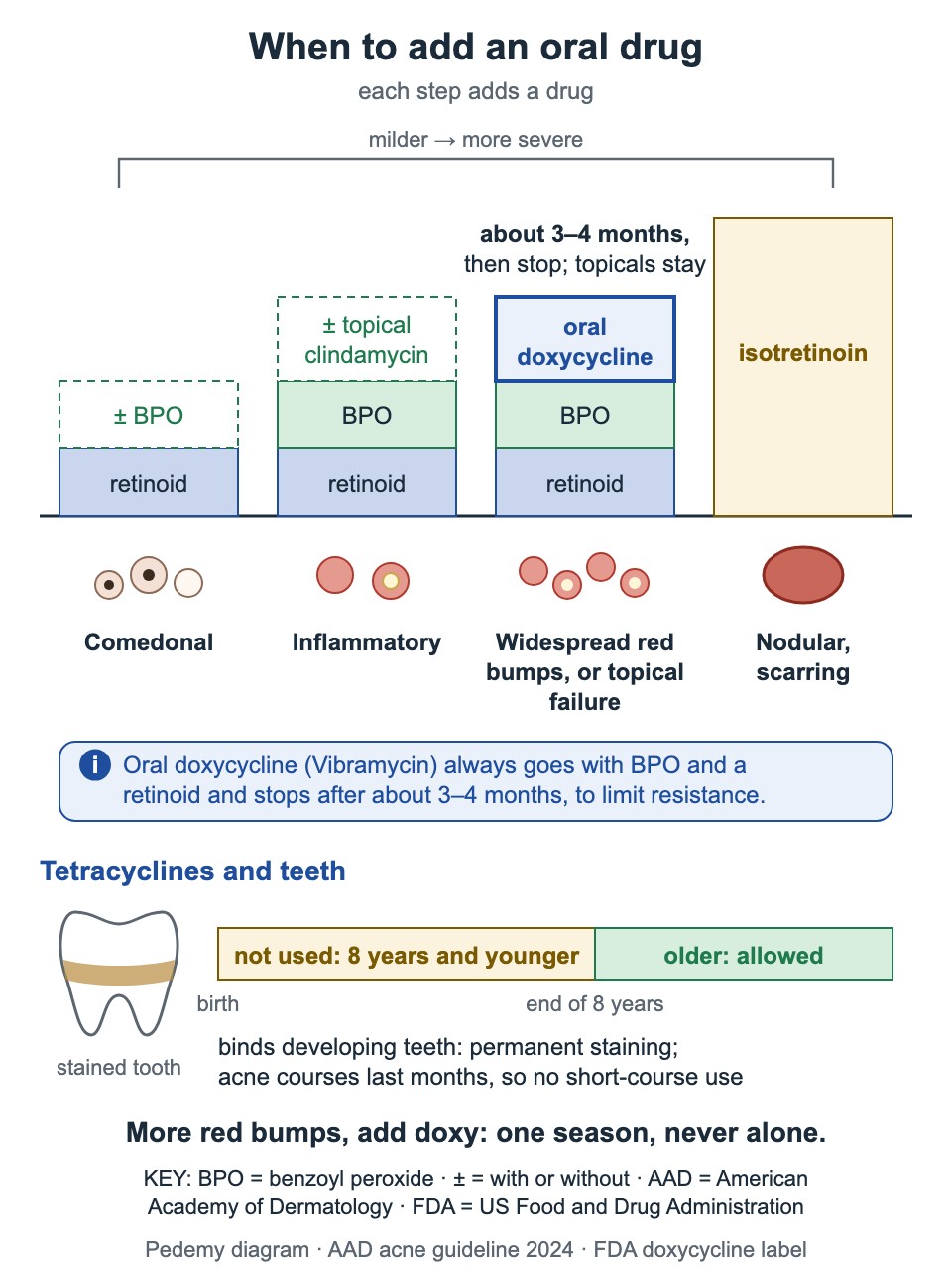
Acne treatment ladder -
Systemic Disease Clues
Telogen effluvium → treatment? […]
Show answer
Telogen effluvium → treatment? Reassurance; regrows within 6–12 months
Why: Telogen effluvium is self-limited once the trigger is over, so reassurance and gentle hair care are enough. Griseofulvin, antibiotics and topical or systemic steroids do not help. Hook: wait a season, the hair returns.
Source: StatPearls: Telogen Effluvium. Rewritten for Pedemy in our own words, November 2026.
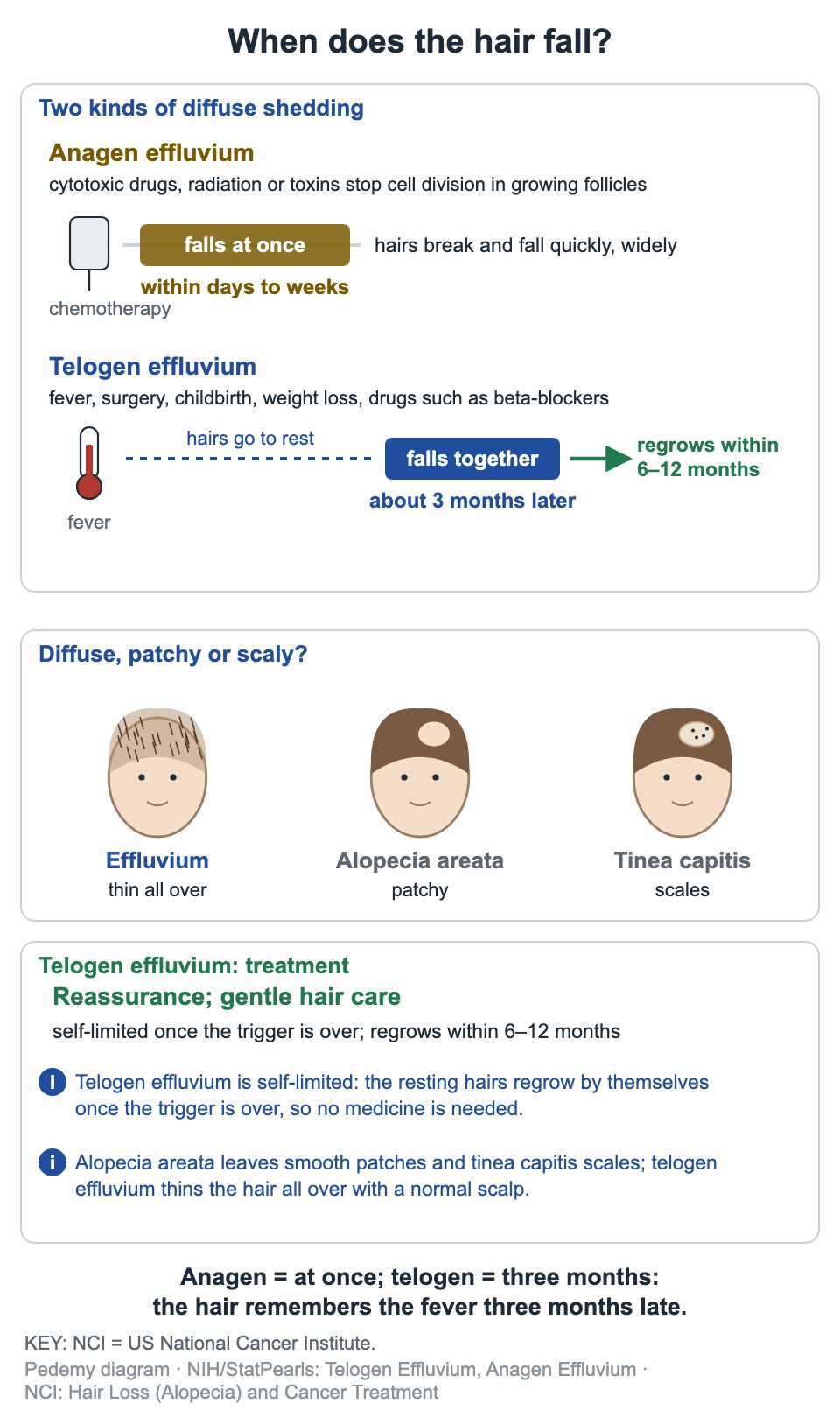
When does the hair fall? -
Vascular Birthmarks
Large segmental facial hemangioma, PHACE suspected → brain and vessel imaging? […]
Show answer
Large segmental facial hemangioma, PHACE suspected → brain and vessel imaging? MRI with MRA of head and neck
Why: In suspected PHACE, MRI shows the posterior fossa and MRA shows the cerebral and neck arteries and the aortic arch. Head ultrasound or CT alone miss the arteries. Hook: One scan for brain, one for pipes.
Source: PHACE Syndrome: Consensus-Derived Diagnosis and Care Recommendations (Garzon et al., J Pediatr 2016). Rewritten for Pedemy in our own words, November 2026.
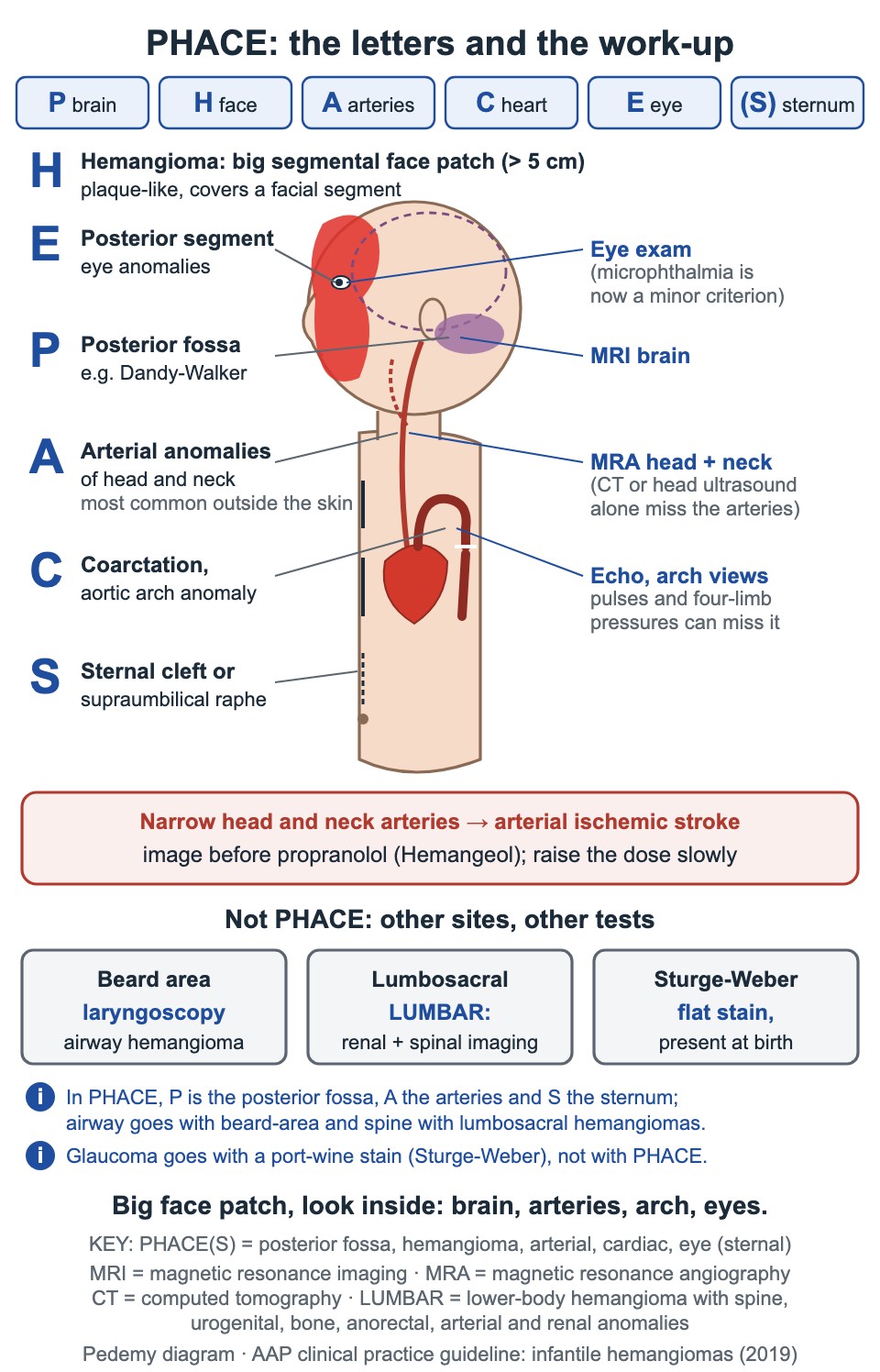
PHACE: the letters and the work-up
Topics in Dermatology
- Contact Dermatitis18
- Eczema & Scaling Disorders64
- Genetic Skin Disorders22
- Infections & Infestations85
- Newborn & Infant Skin58
- Pigment Disorders37
- Reactive & Inflammatory Rashes128
- Systemic Disease Clues21
- Vascular Birthmarks33
Dermatology study guides
- Atopic dermatitis and scaling disorders
- Contact dermatitis
- Genetic skin disorders
- Newborn and infant skin
- Pigment disorders, moles and skin lumps
- Reactive and inflammatory rashes
- Skin and hair clues to systemic disease
- Skin infections and infestations
- Vascular birthmarks
Clinical tools for Dermatology
- Lice, Scabies, Pinworm & Ringworm
- Penicillin Allergy: Can They Take Amoxicillin?
- SCORMA Mastocytosis Index
- Thrush & Diaper Candidiasis
- Skin Infections (Cellulitis, Abscess, Impetigo)
Sample cards in other subjects
- Growth & Development
- Immunizations & Post-exposure Prevention
- Nutrition
- Well-Child Care & Prevention
- Emergency Medicine
- Infectious Disease
- ENT
- Mental Health
- Ophthalmology
- Adolescent Medicine
- Cardiology
- Gastroenterology
- Pulmonology
- Musculoskeletal & Sports Medicine
- Neonatology
- Neurology
- Allergy & Immunology
- Behavioral
- Endocrinology
- Hematology
- Nephrology
- Oncology
- Urology
- Biostatistics & Epidemiology
- Genetics
- Medical Ethics
- Metabolic Disorders
- Patient Safety & Quality Improvement
- Rheumatology
- Pharmacology
Free to study without an account. Sign up free to save your spaced-repetition schedule across devices. For education only; check current guidelines before clinical use.