

Genetics flashcards
247 cards · 9 topics · 2% of the board exam, shared with Metabolic Disorders
247 free Genetics flashcards for pediatric board review and rotations, written in our own words with public guideline sources. Topics: Chromosome & Imprinting Disorders, Craniofacial & Developmental Patterns, Growth & Overgrowth, Immune & DNA Repair Disorders and 5 more. Genetics is 2% of the board exam, shared with Metabolic Disorders.
Sample Genetics cards
-
Chromosome & Imprinting Disorders
Child with Down syndrome, new neck pain, gait change and urine leaks → cause? […]
Show answer
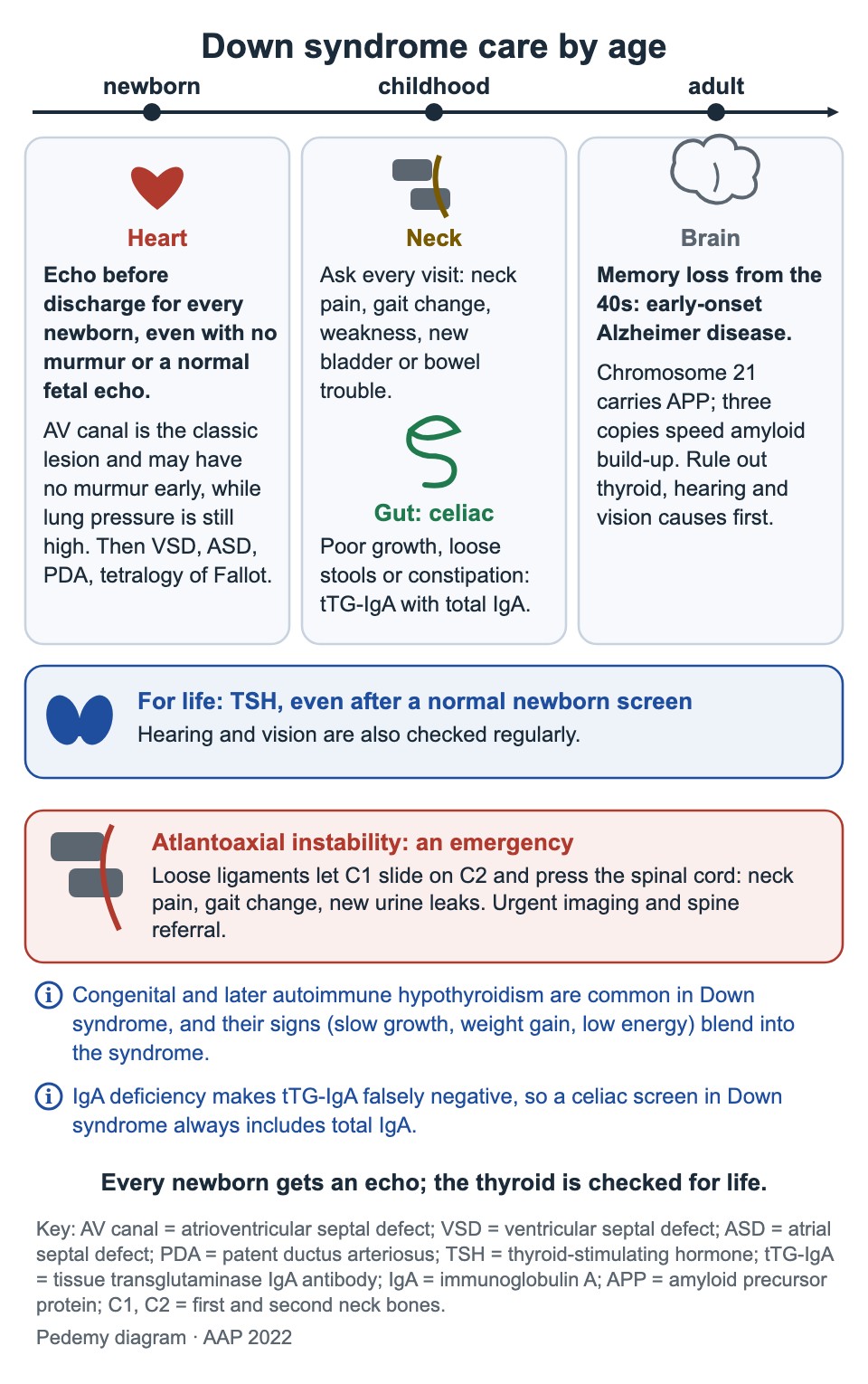
Child with Down syndrome, new neck pain, gait change and urine leaks → cause? Atlantoaxial instability (cord compression)
Why: Loose ligaments let C1 slide on C2 and press the cord; this needs urgent imaging and spine referral. Note: Children with Down syndrome are asked about neck pain, gait change, weakness or new bladder or bowel trouble at every visit. Hook: Loose neck, tight cord.
Source: AAP health supervision for children and adolescents with Down syndrome (2022). Rewritten for Pedemy in our own words, November 2026.
Down syndrome care by age -
Craniofacial & Developmental Patterns
Teen with Apert syndrome → skin problem that is often severe? […]
Show answer
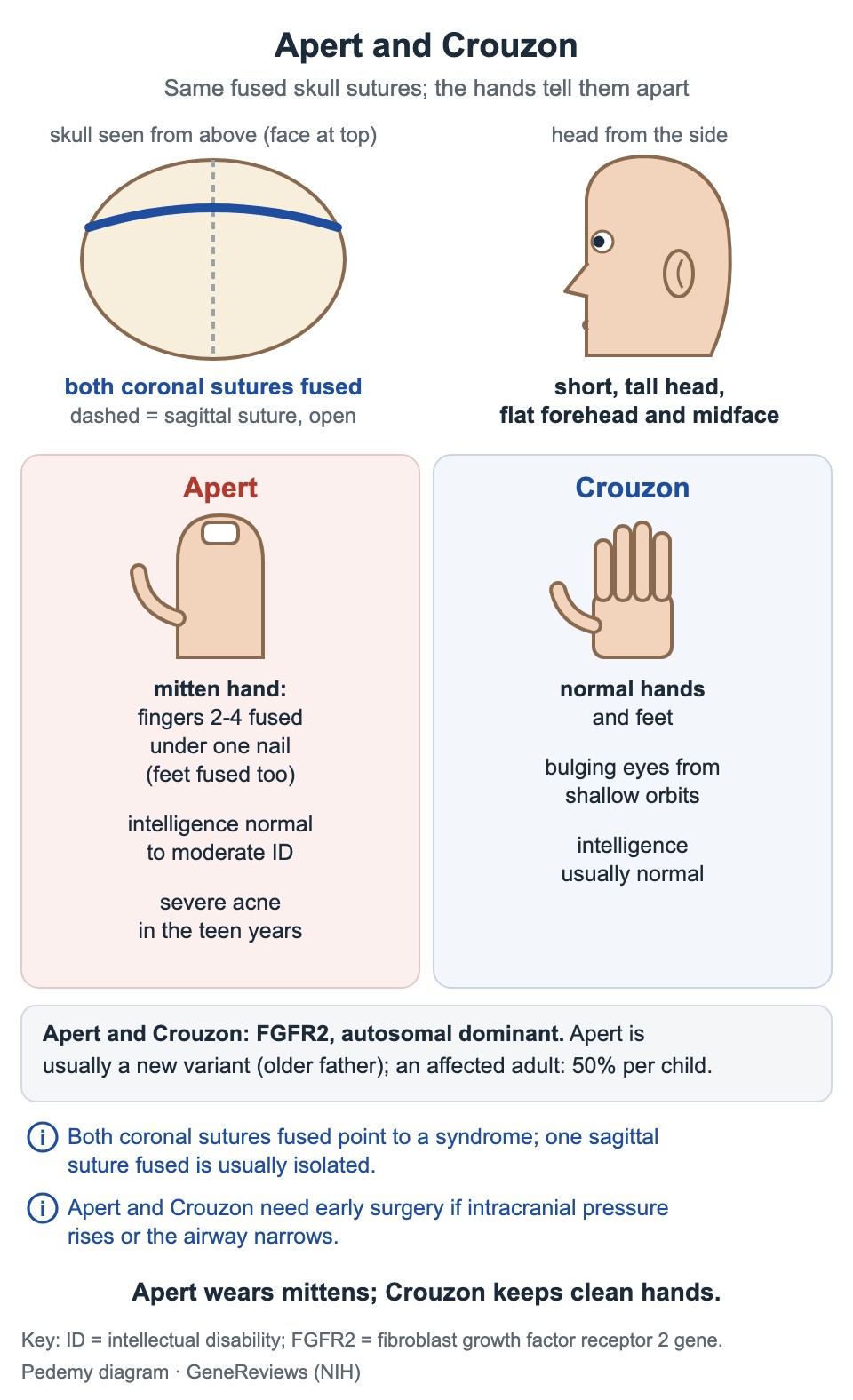
Teen with Apert syndrome → skin problem that is often severe? Acne
Why: Oily skin with severe acne is part of Apert syndrome and often appears in adolescence. Note: Severe acne in adolescence is a known feature of Apert syndrome and may need early dermatology care. Hook: Apert teen, angry acne.
Source: NIH MedlinePlus Genetics: Apert syndrome. Rewritten for Pedemy in our own words, November 2026.
Apert and Crouzon -
Growth & Overgrowth
Toddler: patchy overgrowth starting after birth, thick furrowed sole skin, lipomas → mosaic disorder? […]
Show answer
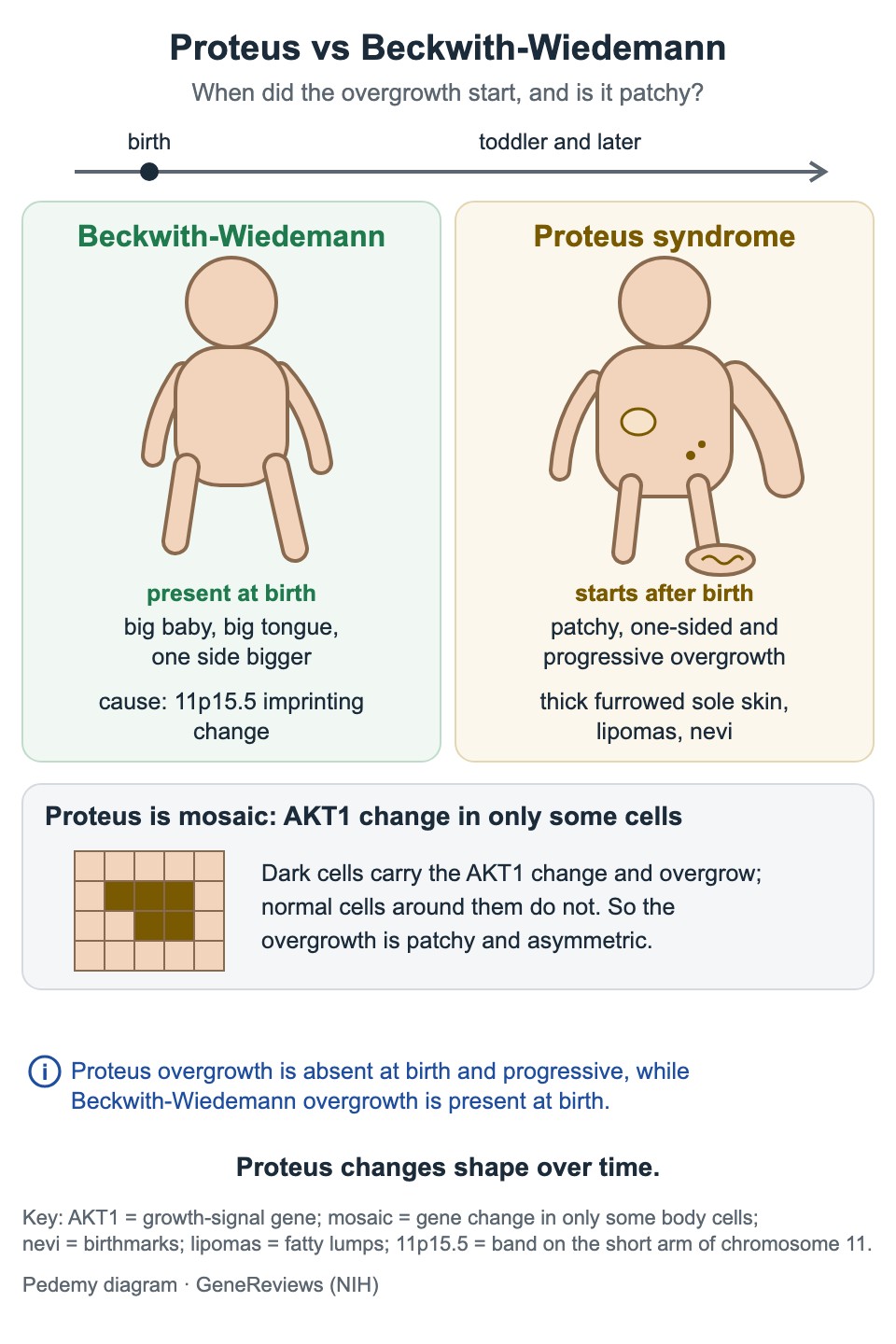
Toddler: patchy overgrowth starting after birth, thick furrowed sole skin, lipomas → mosaic disorder? Proteus syndrome (AKT1)
Why: A mosaic AKT1 change gives patchy, progressive, asymmetric overgrowth with nevi and lipomas. Note: Proteus overgrowth is absent at birth and progressive, while Beckwith-Wiedemann overgrowth is present at birth. Hook: Proteus changes shape over time.
Source: GeneReviews: Proteus syndrome. Rewritten for Pedemy in our own words, November 2026.
Proteus vs Beckwith-Wiedemann -
Immune & DNA Repair Disorders
Boy with eczema, small platelets and repeated infections; his maternal uncle had the same → inheritance? […]
Show answer
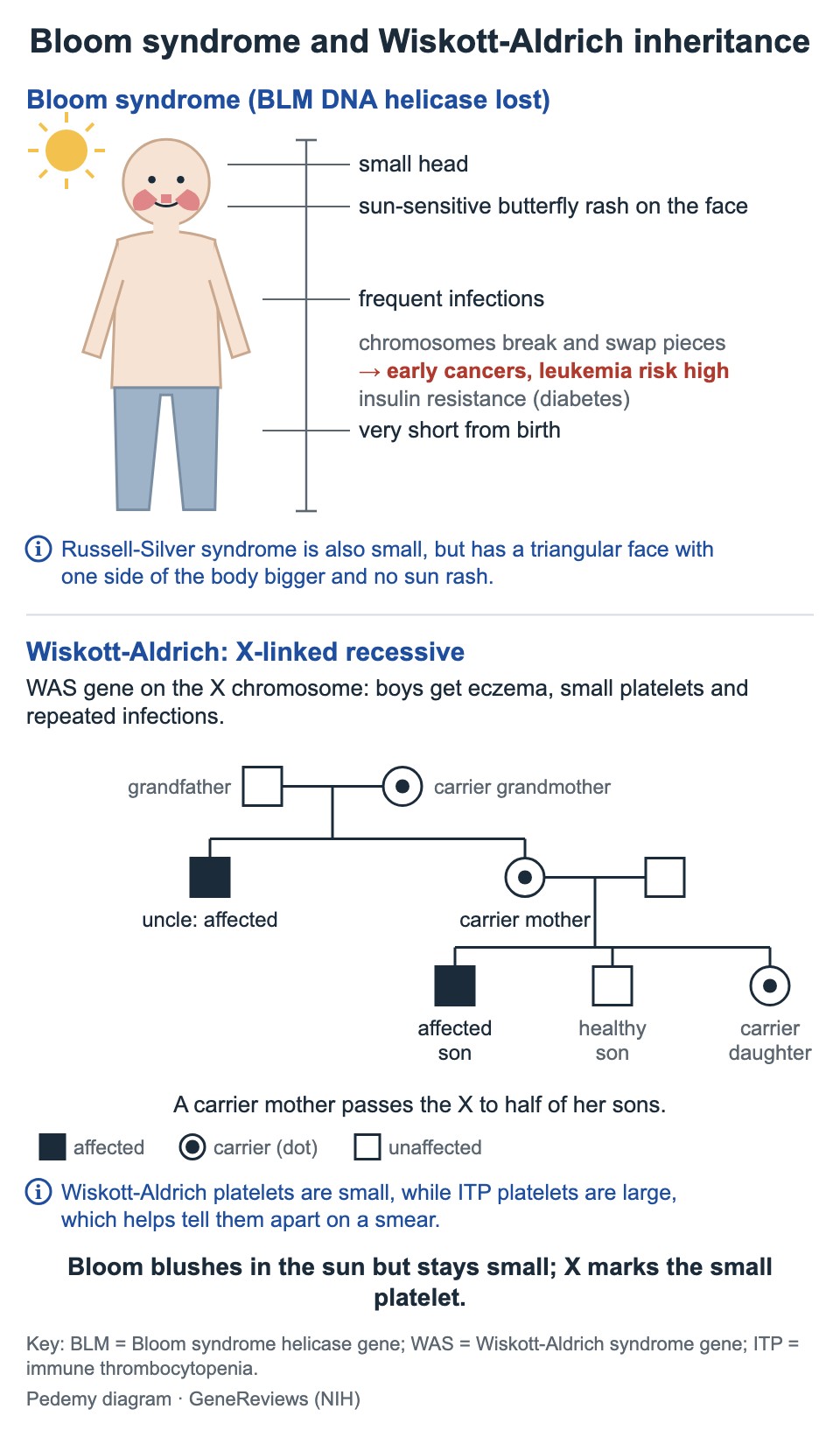
Boy with eczema, small platelets and repeated infections; his maternal uncle had the same → inheritance? X-linked recessive
Why: The WAS gene lies on the X chromosome, so boys are affected and carrier mothers pass it to half their sons. Note: Wiskott-Aldrich platelets are small, while ITP platelets are large, which helps tell them apart on a smear. Hook: X marks the small platelet.
Source: GeneReviews: WAS-related disorders. Rewritten for Pedemy in our own words, November 2026.
Bloom syndrome and Wiskott-Aldrich inheritance -
Inheritance Patterns
Suspected whole-chromosome aneuploidy (Turner syndrome, a trisomy) → best confirmatory test? […]
Show answer
Suspected whole-chromosome aneuploidy (Turner syndrome, a trisomy) → best confirmatory test? Karyotype (chromosome analysis)
Why: A karyotype counts every chromosome and also shows mosaicism and structural changes. Note: Methylation testing is for imprinting disorders, repeat analysis for fragile X and exome for single-gene variants; none is the right test for aneuploidy. Hook: Count the chromosomes.
Source: ACMG/ISCA microarray consensus (2010). Rewritten for Pedemy in our own words, November 2026.
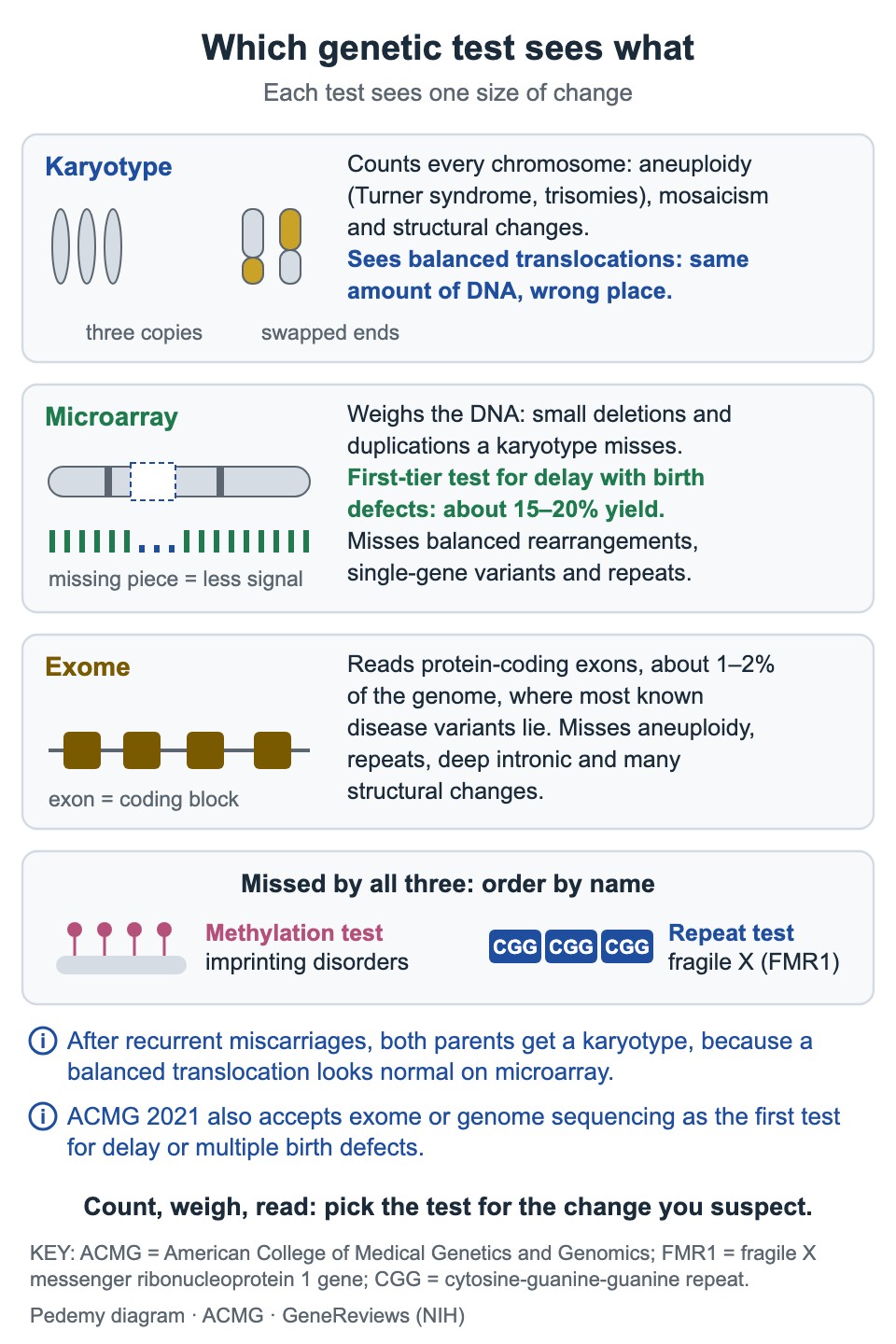
Which genetic test sees what -
Inherited Kidney Disorders
Newborn with huge bright (echogenic) kidneys and congenital liver fibrosis → disease? […]
Show answer
Newborn with huge bright (echogenic) kidneys and congenital liver fibrosis → disease? ARPKD (PKHD1)
Why: Fibrocystin from PKHD1 is needed in kidney collecting ducts and bile ducts, so both organs scar. Note: ARPKD shows in the newborn with large bright kidneys and later portal hypertension, while ADPKD usually shows cysts in adults. Hook: Recessive, renal plus liver, right at birth.
Source: GeneReviews: Polycystic kidney disease, autosomal recessive. Rewritten for Pedemy in our own words, November 2026.
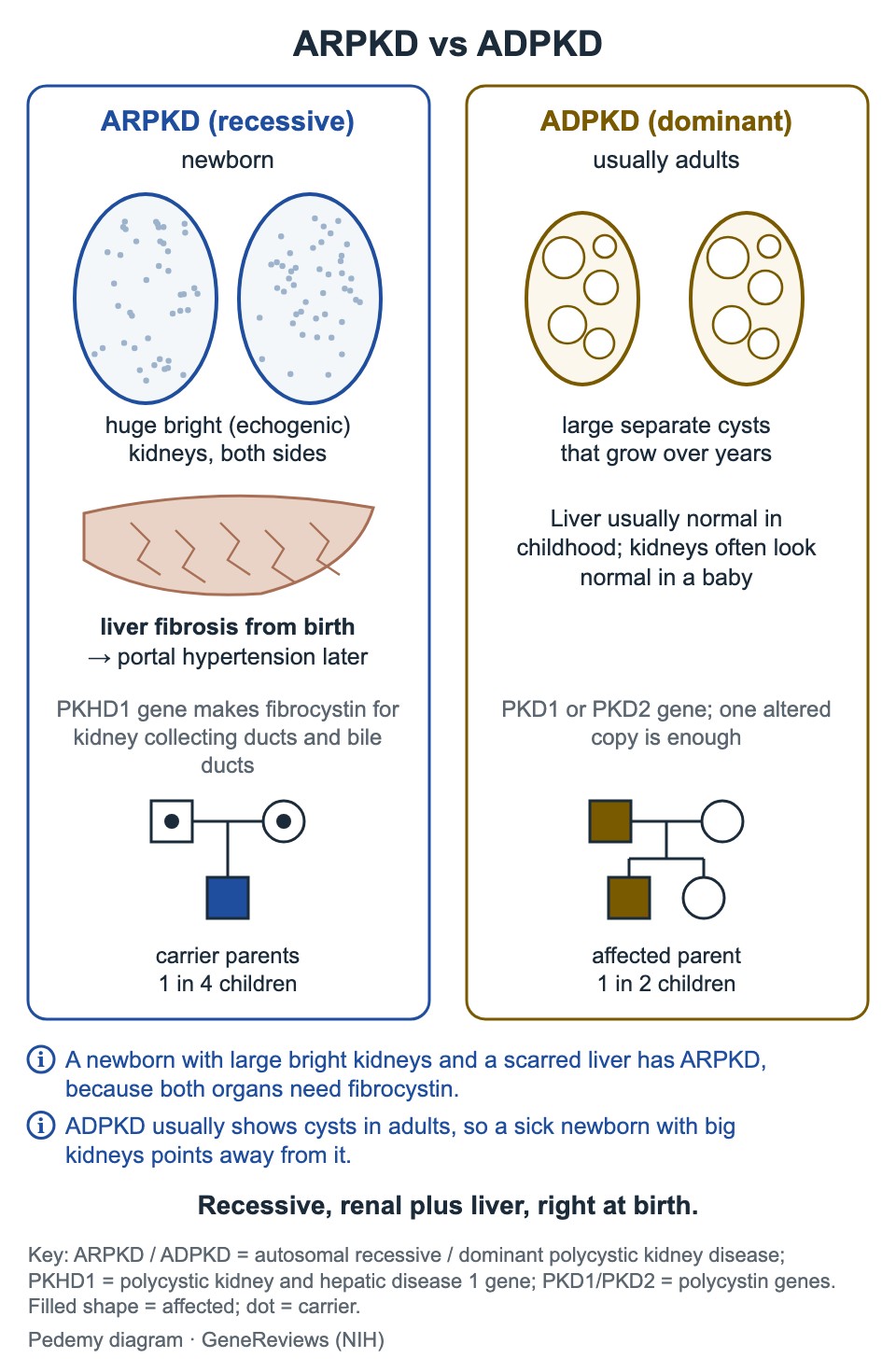
ARPKD vs ADPKD -
Multisystem Syndromes
Alagille syndrome → main gene? […]
Show answer
Alagille syndrome → main gene? JAG1 (chromosome 20p12)
Why: JAG1 is a Notch-pathway gene; variants or 20p12 deletions cause most cases, NOTCH2 a few. It is autosomal dominant. Note: Alagille syndrome is very variable, so an affected parent may have only mild findings. Hook: JAG1 jams the bile ducts.
Source: GeneReviews: Alagille syndrome. Rewritten for Pedemy in our own words, November 2026.
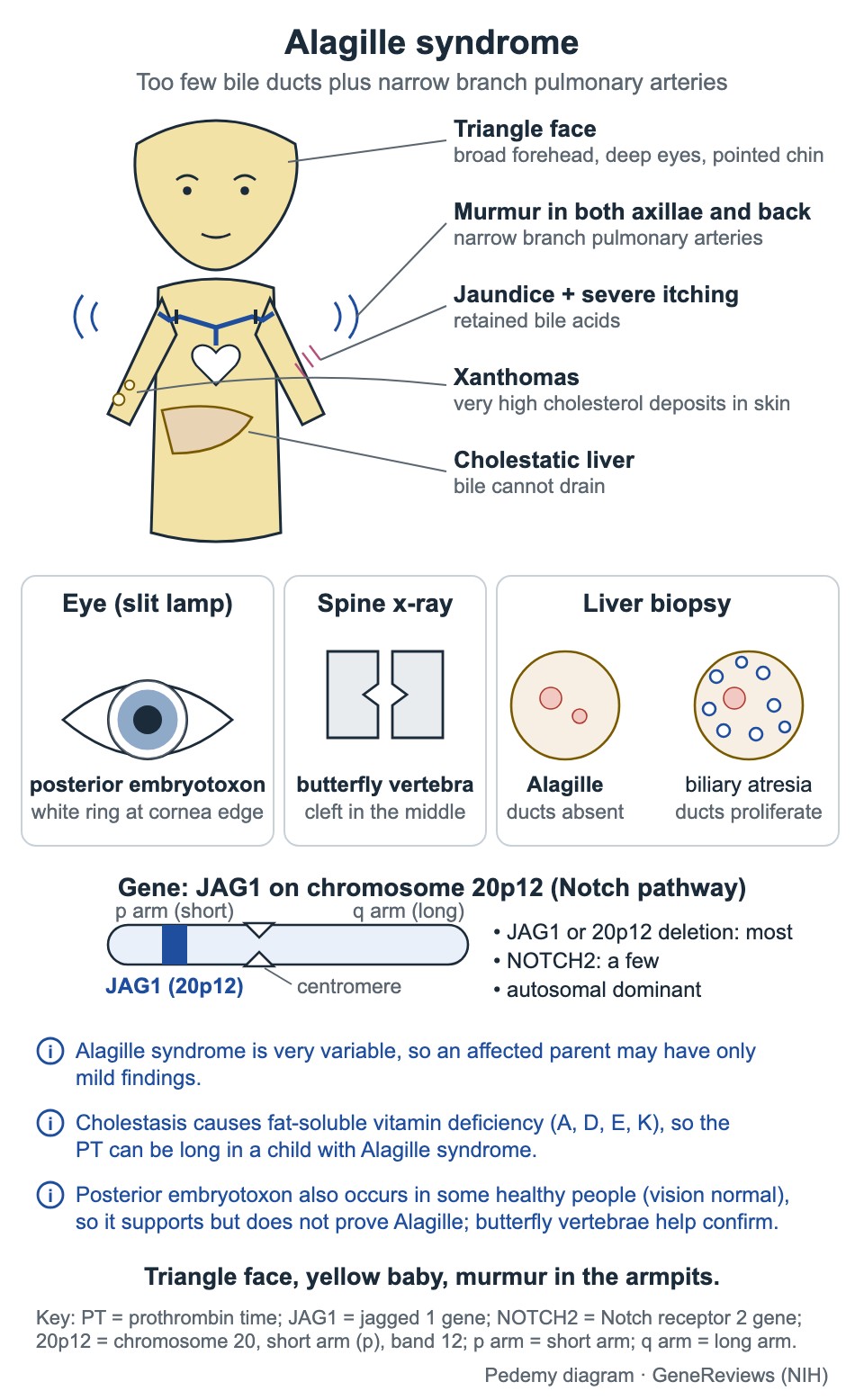
Alagille syndrome -
Neurocutaneous & Tumor Predisposition
Child with 8 café-au-lait macules and Lisch nodules → skin finding in the NF1 criteria to look for? […]
Show answer
Child with 8 café-au-lait macules and Lisch nodules → skin finding in the NF1 criteria to look for? Axillary or inguinal freckling
Why: Freckles in skin folds (Crowe sign) usually appear by 3-5 years and are one of the NF1 criteria. Note: Pale ash-leaf macules belong to tuberous sclerosis, and milia or nevus spilus are not NF1 criteria. Hook: Freckles where the sun never shines.
Source: GeneReviews: Neurofibromatosis 1. Rewritten for Pedemy in our own words, November 2026.
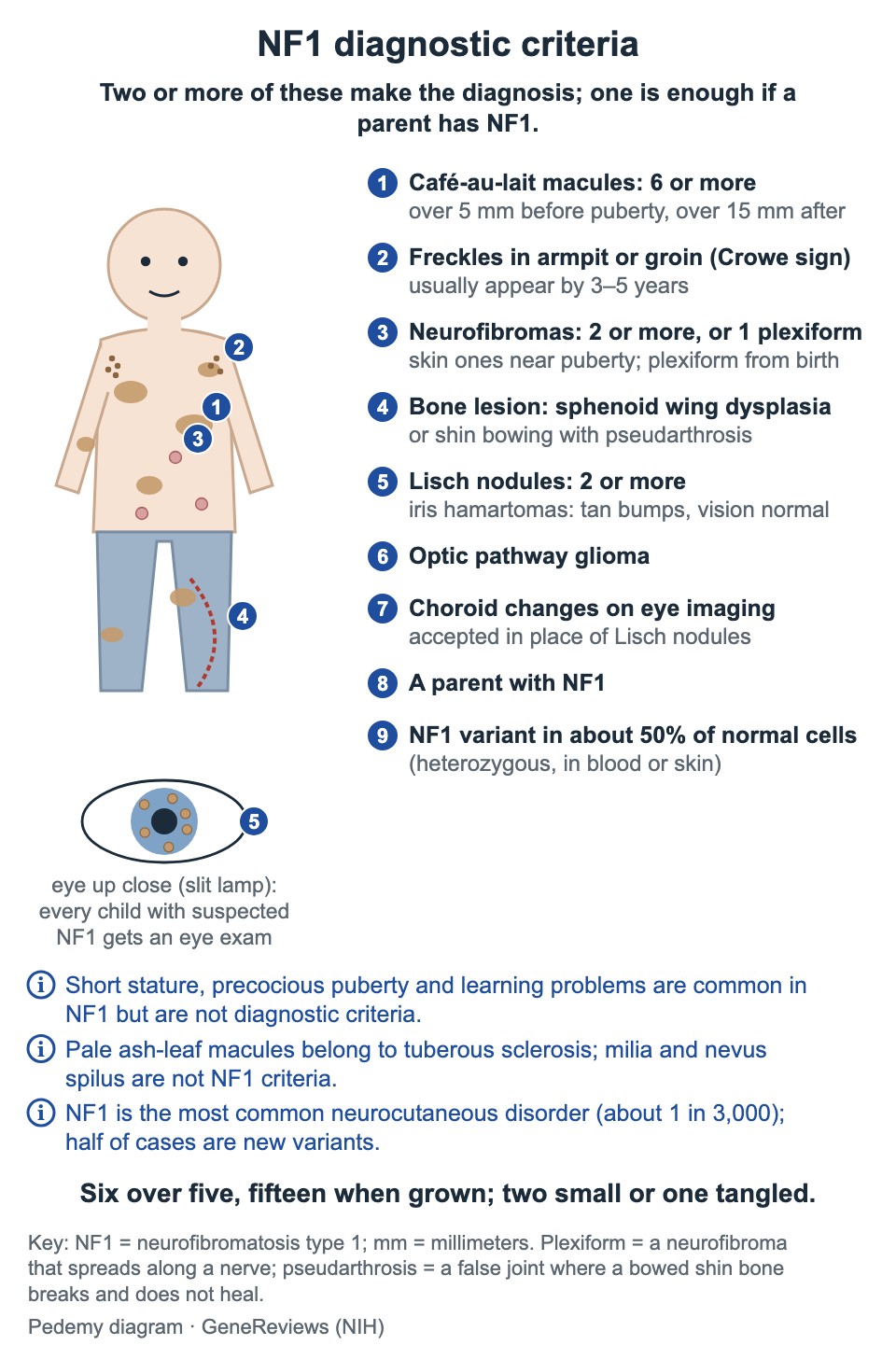
NF1 diagnostic criteria
Topics in Genetics
- Chromosome & Imprinting Disorders66
- Craniofacial & Developmental Patterns37
- Growth & Overgrowth15
- Immune & DNA Repair Disorders2
- Inheritance Patterns15
- Inherited Kidney Disorders3
- Multisystem Syndromes22
- Neurocutaneous & Tumor Predisposition43
- Skeletal & Connective Tissue44
Genetics study guides
- Chromosome and imprinting disorders
- Craniofacial and developmental patterns
- Growth and overgrowth syndromes
- Immune and DNA repair disorders
- Inheritance patterns
- Inherited kidney disorders
- Multisystem syndromes
- Neurocutaneous and tumor predisposition syndromes
- Skeletal and connective tissue disorders
Sample cards in other subjects
- Growth & Development
- Immunizations & Post-exposure Prevention
- Nutrition
- Well-Child Care & Prevention
- Emergency Medicine
- Infectious Disease
- ENT
- Mental Health
- Ophthalmology
- Adolescent Medicine
- Cardiology
- Gastroenterology
- Pulmonology
- Dermatology
- Musculoskeletal & Sports Medicine
- Neonatology
- Neurology
- Allergy & Immunology
- Behavioral
- Endocrinology
- Hematology
- Nephrology
- Oncology
- Urology
- Biostatistics & Epidemiology
- Medical Ethics
- Metabolic Disorders
- Patient Safety & Quality Improvement
- Rheumatology
- Pharmacology
Free to study without an account. Sign up free to save your spaced-repetition schedule across devices. For education only; check current guidelines before clinical use.