

Neonatology flashcards
274 cards · 9 topics · 4% of the board exam
274 free Neonatology flashcards for pediatric board review and rotations, written in our own words with public guideline sources. Topics: Birth Injuries & Neurology, Circulation & Resuscitation, Congenital Anomalies & Eyes, Endocrine & Jaundice and 5 more. Neonatology is 4% of the board exam.
Sample Neonatology cards
-
Birth Injuries & Neurology
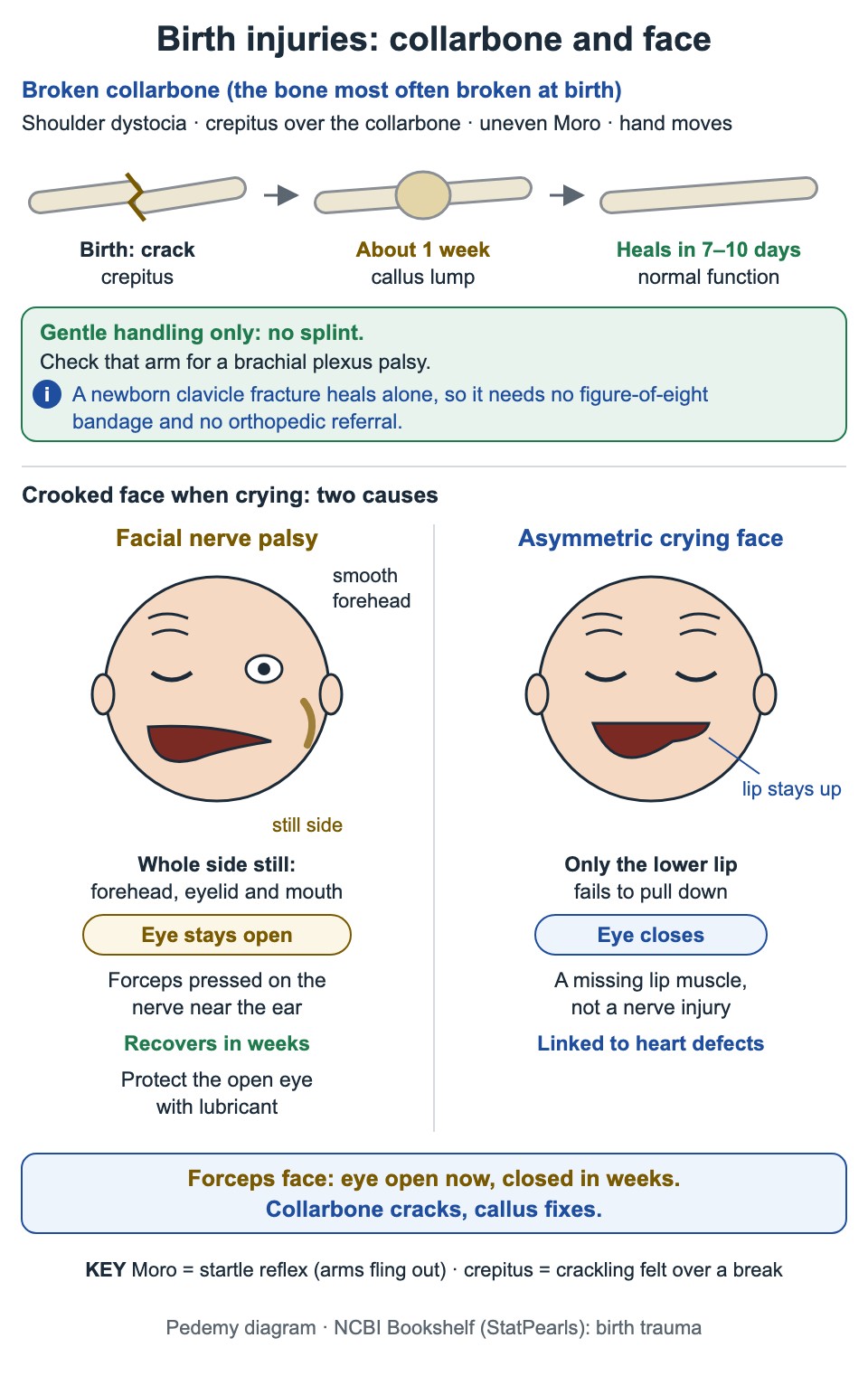
Shoulder dystocia: crepitus over the collarbone, uneven Moro, hand moves → management? […]
Show answer
Shoulder dystocia: crepitus over the collarbone, uneven Moro, hand moves → management? gentle handling only (heals in 7–10 days)
Why: The clavicle is the most often broken bone at birth; it needs no splint, a callus lump appears in about a week and function is normal. A newborn clavicle fracture needs no figure-of-eight bandage or orthopedic referral. Check the arm for a plexus palsy. Hook: Collarbone cracks, callus fixes.
Source: StatPearls: Neonatal Clavicle Fracture (NCBI Bookshelf). Rewritten for Pedemy in our own words, November 2026.
Birth injuries: collarbone and face -
Circulation & Resuscitation
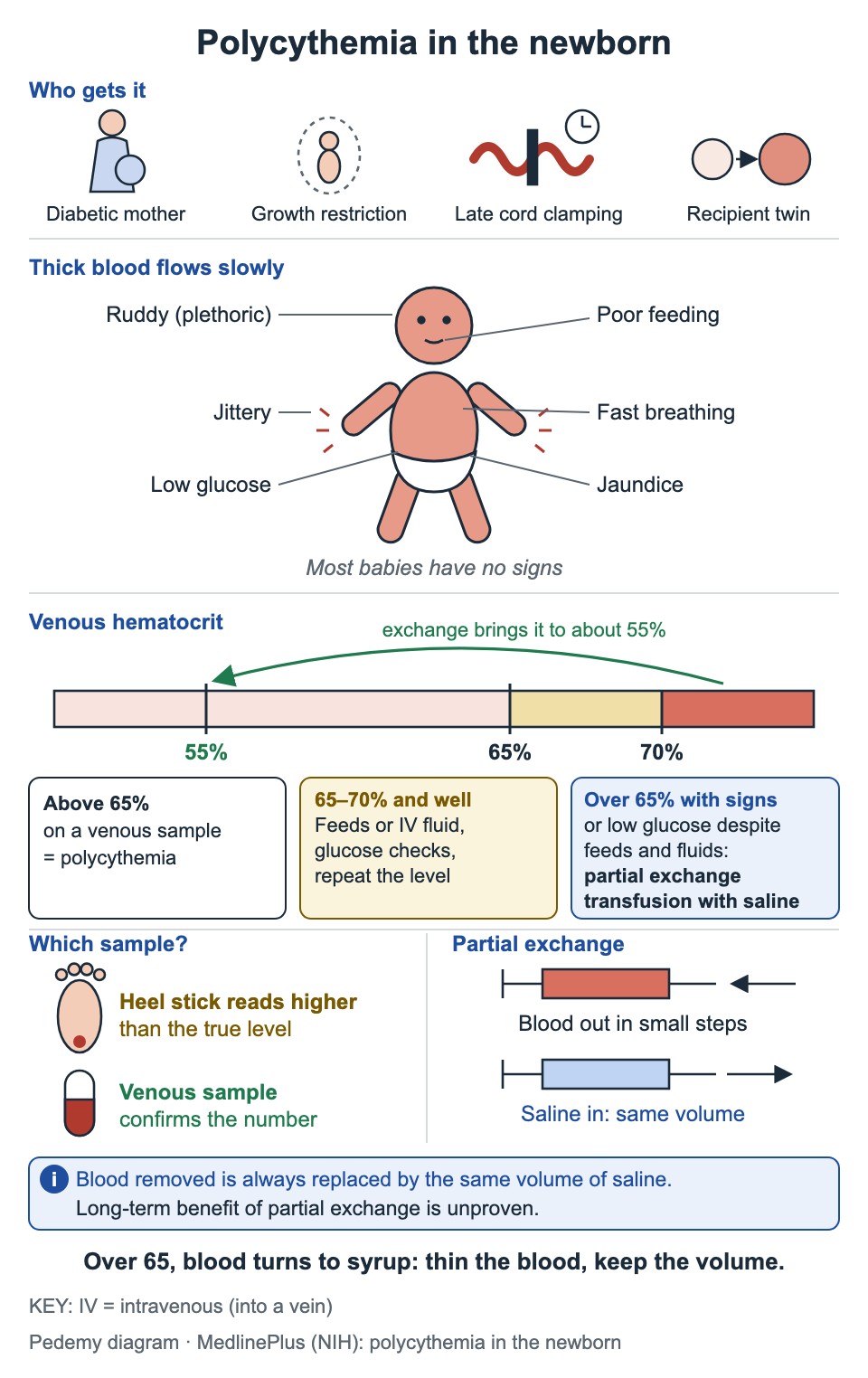
Plethoric, jittery infant of a diabetic mother → polycythemia is a venous hematocrit above? […]
Show answer
Plethoric, jittery infant of a diabetic mother → polycythemia is a venous hematocrit above? 65%
Why: Thick blood flows slowly: jitteriness, poor feeding, low glucose, fast breathing and jaundice, though most babies have no signs. Causes: maternal diabetes, growth restriction, late cord clamping, the recipient twin. A heel-stick hematocrit reads higher, so the diagnosis is confirmed on a venous sample. Hook: Over 65, blood turns to syrup.
Source: StatPearls: Neonatal Polycythemia (NCBI Bookshelf); Sarkar & Rosenkrantz, Neonatal polycythemia and hyperviscosity (Semin Fetal Neonatal Med 2008). Rewritten for Pedemy in our own words, November 2026.
Polycythemia in the newborn -
Congenital Anomalies & Eyes
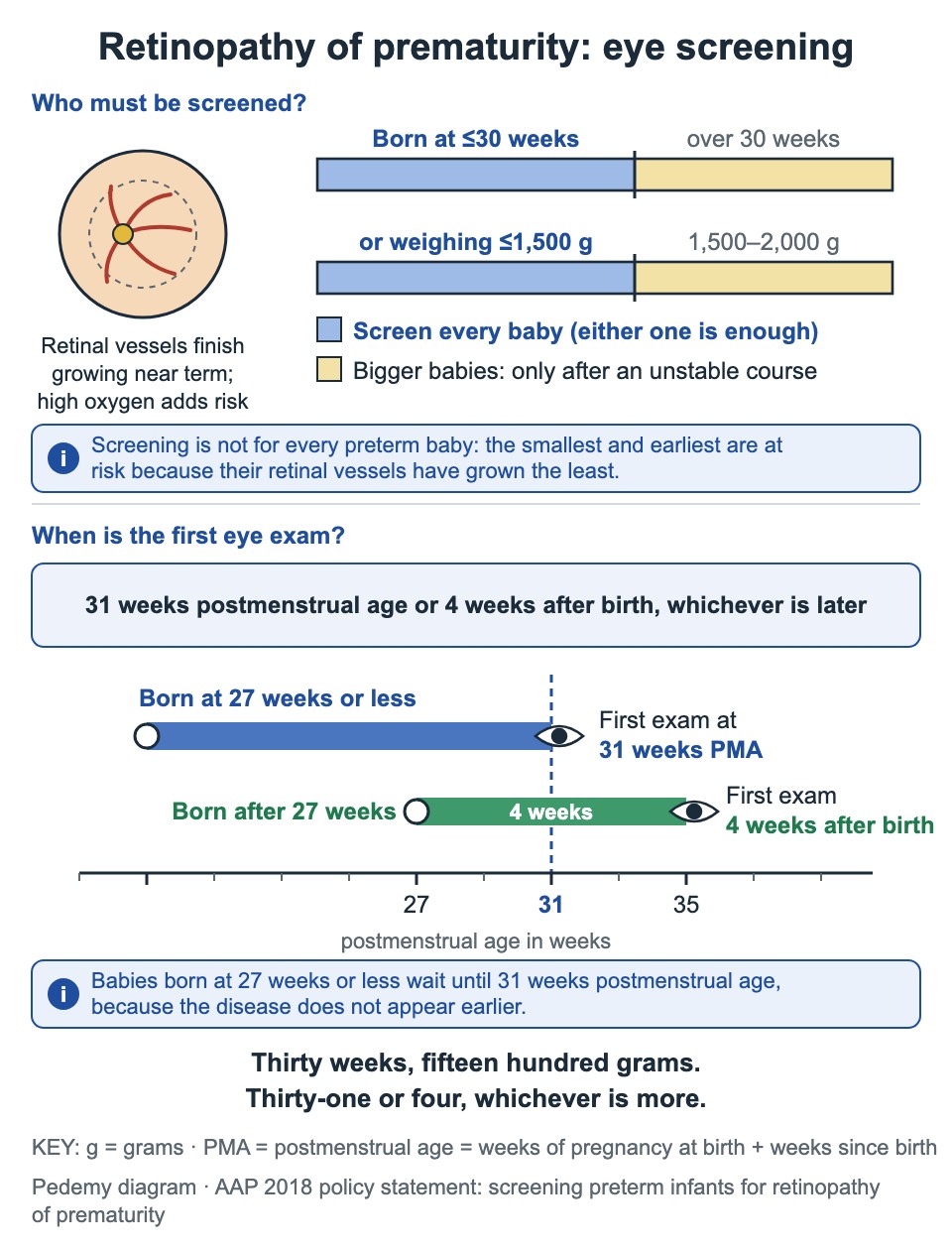
Which preterm infants must have retinopathy of prematurity eye screening? […]
Show answer
Which preterm infants must have retinopathy of prematurity eye screening? born at ≤30 weeks or weighing ≤1,500 g
Why: Retinal vessels finish growing near term, so the smallest and earliest babies are at risk; high oxygen adds to it. Bigger babies (1,500–2,000 g or >30 weeks) are screened only after an unstable course, so screening is not for every preterm baby. First exam at 31 weeks postmenstrual age when born at 27 weeks or less; otherwise 4 weeks after birth. Hook: Thirty weeks, fifteen hundred grams.
Source: AAP policy statement: Screening Examination of Premature Infants for Retinopathy of Prematurity (Fierson, Pediatrics 2018). Rewritten for Pedemy in our own words, November 2026.
Retinopathy of prematurity: eye screening -
Endocrine & Jaundice
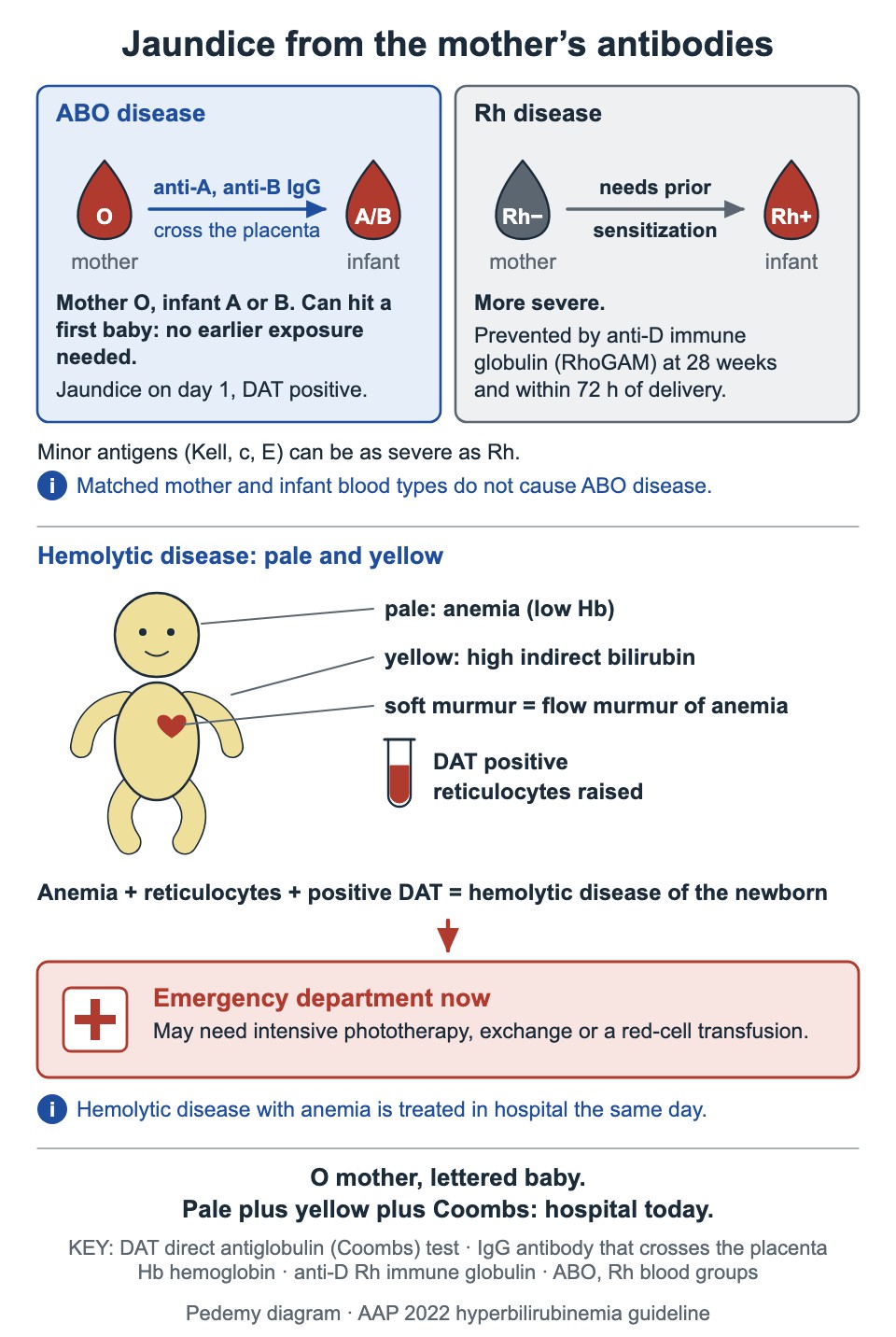
10-day-old: DAT positive, Hb 8.4, indirect bilirubin 18, reticulocytes 9%, soft murmur → next step? […]
Show answer
10-day-old: DAT positive, Hb 8.4, indirect bilirubin 18, reticulocytes 9%, soft murmur → next step? Emergency department now
Why: Anemia, reticulocytosis and a positive DAT mean hemolytic disease of the newborn; affected infants may need intensive phototherapy, exchange or a red-cell transfusion. Minor antigens (Kell, c, E) can be as severe as Rh. Watching at home is unsafe, and a soft flow murmur caused by anemia does not call for cardiology first. Hook: Pale plus yellow plus Coombs: hospital today.
Source: AAP Clinical Practice Guideline: Hyperbilirubinemia in the Newborn ≥35 Weeks (Kemper et al., Pediatrics 2022); ACOG Practice Bulletin 192: Management of Alloimmunization During Pregnancy (2018). Rewritten for Pedemy in our own words, November 2026.
Jaundice from the mother's antibodies -
Exposures & Teratogens
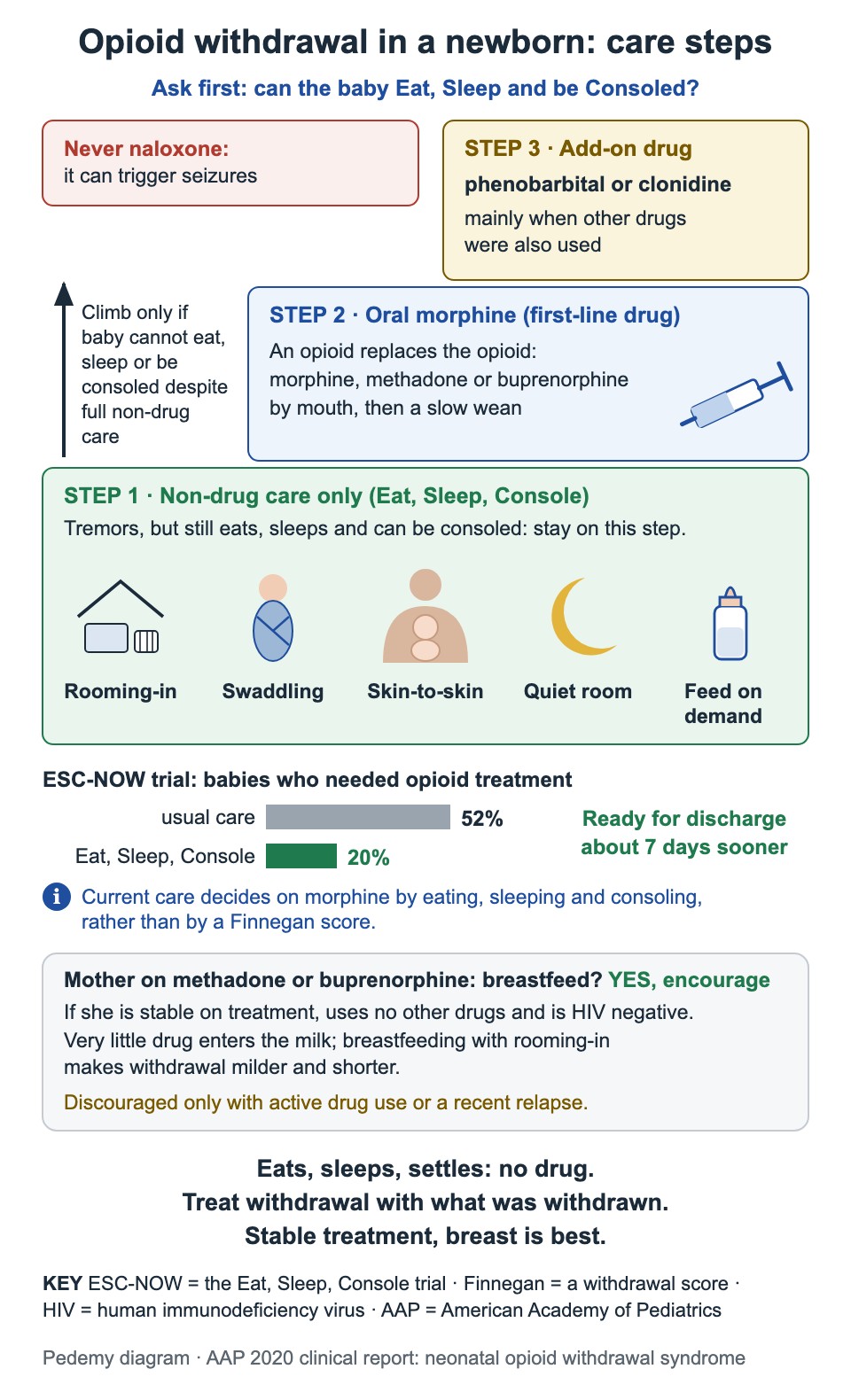
Opioid-exposed newborn with tremors who still eats, sleeps and can be consoled → treatment? […]
Show answer
Opioid-exposed newborn with tremors who still eats, sleeps and can be consoled → treatment? Non-drug care only
Why: Eat, Sleep, Console: rooming-in, swaddling, skin-to-skin, a quiet room and feeding on demand come first. In the ESC-NOW trial this cut opioid treatment from 52% to 20% and brought the baby ready for discharge about 7 days sooner. Current care uses Eat, Sleep, Console rather than starting morphine by Finnegan score. Hook: Eats, sleeps, settles: no drug.
Source: AAP clinical report: Neonatal Opioid Withdrawal Syndrome (Patrick et al., Pediatrics 2020); ESC-NOW trial (Young et al., NEJM 2023). Rewritten for Pedemy in our own words, November 2026.
Opioid withdrawal in a newborn: care steps -
Growth & Newborn Examination
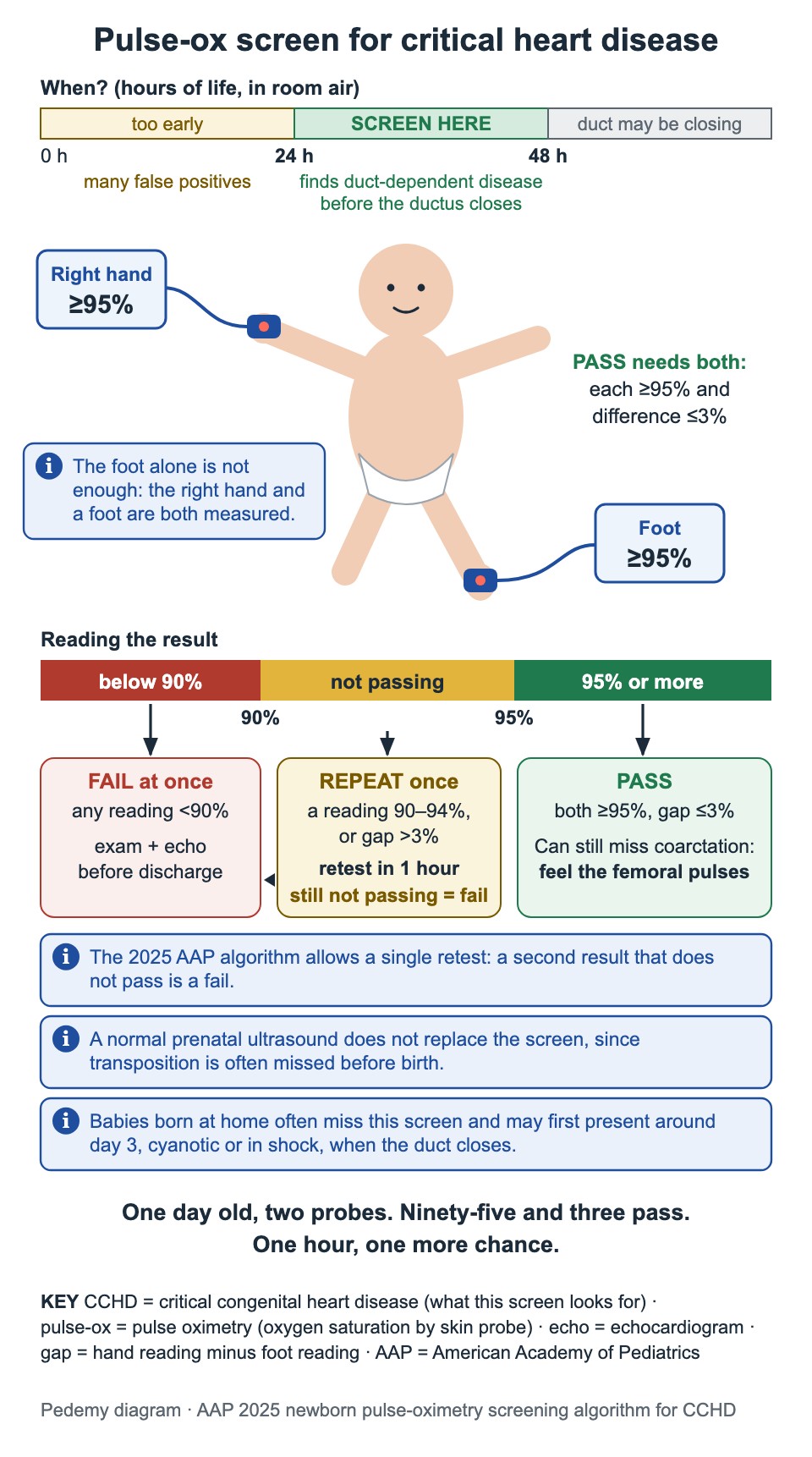
CCHD pulse-ox screen (≥24 h, room air) passes when right hand and foot both read at least? […]
Show answer
CCHD pulse-ox screen (≥24 h, room air) passes when right hand and foot both read at least? 95%, with ≤3% difference
Why: Pulse oximetry finds duct-dependent heart disease before the ductus closes. Both sites must read ≥95% and lie within 3 points; any reading below 90% is an immediate fail, and a result in between gets one repeat screen 1 hour later before it counts as a fail (fail = exam and echo). Screening before 24 hours gives more false positives, home births are screened too, and the foot alone is not enough. Hook: Ninety-five and three keep the heart free.
Source: AAP clinical report: Newborn Screening for Critical Congenital Heart Disease: A New Algorithm and Other Updated Recommendations (Oster et al., Pediatrics 2025); CDC: Screening for Critical Congenital Heart Defects. Rewritten for Pedemy in our own words, November 2026.
Pulse-ox screen for critical heart disease -
Infection & GI Emergencies
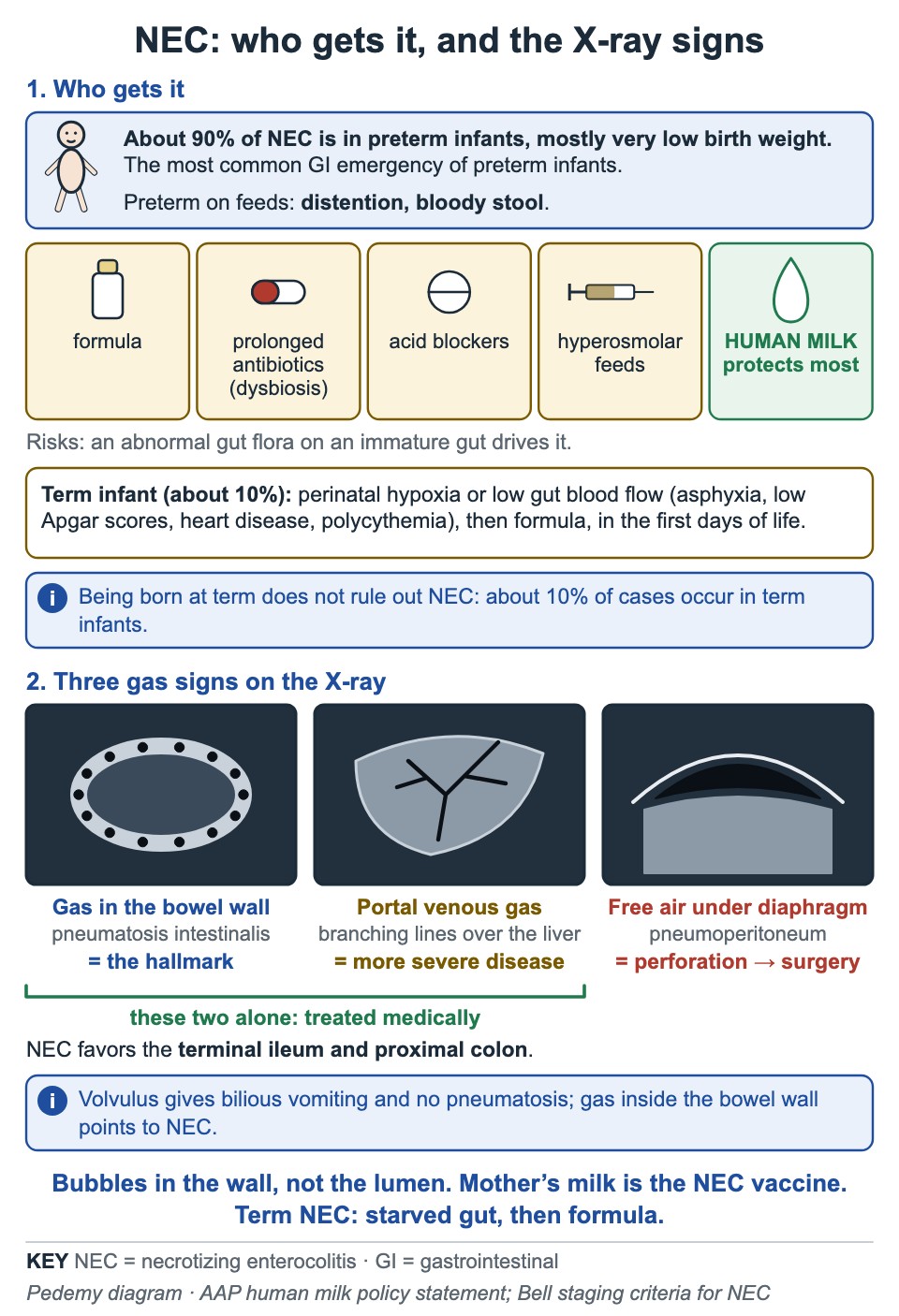
NEC in a term infant (about 10% of cases) → usual setup? […]
Show answer
NEC in a term infant (about 10% of cases) → usual setup? perinatal hypoxia or low gut blood flow, then formula feeding
Why: Asphyxia, low Apgar scores, heart disease or polycythemia leave the gut underperfused; feeds then injure it in the first days of life. Being term does not rule out NEC. Hook: Term NEC: starved gut, then formula.
Source: Zani & Pierro, Necrotizing enterocolitis: controversies and challenges (F1000Research 2015); Necrotizing enterocolitis in children with congenital heart disease: a literature review (2021, PMC8557173); AAP policy statement: Breastfeeding and the Use of Human Milk (Pediatrics 2022). Rewritten for
NEC: who gets it, and the X-ray signs -
Maternal & Fetal Assessment
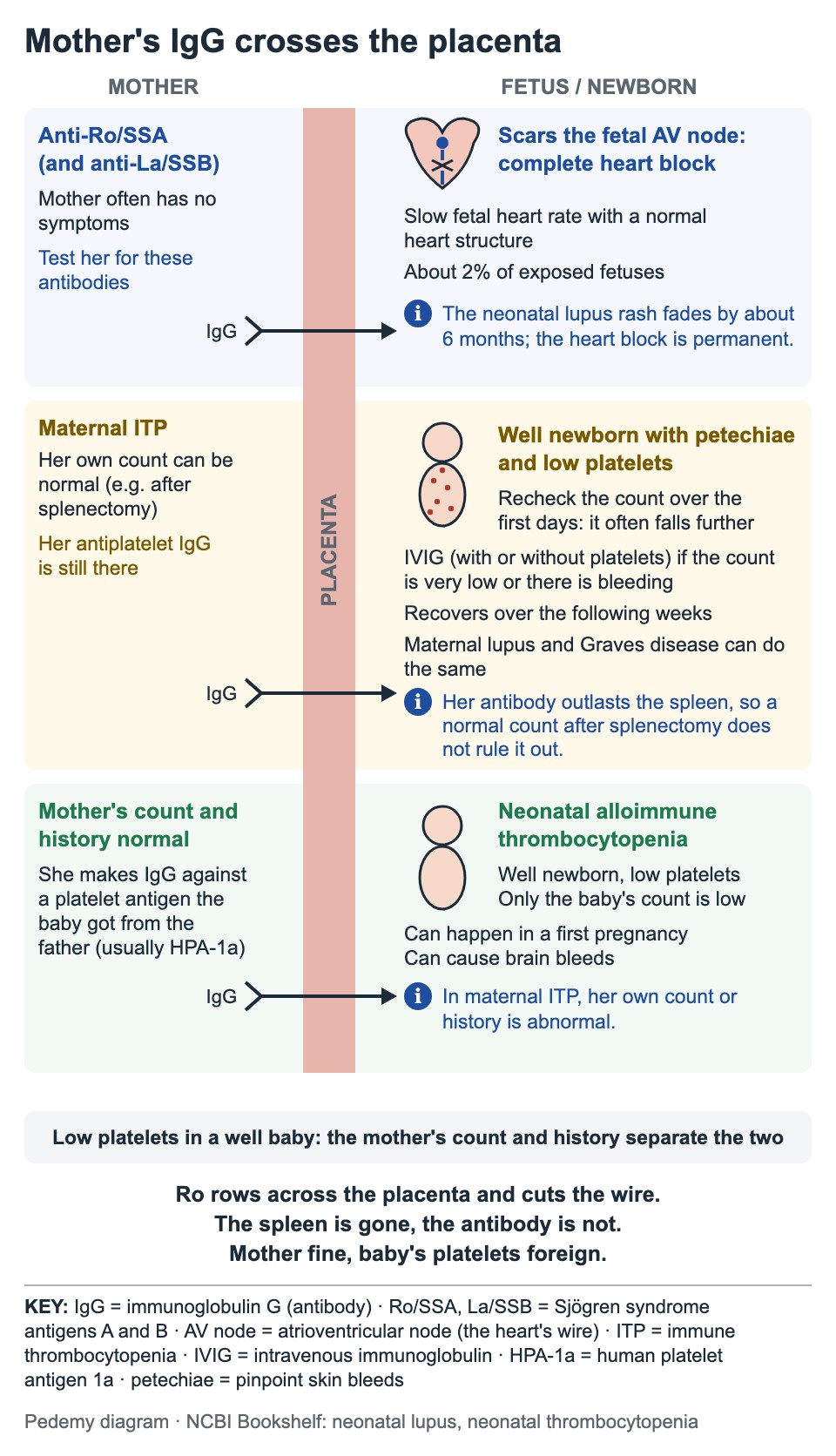
Fetal heart rate 55/min at 22 weeks, normal heart structure → which maternal antibody test? […]
Show answer
Fetal heart rate 55/min at 22 weeks, normal heart structure → which maternal antibody test? Anti-Ro/SSA (and anti-La/SSB)
Why: These IgG antibodies cross the placenta and scar the fetal AV node: complete heart block in about 2% of exposed fetuses, often with a mother who has no symptoms. The neonatal lupus rash fades by about 6 months, but the heart block is permanent. Hook: Ro rows across the placenta and cuts the wire.
Source: ACR Guideline for Reproductive Health in Rheumatic and Musculoskeletal Diseases (2020); Izmirly et al., Hydroxychloroquine to Prevent Recurrent Congenital Heart Block in Fetuses of Anti-SSA/Ro-Positive Mothers (PATCH trial, JACC 2020); AHA scientific statement: Diagnosis and Treatment of Fetal Cardi
Mother's IgG crosses the placenta
Topics in Neonatology
- Birth Injuries & Neurology19
- Circulation & Resuscitation43
- Congenital Anomalies & Eyes6
- Endocrine & Jaundice35
- Exposures & Teratogens26
- Growth & Newborn Examination44
- Infection & GI Emergencies53
- Maternal & Fetal Assessment28
- Respiratory Disorders20
Neonatology study guides
- Birth injuries, cooling for HIE and preterm head scans
- Maternal and fetal assessment
- Neonatal resuscitation, transition and the newborn circulation
- Newborn eyes, Apert syndrome and congenital varicella
- Newborn hypoglycemia and jaundice
- Newborn infections and GI emergencies
- Newborn respiratory disorders
- Newborn size, gestational age and the newborn examination
- Prenatal exposures and teratogens
Clinical tools for Neonatology
- Apgar Score
- Neonatal Jaundice
- Partial Exchange Volume
- Phototherapy Rebound Risk
- New Ballard Score
- Newborn of a Mother with an Infection
Sample cards in other subjects
- Growth & Development
- Immunizations & Post-exposure Prevention
- Nutrition
- Well-Child Care & Prevention
- Emergency Medicine
- Infectious Disease
- ENT
- Mental Health
- Ophthalmology
- Adolescent Medicine
- Cardiology
- Gastroenterology
- Pulmonology
- Dermatology
- Musculoskeletal & Sports Medicine
- Neurology
- Allergy & Immunology
- Behavioral
- Endocrinology
- Hematology
- Nephrology
- Oncology
- Urology
- Biostatistics & Epidemiology
- Genetics
- Medical Ethics
- Metabolic Disorders
- Patient Safety & Quality Improvement
- Rheumatology
- Pharmacology
Free to study without an account. Sign up free to save your spaced-repetition schedule across devices. For education only; check current guidelines before clinical use.