

Endocrinology flashcards
381 cards · 7 topics · 3% of the board exam
381 free Endocrinology flashcards for pediatric board review and rotations, written in our own words with public guideline sources. Topics: Adrenal & Endocrine Hypertension, Bone & Mineral Disorders, Diabetes, Growth and 3 more. Endocrinology is 3% of the board exam.
Sample Endocrinology cards
-
Adrenal & Endocrine Hypertension
Fatigue, weight loss, salt craving, low BP, dark palmar creases → diagnosis? → […]
Show answer
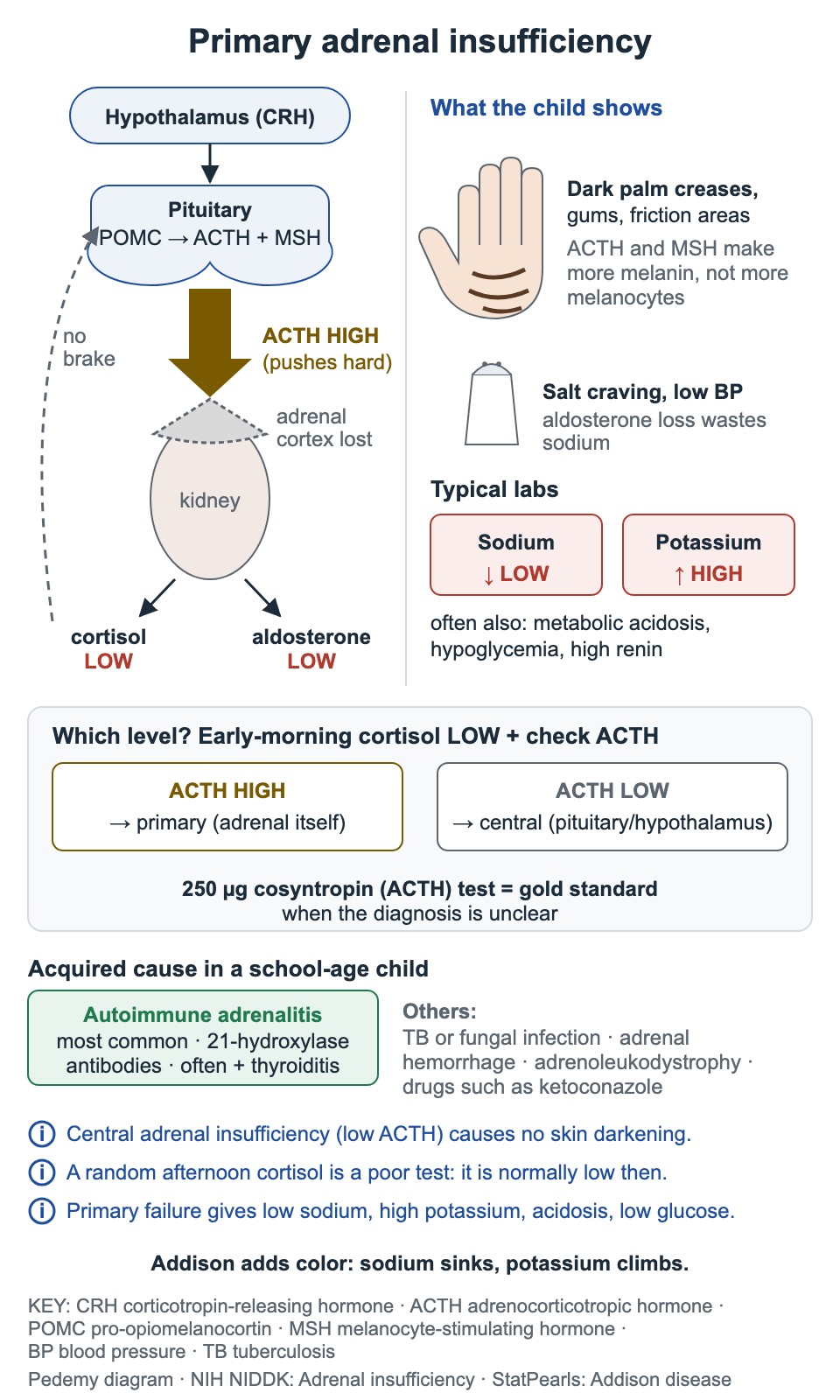
Fatigue, weight loss, salt craving, low BP, dark palmar creases → diagnosis? → Primary adrenal insufficiency (Addison)
Why: Low cortisol removes feedback, so POMC (ACTH and MSH) rises and darkens creases, gums and friction areas; aldosterone loss causes salt craving. Note: The darkening comes from more melanin, not more melanocytes, and central adrenal insufficiency causes no pigmentation. Hook: Addison adds color.
Source: Endocrine Society Clinical Practice Guideline: Diagnosis and treatment of primary adrenal insufficiency (Bornstein et al., 2016). Rewritten for Pedemy in our own words, November 2026.
Primary adrenal insufficiency -
Bone & Mineral Disorders
XLH on oral phosphate without calcitriol → expected complication? […]
Show answer
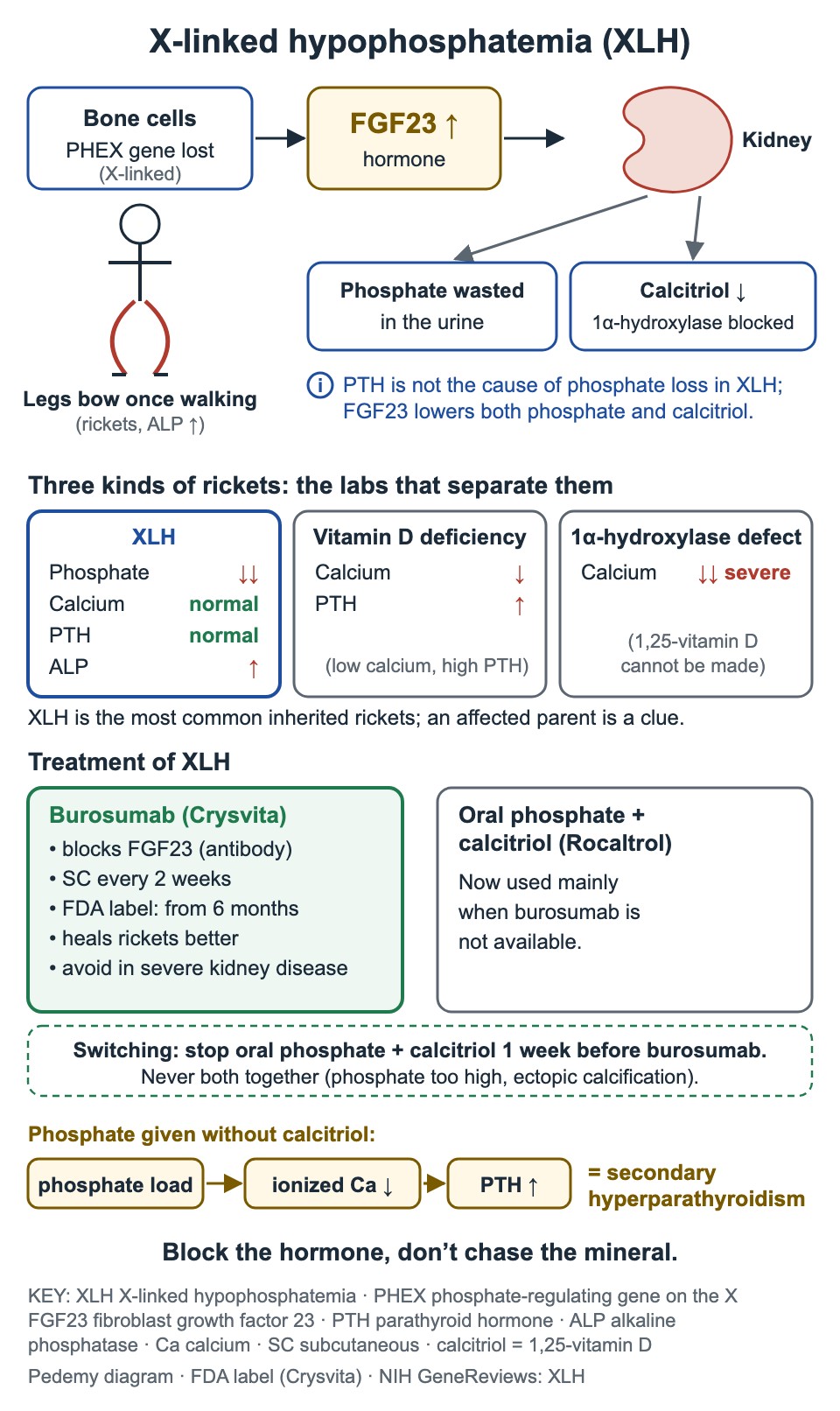
XLH on oral phosphate without calcitriol → expected complication? Secondary hyperparathyroidism
Why: Phosphate loads lower ionized calcium and drive PTH up unless calcitriol (Rocaltrol) is given with it. Note: Hypocalcemic tetany and osteoporosis are not the expected complications. Hook: Phosphate alone wakes the parathyroids.
Source: FDA label: burosumab (Crysvita), revised 4/2026; Imel EA et al. FGF23, hypophosphatemia, and emerging treatments (JBMR Plus 2019). Rewritten for Pedemy in our own words, November 2026.
X-linked hypophosphatemia (XLH) -
Diabetes
Obese teen: glucose 900, osmolality 340, pH 7.35, trace ketones, drowsy → diagnosis? → […]
Show answer
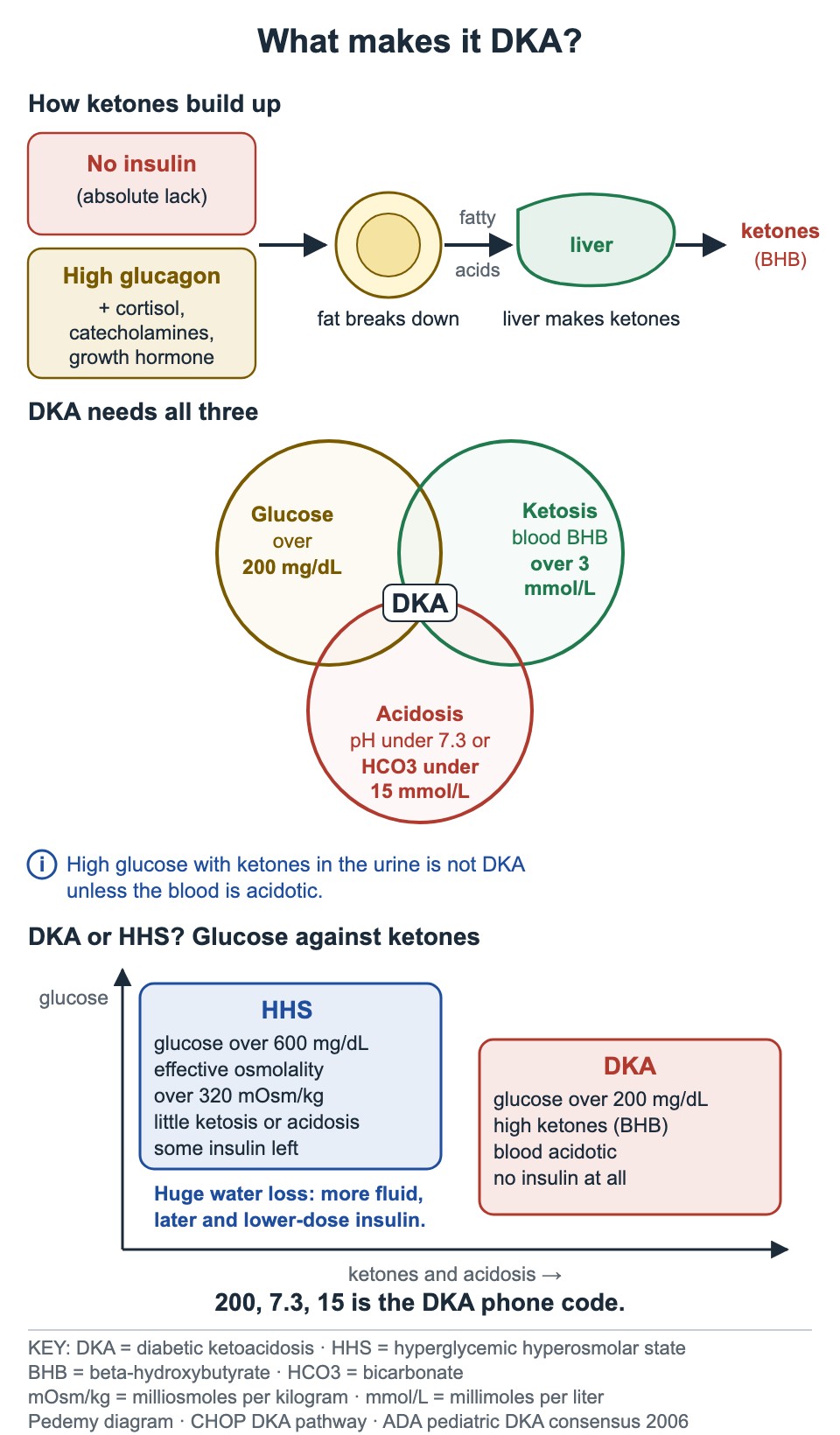
Obese teen: glucose 900, osmolality 340, pH 7.35, trace ketones, drowsy → diagnosis? → Hyperglycemic hyperosmolar state (HHS)
Why: HHS means glucose over 600 mg/dL, effective osmolality over 320 mOsm/kg and little ketosis or acidosis; some insulin remains, so ketones stay low while water loss is huge. Note: HHS is not treated exactly like DKA; it needs more fluid and later, lower-dose insulin. Hook: HHS = huge sugar, hardly sour.
Source: Kitabchi AE et al. Hyperglycemic crises in adult patients with diabetes: ADA consensus statement (Diabetes Care 2009). Rewritten for Pedemy in our own words, November 2026.
What makes it DKA? -
Growth
Child with scoliosis starting growth hormone → what to watch? […]
Show answer
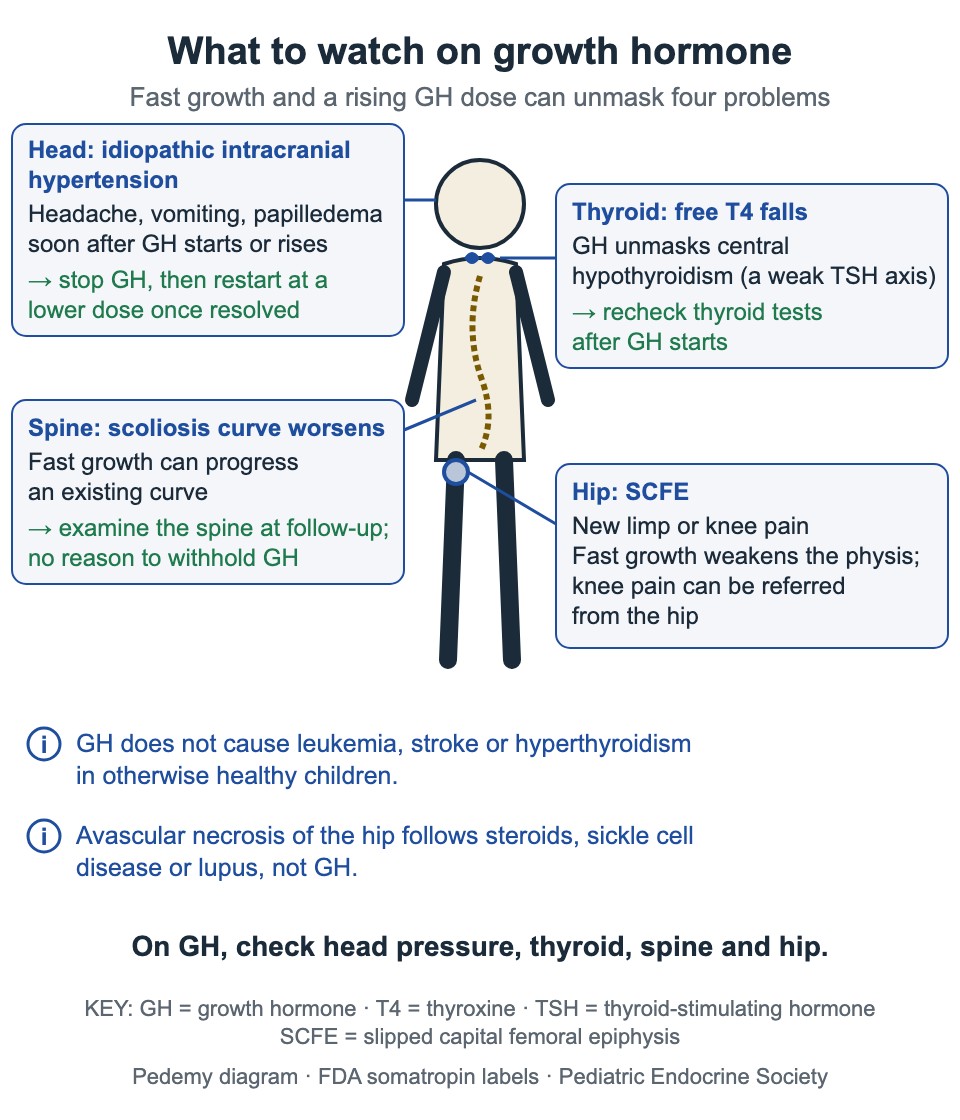
Child with scoliosis starting growth hormone → what to watch? Curve progression
Why: Fast growth can worsen an existing curve, so the spine is examined at follow-up. Note: Scoliosis is not a reason to withhold GH. Hook: Growing spine, growing curve.
Source: FDA label: somatropin (Genotropin), section 5.11 Progression of preexisting scoliosis. Rewritten for Pedemy in our own words, November 2026.
What to watch on growth hormone -
Pituitary & Water Balance
SIADH not improving with fluid restriction → next options? […]
Show answer
SIADH not improving with fluid restriction → next options? Oral urea or salt tablets; tolvaptan only by specialists
Why: Extra solute lets the kidney clear more free water; tolvaptan (Samsca), a vasopressin-receptor blocker, is off-label in children and used only by specialists. Note: 3% saline is kept for hyponatremia with neurologic symptoms. Hook: add solute before stronger drugs.
Source: Verbalis JG et al. Diagnosis, evaluation, and treatment of hyponatremia: expert panel recommendations (Am J Med 2013). Rewritten for Pedemy in our own words, November 2026.
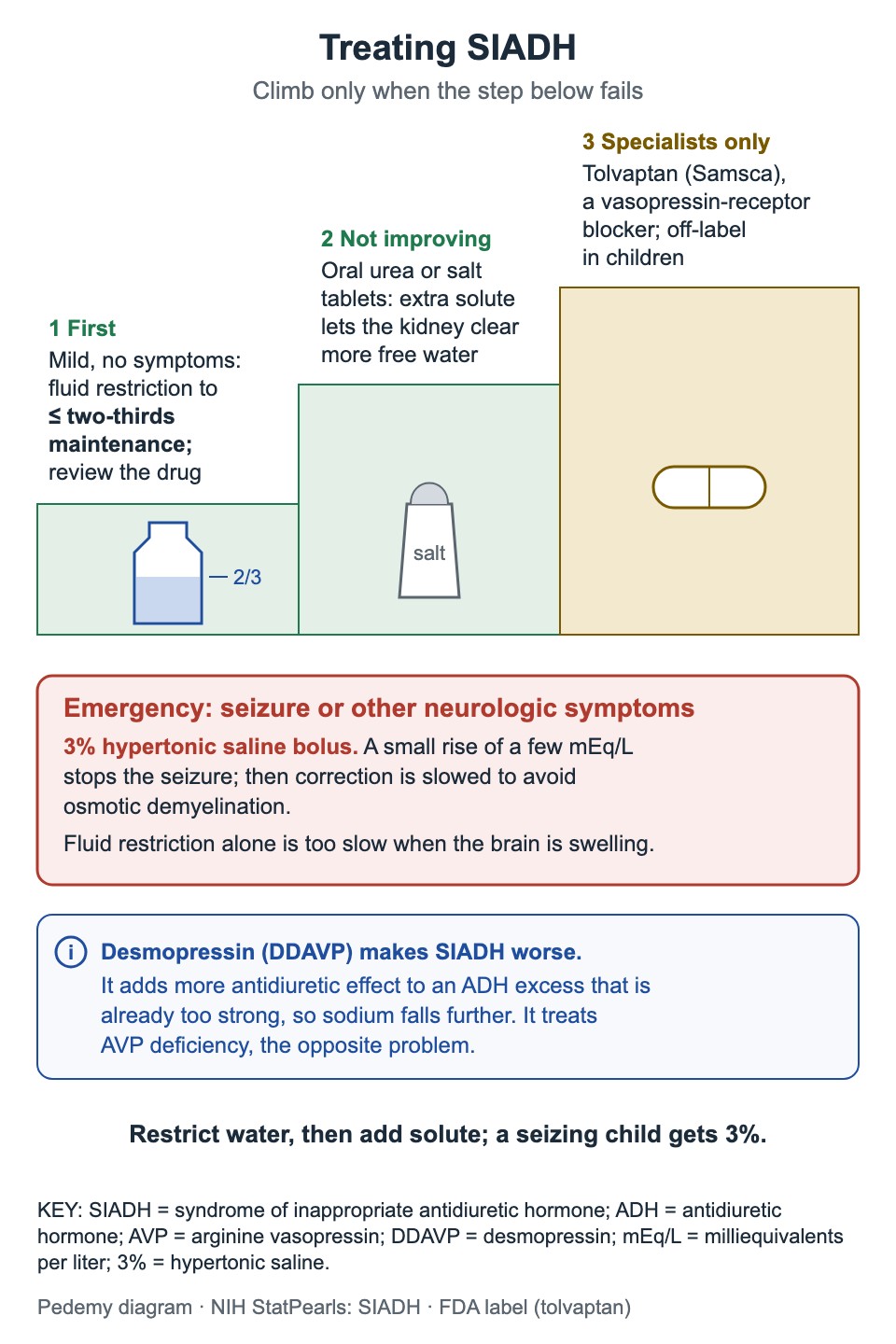
Treating SIADH -
Puberty & Sex Development
Toddler with stable breast buds, no growth spurt, normal bone age, no other puberty signs → diagnosis? […]
Show answer
Toddler with stable breast buds, no growth spurt, normal bone age, no other puberty signs → diagnosis? Premature thelarche
Why: Isolated breast tissue appears in the first 2 years without growth acceleration or bone-age advance, and it may regress or persist. Note: Central puberty brings fast growth and an advanced bone age, which premature thelarche lacks. Hook: breasts alone, body still a toddler.
Source: Merck Manual Professional: Precocious Puberty. Rewritten for Pedemy in our own words, November 2026.
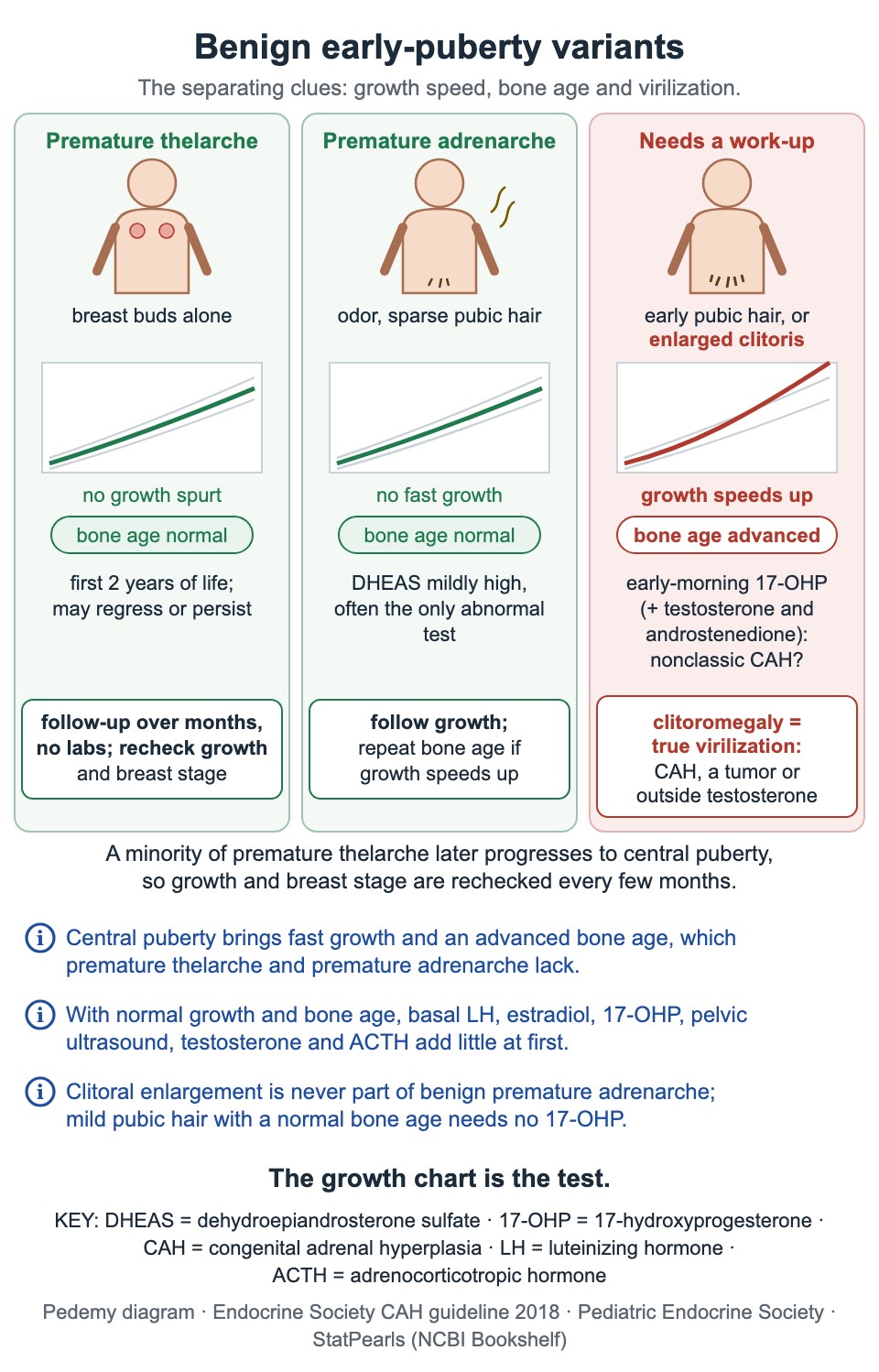
Benign early-puberty variants -
Thyroid Disorders
Home-born infant, no screen: lethargic, cold, constipated, large posterior fontanelle → diagnosis? […]
Show answer
Home-born infant, no screen: lethargic, cold, constipated, large posterior fontanelle → diagnosis? Congenital hypothyroidism
Why: Without screening, hormone lack shows after maternal T4 wanes: low tone and temperature, sluggish gut, big fontanelles, often an umbilical hernia and a large tongue; central hypothyroidism shows the same signs. Get serum TSH and free T4 and treat at once. Note: Congenital hypothyroidism causes a large, not small, fontanelle and low, not high, muscle tone. Hook: the missed screen shows up as a sleepy, cold baby.
Source: AAP clinical report: Congenital Hypothyroidism 2023. Rewritten for Pedemy in our own words, November 2026.
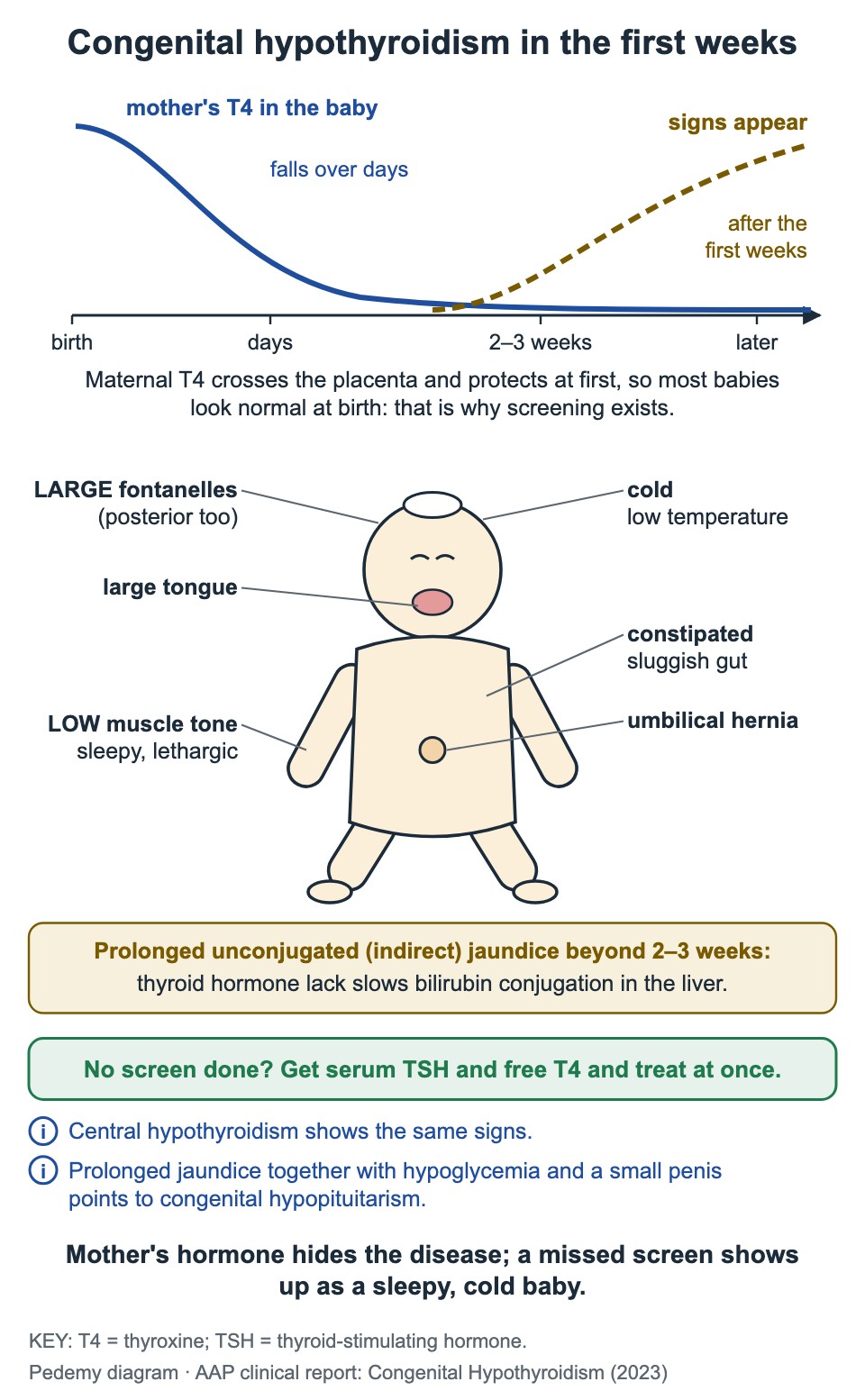
Congenital hypothyroidism in the first weeks -
Adrenal & Endocrine Hypertension
Confirmed endogenous Cushing syndrome with a suppressed (low) ACTH → where is the source? → […]
Show answer
Confirmed endogenous Cushing syndrome with a suppressed (low) ACTH → where is the source? → The adrenal gland (ACTH-independent)
Why: An autonomous adrenal tumor (or nodular adrenal disease) makes cortisol that shuts off pituitary ACTH; a high ACTH means pituitary or ectopic. CRH testing and imaging come only after cortisol excess is proven. Note: Brain MRI comes only after ACTH shows a pituitary source. Hook: ACTH low, look below the diaphragm.
Source: Lodish MB et al. Cushing syndrome in pediatrics (Endocrinol Metab Clin North Am 2018); Endocrine Society Clinical Practice Guideline: The diagnosis of Cushing's syndrome (Nieman et al., 2008). Rewritten for Pedemy in our own words, November 2026.
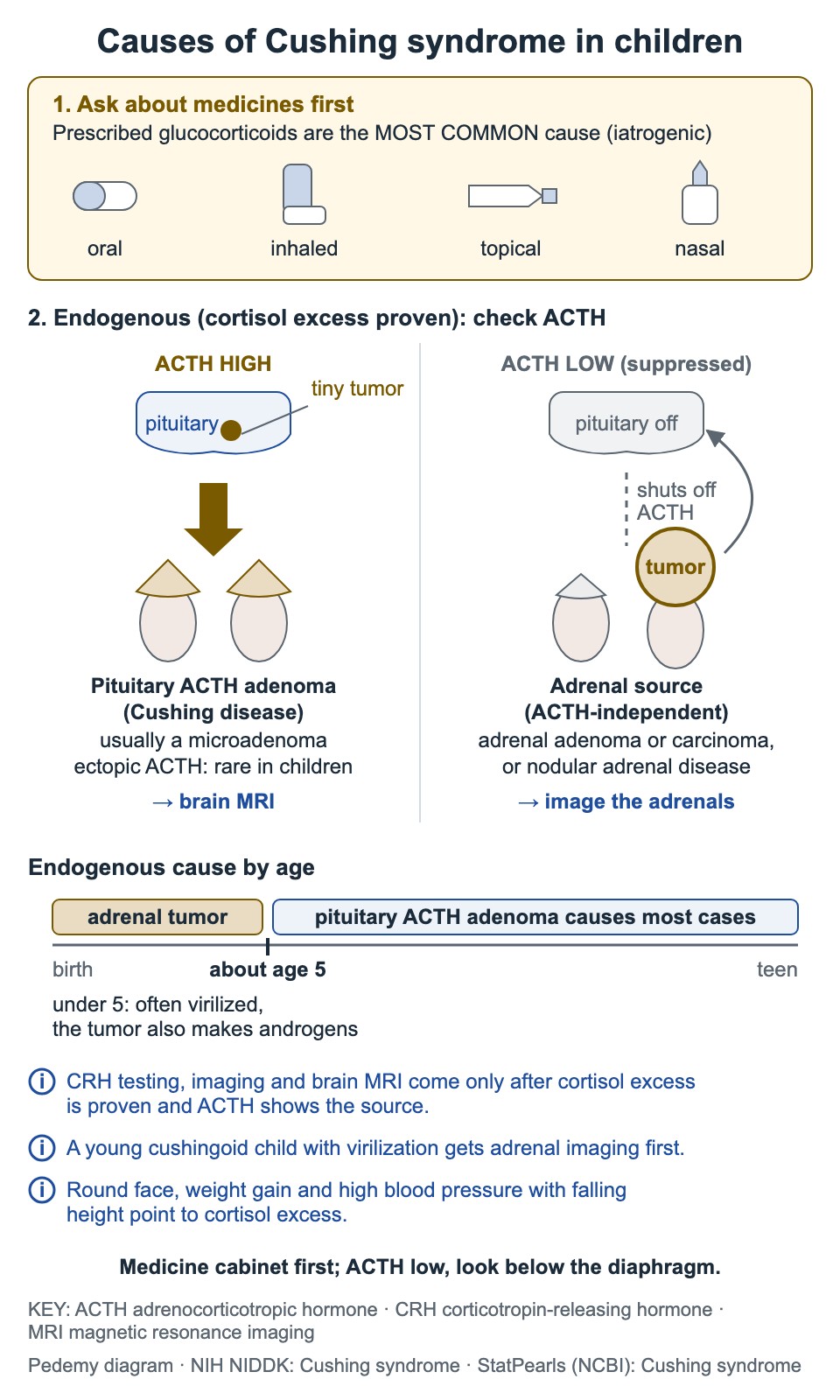
Causes of Cushing syndrome in children
Topics in Endocrinology
- Adrenal & Endocrine Hypertension39
- Bone & Mineral Disorders28
- Diabetes108
- Growth35
- Pituitary & Water Balance33
- Puberty & Sex Development81
- Thyroid Disorders57
Endocrinology study guides
- Adrenal disorders and endocrine hypertension
- Bone and mineral disorders in children
- Diabetes in children and adolescents
- Growth and short stature
- Pituitary disorders and water balance in children
- Puberty and sex development disorders
- Thyroid disorders in children
Clinical tools for Endocrinology
- Adrenal Crisis & Stress Dosing
- BMI & Obesity
- DKA
- Steroid Conversion
- Diabetes Math
- Puberty & Tanner Staging
Sample cards in other subjects
- Growth & Development
- Immunizations & Post-exposure Prevention
- Nutrition
- Well-Child Care & Prevention
- Emergency Medicine
- Infectious Disease
- ENT
- Mental Health
- Ophthalmology
- Adolescent Medicine
- Cardiology
- Gastroenterology
- Pulmonology
- Dermatology
- Musculoskeletal & Sports Medicine
- Neonatology
- Neurology
- Allergy & Immunology
- Behavioral
- Hematology
- Nephrology
- Oncology
- Urology
- Biostatistics & Epidemiology
- Genetics
- Medical Ethics
- Metabolic Disorders
- Patient Safety & Quality Improvement
- Rheumatology
- Pharmacology
Free to study without an account. Sign up free to save your spaced-repetition schedule across devices. For education only; check current guidelines before clinical use.