

Gastroenterology flashcards
428 cards · 8 topics · 5% of the board exam
428 free Gastroenterology flashcards for pediatric board review and rotations, written in our own words with public guideline sources. Topics: Feeding Stooling and Hydration, Functional Abdominal Pain & IBS, Gastritis and H pylori, Hepatitis and 4 more. Gastroenterology is 5% of the board exam.
Sample Gastroenterology cards
-
Feeding Stooling and Hydration
Thriving infant, crying bouts that began and ended before 5 months → newest name for this functional disorder? […]
Show answer
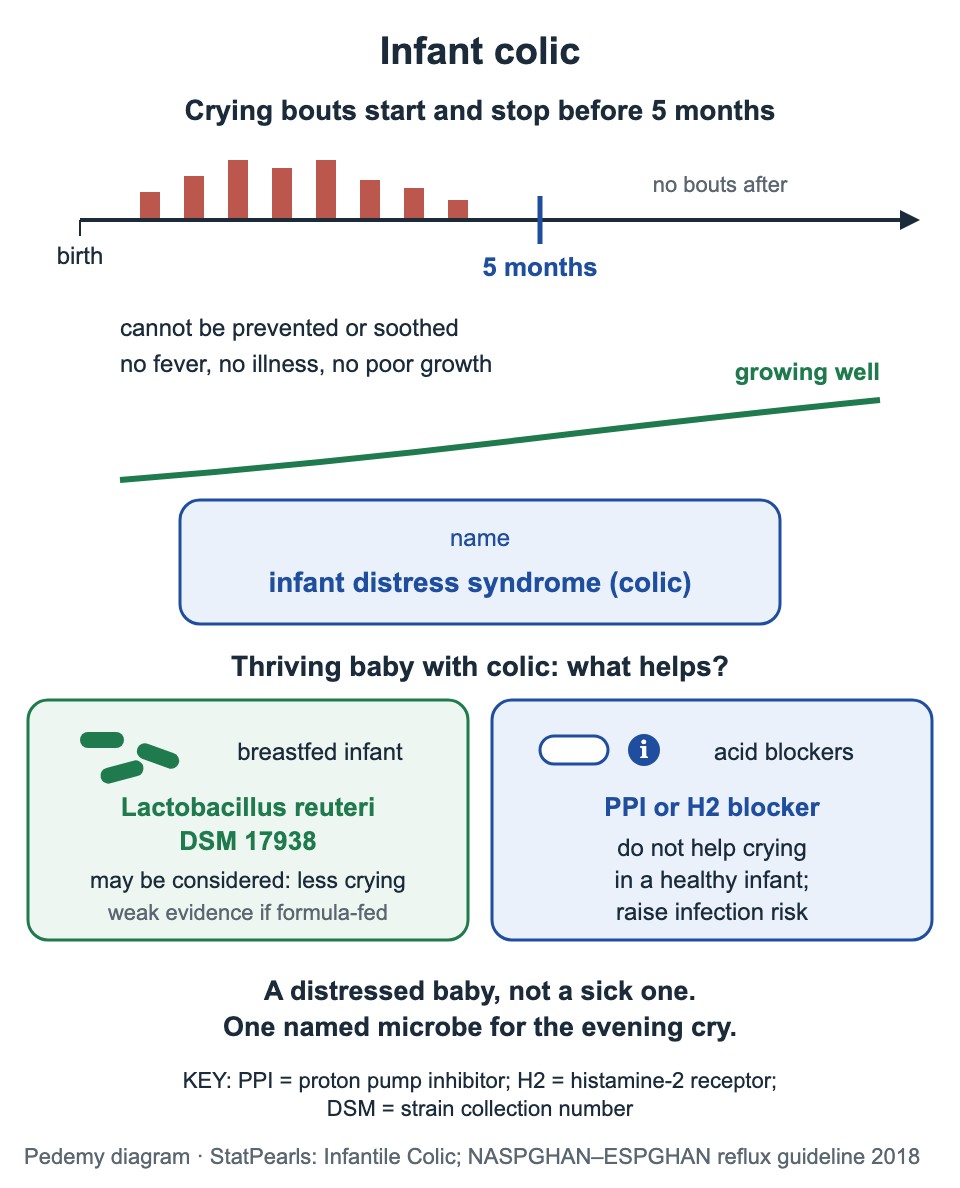
Thriving infant, crying bouts that began and ended before 5 months → newest name for this functional disorder? Infant distress syndrome (formerly colic)
Why: Colic is crying or fussing that starts and stops before 5 months, cannot be prevented or soothed, with no fever, illness or poor growth; the newer name is infant distress syndrome, and the 3-hour rule is dropped as arbitrary. The older rule of 3s (over 3 hours a day, 3 days a week, 3 weeks) is no longer needed. Hook: a distressed baby, not a sick one.
Source: StatPearls (NCBI Bookshelf): Infantile Colic. Rewritten for Pedemy in our own words, November 2026.
Infant colic -
Functional Abdominal Pain & IBS
Cyclic vomiting syndrome → common attack triggers to ask about? […]
Show answer
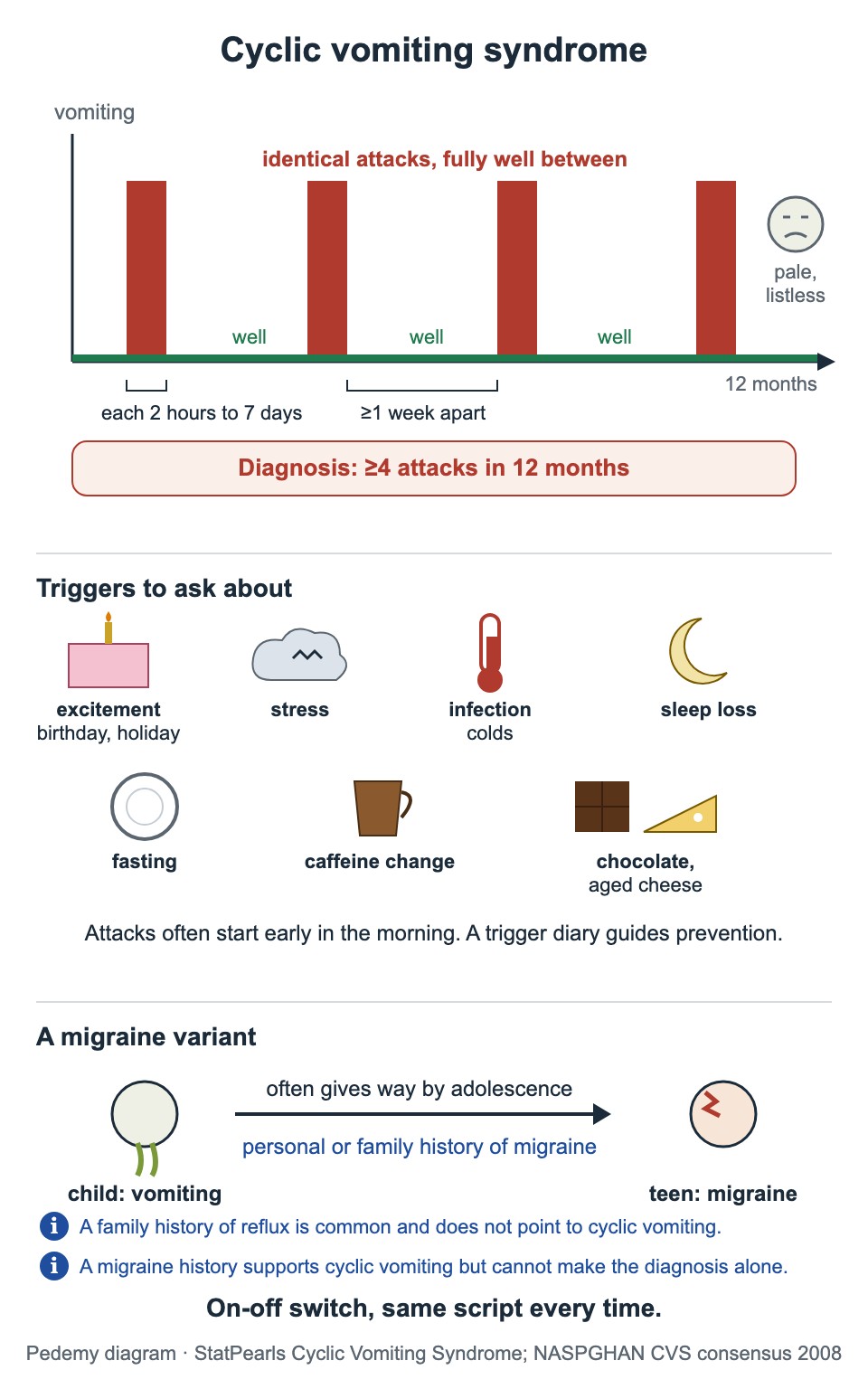
Cyclic vomiting syndrome → common attack triggers to ask about? Stress or excitement, infection, sleep loss
Why: Attacks often follow emotional stress, including happy excitement such as birthdays or holidays, colds, poor sleep, fasting, caffeine change or foods like chocolate and aged cheese, and often start early in the morning. Stress of any kind counts, not only negative stress. A trigger diary guides prevention. Hook: even a birthday party can set off the cycle.
Source: NASPGHAN Cyclic Vomiting Consensus (Li et al., JPGN 2008); StatPearls (NCBI Bookshelf): Cyclic Vomiting Syndrome. Rewritten for Pedemy in our own words, November 2026.
Cyclic vomiting syndrome -
Gastritis and H pylori
Child treated for H. pylori → test of cure, and when? […]
Show answer
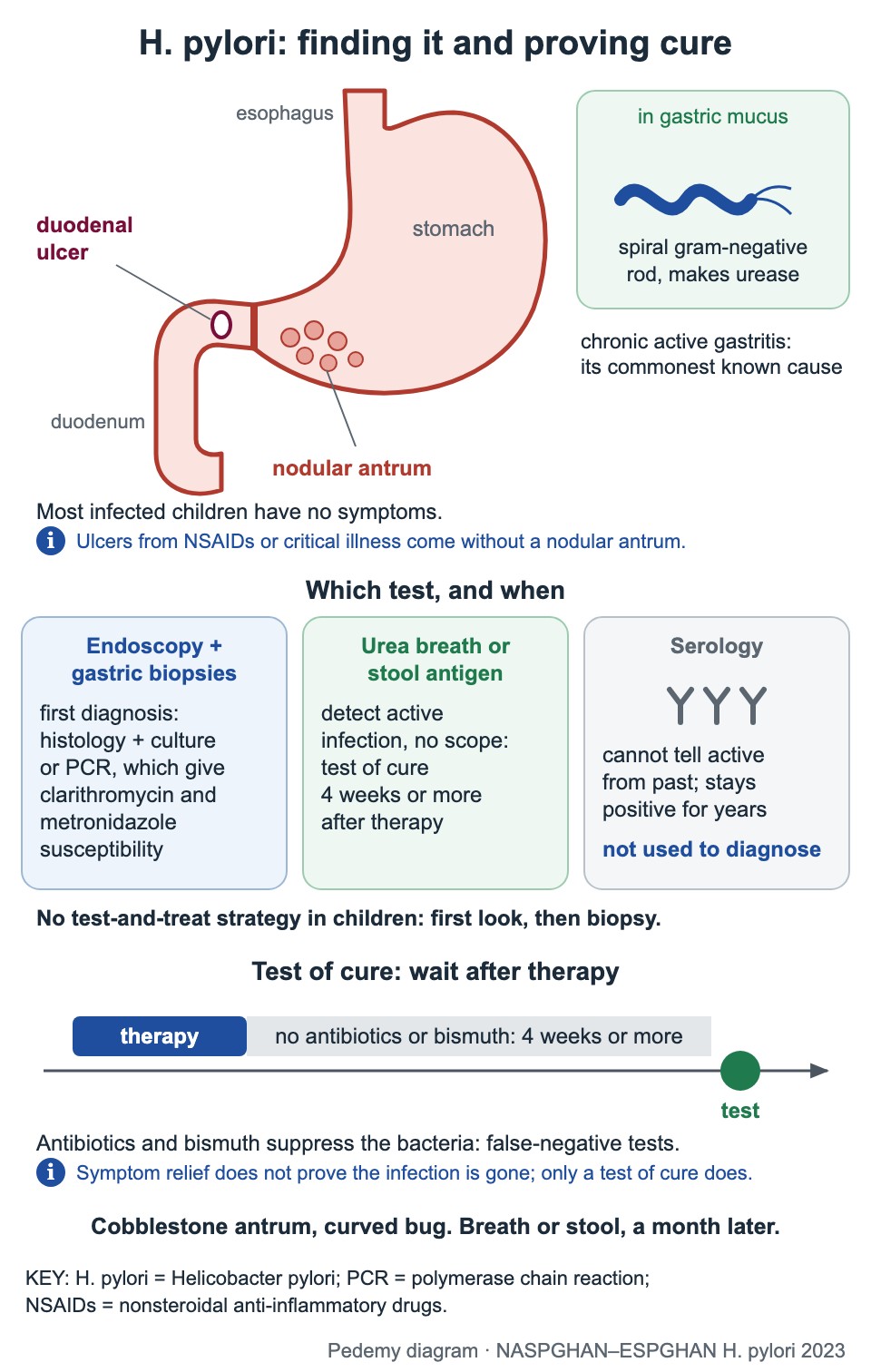
Child treated for H. pylori → test of cure, and when? Urea breath or stool antigen test, ≥4 weeks after therapy
Why: Both detect active infection noninvasively. Waiting 4 weeks after antibiotics and bismuth (Pepto-Bismol) avoids a false negative. Serology stays positive for years, and symptom relief does not prove cure. Hook: Breath or stool, a month later.
Source: NASPGHAN–ESPGHAN joint guideline: H. pylori in Children, 2023 update (Homan et al., JPGN 2024). Rewritten for Pedemy in our own words, November 2026.
H. pylori: finding it and proving cure -
Hepatitis
Most common chronic bloodborne infection in the US, now curable by oral drugs → virus? […]
Show answer
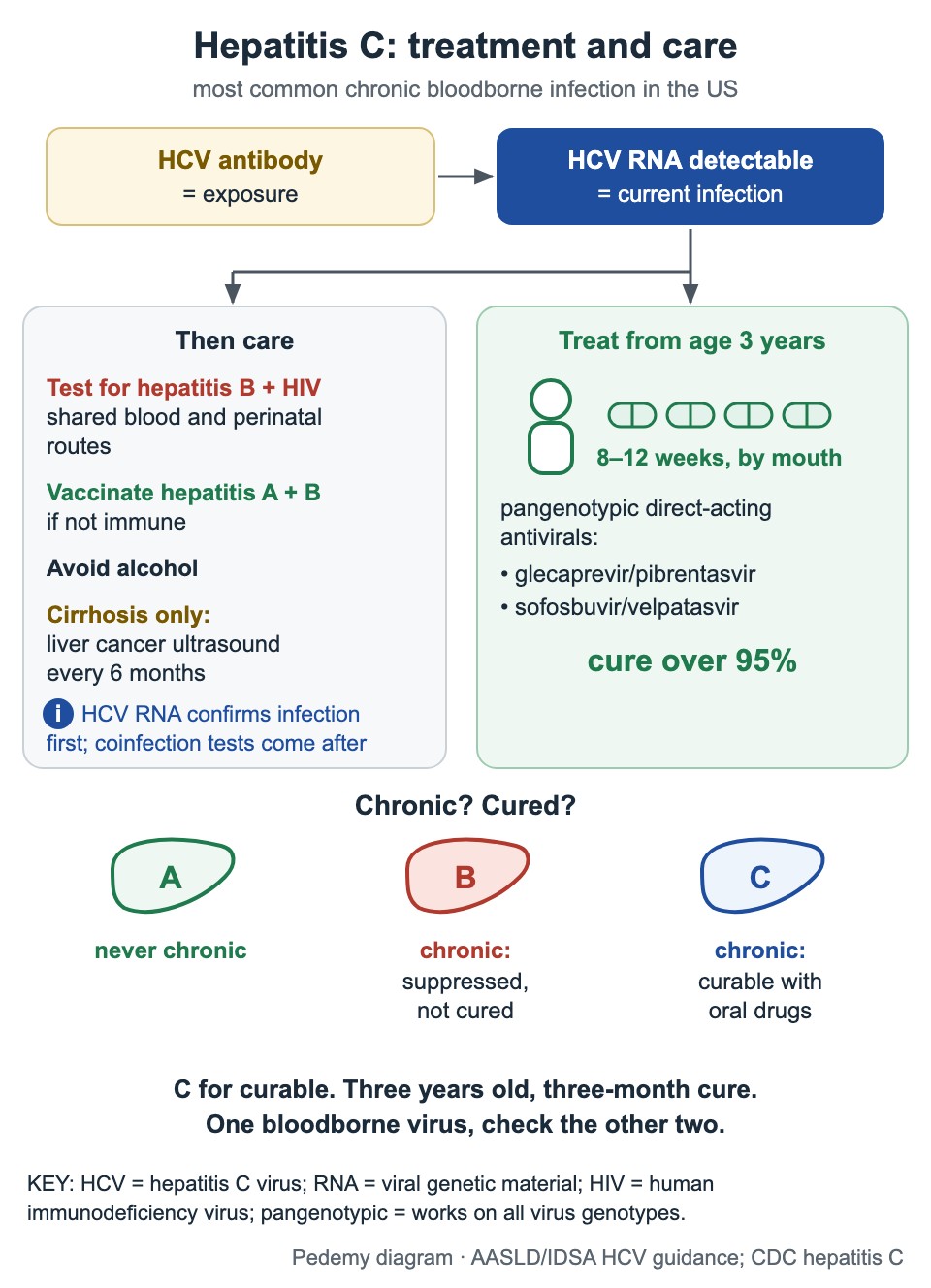
Most common chronic bloodborne infection in the US, now curable by oral drugs → virus? Hepatitis C
Why: Antibody shows exposure and RNA shows current infection; direct-acting antivirals cure over 95%. Chronic hepatitis B is suppressed, not cured, and hepatitis A never becomes chronic. Hook: C for curable.
Source: CDC STI Treatment Guidelines: Hepatitis C; AASLD/IDSA HCV Guidance: HCV in Children. Rewritten for Pedemy in our own words, November 2026.
Hepatitis C: treatment and care -
Ingestions and Esophagus
Teen on doxycycline, pill taken with little water → sudden odynophagia and chest pain → diagnosis? […]
Show answer
Teen on doxycycline, pill taken with little water → sudden odynophagia and chest pain → diagnosis? Pill-induced esophagitis
Why: A pill stuck in the mid-esophagus burns the mucosa, so pain starts suddenly; it heals in 1–3 weeks. Other culprits: NSAIDs, iron, potassium, alendronate. Severe pain, bleeding or inability to swallow needs evaluation. Scleroderma causes slowly progressive dysphagia instead. Hook: Dry-swallowed doxy burns on the way down.
Source: StatPearls (NCBI Bookshelf): Pill-Induced Esophagitis; FDA label: doxycycline. Rewritten for Pedemy in our own words, November 2026.
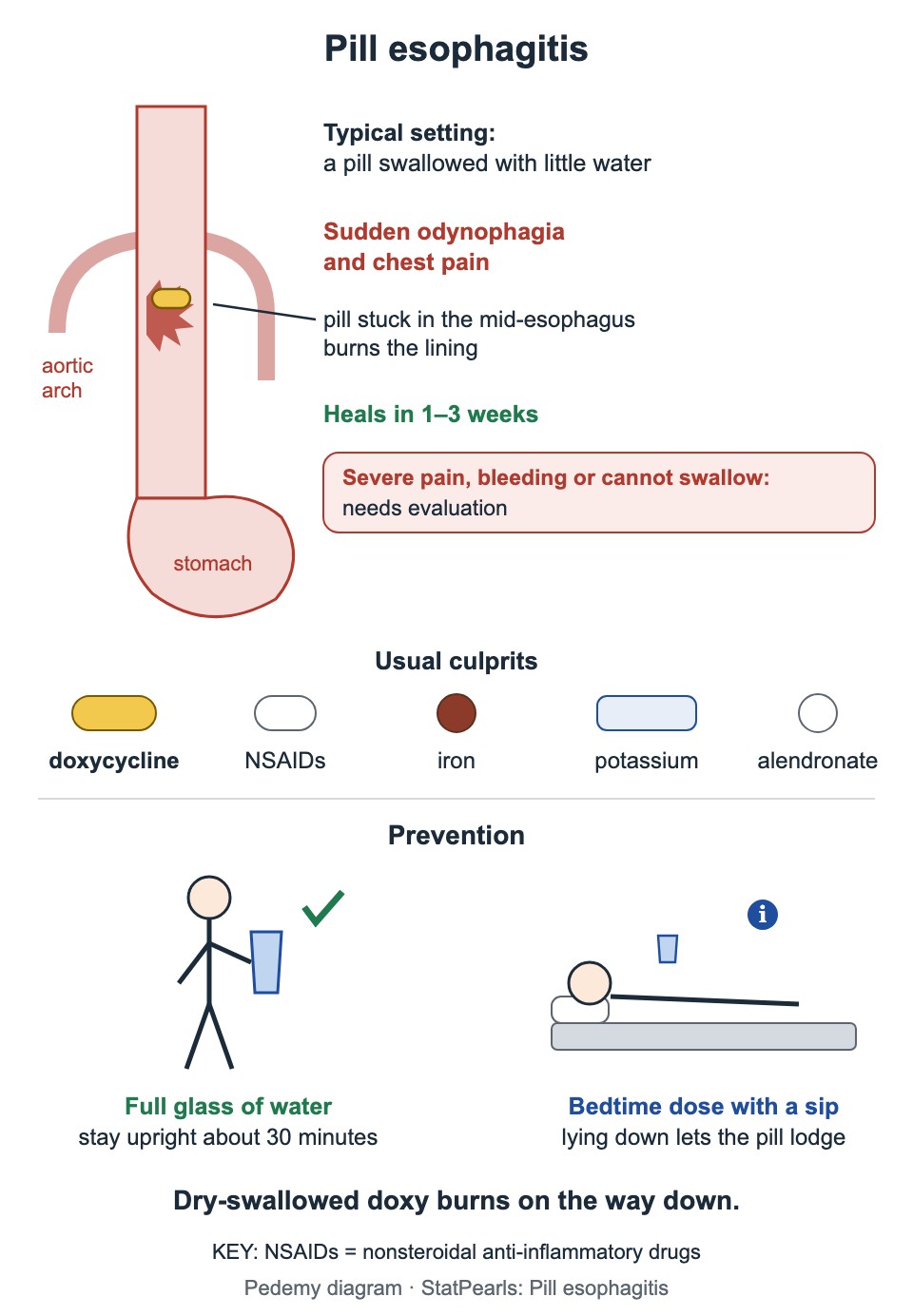
Pill esophagitis -
Liver Biliary and Pancreas
Teen with gallstones: fever, constant RUQ pain, Murphy sign, thick gallbladder wall → diagnosis? […]
Show answer
Teen with gallstones: fever, constant RUQ pain, Murphy sign, thick gallbladder wall → diagnosis? Acute cholecystitis
Why: A stone stuck in the cystic duct inflames the gallbladder wall; ultrasound is the first test (HIDA if unclear: the gallbladder does not fill). Treat with IV fluids, antibiotics and early laparoscopic cholecystectomy. Biliary colic is brief, without fever or wall thickening. Hook: a blocked neck makes a hot sac.
Source: StatPearls (NCBI Bookshelf): Acute Cholecystitis; NIDDK: Gallstones; Tokyo Guidelines 2018 for acute cholecystitis (J Hepatobiliary Pancreat Sci 2018). Rewritten for Pedemy in our own words, November 2026.
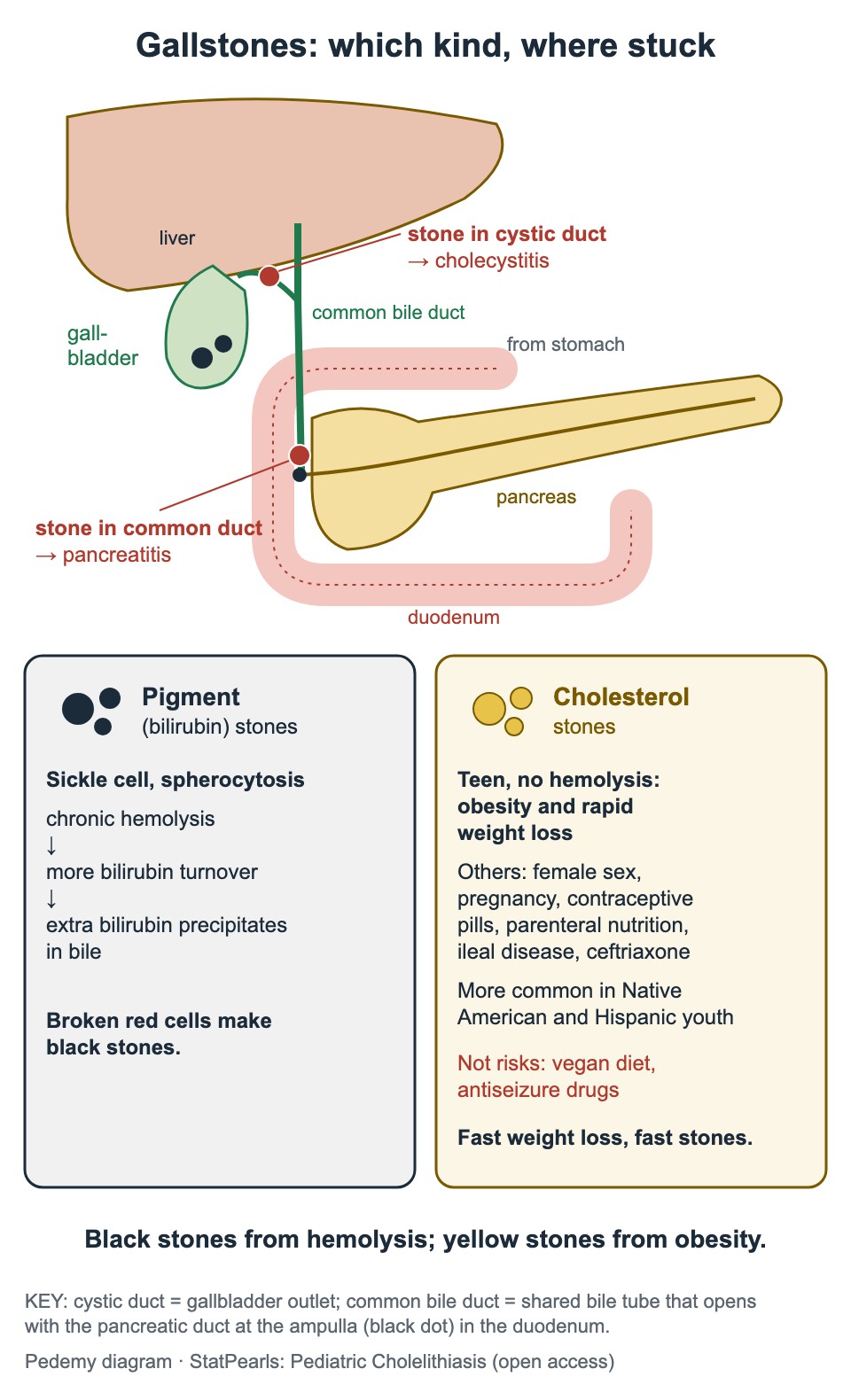
Gallstones: which kind, where stuck -
Malabsorption and IBD
Down syndrome, no GI symptoms, normal growth → routine celiac serology (AAP 2022)? […]
Show answer
Down syndrome, no GI symptoms, normal growth → routine celiac serology (AAP 2022)? No; ask at each visit, test if symptoms
Why: Celiac affects about 5–12% of children with Down syndrome, but the AAP 2022 health-supervision report advises checking symptoms and growth at every visit and testing when they appear, not routine screening of children without symptoms. Hook: in Down syndrome, ask first, draw later.
Source: AAP Clinical Report: Health Supervision for Children and Adolescents With Down Syndrome (Pediatrics 2022). Rewritten for Pedemy in our own words, November 2026.
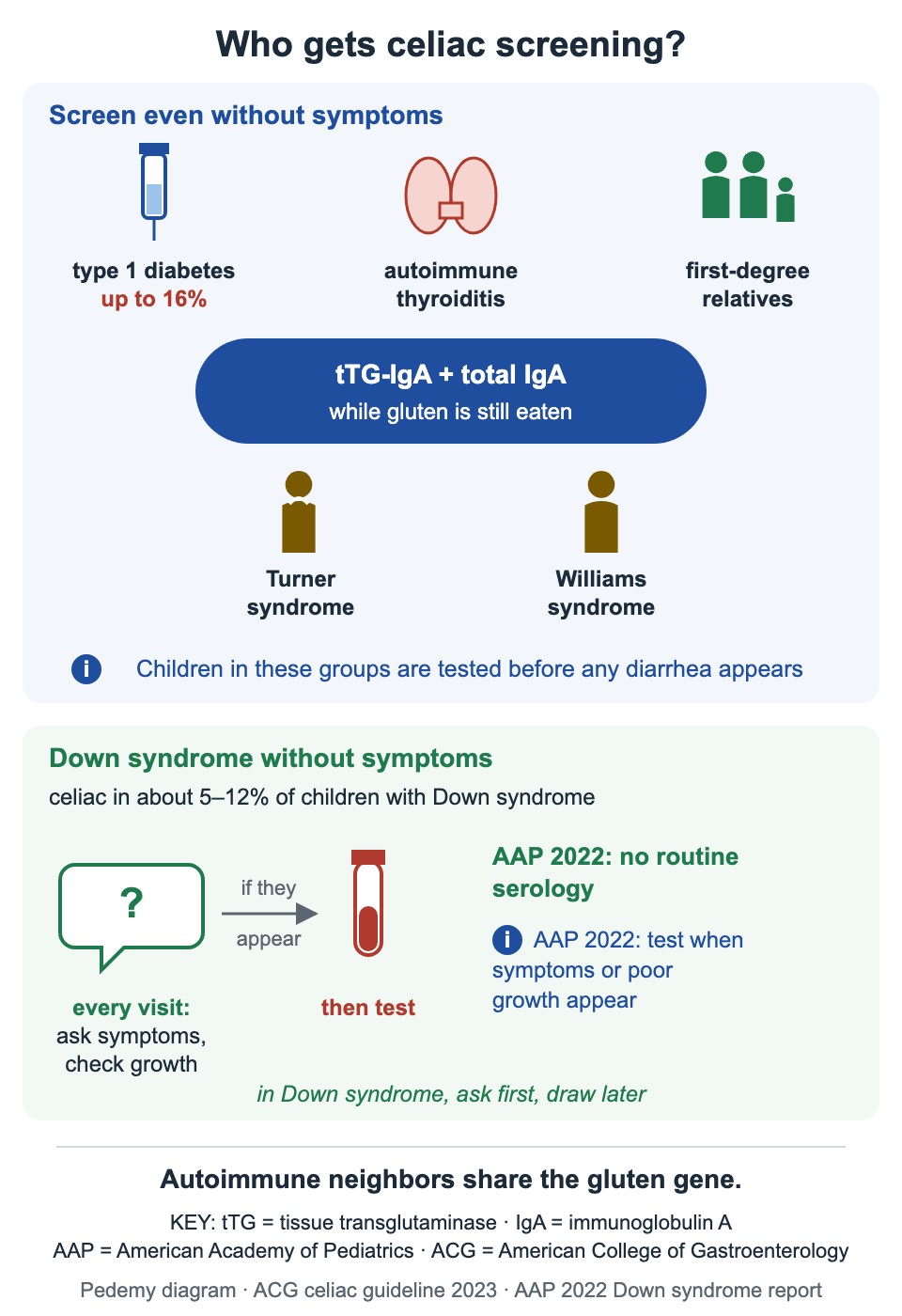
Who gets celiac screening? -
Neonatal and Surgical GI
Gastroschisis → classic maternal risk factor? […]
Show answer
Gastroschisis → classic maternal risk factor? Young maternal age (under 20)
Why: Vasoactive exposures (cocaine, smoking, decongestants) are also linked, probably through vascular injury of the wall. Advanced maternal age raises trisomy and omphalocele risk instead. Hook: young mother, open wall.
Source: StatPearls (NCBI Bookshelf): Gastroschisis. Rewritten for Pedemy in our own words, November 2026.
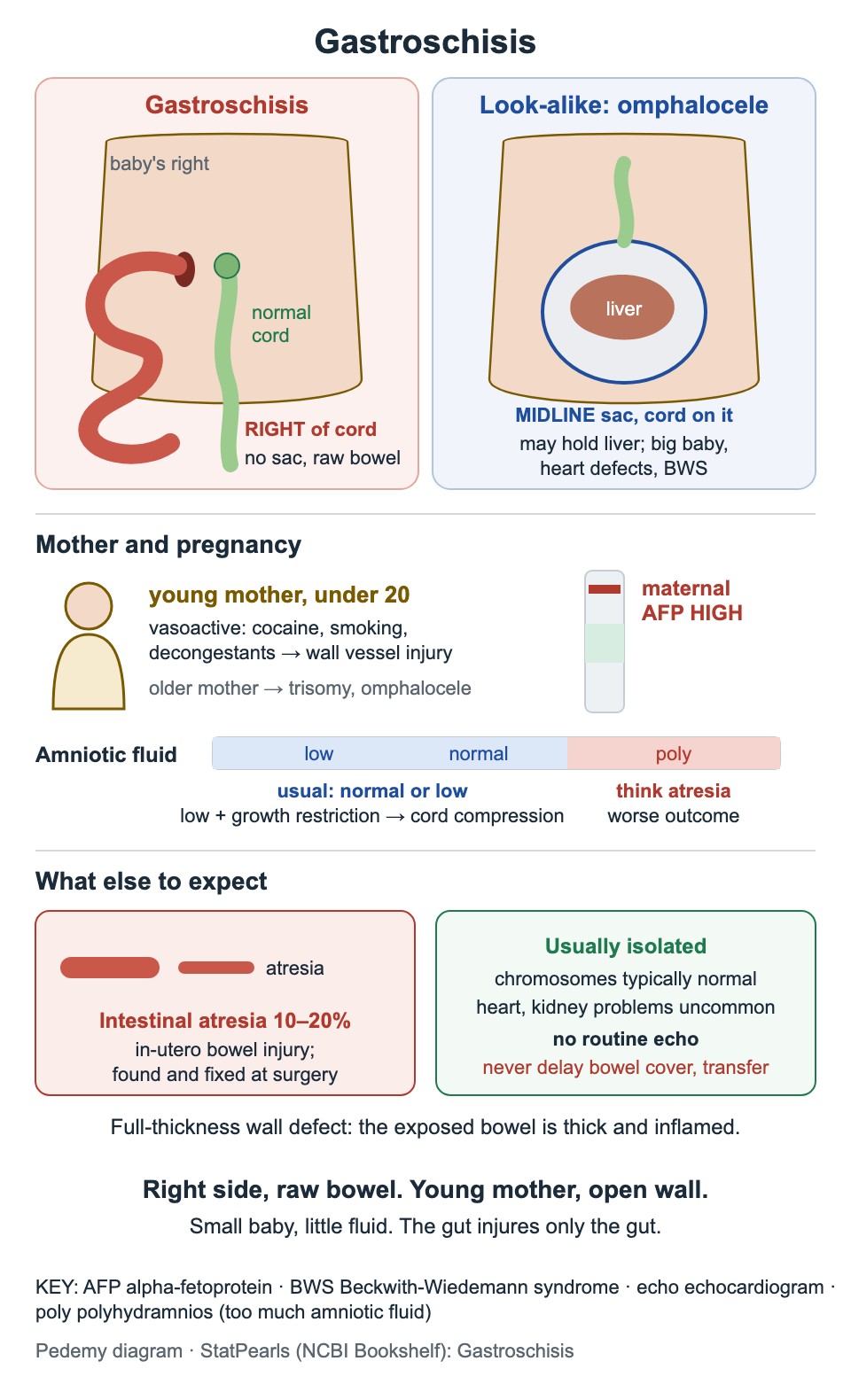
Gastroschisis
Topics in Gastroenterology
- Feeding Stooling and Hydration62
- Functional Abdominal Pain & IBS24
- Gastritis and H pylori6
- Hepatitis29
- Ingestions and Esophagus58
- Liver Biliary and Pancreas81
- Malabsorption and IBD80
- Neonatal and Surgical GI88
Gastroenterology study guides
- Dehydration, reflux, constipation and toddler diarrhea
- Functional abdominal pain and IBS in children
- Gastritis and H. pylori in children
- Liver, biliary and pancreatic disease in children
- Malabsorption and inflammatory bowel disease
- Neonatal and surgical GI problems
- Swallowed objects and esophageal disease in children
- Viral and autoimmune hepatitis in children
Clinical tools for Gastroenterology
- Appendicitis
- Appendicitis Risk Scores
- DHAKA & NIRUDAK Scores
- Dehydration & ORS
- IBD Activity
- IV Fluids & Dehydration
- PELD Cr Score
- pFIB-c Liver Fibrosis
Sample cards in other subjects
- Growth & Development
- Immunizations & Post-exposure Prevention
- Nutrition
- Well-Child Care & Prevention
- Emergency Medicine
- Infectious Disease
- ENT
- Mental Health
- Ophthalmology
- Adolescent Medicine
- Cardiology
- Pulmonology
- Dermatology
- Musculoskeletal & Sports Medicine
- Neonatology
- Neurology
- Allergy & Immunology
- Behavioral
- Endocrinology
- Hematology
- Nephrology
- Oncology
- Urology
- Biostatistics & Epidemiology
- Genetics
- Medical Ethics
- Metabolic Disorders
- Patient Safety & Quality Improvement
- Rheumatology
- Pharmacology
Free to study without an account. Sign up free to save your spaced-repetition schedule across devices. For education only; check current guidelines before clinical use.