

Pulmonology flashcards
158 cards · 5 topics · 5% of the board exam
158 free Pulmonology flashcards for pediatric board review and rotations, written in our own words with public guideline sources. Topics: Asthma and Devices, CF and Ciliary Disease, Pneumonia and Aspiration, Rare and Systemic Lung Disease and 1 more. Pulmonology is 5% of the board exam.
Sample Pulmonology cards
-
Asthma and Devices
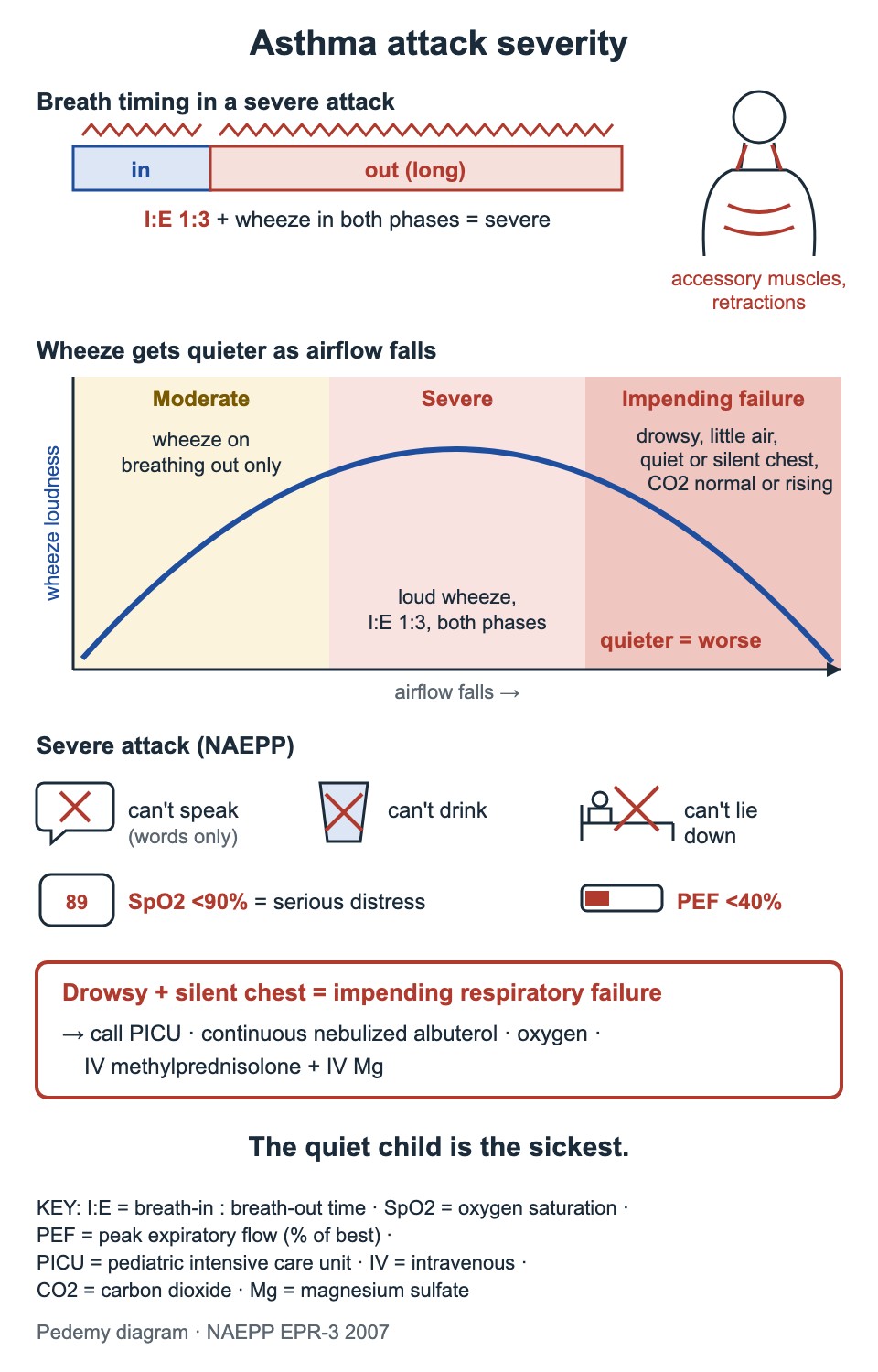
Severe asthma: child now drowsy, very little air movement, wheeze quieter → meaning? […]
Show answer
Severe asthma: child now drowsy, very little air movement, wheeze quieter → meaning? Impending respiratory failure
Why: A silent chest means almost no airflow, and a normal or rising CO2 in a breathless child means the muscles are tiring. Call the PICU; give continuous nebulized albuterol, oxygen, IV methylprednisolone and IV magnesium, and prepare for ventilatory support. A quieter chest here is worse, not better. Hook: the quiet child is the sickest.
Source: NAEPP Expert Panel Report 3 (EPR-3, 2007) (managing exacerbations); NAEPP 2020 Focused Updates to the Asthma Management Guidelines. Rewritten for Pedemy in our own words, November 2026.
Asthma attack severity -
CF and Ciliary Disease
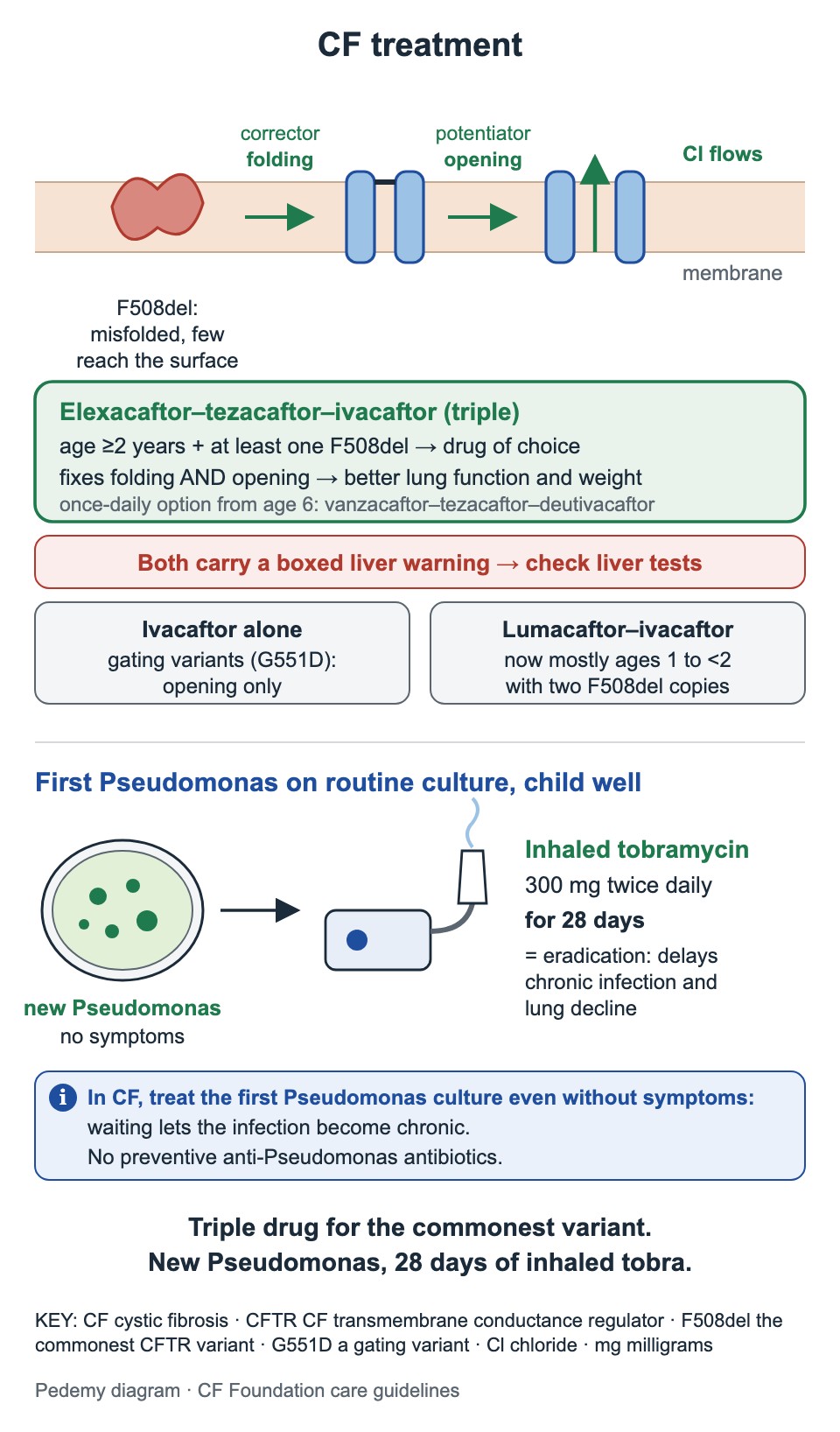
Teen with CF coughs up about a cup of bright red blood and keeps bleeding → definitive treatment? […]
Show answer
Teen with CF coughs up about a cup of bright red blood and keeps bleeding → definitive treatment? Bronchial artery embolization
Why: Chronic infection enlarges the bronchial arteries, which run at systemic pressure, so advanced CF can bleed massively; admit, stop airway clearance and inhaled irritants for now, treat the infection, and embolize the bleeding artery if it continues. Emergency lobectomy or bronchoscopy is not the first step because embolization controls the bleeding source with less risk. Hook: Big bronchial arteries, plug the bleeder.
Source: Flume PA et al. Cystic fibrosis pulmonary guidelines: pneumothorax and hemoptysis (Am J Respir Crit Care Med 2010). Rewritten for Pedemy in our own words, November 2026.
CF treatment -
Pneumonia and Aspiration
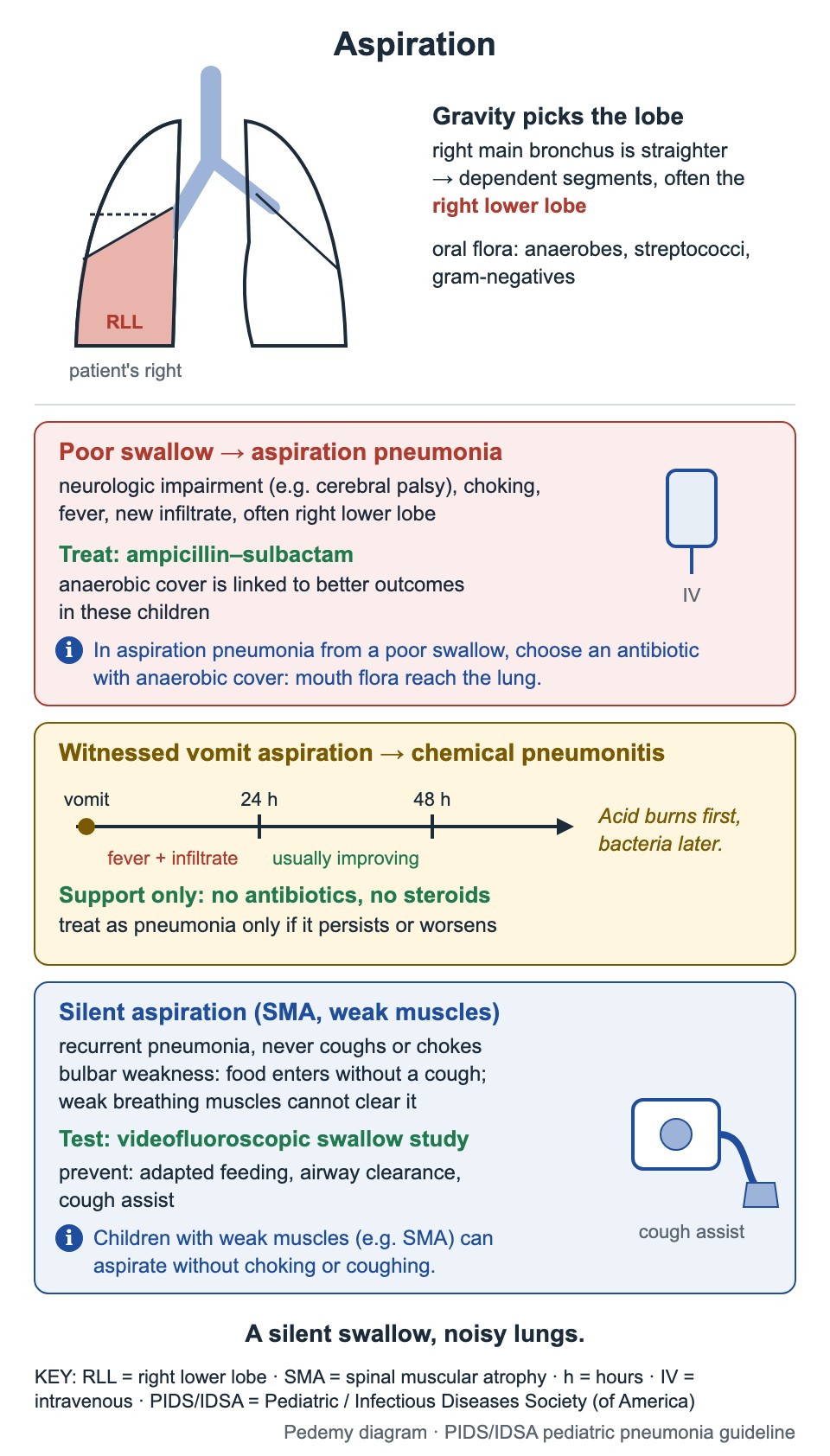
Child with cerebral palsy and seizures, recurrent choking, fever, new right lower lobe infiltrate → cause? […]
Show answer
Child with cerebral palsy and seizures, recurrent choking, fever, new right lower lobe infiltrate → cause? Aspiration pneumonia
Why: A poor swallow lets oral flora (anaerobes, streptococci, gram-negatives) into dependent segments; ampicillin–sulbactam covers them, and anaerobic cover is linked to better outcomes in these children. A drug with no anaerobic cover leaves part of the flora untreated. Ampicillin-sulbactam (Unasyn) is FDA-labelled for skin, abdominal and pelvic infections from 1 year; aspiration pneumonia use is off-label. Hook: gravity picks the lobe.
Source: Thomson J et al., Antibiotics for aspiration pneumonia in neurologically impaired children (J Hosp Med 2020). Rewritten for Pedemy in our own words, November 2026.
Aspiration -
Rare and Systemic Lung Disease
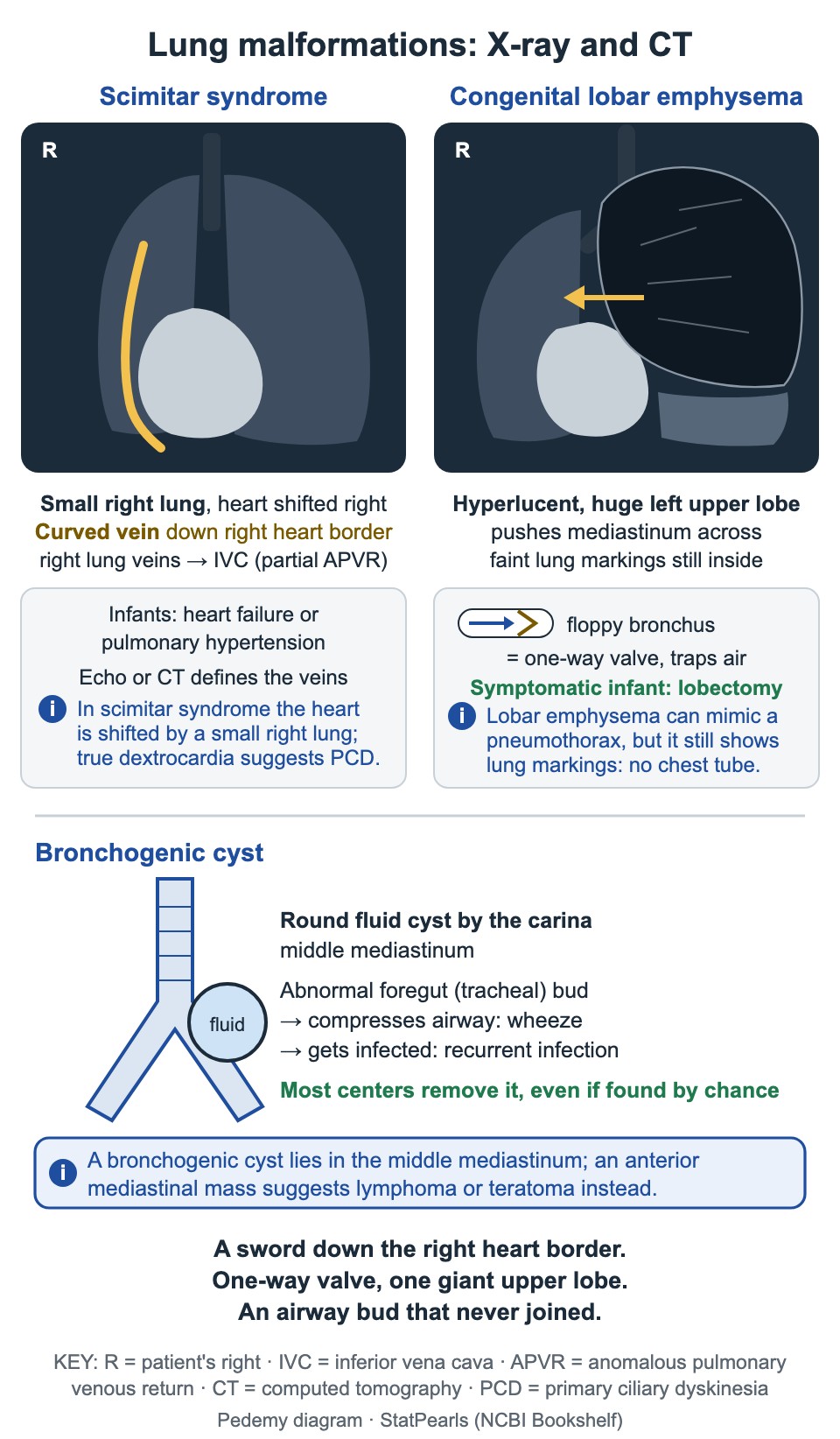
Prenatal lung mass; newborn has air-filled cysts with a normal pulmonary blood supply → diagnosis? […]
Show answer
Prenatal lung mass; newborn has air-filled cysts with a normal pulmonary blood supply → diagnosis? CPAM (airway malformation)
Why: CPAM is abnormal airway tissue that keeps a pulmonary blood supply and an airway connection, so its cysts fill with air after birth; infection, air trapping and rare cancer lead many centers to remove it. Sequestration differs: it is fed from the aorta. Hook: Air cysts on lung blood = CPAM.
Source: StatPearls (NCBI Bookshelf): Congenital Pulmonary Airway Malformation. Rewritten for Pedemy in our own words, November 2026.
Lung malformations: X-ray and CT -
Stridor and Airway
Child over 6, chronic stridor: flow–volume loop flat in both inspiration and expiration → lesion type? […]
Show answer
Child over 6, chronic stridor: flow–volume loop flat in both inspiration and expiration → lesion type? Fixed airway obstruction
Why: Spirometry with a flow–volume loop helps assess chronic stridor in a cooperative child over 6 (not in the ED). Flat inspiratory limb only = variable extrathoracic (e.g., vocal fold dysfunction); flat expiratory limb only = variable intrathoracic (tracheomalacia); both flat = fixed (subglottic stenosis). Asthma scoops the expiratory curve instead. Hook: Flat top and bottom, fixed in place.
Source: StatPearls (NCBI Bookshelf): Stridor in Children; ATS/ERS Standardization of Spirometry 2019 update (Graham BL et al, Am J Respir Crit Care Med 2019). Rewritten for Pedemy in our own words, November 2026.
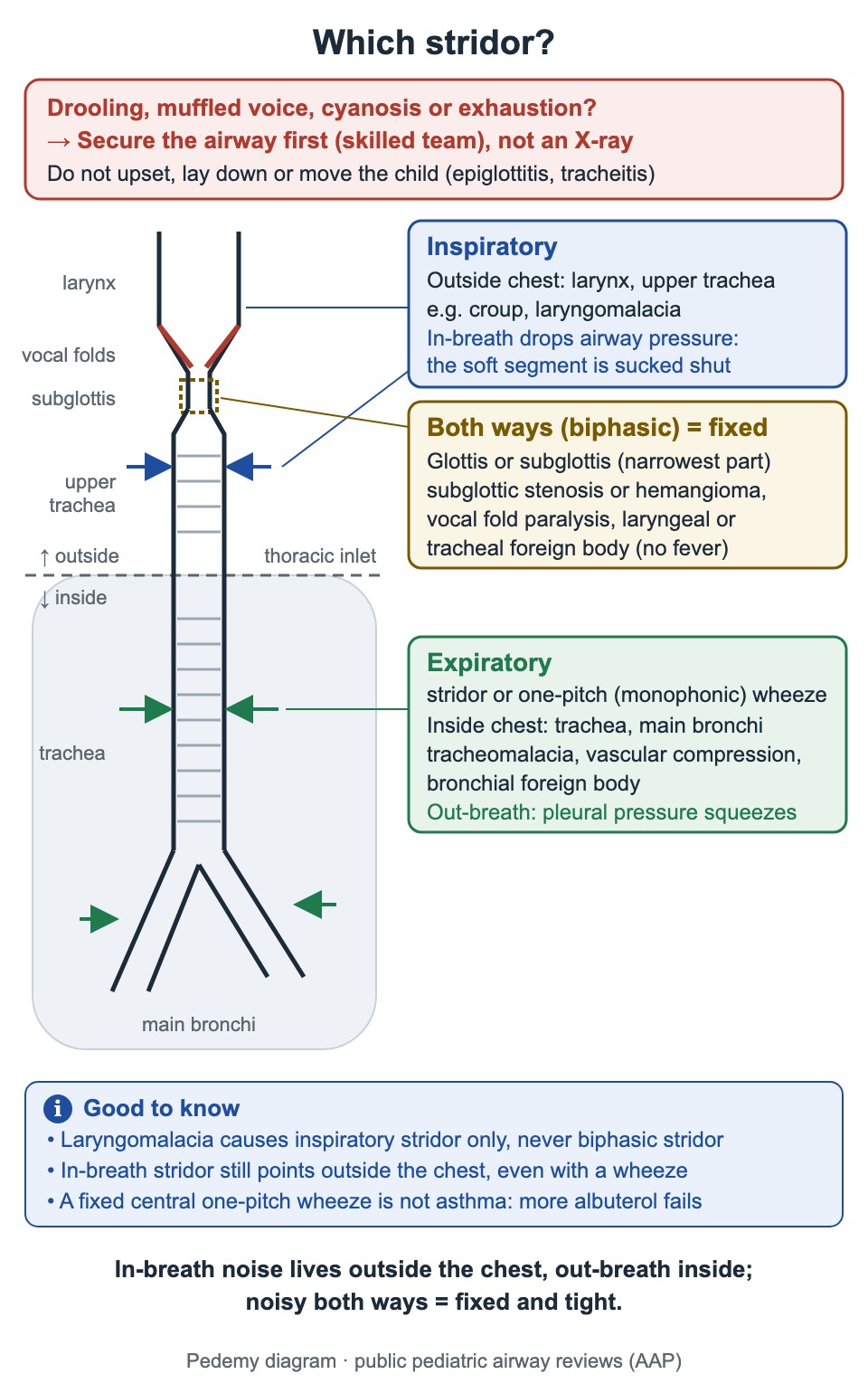
Which stridor? -
Asthma and Devices
School-age child: dry cough at night and with exercise for 6 weeks, normal exam and X-ray → likely cause? […]
Show answer
School-age child: dry cough at night and with exercise for 6 weeks, normal exam and X-ray → likely cause? Cough-variant asthma
Why: Cough can be the only sign of asthma; spirometry with a bronchodilator response supports it, and a cough that clears on a 2–4 week inhaled steroid trial confirms it (stop the steroid if there is no response). A whoop or vomiting after coughing fits points to pertussis, and a wet cough to protracted bacterial bronchitis. Hook: dry nights, quiet chest, still asthma.
Source: NAEPP Expert Panel Report 3 (EPR-3, 2007) (cough variant asthma); CHEST 2017 pediatric chronic cough guideline (Chang AB et al, Chest 2017). Rewritten for Pedemy in our own words, November 2026.
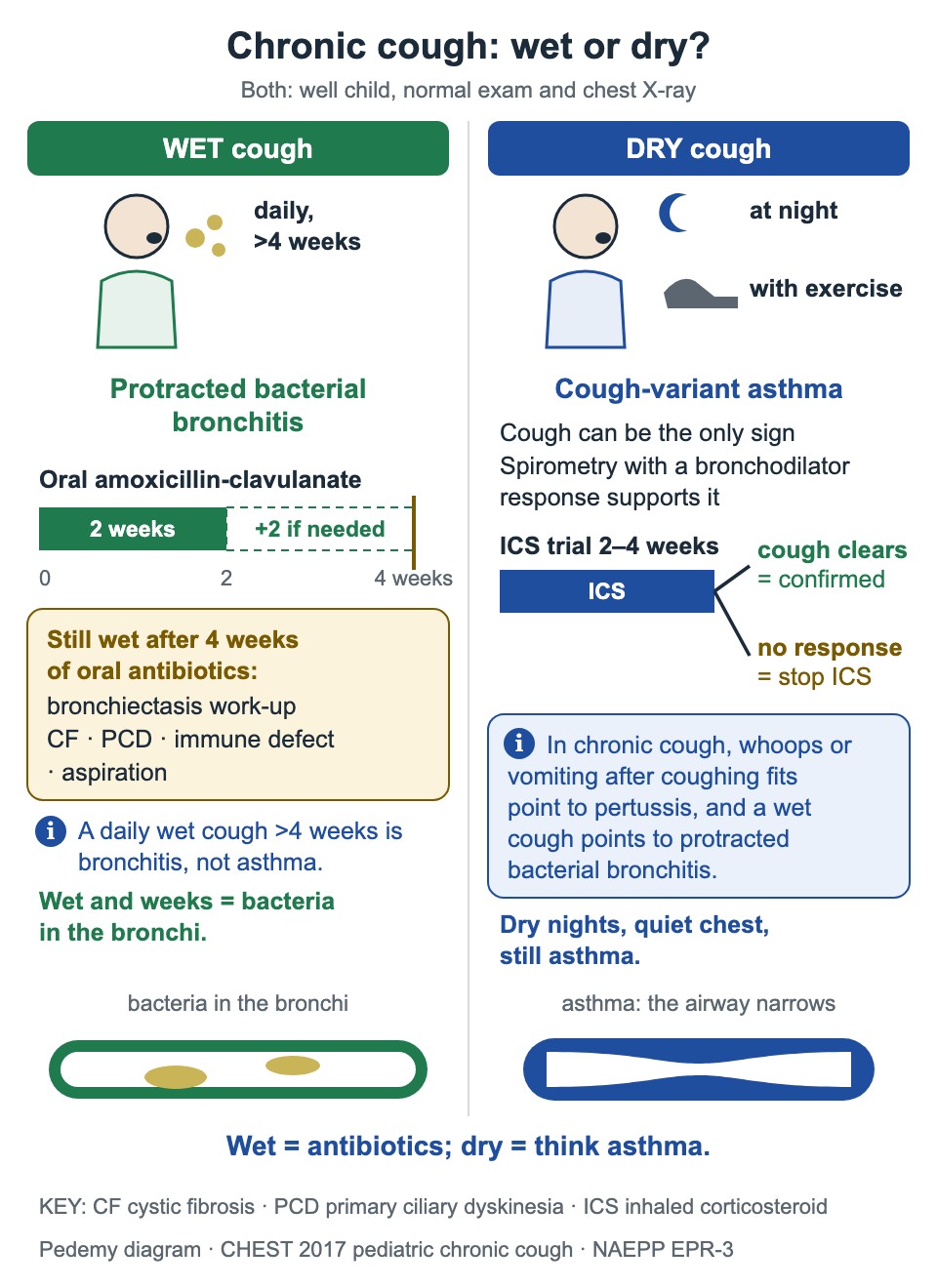
Chronic cough: wet or dry? -
CF and Ciliary Disease
3-year-old with nasal polyps and recurrent rectal prolapse → disease to test for? […]
Show answer
3-year-old with nasal polyps and recurrent rectal prolapse → disease to test for? Cystic fibrosis (sweat chloride test)
Why: Nasal polyps in a child and rectal prolapse in a toddler both point to CF; 10–20% present at birth with meconium ileus, which means CF until proven otherwise. A normal newborn screen does not exclude CF, so these signs still need a sweat test. Nasal polyps in children are not usually allergic. Hook: Polyps plus prolapse = salt test.
Source: Cystic Fibrosis Foundation diagnosis consensus guidelines (Farrell et al, J Pediatr 2017); GeneReviews: Cystic Fibrosis (NCBI Bookshelf). Rewritten for Pedemy in our own words, November 2026.
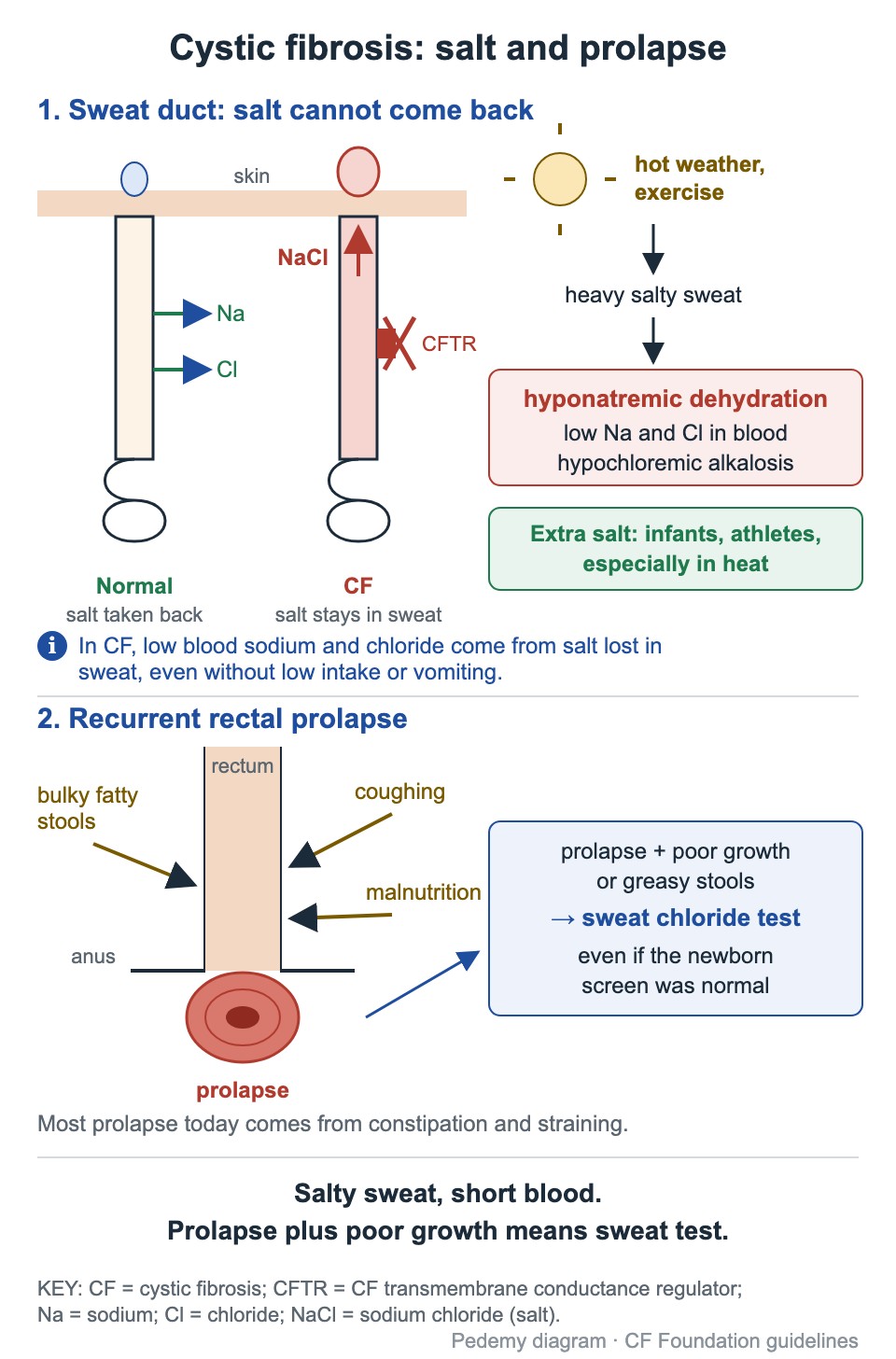
Cystic fibrosis clues -
Pneumonia and Aspiration
Febrile 2-year-old, 39.5 °C, no source, no cough or tachypnea, WBC 24,000/µL → imaging? […]
Show answer
Febrile 2-year-old, 39.5 °C, no source, no cough or tachypnea, WBC 24,000/µL → imaging? Chest X-ray (occult pneumonia)
Why: Pneumonia can hide without cough or tachypnea; in a highly febrile young child a WBC of 20,000/µL or more finds it on film often enough to justify imaging, though less often since pneumococcal vaccines. Urine is checked too. Clear lung sounds do not exclude pneumonia, yet not every febrile child needs a film. Hook: Twenty thousand whites, take a picture.
Source: Bachur R, Perry H, Harper MB. Occult pneumonias: empiric chest radiographs in febrile children with leukocytosis (Ann Emerg Med 1999); Rutman MS, Bachur R, Harper MB. Radiographic pneumonia in young, highly febrile children with leukocytosis before and after universal conjugate pneumococcal vaccinat
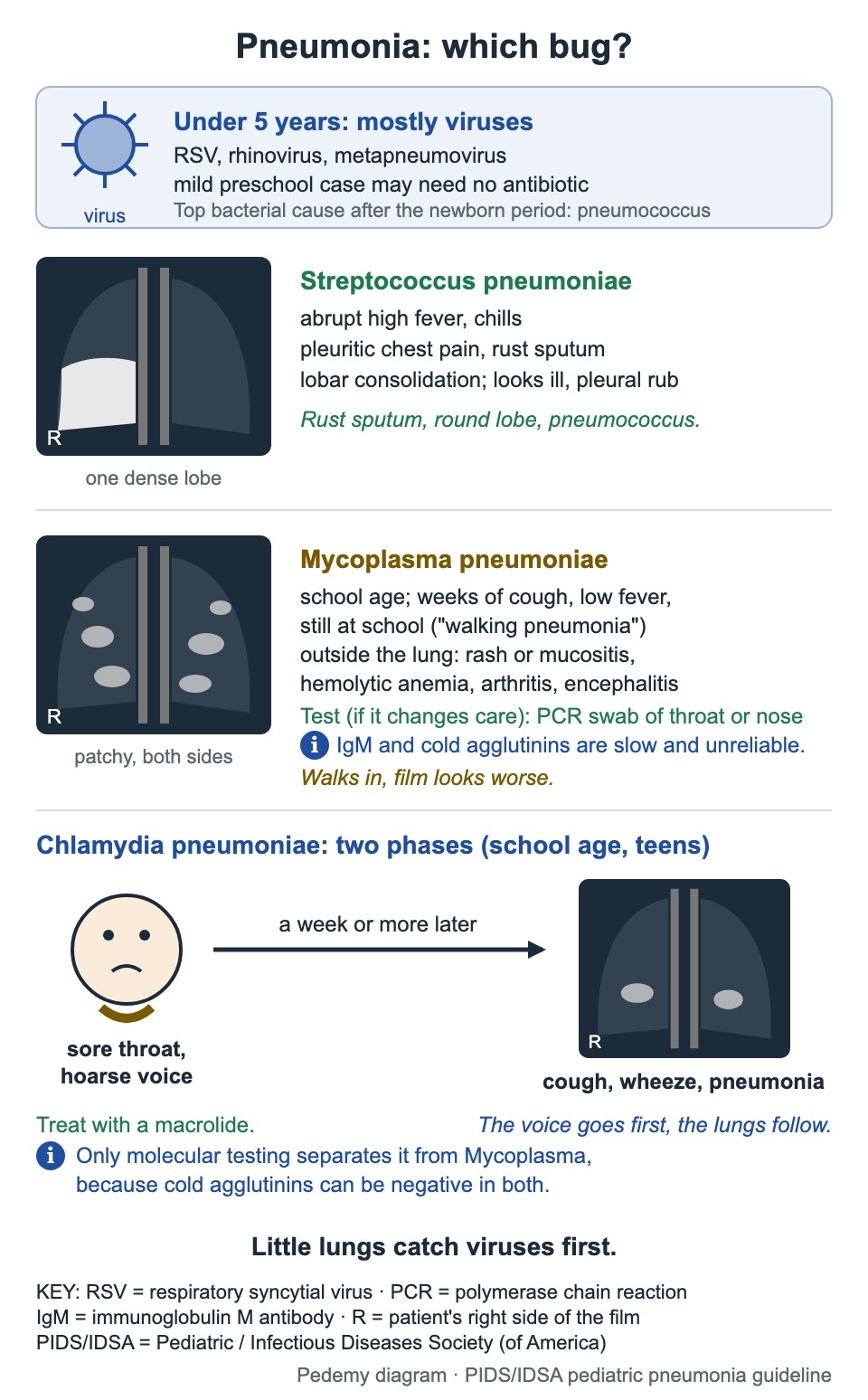
Pneumonia: which bug?
Topics in Pulmonology
- Asthma and Devices72
- CF and Ciliary Disease16
- Pneumonia and Aspiration22
- Rare and Systemic Lung Disease18
- Stridor and Airway30
Pulmonology study guides
- Asthma and inhaler devices in children
- Cystic fibrosis and primary ciliary dyskinesia
- Pneumonia, aspiration and bronchiolitis
- Rare and systemic lung disease in children
- Stridor and airway problems in children
Clinical tools for Pulmonology
- Asthma Prediction
- Bronchiolitis
- Croup
- Peak Flow
- Pneumonia
- Pneumonia Risk Score
- Asthma
- Asthma Severity Scores
- Difficult Airway (HEAVEN)
- Oxygenation Index
Sample cards in other subjects
- Growth & Development
- Immunizations & Post-exposure Prevention
- Nutrition
- Well-Child Care & Prevention
- Emergency Medicine
- Infectious Disease
- ENT
- Mental Health
- Ophthalmology
- Adolescent Medicine
- Cardiology
- Gastroenterology
- Dermatology
- Musculoskeletal & Sports Medicine
- Neonatology
- Neurology
- Allergy & Immunology
- Behavioral
- Endocrinology
- Hematology
- Nephrology
- Oncology
- Urology
- Biostatistics & Epidemiology
- Genetics
- Medical Ethics
- Metabolic Disorders
- Patient Safety & Quality Improvement
- Rheumatology
- Pharmacology
Free to study without an account. Sign up free to save your spaced-repetition schedule across devices. For education only; check current guidelines before clinical use.