

Neurology flashcards
237 cards · 10 topics · 4% of the board exam
237 free Neurology flashcards for pediatric board review and rotations, written in our own words with public guideline sources. Topics: Autoimmune Encephalitis, Brain & Spine Malformations, Brain Death Determination, Cerebral Palsy & Hydrocephalus and 6 more. Neurology is 4% of the board exam.
Sample Neurology cards
-
Autoimmune Encephalitis
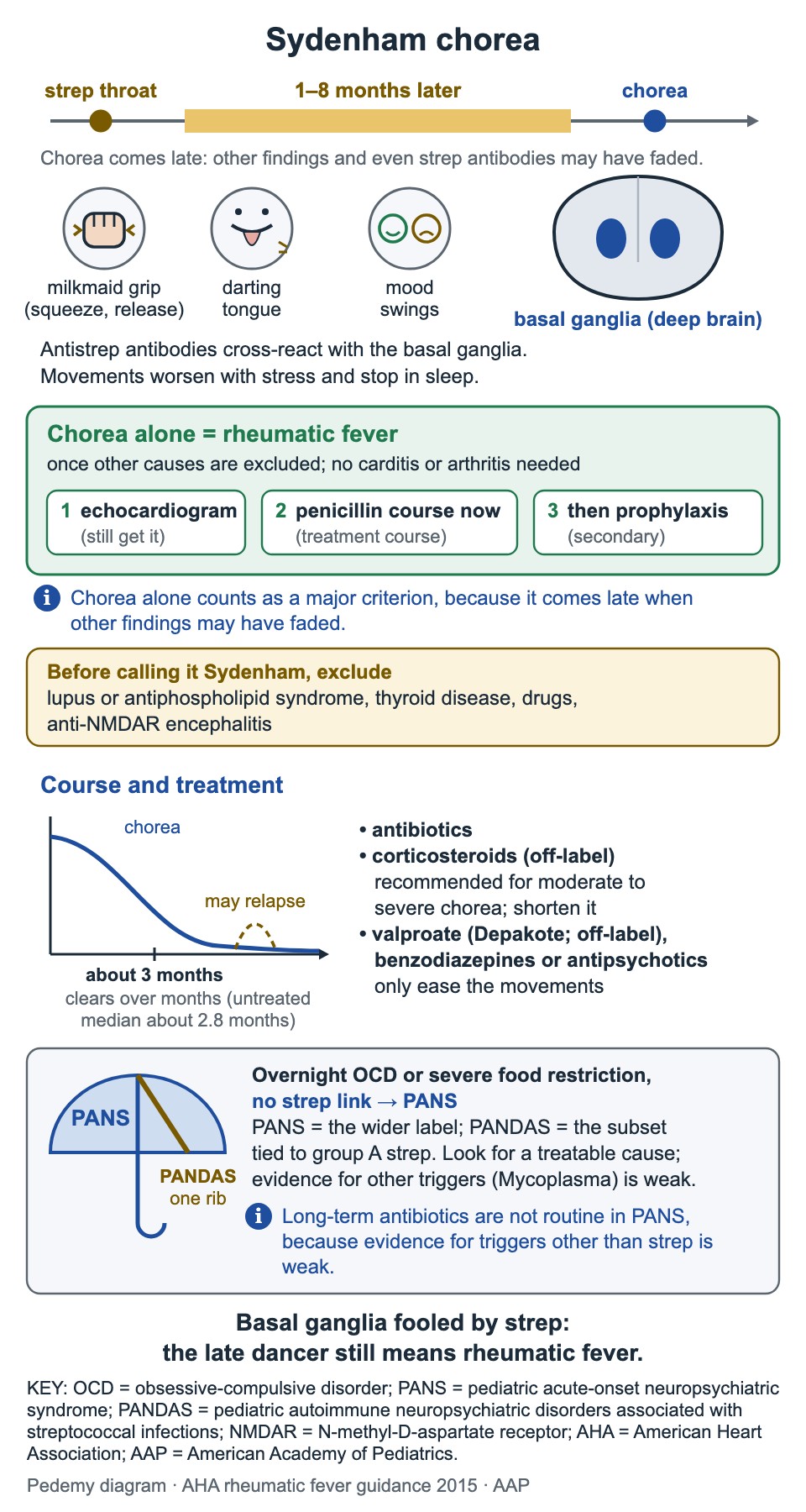
Sydenham chorea (milkmaid grip, darting tongue, mood swings) → usual course? […]
Show answer
Sydenham chorea (milkmaid grip, darting tongue, mood swings) → usual course? Clears over months (median ~3 untreated); may relapse
Why: Antistrep antibodies cross-react with basal ganglia; movements worsen with stress and stop in sleep. Untreated chorea lasts a median of about 2.8 months. Antibiotics are given; corticosteroids shorten moderate to severe chorea; valproate (Depakote), benzodiazepines or antipsychotics only ease movements. Steroids and valproate are off-label here. The diagnosis requires excluding lupus or antiphospholipid syndrome, thyroid disease, drugs and anti-NMDAR encephalitis. Hook: basal ganglia fooled by strep.
Source: AHA Scientific Statement: Revision of the Jones Criteria (Circulation 2015); NINDS: Sydenham chorea information page.
Sydenham chorea -
Brain & Spine Malformations
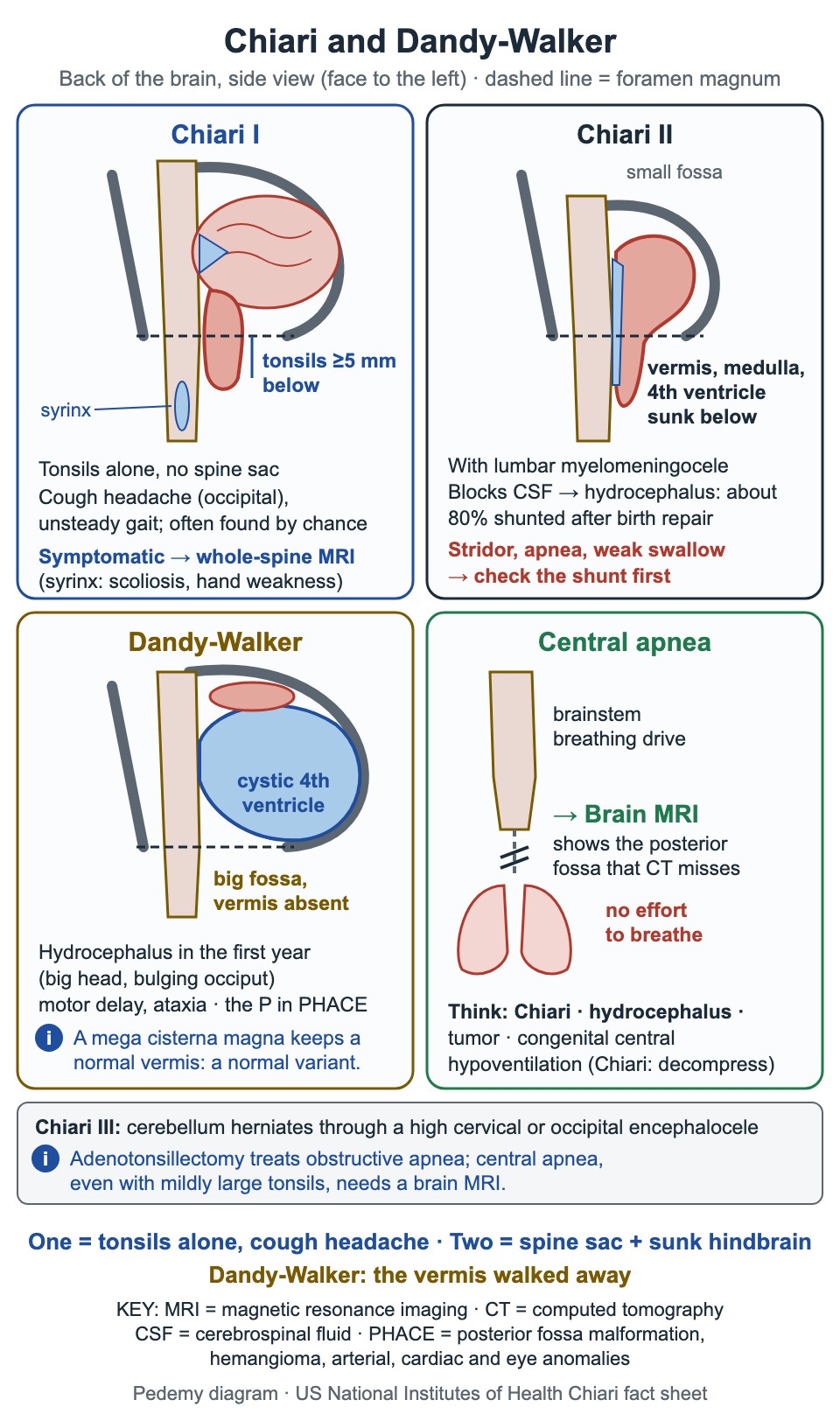
MRI: cystic fourth ventricle, absent vermis, enlarged posterior fossa → malformation? […]
Show answer
MRI: cystic fourth ventricle, absent vermis, enlarged posterior fossa → malformation? Dandy-Walker malformation
Why: Most develop hydrocephalus in the first year (big head, bulging occiput); motor delay and ataxia are common. It is the P in PHACE syndrome. A mega cisterna magna has a normal vermis and is a normal variant. Hook: Dandy-Walker: the vermis walked away.
Source: NINDS: Dandy-Walker syndrome.
Chiari and Dandy-Walker -
Brain Death Determination
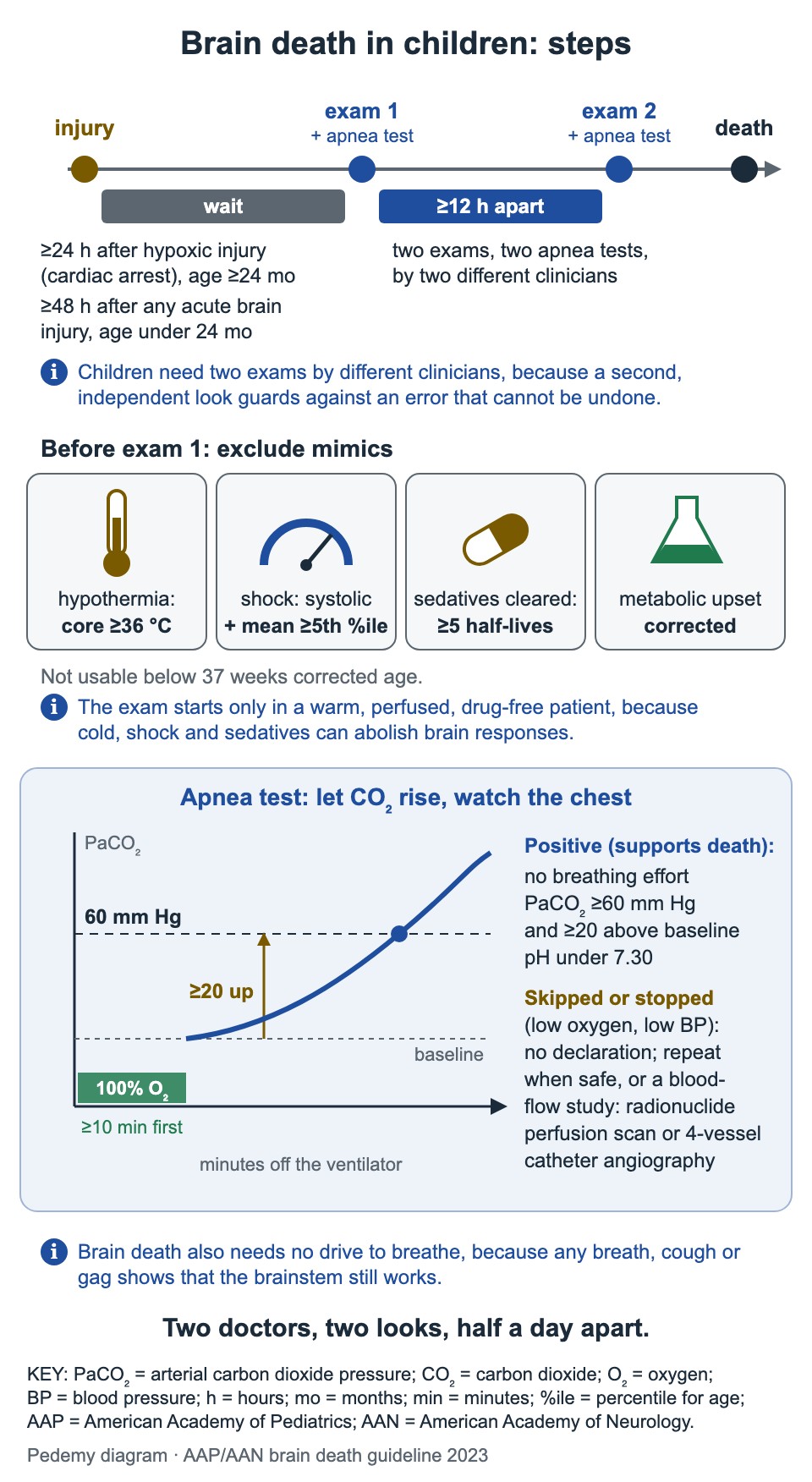
Child brain-death evaluation → number of exams and spacing? […]
Show answer
Child brain-death evaluation → number of exams and spacing? Two, by different clinicians, ≥12 h apart
Why: Each exam is followed by its own apnea test, so two of each are done. A second, independent look guards against error in a decision that cannot be undone. One exam is the adult rule, not the child rule. Hook: two doctors, two looks, half a day apart.
Source: AAN/AAP/CNS/SCCM Pediatric and Adult Brain Death/Death by Neurologic Criteria Consensus Guideline (Neurology 2023).
Brain death in a child: steps -
Cerebral Palsy & Hydrocephalus
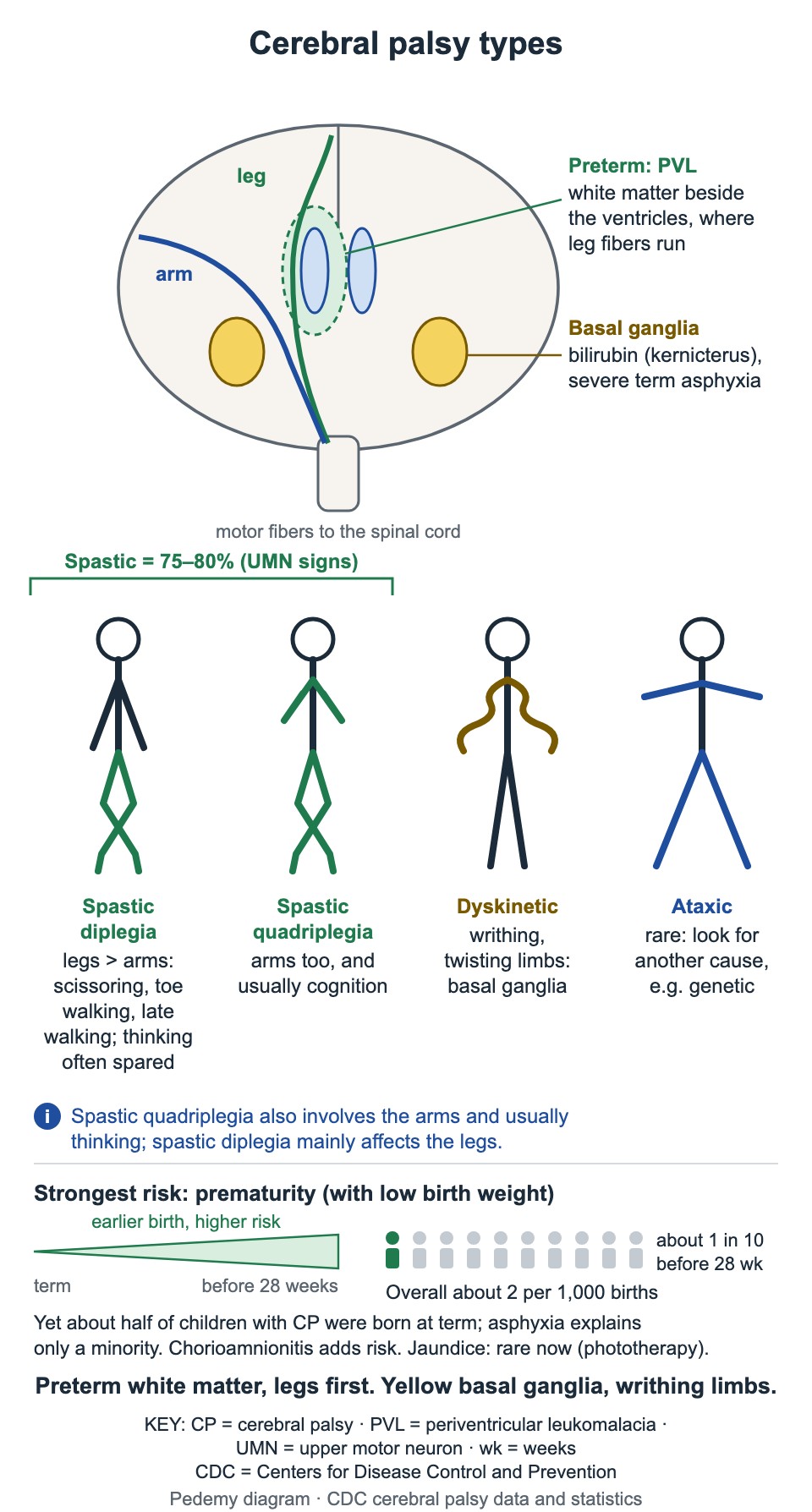
Child with CP, writhing and twisting movements, past kernicterus → CP type? […]
Show answer
Child with CP, writhing and twisting movements, past kernicterus → CP type? Dyskinetic
Why: Basal ganglia injury (bilirubin, severe term asphyxia) causes dyskinetic CP. Spastic CP is by far the most common type, about 75–80%, with upper motor neuron signs. Ataxic CP is rare, so another cause such as a genetic disorder is sought. Hook: Yellow basal ganglia, writhing limbs.
Source: CDC: About cerebral palsy; CDC: Cerebral palsy risk factors; AAP Clinical Report on cerebral palsy medical home (Pediatrics 2022).
Cerebral palsy types -
Demyelination & Acute Ataxia
Transverse myelitis, little improvement after 3–5 days of high-dose IV methylprednisolone → next? […]
Show answer
Transverse myelitis, little improvement after 3–5 days of high-dose IV methylprednisolone → next? Plasma exchange
Why: High-dose IV steroids (off-label) are first-line; plasma exchange (about 5–7 exchanges) follows a poor response or starts early in severe attacks. Care also includes bladder catheter, bowel and skin care, clot prevention and early rehab. Weeks of steroids alone delay effective treatment. Hook: steroids stall, swap the plasma.
Source: NINDS Transverse Myelitis fact sheet; AAN evidence-based guideline: transverse myelitis (2011); Brenton JN. Pediatric acquired demyelinating disorders (Continuum 2022).
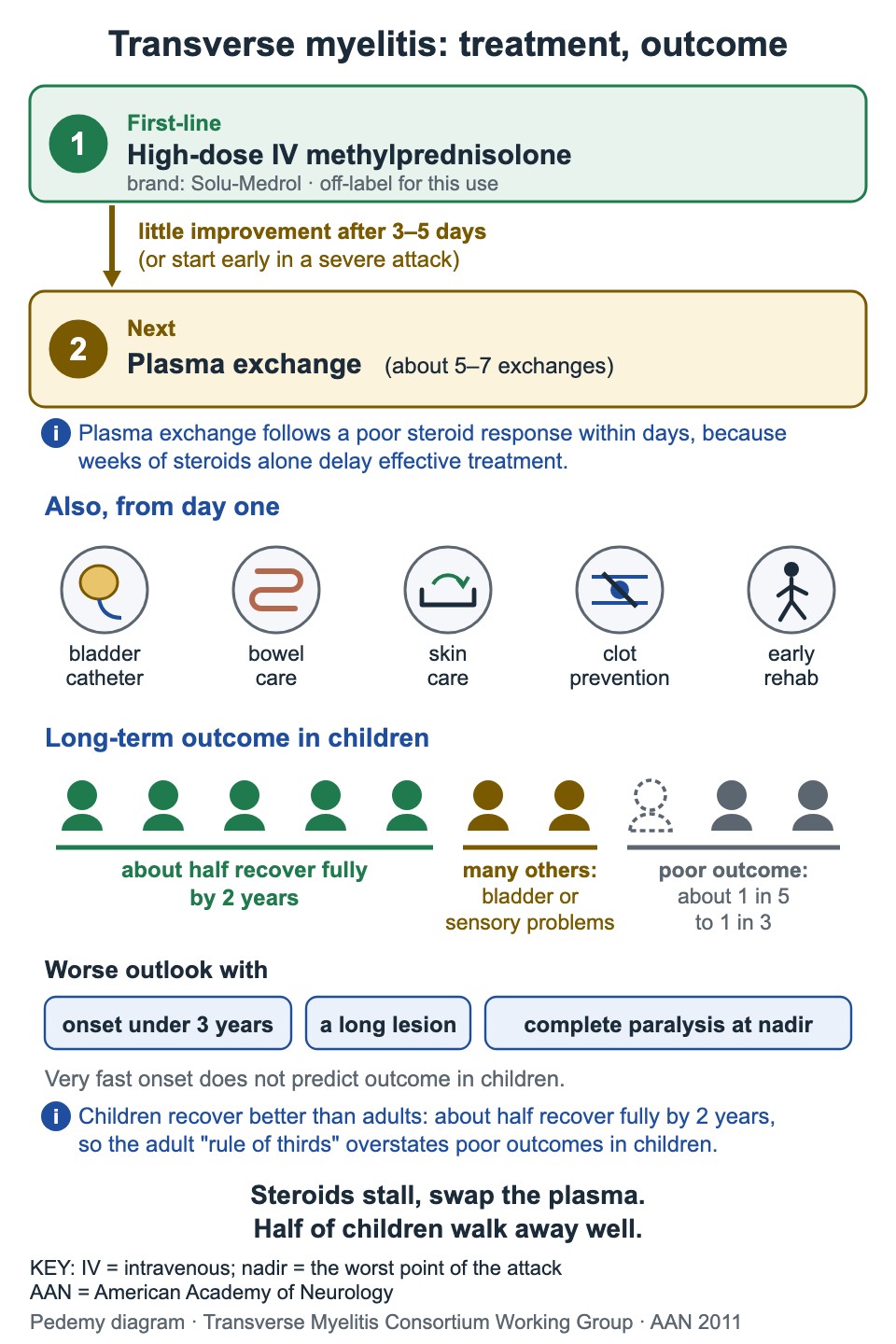
Transverse myelitis: treatment, outcome -
Headache
Suspected idiopathic intracranial hypertension → MRI signs? […]
Show answer
Suspected idiopathic intracranial hypertension → MRI signs? Empty sella, flat posterior globes, wide optic nerve sheaths
Why: Other MRI signs are transverse venous sinus narrowing and optic nerve head protrusion; brain tissue and ventricles are otherwise normal. Without papilledema, IIH needs a sixth nerve palsy or 3 of these 4 MRI signs (empty sella, flattened globe, distended sheath, sinus stenosis) plus high pressure. A normal MRI does not exclude IIH. Hook: empty sella, flat eyes, fat sheaths.
Source: Friedman DI et al. Diagnostic criteria for the pseudotumor cerebri syndrome in adults and children (Neurology 2013) Rewritten for Pedemy in our own words, November 2026.
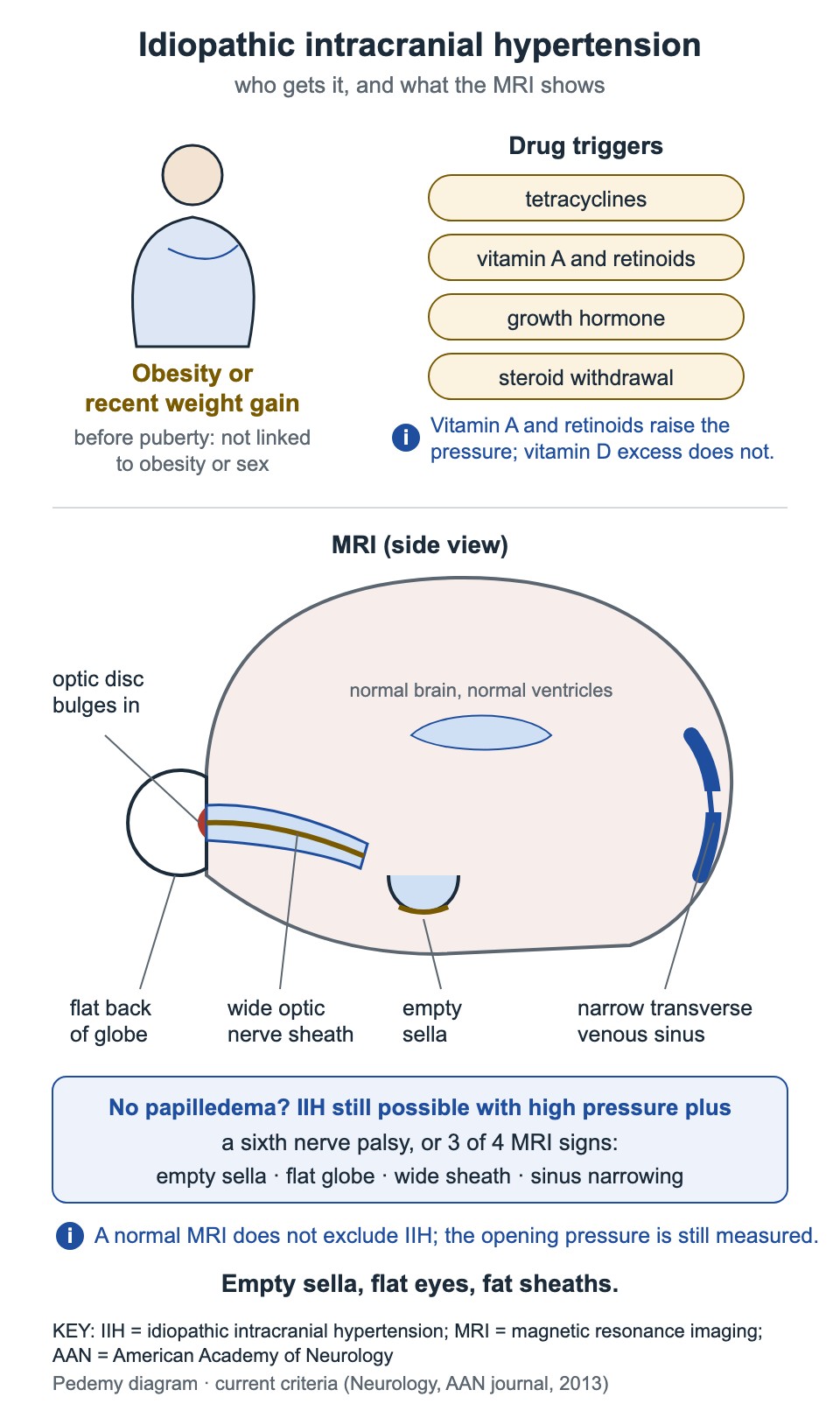
Idiopathic intracranial hypertension -
Neuromuscular Disorders
Child with Guillain-Barré: weakness peaks by 4 weeks → course after that? […]
Show answer
Child with Guillain-Barré: weakness peaks by 4 weeks → course after that? Plateau, then slow recovery (most recover fully)
Why: After the nadir comes a plateau of days to weeks, then recovery over weeks to months; children do better than adults. Vibration and position sense suffer more than pain and temperature, and eye muscles are usually spared. Progression beyond 8 weeks suggests CIDP. Botulism instead starts with eye muscles and sluggish pupils and descends. Hook: down for a month, up for months.
Source: NINDS: Guillain-Barré syndrome; AAN practice parameter: immunotherapy for Guillain-Barré syndrome (Neurology 2003) Rewritten for Pedemy in our own words, November 2026.
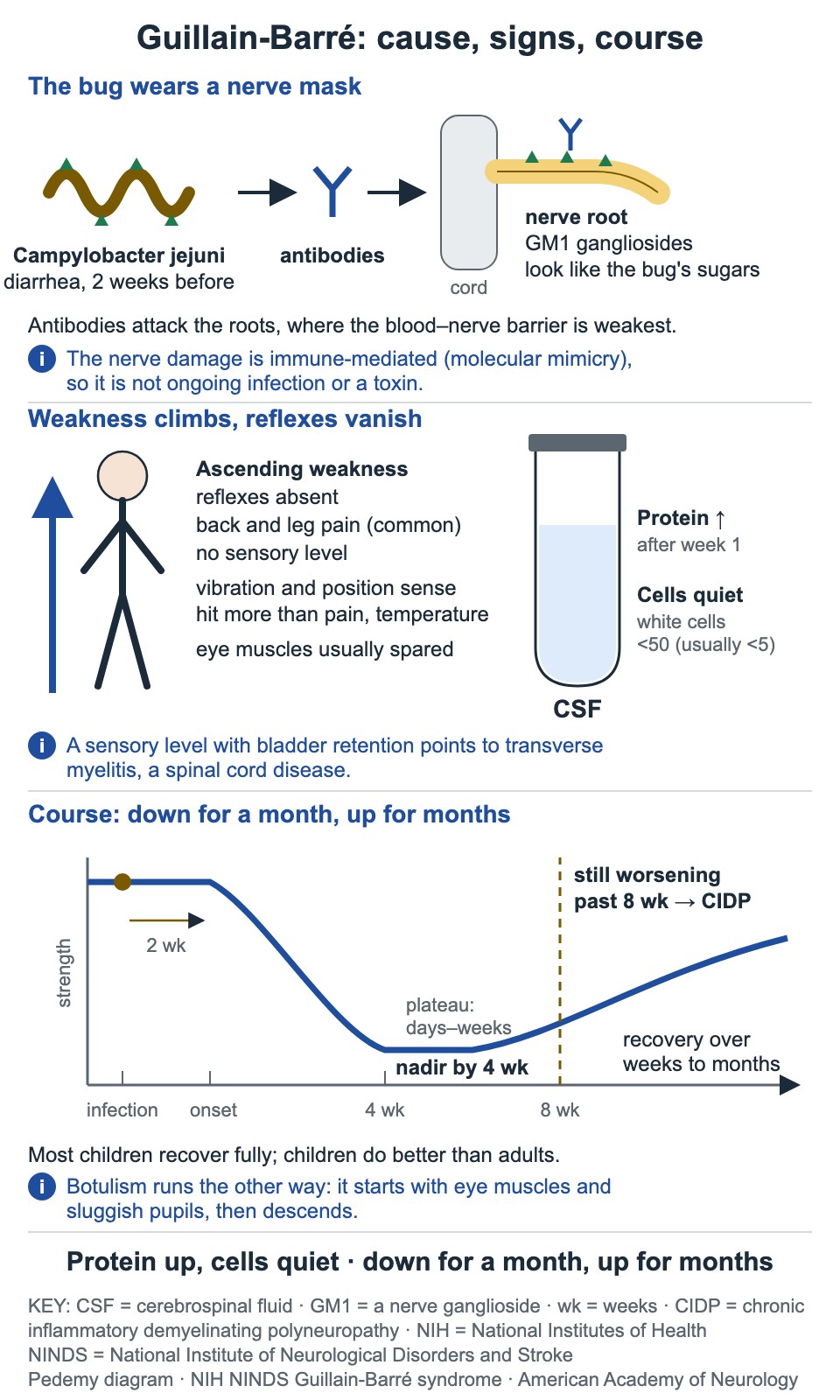
Guillain-Barré: cause, signs, course -
Seizures & Epilepsy
Long-term antiseizure drug causing gum overgrowth, extra body hair and coarse facial features → drug? […]
Show answer
Long-term antiseizure drug causing gum overgrowth, extra body hair and coarse facial features → drug? Phenytoin
Why: Long-term phenytoin (Dilantin) causes gum overgrowth, extra body hair and coarse facial features; high levels also bring ataxia and nystagmus. Its saturable (zero-order) metabolism makes small dose increases jump the level; good dental care limits gum overgrowth. Weight gain, hair loss and tremor point to valproate (Depakote), and irritability to levetiracetam (Keppra). Hook: 'Phenytoin: gums, hair, wobble.'
Source: FDA label: phenytoin (Dilantin).
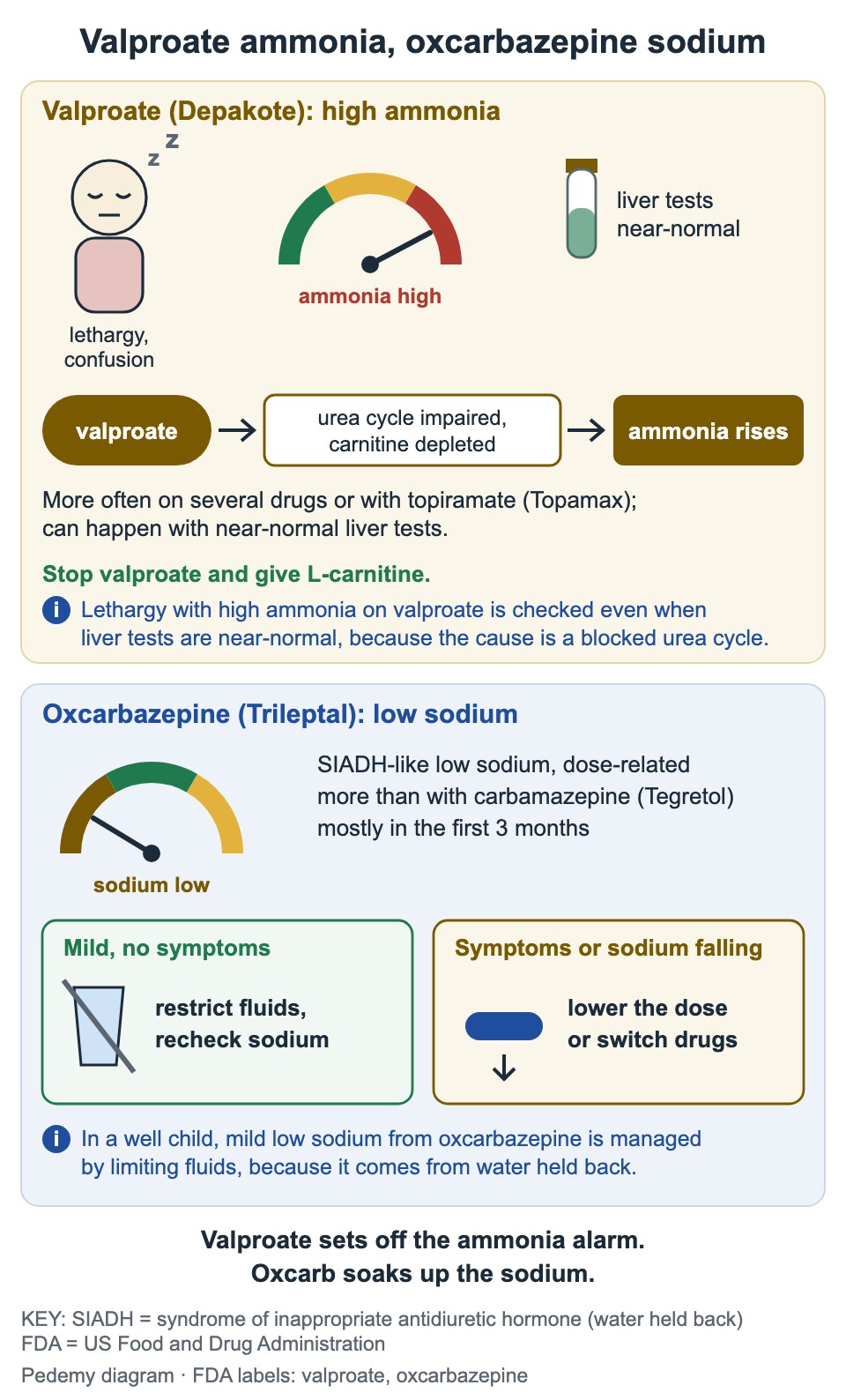
Valproate ammonia, oxcarbazepine sodium
Topics in Neurology
- Autoimmune Encephalitis10
- Brain & Spine Malformations20
- Brain Death Determination7
- Cerebral Palsy & Hydrocephalus12
- Demyelination & Acute Ataxia18
- Headache30
- Neuromuscular Disorders43
- Seizures & Epilepsy69
- Stroke & Vascular Disease11
- Trauma & Peripheral Nerves17
Neurology study guides
- Autoimmune encephalitis in children
- Brain and spine malformations
- Brain death determination in children
- Cerebral palsy and hydrocephalus
- Demyelination and acute ataxia in children
- Head injury, cranial nerves and peripheral nerve injuries
- Headache in children
- Neuromuscular disorders in children
- Seizures and epilepsy in children
- Stroke and vascular disease in children
Clinical tools for Neurology
Sample cards in other subjects
- Growth & Development
- Immunizations & Post-exposure Prevention
- Nutrition
- Well-Child Care & Prevention
- Emergency Medicine
- Infectious Disease
- ENT
- Mental Health
- Ophthalmology
- Adolescent Medicine
- Cardiology
- Gastroenterology
- Pulmonology
- Dermatology
- Musculoskeletal & Sports Medicine
- Neonatology
- Allergy & Immunology
- Behavioral
- Endocrinology
- Hematology
- Nephrology
- Oncology
- Urology
- Biostatistics & Epidemiology
- Genetics
- Medical Ethics
- Metabolic Disorders
- Patient Safety & Quality Improvement
- Rheumatology
- Pharmacology
Free to study without an account. Sign up free to save your spaced-repetition schedule across devices. For education only; check current guidelines before clinical use.