

Oncology flashcards
150 cards · 9 topics · 3% of the board exam, shared with Hematology
150 free Oncology flashcards for pediatric board review and rotations, written in our own words with public guideline sources. Topics: Abdominal Tumors, Bone & Soft Tissue Tumors, CNS Tumors, Chemotherapy and 5 more. Oncology is 3% of the board exam, shared with Hematology.
Sample Oncology cards
-
Abdominal Tumors
Neuroblastoma: age at diagnosis linked to better outcome → under […]
Show answer
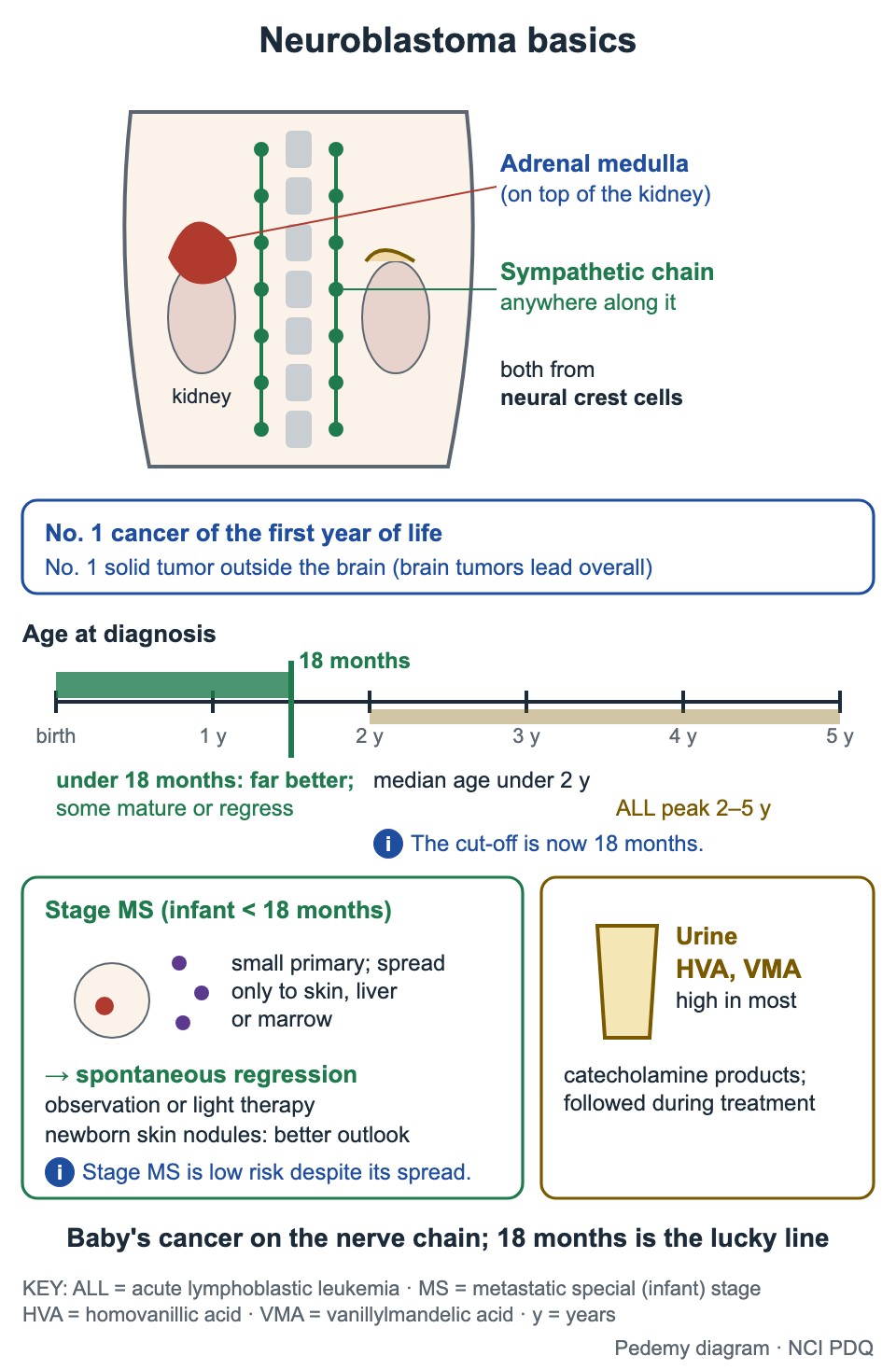
Neuroblastoma: age at diagnosis linked to better outcome → under 18 months
Why: Infants diagnosed before 18 months do far better, and some tumors mature or regress. Median age at diagnosis is under 2 years. The current risk cut-off is 18 months, not 1 year. Hook: 18 months, the lucky line.
Source: NCI PDQ Neuroblastoma Treatment (Health Professional Version). Rewritten for Pedemy in our own words, November 2026.
Neuroblastoma basics -
Bone & Soft Tissue Tumors
Rhabdomyosarcoma → most common body region? […]
Show answer
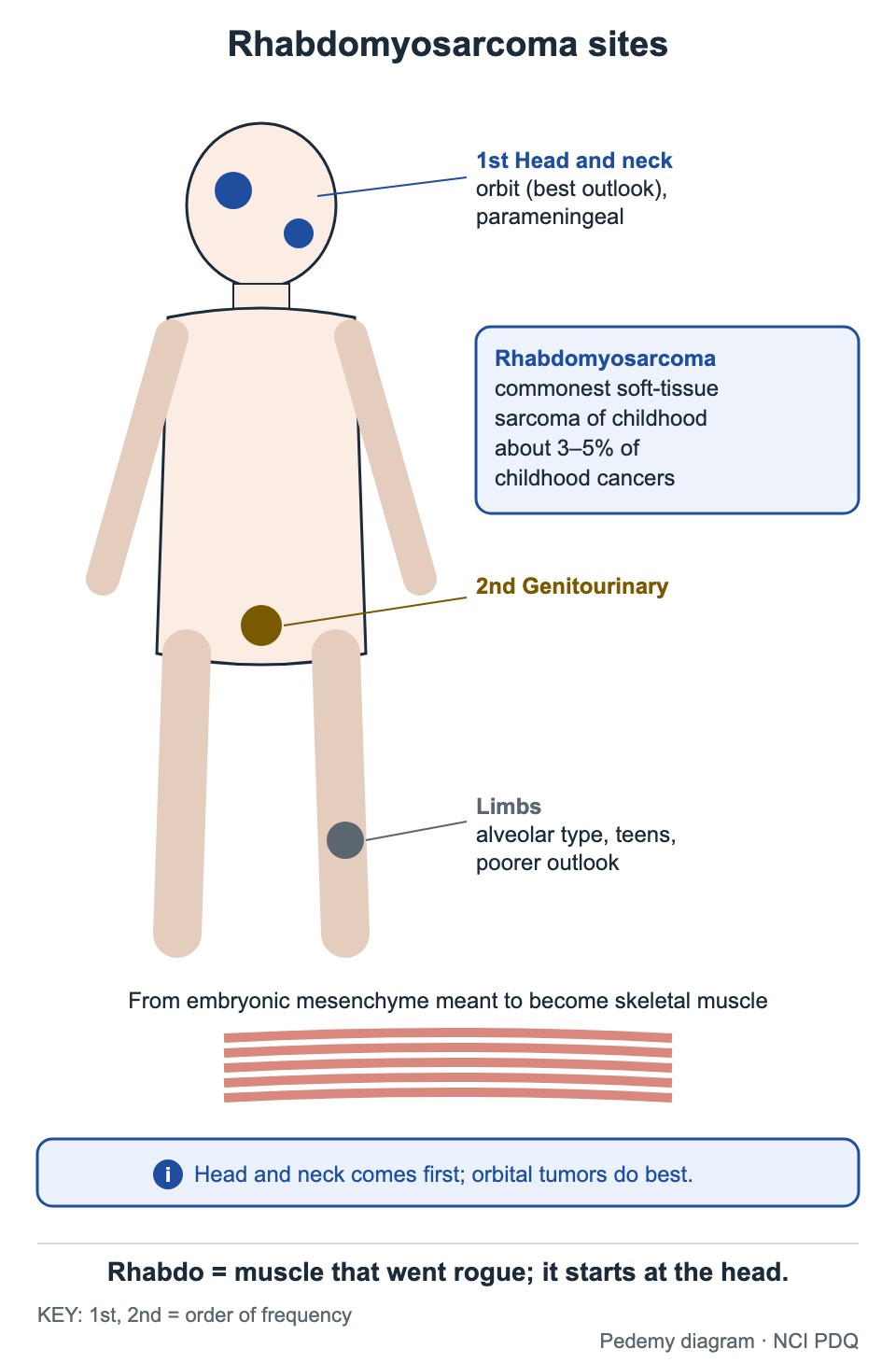
Rhabdomyosarcoma → most common body region? Head and neck (orbit, parameningeal)
Why: Head and neck comes first, then genitourinary sites; orbital tumors have the best outlook. Limb tumors are typical of the poorer-prognosis alveolar type in teens. Hook: rhabdo starts at the head.
Source: NCI PDQ Childhood Rhabdomyosarcoma Treatment. Rewritten for Pedemy in our own words, November 2026.
Rhabdomyosarcoma sites -
CNS Tumors
Leg weakness with BRISK reflexes below the lesion → where is the compression? […]
Show answer
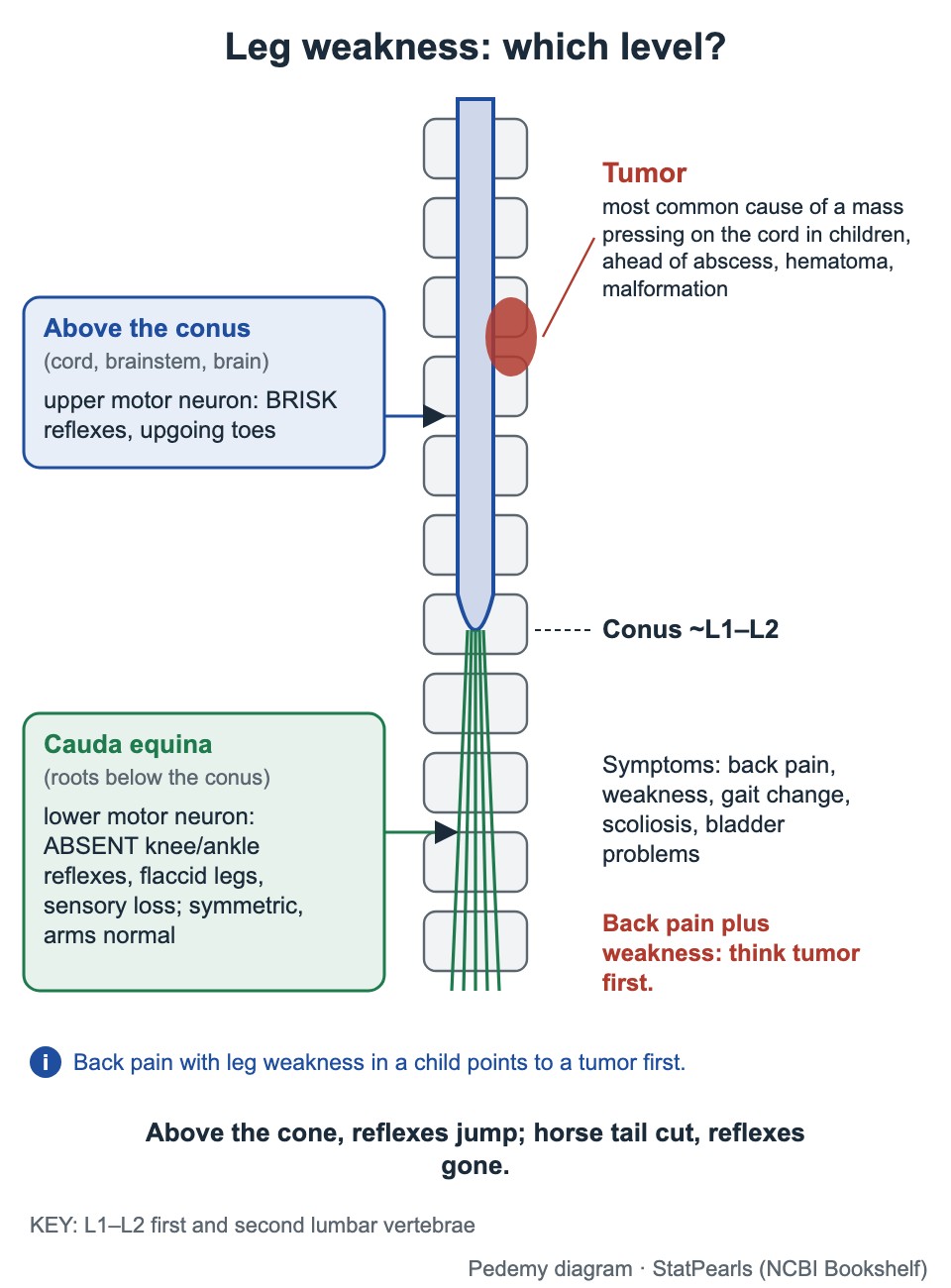
Leg weakness with BRISK reflexes below the lesion → where is the compression? Spinal cord above the conus or intracranial
Why: Cord, brainstem and brain lesions injure upper motor neurons, so reflexes become brisk with upgoing toes. Leg weakness with back pain does not always mean cauda equina, which gives absent reflexes. Hook: Above the cone, reflexes jump.
Source: StatPearls (NCBI Bookshelf): Upper Motor Neuron Lesions. Rewritten for Pedemy in our own words, November 2026.
Leg weakness: which level? -
Chemotherapy
Teen treated with dexamethasone for ALL develops hip pain and limp → diagnosis? […]
Show answer
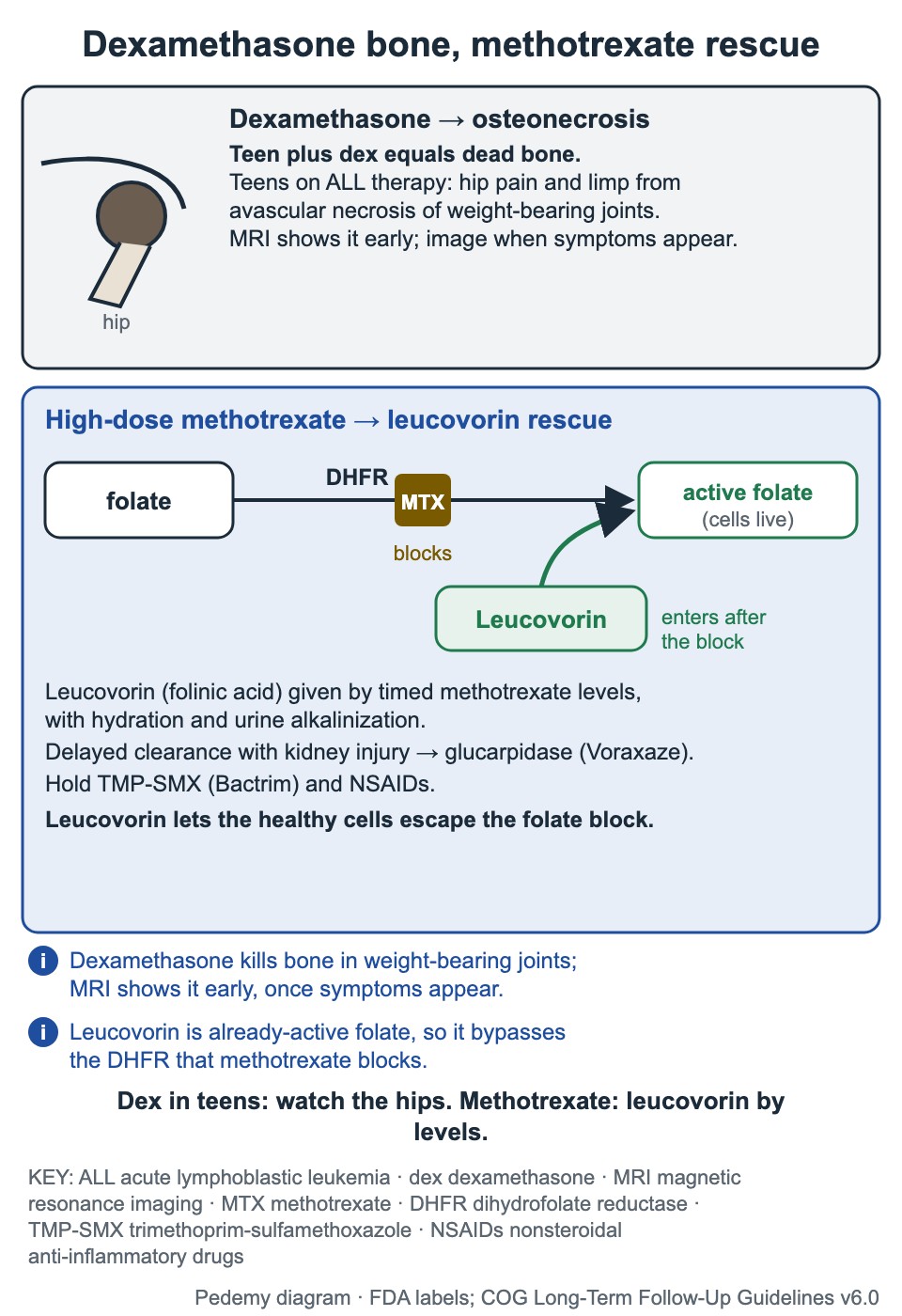
Teen treated with dexamethasone for ALL develops hip pain and limp → diagnosis? Osteonecrosis (avascular necrosis)
Why: Steroids, especially dexamethasone (generic) in adolescents, cause bone death in weight-bearing joints; MRI shows it early. Routine yearly bone scans are not used; imaging is done when symptoms appear. Hook: Teen plus dex equals dead bone.
Source: Children's Oncology Group Long-Term Follow-Up Guidelines, version 6.0. Rewritten for Pedemy in our own words, November 2026.
Dexamethasone bone, methotrexate rescue -
Fever and Neutropenia
Child on intensive chemotherapy → drug proven to cut febrile neutropenia episodes? […]
Show answer
Child on intensive chemotherapy → drug proven to cut febrile neutropenia episodes? G-CSF (filgrastim)
Why: G-CSF (filgrastim, Neupogen) shortens the neutrophil nadir and lowers febrile neutropenia and infection; levofloxacin (generic) prophylaxis is used in some high-risk groups (off-label in children). TMP-SMX (Bactrim) prevents Pneumocystis, not febrile neutropenia. Hook: G-CSF grows the guards.
Source: ASCO guideline: hematopoietic colony-stimulating factors (Smith TJ et al., J Clin Oncol 2015); Alexander S et al., levofloxacin prophylaxis in children with leukemia, JAMA 2018 Rewritten for Pedemy in our own words, November 2026.
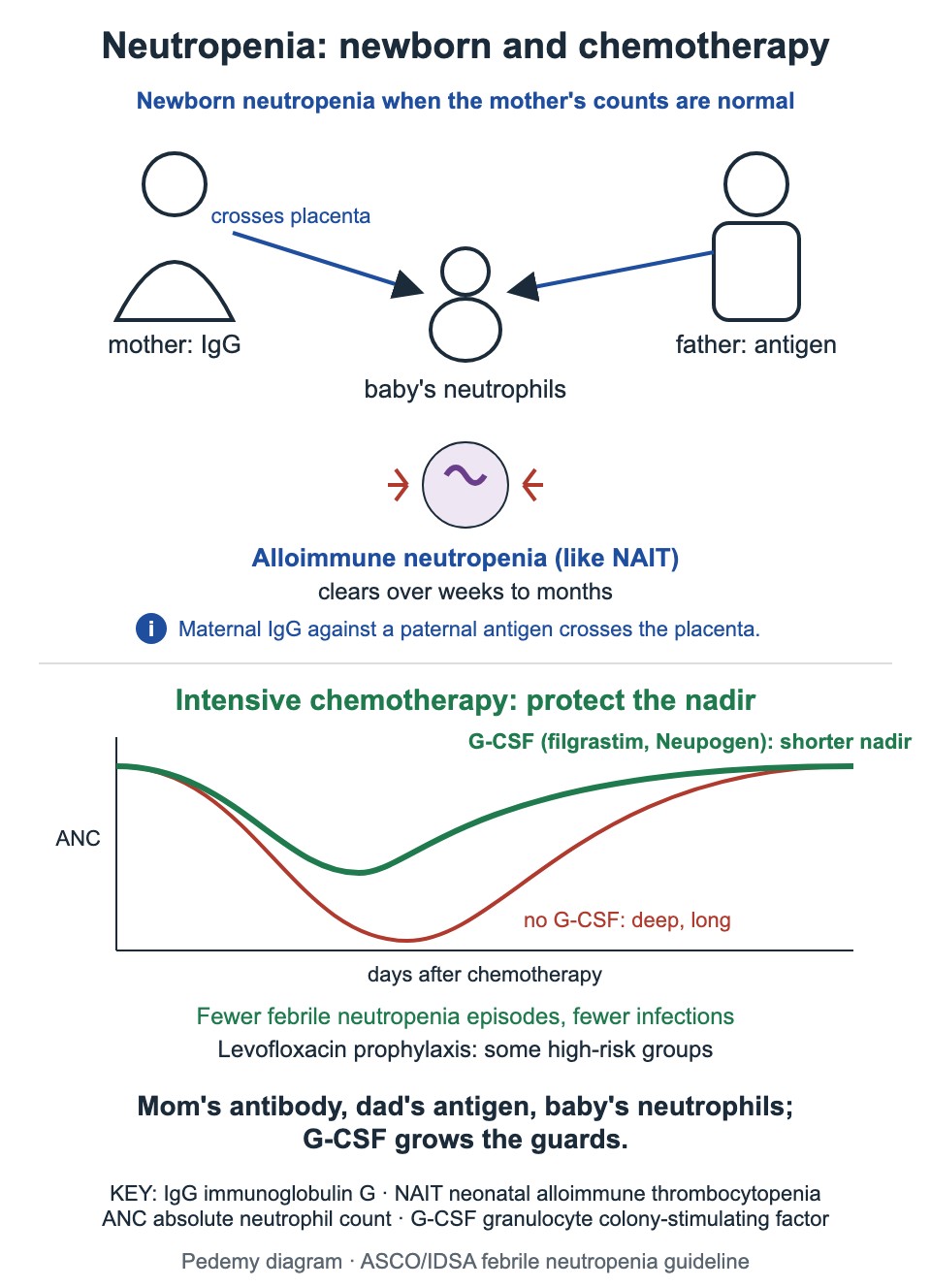
Neutropenia: newborn and chemotherapy -
Histiocytosis
Infant with a punched-out lytic skull lesion with beveled edges → diagnosis? […]
Show answer
Infant with a punched-out lytic skull lesion with beveled edges → diagnosis? Langerhans cell histiocytosis
Why: LCH makes sharply punched-out lytic skull holes; uneven loss of the inner and outer tables can give a beveled edge. A skull fracture or dermoid cyst looks different on imaging. Hook: a beveled hole is a histiocyte hole.
Source: NCI PDQ Langerhans Cell Histiocytosis Treatment (health professional) Rewritten for Pedemy in our own words, November 2026.
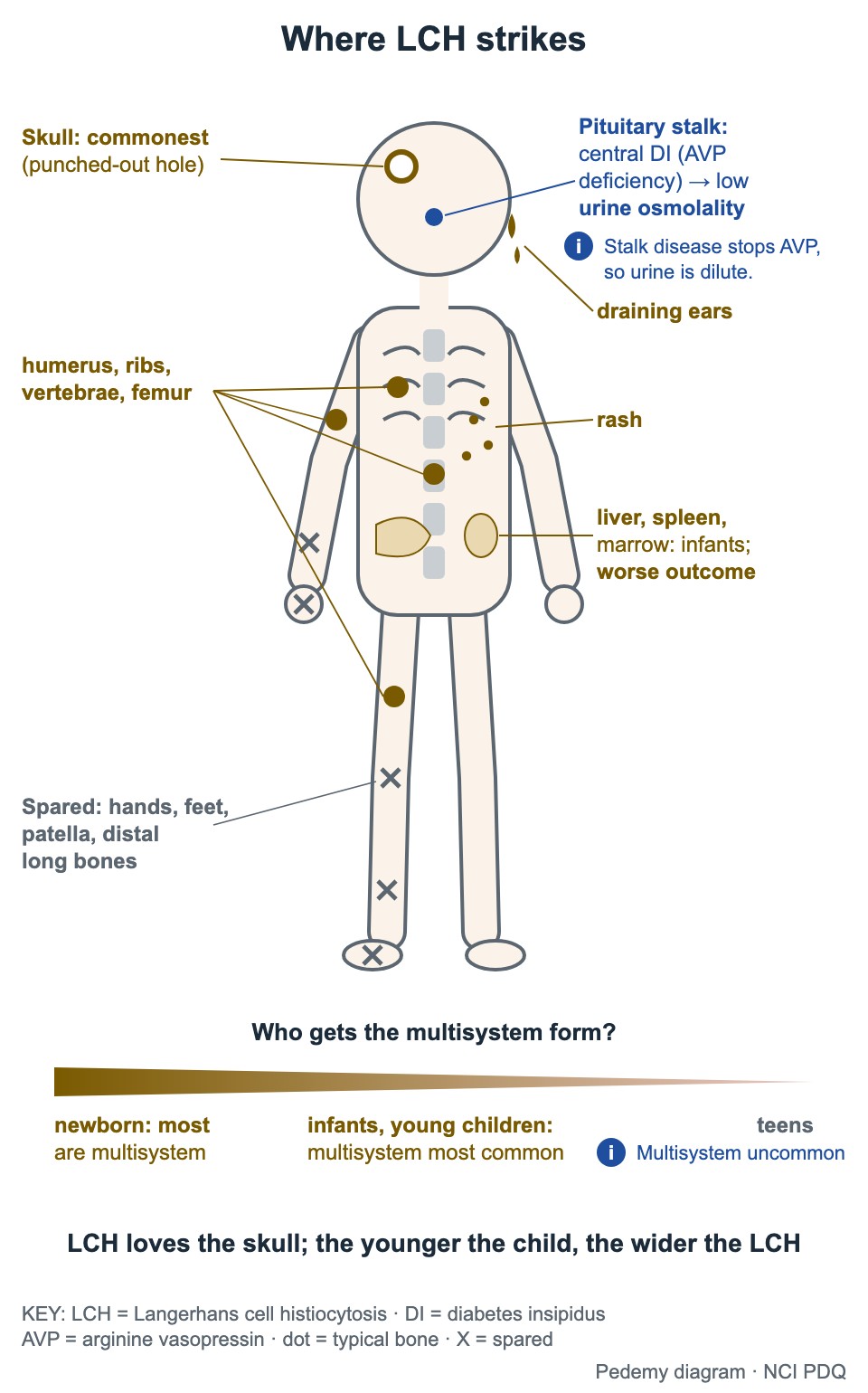
Where LCH strikes -
Leukemia & Lymphoma
t(9;22) fusion gene BCR::ABL1 → makes what kind of protein, targeted by imatinib? […]
Show answer
t(9;22) fusion gene BCR::ABL1 → makes what kind of protein, targeted by imatinib? A constantly active tyrosine kinase
Why: The fused ABL kinase drives growth nonstop, so tyrosine kinase inhibitors such as imatinib (Gleevec) are added to chemotherapy in Ph-positive ALL and CML. A transcription factor like MYC is the Burkitt mechanism instead. Hook: the fusion kinase never switches off.
Source: NCI PDQ childhood cancer summaries (health professional version). Rewritten for Pedemy in our own words, November 2026.
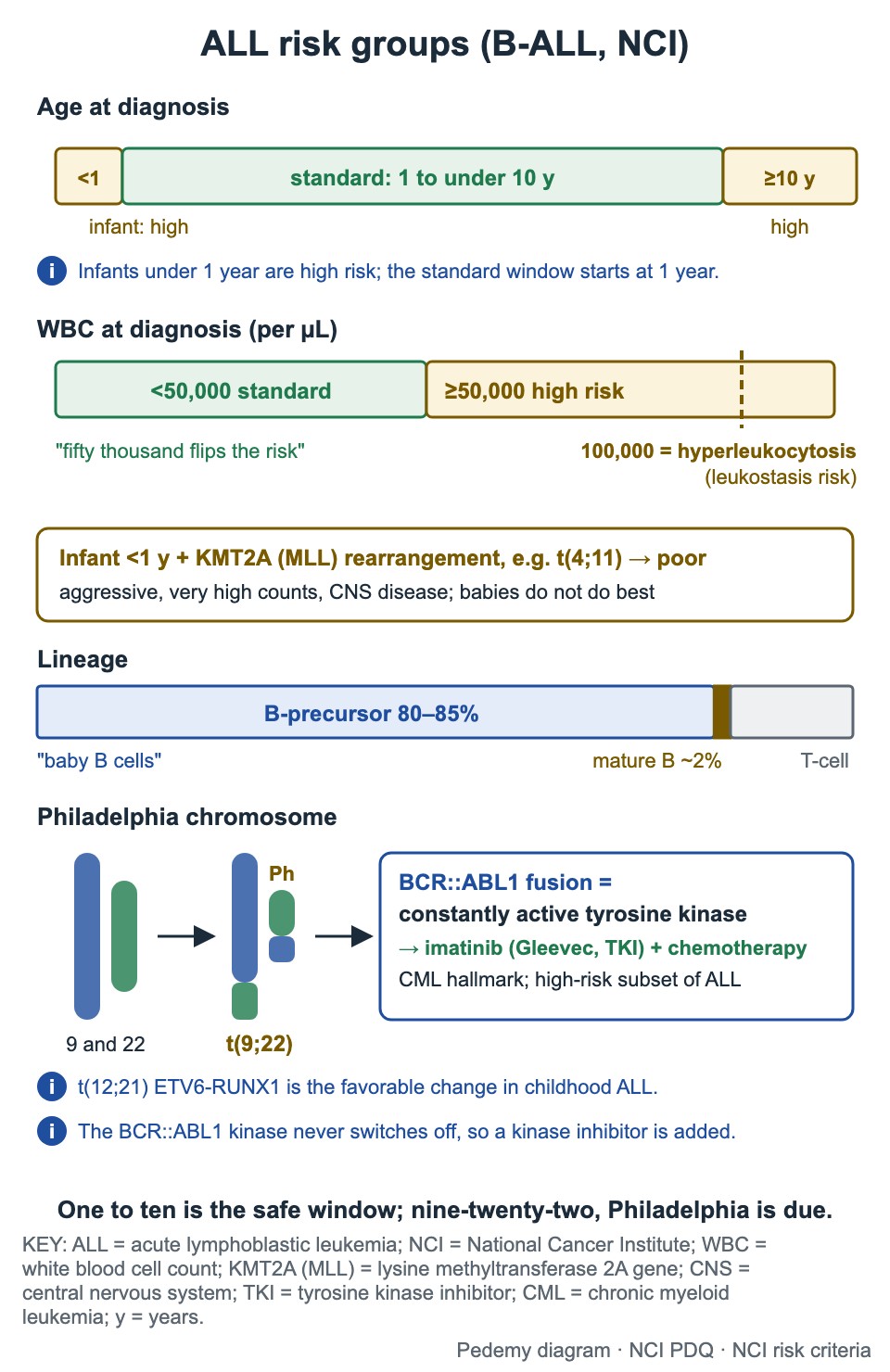
ALL risk groups (B-ALL, NCI) -
Oncologic Emergencies
Child with SVC syndrome from a central line clot, no tumor → treatment? […]
Show answer
Child with SVC syndrome from a central line clot, no tumor → treatment? Anticoagulation (heparin, often LMWH)
Why: A clot inside the vein is treated with anticoagulation, such as LMWH (enoxaparin, Lovenox; off-label in children), and the line is removed if no longer needed; tumor pressing from outside gets steroids, chemotherapy or radiation. Radiation and steroids do not treat a line clot. Hook: clot inside gets heparin, mass outside gets chemo.
Source: ASH 2018 guidelines for management of venous thromboembolism: treatment of pediatric VTE (Monagle P et al., Blood Adv 2018). Rewritten for Pedemy in our own words, November 2026.
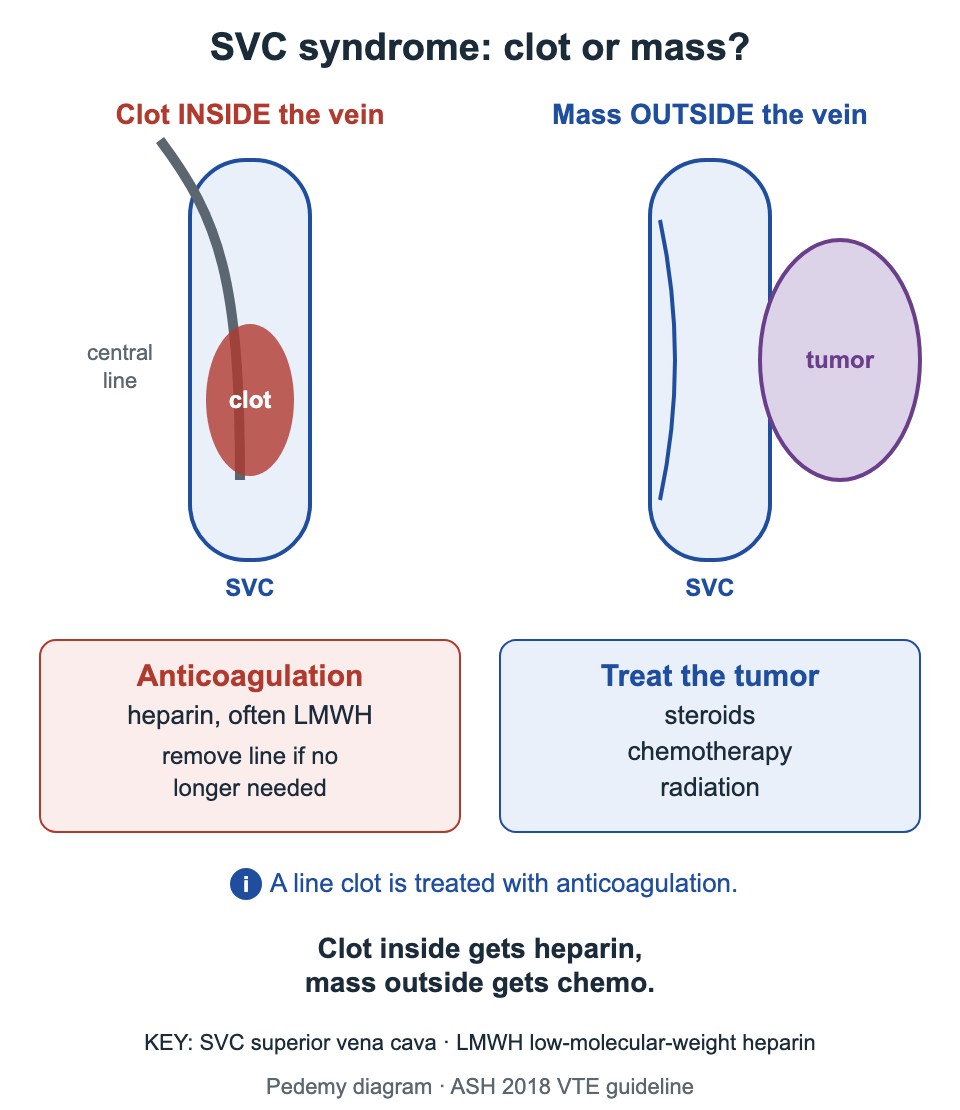
SVC syndrome: clot or mass?
Topics in Oncology
- Abdominal Tumors37
- Bone & Soft Tissue Tumors11
- CNS Tumors28
- Chemotherapy14
- Fever and Neutropenia7
- Histiocytosis7
- Leukemia & Lymphoma28
- Oncologic Emergencies9
- Treatment Effects & Survivorship9
Oncology study guides
- Abdominal and germ cell tumors in children
- Bone and soft-tissue tumors in children
- Brain and spinal cord tumors in children
- Chemotherapy side effects in children
- Fever and neutropenia in children with cancer
- Langerhans cell histiocytosis in children
- Late effects in childhood cancer survivors
- Leukemia and lymphoma in children
- Oncologic emergencies in children
Clinical tools for Oncology
Sample cards in other subjects
- Growth & Development
- Immunizations & Post-exposure Prevention
- Nutrition
- Well-Child Care & Prevention
- Emergency Medicine
- Infectious Disease
- ENT
- Mental Health
- Ophthalmology
- Adolescent Medicine
- Cardiology
- Gastroenterology
- Pulmonology
- Dermatology
- Musculoskeletal & Sports Medicine
- Neonatology
- Neurology
- Allergy & Immunology
- Behavioral
- Endocrinology
- Hematology
- Nephrology
- Urology
- Biostatistics & Epidemiology
- Genetics
- Medical Ethics
- Metabolic Disorders
- Patient Safety & Quality Improvement
- Rheumatology
- Pharmacology
Free to study without an account. Sign up free to save your spaced-repetition schedule across devices. For education only; check current guidelines before clinical use.