

Mental Health flashcards
189 cards · 14 topics · 6% of the board exam
189 free Mental Health flashcards for pediatric board review and rotations, written in our own words with public guideline sources. Topics: ADHD, Anxiety Disorders, Autism & Rett, Bipolar & Mania and 10 more. Mental Health is 6% of the board exam.
Sample Mental Health cards
-
ADHD
Parents fear ADHD medicine will lead to drug use later → what does treating ADHD do to later substance use? […]
Show answer
Parents fear ADHD medicine will lead to drug use later → what does treating ADHD do to later substance use? Lowers the risk
Why: Treated ADHD is linked to fewer substance use disorders, injuries and car crashes and to better school results. Untreated ADHD brings low self-esteem, school failure and poor peer relations. Stimulant treatment does not raise later addiction risk. Hook: Treat the focus, cut the crashes.
Source: AAP Clinical Practice Guideline: ADHD (Wolraich et al., Pediatrics 2019). Rewritten for Pedemy in our own words, November 2026.
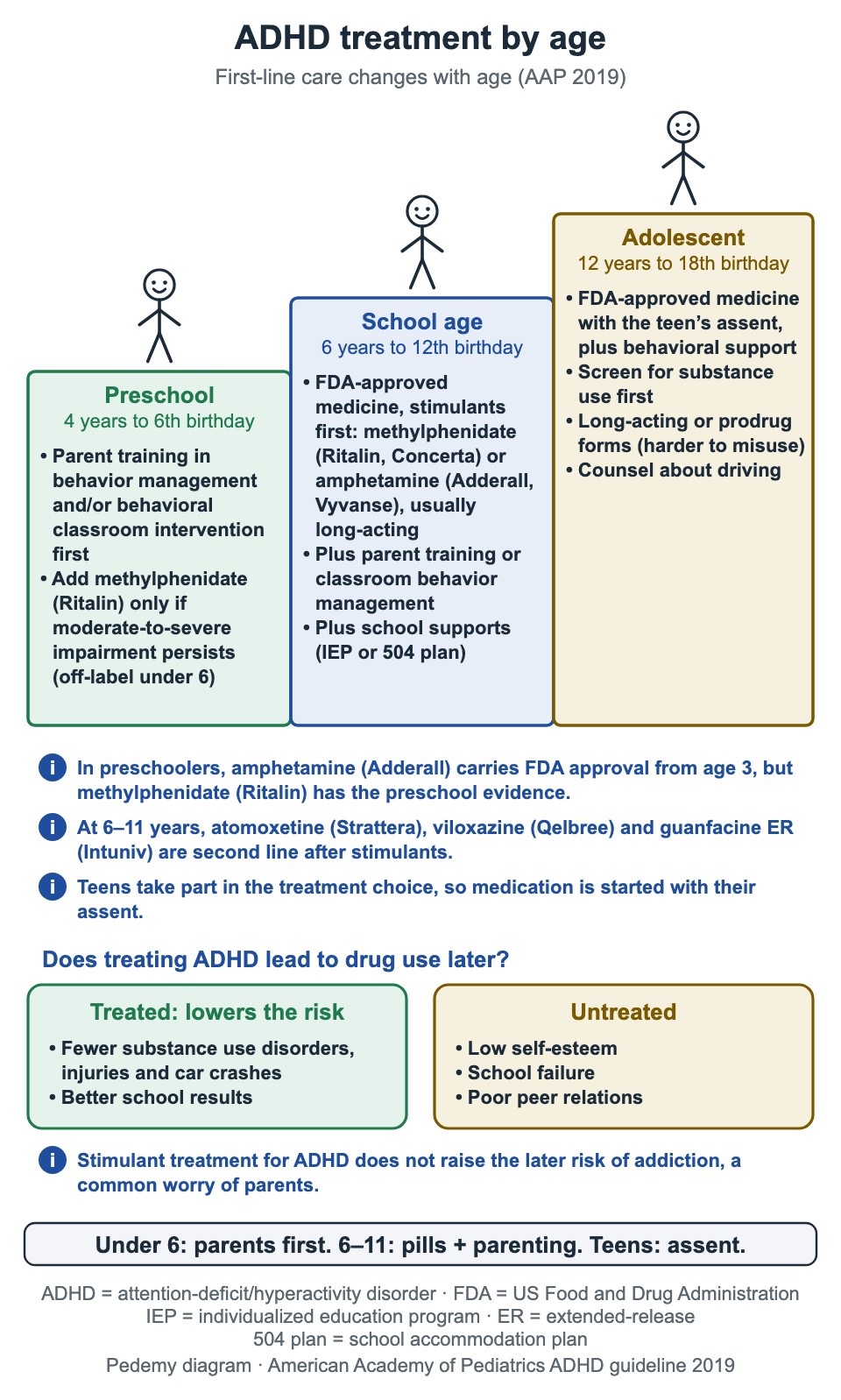
ADHD treatment by age -
Anxiety Disorders
9-year-old at a well visit, no complaints → screen for anxiety? […]
Show answer
9-year-old at a well visit, no complaints → screen for anxiety? Yes—screen all children 8–18 years
Why: USPSTF 2022 (grade B): screen for anxiety at 8–18 years (e.g., SCARED, GAD-7), because anxiety disorders are the most common mental health disorders in youth (up to 1 in 5; onset often 6–11 y). Depression screening starts later, at 12 years. Hook: anxiety screening starts at eight.
Source: USPSTF 2022: Screening for Anxiety in Children and Adolescents (JAMA 2022); Merikangas et al., JAACAP 2010 (NCS-A). Rewritten for Pedemy in our own words, November 2026.
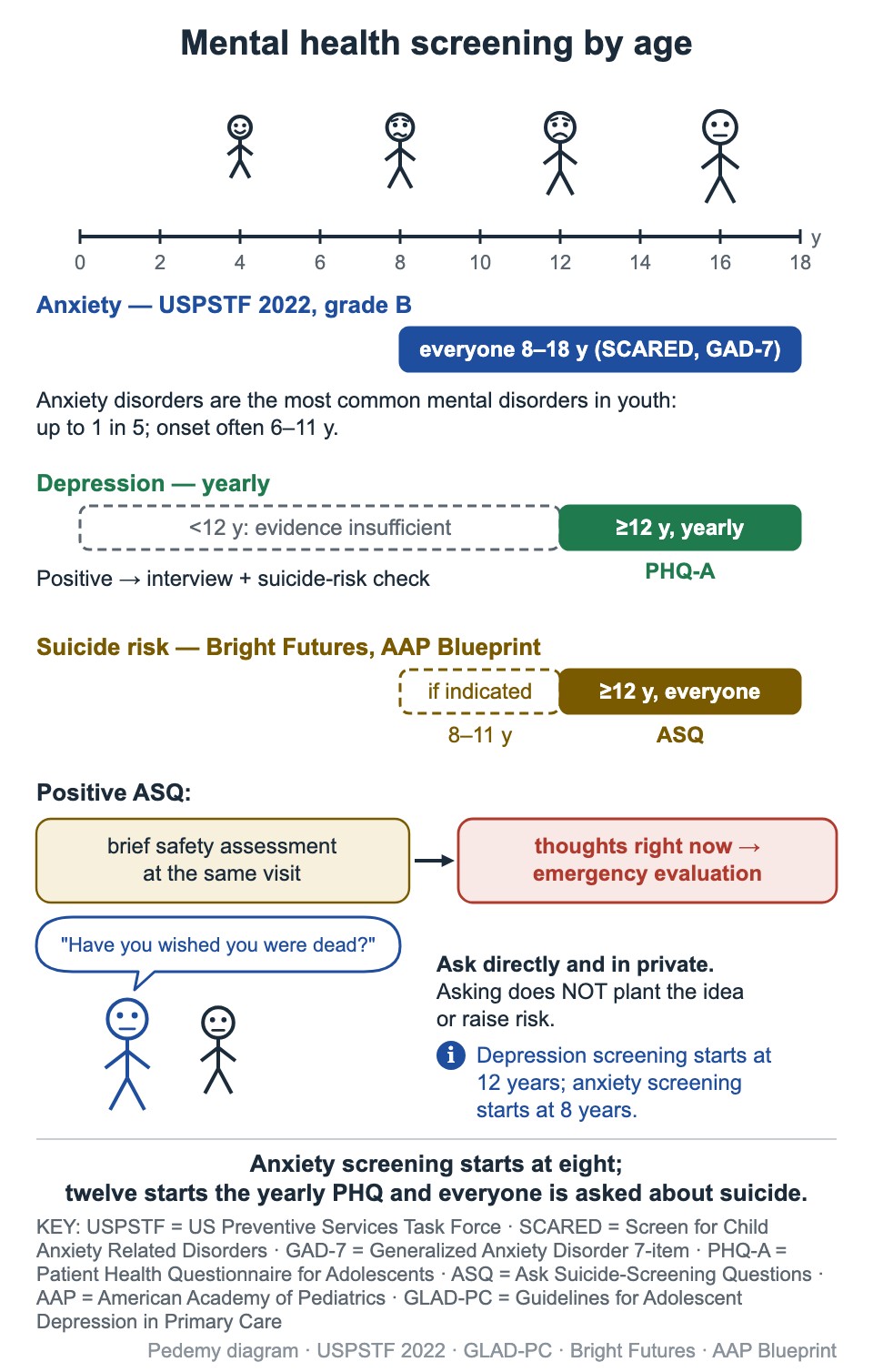
Mental health screening by age -
Autism & Rett
Boy newly diagnosed with autism, normal exam, no dysmorphism → first genetic tests? […]
Show answer
Boy newly diagnosed with autism, normal exam, no dysmorphism → first genetic tests? Chromosomal microarray and fragile X
Why: AAP 2020 offers genetic testing to every child with autism (exome sequencing increasingly first); add MECP2 in girls with regression and PTEN if head circumference >2.5 SD. Every child also gets audiology, and lead if pica. EEG and MRI are not routine. Hook: Array plus X for every new diagnosis.
Source: AAP Clinical Report: Identification, Evaluation, and Management of Children With Autism Spectrum Disorder (Hyman et al., Pediatrics 2020); ACMG guideline: exome and genome sequencing (2021). Rewritten for Pedemy in our own words, November 2026.
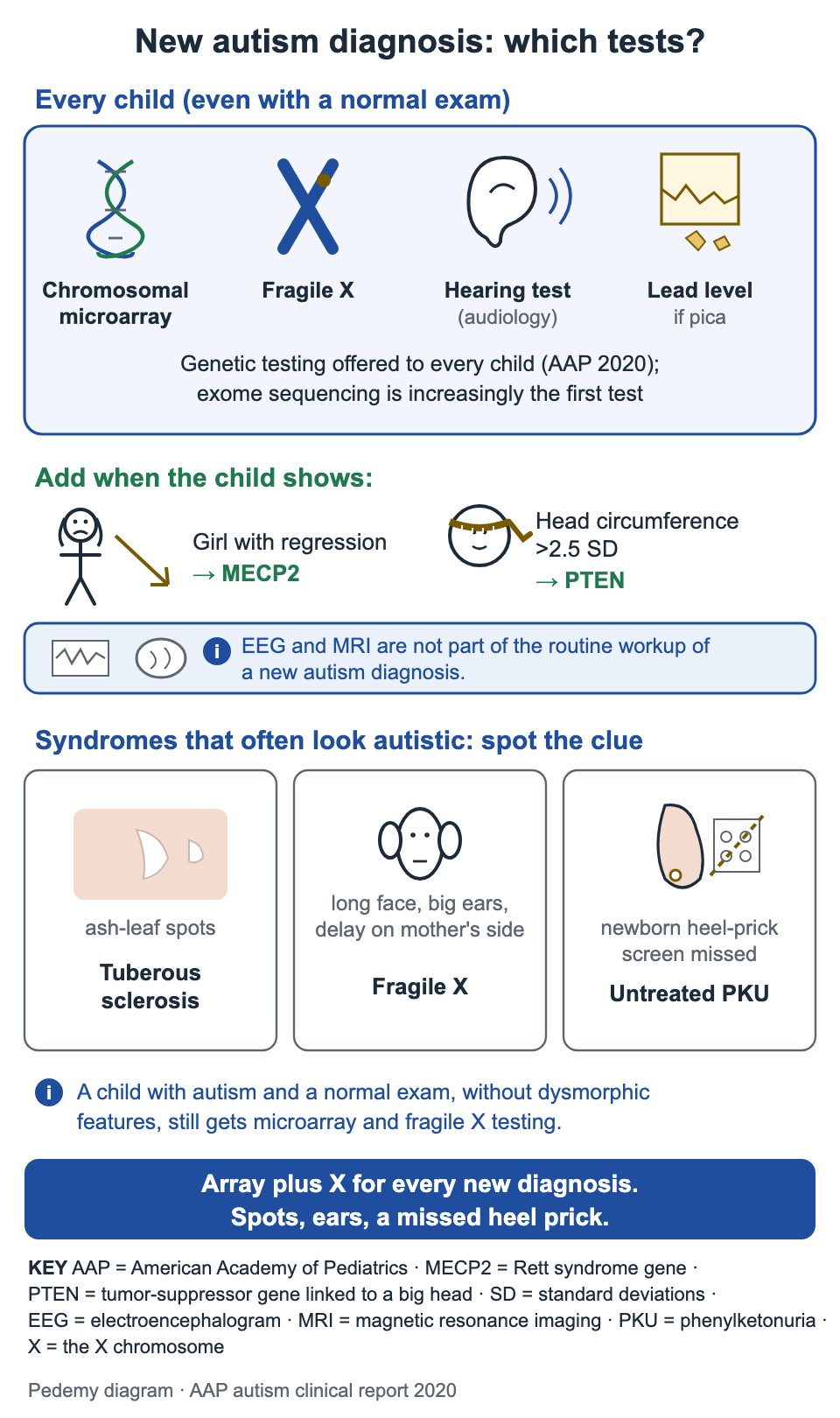
New autism diagnosis: which tests? -
Bipolar & Mania
9-year-old: outbursts 4×/week for 18 months, irritable between, no manic episodes → diagnosis? […]
Show answer
9-year-old: outbursts 4×/week for 18 months, irritable between, no manic episodes → diagnosis? DMDD
Why: DMDD: severe outbursts ≥3/week, irritable mood between, ≥12 months, ≥2 settings, onset before 10, diagnosed only at 6–18 years. It is a depressive disorder made to stop over-diagnosing bipolar. Chronic, non-episodic irritability is not bipolar. Hook: daily anger, not episodes, means DMDD.
Source: DSM-5-TR (APA 2022). Rewritten for Pedemy in our own words, November 2026.
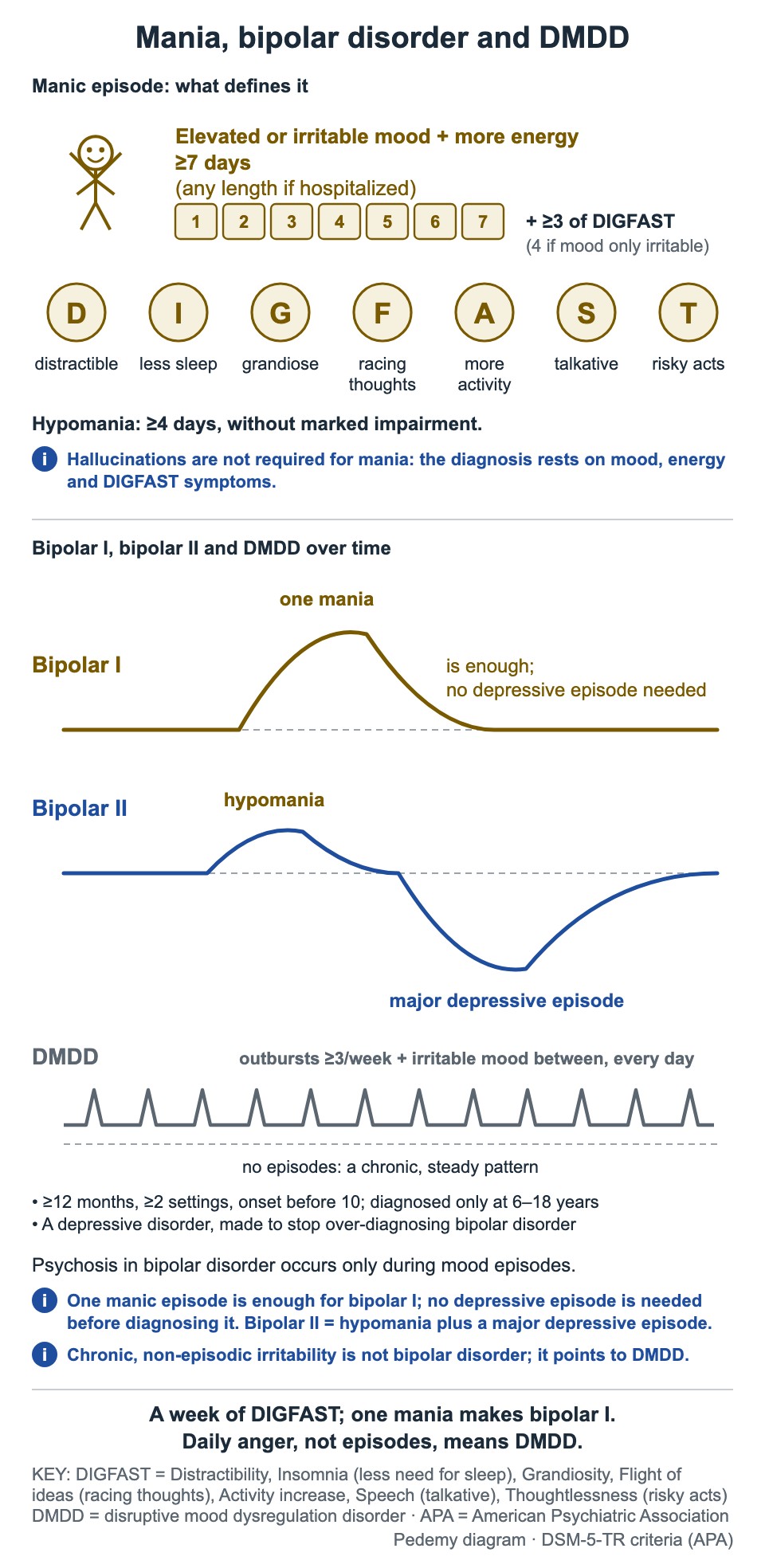
Mania: a week of DIGFAST -
Depression
15-year-old with mild depression, no suicidal thoughts, still at school → first step? […]
Show answer
15-year-old with mild depression, no suicidal thoughts, still at school → first step? Active support and monitoring for 6–8 weeks
Why: GLAD-PC: for mild depression, see the teen every 1–2 weeks for support and symptom tracking for 6–8 weeks; many improve. Start CBT/IPT or an SSRI if it persists, worsens or suicidal thoughts appear. An SSRI is not the first step for mild symptoms. Hook: mild means watch and support first.
Source: GLAD-PC Part II (Cheung et al., Pediatrics 2018; AAP-endorsed). Rewritten for Pedemy in our own words, November 2026.
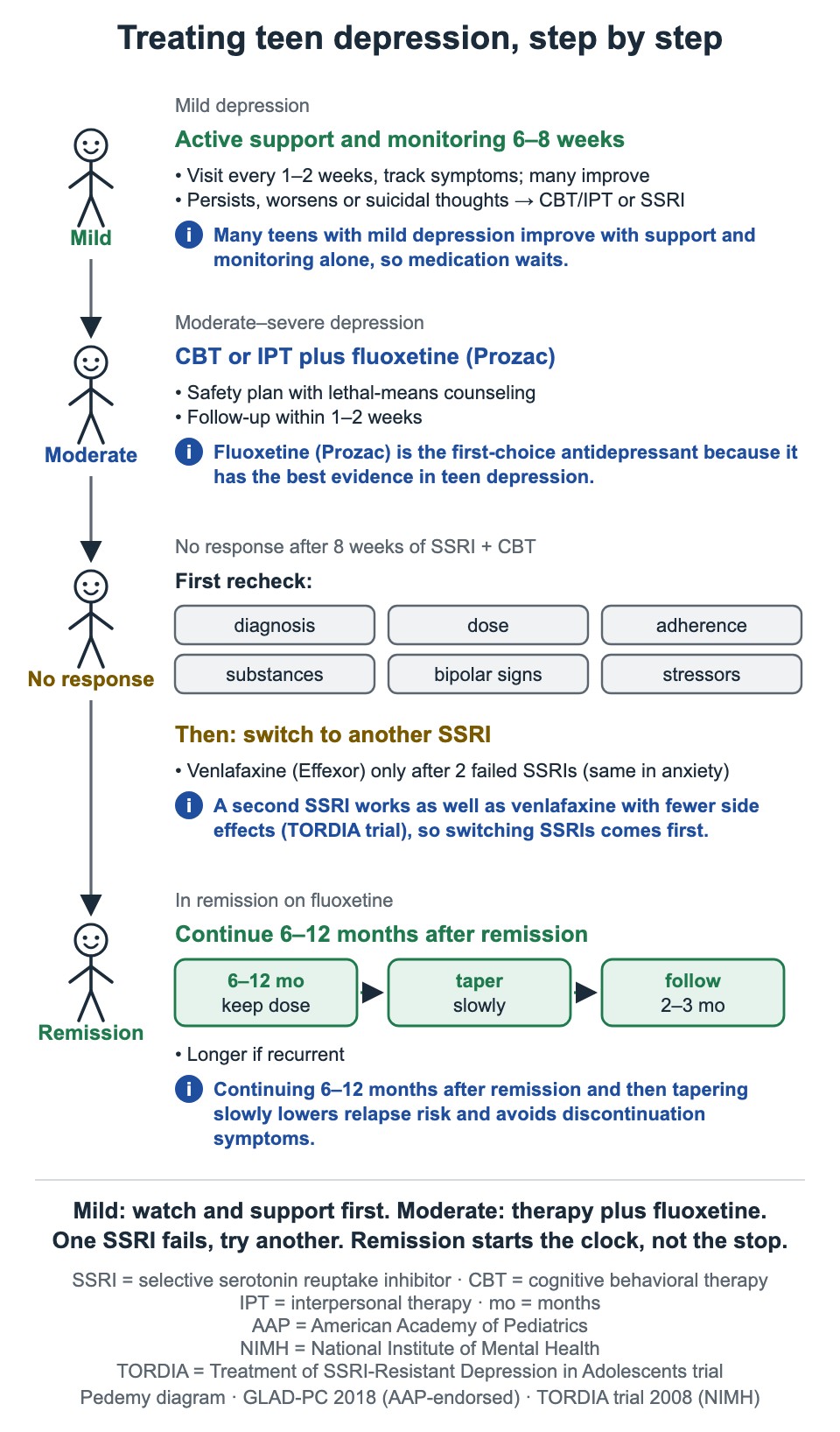
Treating teen depression, step by step -
OCD & Hair Pulling
10-year-old with mild–moderate OCD (washing, checking) → first-line treatment? […]
Show answer
10-year-old with mild–moderate OCD (washing, checking) → first-line treatment? CBT with exposure and response prevention
Why: ERP has the strongest evidence: the child faces the trigger step by step without doing the ritual, and parents stop giving reassurance. Add an SSRI if OCD is moderate–severe or ERP is not enough. Habit reversal is for tics and hair pulling, DBT is for self-harm, and psychodynamic therapy has no evidence in OCD. Hook: face it, don’t wash it.
Source: AACAP Practice Parameter for Obsessive-Compulsive Disorder (Geller & March, JAACAP 2012); Steele et al., Pediatrics 2024 (AHRQ review). Rewritten for Pedemy in our own words, November 2026.
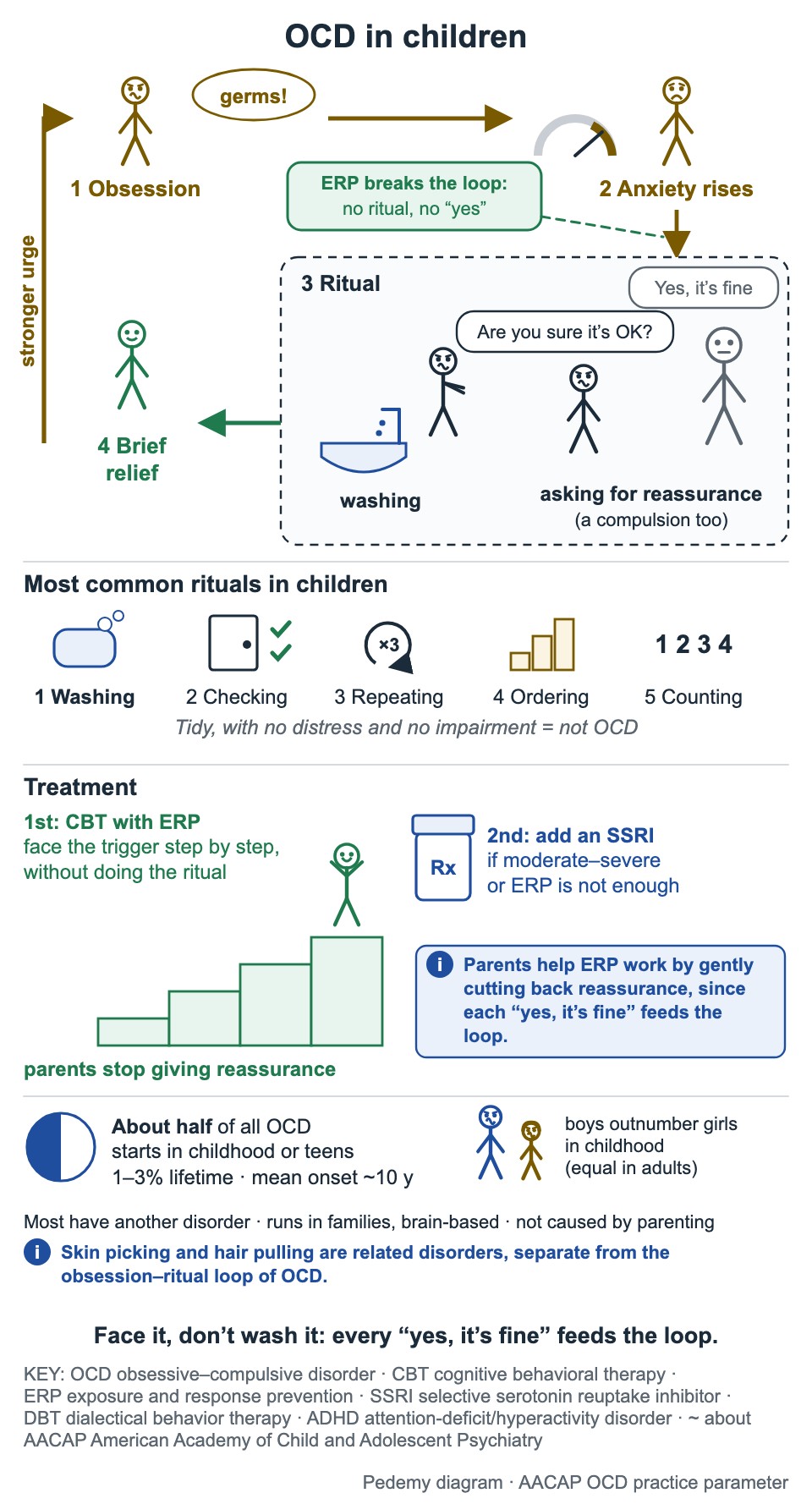
OCD in children: the loop and how to break it -
Psychosis
Haloperidol started 4 days ago; now 40 °C, lead-pipe rigidity, confusion, labile BP, high CK → diagnosis? […]
Show answer
Haloperidol started 4 days ago; now 40 °C, lead-pipe rigidity, confusion, labile BP, high CK → diagnosis? NMS
Why: NMS develops over days after starting or raising a dopamine blocker: fever, rigidity, altered mental status, autonomic instability, high CK. Stop the drug; give cooling, IV fluids and benzodiazepines in the ICU, and dantrolene or bromocriptine if severe. Serotonin syndrome differs: it starts within hours with clonus and hyperreflexia. Hook: lead pipe after a neuroleptic.
Source: FDA antipsychotic labeling (Warnings: neuroleptic malignant syndrome; DailyMed); Neuhut et al., J Child Adolesc Psychopharmacol 2009. Rewritten for Pedemy in our own words, November 2026.
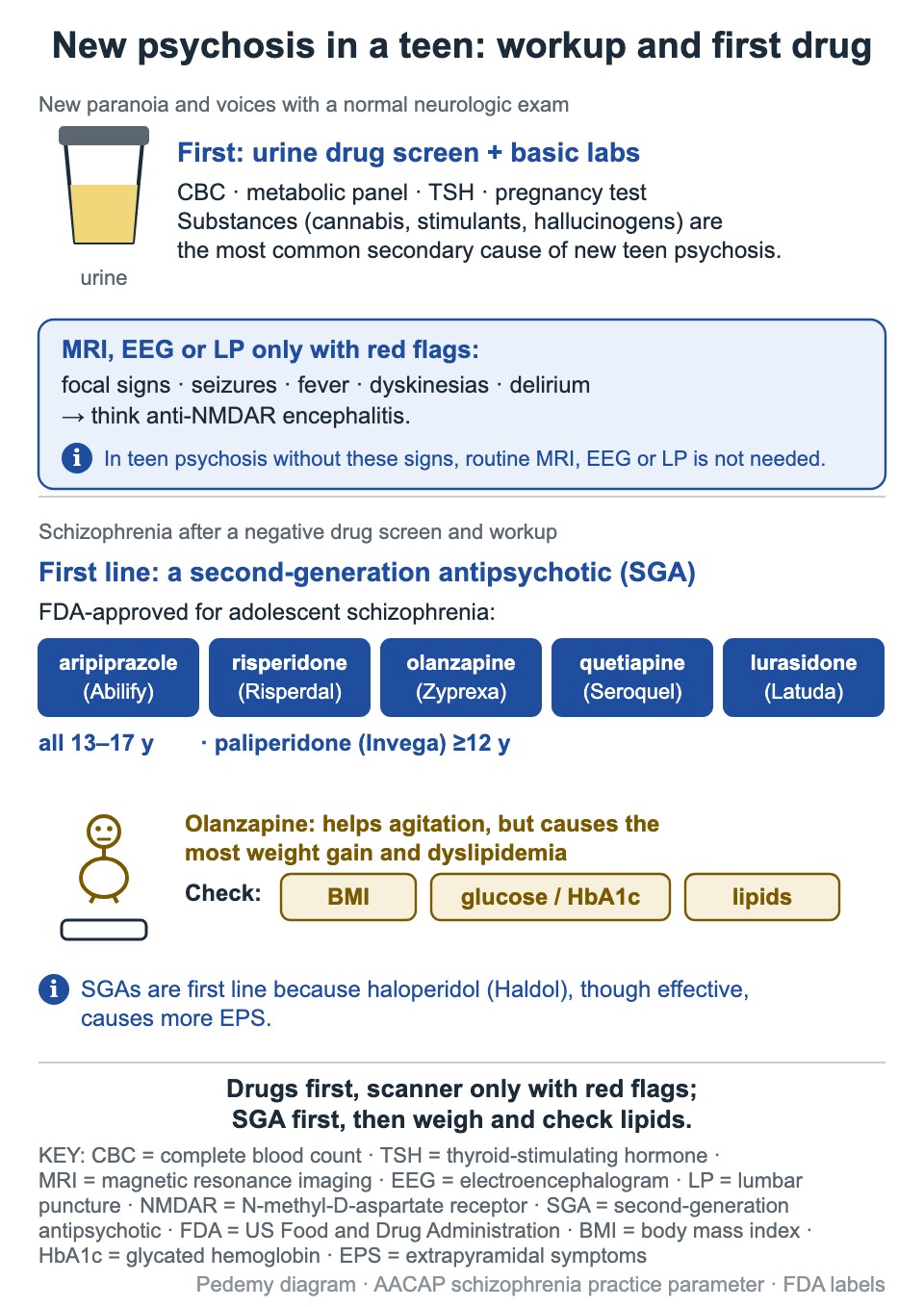
New psychosis in a teen: workup and first drug -
Substance Use
16-year-old uses cannabis on weekends, asks you not to tell her parents → confidential? […]
Show answer
16-year-old uses cannabis on weekends, asks you not to tell her parents → confidential? Yes, unless imminent risk of serious harm
Why: Confidential care makes teens more honest and more likely to return. Confidentiality is broken only for imminent danger to self or others, such as overdose risk, suicidality or impaired driving, and the teen should be told first. Ordinary drug use alone does not require telling parents. Hook: Secrets kept unless safety is at stake.
Source: AAP Clinical Report: Substance Use Screening, Brief Intervention, and Referral to Treatment (Levy, Williams & Committee on Substance Use and Prevention, Pediatrics 2016;138(1):e20161211); AAP/SAHM position on confidential adolescent care. Rewritten for Pedemy in our own words, November 2026.
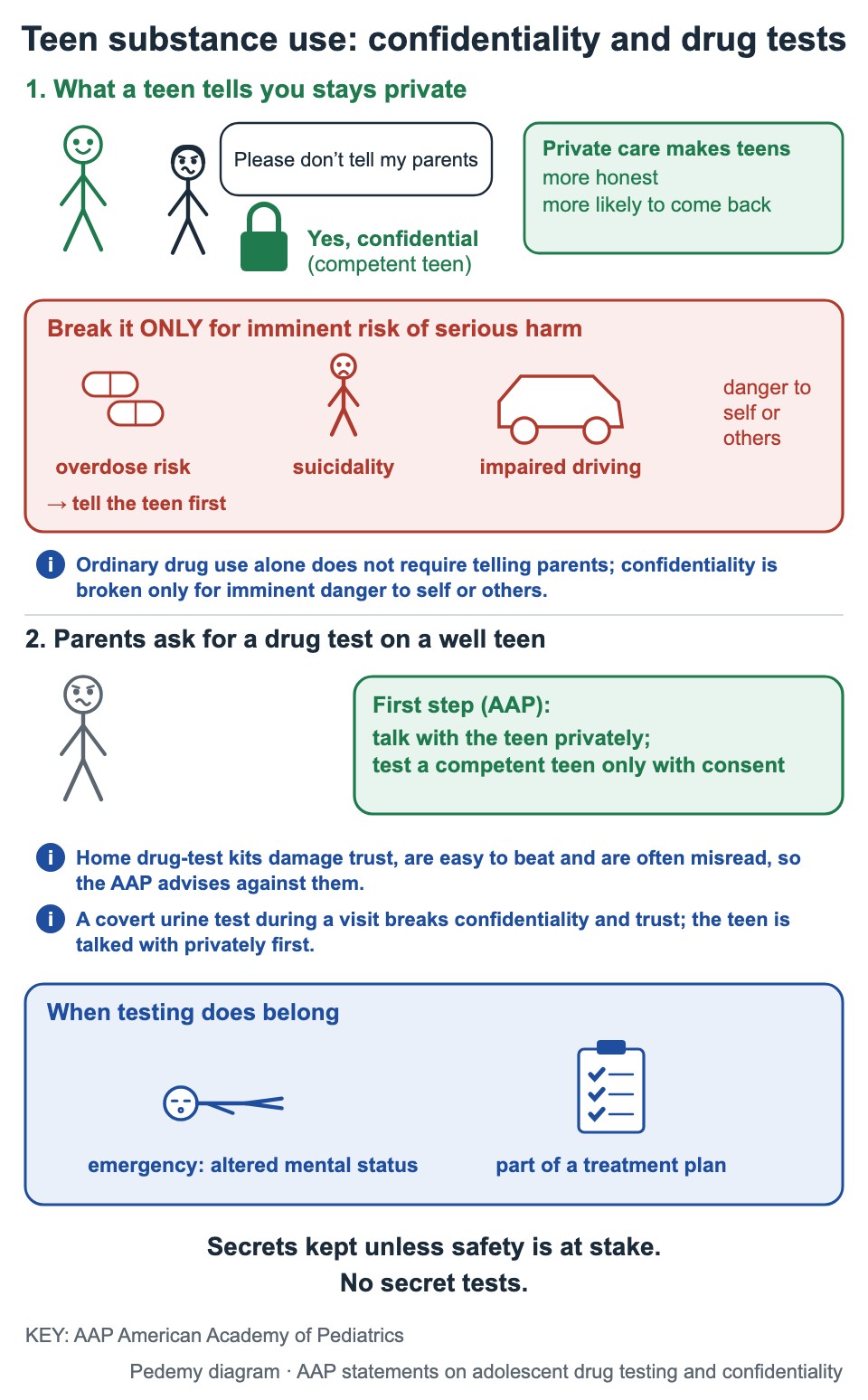
Teen drug use: privacy and drug tests
Topics in Mental Health
- ADHD22
- Anxiety Disorders10
- Autism & Rett10
- Bipolar & Mania7
- Conduct Disorder5
- Depression12
- OCD & Hair Pulling7
- Oppositional Defiant Disorder3
- Psychosis5
- Somatic Symptoms8
- Substance Use60
- Suicide & Self-Harm7
- Tics & Tourette13
- Trauma, ACEs & Resilience22
Mental Health study guides
- ADHD: diagnosis and treatment
- Adolescent substance use
- Anxiety disorders in children and teens
- Autism spectrum disorder and Rett syndrome
- Bipolar disorder, mania and DMDD
- Conduct disorder
- Depression in children and adolescents
- OCD and hair pulling in children
- Oppositional defiant disorder
- Psychosis in adolescents
- Somatic symptom and related disorders
- Suicide risk and self-harm in adolescents
- Tics and Tourette syndrome
- Trauma, ACEs and resilience
Clinical tools for Mental Health
- ADHD evaluation checklist
- ADHD follow-up dashboard
- Daily routine and reward chart
- Teen Depression (PHQ-A, ASQ)
- Vanderbilt ADHD Scorer
Sample cards in other subjects
- Growth & Development
- Immunizations & Post-exposure Prevention
- Nutrition
- Well-Child Care & Prevention
- Emergency Medicine
- Infectious Disease
- ENT
- Ophthalmology
- Adolescent Medicine
- Cardiology
- Gastroenterology
- Pulmonology
- Dermatology
- Musculoskeletal & Sports Medicine
- Neonatology
- Neurology
- Allergy & Immunology
- Behavioral
- Endocrinology
- Hematology
- Nephrology
- Oncology
- Urology
- Biostatistics & Epidemiology
- Genetics
- Medical Ethics
- Metabolic Disorders
- Patient Safety & Quality Improvement
- Rheumatology
- Pharmacology
Free to study without an account. Sign up free to save your spaced-repetition schedule across devices. For education only; check current guidelines before clinical use.