

Infectious Disease flashcards
547 cards · 15 topics · 7% of the board exam
547 free Infectious Disease flashcards for pediatric board review and rotations, written in our own words with public guideline sources. Topics: Antimicrobial Safety, Bone and Joint, CNS and Invasive Infection, Endemic Fungal Infections and 11 more. Infectious Disease is 7% of the board exam.
Sample Infectious Disease cards
-
Antimicrobial Safety
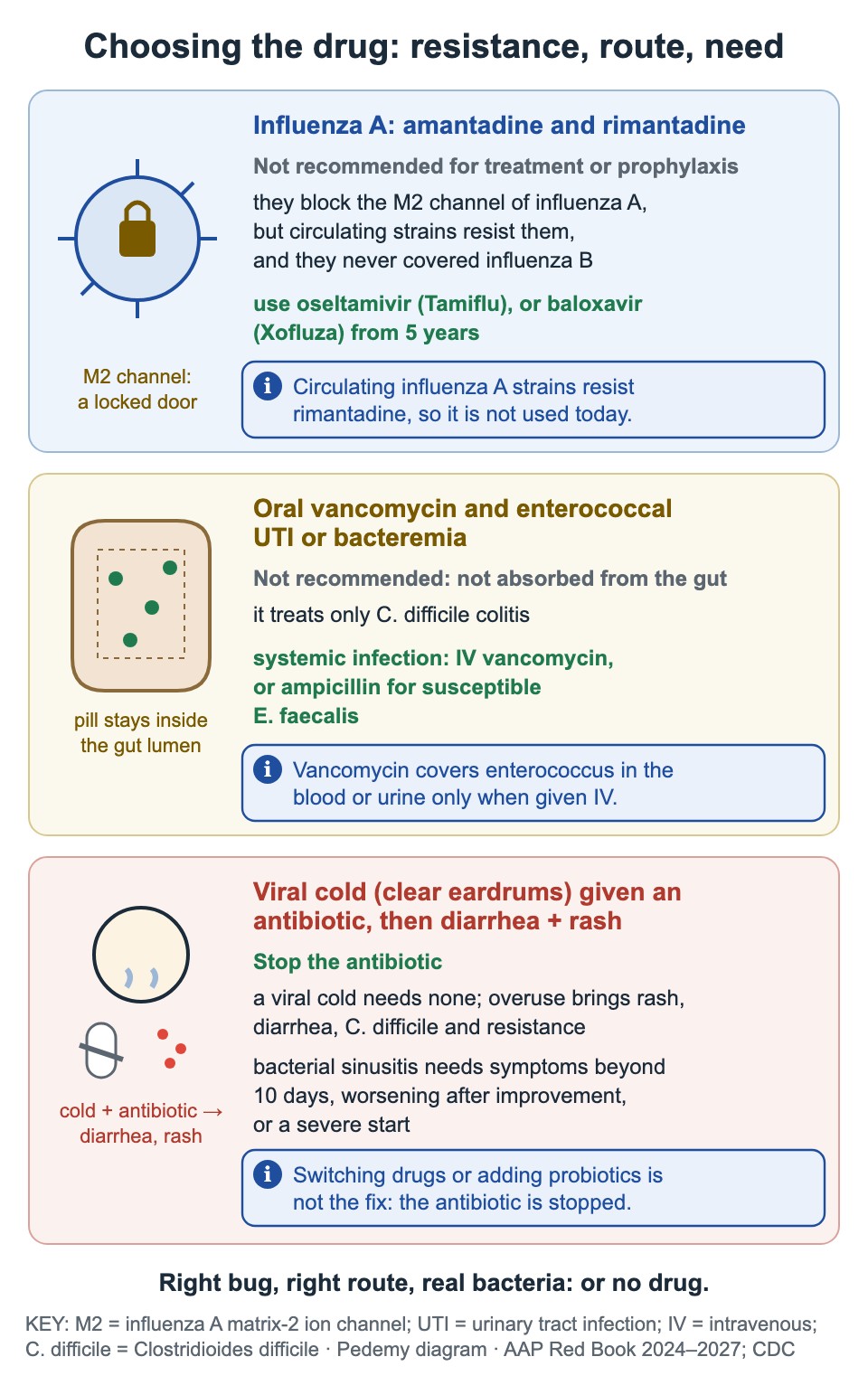
Toddler with a 3-day cold and clear eardrums, given an antibiotic, now diarrhea and rash → next step? […]
Show answer
Toddler with a 3-day cold and clear eardrums, given an antibiotic, now diarrhea and rash → next step? Stop the antibiotic
Why: A viral cold needs no antibiotic, and overuse brings rash, diarrhea, C. difficile and resistance, so the antibiotic is stopped rather than switched or covered with probiotics. Bacterial sinusitis needs symptoms beyond 10 days, worsening after improvement, or a severe start. Hook: No bacteria, no antibiotic.
Source: AAP Policy Statement: Antibiotic Stewardship in Pediatrics (2021); AAP Clinical Practice Guideline: Acute Bacterial Sinusitis (2013). Rewritten for Pedemy in our own words, November 2026.
Three wrong drug choices -
Bone and Joint
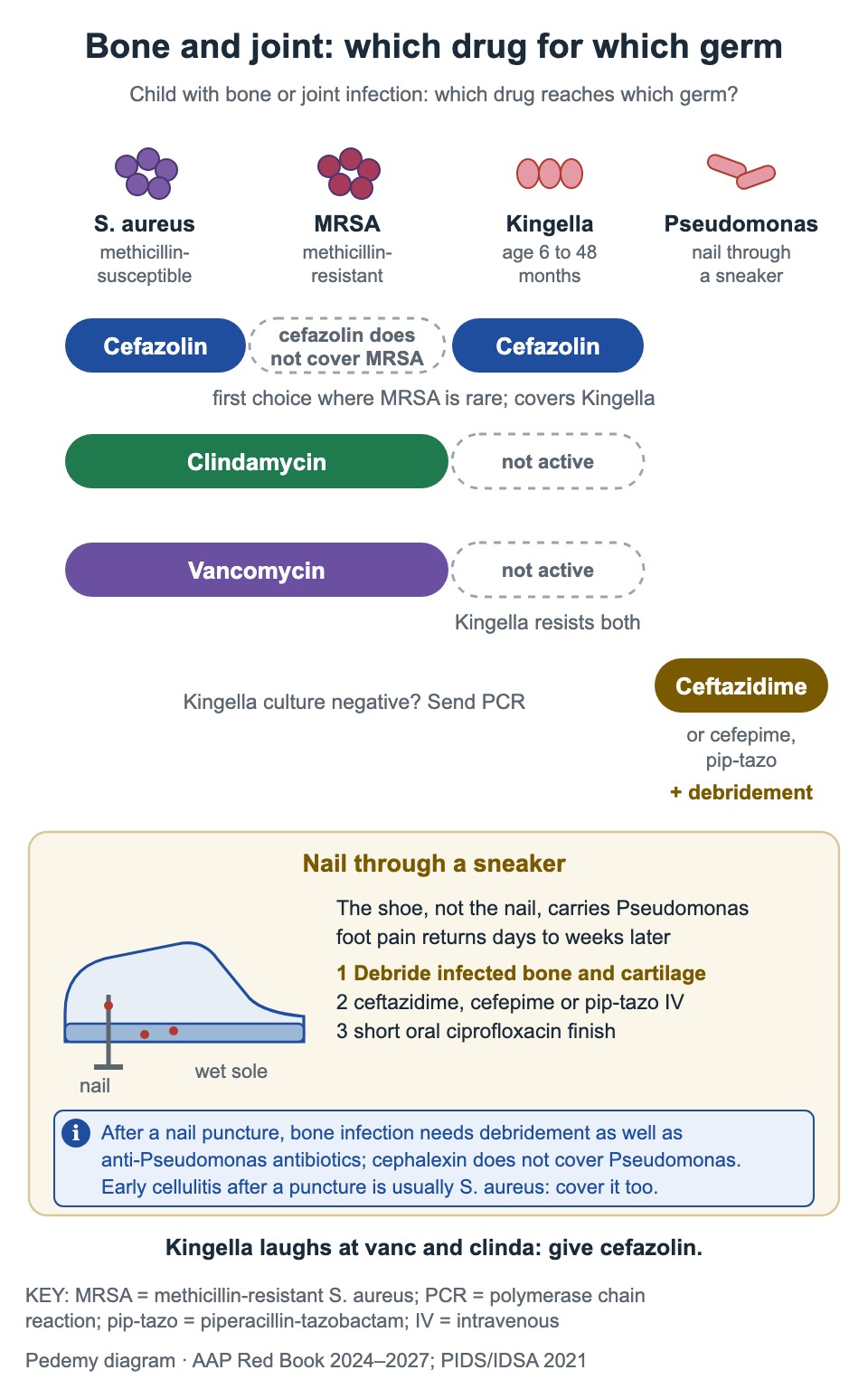
18-month-old with septic arthritis → empiric drug that covers S. aureus and Kingella? […]
Show answer
18-month-old with septic arthritis → empiric drug that covers S. aureus and Kingella? Cefazolin
Why: Kingella kingae is the most reported joint organism at 6–48 months; cephalosporins such as cefazolin (Ancef) kill it, while clindamycin (Cleocin) and vancomycin do not. Joint-fluid culture is often negative in septic arthritis, and Kingella grows poorly, so send PCR when the culture is negative. Hook: Kingella laughs at vanc and clinda.
Source: PIDS/IDSA Guideline: Acute Bacterial Arthritis in Pediatrics (2023, published 2024). Rewritten for Pedemy in our own words, November 2026.
Bone and joint: which drug for which germ -
CNS and Invasive Infection
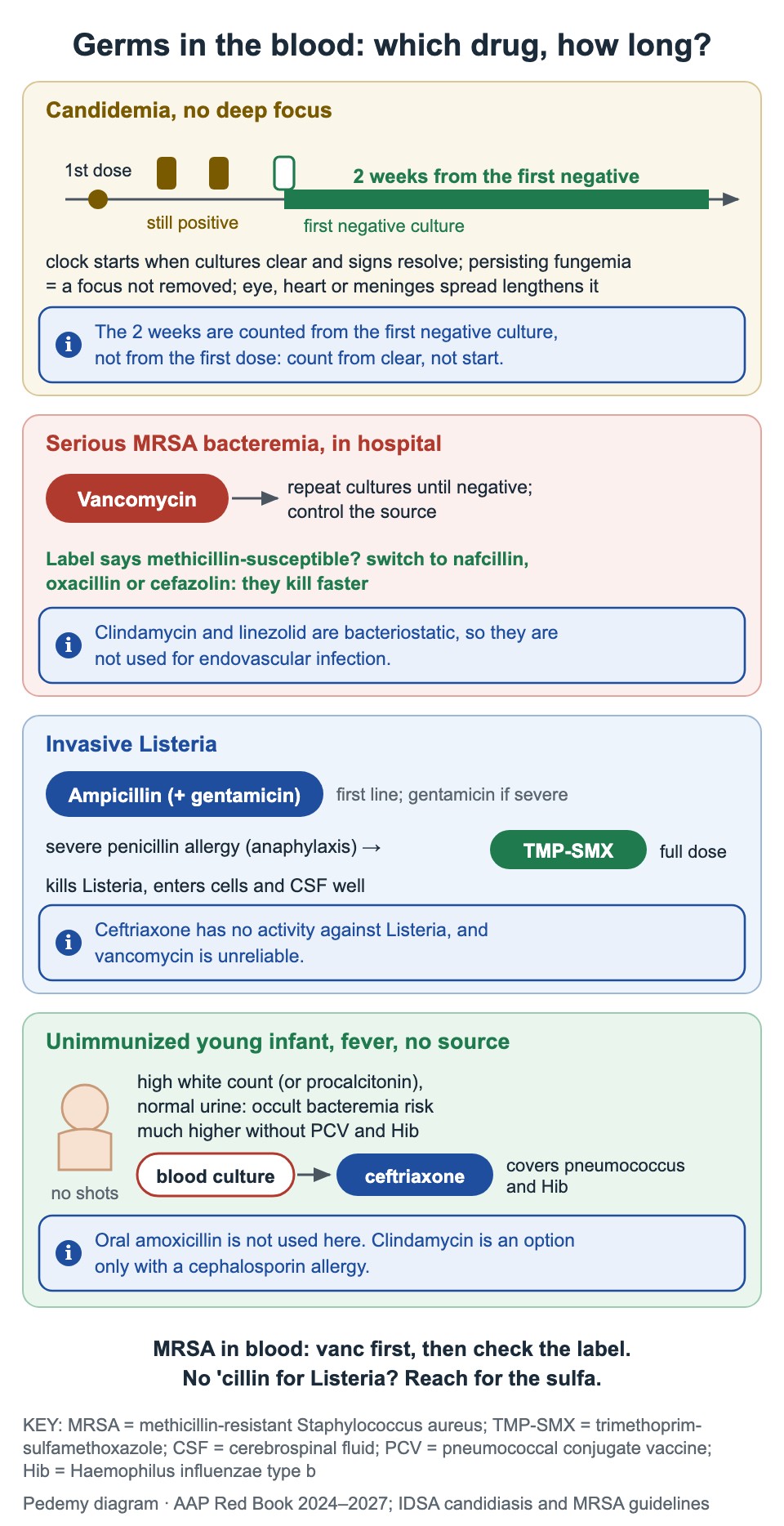
Candidemia with no deep focus → treat for how long? […]
Show answer
Candidemia with no deep focus → treat for how long? 2 weeks after the first negative blood culture
Why: The clock starts when blood cultures clear and signs resolve, not on day 1 of treatment, because persisting fungemia means an unremoved focus. Spread to the eye, heart or meninges lengthens therapy. Fourteen days are counted from the first negative culture, not the first dose. Hook: Count from clear, not from start.
Source: IDSA Clinical Practice Guideline for the Management of Candidiasis (2016). Rewritten for Pedemy in our own words, November 2026.
Germs in the blood: which drug, how long? -
Endemic Fungal Infections
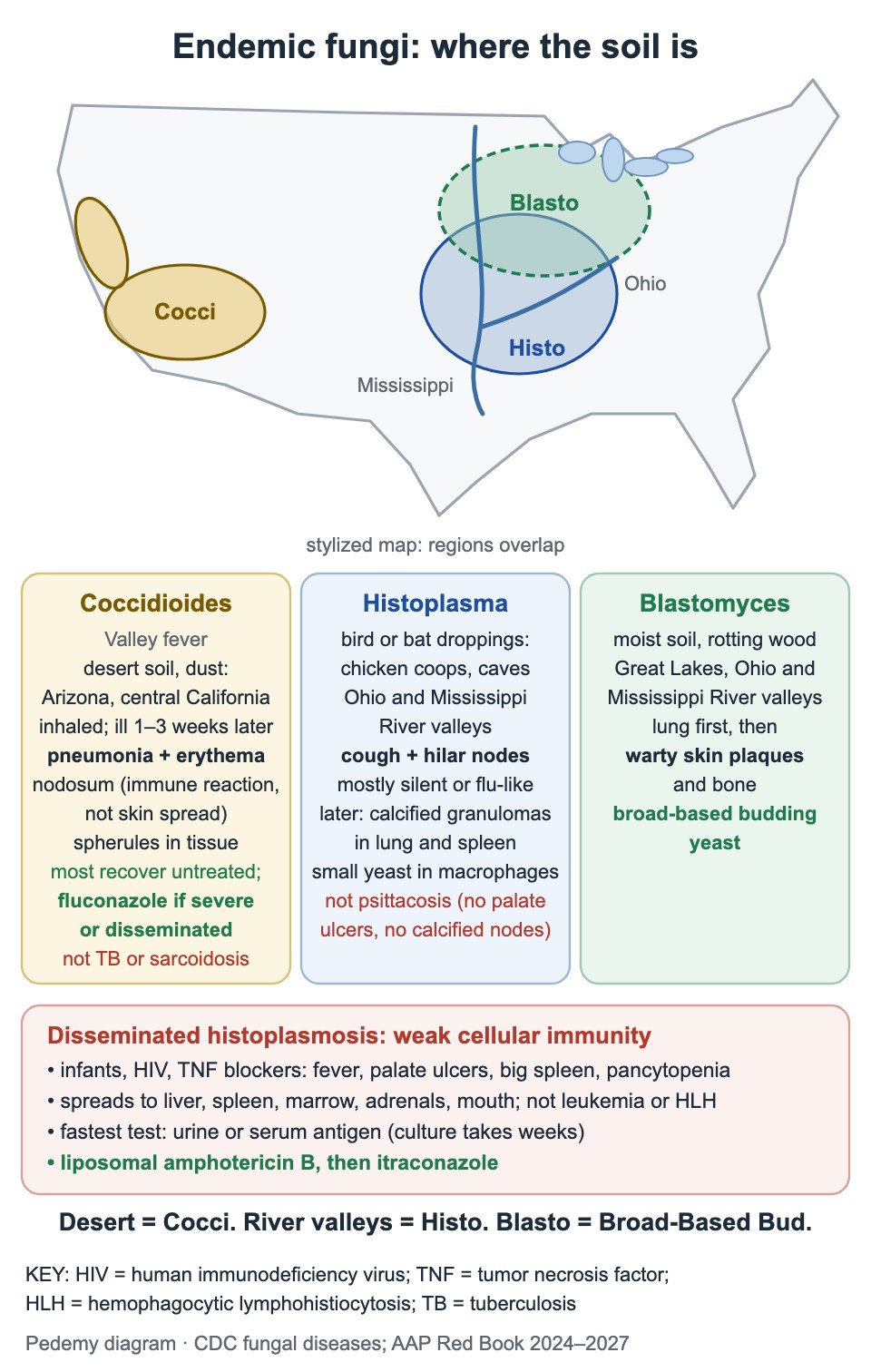
Pneumonia + warty skin plaques, Great Lakes soil; broad-based budding yeast → fungus? […]
Show answer
Pneumonia + warty skin plaques, Great Lakes soil; broad-based budding yeast → fungus? Blastomyces
Why: Blastomyces lives in moist soil and rotting wood around the Great Lakes and the Ohio and Mississippi River valleys; it starts in the lung and spreads to skin and bone. Histoplasma is a small yeast inside macrophages (caves, droppings), and Coccidioides forms spherules (Southwest). Hook: Blasto = Broad-Based Bud.
Source: CDC: Clinical Overview of Blastomycosis. Rewritten for Pedemy in our own words, November 2026.
Endemic fungi: where the soil is -
Exposure and Prophylaxis
Measles inpatient: a nurse with proven immunity enters the room → which mask? […]
Show answer
Measles inpatient: a nurse with proven immunity enters the room → which mask? N95 respirator
Why: Airborne precautions mean a negative-pressure room and a fit-tested N95 respirator for everyone who enters, immune or not; nonimmune staff stay out. Continue until 4 days after rash onset. A surgical mask is only droplet protection, and positive pressure is wrong. Hook: Immune or not, N95 on.
Source: CDC/HICPAC Guideline for Isolation Precautions (2007), Appendix A (updated online); CDC: Measles in Healthcare Settings. Rewritten for Pedemy in our own words, November 2026.
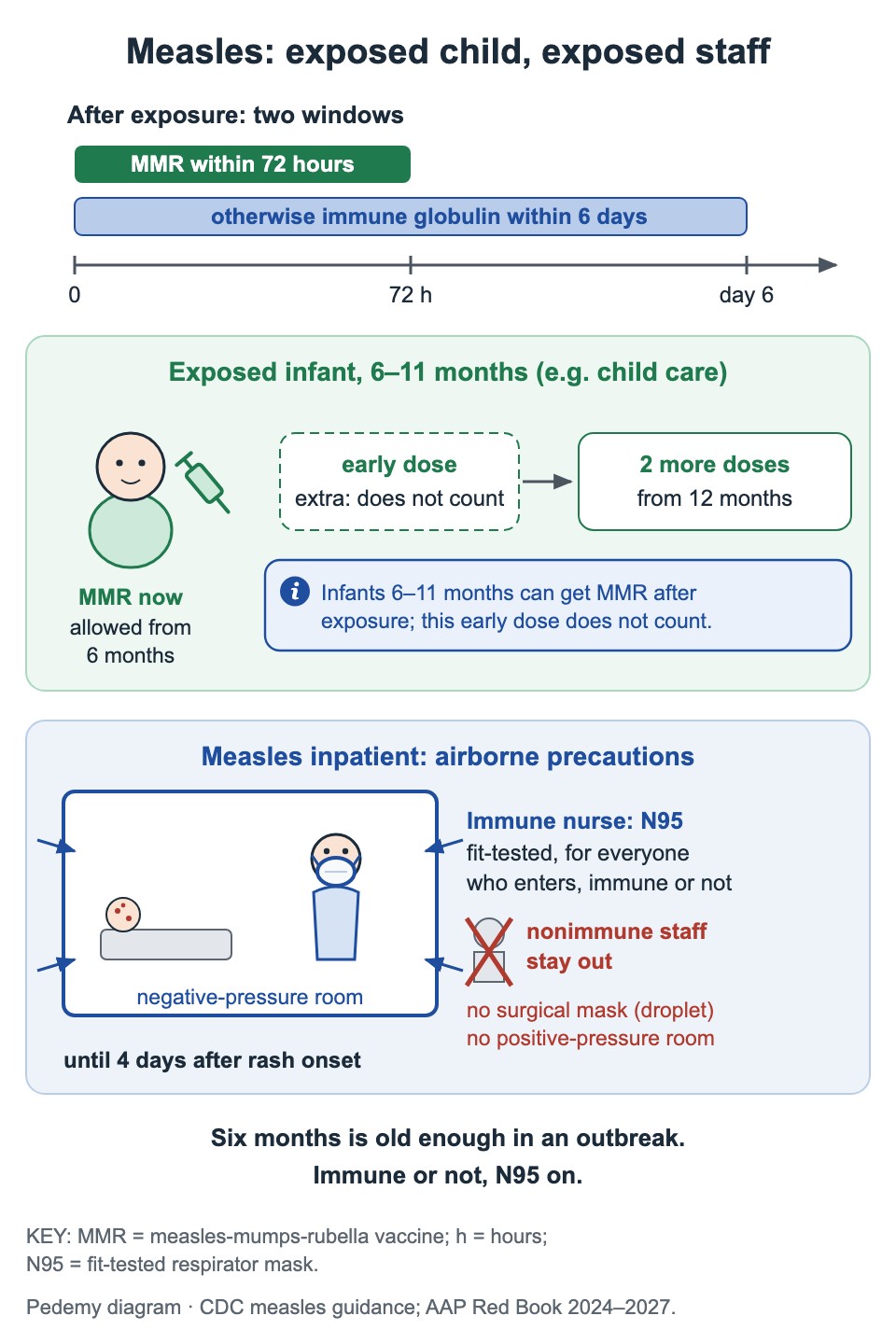
Measles: exposed child, exposed staff -
Gastrointestinal Infections
Second C. difficile recurrence in a child → regimen? […]
Show answer
Second C. difficile recurrence in a child → regimen? Tapered and pulsed oral vancomycin
Why: After a second C. difficile recurrence in a child, treatment is a long oral vancomycin (Vancocin, Firvanq) taper with pulsed doses, which lets remaining spores germinate and be killed. Metronidazole (Flagyl) is not repeated after the first recurrence. Vancomycin followed by rifaximin (Xifaxan, off-label in children), or fecal microbiota transplant, are the other options. Hook: Second relapse: taper and pulse.
Source: IDSA/SHEA C. difficile Guideline 2017 (pediatric section current; 2021 update is adult-only). Rewritten for Pedemy in our own words, November 2026.
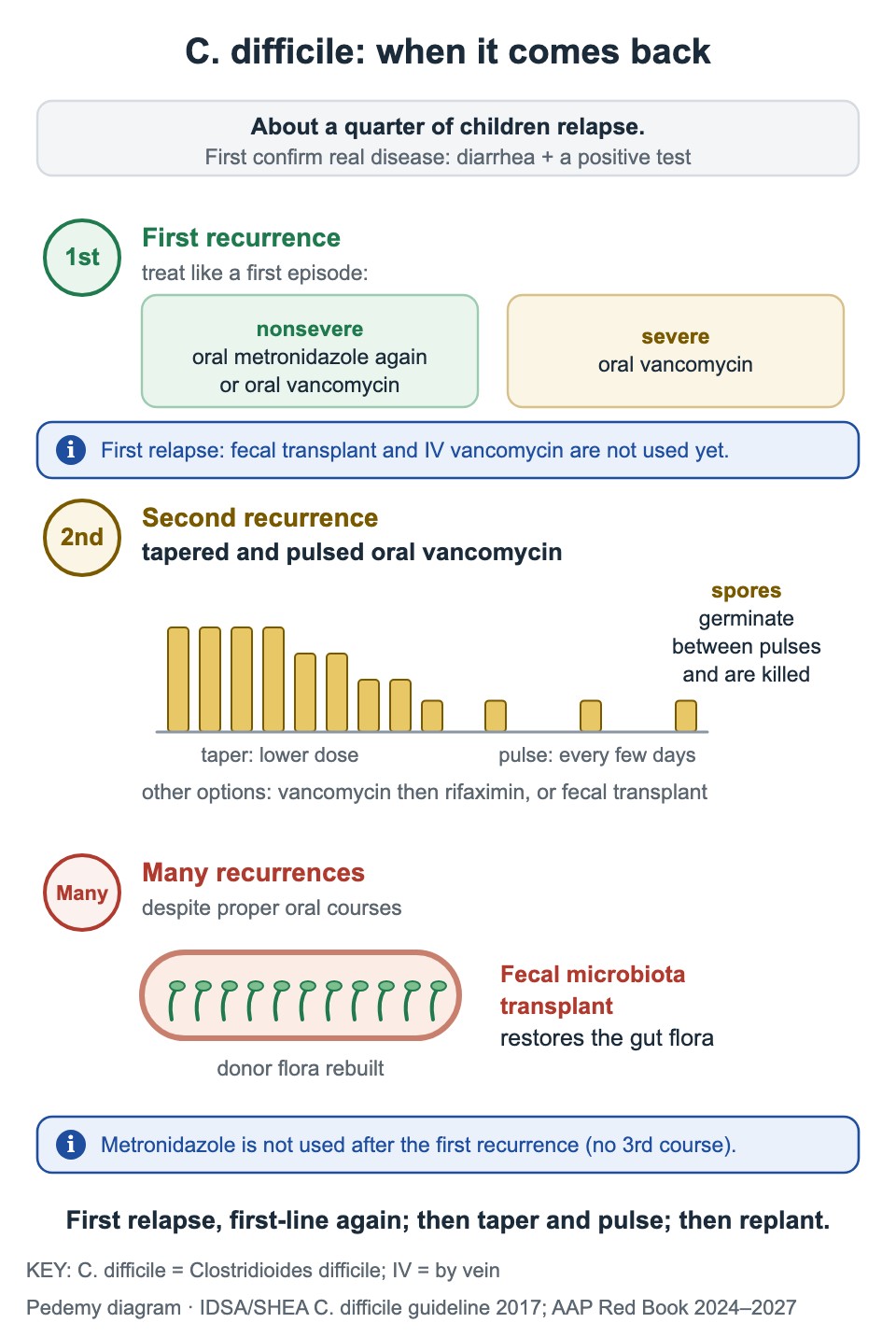
C. difficile: when it comes back -
HIV and Immunocompromise
Pregnant teen with HIV, normal CD4 count, no symptoms → start ART now or wait? […]
Show answer
Pregnant teen with HIV, normal CD4 count, no symptoms → start ART now or wait? Start now, whatever the CD4 count
Why: In pregnancy with HIV, ART is started right away regardless of CD4 count; it treats the mother and lowers the viral load, the main driver of transmission: about 25% untreated, under 1% with sustained suppression. Waiting for the CD4 count to fall is not appropriate. Hook: Positive test, pills today.
Source: HHS Perinatal HIV Guidelines (clinicalinfo.hiv.gov), updated June 2026. Rewritten for Pedemy in our own words, November 2026.
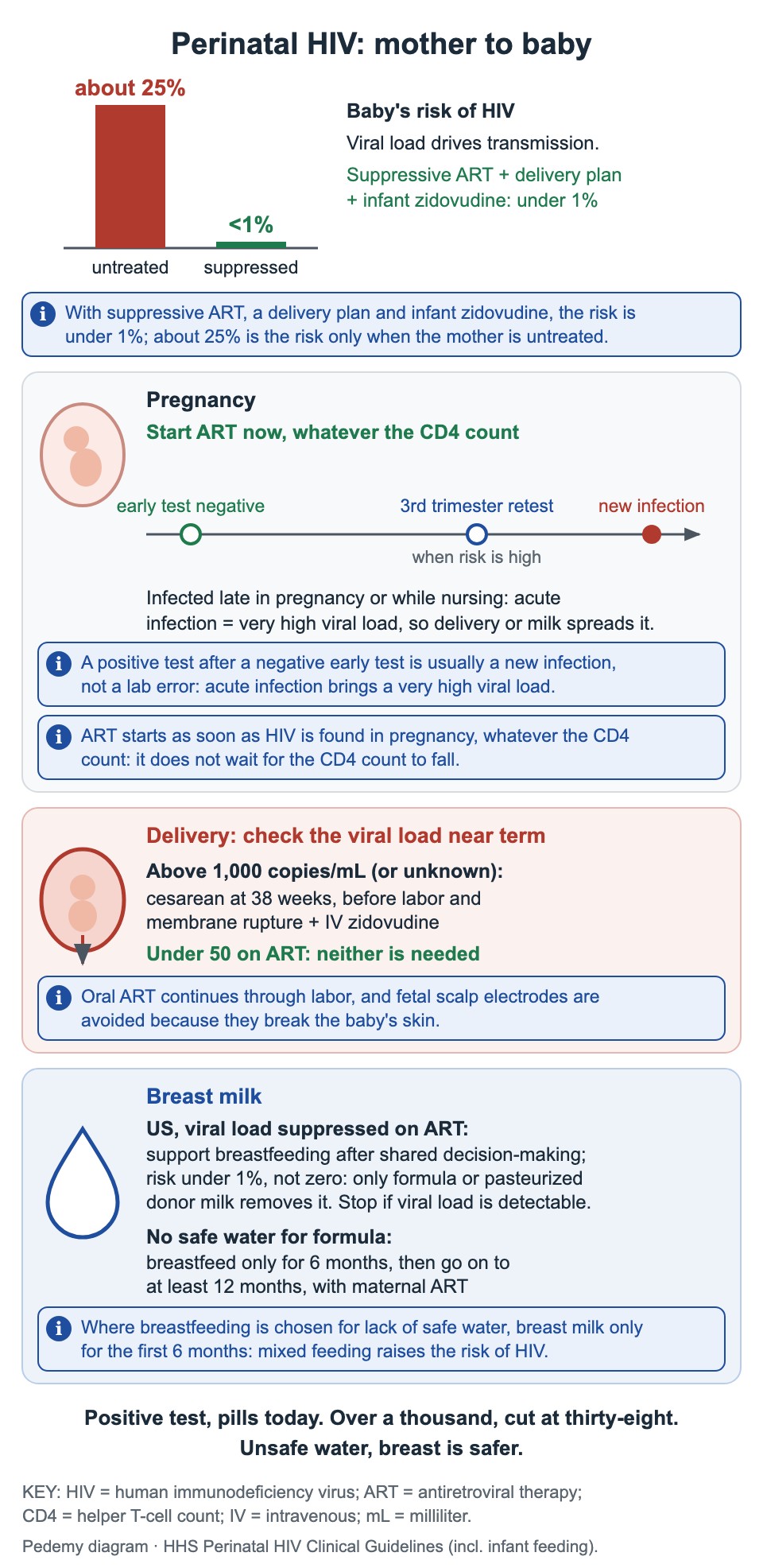
Perinatal HIV: mother to baby -
Lymph Nodes and Mycobacteria
Well child, tender axillary node for weeks, failed cephalexin, new kitten → diagnosis? […]
Show answer
Well child, tender axillary node for weeks, failed cephalexin, new kitten → diagnosis? Cat-scratch disease (Bartonella henselae)
Why: Cat-scratch disease: Bartonella henselae from cats, kittens most, inflames the node that drains the scratch, often weeks later, and it ignores beta-lactams. Among slow single nodes it is the one with a kitten, while NTM is painless and violet in a toddler and TB follows an adult case. Incision and drainage can leave a draining sinus. Hook: New kitten, stubborn node.
Source: CDC: Clinical Overview of Cat Scratch Disease (2026). Rewritten for Pedemy in our own words, November 2026.
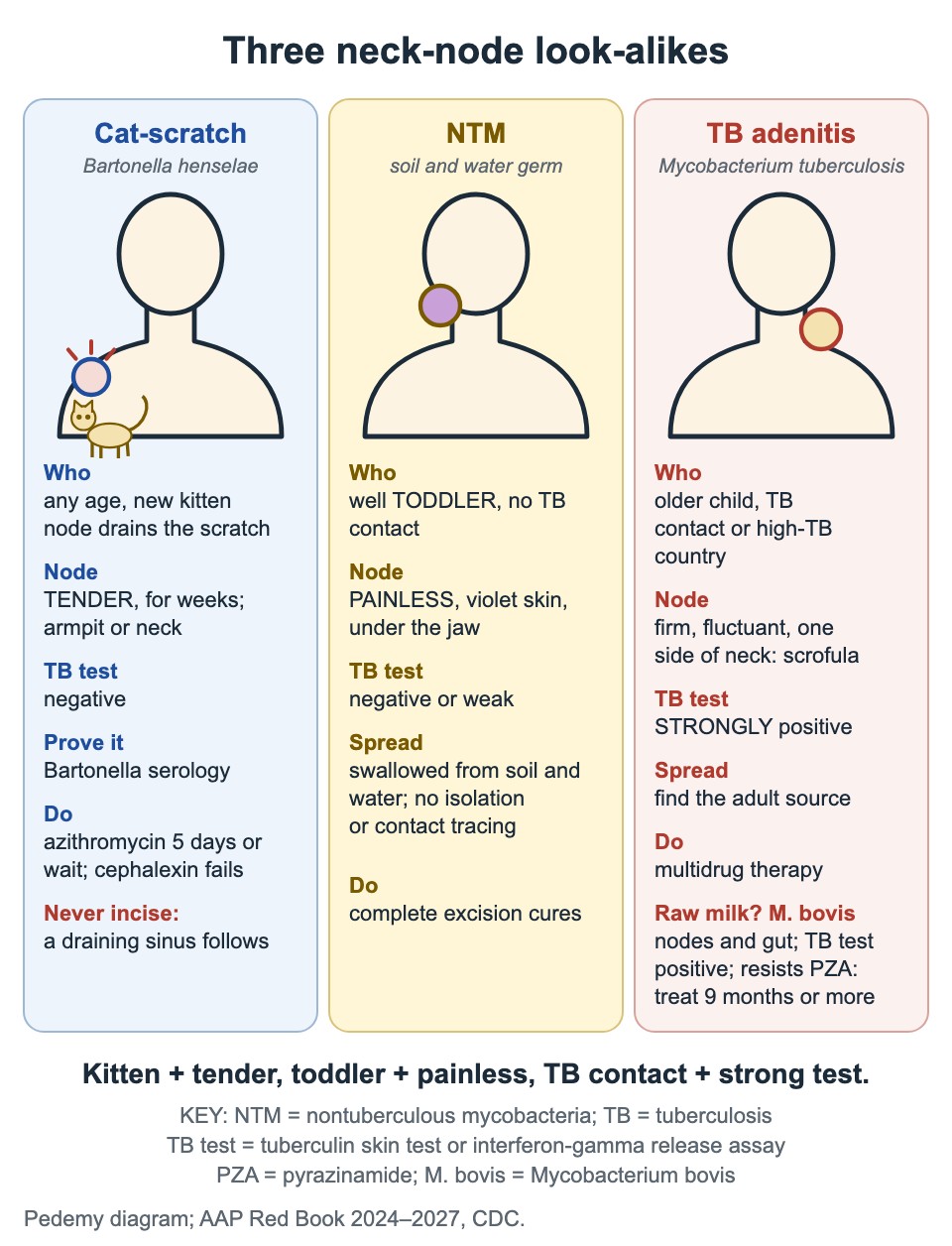
Three neck-node look-alikes
Topics in Infectious Disease
- Antimicrobial Safety19
- Bone and Joint9
- CNS and Invasive Infection48
- Endemic Fungal Infections4
- Exposure and Prophylaxis21
- Gastrointestinal Infections69
- HIV and Immunocompromise24
- Lymph Nodes and Mycobacteria31
- Neonatal and Congenital80
- Parasites and Travel20
- Rash and Mucocutaneous77
- Respiratory53
- Skin Soft Tissue and Toxins32
- Urinary Tract Infection20
- Zoonoses and Vector Borne40
Infectious Disease study guides
- Antimicrobial safety in children
- Bone and joint infections in children
- CNS and invasive bacterial infection
- Endemic fungal infections
- Exposure and post-exposure prophylaxis
- Gastrointestinal infections in children
- HIV, Pneumocystis, asplenia and other immune defects in children
- Neonatal and congenital infections
- Parasites and travel infections in children
- Rash and mucocutaneous infections
- Respiratory infections in children
- Skin and soft tissue infections and toxin syndromes
- Tuberculosis, nontuberculous mycobacteria and cat-scratch disease
- Urinary tract infection in children
- Zoonoses and vector-borne infections
Clinical tools for Infectious Disease
- Anti-infective Dose Lookup
- Antibiotics
- Central Line Infection (CLABSI)
- Childhood rash comparison guide
- Diarrhea: Test & Treat
- Exposure & Post-exposure Prophylaxis
- Fever with a Rash
- Flu, COVID-19 & RSV
- Hand-foot-mouth home-care tracker
- Isolation Precautions
Sample cards in other subjects
- Growth & Development
- Immunizations & Post-exposure Prevention
- Nutrition
- Well-Child Care & Prevention
- Emergency Medicine
- ENT
- Mental Health
- Ophthalmology
- Adolescent Medicine
- Cardiology
- Gastroenterology
- Pulmonology
- Dermatology
- Musculoskeletal & Sports Medicine
- Neonatology
- Neurology
- Allergy & Immunology
- Behavioral
- Endocrinology
- Hematology
- Nephrology
- Oncology
- Urology
- Biostatistics & Epidemiology
- Genetics
- Medical Ethics
- Metabolic Disorders
- Patient Safety & Quality Improvement
- Rheumatology
- Pharmacology
Free to study without an account. Sign up free to save your spaced-repetition schedule across devices. For education only; check current guidelines before clinical use.