

Pharmacology flashcards
44 cards · 2 topics · Tested within the other subjects
44 free Pharmacology flashcards for pediatric board review and rotations, written in our own words with public guideline sources. Topics: Drug Interactions, Pharmacokinetics. Pharmacology is tested within the other subjects.
Sample Pharmacology cards
-
Drug Interactions
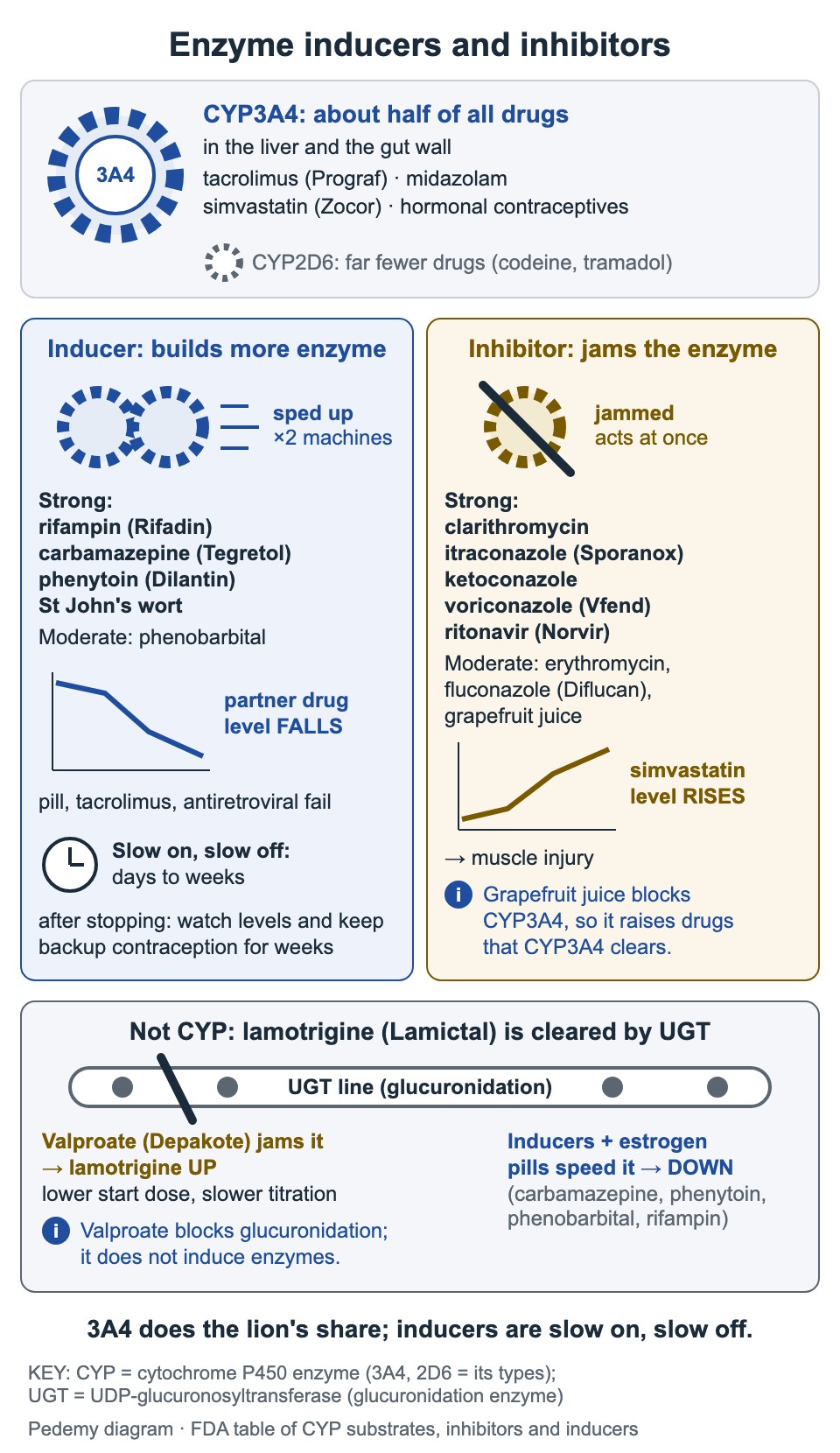
Rifampin, carbamazepine, phenytoin or St John's wort is added → level of a CYP3A4 drug? […]
Show answer
Rifampin, carbamazepine, phenytoin or St John's wort is added → level of a CYP3A4 drug? falls (induction)
Why: Inducers make more enzyme, so partner drugs are cleared faster and can fail: hormonal contraception, tacrolimus (Prograf), antiretrovirals. FDA strong CYP3A inducers are rifampin (Rifadin), carbamazepine (Tegretol), phenytoin (Dilantin) and St John's wort; phenobarbital is moderate. Valproate (Depakote) is not an inducer; it blocks glucuronidation instead. Hook: the inducer crew makes partner drugs vanish.
Source: FDA: Healthcare professionals - FDA's examples of drugs that interact with CYP enzymes and transporter systems (page current 2026); rifampin FDA label (2026). Rewritten for Pedemy in our own words, November 2026.
Enzyme inducers and inhibitors -
Pharmacokinetics
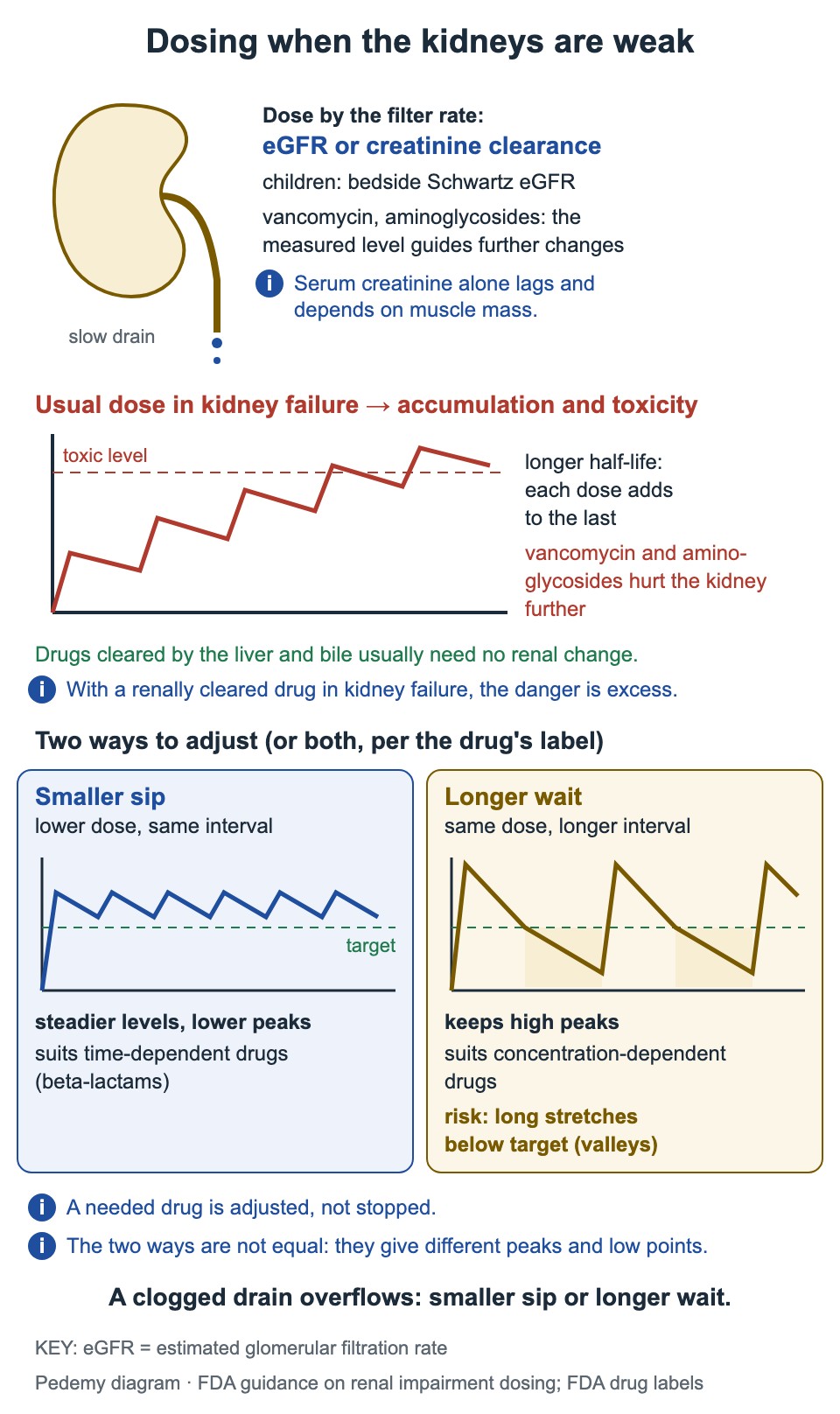
Renal adjustment by a longer interval (same dose) → main risk versus a smaller dose? […]
Show answer
Renal adjustment by a longer interval (same dose) → main risk versus a smaller dose? long stretches below target level
Why: A longer interval keeps high peaks (good for concentration-dependent drugs) but lets levels sit low for hours; a smaller dose at the usual interval keeps levels steadier (good for time-dependent drugs such as beta-lactams) but lowers peaks. The two methods are not equal. Hook: wide gaps leave valleys.
Source: StatPearls: Aminoglycosides and Beta-Lactam Antibiotics (NCBI Bookshelf, 2024). Rewritten for Pedemy in our own words, November 2026.
Dosing when the kidneys are weak -
Drug Interactions
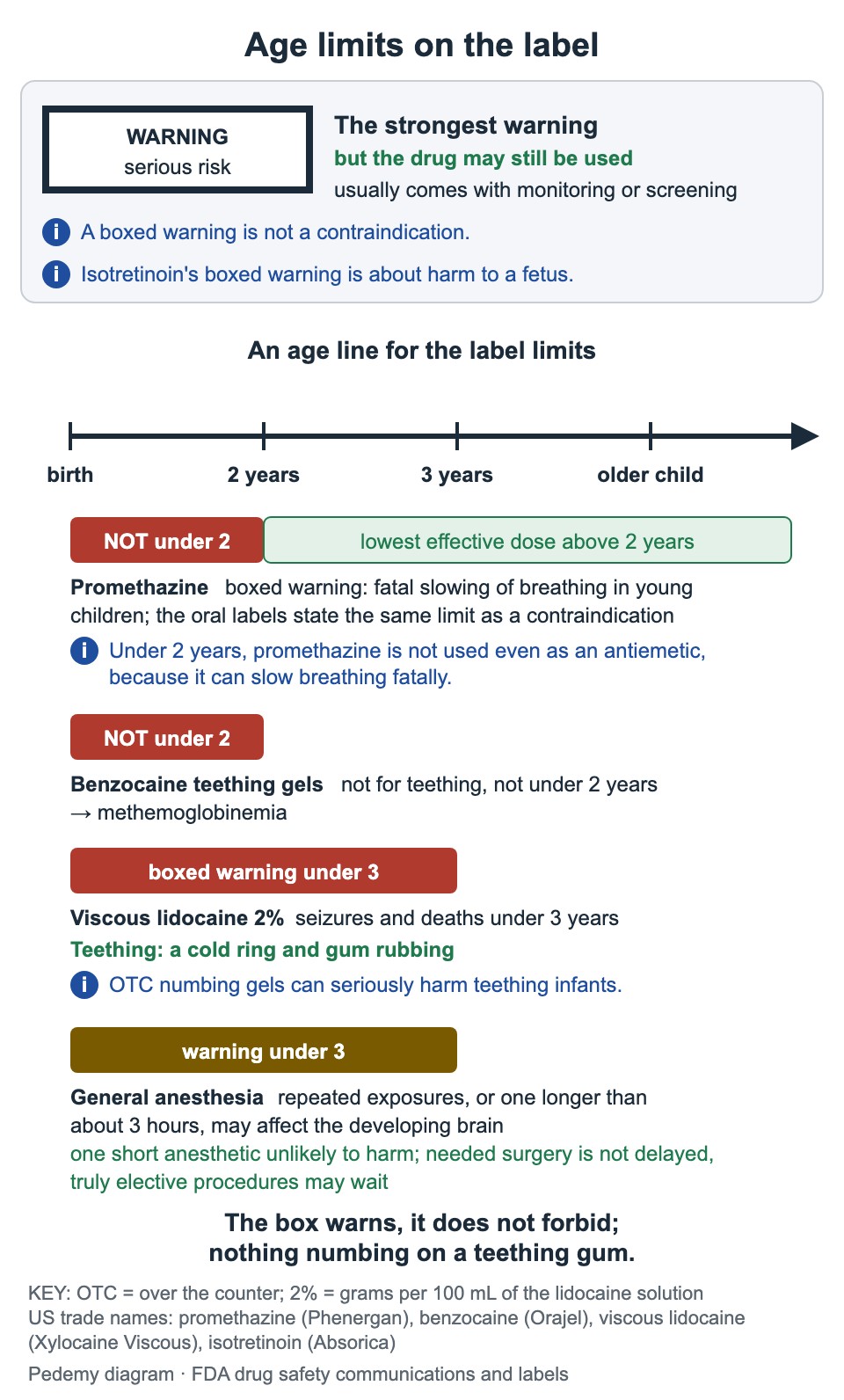
What does an FDA boxed warning on a label mean for prescribing? […]
Show answer
What does an FDA boxed warning on a label mean for prescribing? the strongest warning, but the drug may still be used
Why: A boxed warning flags a serious or life-threatening risk and usually comes with monitoring or screening steps; it is not a ban, and some boxed drugs remain first choice. It is not a contraindication. Isotretinoin's (Absorica) box is harm to a fetus, not depression. Hook: the box warns, it does not forbid.
Source: FDA labelling regulation 21 CFR 201.57(c)(1); isotretinoin FDA label (rev. 11/2026). Rewritten for Pedemy in our own words, November 2026.
Age limits on the label -
Pharmacokinetics
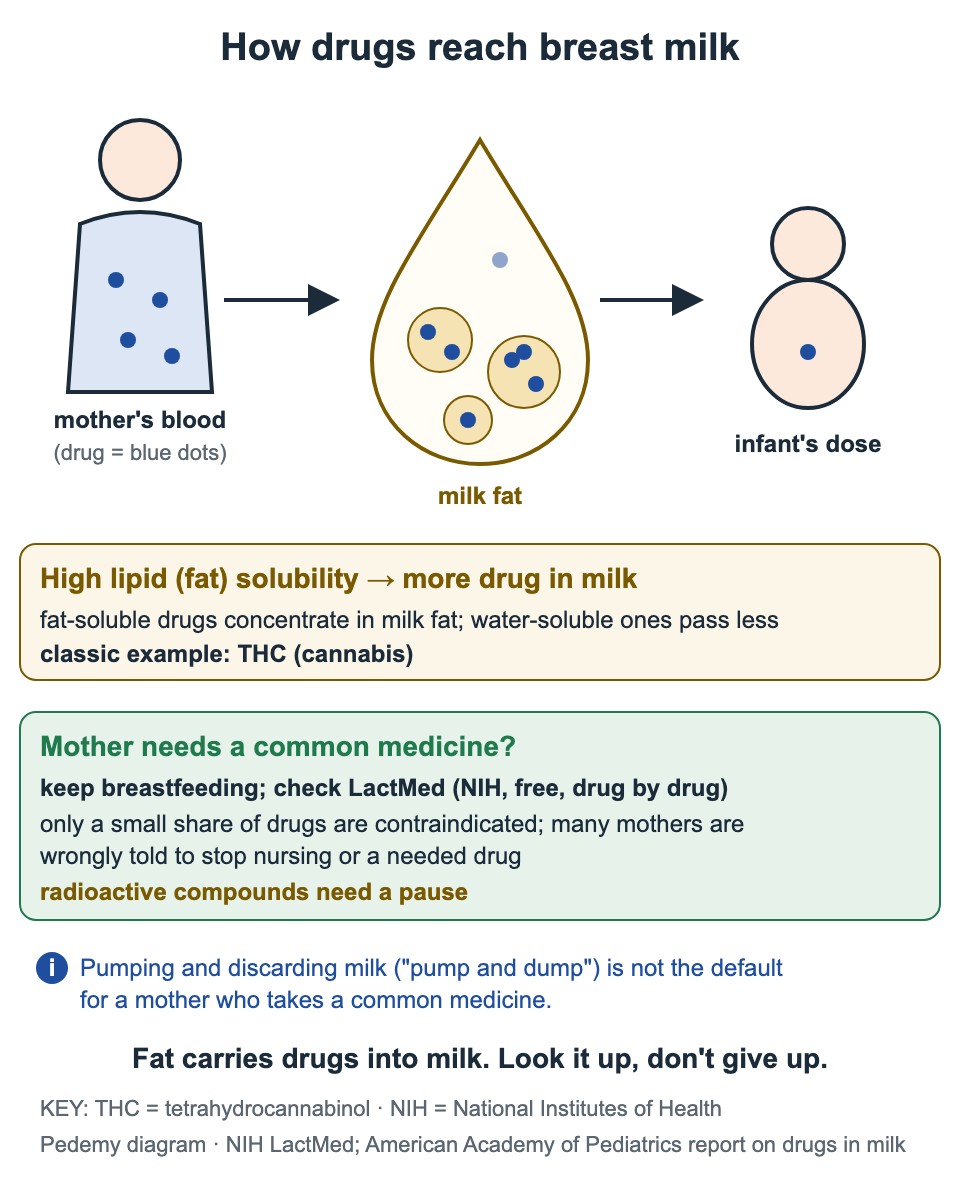
Breastfeeding mother needs a common medicine → usual advice and best free reference? […]
Show answer
Breastfeeding mother needs a common medicine → usual advice and best free reference? keep breastfeeding; check LactMed
Why: Only a small share of drugs are contraindicated in breastfeeding, and many mothers are wrongly told to stop nursing or a needed drug; NIH LactMed gives drug-by-drug data. Radioactive compounds need a pause. "Pump and dump" is not the default. Hook: look it up, don't give up.
Source: AAP clinical report: The Transfer of Drugs and Therapeutics Into Human Breast Milk: An Update on Selected Topics (Sachs et al., Pediatrics 2013); NIH LactMed database. Rewritten for Pedemy in our own words, November 2026.
How drugs reach breast milk -
Drug Interactions
St John's wort lowers drug levels through CYP3A4 and which gut-wall efflux pump? […]
Show answer
St John's wort lowers drug levels through CYP3A4 and which gut-wall efflux pump? P-glycoprotein
Why: P-glycoprotein pushes drug out of gut cells back into the lumen and into bile and urine, so inducing it cuts absorption; rifampin (Rifadin) induces it too. St John's wort acts on this pump as well as on enzymes, and it induces rather than inhibits. Hook: P-gp is the gut's bouncer.
Source: NCCIH (NIH): St. John's Wort and herb-drug interactions for health care providers (reviewed 2026); rifampin FDA label (2026). Rewritten for Pedemy in our own words, November 2026.
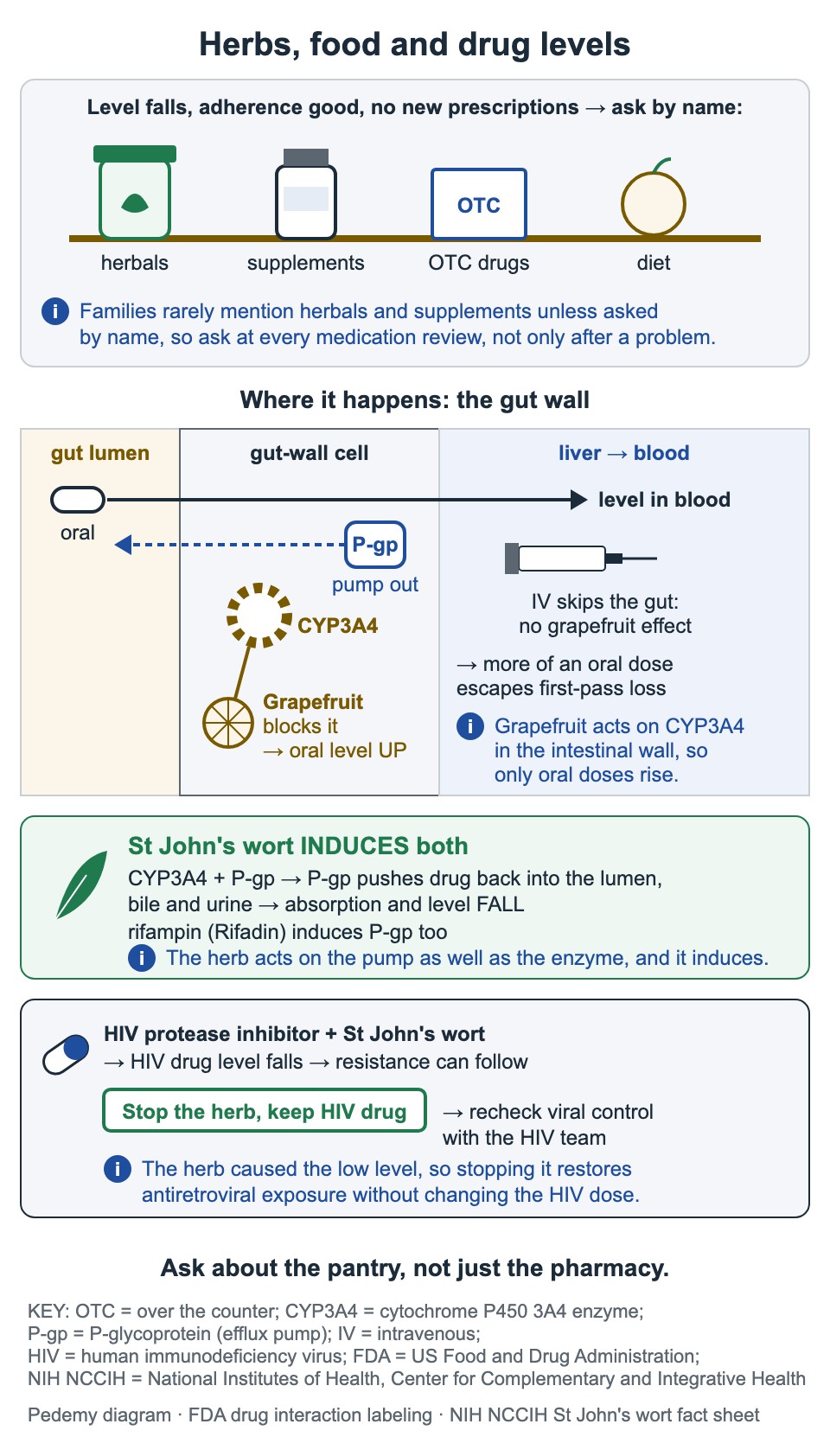
Herbs, food and drug levels -
Pharmacokinetics
Which folate antagonist carries a boxed warning for embryo-fetal death and birth defects? […]
Show answer
Which folate antagonist carries a boxed warning for embryo-fetal death and birth defects? methotrexate
Why: Methotrexate (Trexall) blocks folate-dependent cell division, so it is contraindicated in pregnancy for non-cancer uses (arthritis, psoriasis); exclude pregnancy and use contraception. Folic acid is protective, not harmful. Hook: antifolate, anti-fetus.
Source: Methotrexate injection FDA label, boxed warning (DailyMed, 2026). Rewritten for Pedemy in our own words, November 2026.
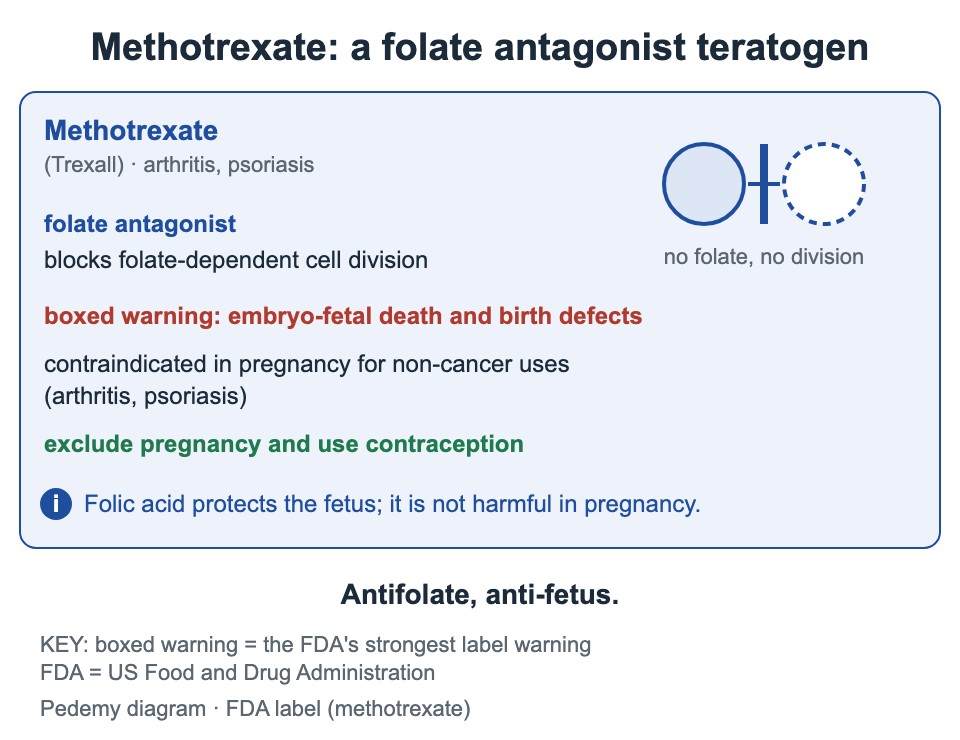
Teratogens that look alike -
Drug Interactions
On warfarin plus ibuprofen the INR is unchanged → why is bleeding risk up? […]
Show answer
On warfarin plus ibuprofen the INR is unchanged → why is bleeding risk up? NSAIDs block platelets
Why: NSAIDs stop platelets aggregating and irritate the stomach lining, so bleeding rises while the INR, which measures clotting factors only, stays flat. A normal INR does not mean low bleeding risk. Acetaminophen (Tylenol) is the usual alternative. Hook: normal INR, platelets off duty.
Source: Warfarin sodium tablets, FDA label (DailyMed setid 0cbce382-9c88-4f58-ae0f-532a841e8f95, current 2026), Table 3 (NSAIDs raise bleeding risk); platelet mechanism: general pharmacology. Rewritten for Pedemy in our own words, November 2026.
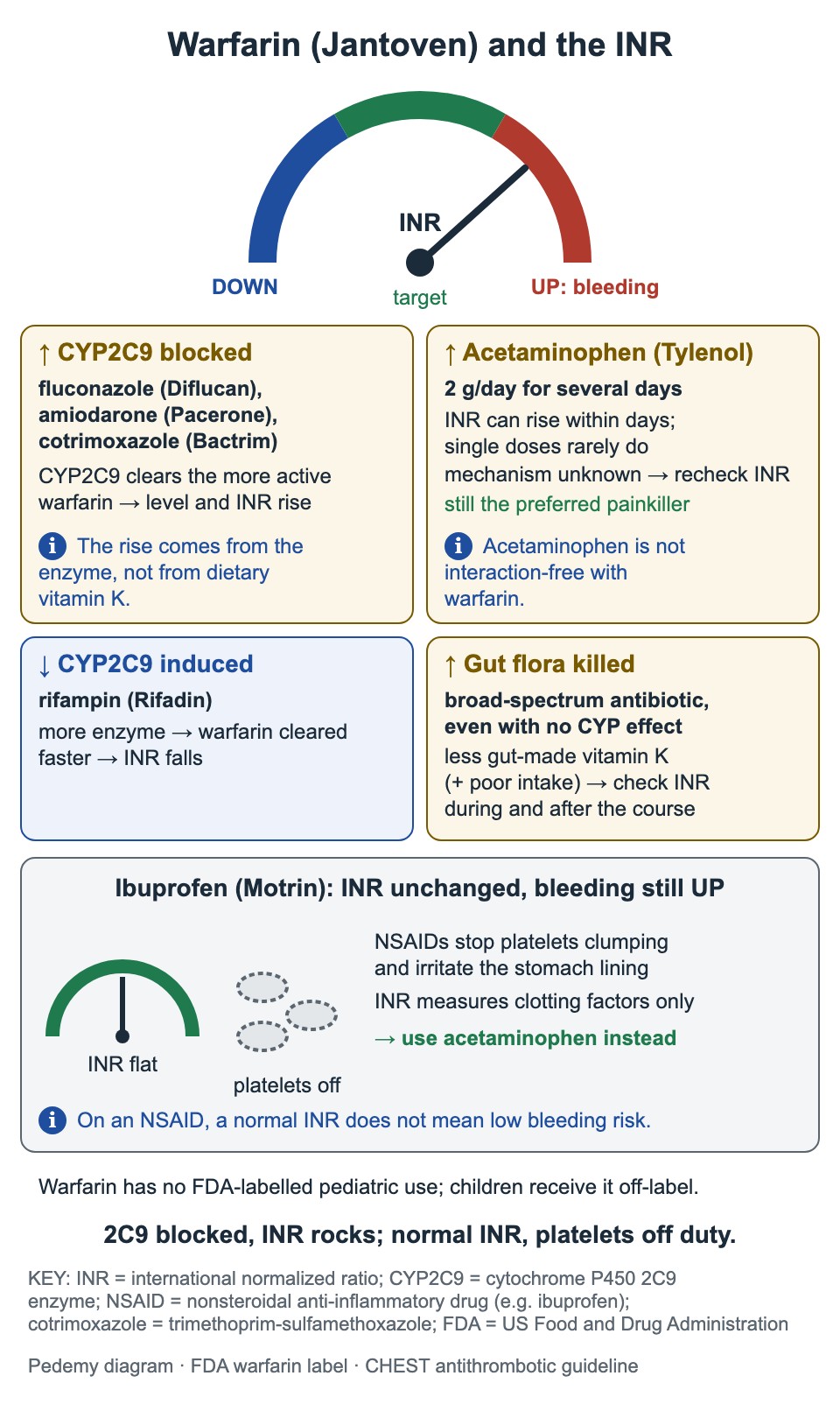
Warfarin and the INR -
Pharmacokinetics
Half-life 6 h, regular dosing, no loading dose → about how long until steady state? […]
Show answer
Half-life 6 h, regular dosing, no loading dose → about how long until steady state? about 24–30 hours
Why: Time to steady state = 4–5 half-lives, whatever the dose: 4 × 6 h = 24 h, 5 × 6 h = 30 h. So a level drawn on the first morning is too early. One dosing interval (6 h) is far too short. Hook: multiply the half-life by five.
Source: Merck Manual Professional: Overview of Pharmacokinetics (reviewed 2026). Rewritten for Pedemy in our own words, November 2026.
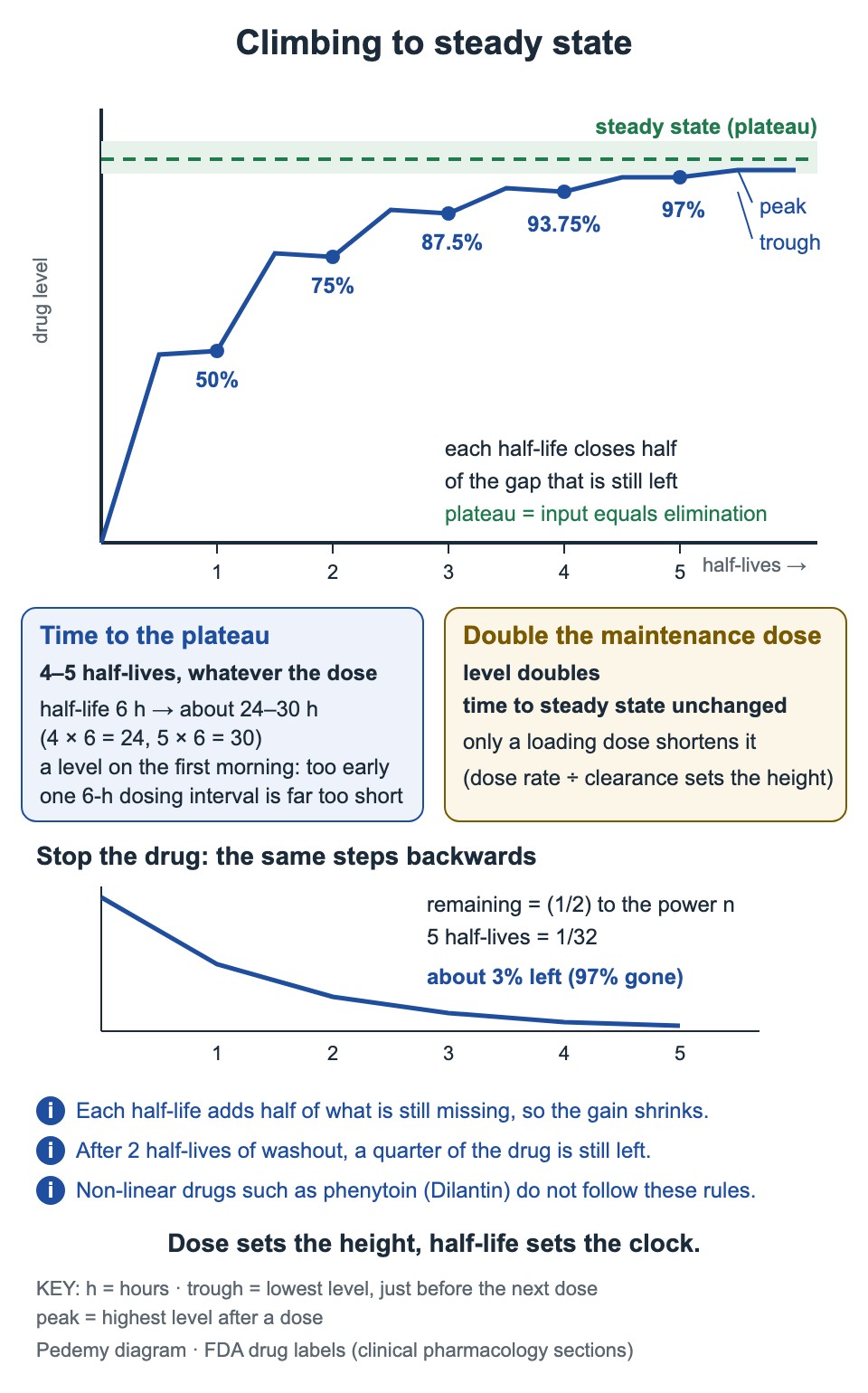
Climbing to steady state
Topics in Pharmacology
Pharmacology study guides
Clinical tools for Pharmacology
Sample cards in other subjects
- Growth & Development
- Immunizations & Post-exposure Prevention
- Nutrition
- Well-Child Care & Prevention
- Emergency Medicine
- Infectious Disease
- ENT
- Mental Health
- Ophthalmology
- Adolescent Medicine
- Cardiology
- Gastroenterology
- Pulmonology
- Dermatology
- Musculoskeletal & Sports Medicine
- Neonatology
- Neurology
- Allergy & Immunology
- Behavioral
- Endocrinology
- Hematology
- Nephrology
- Oncology
- Urology
- Biostatistics & Epidemiology
- Genetics
- Medical Ethics
- Metabolic Disorders
- Patient Safety & Quality Improvement
- Rheumatology
Free to study without an account. Sign up free to save your spaced-repetition schedule across devices. For education only; check current guidelines before clinical use.