

Immunizations & Post-exposure Prevention flashcards
305 cards · 15 topics · 12% of the board exam, shared with Growth, Nutrition & Well-Child Care
305 free Immunizations & Post-exposure Prevention flashcards for pediatric board review and rotations, written in our own words with public guideline sources. Topics: DTaP,Tdap & Td, HPV, Hepatitis A, Hepatitis B and 11 more. Immunizations & Post-exposure Prevention is 12% of the board exam, shared with Growth, Nutrition & Well-Child Care.
Sample Immunizations & Post-exposure Prevention cards
-
DTaP,Tdap & Td
Tetanus immune globulin (TIG) is added for which wounds? […] · Also dirty wound with? […]
Show answer
Tetanus immune globulin (TIG) is added for which wounds? Dirty wound, unknown or under 3 doses · Also dirty wound with? HIV or severe immunodeficiency
Why: TIG gives immediate antitoxin to patients who cannot be relied on to have immune memory: dirty or major wounds with fewer than 3 doses or an unknown history. Patients with HIV or severe immunodeficiency get TIG for dirty wounds whatever their vaccine history. Give vaccine at the same visit, at a different site. Clean minor wounds never need TIG, only vaccine if due. Hook: TIG for dirty wounds with doubtful immunity.
Source: Reviewed 10 October 2026. CDC: tetanus wound managementStudy aid: check current guidelines, drug labels, dose limits and patient factors before clinical use.
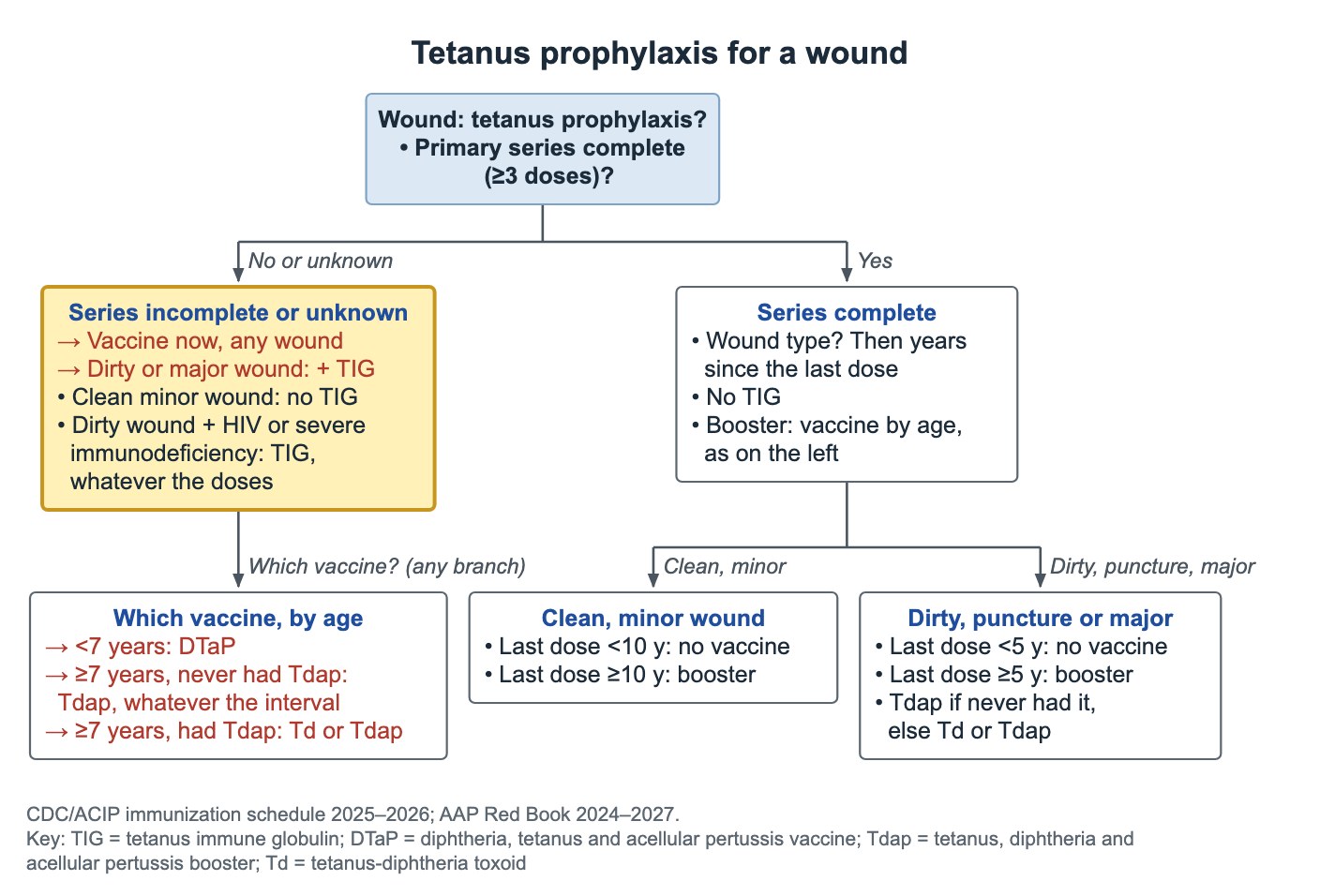
Tetanus prophylaxis for a wound — algorithm -
HPV
12-year-old got HPV dose 2 only 3 months after dose 1 → next step? […] · Minimum gap in the 2-dose series? […]
Show answer
12-year-old got HPV dose 2 only 3 months after dose 1 → next step? Repeat a dose · Minimum gap in the 2-dose series? 5 months
Why: In the 2-dose series (started before age 15) the doses must be at least 5 months apart. A dose given too early is repeated at least 12 weeks after the invalid dose and at least 5 months after dose 1.
Source: CDC/ACIP 2025 child and adolescent schedule, HPV notes. Written for Pedemy in our own words, November 2026.
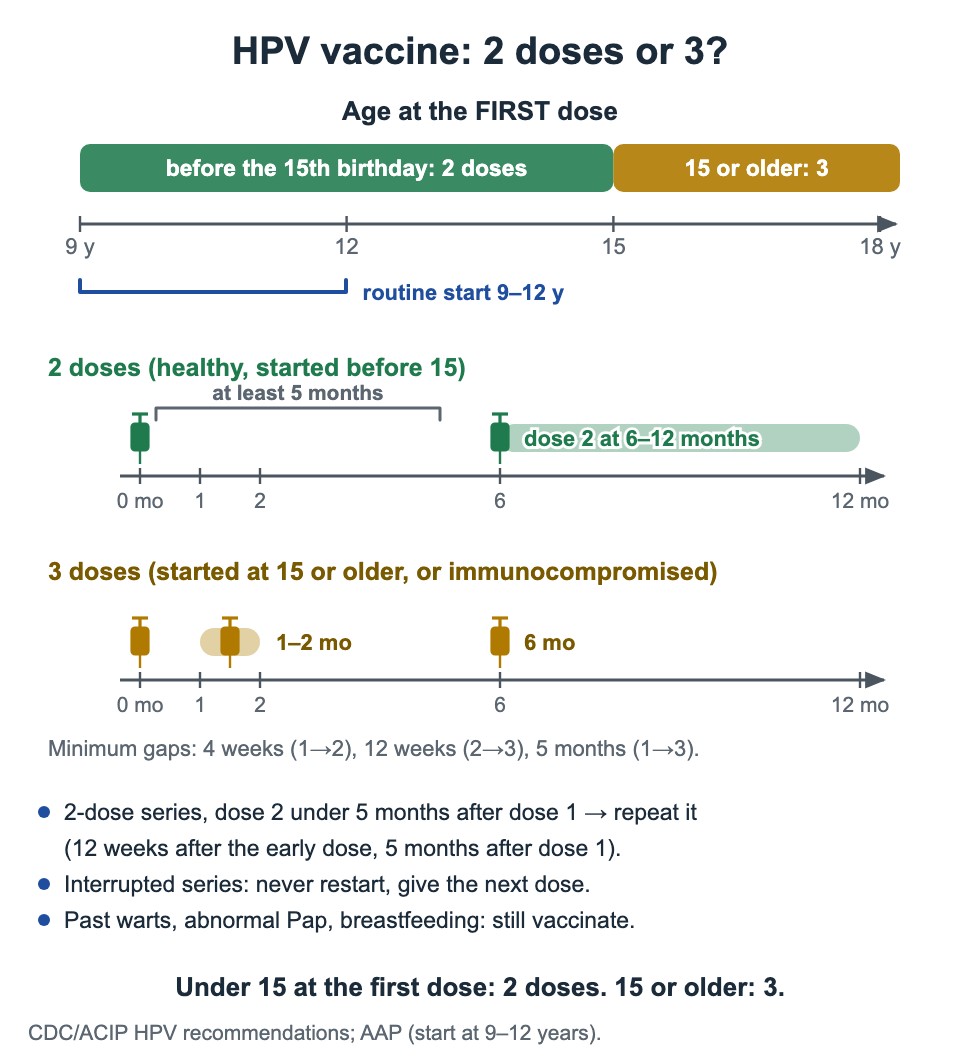
HPV vaccine: 2 doses or 3? — diagram -
Hepatitis A
Healthy unvaccinated 2-year-old, hepatitis A exposure within 14 days → prophylaxis? […]
Show answer
Healthy unvaccinated 2-year-old, hepatitis A exposure within 14 days → prophylaxis? Single-antigen HepA vaccine now
Why: In healthy people aged 12 months and older, vaccine alone protects as well as immune globulin and gives lasting immunity; immune globulin is for infants under 12 months and is added for immunocompromised people or chronic liver disease. Prophylaxis goes to household contacts, sexual or needle-sharing partners, and child-care staff and attendees in close contact; ordinary school or work contacts do not need it. Nothing is given after 14 days. Hook: healthy and 12 months or older, vaccine alone.
Source: CDC: Prevention of Hepatitis A Virus Infection in the United States, ACIP 2020 (MMWR Recomm Rep 2020;69(5)); CDC: hepatitis A clinical care and prophylaxis. Rewritten for Pedemy in our own words, November 2026.
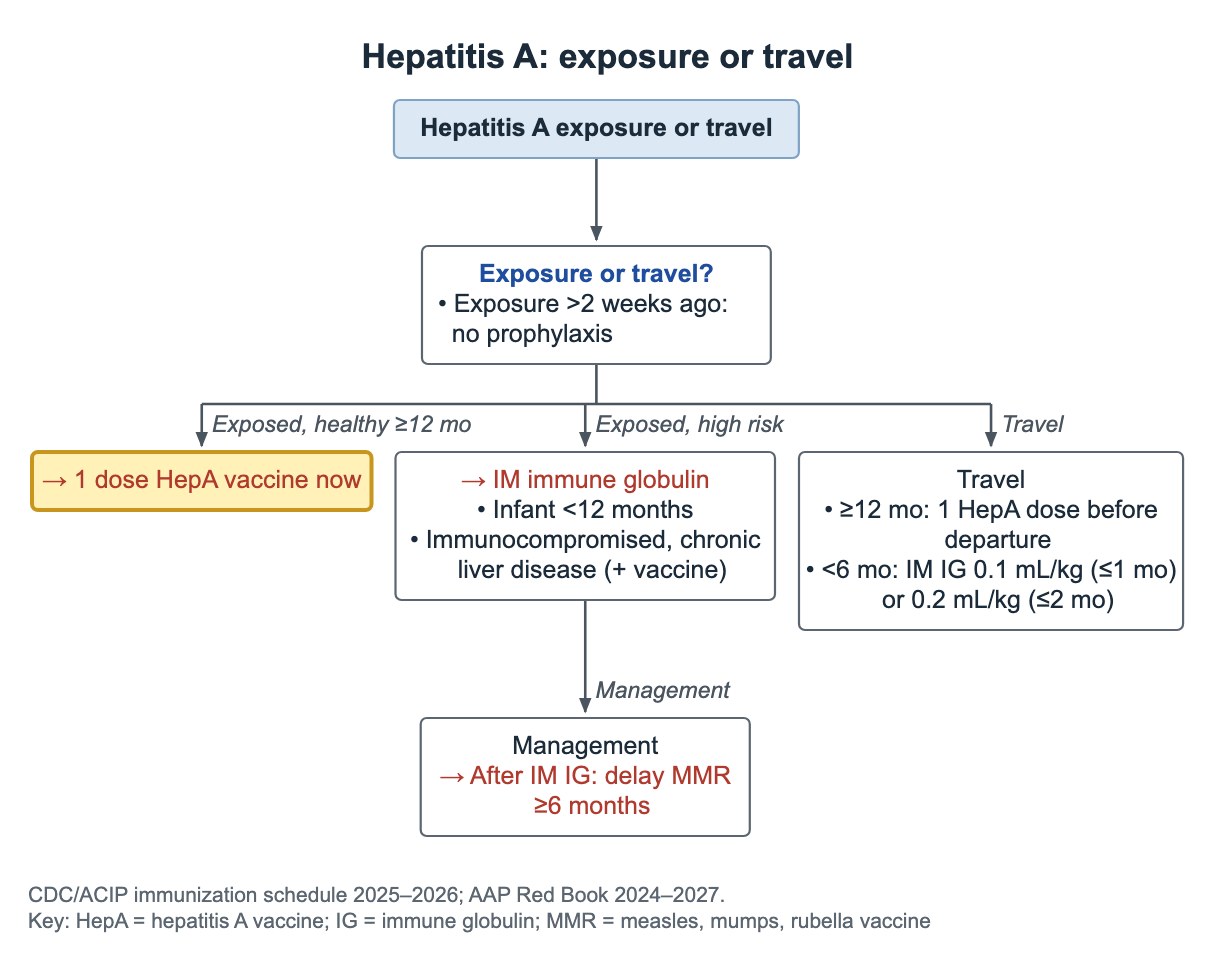
Hepatitis A: exposure or travel — algorithm -
Hepatitis B
HepB dose 2 → age? […] · Minimum interval after dose 1? […]
Show answer
HepB dose 2 → age? 1–2 months · Minimum interval after dose 1? 4 weeks
Why: The routine series is birth, 1 to 2 months and 6 to 18 months. Dose 2 must be at least 4 weeks after dose 1. Dose 3 has three limits: 8 weeks after dose 2, 16 weeks after dose 1, and not before 24 weeks of age.CDC 2026 differs: CDC 2026 differs: for infants of hepatitis B surface antigen–negative mothers the birth dose is an individual decision; if it is skipped, the series starts no earlier than 2 months (Dec 2025 CDC change; on hold by court order since March 2026). Four total doses are acceptable when combination vaccines follow the birth dose. Continue a delayed series without restarting;
Source: AAP 2026 immunization schedule; CDC 2026 child and adolescent schedule (Jan 2026; on hold by court order since March 2026)
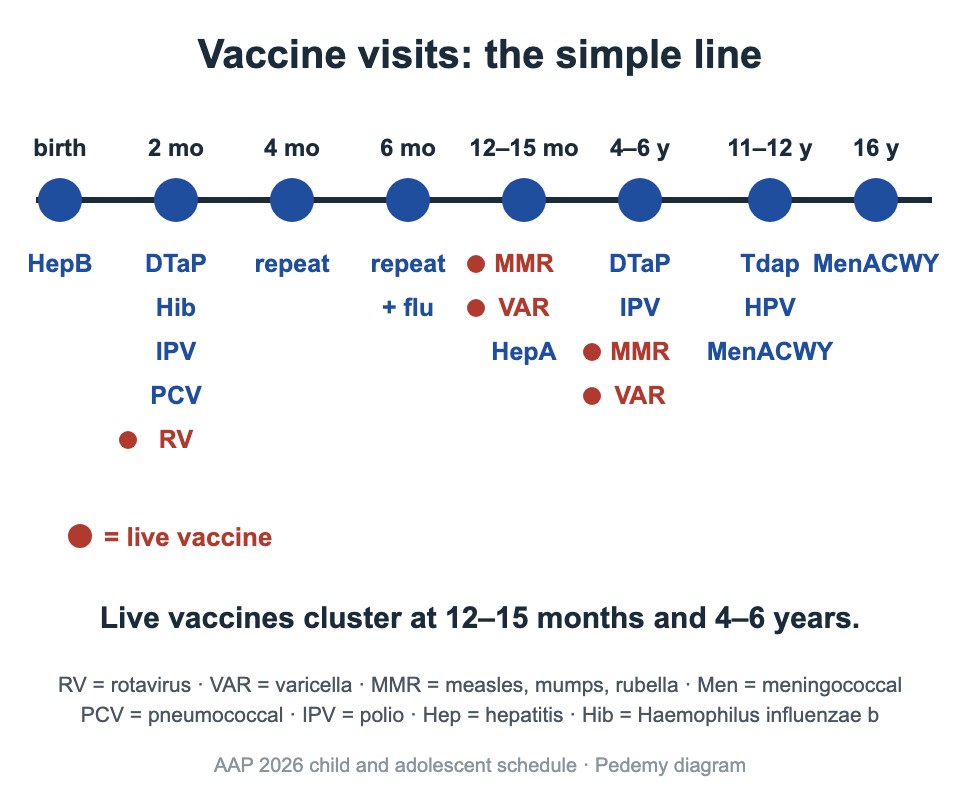
Vaccine visits: the simple line — diagram -
Hib
Healthy unvaccinated child, first Hib dose at 12–14 months → doses? […] · First dose at 15–59 months? […]
Show answer
Healthy unvaccinated child, first Hib dose at 12–14 months → doses? 2 doses, 8 weeks apart · First dose at 15–59 months? 1 dose only
Why: The number of Hib doses falls as the starting age rises: 7 to 11 months needs 2 doses plus a booster at 12 to 15 months; from 15 months one dose is enough; from 5 years none in healthy children.
Source: CDC/ACIP 2025 child and adolescent schedule, catch-up table and Hib notes. Written for Pedemy in our own words, November 2026.
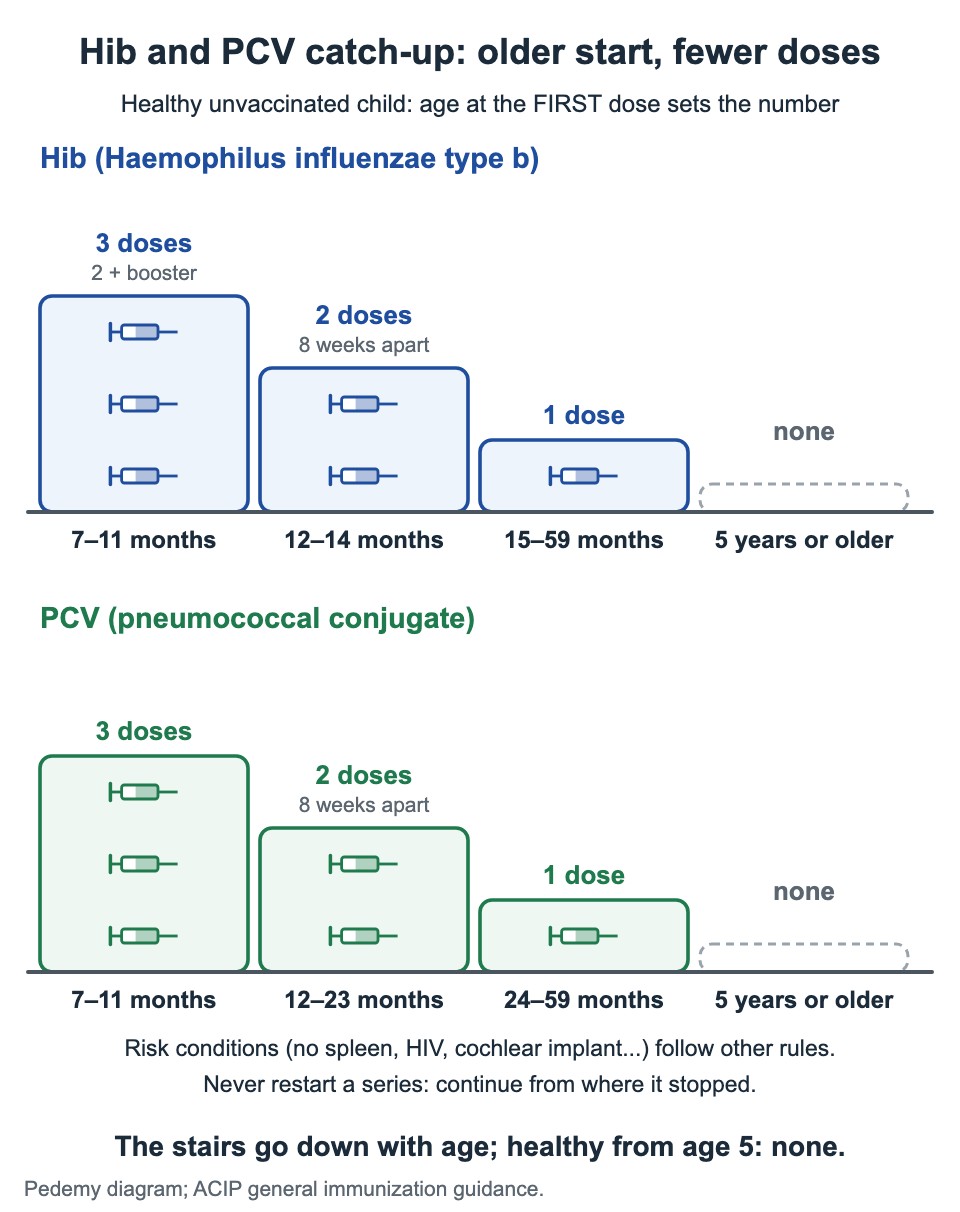
Hib and PCV catch-up: older start, fewer doses — diagram -
MMR
MMR given at 9 months for travel or outbreak → counts toward the 2-dose series? […]
Show answer
MMR given at 9 months for travel or outbreak → counts toward the 2-dose series? No, 2 doses after 12 months
Why: Maternal antibody before the first birthday can block the response, so any dose before 12 months is extra. The child still needs 2 valid doses: at 12 to 15 months and 4 to 6 years, at least 28 days apart. A dose given up to 4 days before the first birthday is accepted (grace period).
Source: Reviewed 10 October 2026. CDC: measles vaccine recommendationsStudy aid: check current guidelines, drug labels, dose limits and patient factors before clinical use.
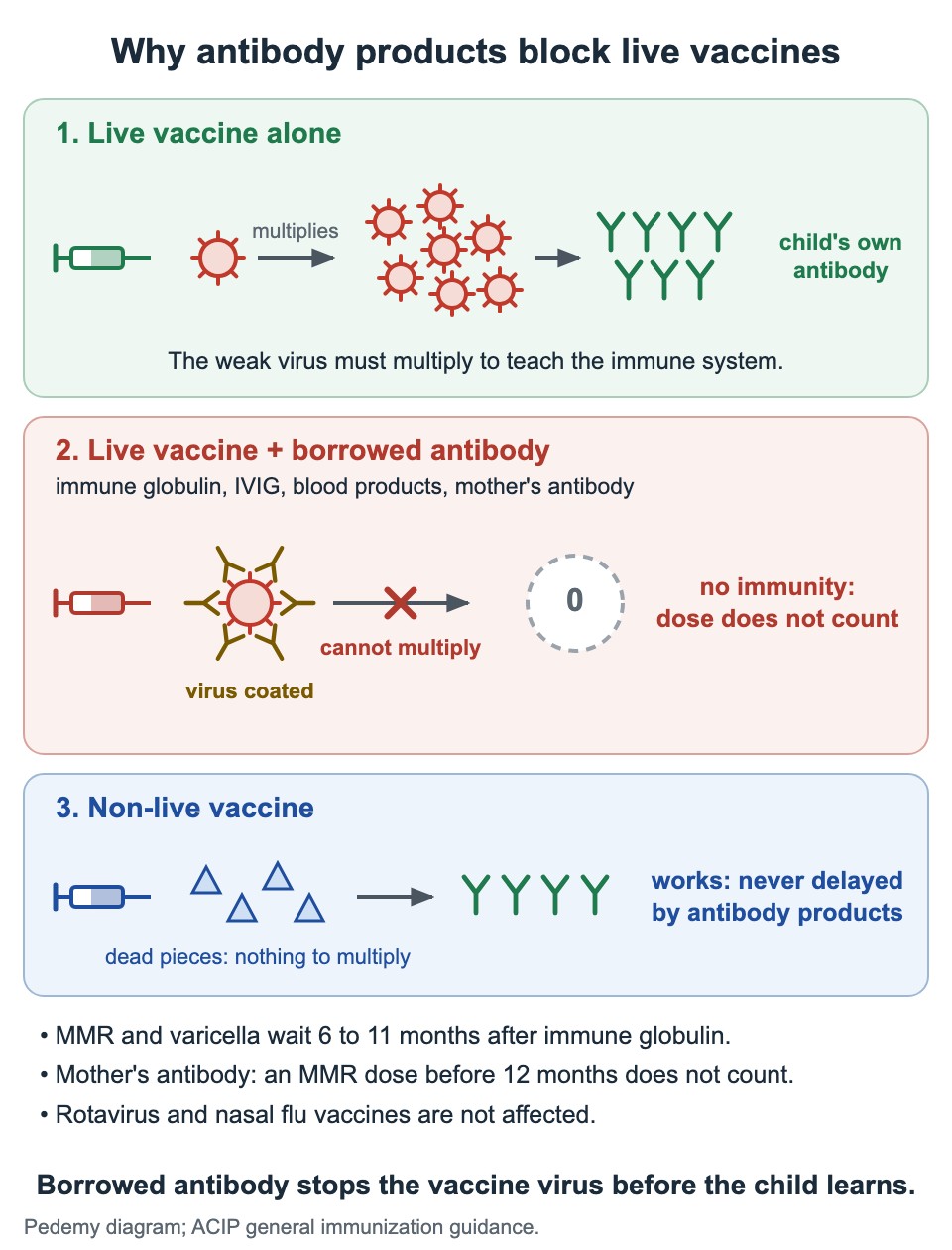
Why antibody products block live vaccines — diagram -
Meningococcal
First MenACWY at 13–15 years → booster at? […] · First dose at ≥16? […]
Show answer
First MenACWY at 13–15 years → booster at? 16–18 years · First dose at ≥16? No booster (unless high risk)
Why: Protection wanes within about 5 years, and the peak risk is 16 to 23 years, so anyone whose first dose was before 16 needs a booster at 16 to 18 years (minimum 8 weeks after the first). A first dose at 16 or later already covers the peak years.CDC 2026 differs: CDC 2026 differs: for healthy adolescents MenACWY, including the booster, is by shared clinical decision-making (Jan 2026 CDC schedule; on hold by court order since March 2026).
Source: AAP 2026 immunization schedule; CDC 2026 child and adolescent schedule (Jan 2026; on hold by court order since March 2026)
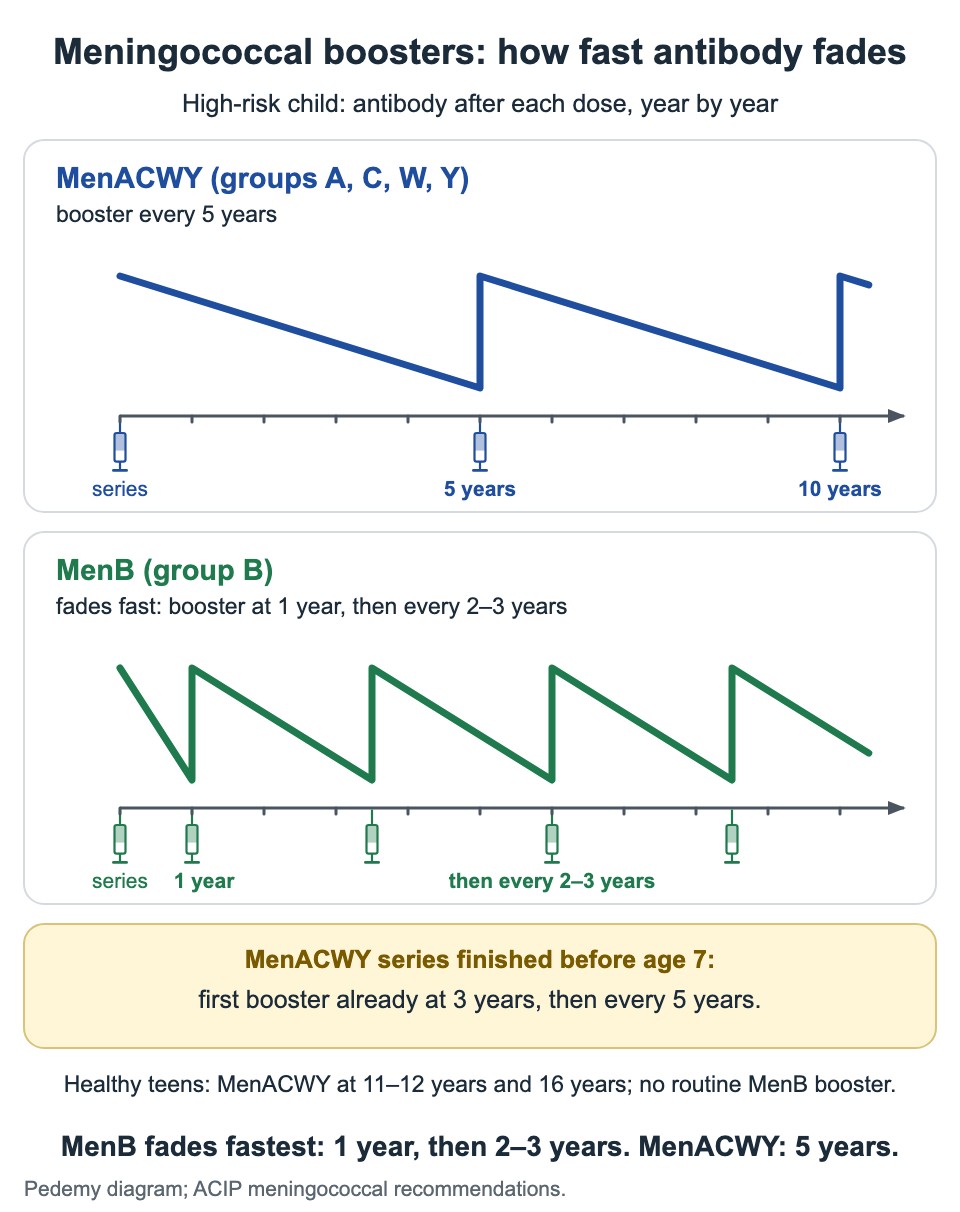
Meningococcal boosters: how fast antibody fades — diagram -
Pneumococcal (PCV & PPSV)
Healthy unvaccinated infant starts PCV at 7–11 months → total doses? […] · Starts at 12–23 months? […]
Show answer
Healthy unvaccinated infant starts PCV at 7–11 months → total doses? 3 · Starts at 12–23 months? 2 doses, 8 weeks apart
Why: The later the start, the fewer doses. Start at 7–11 months: 2 doses 4 weeks apart, then 1 at ≥12 months. Start at 12–23 months: 2 doses 8 weeks apart. Hook: older = fewer.
Source: CDC/ACIP 2025 child and adolescent schedule, catch-up table and pneumococcal notes. Written for Pedemy in our own words, November 2026.
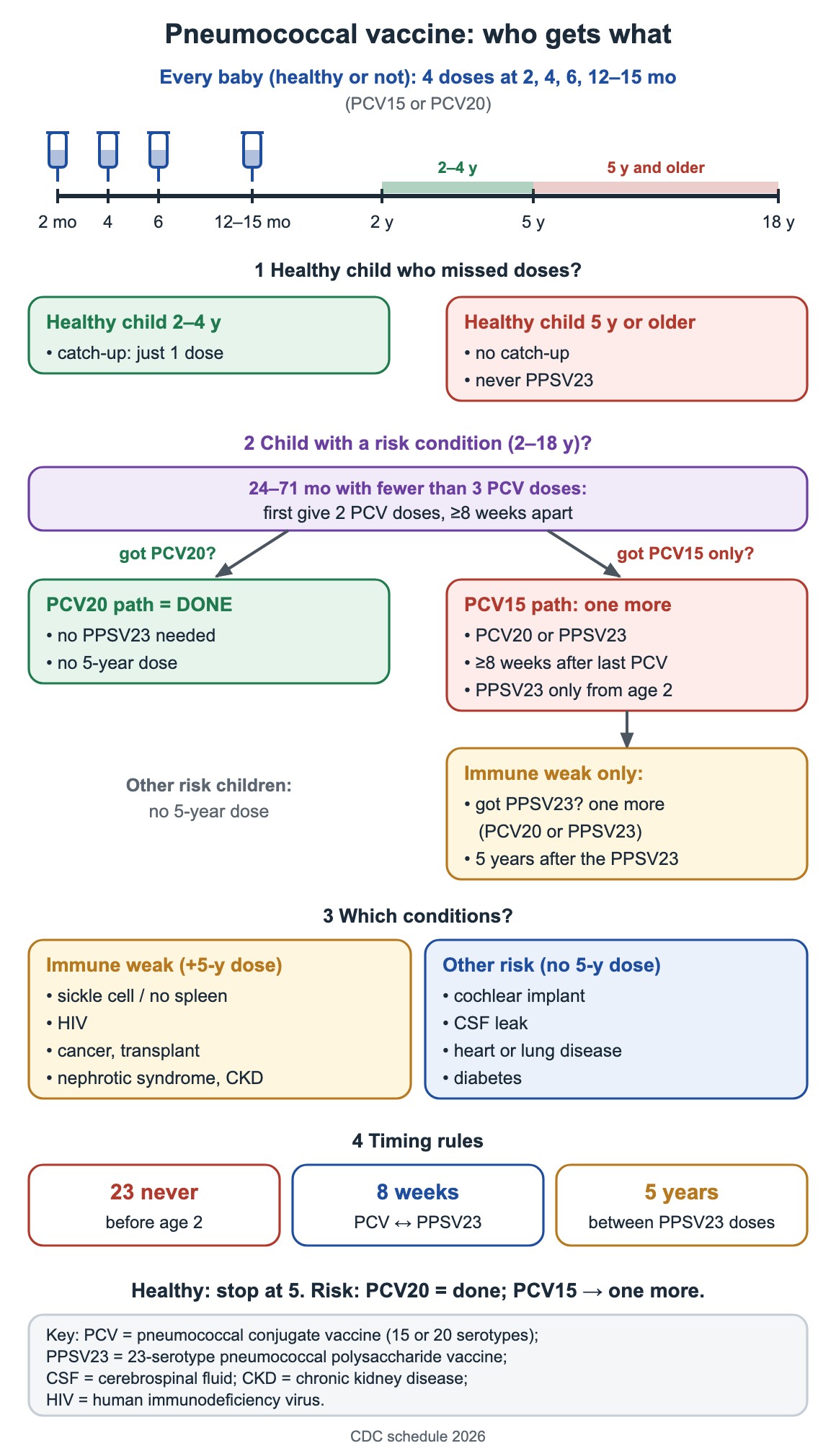
Pneumococcal vaccine — diagram
Topics in Immunizations & Post-exposure Prevention
- DTaP,Tdap & Td24
- HPV9
- Hepatitis A9
- Hepatitis B15
- Hib6
- Influenza7
- MMR28
- Meningococcal14
- Pneumococcal (PCV & PPSV)23
- Polio (IPV)9
- RSV Prevention10
- Rabies5
- Rotavirus12
- Schedule & General Principles38
- Varicella16
Immunizations & Post-exposure Prevention study guides
Clinical tools for Immunizations & Post-exposure Prevention
- Vaccine Catch-Up
- Vaccines with Weakened Immunity
- Exposure & Post-exposure Prophylaxis
- Flu, COVID-19 & RSV
- Tetanus & Rabies for Wounds and Bites
Sample cards in other subjects
- Growth & Development
- Nutrition
- Well-Child Care & Prevention
- Emergency Medicine
- Infectious Disease
- ENT
- Mental Health
- Ophthalmology
- Adolescent Medicine
- Cardiology
- Gastroenterology
- Pulmonology
- Dermatology
- Musculoskeletal & Sports Medicine
- Neonatology
- Neurology
- Allergy & Immunology
- Behavioral
- Endocrinology
- Hematology
- Nephrology
- Oncology
- Urology
- Biostatistics & Epidemiology
- Genetics
- Medical Ethics
- Metabolic Disorders
- Patient Safety & Quality Improvement
- Rheumatology
- Pharmacology
Free to study without an account. Sign up free to save your spaced-repetition schedule across devices. For education only; check current guidelines before clinical use.