

Emergency Medicine flashcards
391 cards · 15 topics · 7% of the board exam (4% emergency care, 3% child abuse)
391 free Emergency Medicine flashcards for pediatric board review and rotations, written in our own words with public guideline sources. Topics: Asthma Attack, BRUE, Bites & Wounds, Burns & Environment and 11 more. Emergency Medicine is 7% of the board exam (4% emergency care, 3% child abuse).
Sample Emergency Medicine cards
-
Asthma Attack
Asthma attack with low pulse oximetry → oxygen target in the ED? […]
Show answer
Asthma attack with low pulse oximetry → oxygen target in the ED? keep SpO2 at least 90%
Why: Low oxygen comes from mismatched ventilation and blood flow, and albuterol (ProAir, Ventolin) can briefly make it worse, so give oxygen first. NAEPP says to give oxygen to keep SpO2 at least 90%. A child who stays below 90% after treatment needs admission, and a normal SpO2 alone does not prove a mild attack. Hook: ninety or more, or oxygen on.
Source: NAEPP Expert Panel Report 3. Rewritten for Pedemy in our own words, November 2026.
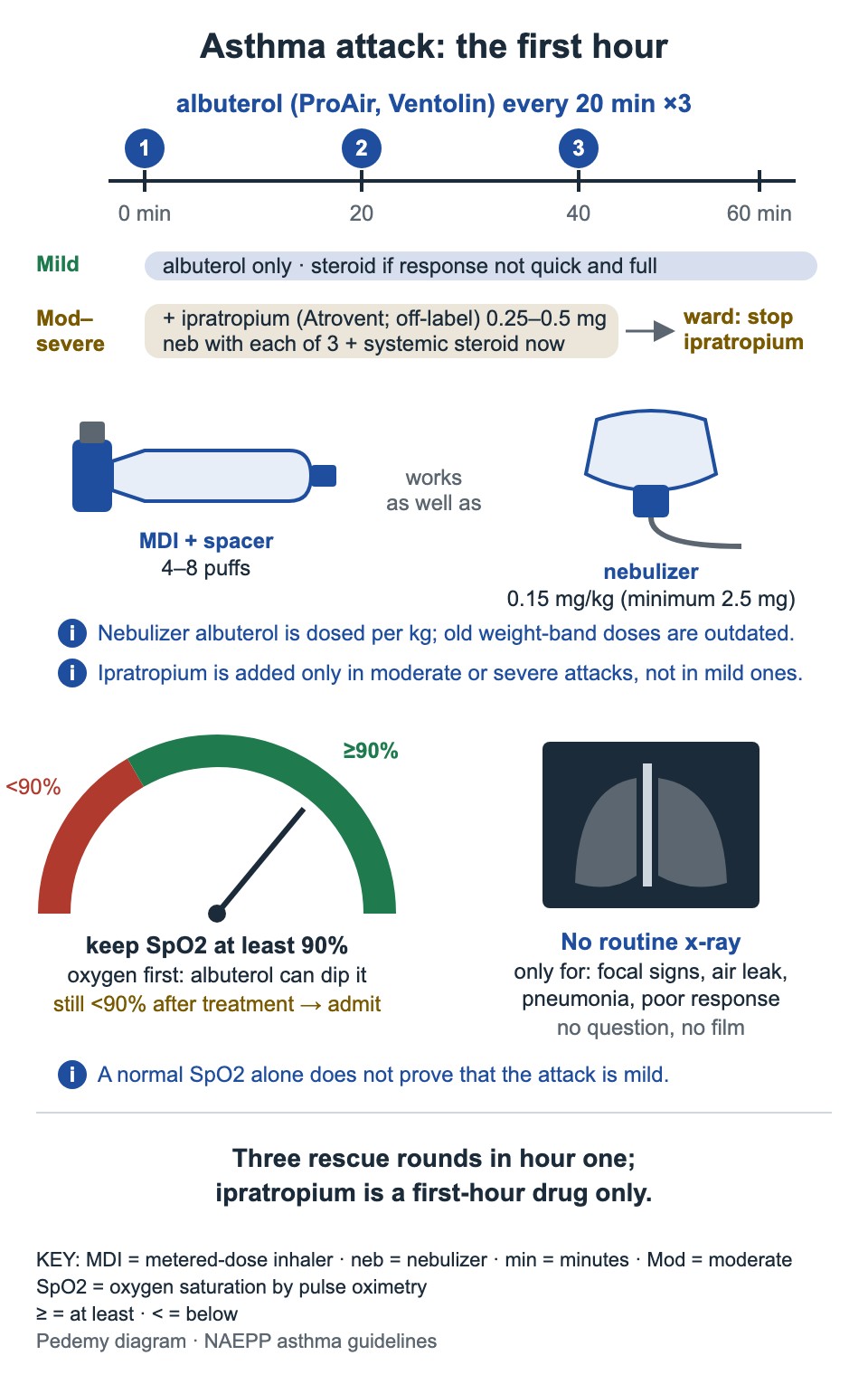
Asthma attack: the first hour -
BRUE
6-wk-old, second spell today, lasted 2 min → higher-risk BRUE; two serious causes to seek? […]
Show answer
6-wk-old, second spell today, lasted 2 min → higher-risk BRUE; two serious causes to seek? Pertussis and child abuse
Why: Higher-risk infants (60 days or younger, preterm, repeat or clustered events, 1 minute or longer, CPR needed, abnormal findings) carry more risk of recurrence and a serious cause. Evaluate by history and exam and usually admit. An infant who looks well now still gets the higher-risk work-up, not lower-risk advice. Hook: whoop and bruise: cough illness and inflicted injury hide behind a spell.
Source: AAP Clinical Practice Guideline: Brief Resolved Unexplained Events (Tieder, Pediatrics 2016). Rewritten for Pedemy in our own words, November 2026.
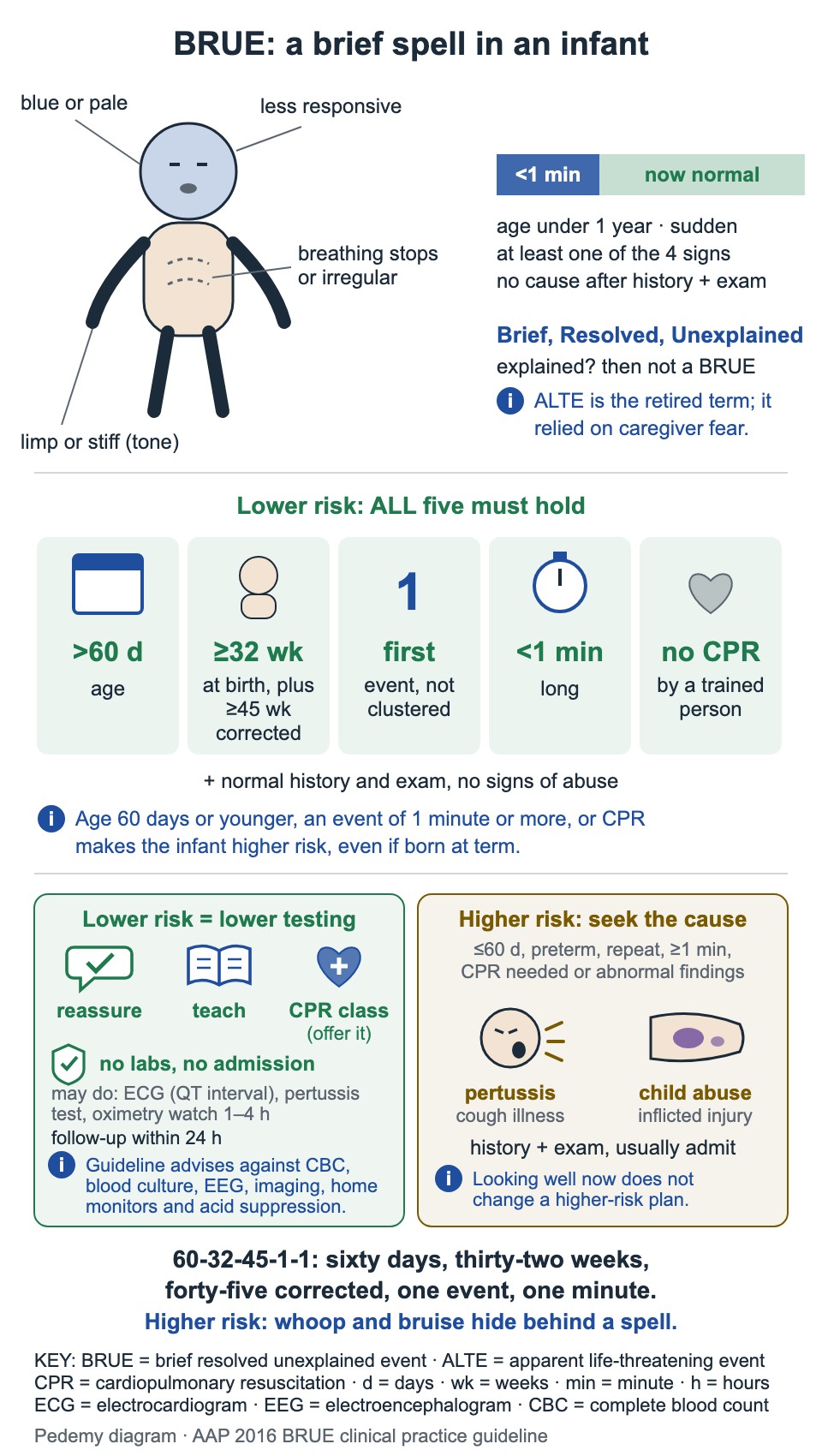
BRUE: a brief spell in an infant -
Bites & Wounds
Rattlesnake bite with spreading swelling, low platelets or low fibrinogen → treatment? […]
Show answer
Rattlesnake bite with spreading swelling, low platelets or low fibrinogen → treatment? pit viper antivenom (CroFab or Anavip)
Why: Pit viper antivenom (CroFab or Anavip) is given for progressive swelling or coagulopathy. Mark the swelling edge every 15 to 30 minutes and follow CBC, platelets, fibrinogen and PT. Warn families of serum sickness 1 to 2 weeks after antivenom. Platelets or plasma alone do not fix venom coagulopathy. Hook: spreading edge, give antivenom.
Source: Unified treatment algorithm for North American pit viper envenomation (Lavonas, BMC Emerg Med 2011); AHA/Red Cross First Aid Guidelines. Rewritten for Pedemy in our own words, November 2026.
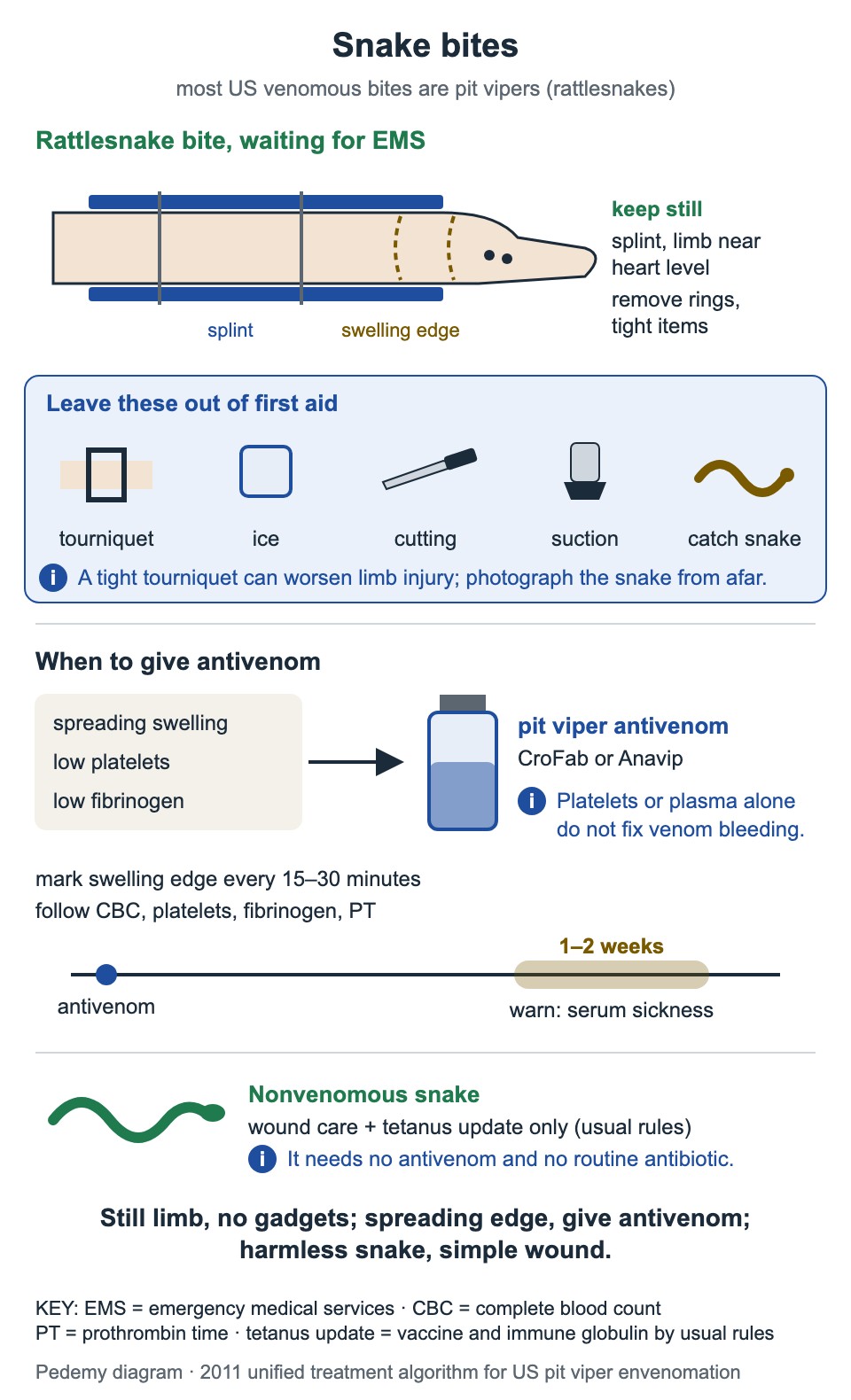
Snake bites -
Burns & Environment
Circumferential full-thickness arm burn, cool pale hand, fading pulse → step? […]
Show answer
Circumferential full-thickness arm burn, cool pale hand, fading pulse → step? escharotomy
Why: Stiff eschar cannot stretch as tissue swells, so it strangles the limb (or chest, limiting breathing); cutting it releases pressure. Elevating and waiting for the pulse to return only delays release. Hook: leather belt too tight, cut it.
Source: American Burn Association Advanced Burn Life Support Provider Manual (2018). Rewritten for Pedemy in our own words, November 2026.
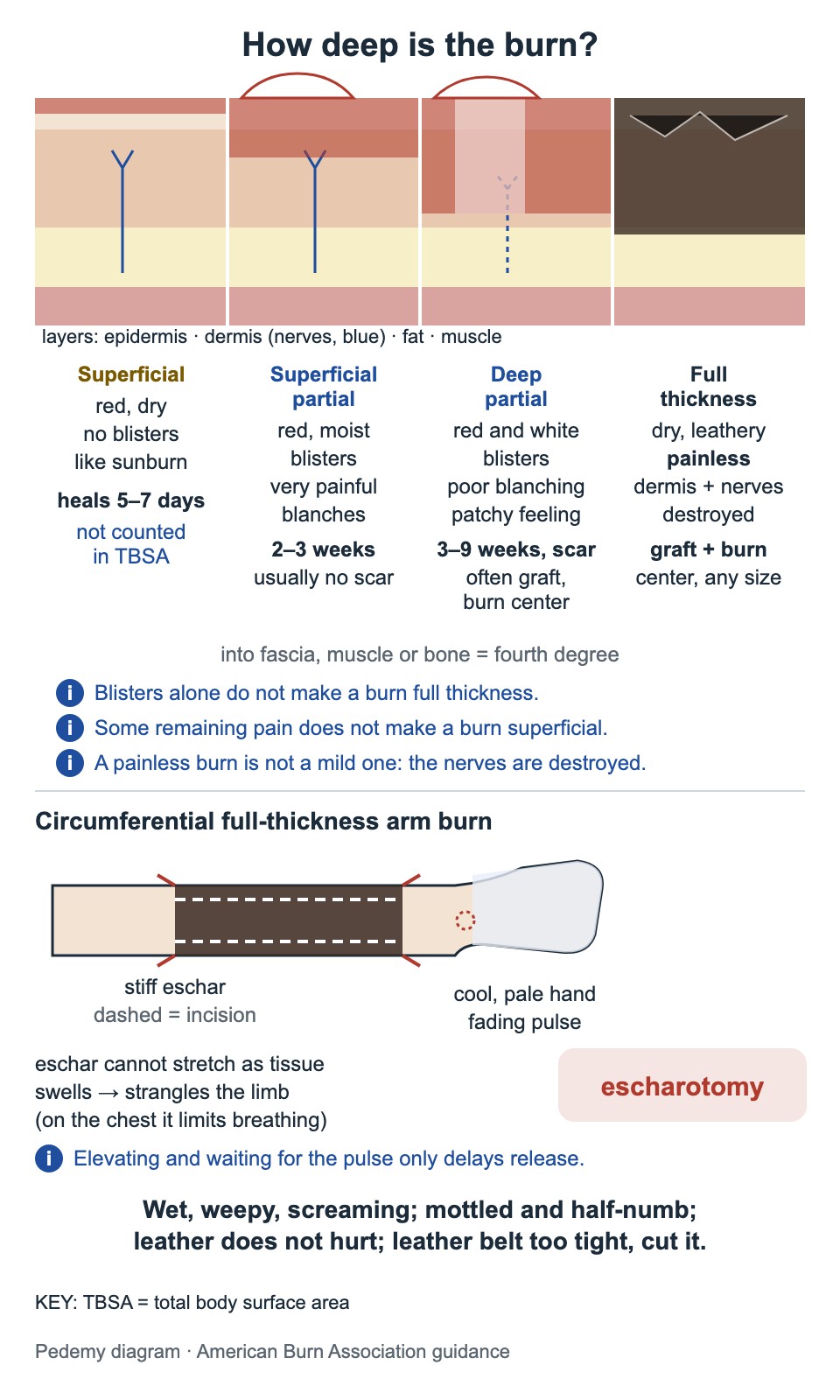
How deep is the burn? -
Child Abuse
Infant under 6 months with suspected abuse (bruise, fracture), normal neuro exam → head imaging? […]
Show answer
Infant under 6 months with suspected abuse (bruise, fracture), normal neuro exam → head imaging? Yes; head CT or MRI
Why: Occult brain injury is common in abused young infants, so image under 6 months (consider to 12 months) even when well; noncontrast CT comes first for an unexplained scalp swelling or any head signs, with MRI later for detail. A baby who looks fine is not a reason to skip imaging, and skull X-rays alone are not enough. Hook: quiet head, still scan.
Source: AAP Clinical Report: Abusive Head Trauma in Infants and Children (Narang, Pediatrics 2020); ACR Appropriateness Criteria: Suspected Physical Abuse—Child; AAP Clinical Report (Christian, Pediatrics 2015). Rewritten for Pedemy in our own words, November 2026.
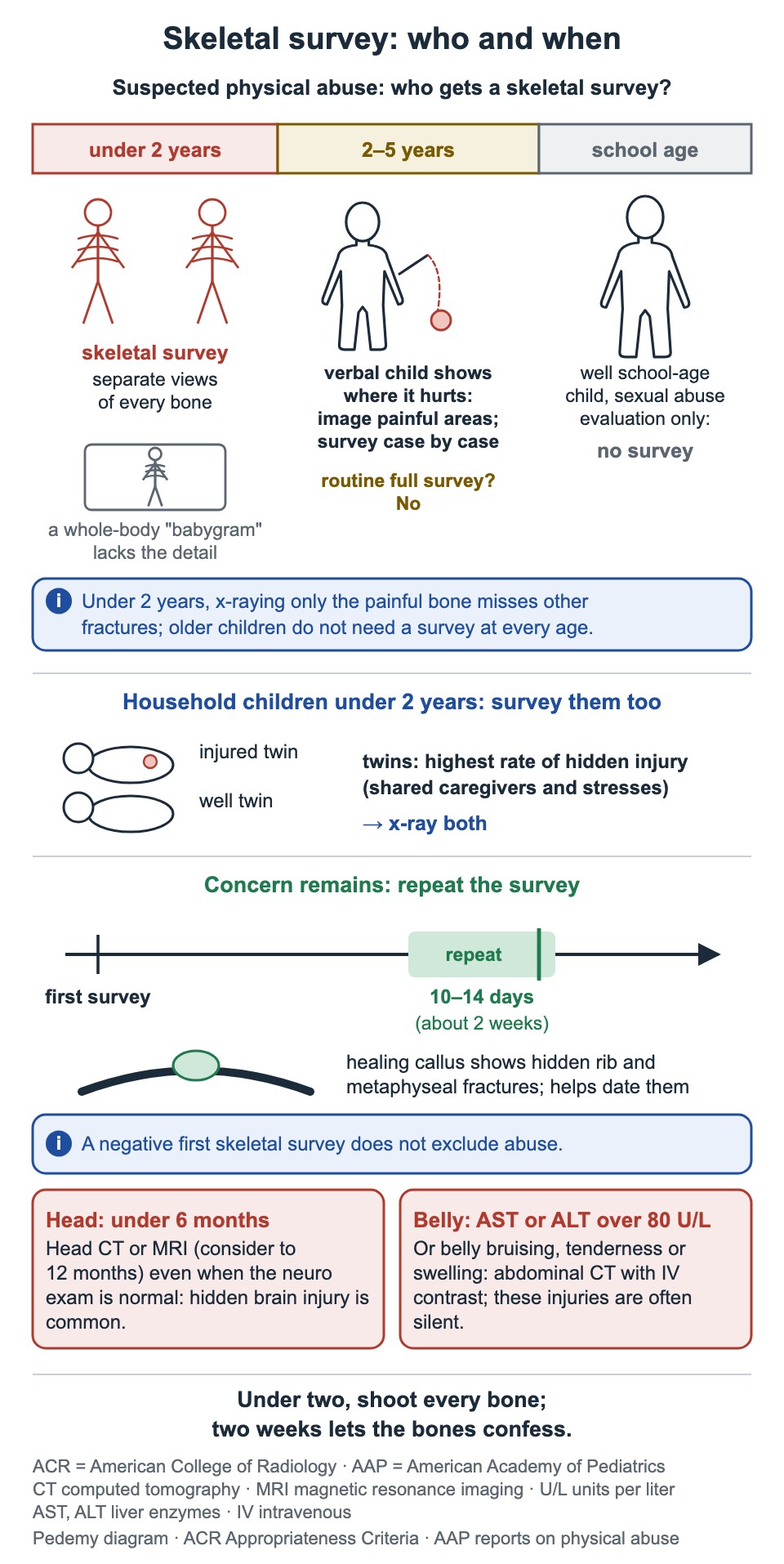
Skeletal survey: who and when -
Febrile Infant
Febrile 5-week-old needs a urine culture → how to collect it? […]
Show answer
Febrile 5-week-old needs a urine culture → how to collect it? Bladder catheter (or suprapubic tap)
Why: A bag specimen may screen a UA in the older infant, but bag cultures are too often contaminated to prove a UTI, so a bag urine is never sent for culture. Hook: the bag can hint, only the catheter can prove.
Source: AAP Clinical Practice Guideline: Febrile Infants 8–60 Days (Pantell, Pediatrics 2021). Rewritten for Pedemy in our own words, November 2026.
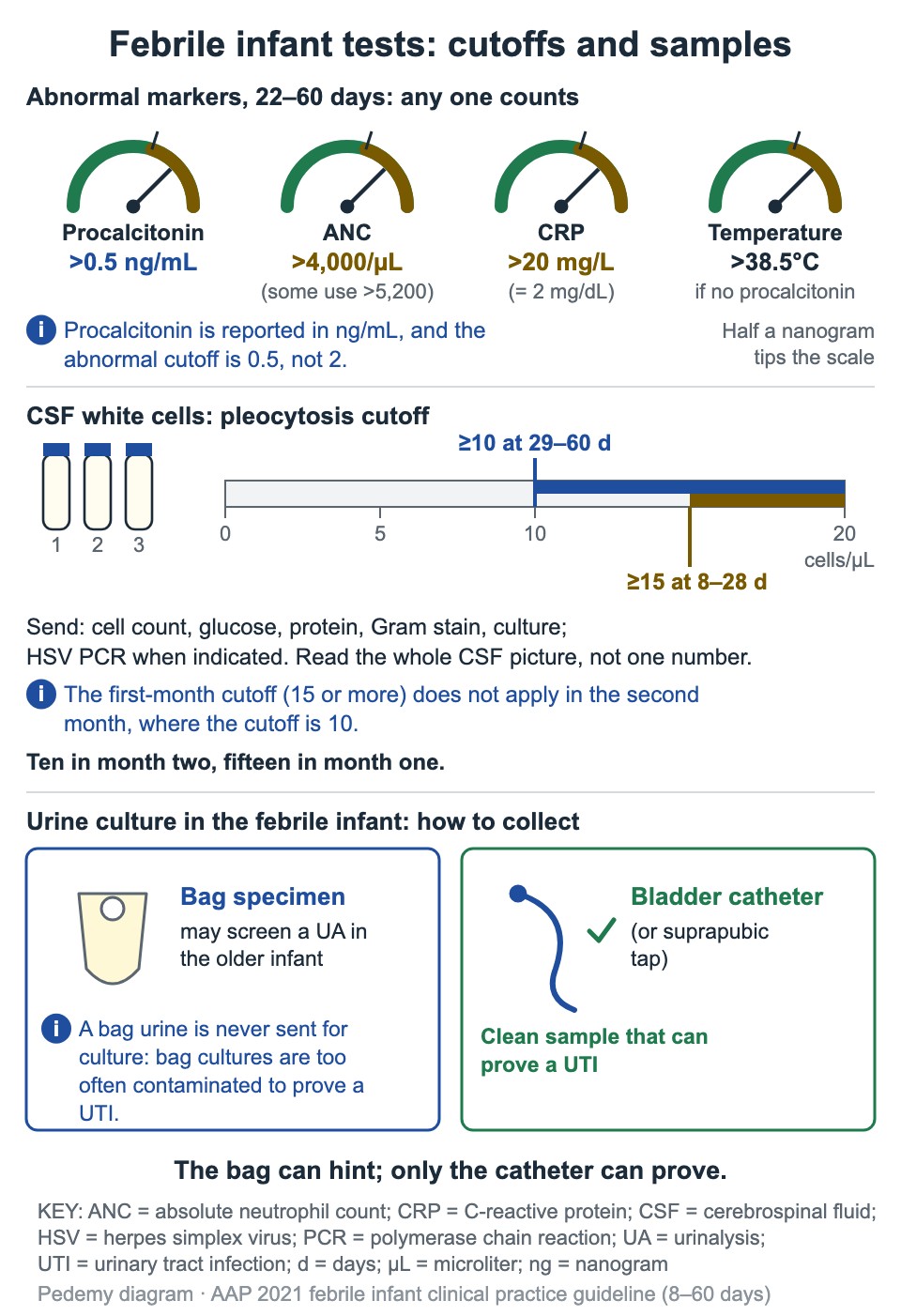
Febrile infant tests: cutoffs and samples -
Foreign Bodies & Batteries
Days after a battery ingestion, small hematemesis (sentinel bleed) → suspect? […]
Show answer
Days after a battery ingestion, small hematemesis (sentinel bleed) → suspect? aortoesophageal fistula
Why: A small bleed can come just before massive hemorrhage. Resuscitate first (ABCs, blood, portable films) and call surgery at once. A child whose bleeding has stopped is still not sent home. Hook: herald bleed, call surgery.
Source: National Capital Poison Center Button Battery Ingestion Guideline (poison.org); NASPGHAN Foreign Body Ingestion clinical report (Kramer, JPGN 2015). Rewritten for Pedemy in our own words, November 2026.
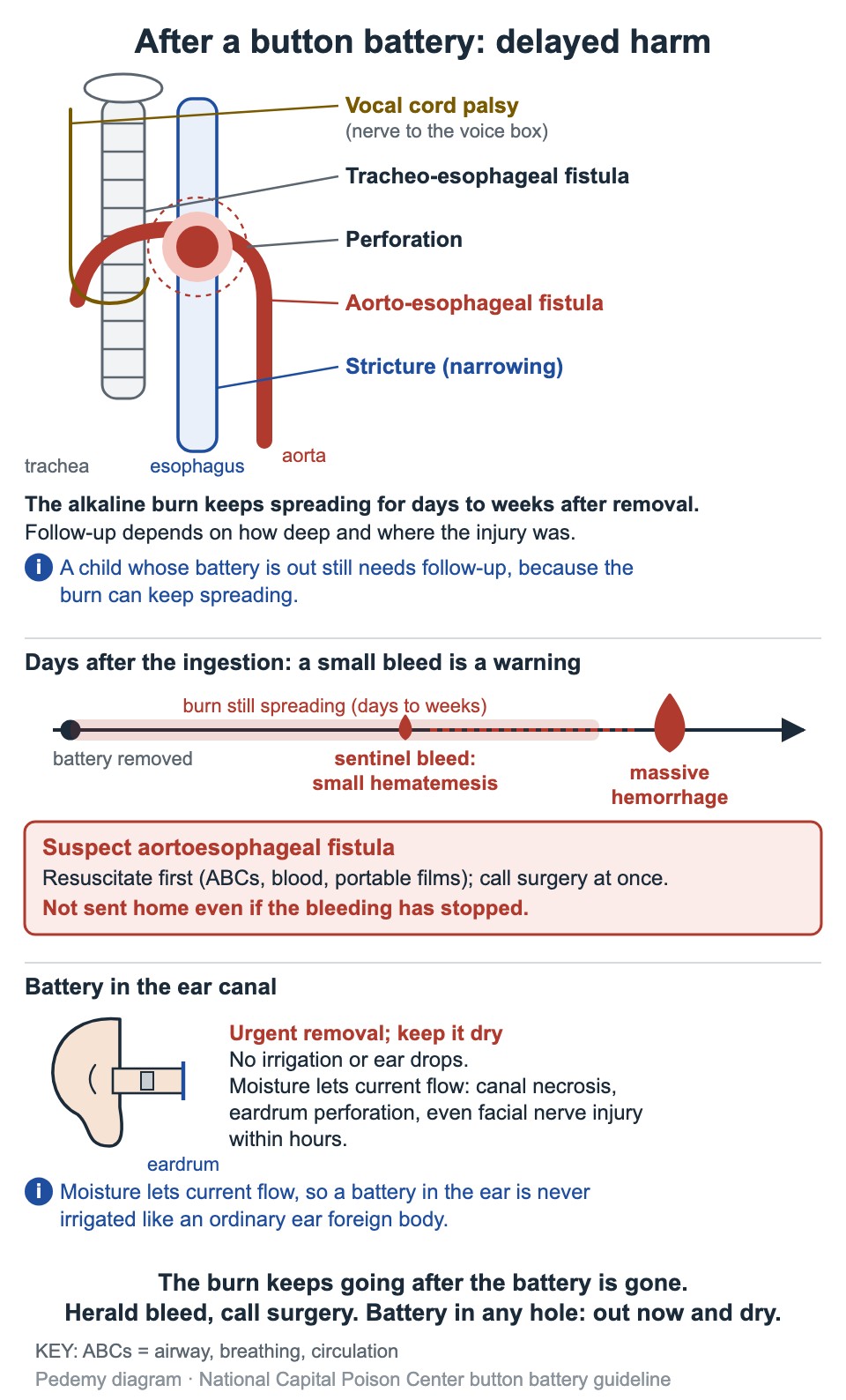
After a button battery: delayed harm -
Newborn Low Sugar
Newborn with apnea, hypotonia, weak or high-pitched cry, poor suck and low temperature → first bedside test? […]
Show answer
Newborn with apnea, hypotonia, weak or high-pitched cry, poor suck and low temperature → first bedside test? blood glucose
Why: These are brain-starvation signs of hypoglycemia; the stress-hormone signs are jitteriness, sweating, pallor, fast breathing and fast heart rate. Hypoglycemia gives low tone and low temperature, not stiffness or fever. Hook: floppy, apneic, cold: check the sugar.
Source: AAP Clinical Report: Postnatal Glucose Homeostasis in Late-Preterm and Term Infants (Adamkin, Pediatrics 2011). Rewritten for Pedemy in our own words, November 2026.
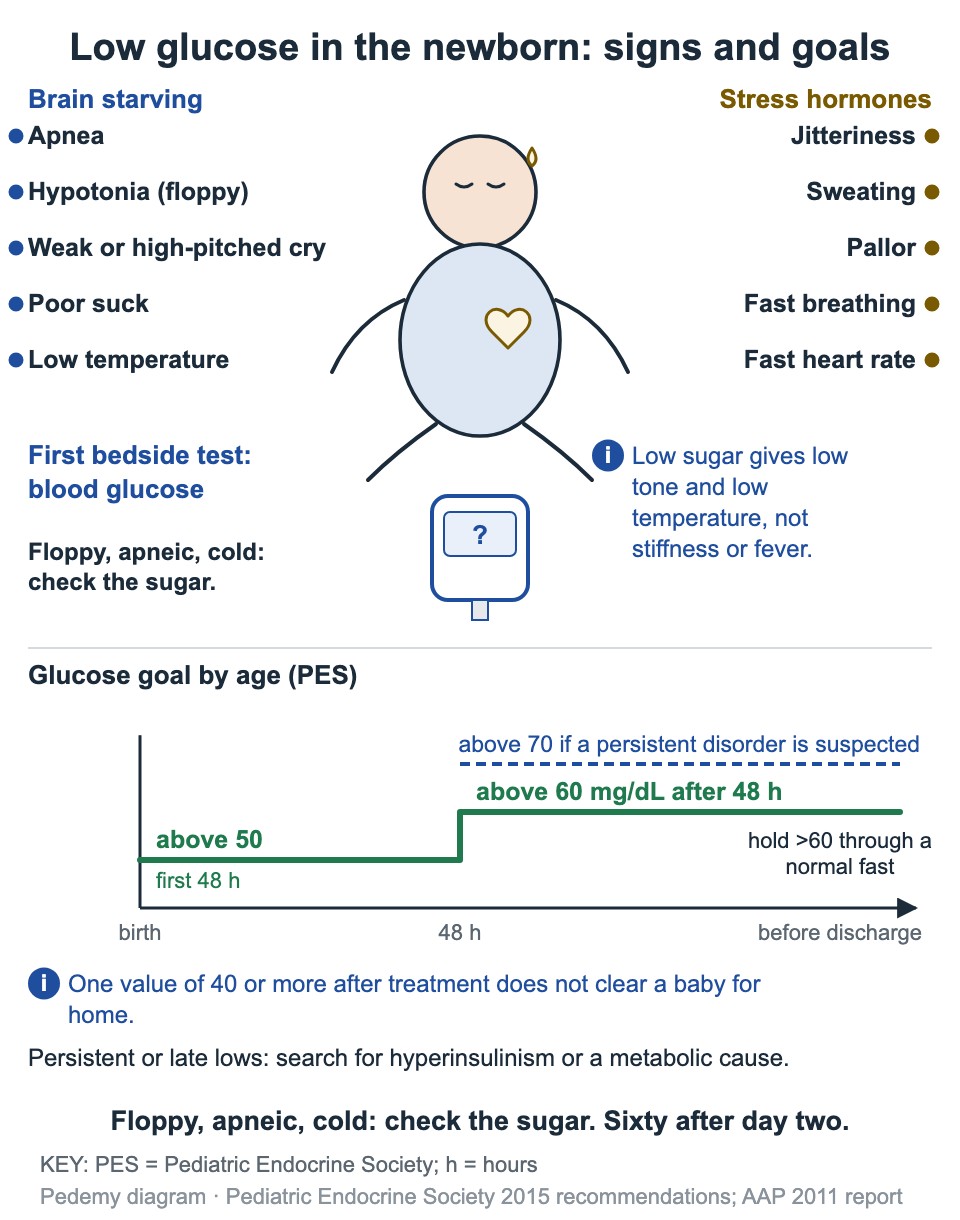
Low glucose in the newborn: signs and goals
Topics in Emergency Medicine
- Asthma Attack12
- BRUE4
- Bites & Wounds20
- Burns & Environment16
- Child Abuse59
- Febrile Infant16
- Foreign Bodies & Batteries15
- Newborn Low Sugar5
- Resuscitation & Shock31
- STIs in the ED18
- Sedation & Pain21
- Seizures & Status22
- Stroke13
- Toxicology75
- Trauma67
Emergency Medicine study guides
- Asthma attack in the emergency department
- BRUE (brief resolved unexplained event)
- Bites, stings and wounds
- Burns, drowning and environmental emergencies
- Button battery ingestion
- Child abuse: sexual abuse, neglect, medical child abuse and reporting
- Febrile infant 8 to 60 days old
- Low blood sugar in the newborn
- Pediatric toxicology and poisonings
- Pediatric trauma: head, neck, chest, abdomen and fractures
- Physical abuse: recognition and evaluation
- Procedural sedation and analgesia
- Resuscitation, shock and anaphylaxis
- STI testing and treatment in adolescents
- Seizures and status epilepticus
- Stroke in children
Clinical tools for Emergency Medicine
- ACE Score
- Acetaminophen Overdose
- Asthma
- Asthma Severity Scores
- BRUE
- Blunt Abdominal Trauma
- Burns
- Button Battery
- Cervical Spine Imaging
- Child Physical Abuse
Sample cards in other subjects
- Growth & Development
- Immunizations & Post-exposure Prevention
- Nutrition
- Well-Child Care & Prevention
- Infectious Disease
- ENT
- Mental Health
- Ophthalmology
- Adolescent Medicine
- Cardiology
- Gastroenterology
- Pulmonology
- Dermatology
- Musculoskeletal & Sports Medicine
- Neonatology
- Neurology
- Allergy & Immunology
- Behavioral
- Endocrinology
- Hematology
- Nephrology
- Oncology
- Urology
- Biostatistics & Epidemiology
- Genetics
- Medical Ethics
- Metabolic Disorders
- Patient Safety & Quality Improvement
- Rheumatology
- Pharmacology
Free to study without an account. Sign up free to save your spaced-repetition schedule across devices. For education only; check current guidelines before clinical use.