

Nutrition flashcards
237 cards · 6 topics · 12% of the board exam, shared with Growth, Immunizations & Well-Child Care
237 free Nutrition flashcards for pediatric board review and rotations, written in our own words with public guideline sources. Topics: Breastfeeding & Supplements, Infant Feeding, Nutrition Support & Calculations, Obesity & Cardiometabolic Risk and 2 more. Nutrition is 12% of the board exam, shared with Growth, Immunizations & Well-Child Care.
Sample Nutrition cards
-
Breastfeeding & Supplements
Breastfeeding lowers the infant's risk of which infections? […] · Which sudden death? […]
Show answer
Breastfeeding lowers the infant's risk of which infections? Otitis media, respiratory, gastrointestinal · Which sudden death? SIDS
Why: Human milk also lowers the risk of necrotizing enterocolitis in preterm infants, and later asthma, obesity, diabetes and leukemia. The mother has lower risk of breast and ovarian cancer, type 2 diabetes and hypertension. Breastfeeding is not proven to prevent food allergy. Hook: fewer infections, less SIDS.
Source: AAP 2022 policy statement: breastfeeding and the use of human milk. Written for Pedemy in our own words, November 2026.
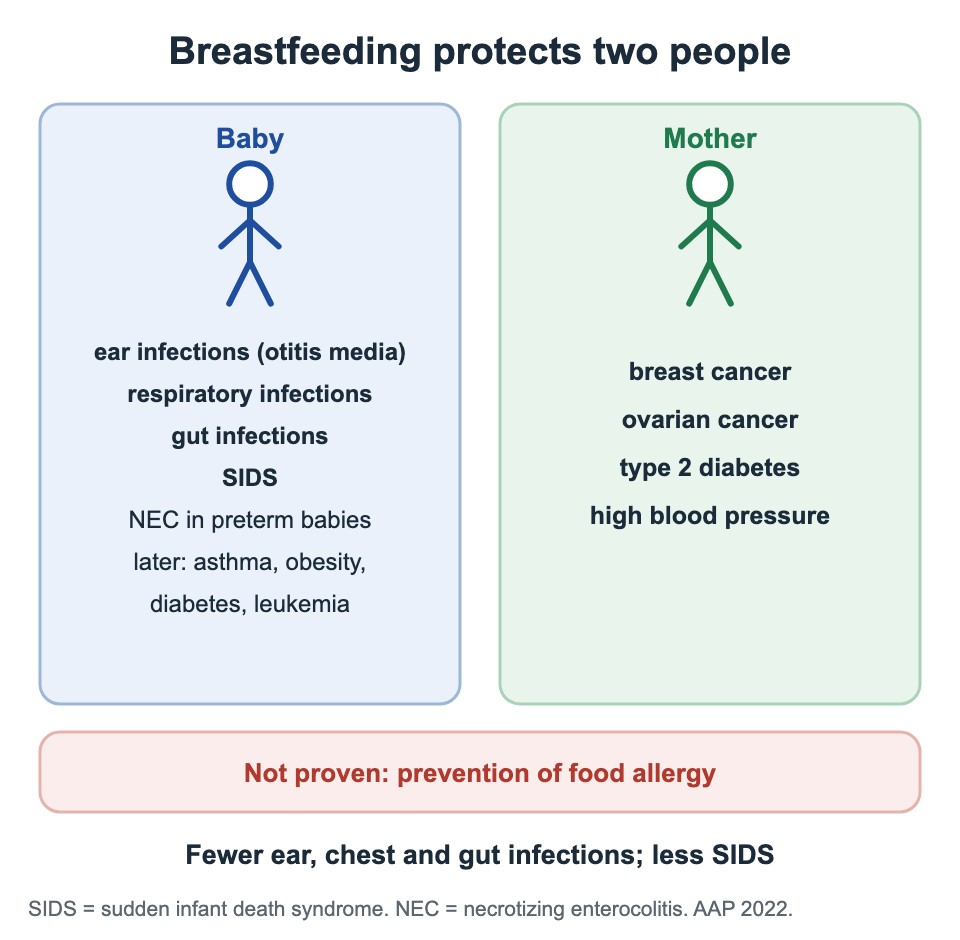
Breastfeeding: what it lowers for baby and mother — diagram -
Infant Feeding
15-month-old with rapid weight gain and strong family history of obesity and high cholesterol → milk choice? […]
Show answer
15-month-old with rapid weight gain and strong family history of obesity and high cholesterol → milk choice? Reduced-fat (2%) milk
Why: Whole milk is usual at 12 to 24 months, but reduced-fat milk is appropriate for toddlers with excess weight gain or a family history of obesity, dyslipidemia or early heart disease. From age 2 all children drink skim or low-fat milk. Plant milks other than fortified soy are not equivalent to cow's milk. Hook: risk of obesity, 2% milk.
Source: AAP clinical report: lipid screening and cardiovascular health in childhood; Healthy Beverage Consumption in Early Childhood 2019. Written for Pedemy in our own words, November 2026.
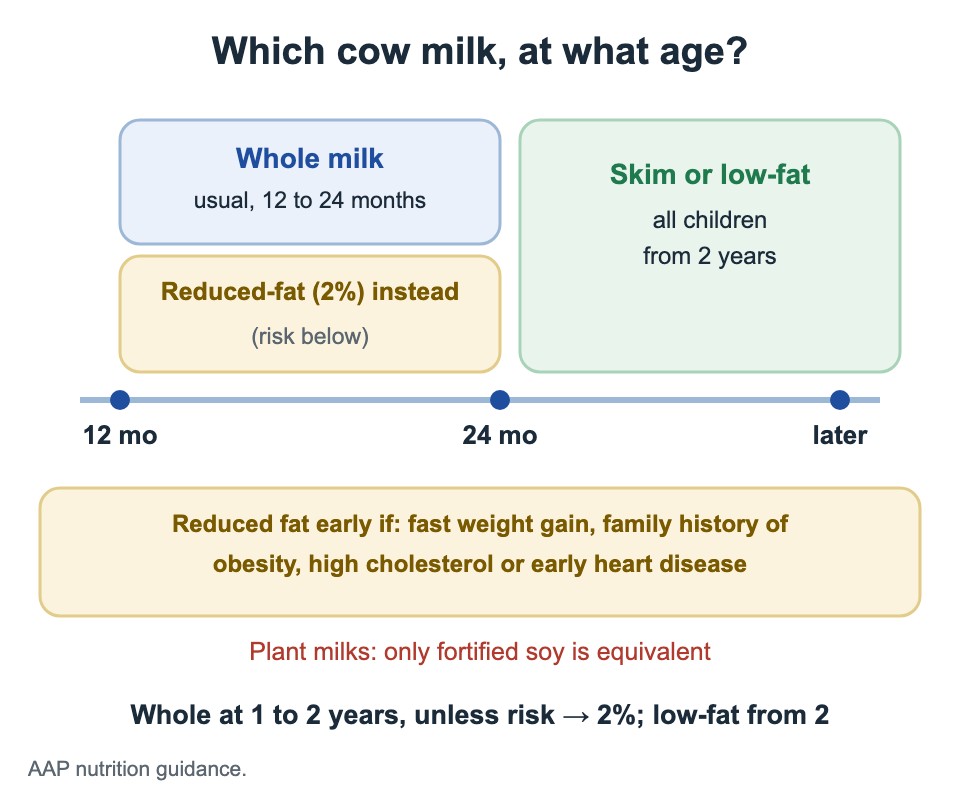
Cow milk by age: whole, 2% for risk, low-fat from 2 — diagram -
Nutrition Support & Calculations
Infant on fat-free parenteral nutrition: dry, scaly, eczema-like rash, slow growth → deficiency? […]
Show answer
Infant on fat-free parenteral nutrition: dry, scaly, eczema-like rash, slow growth → deficiency? Essential fatty acid deficiency
Why: Linoleic and alpha-linolenic acid cannot be made by the body, so fat-free feeding or severe fat malabsorption (cystic fibrosis, pancreatic insufficiency) depletes them, and the skin barrier fails: a dry, scaly, peeling rash, with slow growth and poor wound healing. Biotin and zinc deficiency are the other nutrient rashes that look like eczema. Intravenous lipid emulsion prevents it. Hook: No fat in, flaky skin out.
Source: Merck Manual Professional: Essential Fatty Acid Deficiency; Essential fatty acid deficiency: a narrative review (Nutr Clin Pract 2025, PMC11879921). Rewritten for Pedemy in our own words, November 2026.
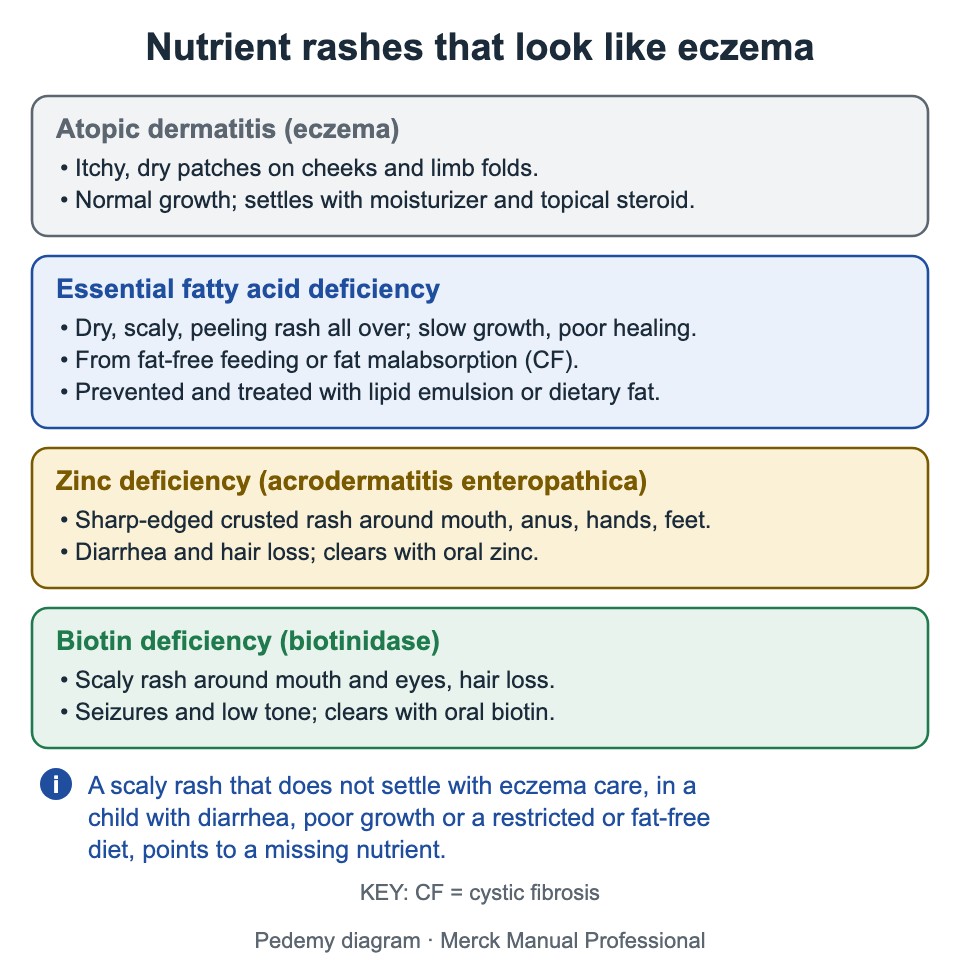
Nutrient rashes that look like eczema -
Obesity & Cardiometabolic Risk
Routine BMI-for-age screening starts at what age? […]
Show answer
Routine BMI-for-age screening starts at what age? 2 years
Why: CDC recommends the WHO growth charts for children under 2, using weight-for-length; from 2 years plot BMI on the CDC charts at least yearly. Overweight is the 85th to below the 95th percentile and obesity is the 95th or above. BMI percentiles are not used to label obesity before age 2. Hook: BMI starts at 2.
Source: CDC growth chart guidance (WHO charts under 2 years, CDC charts from 2 years); AAP 2023 obesity clinical practice guideline. Rewritten for Pedemy in our own words, November 2026.
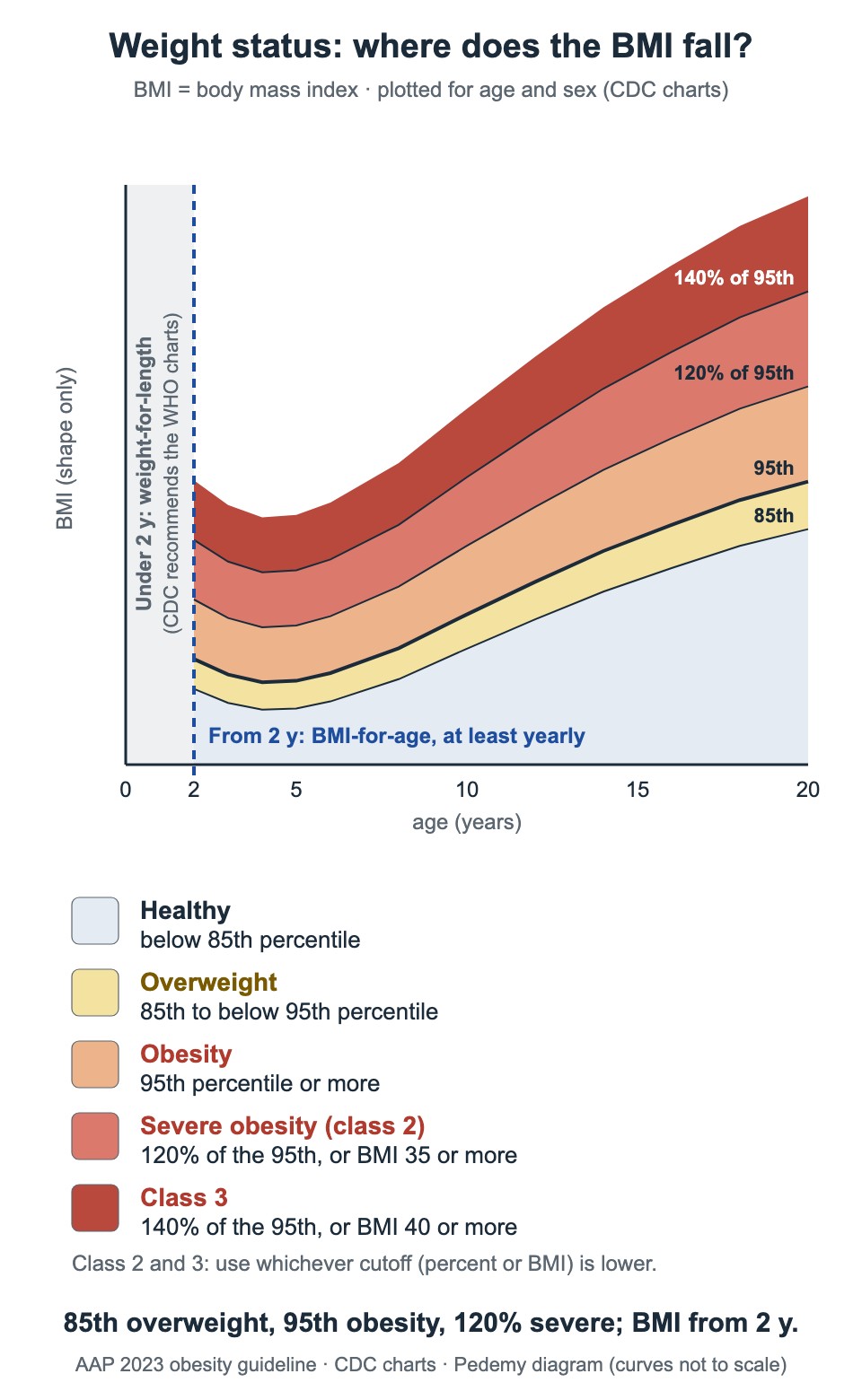
Weight status: BMI percentile bands on the growth chart — diagram -
Special Diets & Formula
Ketogenic diet → first-line treatment for which two metabolic disorders? […]
Show answer
Ketogenic diet → first-line treatment for which two metabolic disorders? GLUT1 deficiency; pyruvate dehydrogenase deficiency
Why: In both, the brain cannot use glucose well, and ketones give an alternate fuel. The diet is also used for drug-resistant epilepsy. Monitor growth, lipids, kidney stones and minerals (magnesium, copper, zinc, selenium). It is contraindicated in fatty acid oxidation and carnitine disorders and in pyruvate carboxylase deficiency. Hook: Brain can't burn glucose, so feed it ketones.
Source: International Ketogenic Diet Study Group consensus 2018. Written for Pedemy in our own words, November 2026.
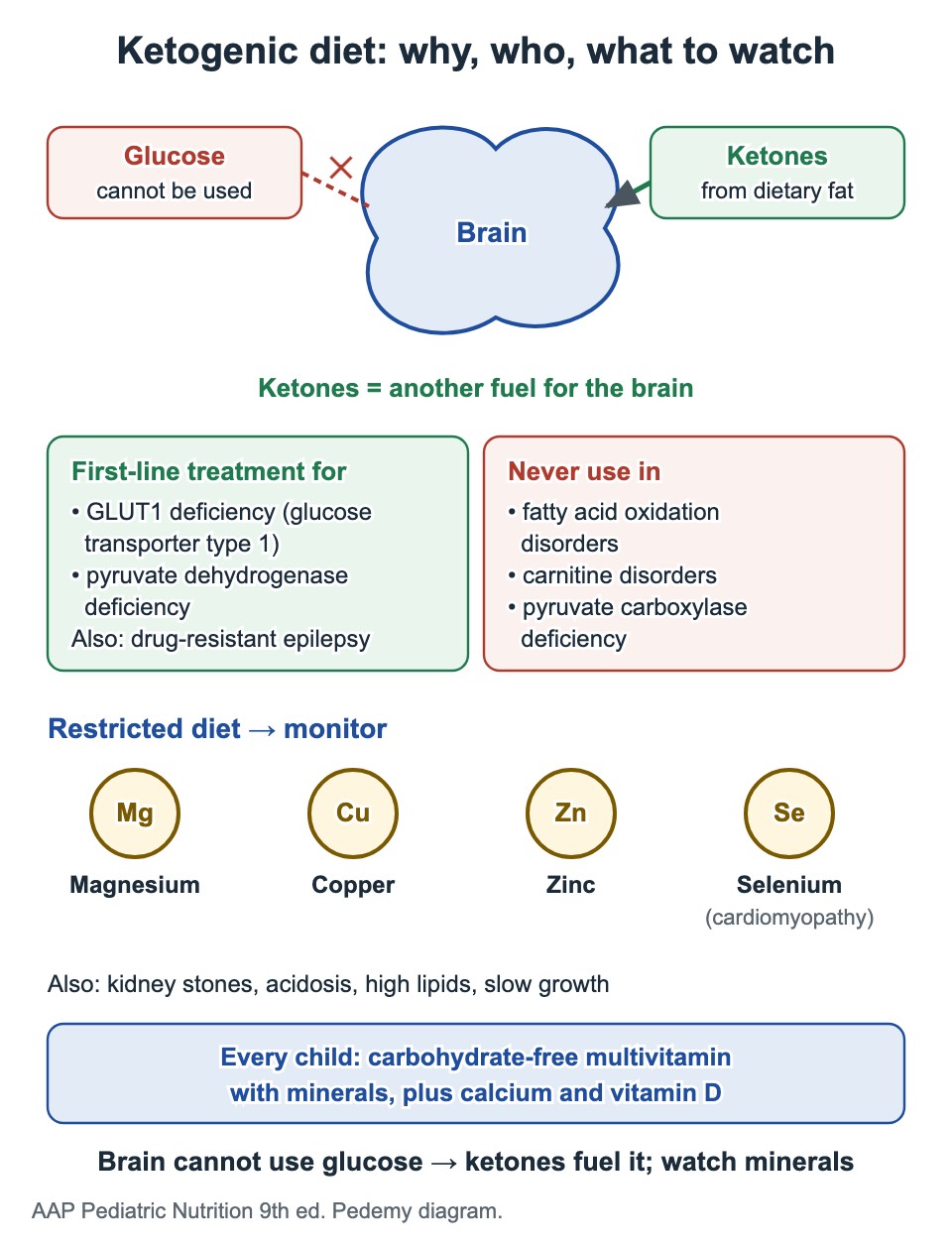
Ketogenic diet: ketones fuel the brain, who gets it, what to monitor — diagram -
Vitamins
Dark-skinned breastfed infant, no supplement, wide wrists → best blood test for vitamin D status? […]
Show answer
Dark-skinned breastfed infant, no supplement, wide wrists → best blood test for vitamin D status? 25-hydroxyvitamin D
Why: 25-OH vitamin D is the storage form and reflects body stores; a level of 20 ng/mL or more is considered sufficient. 1,25-dihydroxyvitamin D can be normal or even high in deficiency because PTH drives its production, so it does not show stores. Hook: Check the stored form, 25-OH.
Source: Wagner CL, Greer FR; AAP Section on Breastfeeding and Committee on Nutrition. Prevention of rickets and vitamin D deficiency in infants, children, and adolescents. Pediatrics 2008;122(5):1142–1152; AAP clinical report: optimizing bone health in children and adolescents 2014. Rewritten for Pedemy in
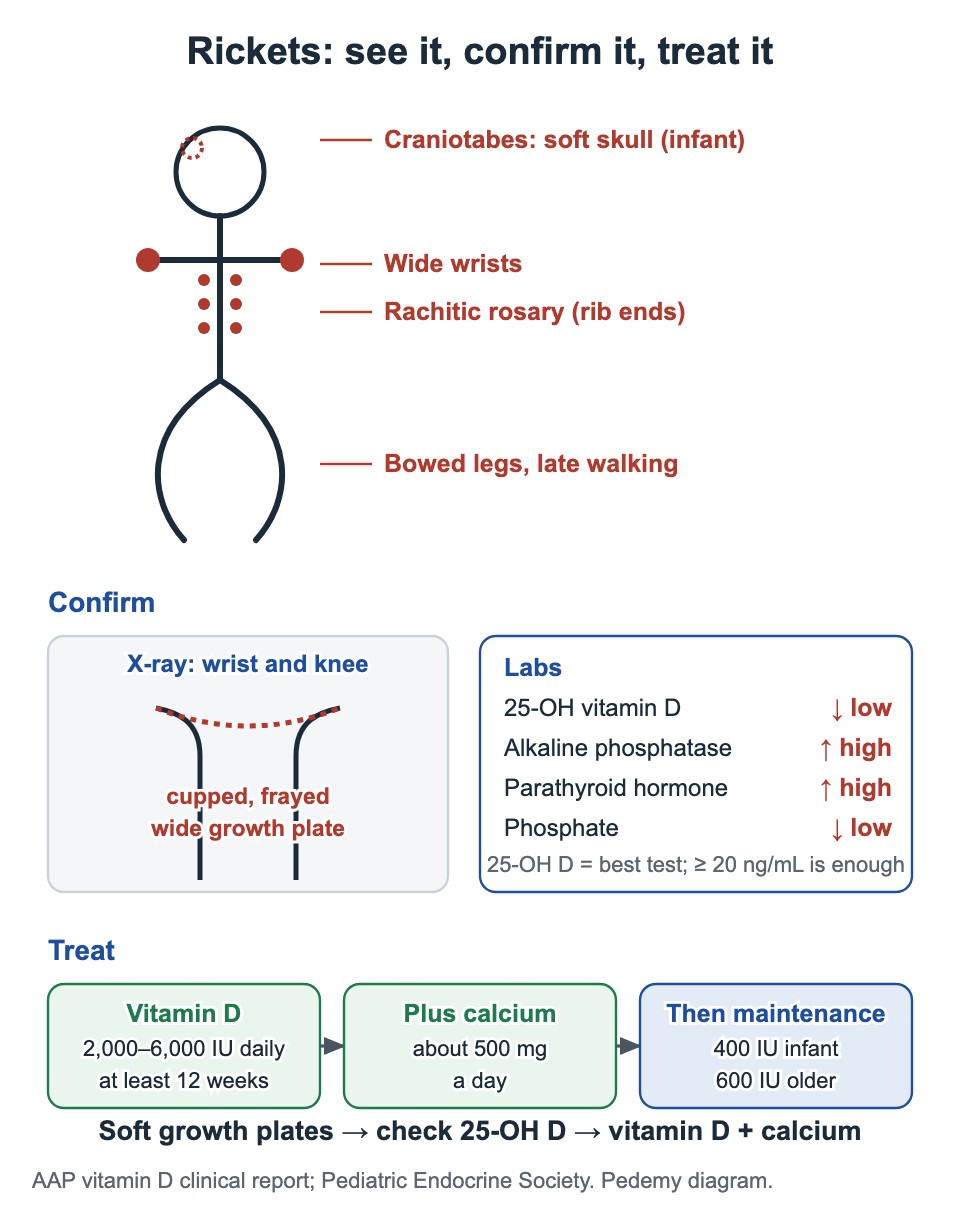
Rickets: signs on a child figure, x-ray and labs, treatment steps — diagram -
Breastfeeding & Supplements
AAP: exclusive breastfeeding for about how long? […] · Then continue with foods until? […]
Show answer
AAP: exclusive breastfeeding for about how long? 6 months · Then continue with foods until? 2 years or beyond
Why: The 2022 policy recommends exclusive breastfeeding for about 6 months, then continued breastfeeding with complementary foods as long as mother and child wish, for 2 years or beyond. Earlier policies set the goal at 1 year. Water, juice and other foods are not needed before about 6 months. Hook: 6 months exclusive, 2 years or beyond.
Source: AAP 2022 policy statement: breastfeeding and the use of human milk. Written for Pedemy in our own words, November 2026.
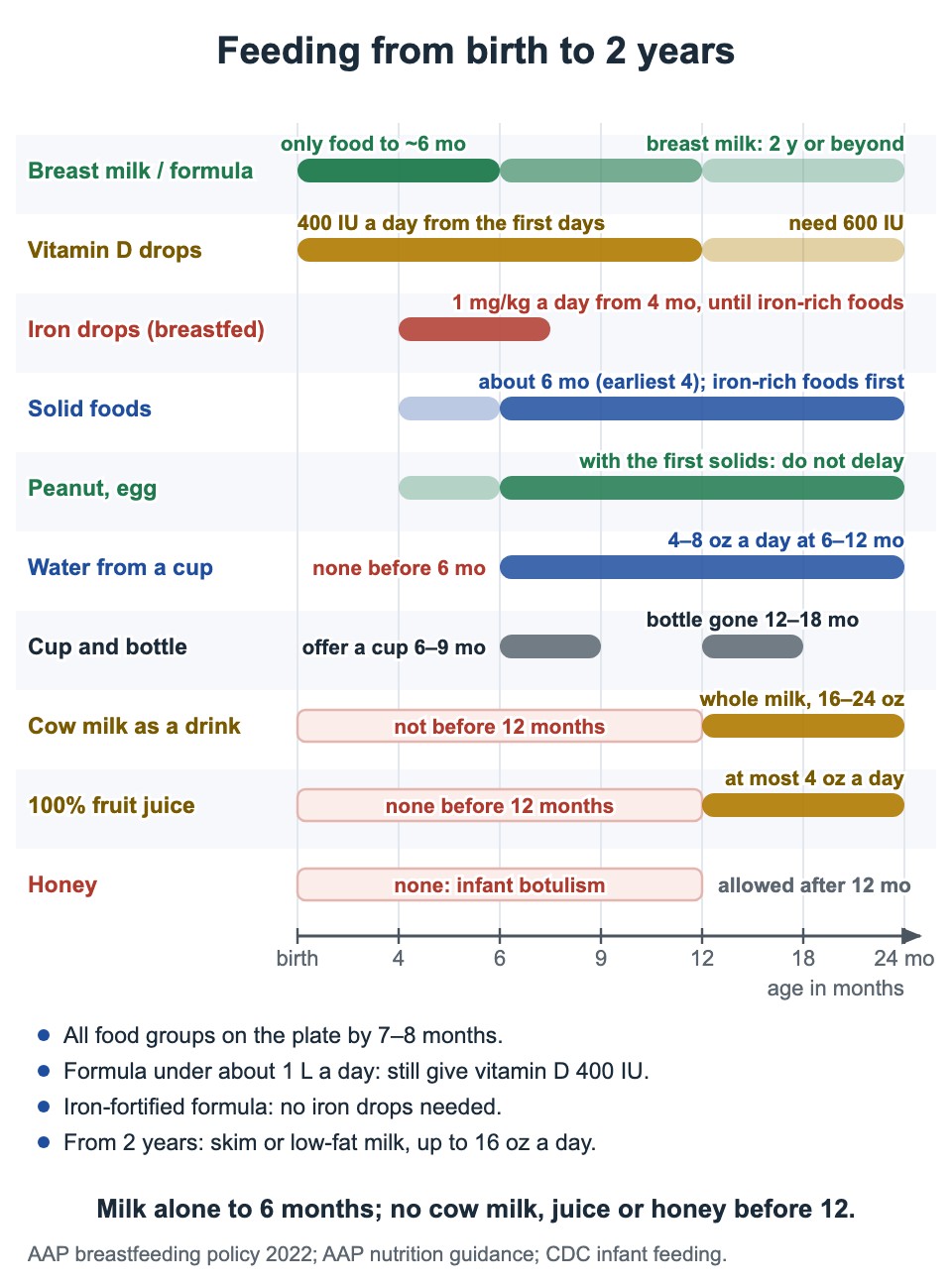
Feeding from birth to 2 years — diagram -
Infant Feeding
Mature human milk and standard term infant formula → energy density? […]
Show answer
Mature human milk and standard term infant formula → energy density? About 20 kcal/oz
Why: Both give about 20 kcal per ounce (0.67 kcal/mL), so a term infant needing about 100 to 110 kcal/kg/day takes roughly 150 mL/kg/day. Preterm and transitional formulas are 22 to 24 kcal/oz. Whole cow milk has about the same energy (19 to 20 kcal/oz) but is not for infants under 12 months. Hook: milk and formula are both 20 kcal/oz.
Source: AAP Pediatric Nutrition, 8th edition; FDA infant formula nutrient requirements (21 CFR 107.100). Rewritten for Pedemy in our own words, November 2026.
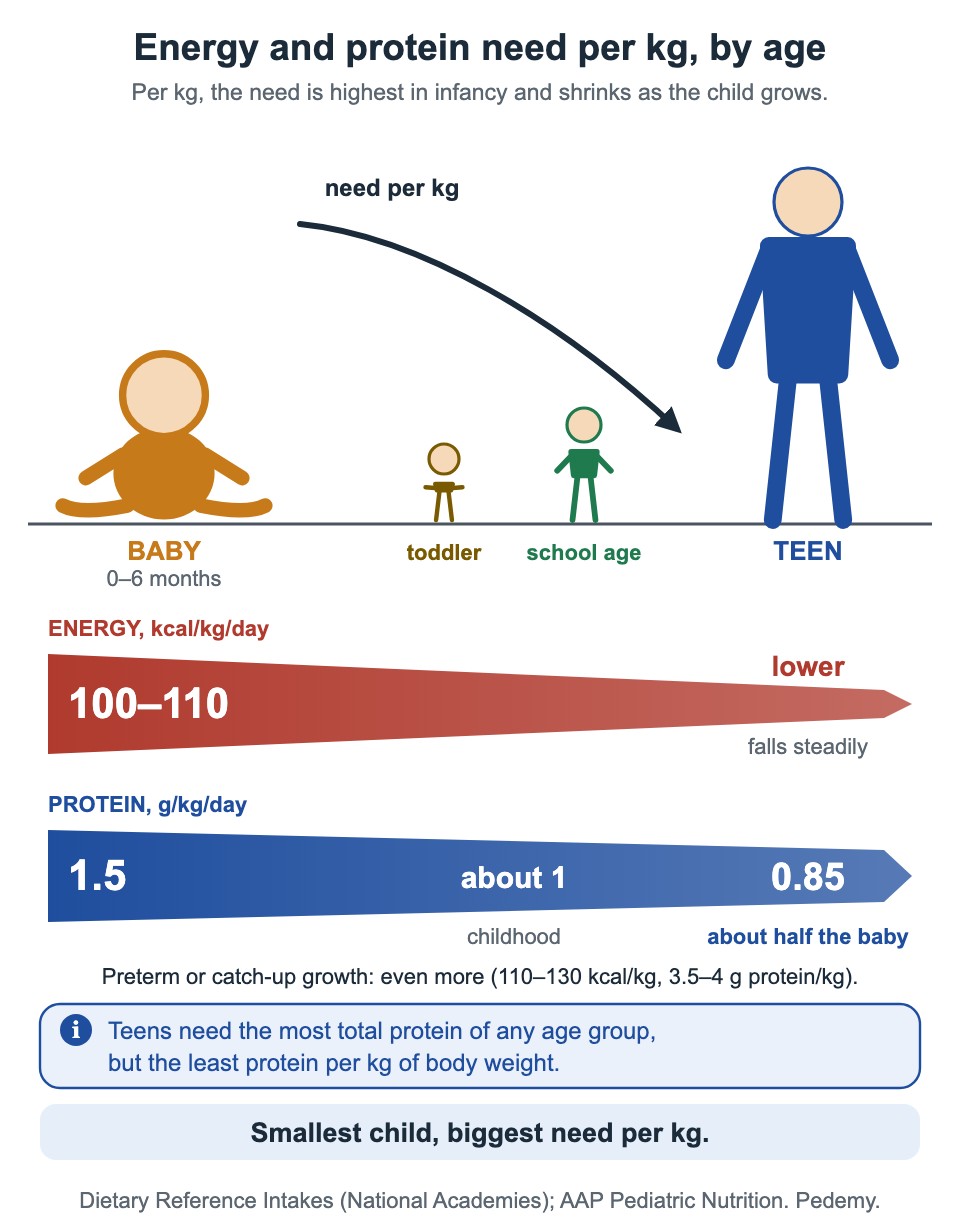
Energy and protein by age: baby vs teen — diagram
Topics in Nutrition
- Breastfeeding & Supplements47
- Infant Feeding36
- Nutrition Support & Calculations23
- Obesity & Cardiometabolic Risk60
- Special Diets & Formula18
- Vitamins30
Nutrition study guides
- Breastfeeding and supplements
- Infant and toddler feeding
- Nutrition support and calculations
- Obesity and cardiometabolic risk in children
- Special diets and infant formula
- Vitamin deficiencies
Clinical tools for Nutrition
- Body Size
- Formula Mixing
- BMI & Obesity
- Familial Hypercholesterolemia
- IV Fluids & Dehydration
- Newborn Weight Loss
- pFIB-c Liver Fibrosis
Sample cards in other subjects
- Growth & Development
- Immunizations & Post-exposure Prevention
- Well-Child Care & Prevention
- Emergency Medicine
- Infectious Disease
- ENT
- Mental Health
- Ophthalmology
- Adolescent Medicine
- Cardiology
- Gastroenterology
- Pulmonology
- Dermatology
- Musculoskeletal & Sports Medicine
- Neonatology
- Neurology
- Allergy & Immunology
- Behavioral
- Endocrinology
- Hematology
- Nephrology
- Oncology
- Urology
- Biostatistics & Epidemiology
- Genetics
- Medical Ethics
- Metabolic Disorders
- Patient Safety & Quality Improvement
- Rheumatology
- Pharmacology
Free to study without an account. Sign up free to save your spaced-repetition schedule across devices. For education only; check current guidelines before clinical use.