

Well-Child Care & Prevention flashcards
214 cards · 6 topics · 12% of the board exam, shared with Growth, Nutrition & Immunizations
214 free Well-Child Care & Prevention flashcards for pediatric board review and rotations, written in our own words with public guideline sources. Topics: Dental Health, Fever Counseling, Foster Care, Safety & Injury Prevention and 2 more. Well-Child Care & Prevention is 12% of the board exam, shared with Growth, Nutrition & Immunizations.
Sample Well-Child Care & Prevention cards
-
Dental Health
First primary teeth to erupt? […]
Show answer
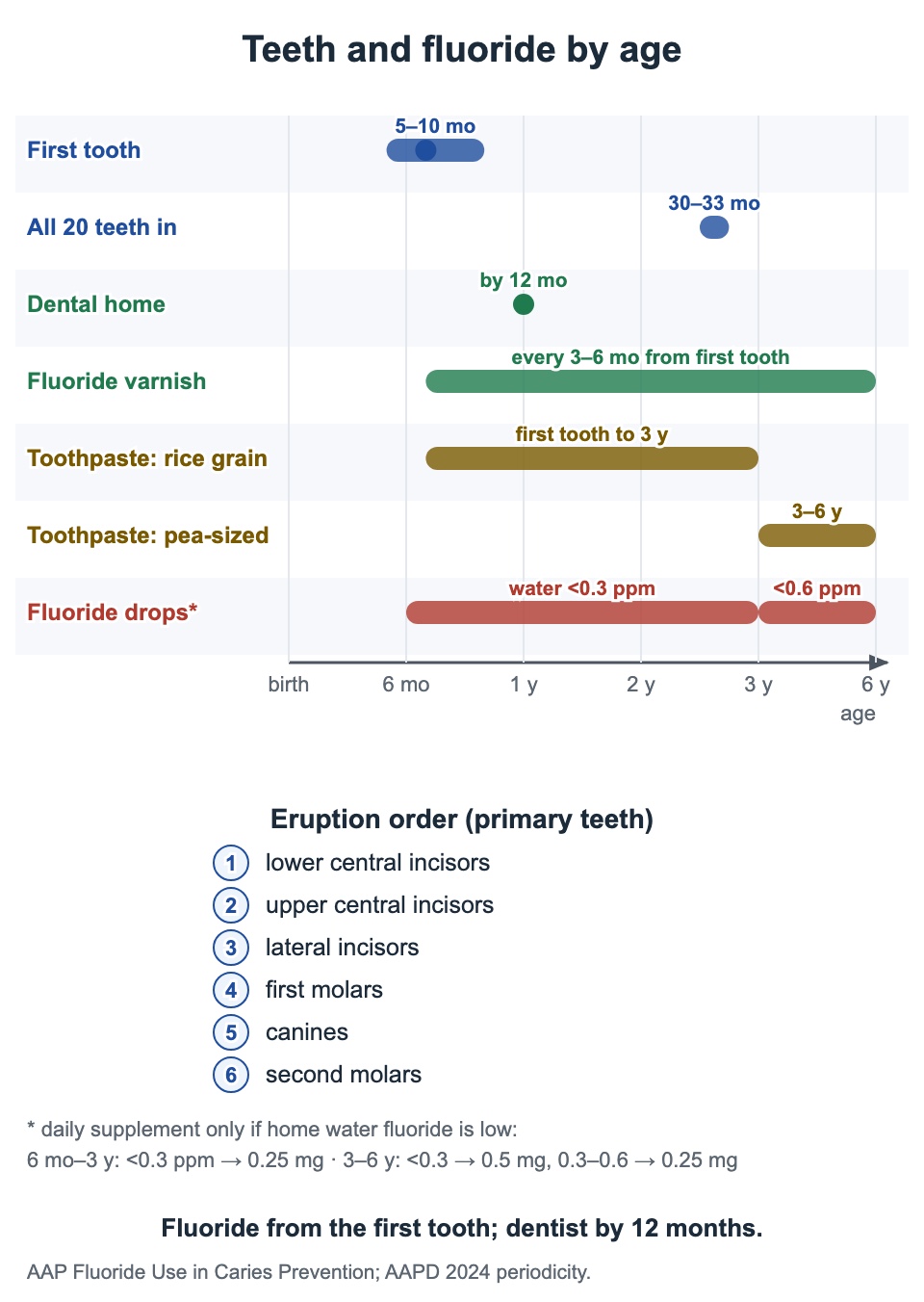
First primary teeth to erupt? Lower central incisors
Why: The mandibular central incisors usually erupt first, at about 6 months. The upper central incisors follow, then lateral incisors, first molars, canines and second molars.
Source: Krol DM, Whelan K, AAP clinical report: Maintaining and Improving the Oral Health of Young Children (Pediatrics 2023)
Teeth: first tooth to brushing — diagram -
Foster Care
Child newly placed in foster care → first health screen within? […]
Show answer
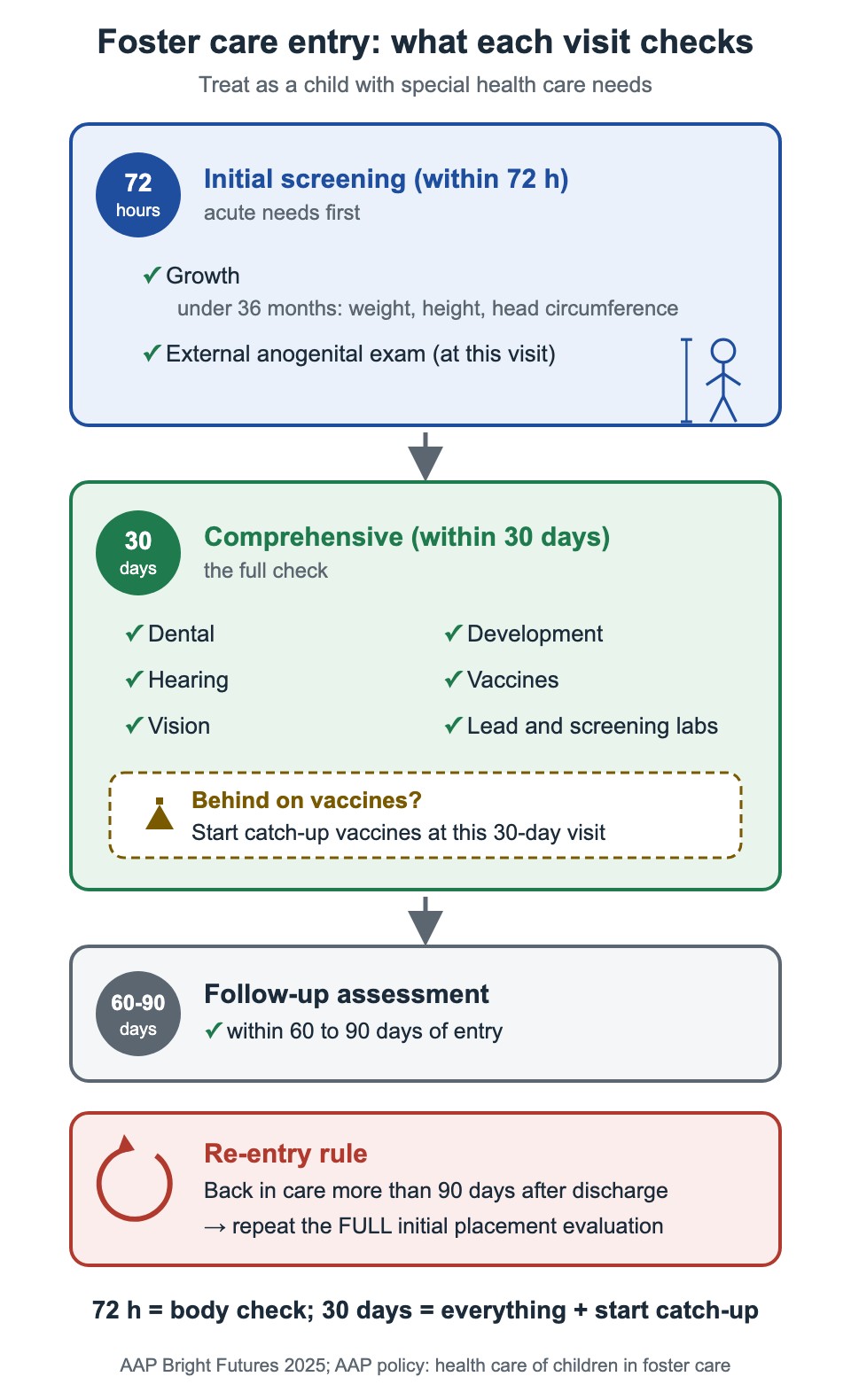
Child newly placed in foster care → first health screen within? 72 hours (sooner for high-risk children)
Why: Children entering foster care often arrive with untreated illness, injuries or medicines and little history, so the AAP asks for a health screen within 72 hours of placement, ideally within the first day for very young children, suspected abuse, complex or chronic needs, daily medicines or acute illness. A comprehensive assessment follows within 30 days and a follow-up within 60 to 90 days. Hook: Three days, thirty days, then again.
Source: AAP Policy Statement: Health Care Issues for Children and Adolescents in Foster Care and Kinship Care (Pediatrics 2015); AAP Fostering Health: Health Care for Children and Adolescents in Foster Care, 2nd ed.; AAP Healthy Foster Care America. Rewritten for Pedemy in our own words, November 2026.
Foster care entry: what each visit checks (72 h, 30 days, 60-90 days, re-entry) — diagram -
Safety & Injury Prevention
Forward-facing harness → use until the child reaches? […]
Show answer
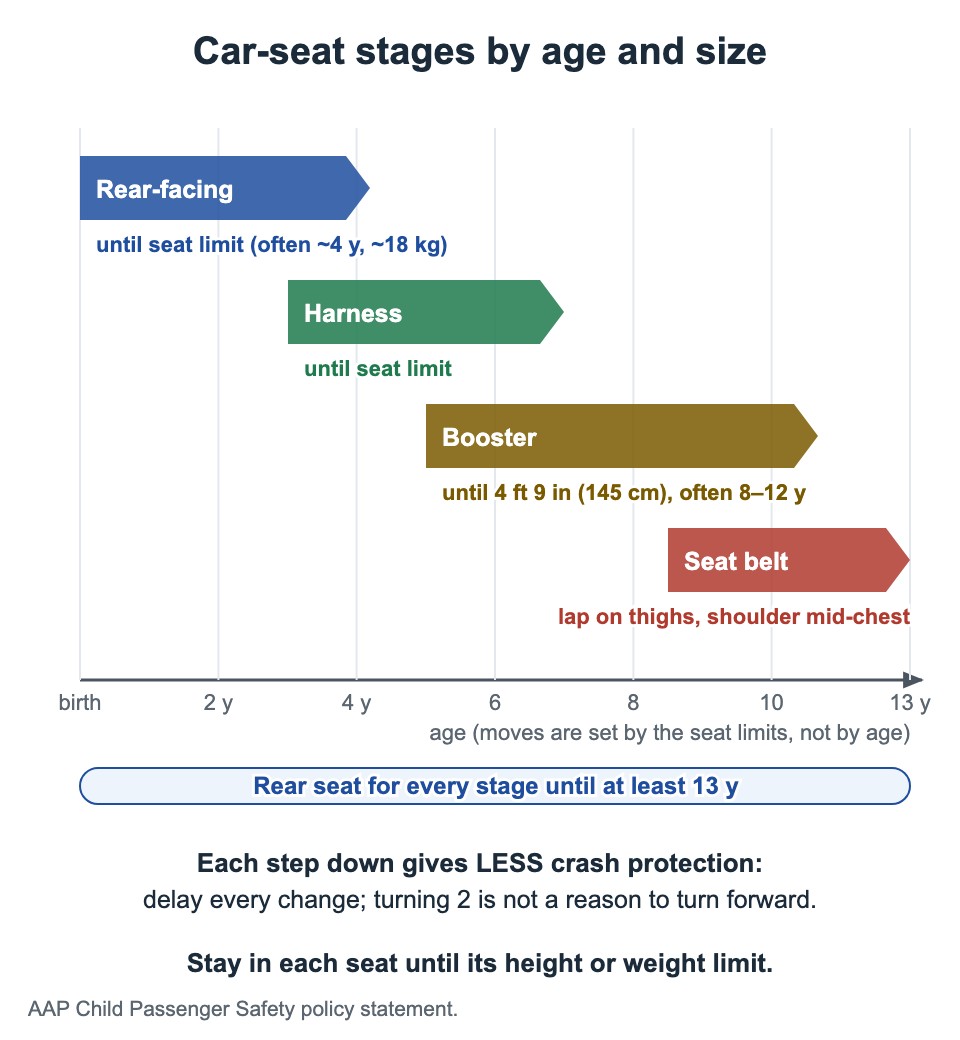
Forward-facing harness → use until the child reaches? Seat's height or weight limit
Why: Each move (rear-facing, forward-facing harness, booster, seat belt) lowers protection, so a child stays in the harness until the seat's highest height or weight limit, often 29 kg (65 lb) or more. Age alone is never the trigger to move to a booster. Hook: max out each seat before moving on.
Source: Durbin DR, Hoffman BD, AAP policy statement: Child Passenger Safety (Pediatrics 2018)
Car-seat stages by age and size — diagram -
Screening & Well Visits
Routine TB testing for all healthy children? […]
Show answer
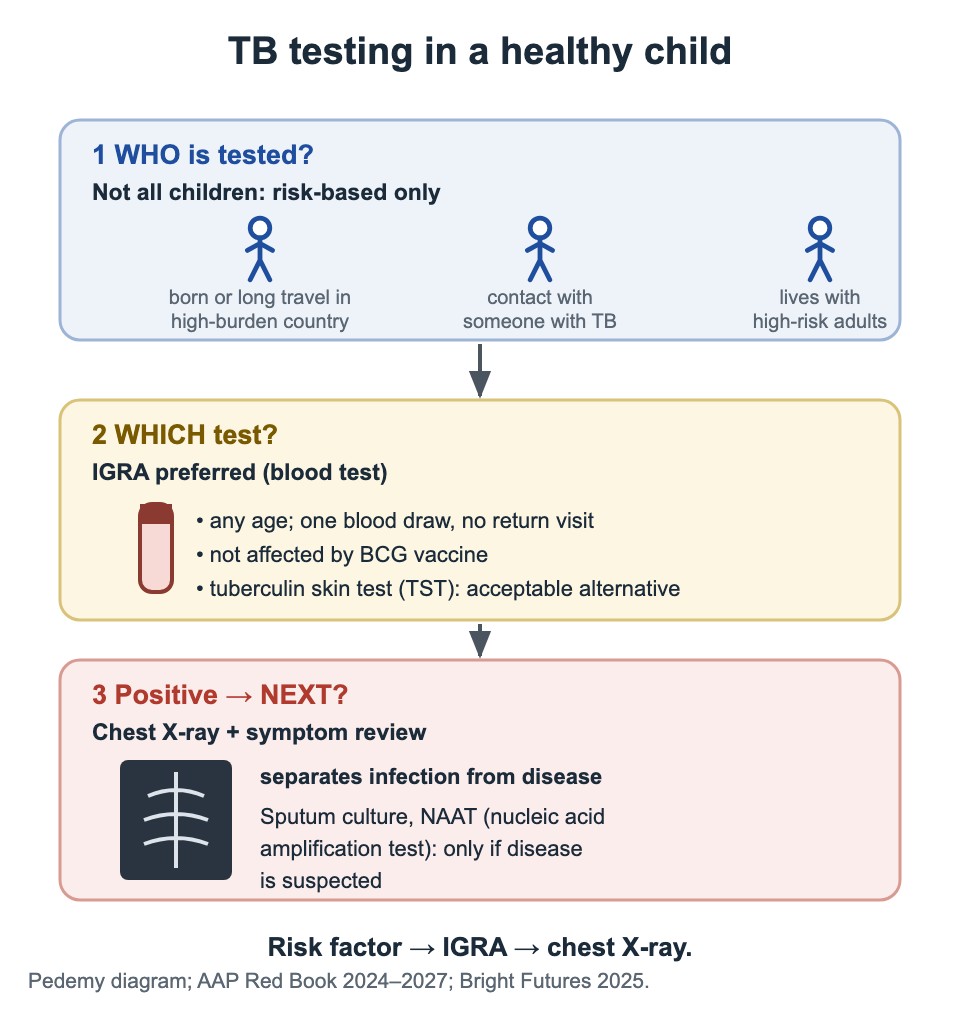
Routine TB testing for all healthy children? No; risk-based
Why: Test only children with risk factors on the questionnaire: birth or long travel in a high-burden country, contact with TB, or living with high-risk adults. Universal testing in low-risk children mostly gives false positives.
Source: Reworded for focused recall. Reviewed 14 October 2026.www.aap.org
TB testing in a healthy child: who, which test, positive then next — diagram -
Vision & Hearing
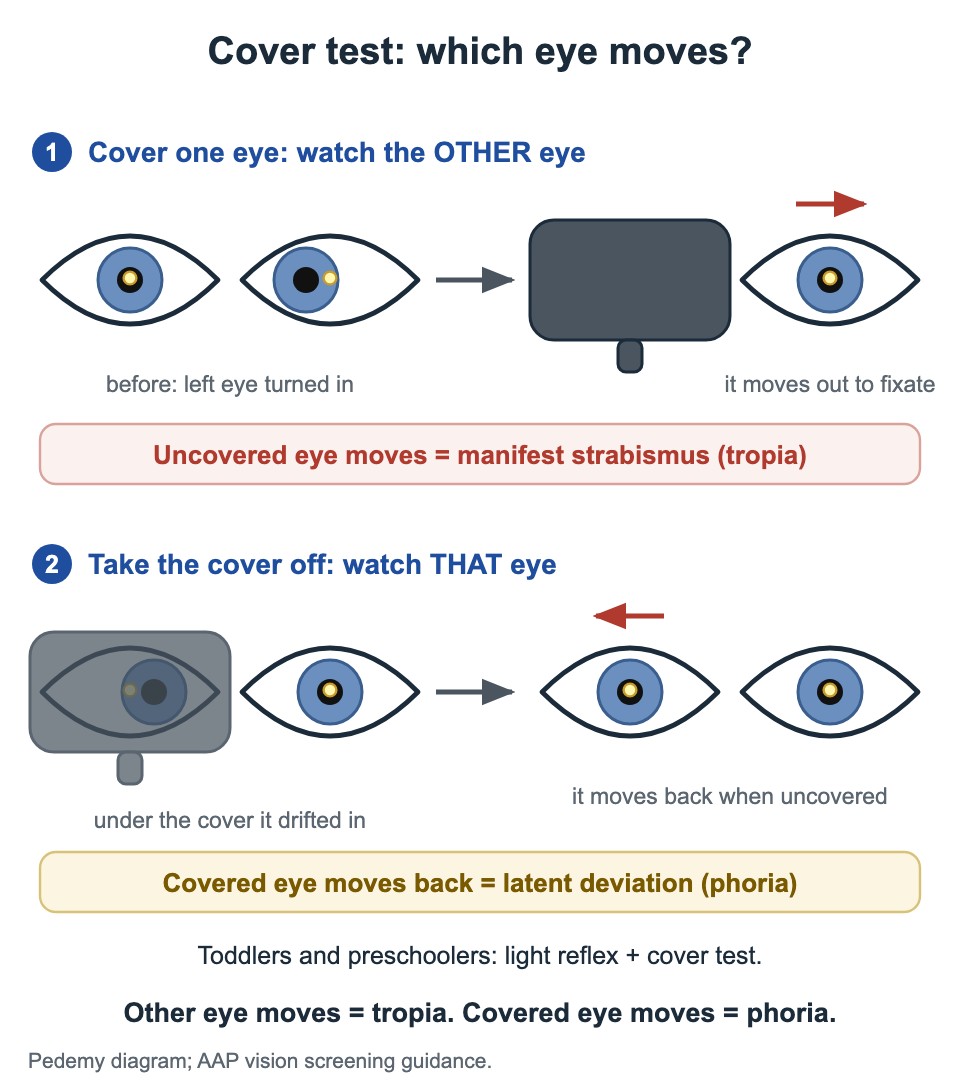
Cover test: uncovered eye moves to fixate → suggests? […]
Show answer
Cover test: uncovered eye moves to fixate → suggests? Manifest strabismus
Why: If the uncovered eye had to move, it was not aligned before, which is a manifest deviation (tropia). Movement of the covered eye when the cover is removed instead shows a latent deviation (phoria).
Source: AAP/AAPOS/AAO joint report: Visual System Assessment in Infants, Children, and Young Adults by Pediatricians (Pediatrics 2016)
Cover test: which eye moves? — diagram -
Dental Health
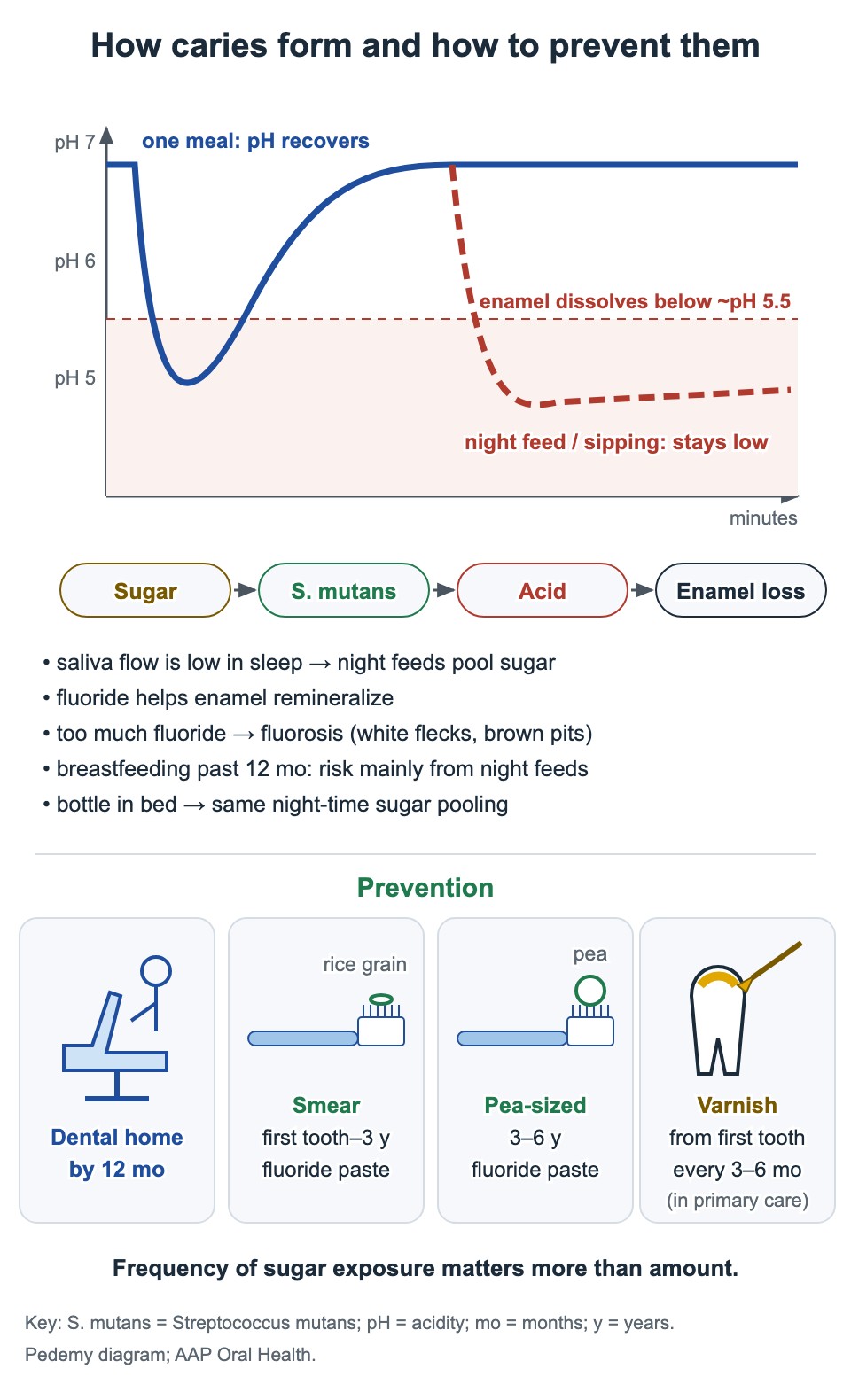
Dental home → no later than what age? […]
Show answer
Dental home → no later than what age? 12 months
Why: The first dental visit should be within 6 months of the first tooth and by 12 months. Early visits allow risk assessment, fluoride advice and caries prevention. Primary care still applies fluoride varnish from the first tooth. Hook: dental home by 12 months.
Source: Krol DM, Whelan K, AAP clinical report: Maintaining and Improving the Oral Health of Young Children (Pediatrics 2023); AAPD Policy on the Dental Home
How caries form and how to prevent them — diagram -
Safety & Injury Prevention
Teen safety counseling → when should phones and texting be put away? […]
Show answer
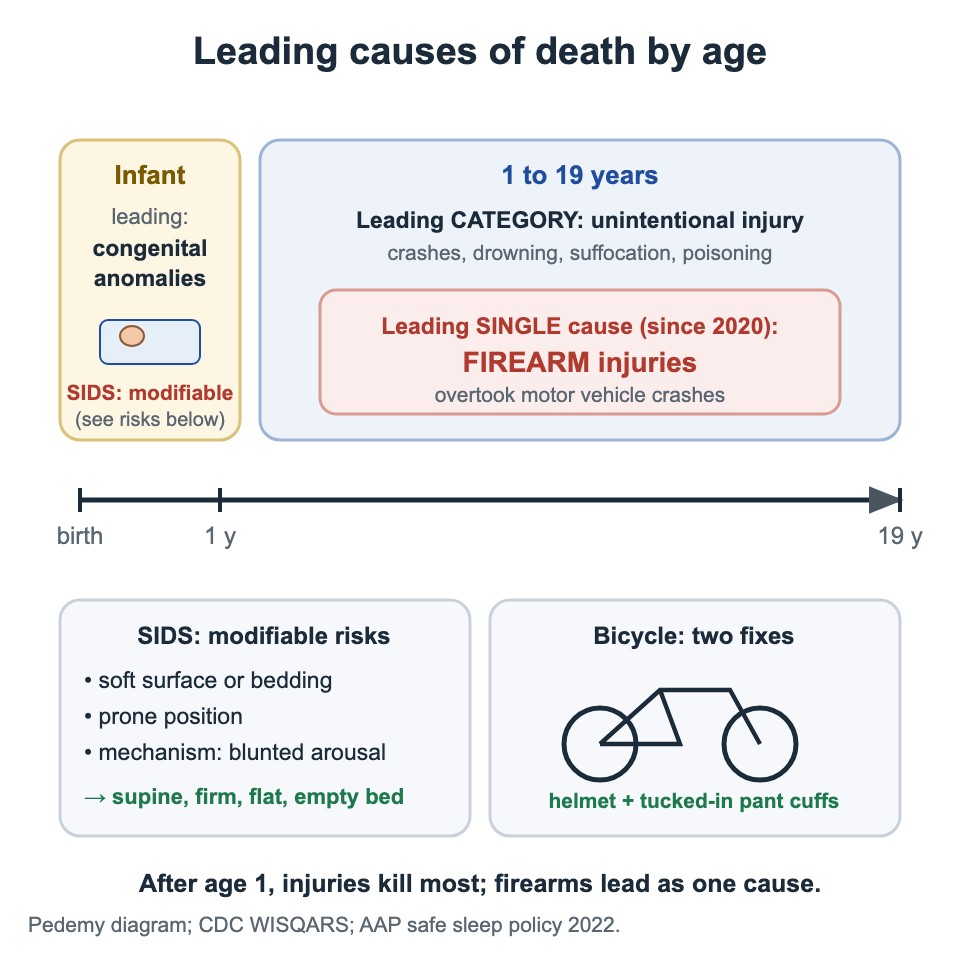
Teen safety counseling → when should phones and texting be put away? While driving and while walking near traffic
Why: Texting or phone use while driving is a leading cause of teen crashes and endangers pedestrians too. Texting while walking near traffic distracts the walker as well, so the advice covers drivers and pedestrians. Hook: Phone down, eyes up, on wheels or feet.
Source: CDC: Risk Factors for Teen Drivers (distracted driving); NHTSA: Distracted Driving; AAP HealthyChildren.org: Teen Driving Safety. Rewritten for Pedemy in our own words, November 2026.
Leading causes of death by age (infant vs 1 to 19 years), SIDS risks, bicycle — diagram -
Screening & Well Visits
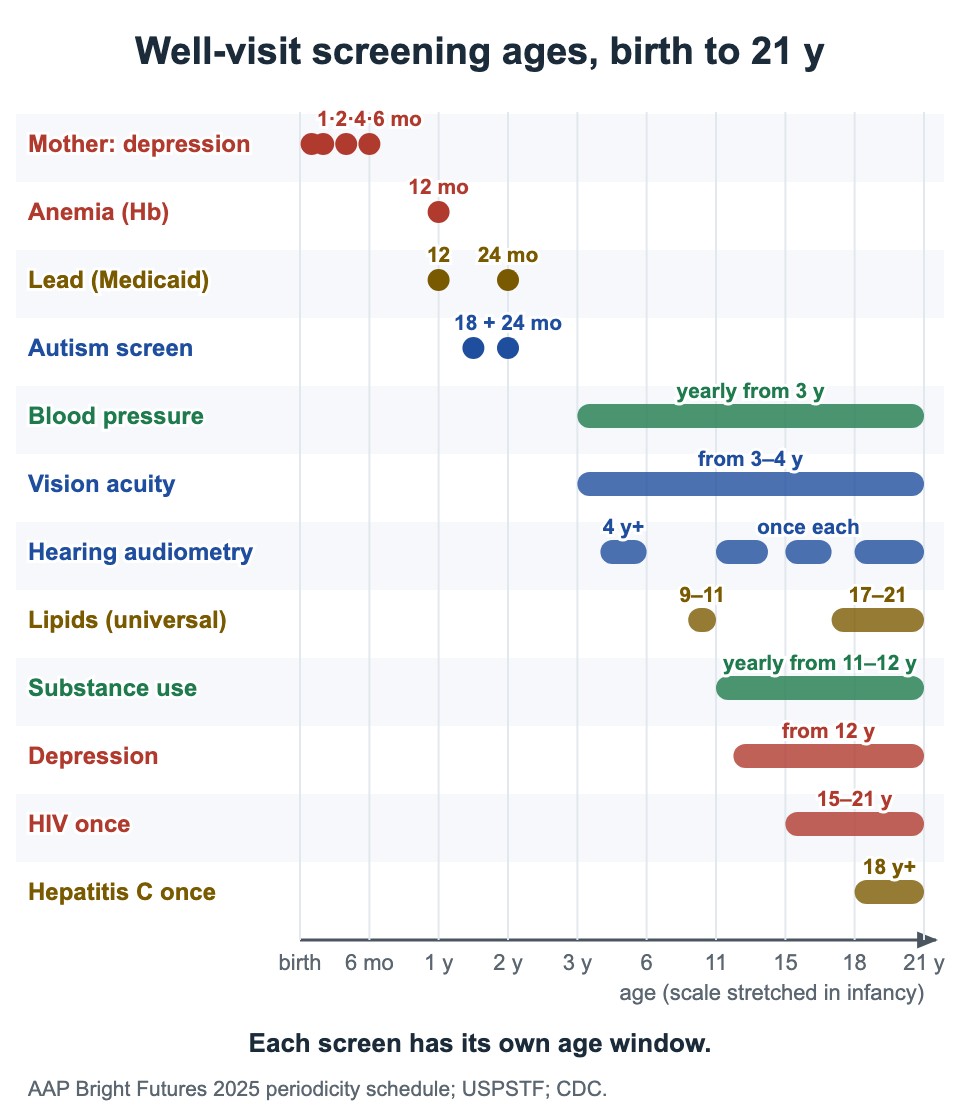
Maternal depression screening at which infant visits? […]
Show answer
Maternal depression screening at which infant visits? 1, 2, 4, and 6 months
Why: Postpartum depression peaks in the first months and harms bonding and infant development, so mothers are screened (e.g., with the Edinburgh scale) at the 1, 2, 4 and 6 month visits.
Source: Reworded for focused recall. Reviewed 14 October 2026.www.aap.org
Well-visit screening ages, birth to 21 y — diagram
Topics in Well-Child Care & Prevention
- Dental Health20
- Fever Counseling13
- Foster Care20
- Safety & Injury Prevention63
- Screening & Well Visits38
- Vision & Hearing8
Well-Child Care & Prevention study guides
- Dental health in children
- Fever counseling
- Health care for children in foster care
- Safety and injury prevention
- Screening at well-child visits
- Vision and hearing screening in children
Clinical tools for Well-Child Care & Prevention
Sample cards in other subjects
- Growth & Development
- Immunizations & Post-exposure Prevention
- Nutrition
- Emergency Medicine
- Infectious Disease
- ENT
- Mental Health
- Ophthalmology
- Adolescent Medicine
- Cardiology
- Gastroenterology
- Pulmonology
- Dermatology
- Musculoskeletal & Sports Medicine
- Neonatology
- Neurology
- Allergy & Immunology
- Behavioral
- Endocrinology
- Hematology
- Nephrology
- Oncology
- Urology
- Biostatistics & Epidemiology
- Genetics
- Medical Ethics
- Metabolic Disorders
- Patient Safety & Quality Improvement
- Rheumatology
- Pharmacology
Free to study without an account. Sign up free to save your spaced-repetition schedule across devices. For education only; check current guidelines before clinical use.